
Gel Ice Packs by Design: Materials, Formats, and Selection Logic
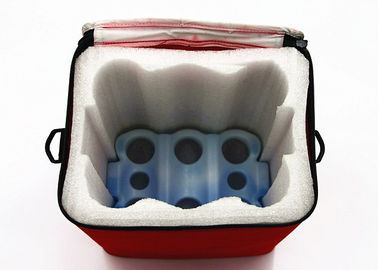
In procurement conversations, the phrase gel ice packs can refer to products as different as a thin lunch-box chiller, a 1,000 g hard-shell freezer brick, a soft nylon PCM cooler pack, and a 2,600 ml phase-change cold plate. Buyers entering the cold chain category often assume one product can complete almost any cooling job. In reality, gel ice packs are a family of reusable temperature-control products, each built around a specific cooling medium, shell format, capacity, and intended duty cycle.
This article explains how gel ice packs are designed, why materials and formats matter, and how to translate a health and medicine cold chain requirement into an informed product choice. It uses factory-level specification data from Changzhou Jisi Cold Chain Technology Co., Ltd, a China-based cold chain manufacturer founded in 2013 that produces gel ice packs, PCM ice plates, cooler boxes, and VIP panels under the JISILL and JISI brands.
Why the Gel Ice Pack Category Feels Confusing
The first problem is terminology. A buyer searching gel ice packs will see words like ice brick, ice cooler brick, lunch ice packs, fan ice pack, breast milk ice pack, cool bag ice packs, eutectic cold plates, and PCM ice pack. Some suppliers use these names interchangeably, but the engineering and procurement consequences are different.
The second problem is that product performance does not come from the gel alone. A complete passive cold chain unit includes a refrigerant pack plus an insulated enclosure such as a cooler bag, cooler box, medical cool box, or vacuum insulated panel box. Buyers who evaluate the pack without considering the insulation system, freezer conditions, ambient temperature, and packed product load often receive samples that look correct but perform poorly in validation.
A more useful approach is to define gel ice packs by three design decisions: the shell material, the internal cooling medium, and the physical format. Once these three variables are understood, comparing suppliers and models becomes faster and less emotional.
Industry Background: Health and Medicine Is Expanding the Role of Reusable Ice Packs
Cold chain demand has made gel ice packs an important purchasing category rather than a simple consumable. According to The Business Research Company, the global gel ice pack market reached USD 14.56 billion in 2025, driven partly by pharmaceutical cold chain and pain management demand. Estimates vary by market definition; for example, Market Research Future valued the reusable ice pack market at approximately USD 1.962 billion in 2024 and projected USD 2.862 billion by 2035, with differences explained mainly by product scope and geography.
In the health and medicine segment, cold chain equipment is drawing more attention. MarketsandMarkets projected the vaccine storage equipment market, including cold boxes and carriers, to grow from USD 0.86 billion in 2024 to USD 1.21 billion by 2029. Meanwhile, Intel Market Research stated that the phase change material pack market reached USD 476 million in 2025 with a compound annual growth rate of 4.5 percent, reflecting the need for more precise thermal management in biologics. China plays a major supply role: Dataintelo reported that China accounted for over 11.2 percent of global gel ice pack revenues as of 2025 and serves as a primary manufacturing hub for export to North America and Europe.
These conditions explain why buyers are moving beyond generic quotes and asking suppliers to demonstrate temperature capability, material safety, and repeatable production quality.
How a Gel Ice Pack Is Constructed
Although visual designs differ, a gel ice pack is essentially a sealed shell containing a cooling medium that is chilled before use and later releases cold energy during transport.
Shell Material
The shell protects the cooling medium from leakage and gives the product its stiffness or flexibility. In the JISILL product range, common outer materials include food-grade HDPE plastic, standard environmental HDPE, and Nylon PE for softer formats. HDPE-based hard shells are widely used for ice bricks and cooler packs because they resist pressure, survive repeated freezing, and allow cleaner stacking inside insulated boxes. Nylon PE shells appear in portable and flexible gel packs designed for food fresh scenarios.
Internal Cooling Medium
Manufacturers use different media inside gel ice packs. The most common JISILL materials are cooling gel, cooling powder, SAP CMC, and phase change material. Cooling gel and cooling powder are typically used in products described for food fresh and food frozen scenarios. SAP is the abbreviation for super absorbent polymer, and CMC is carboxymethyl cellulose; both are common hygroscopic materials that help control liquid behavior inside a frozen pack. PCM, or phase change material, stores cold energy by changing from liquid to solid and then releases cold at a relatively stable temperature while changing back.
Capacity and Physical Format
Capacity is not a marketing feature; it is a performance parameter. JISILL models range from 200 ml cool bag packs and 350 ml fan ice packs to large PCM plates with 2,600 ml capacity. Physical format influences how the pack fits into a cooler or medical box. For example, the BH009 cool bag ice pack measures 16.5 by 10 by 2 cm and has a 200 ml capacity; the BH130 PCM ice pack measures 46 by 32.5 by 2.5 cm and has a 2,600 ml capacity. A box designed for a thick PCM plate may not work well with many small gel bricks, so dimensional fit is a purchasing criterion, not an afterthought.
Temperature and Insulation System
Gel ice packs do not have one universal operating temperature. JISILL phase change material ice plates are available in temperature variants including -30, -25, -15, -10, -5, 0, 2-8, 18, and 23 degrees Celsius. Standard freezing packs, such as the food-grade PCM Ice Cooler Brick BH091, are designed for outdoor frozen use at -22 degrees.
Measured cold duration also depends on the surrounding enclosure. JISILL cooler boxes use PU or VPU panels with low thermal conductivity, and when those boxes are combined with PCM ice plates, manufacturer-stated duration can reach 12, 24, 48, 72, 96, or even 120 hours. Buyers should request performance testing under their own packaging configuration instead of relying on a single ice pack duration claim.
Specification Snapshot: Visible Differences Across Real JISILL Formats
The table below consolidates typical models to show how a single supplier differentiates gel ice packs by format, shell, medium, and size. This is not a product recommendation list; it is a mapping reference for buyers who are still learning the category.
| Format | Indicative Model | Shell Material | Internal Medium | Example Size or Capacity | Positioning in Cold Chain Use |
|---|---|---|---|---|---|
| Cool bag ice pack | BH009 | HDPE plastic | SAP | 200 ml / 16.5 x 10 x 2 cm | Portable reusable cooling inside cooler bags |
| Fan ice pack | BH050 | Food-grade HDPE | Cooling gel | 350 ml / 16.5 x 10.2 x 3 cm | Ice cream cart and food frozen scenarios |
| Fan ice pack, hard shell | BH065 | HDPE plastic | Cooling powder | 600 ml / 18.5 x 11.7 x 3.3 cm | General cold chain transportation |
| Ultra-thin lunch ice pack | BH066 | HDPE plastic | SAP or CMC | 19 x 12.5 x 1 cm | Lunch boxes and slim cool bags |
| Ice cooler brick | BH047 | Food-grade HDPE | Cooling gel | 23.5 x 19.5 x 3 cm / 1,000 g | Food keep fresh, reusable freezer brick |
| Breast milk ice pack | BH004 / BH125 | Food-grade HDPE | Cooling gel | 21 x 10 x 5.2 cm | Food fresh and cooler bag use |
| Large cooler ice pack | BH108 | Food-grade HDPE | Cooling gel or SAP/CMC/PCM | 35 x 22 x 3 cm / 1,200 g | Large cooler boxes and longer insulation duty |
| PCM ice cooler brick | BH091 | Environmental HDPE | SAP CMC | 38.5 x 20 x 2 cm / 1,200 g | Outdoor frozen transport at -22 degrees |
| PCM reusable cold plate | BH142 / BH130 | Hard HDPE plastic | PCM | 24.5 x 24.5 x 2.5 cm / 1,200 ml; 46 x 32.5 x 2.5 cm / 2,600 ml | Vaccine, pharmaceutical, and food cold chain |
| Nylon cooler PCM gel pack | BH162 | Nylon PE | PCM | 250 ml / 500 ml | Portable food fresh and cooler bag scenarios |
The table also illustrates why certification matters. Several models carry FDA, SGS, MSDS, CPSIA, CE, LFGB, or Regulation (EU) No 10/2011 statements depending on target market. A compliance review should always be performed against the specific model and destination market.
Step-by-Step: How to Choose a Gel Ice Pack Without Guessing
Step 1: Write the temperature and duration requirement first
Choose frozen or chilled conditions explicitly. For example, a vaccine distribution project may require 2-8 degrees, while ice cream transport may require -22 degrees or lower. JISILL PCM ice plates include temperature points such as -30, -25, -15, -10, -5, 0, 2-8, 18, and 23 degrees Celsius, which gives procurement teams a practical starting vocabulary. If the requirement is not temperature-based, the sample evaluation will be difficult to compare across suppliers.
Step 2: Match the cooling medium to the temperature behavior
Standard freezing gel packs and ice bricks are simple and widely available, but their temperature curves can vary as the pack warms. PCM-based packs are designed to release cold energy during phase change at a more stable temperature, which is why they often appear in pharmaceutical and vaccine cold chains. Since this is a discovery-stage decision, the key is to ask every supplier what internal medium the model actually uses and whether it can be supplied with a controlled target temperature.
Step 3: Check shell material against the product and regulatory requirement
Food and medical applications create different material expectations. For food storage, JISILL reports that its HDPE outer materials and liquid systems such as SAP or CMC are non-toxic and food-grade, and that FDA, SGS, and MSDS reports are available. For medical use, buyers should verify the exact certification of the selected model and its suitability for the destination market.
Step 4: Confirm format, stacking, and box compatibility
A gel pack only works if it fits the intended cooler box, vaccine cooler bag, or lunch bag. Ask for the external dimensions, weight, and number of packs per carton. Real JISILL models demonstrate this clearly: the BH009 cool bag ice pack is small enough for a 200 ml portable format, while the BH130 PCM ice pack is a large plate intended for bigger cold chain boxes. If a project needs mixed sizes, request a packing layout to confirm fit.
Step 5: Review customization requirements
Color and logo printing can be customized, and JISILL can make colors according to samples or PANTONE codes. Common decoration methods include silk screen printing, offset printing, or stickers. Buyers who need an own-brand product should ask about OEM capability, mold changes, and minimum order requirements before sampling.
Step 6: Validate with samples and first production checks
Sample requests are standard practice, but they should include the actual insulation enclosure for testing. If an existing model is accepted and no printing is needed, JISILL can supply free samples with freight paid by the buyer. Sampling is also the correct time to review lead time, surface quality, cap sealing, freezing performance, and dimensional consistency before committing to volume.
Real Use Cases in Health and Medicine Cold Chain
Vaccine and pharmaceutical transport
Vaccine and medicine projects usually need controlled temperatures inside a qualified carrier or cool box. JISILL produces PCM phase change material ice plates such as the BH142 and BH130, and also supplies medical cool boxes and vaccine carriers using PU and vacuum insulation panels. For example, the JS-42L medical transport box has an external dimension of 46 x 46 x 46 cm, an internal dimension of 35 x 35 x 35 cm, and a 42 L capacity. These boxes are designed to be used with cold plates to support temperature-sensitive transport, and WHO PQS E004/VC01.2 provides a recognized framework for verifying vaccine carrier and cold box cold-life performance.
Food fresh and meal delivery
Portable food fresh scenarios call for smaller and easier-to-handle formats. The JISILL BH009 cool bag ice pack is a reusable freezable gel pack with 200 ml capacity, while the BH162 is a reusable nylon cooler PCM gel pack available in 250 ml and 500 ml versions. The BH066 ultra-thin ice pack, at about 19 by 12.5 by 1 cm, is sized for lunch boxes and slim cool bags where thickness is limited.
Ice cream cart and frozen food point-of-sale
Mobile selling and last-meter frozen display typically need repeated freezing cycles and compact dimensions. The BH050 Fan Ice Pack is a food-grade HDPE pack with cooling gel, 350 ml capacity, and dimensions of 16.5 by 10.2 by 3 cm, designed for food frozen scenarios such as ice cream carts. The BH065 model provides a 600 ml hard-shell alternative with cooling powder and can be customized for higher-volume holdover.
Breast milk storage in the home and hospital setting
Breast milk ice packs look simple, but material trust is essential because the pack is used close to food containers. JISILL offers the BH004 and BH125 models with food-grade HDPE outer shells, cooling gel interiors, and BPA-free statements. The 21 x 10 x 5.2 cm size is convenient for breast milk cooler bags and similar food fresh scenarios.
Comparison: Cooling Gel Ice Packs vs. SAP/CMC Ice Bricks vs. PCM Ice Plates
The comparison below is deliberately limited to cooling systems and procurement logic. It does not create quality rankings because supplier quality can only be verified through testing.
| Comparison Dimension | Cooling Gel Ice Packs | SAP/CMC Ice Bricks | PCM Ice Plates / PCM Packs |
|---|---|---|---|
| Internal medium | Cooling gel or cooling powder | SAP CMC liquid or paste type | Phase change material |
| Typical shell | HDPE, food-grade HDPE, Nylon PE | HDPE or food-grade HDPE | Hard HDPE or Nylon PE |
| Temperature behavior | Standard freezer pack behavior; broad and simple cooling | Often positioned for food fresh and brick-type stacking | Designed to release cold at stated phase-change temperature points |
| Common examples in JISILL range | BH004, BH005, BH050, BH065 | BH011, BH047, BH091 | BH142, BH130, BH162 |
| Typical cold chain use | Lunch bags, breast milk cooler bags, ice cream carts, cool bags | Cooler bricks for food fresh and frozen scenarios | Vaccine cool boxes, medical transport, longer-duration thermal packaging |
| Procurement consideration | Balance of cost, simplicity, and reusable performance | Volume efficiency and mechanical durability in boxes | Precise temperature matching and qualification testing |
Frequently Asked Questions
Are JISILL gel ice packs safe for food storage and medical-adjacent use?
JISILL states that all its materials, including HDPE outer material and inner liquids such as SAP or CMC, are non-toxic and food-grade. FDA, SGS, and MSDS reports are available, and many models carry certifications such as FDA, SGS, MSDS, CPSIA, CE, LFGB, or Regulation (EU) No 10/2011. For example, the BH004 Breast Milk Ice Pack uses a food-grade HDPE shell and cooling gel interior. Buyers should still verify the specific model certification for their destination regulatory framework.
Can gel ice packs maintain 2-8 degrees for vaccine transport?
Maintaining 2-8 degrees requires a matched system rather than a single pack. JISILL produces PCM phase change material ice plates with temperature variants that include 2-8 degrees, and its medical cool boxes use PU and vacuum insulation panels to extend cold life. In practice, a 2-8 degree vaccine transport system should be validated with the complete cooler or carrier, not judged from the ice pack label alone.
How long do gel ice packs stay cold after freezing?
There is no meaningful universal hour count because cold duration depends on pack mass, starting temperature, insulation quality, ambient temperature, loading pattern, and box openings. In JISILL cooler boxes, PU or VPU panels combined with PCM ice plates can support durations of 12, 24, 48, 72, 96, and up to 120 hours according to factory configuration data. Buyers should request a duration test under their own packaging and payload conditions.
Can JISILL customize gel ice pack color, logo, and OEM design?
Yes. Color and logo printing can be customized according to samples or PANTONE codes. Printing options include silk screen printing, offset printing, or applying stickers to the pack, and the supplier will recommend a suitable method for the design. OEM buyers can also explore new model creation, although new tooling generally requires a higher order quantity than an existing JISILL model.
What are the MOQ and lead time for gel ice packs?
For an existing JISILL model, the usual MOQ is approximately 3,000 pieces. If a buyer needs a newly created model, a quantity above 5,000 pieces is typically preferred. Lead time varies by model and quantity; some supplier specification sheets list two to three days for quick-turn models, while customized or bulk production often runs from seven to fifteen days depending on the product type. If you are in an early research stage, ask for samples first so that material, dimension, and thermal performance can be verified before large-scale commitment.
Moving from research to validation? JISILL is a China-based manufacturer with a 40,000 m² facility, about 60 employees, four R&D engineers, and an annual production capacity of approximately 620,000 units. The company exports to North America, South America, Western Europe, Eastern Europe, Eastern Asia, and Southeast Asia.
Email Ying for samples and specifications Visit JISILL official website
Need a printable reference? Download the JISILL cold chain brochure (PDF).
Market figures cited in this article are attributed to published third-party research reports and were included for category context. Product details are based on manufacturer-published JISILL specifications. This article is informational and does not replace regulatory qualification or thermal validation testing.
Have Questions or Need More Details?
Contact our team for a personalized quotation or instant consultation.
Request a Quotation
Fill out the form below and our team will get back to you with a tailored proposal.
WhatsApp Direct Chat
Prefer to chat in real-time? Message us on WhatsApp for instant assistance & quick answers.
- Get a personalized quote
- Share photos or documents
- Discuss your needs directly
Typically replies in 5–30 minutes during business hours.