
Gel Ice Packs vs. Gel Ice Plates: Which Serves Your Cold Chain Better?
Cold Chain Format Decision
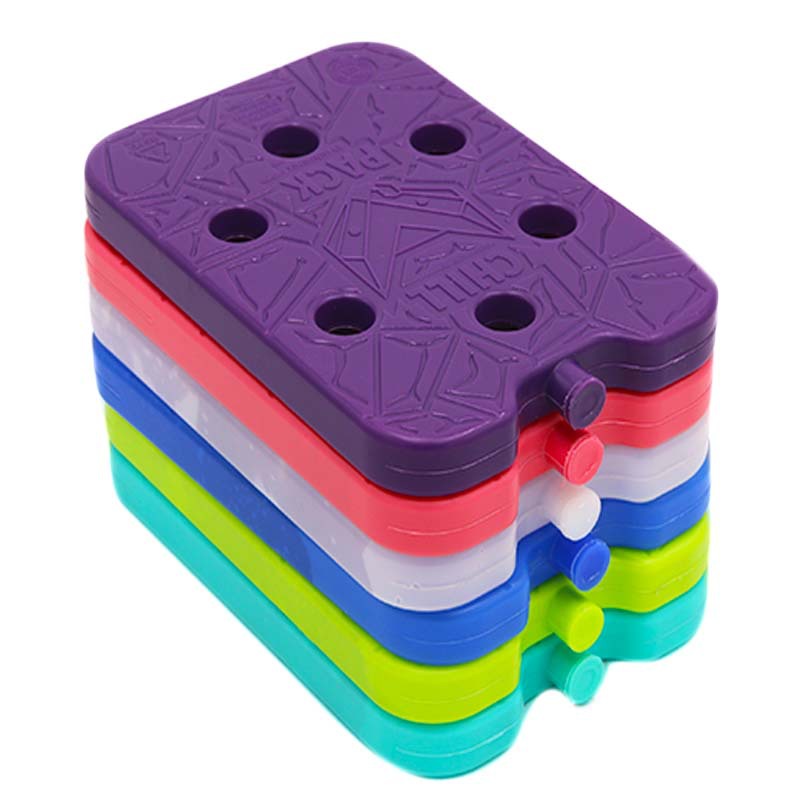
Gel ice packs and gel ice plates cool the same cargo, but they rarely fit the same box. For buyers working through the evaluation and execution stages of a cold chain project, the workable rule is this: choose the format from cargo geometry and required transit time first, and compare unit price last. Flexible gel ice packs — low-profile, gel-filled units such as the JISILL BH-series breast milk and cool bag packs — are built to wrap irregular loads and fill voids. Rigid gel plates, including eutectic cold plates filled with phase change material (PCM), are built to hold a flat, stackable layer and to survive repeated handling in a fixed pack-out.
The Problem: One Category Name, Two Different Physical Jobs
A single RFQ line — "gel ice packs" — covers two physically different products. On one side sit low-profile and flexible packs: HDPE or nylon-PE shells filled with SAP, CMC or cooling gel, commonly 1.0–4.5 cm thick and roughly 100–505 ml in volume, such as the BH066 Ultra Thin Ice Pack at 19 × 12.5 × 1 cm or the BH125 Breast Milk Ice Pack at 21 × 12 × 4.5 cm. On the other side sit rigid plates: hard HDPE shells holding PCM or gel, typically 2.0–2.5 cm thick with flat faces running from 24.5 × 24.5 cm up to 46 × 32.5 cm, such as the BH142 eutectic cold plate or the BH130 PCM pack.
When the format is selected on price per piece alone, three predictable failures appear:
- Cooling gaps. A rigid plate rests on the high points of a curved or irregular load, so contact area drops and cold transfer becomes uneven.
- Unstable pack-outs. Thin packs used as a structural layer under heavy stacking can shift, leaving a lane of cargo without direct cooling media.
- Inflated logistics cost. Large plates ship at low carton density — the BH142 at 15 pcs per carton and the BH084 at 12 pcs per carton — when a higher-density pack would have met the same temperature target.
The correct question is therefore not "which one is better," but "which one matches the geometry of this load and the duration of this lane."
Industry Background: Why Format Choice Is Now a Specification Issue
The cooling-media category is growing on the back of pharmaceutical, biological and food logistics demand. According to Market Research Future, the global reusable icepacks market was valued at approximately USD 1.962 billion in 2024, with expectations to reach USD 2.862 billion by 2035. A separate estimate from The Business Research Company puts the 2025 gel ice pack market at USD 14.56 billion. Those two figures are not directly comparable: research houses define the category differently, ranging from consumer reusable packs to medical cold chain infrastructure, which is precisely why buyers should treat any single market number as directional rather than as a pricing input.
Narrower and more relevant to format selection, Intel Market Research values the Phase Change Material (PCM) pack market at USD 476 million in 2025, growing at a CAGR of 4.5%, driven by demand for precise thermal management in biologics. Vaccine storage equipment — cold boxes and carriers — is projected by MarketsandMarkets to grow from USD 0.86 billion in 2024 to USD 1.21 billion by 2029. China, meanwhile, accounts for over 11.2% of global gel ice pack revenues as of 2025, according to Dataintelo, and remains a primary manufacturing hub for export to North America and Europe.
Two documentation trends reinforce the shift from commodity buying to specification. First, WHO PQS performance specification E004/VC01.2 defines standards for vaccine carriers and cold boxes and requires verified "cold life" durations, which pushes buyers to state a duration target instead of a pack count. Second, food-contact evidence has become a standard line item in supplier questionnaires. The wider supplier landscape also includes specialist players such as Sonoco ThermoSafe, Cold Chain Technologies and Pelton Shepherd, according to Coherent Market Insights — a useful reminder that format decisions sit alongside supplier qualification, not in place of it.
The Two Families, Read Directly From Product Data
Flexible and low-profile gel ice packs: geometry built for contact
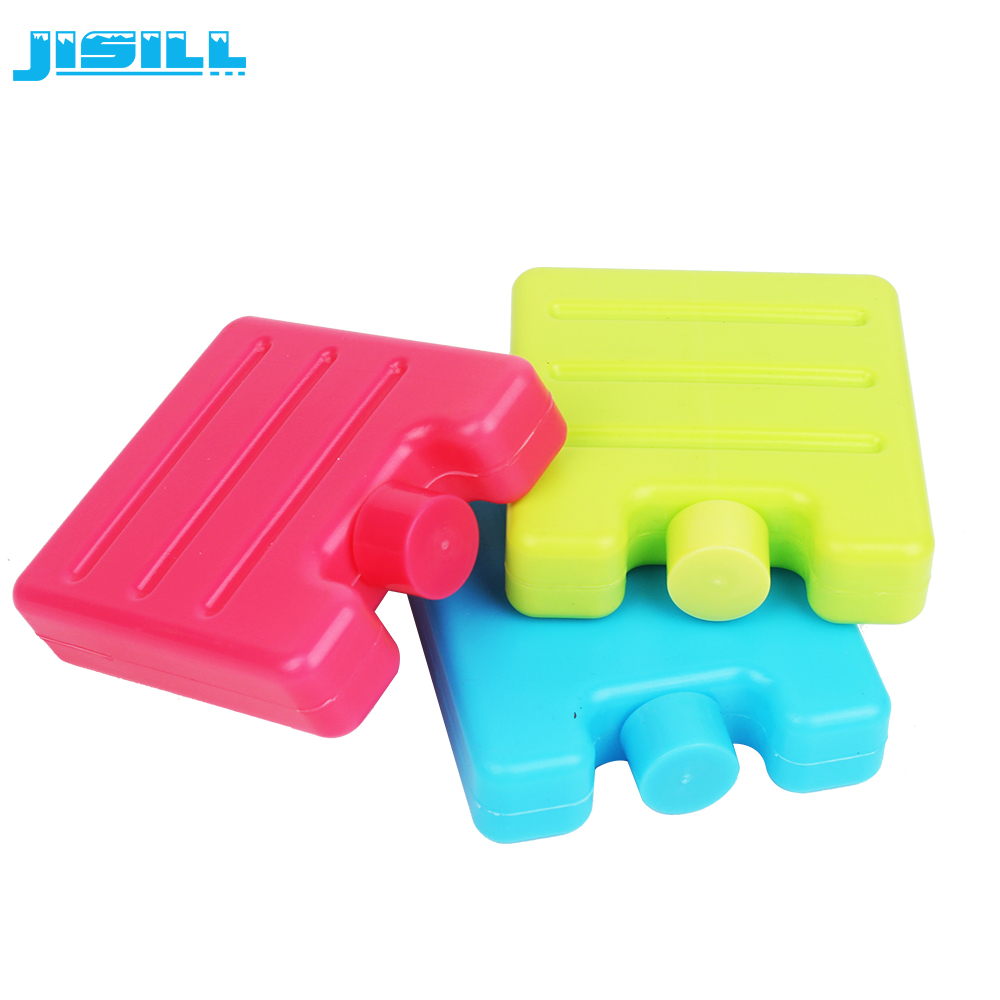
The BH-series low-profile packs are sized to sit close to cargo and to fit into gaps that a plate cannot enter. Representative models from the current data set:
- BH125 Breast Milk Ice Pack — 21 × 12 × 4.5 cm, listed at 505 ml, food-grade HDPE outer shell, cooling gel fill, packed 24 pcs per carton (carton size 41.5 × 34.5 × 22 cm). Certificates listed: FDA, SGS, MSDS, CPSIA.
- BH009 Cool Bag Ice Pack — 16.5 × 10 × 2 cm, 200 ml, HDPE plastic outer with SAP fill, 52 pcs per carton (39 × 28 × 17.5 cm). Certificates listed: SGS, FDA, MSDS, CPSIA.
- BH066 Ultra Thin Ice Pack — 19 × 12.5 × 1 cm, HDPE plastic outer with SAP or CMC fill, 75 pcs per carton (41 × 27 × 20 cm). Certificates listed: FDA, SGS, MSDS, CPSIA, LFGB.
- BH073 — 18.5 × 17.5 × 1.2 cm, 260 ml, HDPE outer with SAP or CMC, 70 pcs per carton.
- BH055 — 16.5 × 9 × 1.8 cm, 200 g per piece, SAP/CMC fill, 48 pcs per carton (40 × 27 × 17 cm).
- BH011 Mini Ice Pack — 100 g, food-grade HDPE with SAP/CMC fill. Its data sheet explicitly lists "Flexible: Yes," "BPA-Free: Yes" and "Non-Toxic: Yes," and it is specified for cooler bags, cooler boxes and lunch bags.
- BH128 — 18 × 18 cm, 350 g, food-grade nylon-PE outer with PCM fill: a flexible pouch carrying phase change material rather than gel, listed for food keep-fresh and medical storage, and referencing Regulation (EU) No. 10/2011.
Rigid gel ice plates and eutectic cold plates: geometry built for stacking
The rigid side of the range is built around flat faces, a hard HDPE shell and larger fill volumes. Representative models:
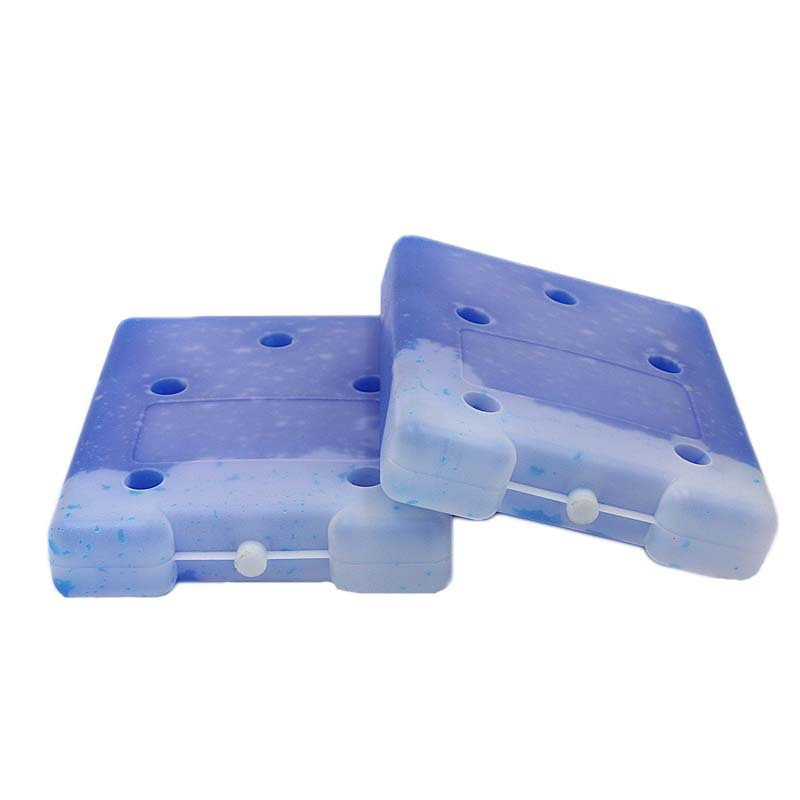
- BH142 PCM eutectic cold plate — 24.5 × 24.5 × 2.5 cm, 1200 ml, hard HDPE outer, SAP/CMC/PCM fill, 15 pcs per carton (32 × 29.5 × 26 cm). Certificates listed: SGS, FDA, MSDS, CPSIA, LFGB.
- BH130 — 46 × 32.5 × 2.5 cm, 2600 ml, HDPE outer with PCM fill, shipped nude-packed.
- BH108 — 35 × 22 × 3 cm, 1200 g, food-grade HDPE, SAP/CMC/PCM fill, 15 pcs per carton.
- BH084 — 33 × 22.5 × 2 cm, 1000 g, hard plastic HDPE with cooling liquid, 12 pcs per carton. This model lists a freezing point choice of 0–8 °C, -10 °C, -15 °C, -18 °C, -20 °C and -25 °C.
- BH091 — 38.5 × 20 × 2 cm, 1200 g, environment HDPE with SAP/CMC, 17 pcs per carton.
- BH047 — 23.5 × 19.5 × 3 cm, 1000 g, food-grade HDPE with cooling gel, referencing Regulation (EU) No. 10/2011.
What the dimensions actually mean for pack-out design
Thickness is the variable that decides conformability. A 1.0 cm pack such as the BH066 can be laid between layers of a non-uniform load, folded into a cooler bag corner or pressed against a curved surface, whereas a 2.5 cm plate such as the BH142 defines a flat plane and expects the cargo to be stacked against it. Footprint works the other way: the BH130 at 46 × 32.5 cm covers a large flat area with one unit, which reduces piece count per shipper but requires a rectangular, dimensionally stable load.
Cooling duration is a system property, not a pack property
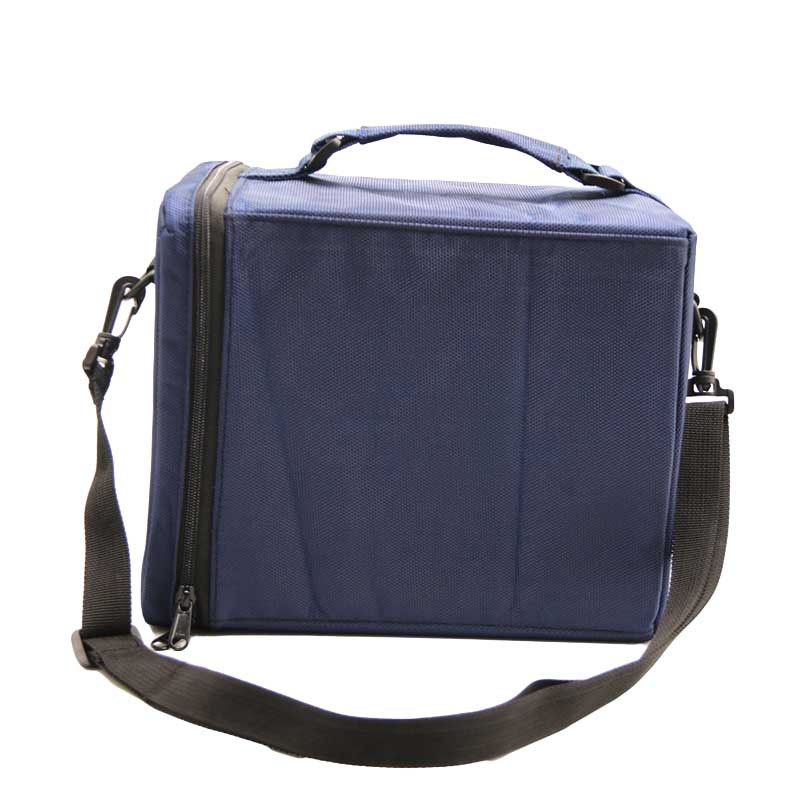
No pack data sheet in this range should be read as a stand-alone duration guarantee. In configured systems, duration comes from fill chemistry, fill temperature, insulation and load together. Cooler boxes built on PU or VPU panels with PCM ice plates are configured for durations of 12, 24, 48, 72, 96 or even 120 hours, depending on the build. The VIP vacuum insulated panel box (BWX003) lists internal temperatures of 2–8 °C and -30 to 0 °C with cold times of 48 and 72 hours, and the 42 L insulated box (BWX42L) holds -20 °C for 40 hours. That is why a duration target belongs in the RFQ next to the pack format.
Step-by-Step: Selecting a Format in Six Steps
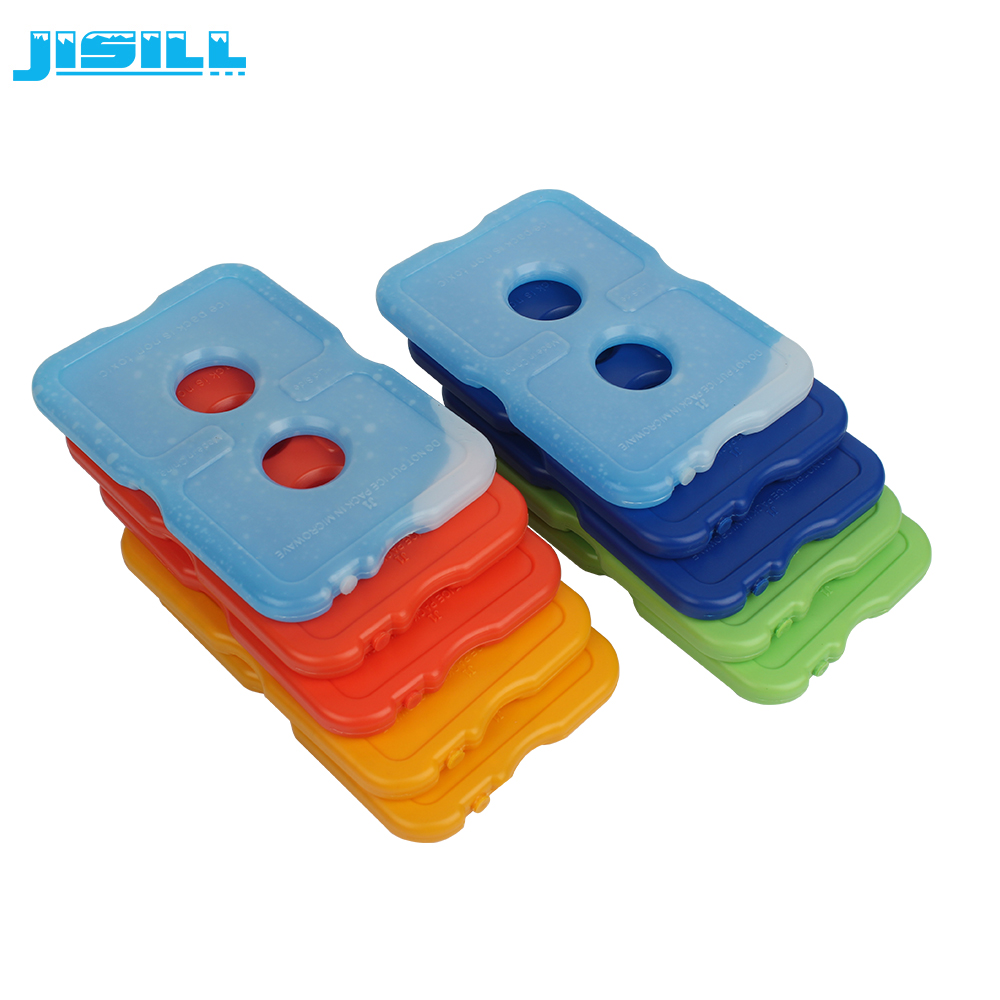
- Map the cargo geometry. Record whether the load is rectangular and stackable, or curved, bagged and irregular. Irregular loads favour flexible packs; uniform cartons favour plates.
- Fix the temperature band and duration target. Choose from the available freezing points — 0–8 °C, -10 °C, -15 °C, -18 °C, -20 °C and -25 °C are listed on the BH084, and the PCM plate deployment in the United States covered -30 °C to 23 °C. Then set the hours the lane actually requires.
- Match format to the binding constraint. If surface contact with irregular cargo is the constraint, specify low-profile packs. If stack stability and a repeatable layer pack is the constraint, specify rigid plates.
- Size the pack count using carton density. The BH066 ships 75 pcs per carton and the BH073 ships 70 pcs per carton, while the BH142 ships 15 pcs and the BH084 ships 12 pcs per carton. Carton count per shipment changes total freight and warehouse volume, not just cooling performance.
- Validate with samples. Existing models can be sampled free of charge where no printing is required, with freight paid by the buyer, and pre-shipment testing is a standard acceptance step.
- Lock compliance and commercial terms. Confirm the certificate set required by your market, then align MOQ (from 1,000 pcs), Incoterms (FOB/CIF), payment terms (T/T, Western Union, PayPal) and lead time.
Use Cases by Cargo Type
2–8 °C vaccine, reagent and blood movement
Medical lanes usually combine both formats. The JS-42L medical transport box (42 L, external 46 × 46 × 46 cm, internal 35 × 35 × 35 cm, PU plus vacuum insulation panel, thermal conductivity below 0.0025 W/m·K) uses rigid plates to build a defined cold layer around the payload, while flexible packs handle carrier bags, hospital circulation boxes and small reagent transport containers. The largest evidence point in the current data set is a United States deployment of 1,000,000 phase change material ice plates across multiple temperature ranges from -30 °C to 23 °C, which reported stable operation over a six-year implementation period for logistics and pharmaceutical transportation clients.
-20 °C frozen and long-haul lanes
Frozen transport depends on both insulation and plate chemistry. The BWX42L insulated box holds -20 °C for 40 hours with a 42 L capacity, and rigid plate models such as the BH108, BH091 and BH084 are specified with PCM, SAP/CMC or cooling liquid fills for frozen food and ice cream transport.
Breast milk, samples and small biological loads
The BH125 Breast Milk Ice Pack (21 × 12 × 4.5 cm, 505 ml, food-grade HDPE with cooling gel) is dimensioned for insulated bags and wave-style breast milk carriers, where the pack must sit against the container wall rather than in a fixed tray. BH011 mini packs at 100 g serve the same role in smaller coolers.
Food, beverage and meal delivery
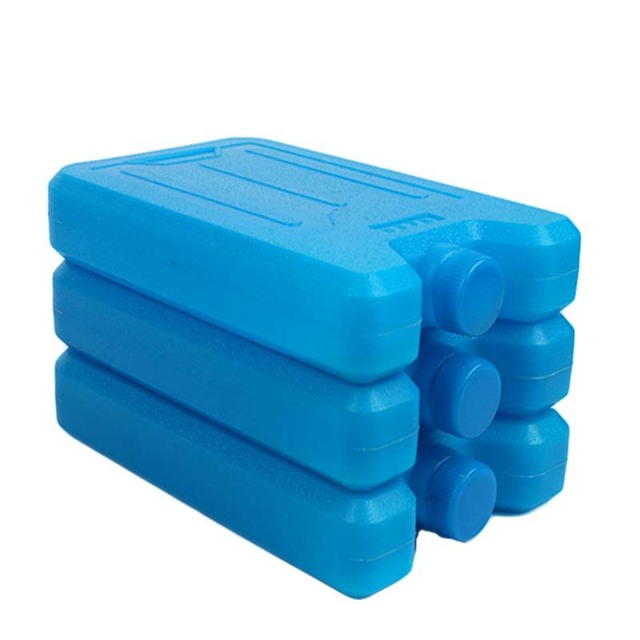
Food service and delivery favour thin packs because they must fit inside insulated bags and around individual portions: BH009 (200 ml), BH024 (130 g, 12.2 × 12.2 × 1.2 cm), BH025 (160 g, 13.3 × 12.7 × 1.3 cm) and BH055 (200 g). Larger rigid units such as the BH047 and BH108 serve bulk food transport where the load is boxed and stackable.
Comparison Tables
Representative models and their pack data
| Model | Format | Dimensions | Fill | Carton density |
|---|---|---|---|---|
| BH066 Ultra Thin Ice Pack | Low-profile pack | 19 × 12.5 × 1 cm | SAP or CMC | 75 pcs/ctn |
| BH073 | Low-profile pack | 18.5 × 17.5 × 1.2 cm (260 ml) | SAP or CMC | 70 pcs/ctn |
| BH055 | Compact pack | 16.5 × 9 × 1.8 cm (200 g) | SAP/CMC | 48 pcs/ctn |
| BH009 Cool Bag Ice Pack | Cool bag pack | 16.5 × 10 × 2 cm (200 ml) | SAP | 52 pcs/ctn |
| BH125 Breast Milk Ice Pack | Breast milk pack | 21 × 12 × 4.5 cm (505 ml) | Cooling gel | 24 pcs/ctn |
| BH084 | Rigid plate | 33 × 22.5 × 2 cm (1000 g) | Cooling liquid | 12 pcs/ctn |
| BH047 | Rigid plate | 23.5 × 19.5 × 3 cm (1000 g) | Cooling gel | Customizable carton |
| BH108 | Rigid plate | 35 × 22 × 3 cm (1200 g) | SAP/CMC/PCM | 15 pcs/ctn |
| BH142 PCM eutectic cold plate | Rigid plate | 24.5 × 24.5 × 2.5 cm (1200 ml) | SAP/CMC/PCM | 15 pcs/ctn |
| BH130 | Rigid plate | 46 × 32.5 × 2.5 cm (2600 ml) | PCM | Nude packing |
Decision factors: flexible pack vs. rigid plate
| Decision factor | Flexible gel ice pack | Rigid gel ice plate | What it means in the RFQ |
|---|---|---|---|
| Conformability to product shape | Thickness from 1.0 cm (BH066) to 4.5 cm (BH125); BH011 data sheet lists "Flexible: Yes" | Flat faces from 24.5 × 24.5 cm (BH142) to 46 × 32.5 cm (BH130), 2–2.5 cm thick | Specify packs where the load is curved or bagged; specify plates where cargo has stable, flat sides |
| Durability in transit | Low weight per piece (100 g BH011; 200 g BH055) reduces handling load | Hard HDPE shell in BH084, BH108 and BH142; the U.S. programme ran 1,000,000 PCM plates stably over six years | Request long-run references where the same pack is refrozen and rehandled for years |
| Cooling duration | Determined by fill, fill temperature and surrounding insulation | Determined by PCM choice and temperature band, e.g. 0–8 °C to -25 °C on BH084 | State hours and temperature band, not pack count; boxes are configured for 12–120 hours |
| Packaging efficiency | 70–75 pcs per carton (BH066, BH073); 48–52 pcs (BH055, BH009) | 12–17 pcs per carton (BH084, BH108, BH142, BH091); BH130 nude packed | Compare cartons and freight per shipment, not just price per piece |
| Compliance evidence | FDA, SGS, MSDS, CPSIA, LFGB, CE and Regulation (EU) No. 10/2011 on selected models | Same certificate families on plate models; food-grade HDPE outer | Name the market and the certificate set in the specification |
FAQ
Are both gel ice packs and gel ice plates safe for food and medical contact?
For the models that carry food-contact documentation, yes. JISI/JISILL product data lists food-grade HDPE as the outer material for models such as BH125, BH084 and BH047, with non-toxic SAP, CMC, cooling gel or PCM inside. Certificate listings across the range include FDA, SGS, MSDS, CPSIA, LFGB and CE, and individual models such as BH024, BH025, BH014, BH065, BH047 and BH128 reference Regulation (EU) No. 10/2011 for food-contact plastics. For vaccine and medical loads, documentation should also be matched to the temperature band; WHO PQS performance specification E004/VC01.2 is the reference standard for vaccine carrier and cold box cold-life verification.
Can one supplier deliver both formats with custom dimensions?
Yes. The manufacturer provides OEM and ODM production and customization covering shape, temperature, color, size and logo. Capacity data shows a 40,000 m² facility, 10,000 units monthly capacity, approximately 620,000 units annual output and 100% testing in quality control, with export markets spanning North America, South America, Western Europe, Eastern Europe, Eastern Asia and Southeast Asia. A United States programme covering 1,000,000 phase change material ice plates across -30 °C to 23 °C reported stable operation over six years for logistics and pharmaceutical transportation clients.
What drives the cost difference between packs and plates?
Four drivers dominate: fill chemistry (SAP or CMC gel versus PCM), unit size and fill volume, carton density, and customization. Carton density has the clearest logistics effect — thin packs ship at 70–75 pcs per carton while large plates ship at 12–17 pcs per carton, so plate-heavy orders consume more cartons and warehouse volume per cooling unit. Commercial terms typically start at an MOQ of 1,000 pcs, with FOB/CIF Incoterms, pre-shipment testing as the acceptance method, and payment by T/T, Western Union or PayPal.
How can I validate both formats before committing to a volume order?
Run a two-format sample test. For existing models that require no printing, samples are supplied free of charge with freight paid by the buyer, and several models list sample lead times of within 2 days. Test the selected packs and plates inside the actual shipper at the target temperature band, then check the cold layer at the end of the intended transit window rather than at the start. Pre-shipment testing is available as a formal acceptance step.
What lead times should be planned for a mixed pack-and-plate order?
Stock items ship within 3–5 days according to capability data, with bulk timing driven by order quantity; several pack models list delivery within 2 days after receiving full payment, while some others run 7–10 days in bulk and vacuum insulated panel boxes quote 7–15 working days. If you send your cargo geometry, temperature band and required hours, the team can confirm which BH-series packs, plates or boxes fit the lane and return a quotation with samples — start with the product range at cooler-icepacks.com.
Conclusion: Choose the Format From Geometry and Duration, Then Compare Price
Gel ice packs and gel ice plates are not competing versions of the same product; they are two pack-out strategies. Flexible low-profile packs — from the 1.0 cm BH066 to the 505 ml BH125 breast milk pack — win where cargo is irregular, bagged or curved and every gap in the load needs contact with cooling media. Rigid plates such as the BH142 eutectic cold plate or the 2600 ml BH130 win where the load is rectangular, the pack-out repeats on every shipment and stacking stability plus long-run durability matter more than flexibility.
The decision framework is short. Fix the temperature band and the hours the lane requires, look at the geometry of the cargo, choose the thickness and footprint that match it, size the count by carton density rather than by habit, then confirm food-contact and market compliance documentation before commercial terms. Price sits last because a cheaper pack that leaves cooling gaps costs more in rejected shipments than it saves per piece.
Next Step: Match the Format to Your Lane
Send your cargo dimensions, target temperature band and required transit hours. JISI Cold Chain can confirm which BH-series gel ice packs, eutectic cold plates or insulated boxes fit the lane, and return samples, specification sheets and a quotation. Existing models can be sampled free of charge where no printing is required (freight paid by the buyer).
Product range: www.cooler-icepacks.com
Full catalogue download: JISI Cold Chain product brochure (PDF)
Email: ying@czjmjs.com | WhatsApp: +86 138 6123 0192
Have Questions or Need More Details?
Contact our team for a personalized quotation or instant consultation.
Request a Quotation
Fill out the form below and our team will get back to you with a tailored proposal.
WhatsApp Direct Chat
Prefer to chat in real-time? Message us on WhatsApp for instant assistance & quick answers.
- Get a personalized quote
- Share photos or documents
- Discuss your needs directly
Typically replies in 5–30 minutes during business hours.