
OEM Gel Ice Packs for Medical Cold Chain Execution
Health & Medicine · Capability & Execution Guide
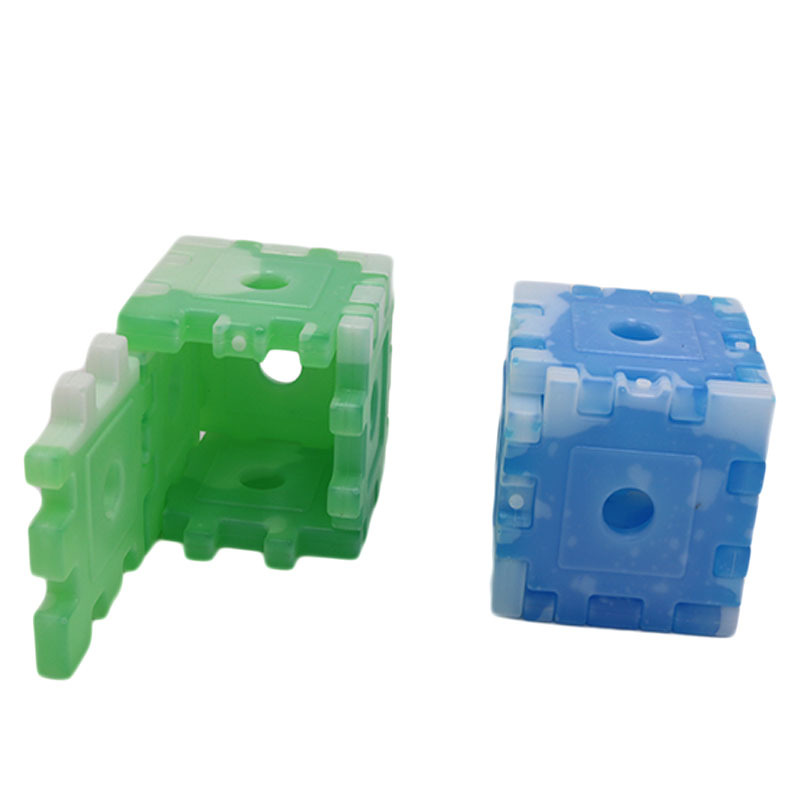
Health and medicine cold chain programs do not simply need a lower-cost gel ice pack. Buyers moving from evaluation to execution need a supplier that can control phase change temperature, modify pack geometry, support OEM or ODM production, and provide enough documentation to protect a pharmaceutical or vaccine shipment. This guide explains how to evaluate those execution capabilities before committing to a purchase order.
The execution problem beneath a simple gel ice pack search
Many procurement teams enter with a broad search for gel ice packs, then discover that stock formats do not match their insulated shippers. A vaccine cooler box may require a precise 2–8°C hold. A medical cool box built with vacuum insulated panels may need a thin PCM pack that can sit flush against the payload area. A lunchbox or breast milk transport kit may need a compact, food-contact-safe pack that does not waste internal space.
The risk is not only a temperature excursion. It is also the time lost when a supplier cannot modify size, fill material, or phase change point. For health and medicine buyers, third-party standards add another layer. WHO PQS performance specification E004/VC01.2 defines expectations for vaccine carriers and cold boxes, including verified cold life. A supplier that can only offer one or two standard shapes may not be enough when the program requires a documented fit inside a medical transport system.
What buyers are actually qualifying in 2026
The market context matters because it separates true capability from generic packaging supply. The Business Research Company estimates that the global gel ice pack market reached USD 14.56 billion in 2025, driven in part by chronic pain management and pharmaceutical cold chain demand. Intel Market Research values the phase change material, or PCM, pack market at USD 476 million in 2025, with a CAGR of 4.5% due to demand for precise thermal management in biologics. MarketsandMarkets projects that vaccine storage equipment—including cold boxes and carriers—will grow from USD 0.86 billion in 2024 to USD 1.21 billion by 2029.
China is a relevant manufacturing base in this category. Dataintelo reports that China accounts for over 11.2% of global gel ice pack revenues as of 2025, serving North America and Europe through export-oriented supply chains. Global competitors often cited in the reusable ice pack sector include Sonoco ThermoSafe, Cold Chain Technologies, and Pelton Shepherd. The presence of these established players means a supplier must be evaluated on documented capability rather than on general claims.
OEM and ODM capability: what the supplier can modify
Changzhou jisi cold chain technology Co.,ltd, commonly referred to as Jisi Cold Chain, is a China-based manufacturer specializing in PCM ice packs, cooler boxes, and VIP panels. The current entity was established in 2013; its predecessor began in 2006 as a food plastic packaging business. The company operates a 40,000 m² facility, has 60 employees, and reports annual output of approximately 620,000 units. Its export ratio is about 70%, with markets in North America, South America, Western Europe, Eastern Europe, Eastern Asia, and Southeast Asia.
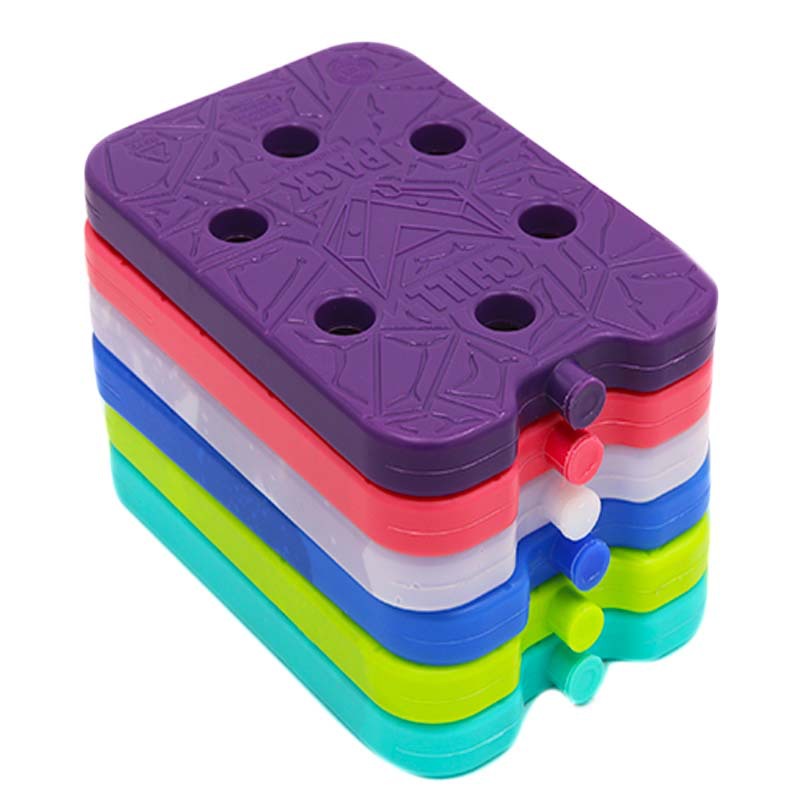
In capability terms, Jisi Cold Chain supports OEM and ODM production. Customization options include shape, temperature, color, size, and logo. The outer material is typically food-grade HDPE, while the inner fill can be SAP, CMC, or PCM depending on the format. Phase change points listed by the company include -30°C, -25°C, -15°C, -10°C, -5°C, 0°C, 2–8°C, 18°C, and 23°C. These support refrigerated transport needs for ice cream, food, vaccines, and drugs. Depending on the product model, listed certificates include FDA, SGS, MSDS, CPSIA, LFGB, and CE.
The company also operates production equipment relevant to execution. Injection molding machines are used for lids and plastic tubes, blow molding machines for plastic shells, and vacuum equipment for insulated panel work. These processes align with the range of formats a health and medicine buyer may need, from plastic ice packs to vacuum insulated panel systems.
From evaluation to execution: a six-step checksheet
1. Map the thermal requirement
Start with temperature, not package count. A PCM ice pack can be specified at a phase change point such as 2–8°C for vaccine transport or lower points for frozen food and drug shipments. The specification should match the payload and the insulated container, not simply the coldest available option.
2. Define pack geometry
After temperature, confirm the physical format. Ultra thin ice packs fit narrow cooler bags and meal boxes. Large cooler ice packs and ice cooler bricks work for bigger thermal loads. PCM ice plates and eutectic cold plates suit larger pharmaceutical or food containers. The manufacturer can modify shape, size, and logo when the program requires a non-stock geometry.
3. Confirm material and compliance documentation
For food or medical contact, the outer material should be HDPE, with an inner fill of SAP, CMC, or PCM. Relevant documentation can include FDA, SGS, MSDS, and CPSIA. Buyers should request the exact certificate set for the specific model and fill formulation being quoted.
4. Validate quality control and acceptance
Execution-level suppliers should define inspection before shipment. Jisi Cold Chain reports 100% testing as part of quality control. The procurement support data also lists pre-shipment testing as an acceptance step. This reduces the chance that a custom pack performs differently from its approved sample.
5. Lock customization and packaging
Once the sample is approved, confirm color, logo method, and carton configuration. The company can match color according to PANTONE code or customer samples, and can provide silk screen printing, offset printing, or sticker application depending on the design and order quantity.
6. Move to production and logistics
Finally, confirm payment terms, lead time, and delivery method. Jisi Cold Chain lists Western Union, T/T, and PayPal as payment options, with FOB or CIF delivery. For first-time orders, T/T is preferred; PayPal may be used for smaller amounts. These commercial details should be fixed before production begins.
Formats that matter in health and medicine cold chains
The same capability platform can support multiple formats. Large cooler ice packs and ice bricks address bulky pharmaceutical or food shipments. Ultra thin ice packs and lunch ice packs serve meal, breast milk, and compact cooler bag programs. PCM ice packs and eutectic cold plates provide longer, more controlled holds where temperature stability is critical. Medical cool boxes and vaccine cooler boxes combine PU or vacuum insulation panels with PCM plates for extended cold life. A VIP cold box can support inner temperatures such as 2–8°C and can deliver cold life of 48 or 72 hours depending on configuration.
The U.S. case material provides a concrete execution example. In one U.S.-based project, 1,000,000 phase change material ice plates were deployed across multiple temperature ranges, including -30°C to 23°C, for refrigerated transport. The solution demonstrated stable operation over a six-year implementation period, serving logistics and pharmaceutical transportation clients.
Product-type reference table
The following table is drawn from the manufacturer’s published product specifications. It is intended as a format reference rather than a universal performance ranking.
| Product type | Example configuration | Outer / inner material | Key spec or note |
|---|---|---|---|
| Large Cooler Ice Packs | Model BH108, 35*22*3 cm, 1200g | Food-grade HDPE / SAP, CMC, PCM | Large-format pack for substantial thermal loads |
| PCM Ice Pack | Model BH130, 46*32.5*2.5 cm, 2600ml | HDPE plastic / PCM | Higher-capacity PCM fill for extended hold |
| PCM Eutectic Cold Plate | Model BH142, 24.5*24.5*2.5 cm, 1200ml | Hard HDPE / SAP, CMC, PCM | Flat-plate format for box or panel-based systems |
| Ultra Thin Ice Pack | Model BH066, 19*12.5*1 cm | HDPE plastic / SAP or CMC | Narrow profile for cooler bags and lunch kits |
| Medical Cool Box | Model JS-42L, 42L capacity | PU + Vacuum Insulation Panel | Thermal conductivity below 0.0025w/m.k |
| Vacuum Insulated Panel | Model BWX003, 74.7L EPP box | Oxford fabric / VIP + PU foaming | Cold life of 48 or 72 hours based on configuration |
Frequently asked questions
A: Jisi Cold Chain gel ice packs typically use an HDPE outer material with SAP, CMC, or PCM inner fill. Applicable product lines list FDA, SGS, MSDS, and CPSIA documentation; selected model data also list LFGB and CE. The company states that the materials are food grade and safe for food storage.
A: Yes. Jisi Cold Chain provides OEM and ODM production services, with customization available for shape, temperature, color, size, and logo. Color can be matched according to PANTONE code or customer samples.
A: The general MOQ shown in the capability data is 1,000 pcs. The company also states that existing-model orders are usually around 3,000 pieces, while a new custom model is preferably above 5,000 pieces. Payment options include Western Union, T/T, and PayPal, with FOB or CIF delivery.
A: Yes, for existing models without printing, the company can supply free samples, with freight paid by the buyer. This allows evaluation of material, fit, and thermal behavior before committing to a bulk order.
A: Lead time depends on the item and order size. The capability data lists stock or 3–5 days for standard runs, with larger quantities based on order volume. Some product listings note samples within 2–5 days and bulk production between 7 and 15 work days depending on the model. Buyers should confirm a production schedule at the quote stage.
Conclusion
For health and medicine cold chain execution, the decisive question is not whether a supplier can make a basic gel pack. It is whether the supplier can match the required phase change point, adjust geometry, document materials, and support OEM or ODM production at the volumes and lead times the program requires. Jisi Cold Chain’s capability data addresses these points directly: OEM and ODM service, custom shape and temperature, HDPE/SAP/CMC/PCM material options, 100% testing, and an export-oriented production base in China.
Next step
If you are evaluating a custom gel ice pack, PCM ice plate, medical cool box, or vaccine cooler box program, review the company brochure for detailed product and capability information.
Download the Jisi Cold Chain brochure
For a sample, quote, or technical discussion, visit www.cooler-icepacks.com.
Have Questions or Need More Details?
Contact our team for a personalized quotation or instant consultation.
Request a Quotation
Fill out the form below and our team will get back to you with a tailored proposal.
WhatsApp Direct Chat
Prefer to chat in real-time? Message us on WhatsApp for instant assistance & quick answers.
- Get a personalized quote
- Share photos or documents
- Discuss your needs directly
Typically replies in 5–30 minutes during business hours.