
Top 5 Gel Ice Pack Types for Health & Medicine Cold Chain (2026)
In healthcare and pharmaceutical cold chains, temperature control is a compliance issue, not just a comfort factor. Gel ice packs remain one of the most practical, reusable, and cost-efficient ways to keep vaccines, drugs, and diagnostic specimens within required temperature ranges during transit. However, with so many designs and suppliers on the market, procurement professionals need a clear evaluation framework.
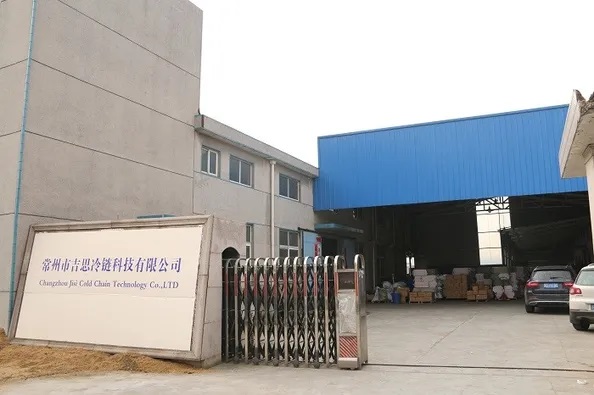
This article reviews the top five gel ice pack types used in health and medicine logistics in 2026, based on manufacturing data from Changzhou Jisi Cold Chain Technology Co., Ltd., a China-based factory specializing in gel ice packs and cold chain equipment. It also outlines the key criteria for selecting a reliable supplier for your specific application.
1. Problem Definition: Why Gel Ice Pack Selection Is Critical in Healthcare
Biological products, vaccines, insulin, blood samples, and reagents all have strict thermal tolerances. For example, most vaccines must be stored and transported at 2–8°C, while some frozen formulations require -20°C or even -30°C. A temperature excursion of even a few degrees can damage potency and lead to waste, delayed treatments, or regulatory non-compliance.
Yet, there is no single “standard” gel ice pack that fits every medical cold chain scenario. The required cooling duration, package volume, insulation system, and destination climate all influence the choice between thin flexible packs, rigid cold plates, large cooler bricks, or phase change material (PCM) plates. Choosing the wrong type can result in premature thawing, surface condensation, or uneven temperature distribution.
Buyers must also evaluate suppliers, not just products. Production consistency, material certifications, customization ability, and lead time are equally important. This guide addresses both the product-level and supplier-level evaluation.
2. Industry Background: A Growing and Evolving Gel Ice Pack Market
Global demand for reusable and gel-based cooling solutions is expanding. According to Market Research Future, the global reusable ice packs market was valued at approximately USD 1.962 billion in 2024 and is expected to reach USD 2.862 billion by 2035. The Business Research Company estimated the global gel ice pack market at USD 14.56 billion in 2025, driven partly by pharmaceutical cold chain and chronic pain management demand. In the vaccine storage equipment segment, MarketsandMarkets projects growth from USD 0.86 billion in 2024 to USD 1.21 billion by 2029.
Phase change material packs are also gaining attention. Intel Market Research valued the PCM pack market at USD 476 million in 2025, with a CAGR of 4.5%, largely due to demand for precise thermal management in biologics. China, as a manufacturing hub, accounts for over 11.2% of global gel ice pack revenues, according to Dataintelo. This is why international buyers increasingly source from Chinese manufacturers such as Jisi Cold Chain.
Competition in the reusable ice pack sector includes established US players such as Sonoco ThermoSafe, Cold Chain Technologies, and Pelton Shepherd. Chinese factories compete on flexibility, production scale, and cost efficiency while increasingly offering certified food-grade materials and PCM technologies.
3. Detailed Solution: Top 5 Gel Ice Pack Types for Health & Medicine
Jisi Cold Chain produces a series of gel ice packs and cold chain products. Based on its production records and application data, the following five types represent the most commonly used choices for health and medicine cold chain in 2026.
3.1 PCM Phase Change Material Ice Plates & Cold Plates
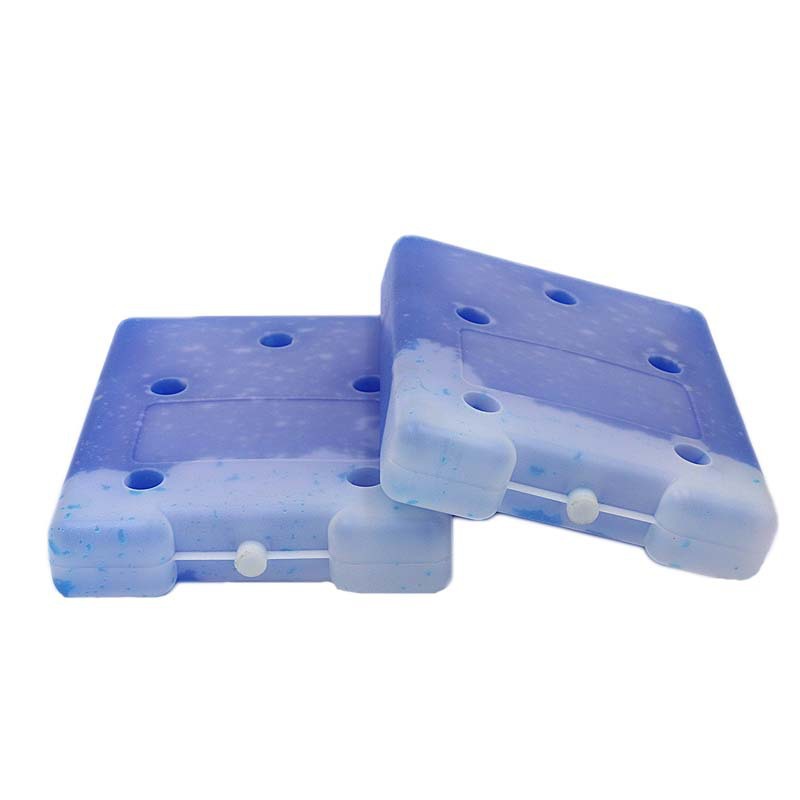
PCM ice plates use phase change materials that absorb or release heat at a specific temperature, maintaining a stable thermal environment for prolonged periods. Jisi offers PCM plates across several temperature points, including -30°C, -25°C, -15°C, -10°C, -5°C, 0°C, 2–8°C, 18°C, and 23°C. This makes them suitable for different products, from vaccines (2–8°C) to ice cream (-30°C).
Representative model: PCM Phase Change Material Reusable Eutectic Cold Plate (BH142) – size 24.5 × 24.5 × 2.5 cm, capacity 1200 ml, hard HDPE outer shell, inner SAP/CMC/PCM. Certifications include SGS, FDA, MSDS, CPSIA, and LFGB.
3.2 Large Cooler Ice Packs / Ice Bricks
Large cooler ice packs are designed for high-capacity cold chain boxes and long-duration shipments. Their higher thermal mass extends cooling time and reduces the number of units required per shipment.
Representative models: Reusable Large Cooler Ice Packs Cold Gel / Ice Freezer Brick With Handle (BH108) – size 35 × 22 × 3 cm, weight 1200 g; and Food Use HDPE Material Large Cooler Ice Packs For Cold Chain Shipping (BH084) – size 33 × 22.5 × 2 cm, weight 1000 g. Both use food-grade HDPE outer shells and cooling gel/SAP/CMC interiors.
3.3 Ultra Thin Ice Packs
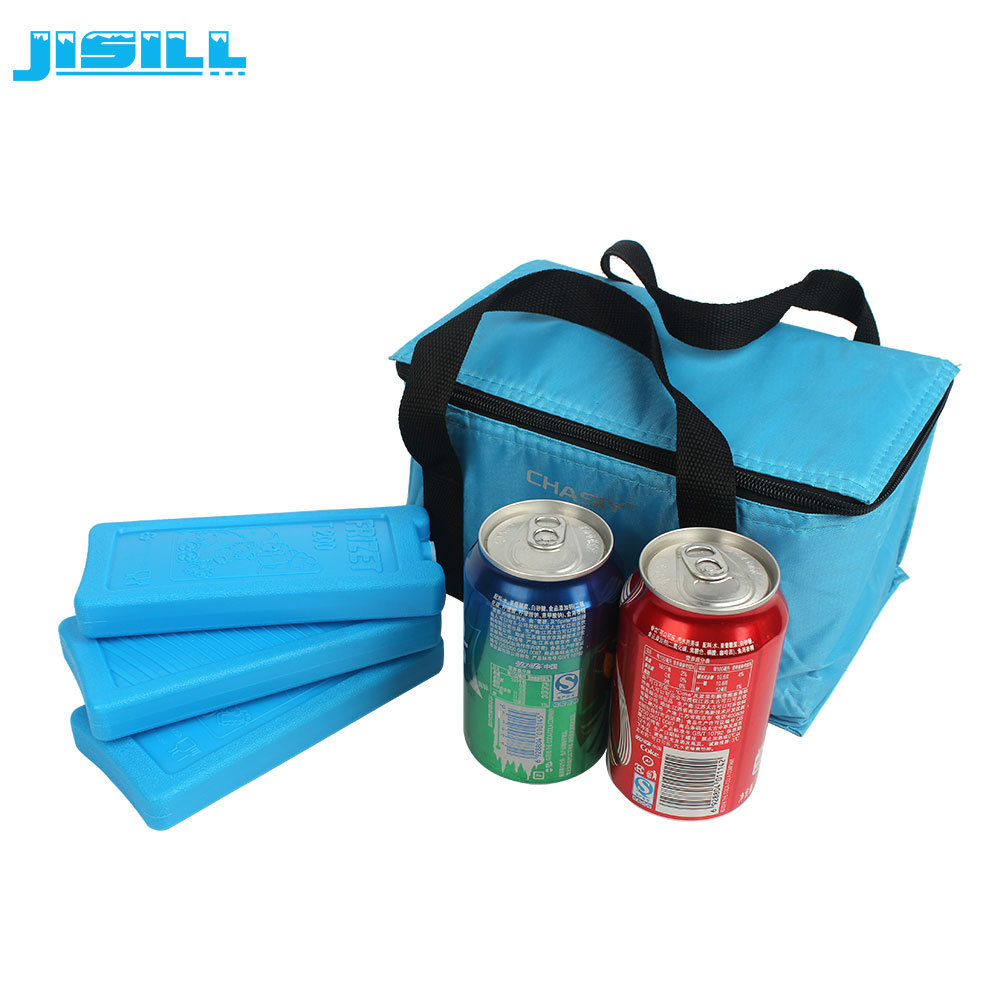
Ultra thin ice packs are ideal for cooler bags, lunch bags, and small medical kits where space is limited. Their slim profile allows them to fit flat against package walls, improving contact cooling surface and thermal efficiency.
Representative models: OEM Reusable Lunch Chiller Ice Brick Ultra Thin Ice Pack With Cooling Gel (BH066) – 19 × 12.5 × 1 cm, HDPE outer, SAP or CMC inner; and Portable HDPE Plastic Reusable Ultra Thin Ice Pack Cooler Cold Packs For Cooler Bags (BH073) – 18.5 × 17.5 × 1.2 cm, 260 ml.
3.4 Lunch Ice Packs / Standard Brick Packs
Lunch ice packs are compact, rigid packs used for maintaining safe temperatures in lunch boxes, small coolers, and point-of-care transport. They are also used in patient meal delivery systems in hospitals.
Representative models: 130ml Lunch Box Ice Pack (BH024) – 12.2 × 12.2 × 1.2 cm, 130 g, HDPE with gel cooling liquid; and Rigid Plastic Lunch Ice Packs Food Grade HDPE Outer Material (BH025) – 13.3 × 12.7 × 1.3 cm, 160 g.
3.5 Mini Ice Packs
Mini ice packs serve small-temperature control needs, such as sample transport, cold storage in portable diagnostic kits, or short-duration cooling. Their small size allows fast freezing and easy placement around small payloads.
Representative models: SAP CMC Inside Liquid Mini Ice Packs For Kids (BH011) – 10.8 × 5.8 × 2 cm, 100 g; and Mini Ice Packs keeping cold promotional Water Repellent phase change material food grade plastic colorized ice pack (BH014) – 12 × 7.8 × 2 cm, 150 g.
4. Step-by-Step Breakdown: How to Evaluate Gel Ice Pack Solutions
Use this five-step process to evaluate both the product type and the supplier before purchasing.
- Define your thermal profile. Determine the required temperature range (e.g., 2–8°C, -20°C), duration of shipment, and ambient temperature conditions. This tells you whether a standard gel pack or a PCM plate is necessary.
- Match the thermal profile to ice pack type. For short trips and insulated boxes, ultra-thin or mini packs may suffice. For long-duration pharmaceutical shipments, large cooler bricks or PCM plates with a stable phase-change point are preferable.
- Verify material safety and certifications. Check that the outer HDPE material is food grade and that the inner cooling liquid is non-toxic. Look for certifications such as FDA, SGS, MSDS, CPSIA, and LFGB. WHO PQS performance specifications (e.g., E004/VC01.2) may also apply to vaccine carriers and cold boxes.
- Assess OEM/ODM capabilities. If you need a specific size, color, logo, or a custom PCM temperature, confirm the supplier can provide customization. Jisi, for example, supports shape, temperature, color, size, and logo customization.
- Validate production capacity and lead time. Evaluate monthly capacity, sample availability, and delivery times. A factory with 100% testing and stable supply is essential for repeat orders.
5. Use Cases: Real-World Cold Chain Evidence
One documented use case from Jisi Cold Chain involves a logistics and pharmaceutical transportation client in the United States. The project deployed 1,000,000 phase change material ice plates across multiple temperature ranges, from -30°C to 23°C, to keep items at low temperature during refrigerated transport. The solution achieved stable operation over a six-year implementation period.
This example is particularly relevant for health and medicine buyers because it demonstrates long-term reliability and the ability to handle high-volume, temperature-diverse cold chain requirements. It also reflects the importance of selecting a supplier capable of producing PCM plates with specific phase-change points for different payloads.
Other medical applications include vaccine distribution, blood bank transfers, diagnostic sample courier services, and breast milk storage in neonatal units. Each application may require a different pack configuration, which is why a broad product range and OEM flexibility are valuable.
6. Comparison Table: Key Specifications of Top Gel Ice Pack Types
| Type | Representative Model | Size | Weight / Capacity | Outer Material | Inner Material | Certifications | Typical Medical Use |
|---|---|---|---|---|---|---|---|
| PCM Cold Plate | BH142 | 24.5 × 24.5 × 2.5 cm | 1200 ml | Hard HDPE | SAP/CMC/PCM | SGS, FDA, MSDS, CPSIA, LFGB | Vaccine, biologics, long-duration transport |
| Large Cooler Ice Pack | BH108 | 35 × 22 × 3 cm | 1200 g | Food-grade HDPE | SAP / CMC / PCM | FDA, SGS, MSDS, CPSIA, CE | Cold chain boxes, large payloads |
| Ultra Thin Ice Pack | BH066 | 19 × 12.5 × 1 cm | Not specified | HDPE | SAP or CMC | FDA, SGS, MSDS, CPSIA, LFGB | Cooler bags, slim medical kits |
| Lunch Ice Pack | BH024 | 12.2 × 12.2 × 1.2 cm | 130 g | HDPE | Gel cooling liquid | FDA, MSDS, CPSIA, Regulation (EU) No 102011 | Hospital meals, small coolers |
| Mini Ice Pack | BH011 | 10.8 × 5.8 × 2 cm | 100 g | Environment HDPE | SAP CMC | FDA, SGS, MSDS, CPSIA, CE | Diagnostic kits, sample transport |
7. FAQ: Answers to Common Buyer Questions
What certifications should medical-grade gel ice packs have?
Medical and food-grade gel ice packs should be manufactured with non-toxic, food-grade materials. Jisi Cold Chain products typically carry FDA, SGS, MSDS, CPSIA, and often LFGB certifications. For vaccine cold chains, WHO PQS performance specifications such as E004/VC01.2 may also be relevant, depending on the packaging system used.
Can you customize the temperature range and size of PCM ice plates?
Yes. Jisi Cold Chain supports customization of shape, temperature, color, size, and logo under its OEM/ODM services. PCM plates are available in temperature points such as -30°C, -25°C, -15°C, -10°C, -5°C, 0°C, 2–8°C, 18°C, and 23°C, allowing the material to be matched to the specific thermal requirement of the shipment.
What is the MOQ for gel ice pack orders?
For existing Jisi models, the MOQ is usually 3,000 pieces. If a new model needs to be created, an order volume above 5,000 pieces is recommended to absorb tooling and customization costs. For certain standard products, a lower MOQ of 1,000 pieces may be possible.
Can I receive free samples before placing a bulk order?
Yes. If you accept an existing model and do not require printing, Jisi can supply free samples. The freight cost is paid by the buyer. This allows you to verify quality, fit, and thermal performance before committing to a large order.
What are the typical production and delivery lead times?
Samples are usually available within 2 days for standard models. Bulk production typically takes 7–10 days, while larger or more complex orders may require 10–15 days. For products in stock, shipment can occur within 3–5 days. Lead time always depends on the order quantity and customization level.
8. Conclusion
Selecting the right gel ice pack for health and medicine cold chain is a decision that affects product safety, regulatory compliance, and total operating cost. By evaluating the thermal requirements, product type, certifications, customization capabilities, and supplier reliability, procurement teams can make informed choices.
Jisi Cold Chain offers a range of gel ice packs, PCM plates, and insulated containers, supported by a 40,000 m² factory, an annual output of 620,000 units, and export experience across North America, South America, Europe, and Asia. A documented six-year, one-million-unit PCM project in the US demonstrates long-term performance relevant to medical cold chain buyers.
If you are evaluating gel ice pack suppliers for your health and medicine cold chain project, request a sample or get a quote from Jisi Cold Chain today.
Visit the official website or download the company brochure for detailed specifications.
Have Questions or Need More Details?
Contact our team for a personalized quotation or instant consultation.
Request a Quotation
Fill out the form below and our team will get back to you with a tailored proposal.
WhatsApp Direct Chat
Prefer to chat in real-time? Message us on WhatsApp for instant assistance & quick answers.
- Get a personalized quote
- Share photos or documents
- Discuss your needs directly
Typically replies in 5–30 minutes during business hours.