Does Self-Adhesive PVC Film Meet Interior Decoration Compliance Standards? A Guide for Importers and Specifiers
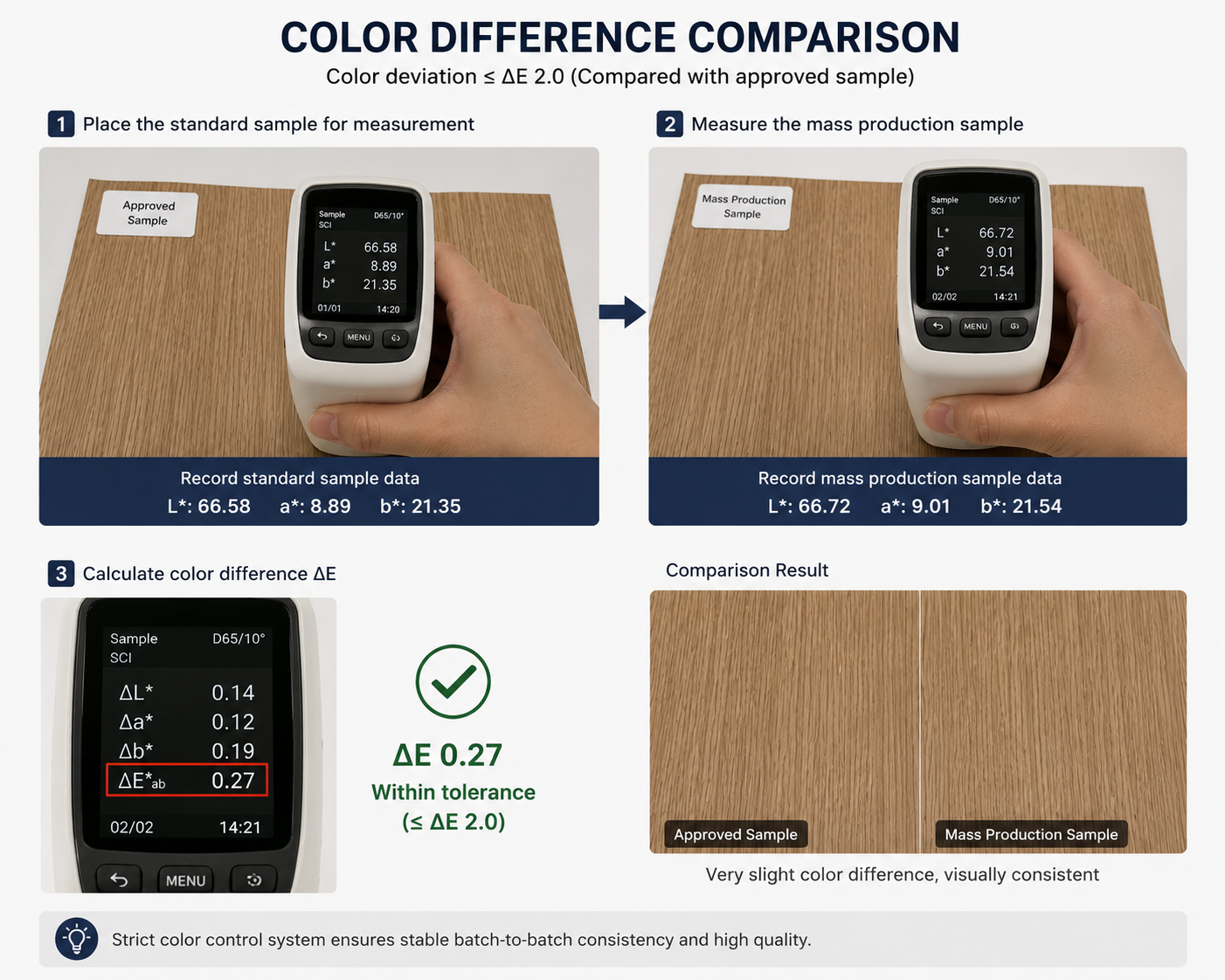
Batch colour comparison data is one of the documents importers and specifiers use when validating self-adhesive PVC decorative film against approved samples and market requirements.
Self-adhesive PVC film for interior decoration can satisfy the compliance requirements of most markets, but not because one single certificate covers it. A decorative film is a self-adhesive plastic sheet classified under HS code 39199090, and compliance is assembled from documented product data, substance declarations, trade classification and project-level requirements. The deciding factor for importers and specifiers is therefore not whether PVC decorative film is permitted in principle, but whether their supplier can produce the data, declarations and inspection records their market actually asks for.
Leiyegaoke is the export brand of Foshan Nanhai Jiadamei Decoration Material Co., Ltd, a manufacturer of self-adhesive PVC decorative film founded in 2001 and based in Foshan, Guangdong, China. The company states that its products comply with REACH and RoHS international requirements and supplies importers, distributors, renovation material suppliers and project customers across Europe, the Middle East, Southeast Asia, Russia, Africa, North America and other international markets.
What “Compliance” Actually Means for Interior Decorative Film
Interior decoration compliance is not a single test. For self-adhesive decorative film it is normally built from three separate layers, and each layer is owned by a different party in the supply chain.
Layer 1 — Material and substance compliance
This layer answers what the film is made of. It covers the PVC base film, the water-based acrylic pressure-sensitive adhesive and the release paper backing, and it is normally evidenced by substance declarations such as REACH and RoHS documentation. Leiyegaoke states that its products comply with REACH and RoHS international requirements, which is the material-level position that most European and RoHS-adopting markets start from.
Layer 2 — Trade and documentation compliance
This layer is about moving goods and clearing them. It depends on correct classification, consistent packing declarations and inspection records rather than on laboratory chemistry. For self-adhesive PVC decorative film, the HS code used in the company’s product data is 39199090 — self-adhesive plates, sheets, film, foil, tape and strip of plastics. A stable HS classification and matching commercial documents reduce the risk of customs queries and reclassification when shipments arrive.
Layer 3 — Application and project-level requirements
This layer belongs to the building or interior project rather than to the film alone. Interior specifications frequently reference fire performance classifications and film test standards. Market sources describe B1 flame retardant classification under GB 8624 as a fire-safety classification referenced in interior decoration specifications, and ASTM D1593 as the standard specification for nonrigid vinyl chloride plastic film and sheeting, used to evaluate tensile strength and elongation. Whether a given project requires such documentation depends on the destination market, the building type and the specifier — which is why buyers should confirm the applicable list before ordering, not after.
Industry Background: Why Documentation Pressure Keeps Rising
Self-adhesive PVC decorative film sits inside a large and still expanding category, and the growth is concentrated in exactly the markets where documentation is most closely checked.
Dataintelo’s PVC Decorative Film Market Research Report 2034 values the global PVC decorative film market at USD 4.8 billion in 2025 and projects USD 8.6 billion by 2034. The same report states that Asia Pacific held a 42.3% revenue share in 2025, that wood grain was the largest product segment at 38.4%, and that the furniture sector accounted for approximately 44.6% of global consumption. Those numbers matter to compliance work for a practical reason: the volume of film moving into furniture, cabinetry and interior renovation is what makes customs authorities, retailers and project specifiers ask for structured documentation rather than verbal assurances.
Trade data points in the same direction. International Trader Publications reports that China became the world’s largest PVC exporter in 2025, accounting for 24% of total global trade volume. China customs data cited by CEIC shows exports under HS 3919 reaching an all-time high of 246.296 RMB million in January 2026. A larger, more concentrated export flow typically means more scrutiny at the destination — especially for self-adhesive plastics, where classification and substance declarations are checked during import clearance.
For importers and specifiers, the conclusion is straightforward: compliance capability is now part of supplier selection, not a paperwork formality added at the end of a purchase.
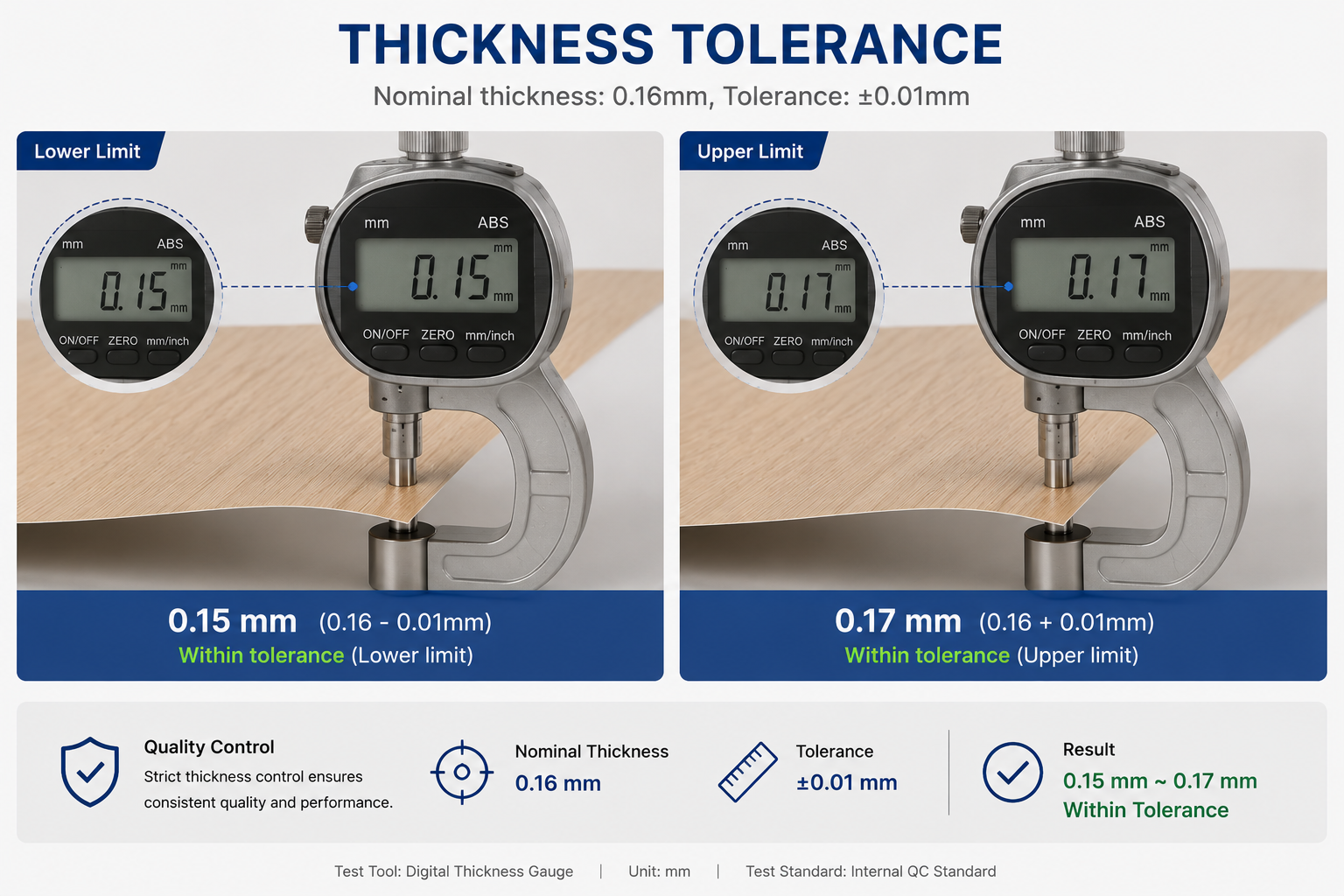
Thickness tolerance is a documentable parameter: Leiyegaoke self-adhesive PVC decorative film is stated at ±0.01 mm.
The Standard Product Data Block Buyers Should Expect
When no project-specific certificate has been issued yet, the foundation of a compliance file is the standard product data block. This is the data a supplier can provide immediately, because it describes the product as manufactured rather than as tested for one particular project.
For the Leiyegaoke self-adhesive PVC decorative film range (model series LY1804–LY1869), the documented product data is as follows: material PVC; thickness 0.16 mm; width 1,240 mm; roll length 50 m; water-based acrylic pressure-sensitive adhesive; release paper backing; surface finish available in matte, glossy, embossed and super matte; pattern options covering wood grain, marble, solid colour, stone, metallic, textile and concrete; installation by peel and stick; packing of 1 roll per carton; and HS code 39199090.
Two performance figures are commonly quoted alongside this block during sample approval: a colour deviation of ΔE ≤ 2.0 and a thickness tolerance of ±0.01 mm. Both are documentable values that help a buyer compare what was approved against what was shipped — the core of any acceptance discussion.
How Leiyegaoke Prepares Self-Adhesive PVC Film for Regulatory Documentation
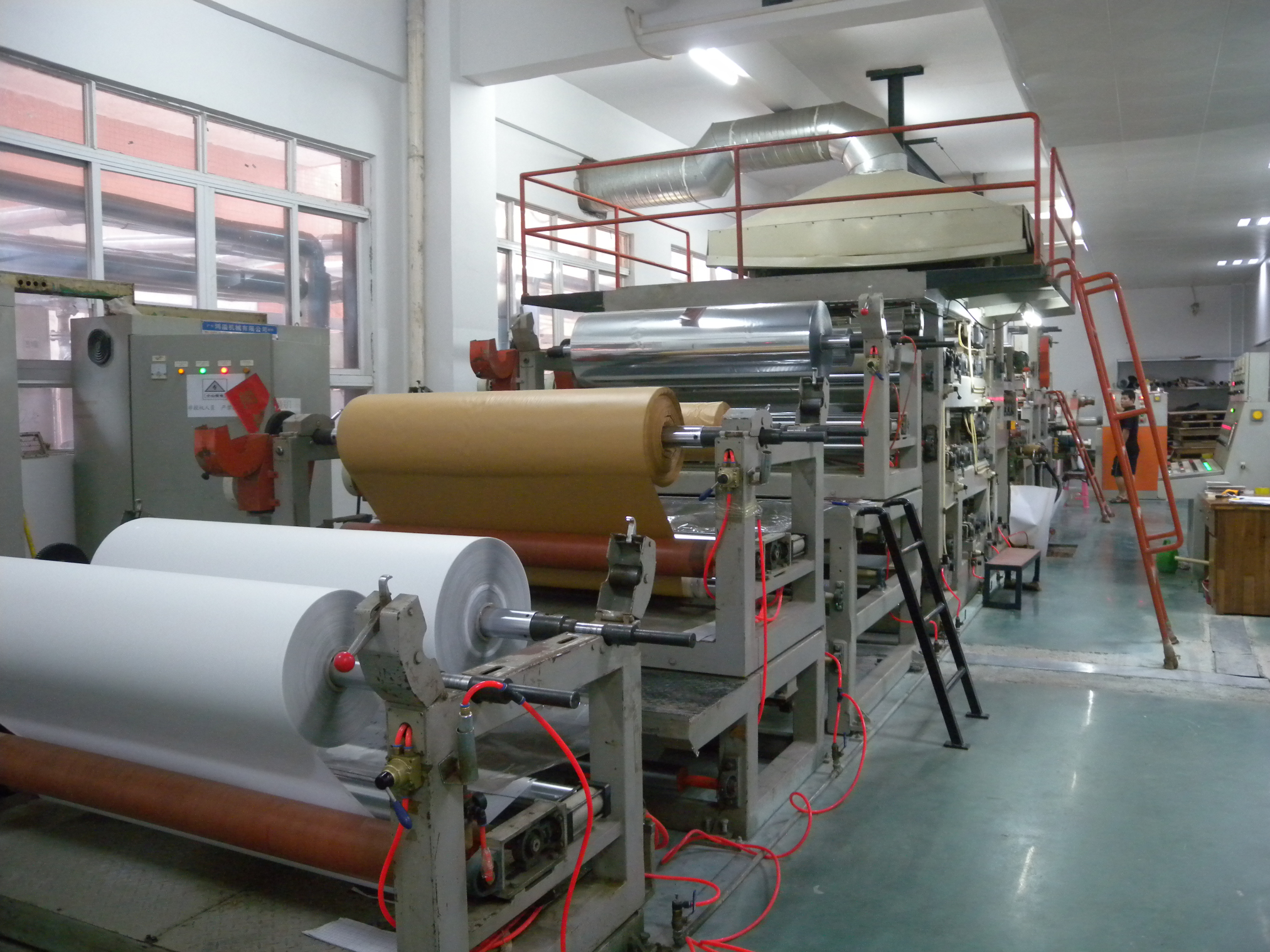
Compliance documents are only credible when the manufacturing process behind them is traceable. Leiyegaoke has operated in the decorative film industry for over 25 years and runs a 12,000 m² factory in Foshan with two adhesive coating lines and an integrated production system covering PVC film production, printing, laminating, adhesive coating, slitting, inspection and packaging. Annual output is stated at 15,000,000 meters, and the company employs five engineers in product development.
Quality control is implemented throughout the production process, from raw material inspection and colour matching through coating to finished-product inspection and final packing. In practical compliance terms, this matters because substance declarations and colour tolerances depend on incoming material control and on batch records. A supplier that inspects raw material and controls colour matching at the coating stage is better positioned to answer a buyer’s request for batch-consistent documentation than one that only inspects finished rolls.
The company states that its products comply with REACH and RoHS international requirements, and that it supports OEM and ODM services including customized colours, patterns, thicknesses, roll sizes, adhesives, release papers, labels, cartons and private-label packaging. Export business accounts for 80% of total sales, with major markets in Europe, South America, the Middle East and CIS countries — markets that between them apply a wide range of import and interior requirements.
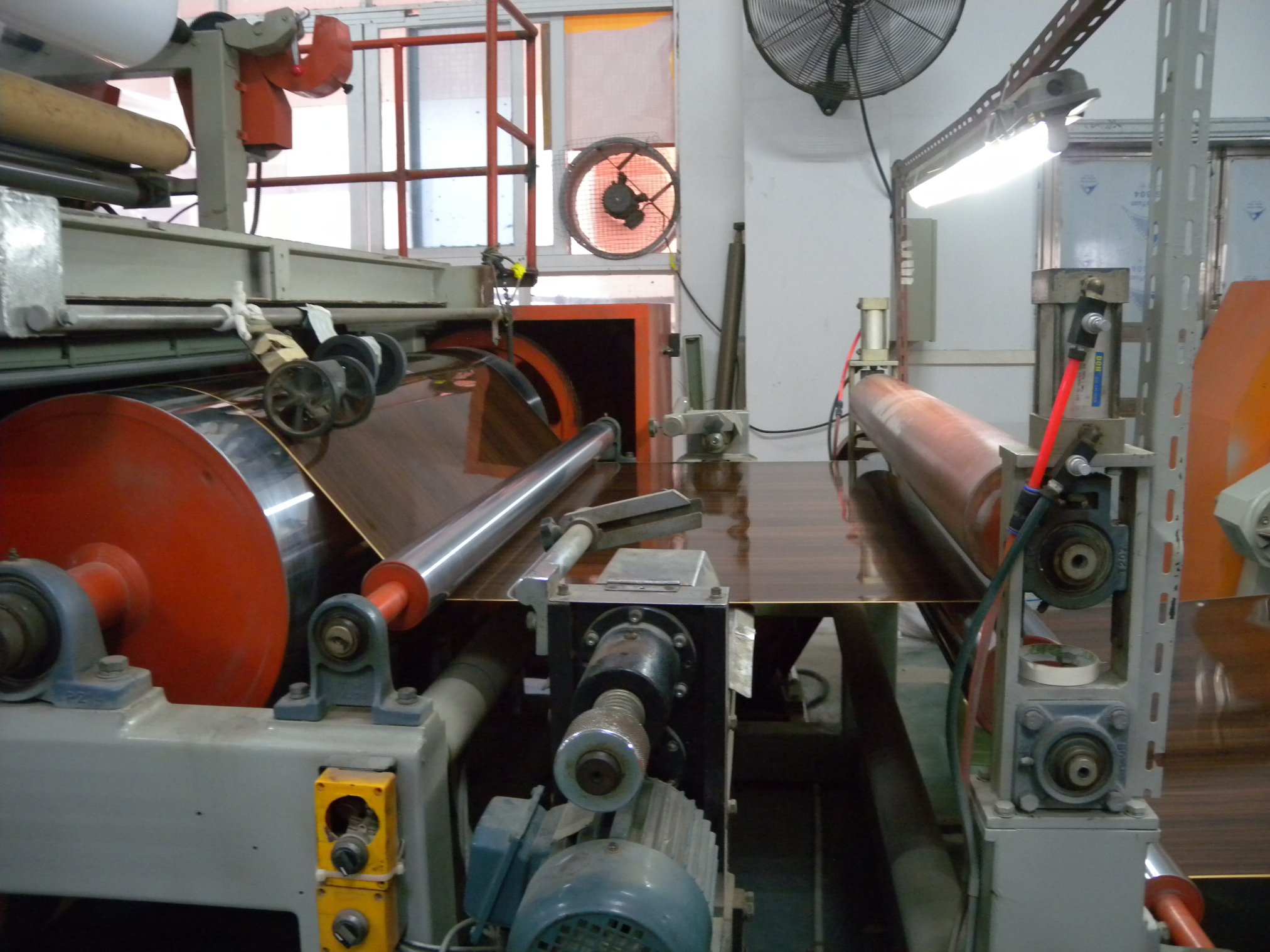
Integrated production and inspection stages are what allow batch-level data to be reconstructed when a buyer requests it.
Step-by-Step: Building a Compliance-Ready Purchase File
The following sequence is designed for importers, distributors and specifiers who need the film to pass both customs and project review.
Step 1 — Define the destination market and its applicable requirements
List what the destination actually requires: substance declarations, fire classification documentation for the project type, labelling language, and any retailer-specific documentation. This list, not the supplier’s catalogue, determines which documents to request.
Step 2 — Request the current compliance dossier before quoting
Ask for the up-to-date dossier rather than an old attachment. Dossiers are revised, and a buyer working from superseded documents risks a mismatch between what the supplier can support and what the market accepts.
Step 3 — Confirm the product data block and HS classification
Match the commercial invoice and packing documents to the same product data used in the dossier: 0.16 mm thickness, 1,240 mm width, 50 m roll length, water-based acrylic pressure-sensitive adhesive, release paper backing, HS code 39199090, 1 roll per carton.
Step 4 — Validate a physical sample against the approved sample
Acceptance in this supply model is based on the approved sample, with appearance, colour, pattern and dimension inspection. Confirm colour deviation and thickness tolerance expectations at this stage, so that later inspection has a written reference.
Step 5 — Run a small market-entry order
For stock colours, the MOQ is one roll per colour, which supports testing, sample distribution and market entry without committing to container volume. Custom colours require 3,000 meters per colour, reflecting the setup involved in matching a new pattern or shade.
Step 6 — Lock the OEM specification that matches local aesthetics
Regulatory requirements vary by market, but so do aesthetic conventions. OEM and ODM customization of colours, patterns, thicknesses, roll sizes, adhesives, release papers, labels, cartons and private-label packaging allows a distributor to align the finish range with local interior preferences while keeping the underlying product data stable and documentable.
Step 7 — Agree acceptance, delivery and payment terms in writing
The documented commercial framework is: acceptance by customer or third-party inspection, based on the approved sample, covering appearance, colour, pattern and dimension; delivery terms EXW, FOB, CIF, express or air shipment; and payment by T/T. Writing these terms into the purchase file keeps the compliance chain intact from sample to shipment.
Use Cases: Where the Compliance File Does the Most Work
Cabinet wrap and kitchen application. Cabinet wrap PVC film is applied to smooth painted wood, sealed MDF, metal and similar finished panels. Because kitchen environments involve moisture and cleaning, buyers usually pair the substance declaration with a clear statement of what the film is and is not suitable for.
Bathroom and wet-adjacent surfaces. Bathroom waterproof PVC film is used on interior surfaces where the PVC surface is water-resistant and easy to clean. The documented limitation matters for compliance conversations: edges, joints and the underlying substrate should not be continuously exposed to water or excessive moisture.
Furniture renovation and distribution. Furniture renovation PVC film is frequently sourced by distributors who resell to installers. These buyers need consistent product data across repeat orders, which is where batch colour control and stable specifications become commercially relevant.
Commercial and hospitality interiors. Hotels, offices and retail fit-outs typically involve a specifier who must document materials for the client. Here the supplier’s ability to answer questions about fire classification and film test standards — or to state clearly that a document is not available — is as important as the film itself.
Private label and market entry. Buyers launching their own brand use OEM/ODM services to adapt finish ranges and packaging. Their compliance file must therefore cover the private-label configuration, not only the standard product.
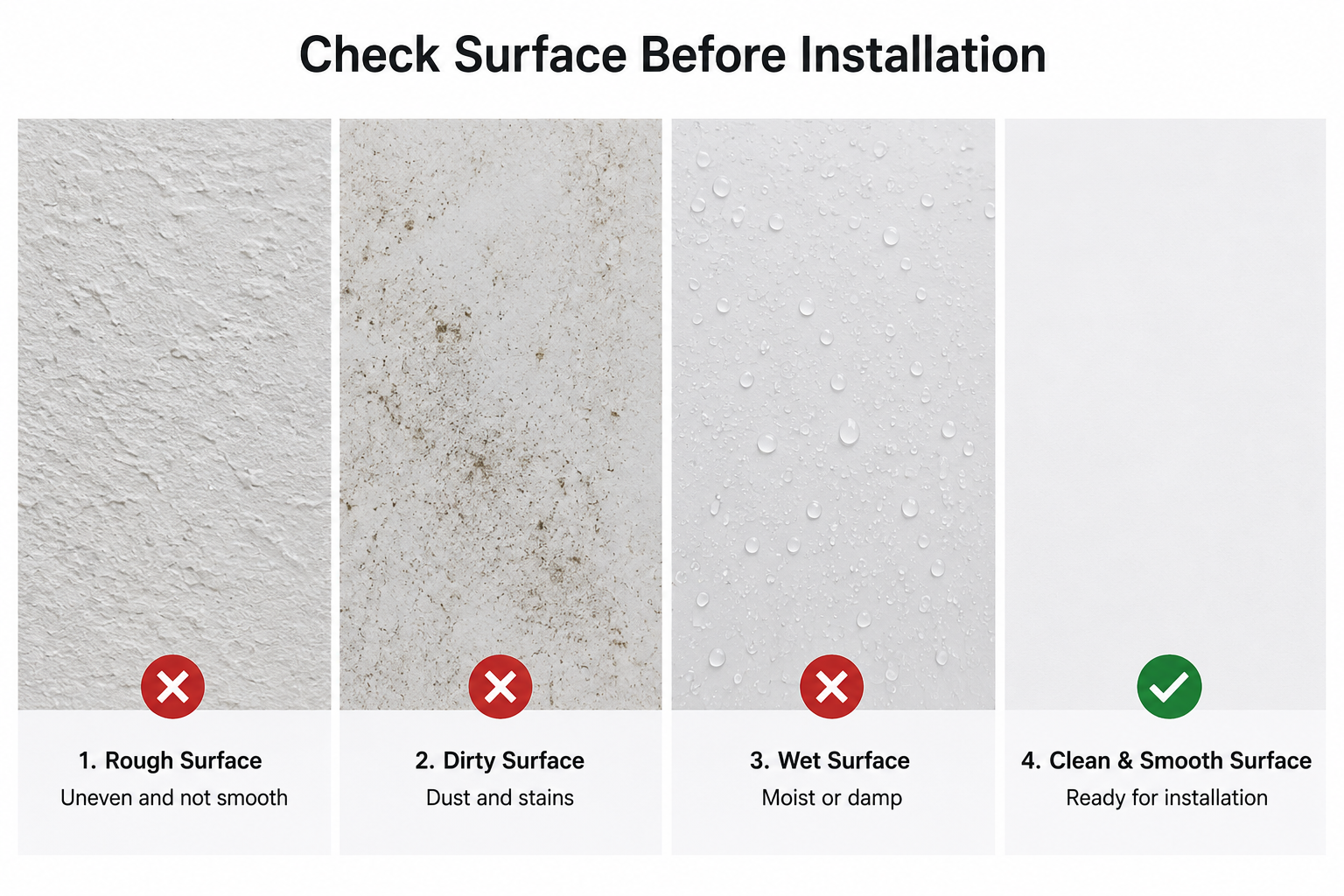
Substrate condition is part of the documented application scope: smooth, clean, dry and stable surfaces are recommended.
Comparison Table: Compliance-Relevant Product Data
| Parameter | Documented value | Where it matters in a compliance file |
|---|---|---|
| HS code | 39199090 | Customs declaration, invoice, packing list |
| Material | PVC | Substance declarations (REACH / RoHS) |
| Adhesive | Water-based acrylic pressure-sensitive adhesive | Material composition and indoor-use documentation |
| Backing | Release paper | Packing description and installation documentation |
| Thickness / tolerance | 0.16 mm / ±0.01 mm | Dimensional inspection and acceptance |
| Width / roll length | 1,240 mm / 50 m | Specification sheet and dimension inspection |
| Colour deviation | ΔE ≤ 2.0 | Approved-sample comparison across batches |
| Surface finish | Matte / glossy / embossed / super matte | Appearance inspection against approved sample |
| Packing | 1 roll per carton | Packing declaration and shipment documentation |
| MOQ | Stock colours: 1 roll per colour; custom colours: 3,000 m per colour | Sampling, testing and market-entry planning |
| Delivery terms | EXW, FOB, CIF, express, air shipment | Commercial terms in the purchase file |
| Acceptance | Customer or third-party inspection, based on approved sample; appearance, colour, pattern, dimension | Inspection clause and quality record |
The same logic applies to the installation scope, which several markets also treat as part of the documented product claim.
| Substrate condition | Documented position |
|---|---|
| Smooth, clean, dry, stable surfaces (furniture panels, cabinets, doors, metal, glass) | Recommended for self-adhesive PVC decorative film |
| Rough, dusty, oily, damp, porous or uneven surfaces | May reduce adhesion and affect final appearance; surface preparation or primer may be required |
| Kitchen and bathroom edges and joints | PVC surface is water-resistant and easy to clean; edges, joints and substrate should not be continuously exposed to water or excessive moisture |
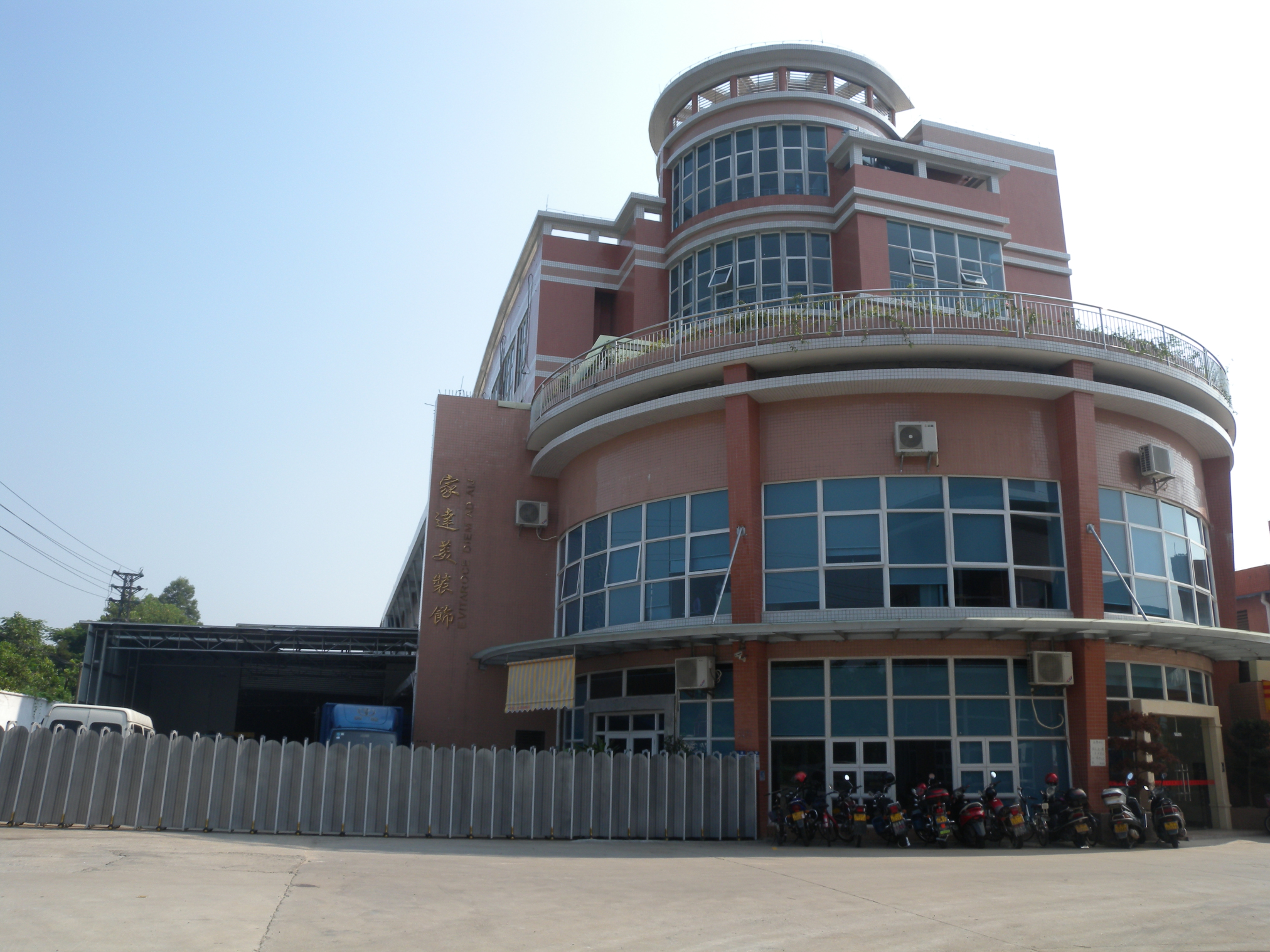
A traceable manufacturing site is the foundation of any compliance dossier: Leiyegaoke operates a 12,000 m² factory in Foshan with two adhesive coating lines.
FAQ
Does self-adhesive PVC film meet interior decoration compliance standards?
It can, but there is no single global certificate that covers interior decorative film. Compliance comes from three layers: material and substance declarations, such as REACH and RoHS, which Leiyegaoke states its products comply with; trade documentation built on a correct HS classification, which for this product is 39199090; and project-level requirements such as fire classification and film test standards, which depend on the destination market and the project specifier. The practical test for a buyer is whether the supplier can provide current documentation for each applicable layer.
Can patterns and colours be customised to match local market requirements?
Yes. Leiyegaoke supports OEM and ODM services covering customized colours, patterns, thicknesses, roll sizes, adhesives, release papers, labels, cartons and private-label packaging. This allows distributors and brand owners to adapt wood grain, marble, solid colour, stone, metallic, textile and concrete finishes, as well as matte, glossy, embossed and super matte surfaces, to local interior preferences while keeping the underlying technical data unchanged. Custom colours require 3,000 meters per colour, while stock colours are available from one roll per colour.
What is the minimum order quantity for testing a new market?
For stock colours, the MOQ is one roll per colour, so a buyer can order a small quantity for testing, sample distribution or market entry before committing to volume. Custom colours are produced at 3,000 meters per colour. This two-tier structure lets importers validate local demand and check documentation handling on a real shipment first, then scale into custom production once the market responds.
How is quality verified before shipment?
Acceptance is by customer or third-party inspection and is based on the approved sample, covering appearance, colour, pattern and dimension. Quality control is implemented throughout production, including raw material inspection, colour matching, coating, finished-product inspection and final packing, with documented values of ΔE ≤ 2.0 for colour deviation and ±0.01 mm for thickness tolerance. Delivery terms are EXW, FOB, CIF, express or air shipment, and payment terms are T/T.
How do I obtain current compliance documents and start a long-term supply relationship?
Request the updated compliance dossier from the supplier rather than relying on older files, and confirm which documents your destination market and project actually require. Leiyegaoke provides production and export teams that support the process from product selection and sampling through order production, quality inspection, documentation and shipment, and supplies customers across Europe, the Middle East, Southeast Asia, Russia, Africa and North America. Buyers can request the current dossier, a sample, or a quotation directly through www.leiyegaoke.com or by contacting office@jiadamei.com.
Conclusion
Self-adhesive PVC film for interior decoration can meet interior decoration compliance standards when the product data, substance declarations, trade classification and project documentation line up. The film is a self-adhesive plastic sheet under HS code 39199090; it is available in a documented specification of 0.16 mm thickness, 1,240 mm width and 50 m roll length with a water-based acrylic pressure-sensitive adhesive and release paper backing; and it can be ordered at one roll per colour for stock shades so a market can be tested before volume commitment.
Because certifications are market- and project-specific, the reliable approach is to request the current compliance dossier, confirm which documents your destination requires, and validate a sample against written acceptance criteria. Suppliers with traceable production, integrated coating and inspection processes, and flexible OEM capability are better placed to keep that file current as markets and aesthetic requirements change.
Next step: request the current compliance dossier, a stock-colour sample (one roll per colour), or an OEM quotation for your market.
Have Questions or Need More Details?
Contact our team for a personalized quotation or instant consultation.
Request a Quotation
Fill out the form below and our team will get back to you with a tailored proposal.
WhatsApp Direct Chat
Prefer to chat in real-time? Message us on WhatsApp for instant assistance & quick answers.
- Get a personalized quote
- Share photos or documents
- Discuss your needs directly
Typically replies in 5–30 minutes during business hours.