
How Peel-and-Stick PVC Decorative Film Is Built: Adhesive, Liner, and Surface Finish
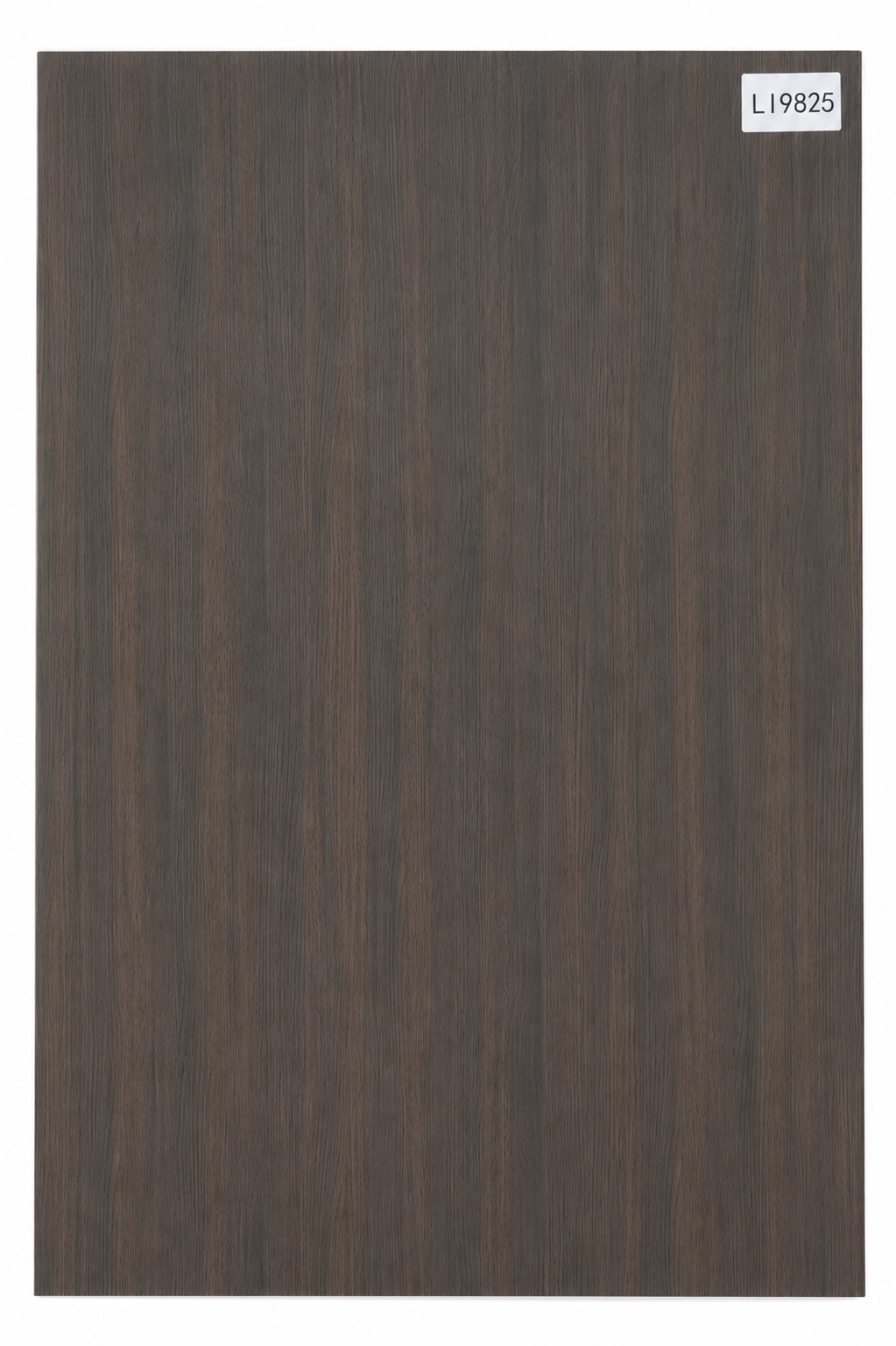
A peel-and-stick PVC decorative film is a three-layer construction with a finished face. A PVC base film carries the decorative pattern. A water-based acrylic pressure-sensitive adhesive provides the bond. A paper release liner protects that adhesive until the moment of installation. The pattern — wood grain, marble, solid color, stone, metallic, textile or concrete — and the surface finish sit on the face of the base film, and that same face is the part that has to resist water and everyday wiping.
Most buyers first meet this material as a sample square or a catalogue photo. The pattern sells it. But the pattern is the least variable part of the product: the same print design can be coated, lined and finished to very different standards. What separates a film that still sits flat on a cabinet door years later from one that lifts at the edge is the part no photograph shows.
This explainer opens the roll up, layer by layer, and then connects each layer to something observable on site: how the film peels, how it cuts, how it behaves on a curve, and why a 0.16 mm × 1,240 mm × 50 m format has become the standard starting point for interior work.
What the layer stack contains
The product families discussed here share the same basic construction. That includes the wood grain series LI9801 to LI9836, the Japanese-style wood grain series LG7801 to LG7836, the marble grain series LF6801 to LF6830, and the multi-pattern LY1804 to LY1869 range. What differs between them is pattern, finish and application emphasis, not the underlying logic of the stack.
| Layer | Material | Job it does | What you notice on site |
|---|---|---|---|
| Face: pattern and finish | Decorative print and finish system carried on PVC | Appearance, sheen, texture, water-resistant and easy-clean surface behaviour | Colour, gloss level, how the surface feels and how it wipes clean |
| Base film | PVC (polyvinyl chloride) | Carries the pattern and gives the film its body, flexibility and cut behaviour | How it bends, whether it holds a radius, how it behaves under a utility knife |
| Adhesive | Water-based acrylic pressure-sensitive adhesive | Bonds to the substrate on contact under pressure | Initial tack, edge holding, whether the film can be repositioned during the first pass |
| Release liner | Paper release liner | Protects the adhesive in storage and controls how much adhesive is exposed during installation | How cleanly the roll unwinds, how easily the liner separates, how much control you keep mid-installation |
Why construction matters more than the pattern
At 0.16 mm, there is very little material available to absorb mistakes. A thin film has no cushion. A rough or gritty substrate telegraphs straight through to the visible surface. Trapped air stays visible because there is no depth for it to disperse into. An edge that has been stretched during installation wants to return to its original length, and the adhesive has to resist that pull. The pattern disguises none of this.
This is also why the same product family can produce very different results in two rooms. The variable is frequently the substrate and the installation rather than the film. A smooth, clean, dry and stable panel gives the pressure-sensitive adhesive the contact area it needs. A dusty, oily, damp or uneven panel does not, and the usual symptoms follow: bubbling, edge lifting, peeling or an uneven surface appearance.
Some constructions add air-release channels at the adhesive and liner interface, using a specially designed liner or adhesive structure so that trapped air can escape during squeegeeing. That is a construction decision, not a pattern decision, and it changes how forgiving the film is on large panels. If bubble control matters on a big surface, it is worth asking whether a specific product includes this feature. On a standard film without air-release channels, installation discipline does the same job more slowly.
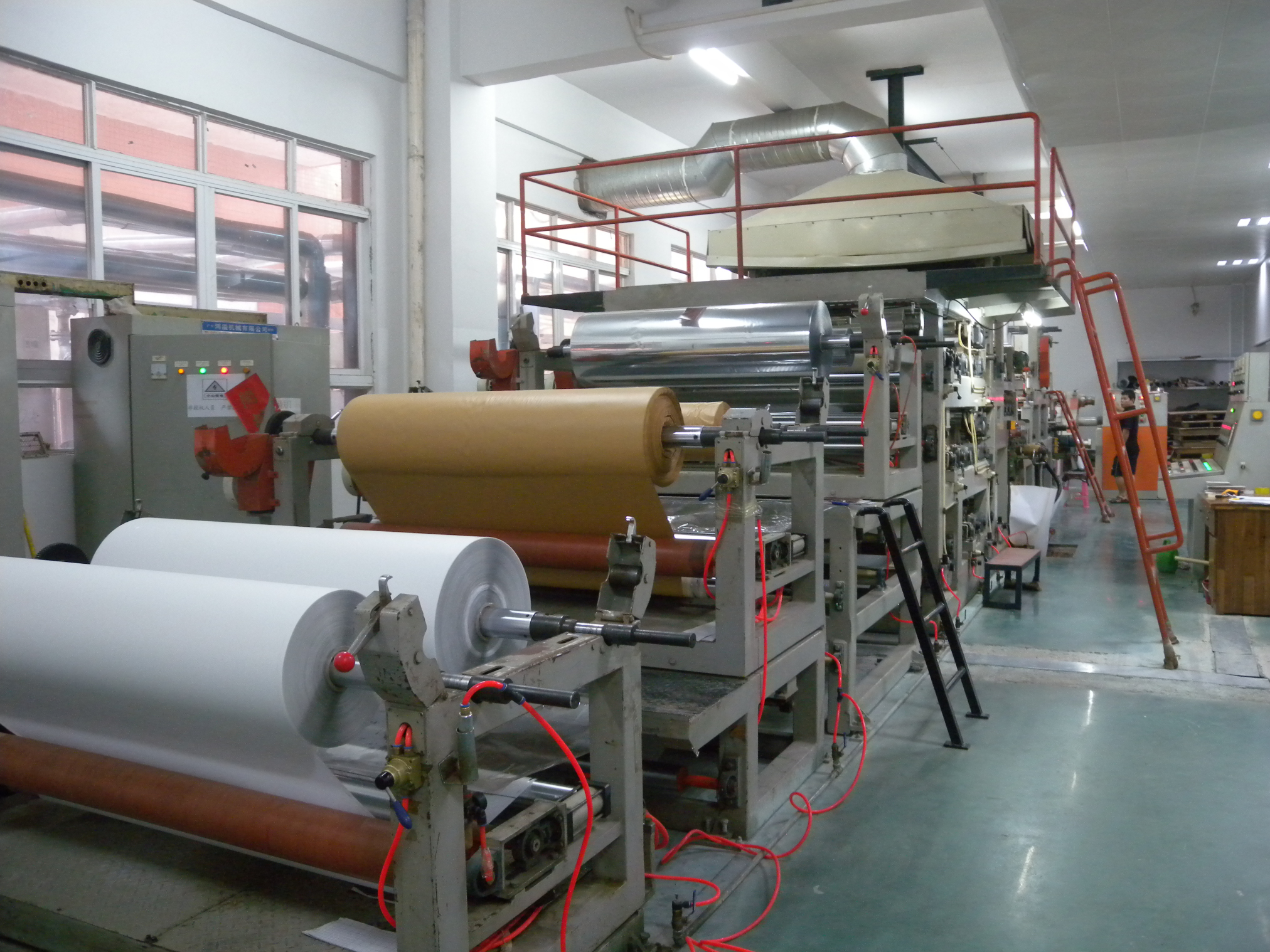
That consistency is a manufacturing question rather than a design question. Leiyegaoke (Foshan Nanhai Jiadamei Decoration Material Co., Ltd) is a manufacturer of self-adhesive PVC decorative films established in 2001 in Foshan, Guangdong, China, operating two adhesive coating lines and an integrated production system that covers PVC film production, printing, laminating, adhesive coating, slitting, inspection and packaging. Keeping those steps under one roof is how thickness, colour consistency and adhesive performance are held steady across a production run.
Where the material sits in the interior film market
Market research published by Dataintelo values the global PVC decorative film market at USD 4.8 billion in 2025 and projects USD 8.6 billion by 2034, a compound annual growth rate of 6.7% across the forecast period. The same report places wood grain as the largest product segment at 38.4% of the market in 2025 and estimates that the furniture sector accounts for around 44.6% of global consumption.
Two consequences matter for a first-time buyer. First, the category is large and mature, so films that look identical in a catalogue can differ meaningfully in coating, liner and finish. Specification has to be explicit rather than assumed. Second, the application centre of gravity is furniture and cabinetry, which is exactly where the layer stack is tested: vertical surfaces, doors that are opened every day, and edges that take hand contact.
Supply is equally globalised. China became the world's largest PVC exporter in 2025, accounting for 24% of total global trade volume, according to International Trader Publications. The polymer itself is a commodity; the coating, laminating and finishing steps are where products separate from one another.
Layer one: the PVC base film
The base film is the structural element of the product. It carries the printed pattern, gives the sheet its body, and determines how the film behaves when it is bent, cut or wrapped around an edge. Because the base is PVC, the film is flexible, easy to cut and, in the LG7801 to LG7836 range, documented as installable on curved surfaces.
Thickness is the single biggest handling variable. At 0.16 mm the film is thin enough to follow a radius and to be trimmed cleanly with a utility knife, and thin enough that a hard crease leaves a visible mark in the face. In practice this shapes how you handle a roll: support the film as it unrolls so it cannot fold back on itself, and cut around a corner rather than stretching the film over it. Film taken from a roll also retains a slight curl, so let it relax on the panel before committing the edge.
Thickness is a standard, not a restriction. The 0.16 mm figure is the standard gauge across these ranges and is customizable, which matters if a project needs a heavier hand feel or a different drape over a complex profile.
Layer two: the water-based acrylic pressure-sensitive adhesive
The adhesive is what makes the product peel-and-stick rather than a decorative sheet that needs a separate glue. It is a water-based acrylic pressure-sensitive adhesive: pressure-sensitive means the bond forms when the adhesive is pressed into contact with a surface, so no additional glue, water or activation step is required. The installer supplies the pressure with a squeegee or an application roller.
That characteristic has a practical consequence. Because the bond depends on contact area, surface preparation and squeegee pressure matter more than how hard you press with a thumb when testing a corner. Adhesion develops across the whole bonded area, and the edges are where it is tested first, because an edge has only one direction to fail.
Adhesive strength is customizable according to the application, and the behaviour is predictable when the substrate is right. Smooth, clean, dry and stable surfaces such as painted wood, sealed MDF, metal, glass and properly finished furniture panels give the adhesive what it needs. Rough, dusty, oily, damp or unstable surfaces reduce adhesion and affect the final appearance. When the substrate is uncertain, a small test patch answers the question faster than a full panel does.
Layer three: the paper release liner
The release liner is the least discussed layer and the one the installer actually works with. It has three jobs: it protects the adhesive during production, storage and transport; it allows the roll to unwind without the adhesive transferring onto the reverse face of the film; and it gives the installer control over how much adhesive is exposed at any moment.
That third job is the reason the liner is paper rather than a simple protective sheet. Installation is a sequence of exposing a strip of adhesive, positioning the film, squeegeeing that strip down, and then exposing the next one. A liner that releases cleanly supports that rhythm. A liner that tears or drags converts a controlled installation into a struggle, and that is a construction issue, not a skill issue.
The liner is also where air-release engineering lives when a product has it. Micro air channels formed at the adhesive and liner interface allow trapped air to migrate out during squeegeeing instead of being locked under the face. Rolls are packed one roll per carton, so the liner stays protected in transit; keeping it intact until the moment of installation is what preserves the adhesive it is protecting.
The face: pattern, finish and the water-resistant surface
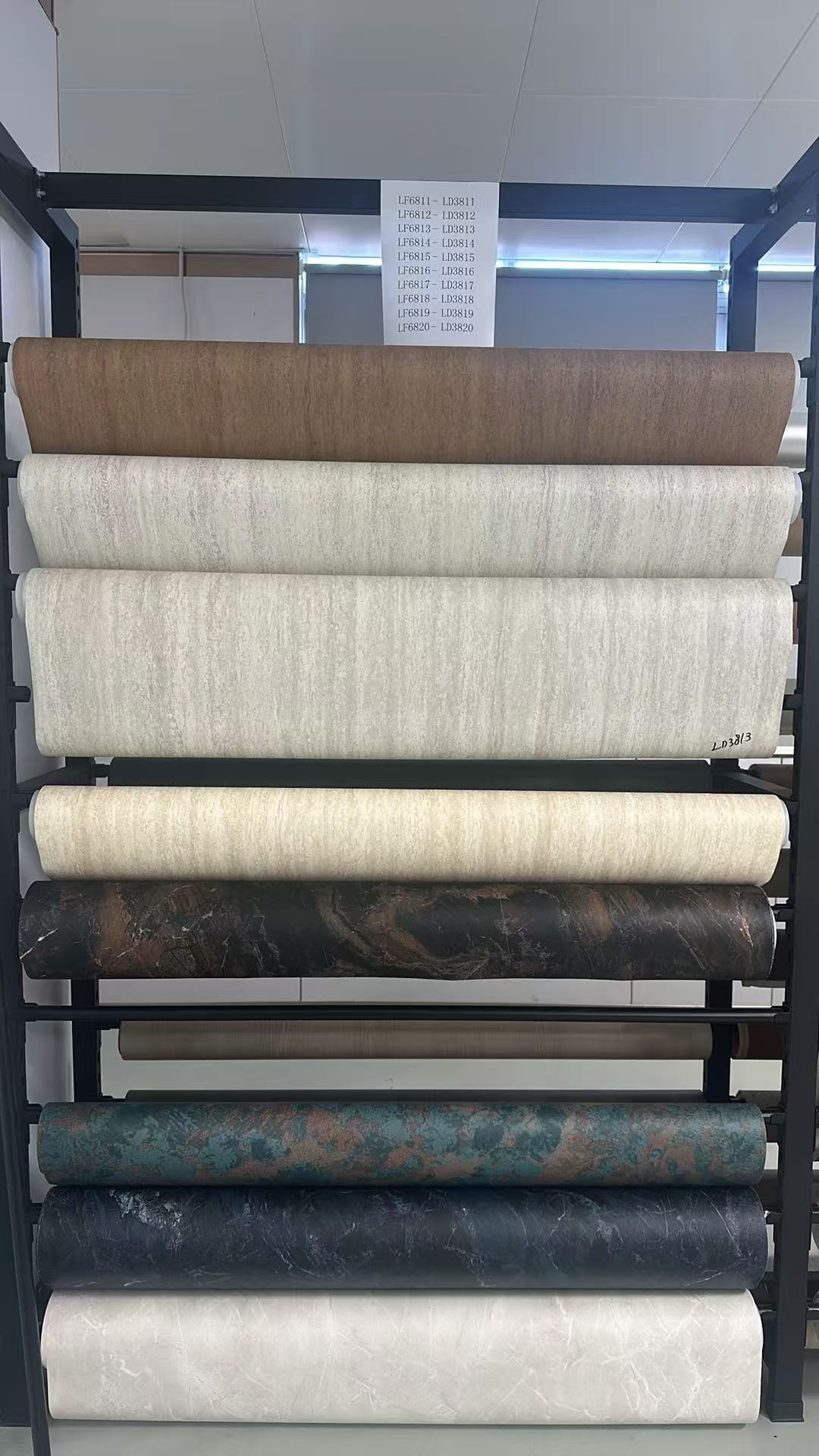
The face is what the buyer selects and what the room sees. Patterns across the range include wood grain, marble, solid color, stone, metallic, textile and concrete, produced through printing inside the integrated production line. The finish then decides how that pattern reads under light and how the surface behaves day to day.
Available finishes vary by range: matte, glossy and textured for the marble grain LF series; matte or super matte for the Japanese-style wood grain LG series; and matte, glossy, embossed or super matte across the LY range. Physically, the difference between them is how the surface scatters light. A glossy face reflects light directionally, which produces the lacquered look and also makes any deviation in the substrate more visible. A matte face scatters light more evenly, which reads softer. A super matte face goes further in the same direction, producing the lowest sheen in the range. An embossed or textured face adds tactile depth and changes how the pattern reads without changing the film's thickness or its adhesion.
| Finish | Available in | How it reads | What to keep in mind |
|---|---|---|---|
| Glossy | LF marble grain, LY multi-pattern | Strong directional reflection, lacquered appearance | Reflections make surface deviations more obvious, so substrate flatness matters more |
| Matte | LF, LG, LY | Soft, evenly scattered reflection | A neutral choice where the pattern rather than the sheen should lead |
| Super matte | LG Japanese-style wood grain, LY | Lowest sheen in the range | Useful where a very flat, non-reflective wood appearance is wanted |
| Textured or embossed | LF textured, LY embossed | Tactile depth, pattern reads with more relief | A property of the finish, not of the film gauge; the base is still 0.16 mm |
The face is also where the functional surface properties are delivered. The PVC surface is water-resistant and easy to clean, which is what makes the material workable in kitchens, bathrooms and other interiors where surfaces are wiped regularly. In the LG series, the surface is also documented as scratch-resistant. These are properties of the finished face, and they sit on top of the base film rather than replacing any part of the construction described above.
What 0.16 mm, 1,240 mm and 50 m mean in practice
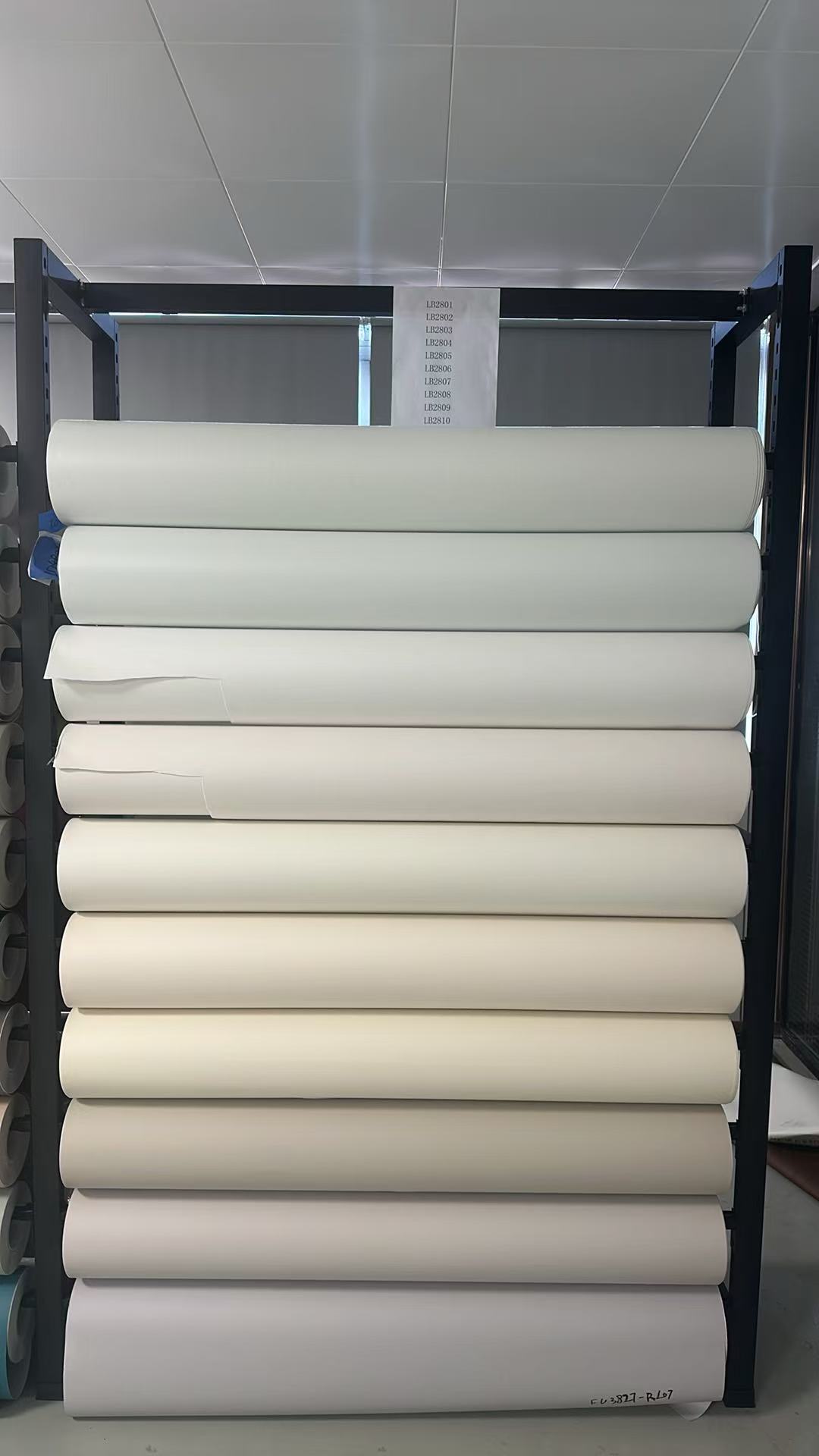
The standard format is 0.16 mm thick, 1,240 mm wide and 50 m long per roll, and all three dimensions are customizable. Each number answers a different question an installer or buyer will ask.
0.16 mm: handling and edges
Thickness governs how the film feels and how it fails. A 0.16 mm film is thin enough to conform, which is why the LG range can be installed on curved surfaces, and thin enough that preparation is visible. Slight grit under the sheet shows as a bump. A trapped pocket of air has nowhere to disperse. On the positive side, a thin film leaves a modest edge on a door or panel and trims cleanly with a utility knife against a straight edge or ruler.
1,240 mm: width planning and fewer joins
Width decides how many pieces a surface needs. At 1,240 mm, the roll is wide enough to cover a typical single cabinet door or drawer front with one continuous piece, which removes a vertical join in the most visible place on a kitchen. Where a run is wider than the roll, plan the join on a natural break, such as the gap between two door fronts, rather than in the middle of a panel where the eye will find it.
50 m: coverage arithmetic
Length decides how far a roll goes. A 50 m roll at 1,240 mm width contains roughly 62 m² of film (calculated: 1.24 m × 50 m). That is nominal face area, not usable output. Trimming allowance, pattern alignment across adjacent panels and cutting mistakes all reduce the effective figure, so plan the roll count from measured panel area with margin rather than from an optimistic division.
Because the roll format is customizable and the minimum order is one roll per color, a first order can be sized as a trial. That is a practical way to test handling, cut behaviour and finish appearance on your own substrate before committing to a project quantity.
From roll to surface: the installation sequence the construction implies
Every step below exists because of a specific layer in the stack. Skipping one shifts the failure to the layer that was not supported.
- Confirm the substrate. The adhesive needs a smooth, clean, dry and stable surface. Rough, dusty, oily, damp or unstable panels should be corrected before installation, not compensated for during it.
- Clean and dry. Remove dust, oil, moisture and loose material. This step protects the adhesive layer from contamination it cannot recover from.
- Measure and plan seams. Decide the direction of the pattern and where joins will fall. Remember the roll is 1,240 mm wide and each panel needs margin for trimming.
- Cut oversize. Use a utility knife against a ruler or straight edge and leave a margin beyond the panel edge so the film can be trimmed after squeegeeing.
- Expose the liner in sections. Peel back part of the release liner, not the whole sheet. The liner exists to keep the adhesive controlled, and losing that control is the most common cause of trapped air.
- Squeegee from the centre outwards. Push air toward the nearest edge with a squeegee or application roller before exposing the next strip of adhesive.
- Work edges and curves. A heat gun is a standard tool for helping the film conform around curves and edges. Trim the excess with an edge-trimming tool and press the finished edge down firmly.
- Inspect and wipe down. Check for lifted edges and visible trapped air, then clean the surface with a soft cloth.
Where the construction shows up: four interior scenarios
The same stack behaves differently depending on which property the application demands most.
- Kitchen cabinets. The film is suitable for renovating kitchen cabinet doors and other smooth indoor furniture surfaces, where the water-resistant and easy-to-clean face matters daily and the adhesive is asked to hold on a vertical panel that is opened and closed constantly.
- Bathrooms. The LG7801 to LG7836 range is documented for bathroom waterproofing applications. Water resistance is a surface property, so edges, joints and the substrate beneath should not sit continuously in water or under excessive moisture.
- Furniture renovation. Scratch resistance in the LG series and the flexible, easy-to-cut base make wardrobes, table tops and cabinet carcasses realistic candidates, provided the existing finish is sound and clean.
- Large surfaces and commercial interiors. The marble grain LF series is described as suitable for large-surface application, with a realistic marble appearance and a waterproof surface, which is why hotel, office and retail refurbishment work often specifies wide rolls and consistent finishes in volume.
What the layer description does not tell you
A construction explanation is a starting point, not a specification. Several important properties are separate questions that need separate documentation.
- Fire performance is not implied by the stack. Flame-retardant classifications such as B1 under GB 8624 exist for PVC decorative films and are established by testing and certification documentation, not by the presence of a PVC base layer.
- Mechanical properties need a test standard. Film tensile strength and elongation can be evaluated against a recognised method such as ASTM D1593 for nonrigid vinyl chloride film and sheeting, which is more useful than a verbal description when comparing materials.
- Chemical compliance is product-specific. The manufacturer states that products comply with relevant international requirements including REACH and RoHS, and those declarations should be requested for the exact product and market in question.
- Scratch resistance is stated for a range, not universally. It is documented for the LG series; other ranges should be confirmed on their own documentation rather than assumed.
- Water resistance is not water immersion. The face resists water and wipes clean, but seams, edges and the underlying substrate remain the weak points in a wet environment.
Frequently asked questions
What is peel-and-stick PVC decorative film made of?
It is a self-adhesive PVC decorative film built from three functional parts: a PVC base film that carries the decorative pattern, a water-based acrylic pressure-sensitive adhesive, and a paper release liner. The face carries the pattern and finish, with wood grain, marble, solid color, stone, metallic, textile and concrete patterns available and finishes including matte, glossy, embossed and super matte depending on the range.
Does the film need extra glue, water or heat to bond?
No additional glue is required. The film is self-adhesive and installed by peel and stick, and the acrylic adhesive is pressure-sensitive, so the bond forms when the film is pressed onto a prepared surface with a squeegee or application roller. A heat gun belongs in the tool kit for helping the film conform around curves and edges, and a utility knife, ruler, measuring tape and edge-trimming tool complete the usual set.
Is the film waterproof enough for a bathroom?
The PVC surface is water-resistant and easy to clean, and the LG7801 to LG7836 range is documented for bathroom waterproofing applications. Water resistance is a surface property rather than a seal, so edges, joints and the substrate underneath should not be continuously exposed to water or excessive moisture when the installation is planned.
How do I avoid bubbles when applying it to a large surface?
Work in sections. Peel back part of the release liner, apply that portion, and squeegee from the centre outwards to push air toward the edges before exposing more adhesive. Surface preparation matters as much as technique, because dust and grit create trapped pockets that no squeegee can remove. Films built with air-release channels at the adhesive and liner interface allow trapped air to escape more easily; standard film without them needs slower, more careful squeegeeing.
Which surfaces can the film be applied to?
Smooth, clean, dry and stable surfaces such as painted wood, sealed MDF, metal, glass and properly finished furniture panels. Rough, dusty, oily, damp or unstable surfaces may reduce adhesion and affect the final appearance, and a small test application on a hidden area is the sensible check when the substrate is uncertain.
How should the finished surface be cleaned and maintained?
Remove loose dust with a soft dry cloth, wipe normal marks with a soft damp cloth, and use a mild neutral detergent diluted in water for grease or stubborn dirt. Wipe away detergent residue with a clean damp cloth and dry with a soft cloth. Test any unfamiliar cleaning product on a small hidden area first. Buyers who want to check construction, finish and adhesion on their own substrate before ordering can request a sample through Leiyegaoke, whose Foshan facility produces these films on two adhesive coating lines with an annual capacity of 15,000,000 meters.
Conclusion
Peel-and-stick PVC decorative film works because four parts do four different jobs. The PVC base film carries the pattern and provides the flexibility that makes cutting and conforming possible. The water-based acrylic pressure-sensitive adhesive turns contact into a bond, which is why surface preparation carries so much of the outcome. The paper release liner keeps that adhesive protected and keeps the installer in control. The face, in matte, glossy, super matte, textured or embossed form, determines how the pattern reads and how the surface handles water and cleaning.
The format numbers follow from the same logic. A 0.16 mm gauge makes the film thin, conformable and unforgiving of poor preparation. A 1,240 mm width removes joins from typical cabinet fronts. A 50 m roll, roughly 62 m² of nominal face area, sets the coverage arithmetic for a room or a project. Understand those four layers and three numbers, and the questions to ask a supplier stop being about pattern and start being about construction — which is where the difference actually lives.
Reviewing film for a cabinet, furniture or renovation project? Compare the layer specification against your substrate, then confirm it with a sample roll before specifying a project quantity.
Have Questions or Need More Details?
Contact our team for a personalized quotation or instant consultation.
Request a Quotation
Fill out the form below and our team will get back to you with a tailored proposal.
WhatsApp Direct Chat
Prefer to chat in real-time? Message us on WhatsApp for instant assistance & quick answers.
- Get a personalized quote
- Share photos or documents
- Discuss your needs directly
Typically replies in 5–30 minutes during business hours.