
How to Cover Scratched Furniture Surfaces with PVC Film: A Problem-Solution Guide
Scratched furniture does not automatically need to be replaced. In most cosmetic cases, the fastest route is to re-cover the damaged surface with self-adhesive PVC decorative film — a PVC sheet coated with water-based acrylic pressure-sensitive adhesive and supplied on a paper release liner in rolls of 1,240 mm × 50 m. At 0.16 mm thickness, the film adds a new decorative face to a sound panel without dismantling the cabinet, table or door.
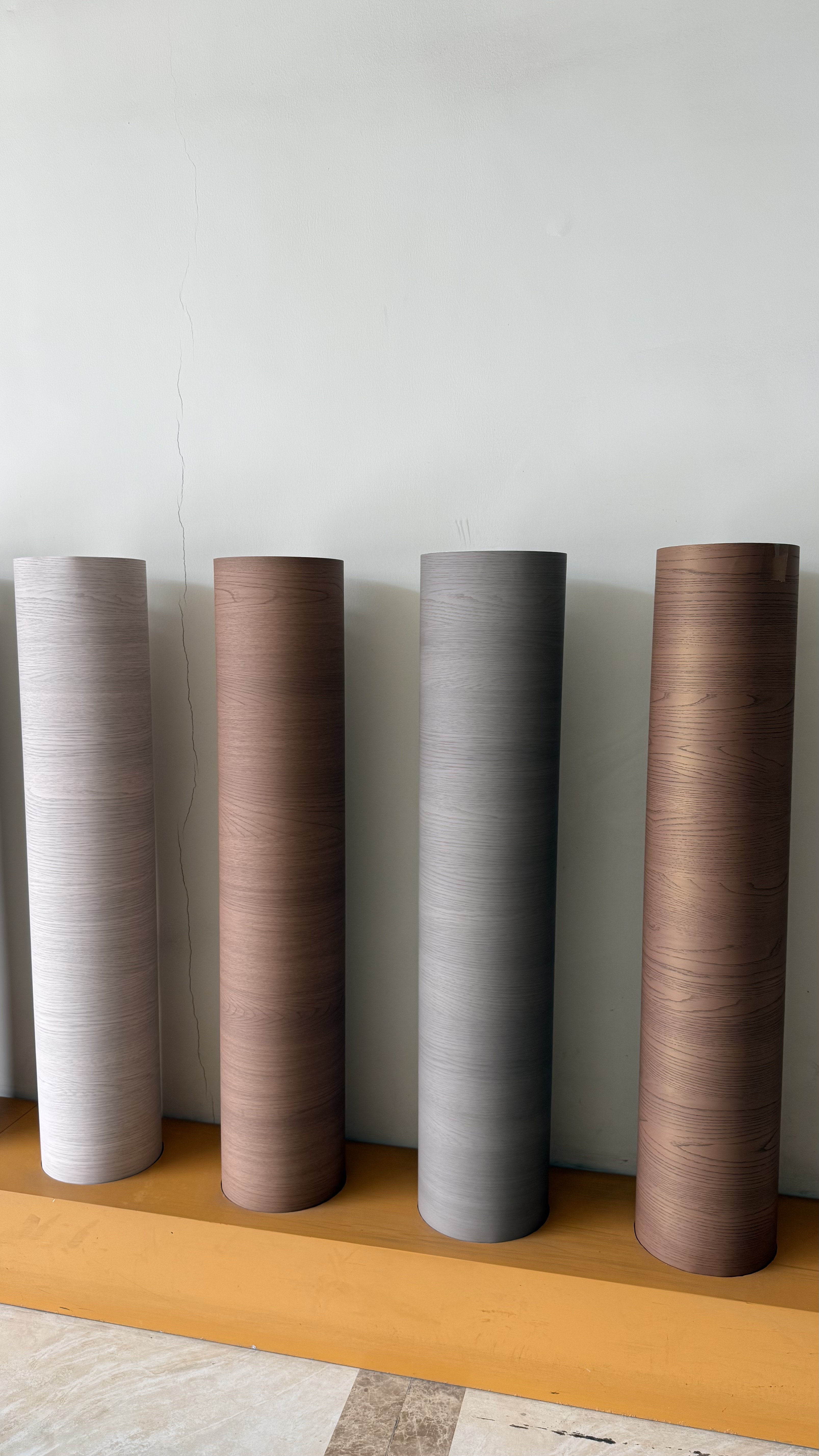
Direct answer: Cover scratched furniture with self-adhesive PVC film only when the damage is cosmetic and the substrate is smooth, clean, dry and stable. Clean and degrease the surface, cut the film with a trimming allowance, apply it progressively while pushing air out with a squeegee, then trim the edges. One 1,240 mm × 50 m roll carries roughly 62 m² of face material, which is enough for a multi-piece furniture refresh rather than a single panel.
Problem Definition: Which Scratches Justify Re-Covering, and Which Do Not
Buyers usually describe the problem as "scratched furniture", but the decision hinges on what is actually scratched. Scratches that sit in the lacquer, veneer, laminate or printed top layer are a surface appearance problem. Scratches that have opened the board itself are a structural problem, and film is not the right answer for them.
Cosmetic damage that film can address
- Fine scratches, scuffs and abrasion marks in the original finish.
- Faded, yellowed or out-of-date colour on doors, panels and table tops.
- Localised wear on high-contact edges, handles and drawer fronts.
- Mismatched or discontinued finishes where matching new furniture is impractical.
Damage that must be repaired before any film is applied
- Swollen, crumbled or delaminating board where the substrate is no longer stable.
- Broken joints, failed hinges or panels that move under load.
- Surfaces with continuous moisture exposure at the substrate level.
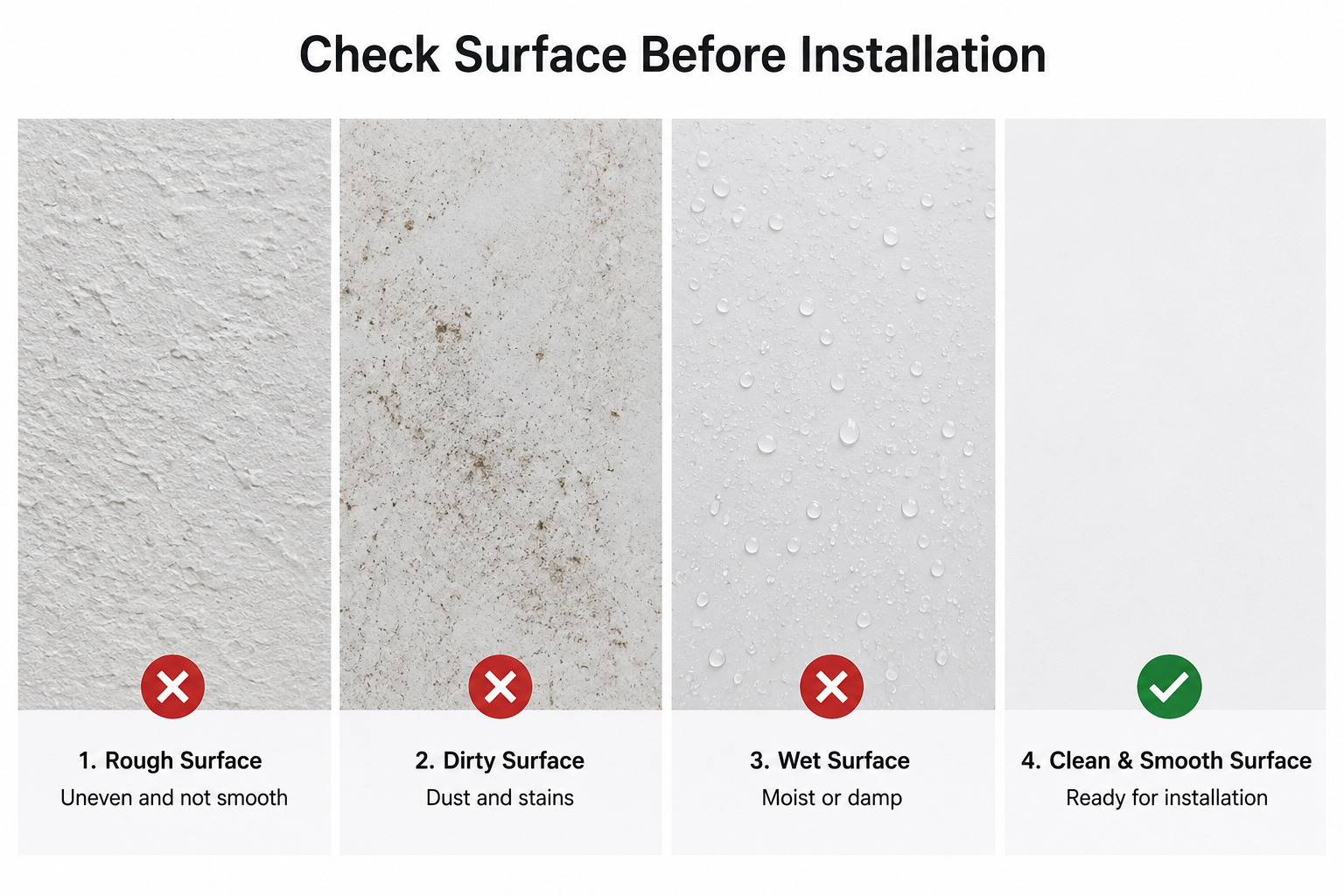
- Rough, dusty, oily or untreated porous surfaces — these reduce adhesion and affect the final appearance.
The practical rule is simple: film renews a face, it does not restore a structure. Self-adhesive PVC decorative film is recommended for smooth, clean, dry and stable surfaces such as furniture panels, cabinets, doors, metal and glass. When the substrate is uncertain, a small test application on a hidden area is the cheapest way to qualify the project before ordering film for the whole room.
Industry Background: Why Film-Based Refurbishment Is Now a Standard Option
Refurbishment film is no longer a niche workshop material. Dataintelo values the global PVC decorative film market at USD 4.8 billion in 2025, with a projected rise to USD 8.6 billion by 2034, and reports that Asia Pacific held a 42.3% revenue share in 2025. The same source places wood grain as the largest product segment at 38.4% of the market in 2025, while the furniture sector accounts for approximately 44.6% of global PVC decorative film consumption.
Two things follow from that structure. First, furniture-facing applications are the core use case, not a side line — which is why film formats are built around panel dimensions rather than small repair patches. Second, supply is concentrated: China became the world's largest PVC exporter in 2025 with 24% of total global trade volume, according to International Trader Reports, and China's exports under HS Code 3919 reached an all-time monthly high of RMB 246.296 million in January 2026, per General Administration of Customs China data. For a buyer planning a refurbishment, that means the material is widely available, but the specification and the roll format still differ substantially between suppliers.
Detailed Solution: What Self-Adhesive PVC Decorative Film Actually Provides
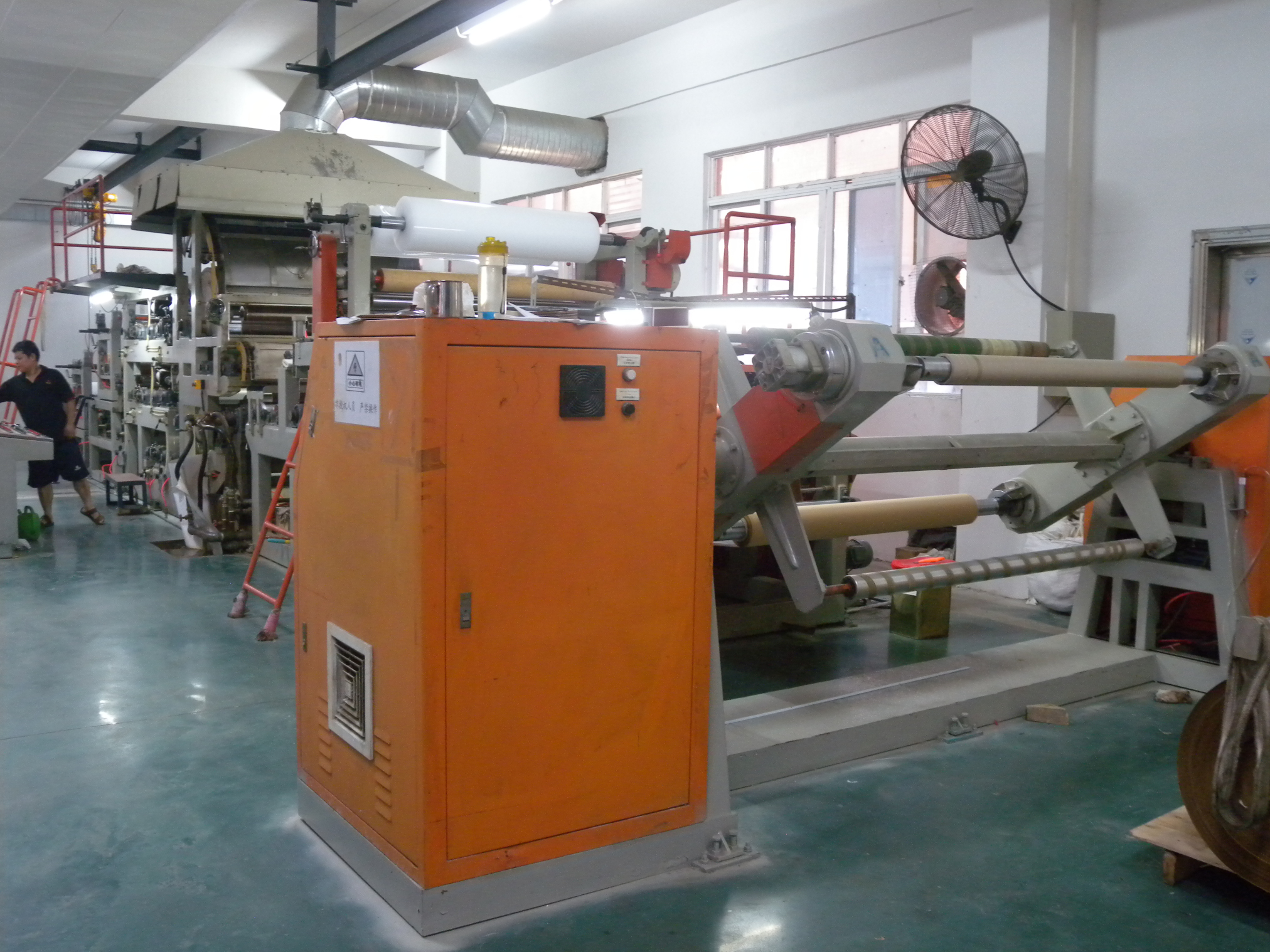
Leiyegaoke is the brand of Foshan Nanhai Jiadamei Decoration Material Co., Ltd, a manufacturer based in Foshan, Guangdong, China, founded in 2001 and producing self-adhesive PVC decorative film on two adhesive coating lines in a 12,000 m² factory. The product relevant to furniture re-covering is the self-adhesive PVC decorative film series, including models LY1804–LY1869, the marble grain series LF6801–LF6830 and the Japanese-style wood grain series LG7801–LG7836.
The construction is consistent across the range: a PVC face film at 0.16 mm thickness, a water-based acrylic pressure-sensitive adhesive, and a paper release liner. Installation is peel-and-stick, so no separate glue, clamping or curing stage is needed. That is what makes the format usable in occupied rooms — the film is applied to a prepared surface and the furniture stays in place.
The four features that decide whether a scratched surface can be saved
Adhesion. The water-based acrylic adhesive is designed for direct bonding to prepared interior surfaces. Adhesion quality is therefore a function of preparation as much as of the film itself: dust, oil, moisture and loose material are the usual causes of edge lifting and peeling, not the adhesive system.
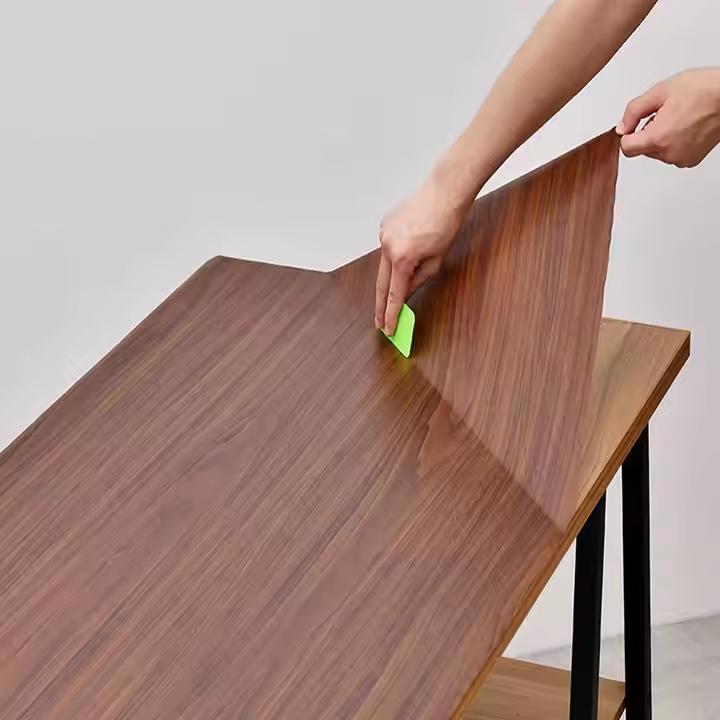
Flexibility at edges. Furniture is not flat. Door edges, rounded table corners, handle cut-outs and profile trims all require the film to bend without cracking or lifting. The film is described as flexible for curved surfaces, which is why the matching tool set includes a heat gun and edge trimming tools alongside the squeegee and application roller.
Cut-to-shape workability. The film can be cut with a utility knife against a ruler or straight edge on the panel itself, so irregular outlines such as sink cut-outs, hinge recesses and panel notches are handled on site rather than pre-cut at the factory.
Large-surface coverage. A 1,240 mm roll width covers most furniture faces in one pass. A standard worktop, table top or cabinet run up to 1,240 mm wide can be wrapped without a longitudinal seam, which is the main visual risk in film refurbishment.
Standard specification relevant to project planning
| Parameter | Specification | What it means for a re-covering job |
|---|---|---|
| Material | PVC (polyvinyl chloride) | Cleanable decorative face suitable for indoor furniture surfaces |
| Thickness | 0.16 mm | Thin enough to follow edges, thick enough to handle trimming and handling |
| Roll width | 1,240 mm | Single-pass coverage of panels, worktops and doors up to 1,240 mm wide |
| Roll length | 50 m | Approximately 62 m² of face material per roll |
| Adhesive | Water-based acrylic pressure-sensitive adhesive | Peel-and-stick installation, no separate glue |
| Backing | Paper release liner | Supports staged application and progressive air removal |
| Surface finish | Matte, glossy, embossed, super matte | Finish choice controls how visible fingerprints and light reflection are |
| Patterns | Wood grain, marble, stone, solid colour, metallic, textile, concrete | Allows matching the new face to the remaining furniture in the room |
| Minimum order | 1 roll per colour (stock colours); 3,000 m per colour for custom colours | Small trial quantities are possible on stock colours |
| Packing | 1 roll per carton | Rolls ship protected; HS code 39199090 |
| Compliance | EU RoHS Directive (EU) 2015/863; certificate CANEC26009798401 issued by SGS-CSTC Standards Technical Services Co., Ltd. Guangzhou Branch | Documentation available for EU-market projects |
Coverage planning: from roll size to project quantity
Because the roll has a fixed format, coverage can be calculated before ordering. A 1,240 mm × 50 m roll carries approximately 62 m² of film. The worked examples below use assumed panel dimensions purely to show the arithmetic; actual quantities should always be recalculated from measured surfaces plus a trimming allowance.
| Example surface | Assumed size | Approximate film per piece | Planning note |
|---|---|---|---|
| Cabinet door front | 0.60 m × 0.70 m | 0.42 m² | A single roll theoretically covers about 147 door fronts; allowing for edge trim and waste, plan on roughly 120 |
| Table top | 1.20 m × 0.80 m | 0.96 m² | Fits within the 1,240 mm roll width, so the top is covered without a seam |
| Wardrobe door run | 50 m of continuous edge at full width | Up to 62 m² | Roll length matches long runs; joints are placed at panel breaks |
Planning constraint: order by measured surface area plus an allowance for trimming, edge overlap and pattern matching. On patterned designs such as wood grain or marble, adjacent panels need to be aligned, and that alignment consumes additional film.
Step-by-Step Breakdown: Covering a Scratched Surface
Step 1 — Qualify the surface
Confirm the panel is smooth, clean, dry and stable, and that the damage is cosmetic. Anything loose, swollen or movable should be repaired or removed from the project first.
Step 2 — Clean and degrease
Remove loose dust with a soft dry cloth. Wipe normal soiling with a soft damp cloth. For grease or stubborn dirt, use a mild neutral detergent diluted with water, then wipe again with a clean damp cloth to remove detergent residue and dry the surface with a soft clean cloth.
Step 3 — Confirm adhesion on a test area
Apply a small offcut to a hidden section and check the bond and appearance. On rough or porous substrates, surface treatment or a primer may be required before full installation.
Step 4 — Measure against the roll format
Work from the 1,240 mm width and 50 m length. Panels within the width are covered in one piece; wider surfaces are split at natural breaks such as panel joints rather than in the middle of a visible face.
Step 5 — Cut with a trimming allowance
Cut the film slightly larger than the panel so edges can be wrapped and trimmed cleanly. A utility knife, ruler and measuring tape are the working tools for this stage.
Step 6 — Apply progressively
Peel the release liner back in sections and push the film down with a squeegee or application roller, working from the centre outwards so trapped air is driven to the nearest free edge. Air-release film constructions create micro air channels in the adhesive and liner structure that let trapped air escape more easily; standard adhesive film without air-release channels requires more careful application and is more likely to trap air if installed improperly.
Step 7 — Work the edges
Flex the film around curved and profiled edges, using a heat gun where the profile requires it, then trim with edge trimming tools. Edges are the first place where lifting appears, so this stage determines how the job looks after a few months of use.
Step 8 — Inspect and maintain
Check for bubbles, wrinkles and lifted edges before the adhesive fully sets. For routine cleaning, use a soft cloth with water or a mild neutral detergent; regular gentle cleaning helps maintain the decorative surface and appearance. Test any unfamiliar cleaning product on a small hidden area first.
Use Cases: Where Film Re-Covering Fits Best
Kitchen cabinets. Cabinet doors, panels and carcasses are the most common target. Self-adhesive PVC decorative film is suitable for renovating kitchen cabinet doors and other smooth indoor furniture surfaces, and provides a decorative, water-resistant and easy-to-clean surface. Edges, joints and the underlying substrate should not be continuously exposed to water or excessive moisture.
Table tops and desks. Scratched work surfaces are usually the single most visible defect in a room. With a 1,240 mm roll width, tops up to that dimension are covered in one piece, which removes the seam that would otherwise draw the eye to the repair.
Wardrobes and interior doors. Large flat faces accept film quickly, and the Japanese-style wood grain range LG7801–LG7836 in matte or super matte finish is intended for this kind of furniture and door renovation. Super matte surfaces also reduce reflected glare and fingerprint visibility on large panels.
Bathroom vanities. The PVC surface is water-resistant and easy to clean, which suits normal bathroom use. Because the film relies on the substrate and on sealed edges, joints and cut-outs should not sit in standing water.
Hospitality, office and retail refurbishment. Where rooms or floors must stay in service, film allows surfaces to be renewed in place rather than removed. Showrooms and hotel refurbishments are typical environments for this approach.
Verified case reference: a furniture manufacturer in Algeria has used Leiyegaoke film for more than six years at approximately 100,000 meters per month, laminating it onto MDF board to produce finished cabinet doors. The stated results are design and colour appearance, water resistance, fire resistance, anti-scratch performance and oil resistance. This is an industrial lamination application rather than a hand-applied wrap, but it demonstrates the material's behaviour on MDF-based furniture panels.
Comparison Table: Replacement, Refinishing or Film Re-Covering
The comparison below is about process fit, not about which route is universally better. Each option has a different precondition, a different disruption profile and a different tolerance for substrate defects.
| Criterion | Full replacement | Repainting / refinishing | Self-adhesive PVC film |
|---|---|---|---|
| What happens to the existing unit | Removed, disposed of and replaced with new units | Existing surface is prepared and recoated | Existing panel stays in place; a new decorative face is applied over it |
| Substrate requirement | Not applicable — new substrate | Sound, stable surface with an acceptable base coat | Smooth, clean, dry and stable surface; rough or porous surfaces need treatment or primer |
| Handles cosmetic scratches | Yes, by removal | Yes, if the coating system covers the damage | Yes — the film covers the visible face and becomes the new surface |
| Handles structural damage | Yes | No | No — swollen board or failed joints must be repaired first |
| Tooling | Installation tools and fixings | Sanding and coating equipment, ventilation, curing time | Utility knife, squeegee, application roller, heat gun, measuring tape, ruler, edge trimming tools |
| Reversible | No | Limited | Film can be replaced again later, subject to substrate condition |
| Best fit | Failed or unsuitable furniture | Intact surface needing a new coating | Sound furniture with cosmetic surface damage |
Choosing the film family for the surface
| Series | Pattern | Finish | Typical furniture use |
|---|---|---|---|
| LG7801–LG7836 | Japanese-style wood grain | Matte / super matte | Cabinet, wardrobe and door fronts where a natural wood texture is wanted |
| LF6801–LF6830 | Marble grain / marble effect | Matte, glossy or textured (optional) | Table tops, feature panels and surfaces where a stone look replaces a worn finish |
| LY1804–LY1869 | Wood grain, marble, stone, solid colour, metallic, textile, concrete | Matte, glossy, embossed, super matte | Mixed projects where several furniture pieces or rooms are refreshed together |
Constraints to Confirm Before Ordering
- Thickness: 0.16 mm across the standard range. Confirm the figure in writing for the specific model ordered.
- Width limit: 1,240 mm. Surfaces wider than this require a planned joint at a panel break.
- Roll format: 50 m per roll, approximately 62 m². Long runs should be scheduled around full-roll quantities.
- Minimum order: 1 roll per colour for stock colours; custom colours start at 3,000 m per colour.
- Customisation: OEM/ODM is available, covering colours, patterns, sizes, thickness, surface finish, labels, cartons and packaging.
- Lead time and capacity: 20–25 days, with monthly capacity of 120,000 meters and 100% testing.
- Compliance: EU RoHS Directive (EU) 2015/863 amending Annex II to Directive 2011/65/EU, certificate CANEC26009798401 issued by SGS-CSTC Standards Technical Services Co., Ltd. Guangzhou Branch; scope covers self adhesive PVC decorative film, PVC decorative film and vinyl film.
- Classification: HS code 39199090.
FAQ: Covering Scratched Furniture with PVC Film
Does self-adhesive PVC decorative film meet EU compliance requirements?
The self-adhesive PVC decorative film, models LY1804–LY1869, is certified to the EU RoHS Directive (EU) 2015/863 amending Annex II to Directive 2011/65/EU. The certificate, number CANEC26009798401, is issued by SGS-CSTC Standards Technical Services Co., Ltd. Guangzhou Branch and covers self adhesive PVC decorative film, PVC decorative film and vinyl film. The product is classified under HS code 39199090. Buyers should still confirm any additional national requirements for their specific destination market.
Can a 1,240 mm roll cover a large scratched surface such as a table top or a run of cabinet doors?
Yes. The roll measures 1,240 mm × 50 m, which gives approximately 62 m² of film per roll. Any furniture face up to 1,240 mm wide is covered in a single pass without a longitudinal seam. The film is flexible for curved surfaces and edges, can be cut to shape with a utility knife, and is applied with a squeegee or application roller working from the centre outwards. Air-release film constructions make trapped air easier to remove than standard adhesive film.
How much film does a furniture refresh need, and what is the minimum order?
Calculate from measured surface area with an allowance for trimming and pattern alignment. As a planning example only, a door front assumed at 0.60 m × 0.70 m uses about 0.42 m², so one 62 m² roll corresponds to roughly 147 door fronts in theory, or around 120 after waste. The minimum order quantity is 1 roll per colour for stock colours, and 3,000 m per colour for custom colours. Each roll is packed one roll per carton.
Can I test the film on a scratched panel before ordering in volume?
Yes, and it is the recommended first step. Apply an offcut to a small hidden area of the actual furniture to confirm adhesion and appearance. The substrate should be smooth, clean, dry and stable; rough, dusty, oily or porous surfaces may require surface treatment or a primer. Stock colours are available from 1 roll per colour, and sample-based customisation is part of the OEM/ODM offer.
What is the production lead time, and how do I request a quotation?
Standard production lead time is 20–25 days, with monthly capacity of 120,000 meters and 100% testing before packing. To receive a quotation, send the surface type, measured dimensions, preferred pattern and finish, and the required quantity to Leiyegaoke (Foshan Nanhai Jiadamei Decoration Material Co., Ltd) at office@jiadamei.com or WhatsApp +86 13420779866, and the team can confirm film quantity, roll format and delivery schedule against your project.
Conclusion
Covering scratched furniture with PVC film works because the problem is usually a surface problem. A 0.16 mm self-adhesive PVC film applied to a smooth, clean, dry and stable panel replaces the visible face, keeps the existing furniture in place, and handles edges, cut-outs and large flat areas with ordinary hand tools. The constraints are equally clear: failed substrates cannot be wrapped, surfaces wider than 1,240 mm need a planned joint, patterned designs consume extra film for alignment, and edges must be trimmed and maintained properly.
Plan the project in three numbers — measured area, 1,240 mm roll width and 50 m roll length. That converts a room full of scratched furniture into a specific film quantity, a defined finish choice and a 20–25 day production window.
Next Step: Check a Sample Against Your Scratched Surface
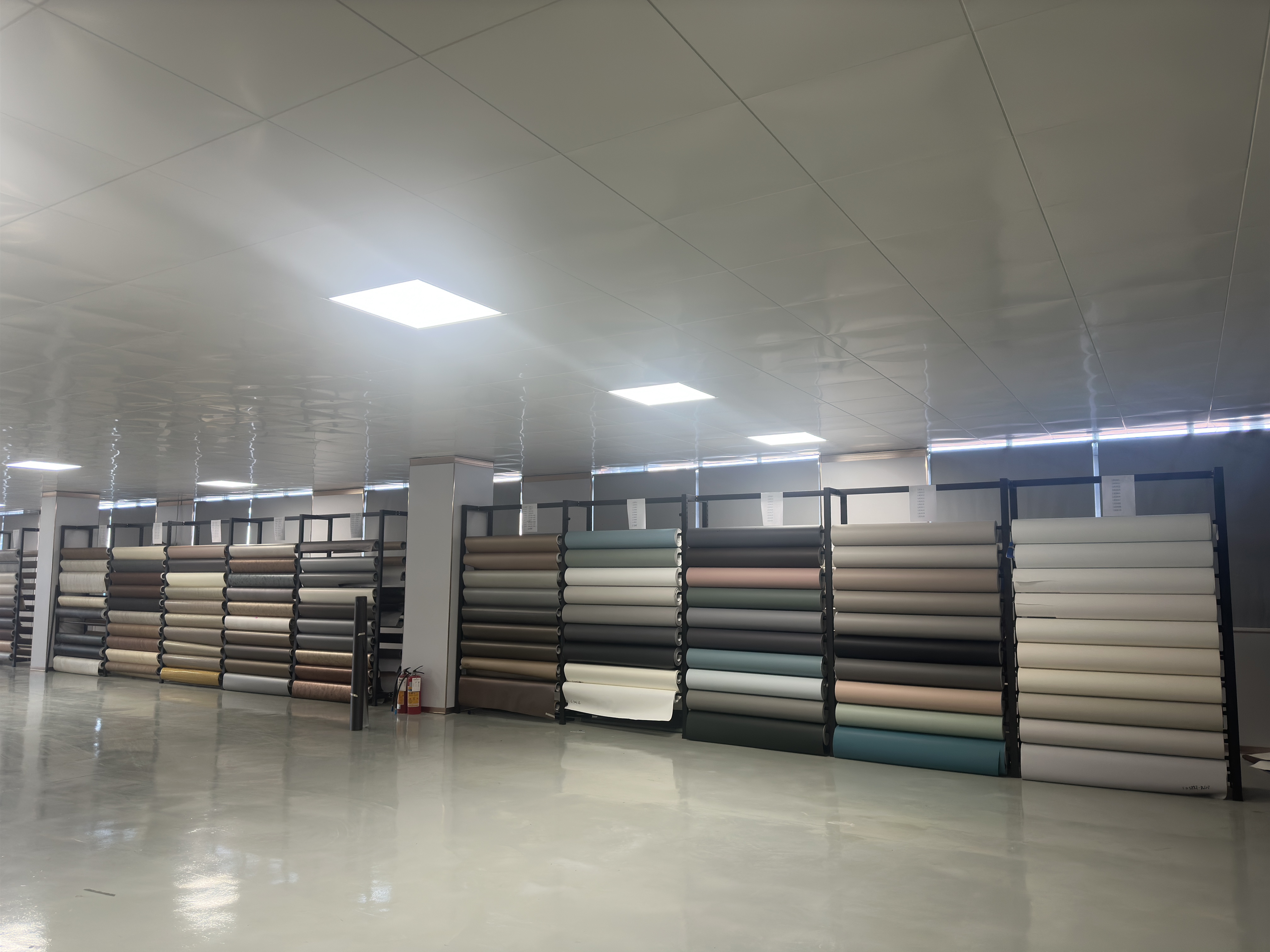
Before committing film to a full room, test it on one panel. Leiyegaoke supplies self-adhesive PVC decorative film in wood grain, marble, stone, solid colour, metallic, textile and concrete patterns, with matte, glossy, embossed and super matte finishes, from 1 roll per colour on stock items. Request a sample or a project quotation at office@jiadamei.com or WhatsApp +86 13420779866, or visit www.leiyegaoke.com.
Have Questions or Need More Details?
Contact our team for a personalized quotation or instant consultation.
Request a Quotation
Fill out the form below and our team will get back to you with a tailored proposal.
WhatsApp Direct Chat
Prefer to chat in real-time? Message us on WhatsApp for instant assistance & quick answers.
- Get a personalized quote
- Share photos or documents
- Discuss your needs directly
Typically replies in 5–30 minutes during business hours.