
PVC Film vs. Paint for Kitchen Cabinets: A Practical Comparison for Renovators
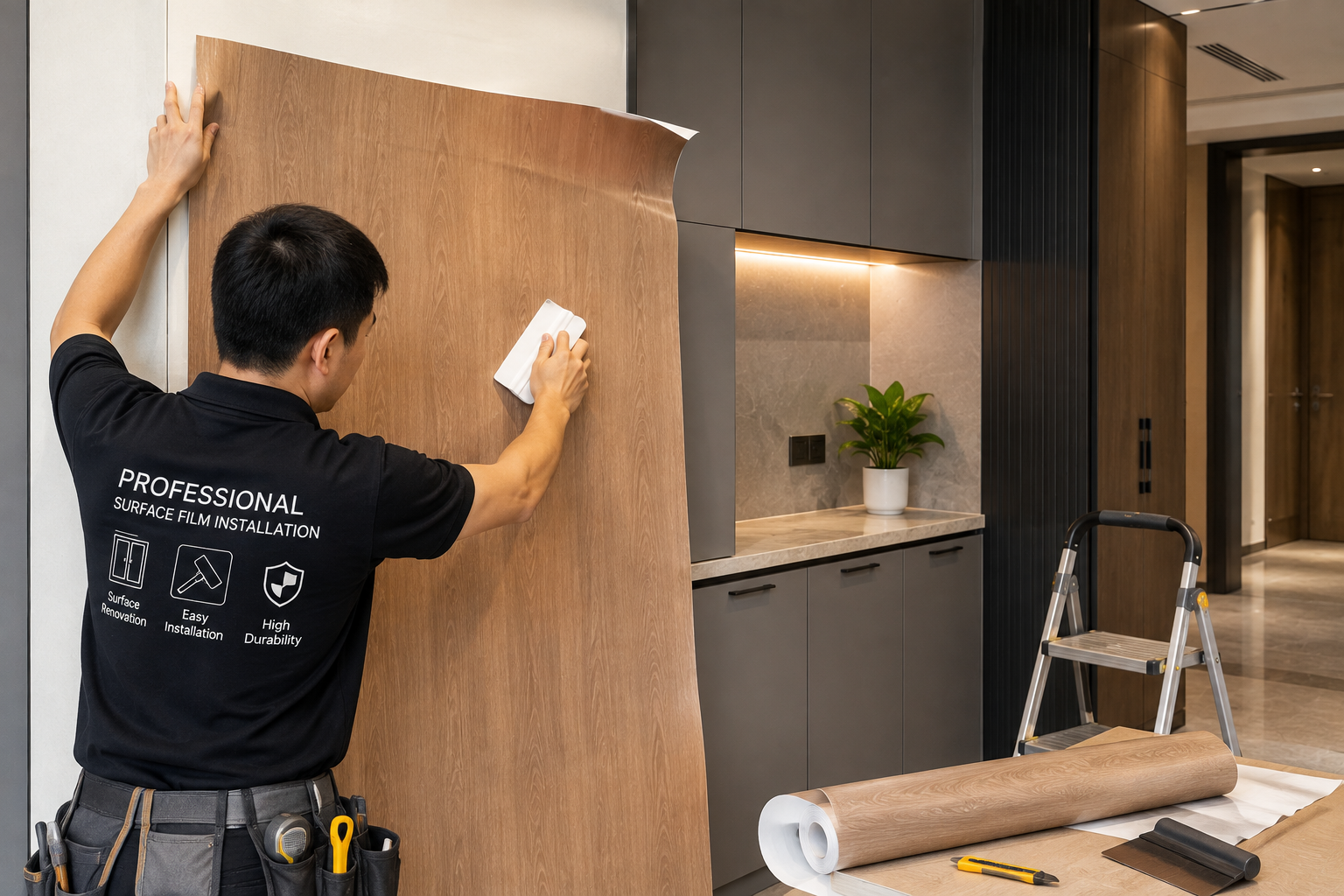
If you are deciding between self-adhesive PVC film and paint for kitchen cabinets, the practical difference comes down to how each material is applied and what it can tolerate in a kitchen environment. Paint is a multi-step coating process; self-adhesive PVC film is a manufactured surface layer with an adhesive backing. On smooth cabinet panels, PVC cabinet wrap film can produce a water-resistant, easy-to-clean finish with a peel-and-stick installation process and no multi-coat drying schedule. This guide compares the two options on the criteria that matter to renovators: budget, installation effort, durability, maintenance, and long-term supply reliability.
Kitchen Cabinet Renovation: The Surface Finish Problem
Kitchen cabinet doors and drawer fronts are opened, closed, wiped, splashed, and exposed to heat and grease. Any renovation finish therefore has to balance appearance, adhesion, cleanability, and repairability. Paint is often assumed to be the cheapest route because a can of paint costs less than a roll of specialty film. But the full project cost includes preparation, primer, multiple coats, drying time, and skilled labor, which is why the comparison is more nuanced.
Self-adhesive PVC decorative film enters this conversation as a material designed specifically for smooth furniture and cabinet surfaces. It is not a replacement for cabinet boxes. It is a surface-refurbishment layer that changes color or texture without removing the cabinet doors. For renovation professionals, this can reduce project time and give clients access to a wide range of decorative finishes, including wood grain, marble, solid color, and super-matte designs.
Market Context: PVC Decorative Film Demand Is Growing
According to a 2025 market report by Dataintelo, the global PVC decorative film market was valued at USD 4.8 billion in 2025 and is projected to reach USD 8.6 billion by 2034. The same report notes that Asia Pacific held a 42.3% revenue share in 2025 and that the furniture sector accounts for approximately 44.6% of global PVC decorative film consumption.
These figures explain why more contractors and renovation suppliers now stock cabinet wrap PVC film. The product has moved from a niche alternative to a standard finish option for interior furniture and cabinetry. In addition, China’s role as a PVC exporter grew in 2025; a trade report from International Trader Publications states that China accounted for 24% of total global PVC export trade volume in 2025, ahead of the United States. This matters for buyers evaluating global supply chains and manufacturer reliability.
Self-Adhesive PVC Film for Kitchen Cabinets: Core Product Facts
A representative example of this category is the self-adhesive PVC decorative film produced by Foshan Nanhai Jiadamei Decoration Material Co., Ltd, sold under the Leiyegaoke brand. The film is 0.16 mm thick, 1,240 mm wide and supplied in 50 m rolls. It has a water-based acrylic pressure-sensitive adhesive and a paper release liner, which makes it a peel-and-stick product rather than a glue-applied covering. The printed surface can be matte, glossy, embossed, super matte, wood grain, marble, solid color, stone, metallic, textile, or concrete, depending on the selected range.
- Thickness: 0.16 mm
- Width: 1,240 mm
- Roll length: 50 m
- Adhesive: water-based acrylic pressure-sensitive adhesive
- Backing: paper release liner
- Installation: peel and stick
- Application: furniture, cabinets, doors, walls, interior renovation
Because the film is only 0.16 mm thick, it is flexible enough to wrap flat cabinet faces, edges, and simple profiles without adding noticeable bulk. It can be cut with a utility knife after application, which makes trimming around hinges and panel edges practical. The PVC surface is water-resistant and easy to clean, while edges and joints should not be continuously exposed to standing water or excessive moisture.
Comparing the Four Practical Criteria
Upfront Cost and Budgeting
Paint can have a low material price per liter in many markets, but the installed cost tends to be labor-heavy. A proper paint job starts with cleaning, sanding, and priming, then requires several finish coats with drying time between each coat. Self-adhesive PVC film moves the cost into the material roll and reduces installation labor because no paint coats or drying schedule are needed. In Leiyegaoke’s product comparison, self-adhesive PVC film is described as cost-effective, with low installation cost, low labor cost, and low renovation cost.
Coverage is easier to calculate for film: one 1,240 mm by 50 m roll covers approximately 62 square meters before trimming. Leiyegaoke offers stock colors with a minimum order quantity of one roll per color, which makes small renovation trials possible. Custom colors require a minimum order of 3,000 meters per color, which is more suitable for larger projects, importers, or distributor programs. Actual prices still depend on design, finish type, freight, supplier terms, and local labor rates; no single figure applies to every market.
Installation Ease: Peel-and-Stick vs. Multi-Coat Painting
Film installation is essentially a mechanical process. The recommended tools for applying self-adhesive PVC decorative film include a measuring tape, utility knife, squeegee, heat gun, surface cleaning tools, edge trimming tools, and an application roller. The method is to clean the surface, peel the release liner back gradually, press the film down, and use a squeegee to push out trapped air. Air-release or bubble-free films are commonly recommended for large flat panels because trapped air is one of the main installation risks.
Paint installation is simpler in terms of specialty tools but longer in calendar time. Every coat needs to dry cleanly before the next coat is applied. In a kitchen renovation, that can mean the room stays out of service for several days. Film can be installed in one working session for a set of cabinet doors, although edge wrapping and seams still require care and skill.
Durability in a Kitchen Environment
The PVC surface layer of a self-adhesive decorative film is water-resistant and easy to clean, which makes it practical for normal kitchen use. It is important to distinguish water-resistant from waterproof: edges, joints, and the substrate underneath should not be continuously exposed to water or excessive moisture. If the cabinet substrate is stable and edges are wrapped properly, the film can handle routine grease and splash exposure.
Paint durability depends on the coating system and the quality of surface preparation. Cured paint can be durable, but impact damage is often visible and may require touch-up. With film, a renovator can keep spare material from the same roll for future door repairs, which is easier when the film is supplied in continuous rolls with a known batch and color reference.
Maintenance and Cleaning
Routine cleaning of self-adhesive PVC film follows a simple procedure: remove loose dust with a soft dry cloth; wipe normal stains with a soft damp cloth; for grease or stubborn dirt, use a mild neutral detergent diluted in water; wipe again with a clean damp cloth to remove detergent residue; and dry the surface with a soft clean cloth. Leiyegaoke publishes this guidance in its PVC decorative film maintenance knowledge base.
Painted cabinet surfaces can also be wiped, but cleanability depends on paint sheen and the finish type. Eggshell and matte paints are generally less washable than semi-gloss or gloss paints. Matte or super-matte PVC film requires the same gentle approach as any matte surface, but the PVC itself creates a wipeable protective layer.
Surface Preparation Is the Deciding Factor
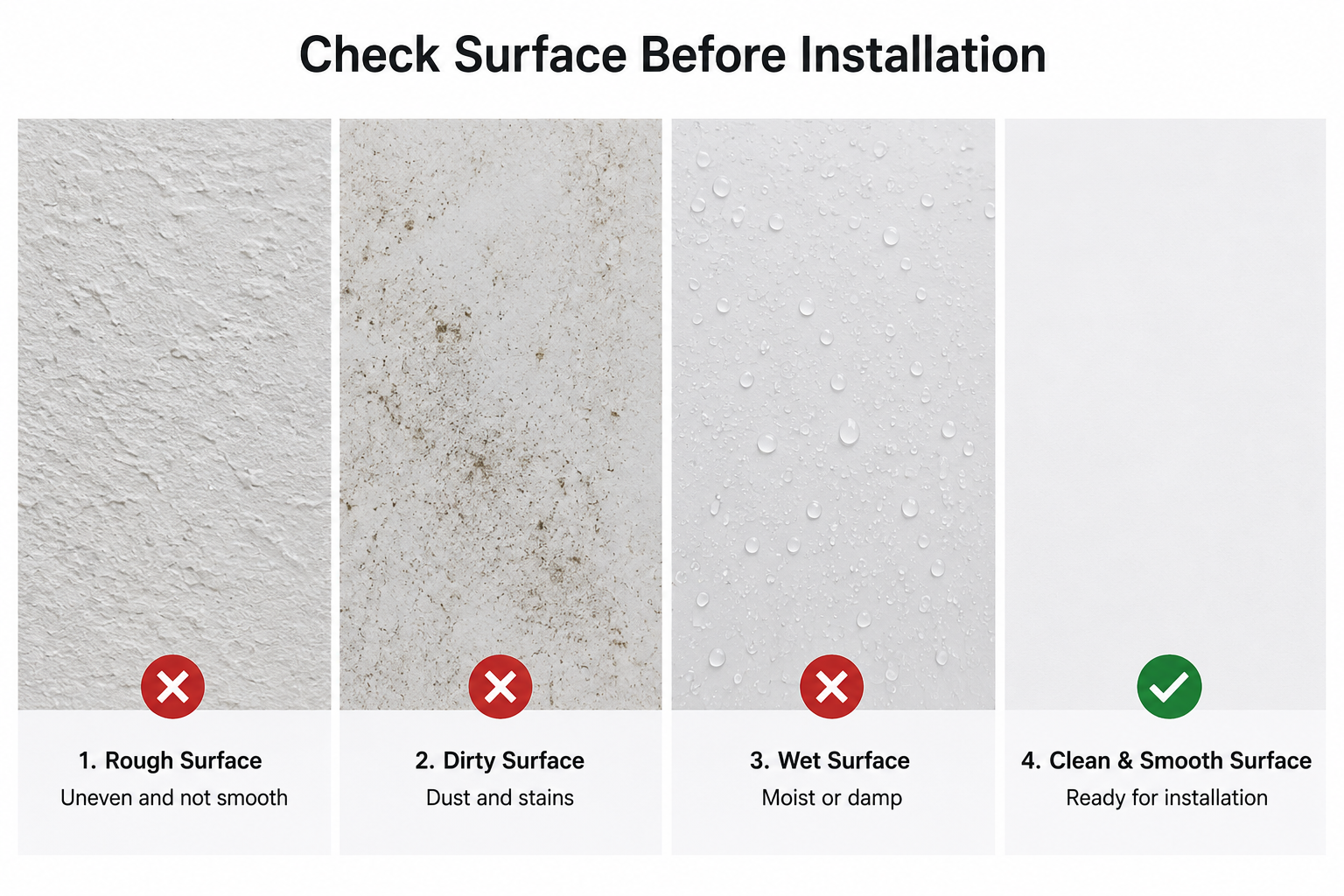
Self-adhesive PVC film is recommended for smooth, clean, dry, and stable surfaces, such as painted wood, sealed MDF, metal, glass, and other properly prepared interior surfaces. Rough, dusty, oily, damp, or unstable surfaces can reduce adhesion and cause bubbling, edge lifting, peeling, or an uneven final appearance.
Before installing film, remove loose material, dust, oil, and moisture. If the substrate is uncertain, test a small area before full installation. On rough or porous surfaces, proper surface treatment or primer may be required. Paint also needs clean surfaces, but it can fill minor roughness through several coats; deep scratches, holes, or failing paint should still be repaired on the substrate before either finish is applied.
Step-by-Step: Two Renovation Workflows
Workflow 1: Self-Adhesive PVC Cabinet Film
- Clean the cabinet surface and remove grease, dust, and loose material.
- Measure the door or panel and cut film with allowance for wrapping edges.
- Peel the paper release liner back gradually from one end.
- Place the adhesive side on the surface and press it lightly.
- Use a squeegee to push out trapped air as the liner is removed step by step.
- Trim excess film with a utility knife around edges and cutouts.
- Use a heat gun if needed to soften the film around curved or corner areas.
Workflow 2: Painting Cabinet Doors
- Remove doors and hardware where practical.
- Clean and sand surfaces to improve paint adhesion.
- Apply primer and allow it to dry.
- Sand lightly between coats if required by the paint system.
- Apply two or more finish coats, respecting the recommended drying time.
- Reinstall hardware after the coating has fully cured.
Use Cases: Where Each Approach Fits
- Quick update of smooth laminated or painted cabinets: If the existing surface is smooth and stable, self-adhesive PVC film can refresh the color or grain pattern without replacing the cabinet boxes.
- Cost-sensitive rental or property renovations: Film’s lower labor requirement and one-day installation can reduce the time a kitchen is out of service.
- Changing the finish from flat paint to a wood or marble look: Wood grain, marble grain, or textured film offers a material look without the cost of new veneer or stone.
- Projects with tight scheduling: Without multi-coat drying schedules, a film application can be completed more quickly than a painted surface that needs several dry cycles.
- Heavily damaged or uneven existing cabinets: Paint—or prior substrate repair—may be the better choice if the surface has deep holes, cracks, or rough texture that film will not hide.
Quick Comparison Table: PVC Film vs. Paint for Kitchen Cabinets
| Criterion | Self-Adhesive PVC Decorative Film | Paint |
|---|---|---|
| Format | Roll of flexible PVC film with adhesive backing | Liquid coating applied in layers |
| Thickness / coverage | 0.16 mm; 1,240 mm x 50 m roll equals about 62 m² before trimming | Coating thickness depends on number of coats |
| Adhesive system | Water-based acrylic pressure-sensitive adhesive with paper release liner | Primer and paint bond to prepared surface |
| Installation | Peel-and-stick; gradual liner removal, squeegee, utility knife trimming | Brush, roller, or spray; primer and multiple coats with dry time |
| Substrate requirement | Smooth, clean, dry, stable surfaces | Clean surface; filling and sanding often needed for defects |
| Water resistance | PVC surface is water-resistant and easy to clean; avoid continuous water at edges | Depends on paint and primer system; many kitchen paints are washable |
| Maintenance | Soft cloth, water, or mild neutral detergent | Wipe clean according to finish sheen |
| Labor profile | Described as low installation cost and low labor cost | Labor-heavy because of prep, coats, and dry time |
| Small-volume supply | Stock colors: one roll per color | Retail cans are commonly available |
| Custom volume | Custom colors: 3,000 m per color | Custom color mixing by paint supplier |
| Customization | OEM/ODM colors, patterns, thickness, roll size, adhesive, release paper, packaging | Color matching and sheen selection |
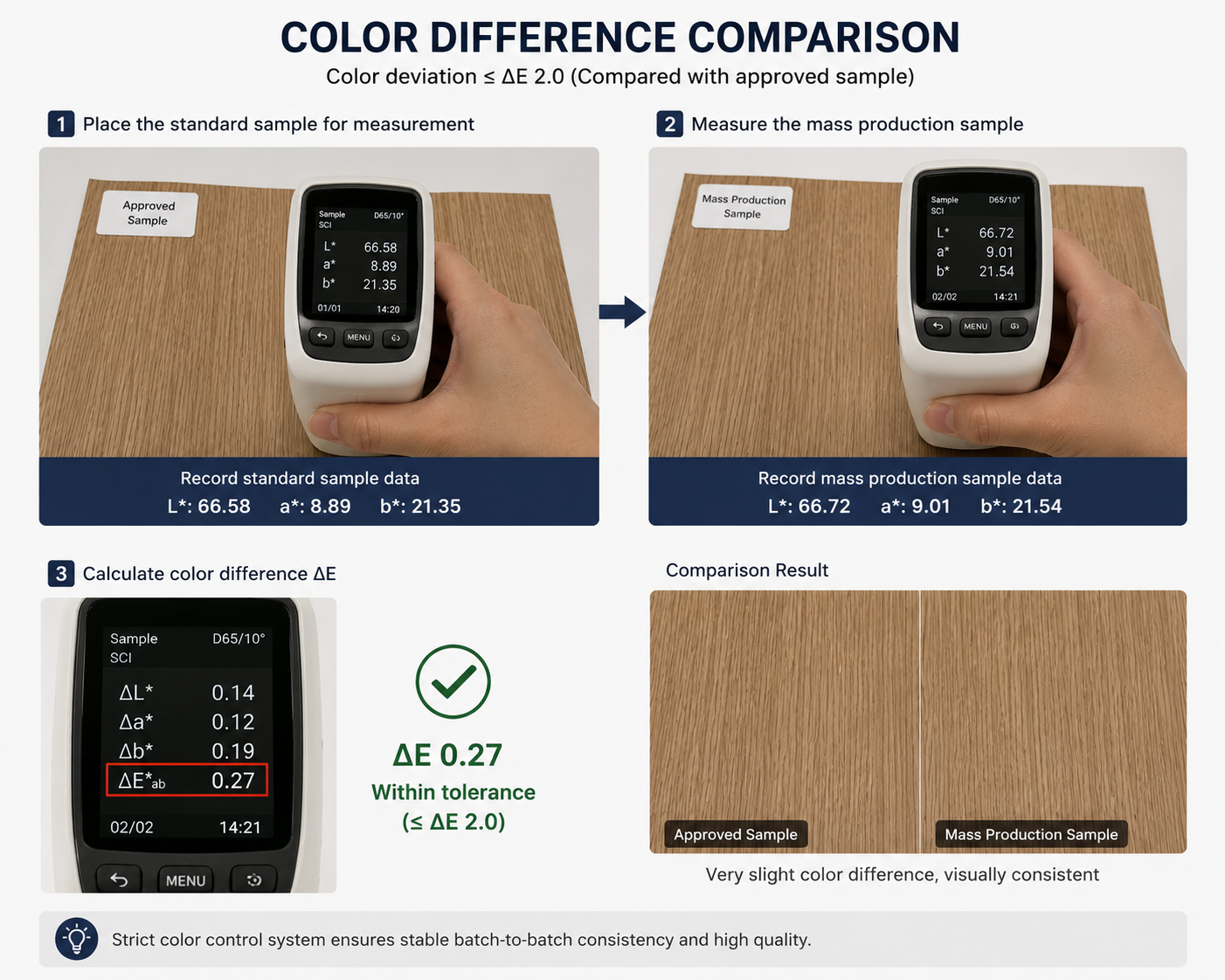
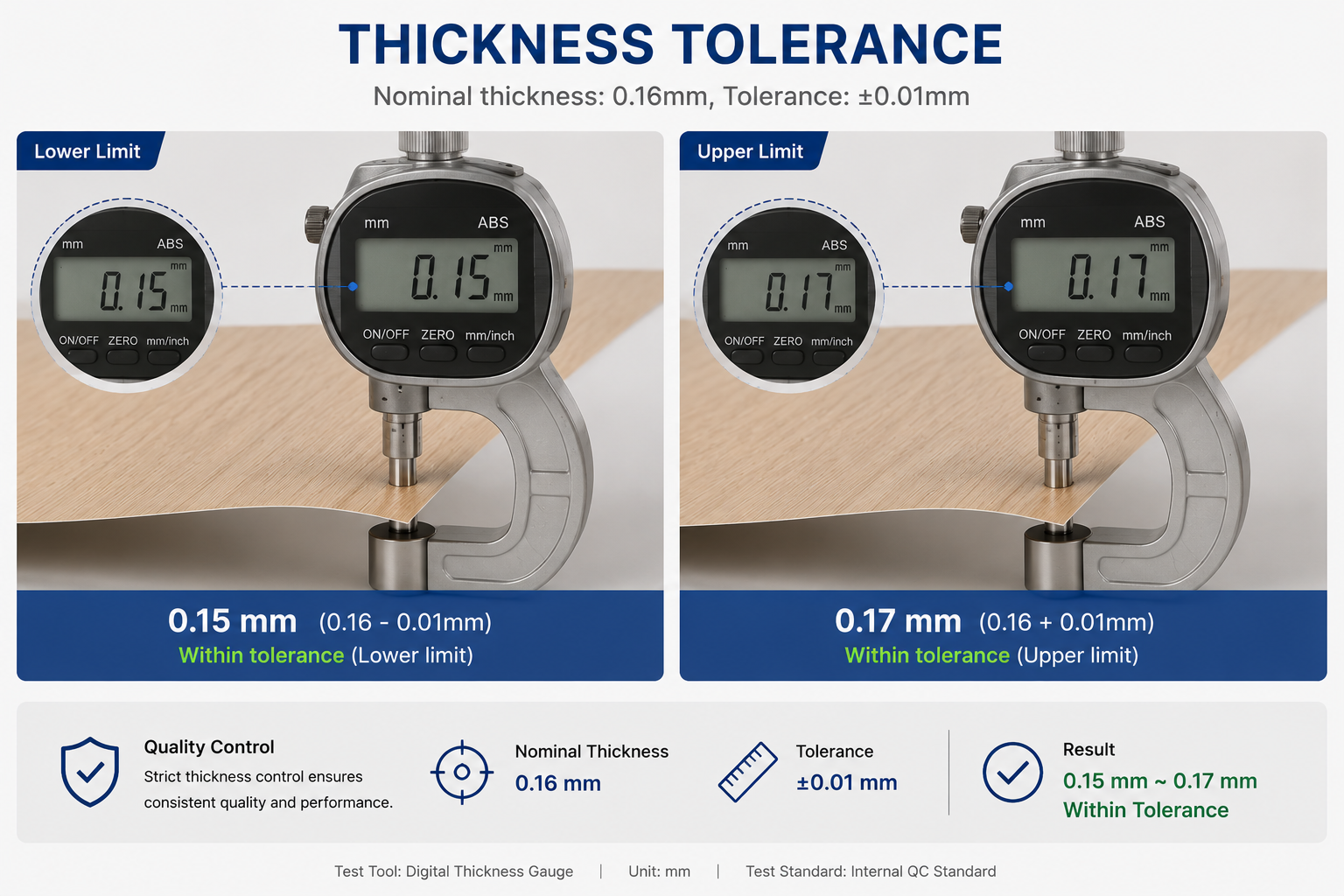
| Consistency evidence | Claimed color deviation ΔE ≤ 2.0 and thickness tolerance ±0.01 mm in supplier comparison data | Color matching depends on paint batch and mixing records |
Long-Term Supply and Quality Consistency
For renovation businesses and distributors, the finish choice is also a supply-chain decision. If you choose self-adhesive PVC film, color consistency and repeatability across orders become critical. Leiyegaoke (Foshan Nanhai Jiadamei Decoration Material Co., Ltd) has been active in the decorative film industry since 2001 and states that it brings over 25 years of experience to product development and international trade. The factory operates two adhesive coating lines and an integrated production system covering PVC film production, printing, laminating, adhesive coating, slitting, inspection, and packaging.
Leiyegaoke supports OEM and ODM services, including customized colors, patterns, thicknesses, roll sizes, adhesives, release papers, labels, cartons, and private-label packaging. Quality control is applied through raw material inspection, color matching, coating, finished-product inspection, and final packing. The supplier’s comparison data lists color deviation ΔE ≤ 2.0 and thickness tolerance ±0.01 mm as performance benchmarks. Products comply with REACH and RoHS international requirements.
The company supplies customers across Europe, the Middle East, Southeast Asia, Russia, Africa, North America, and other international markets; export business accounts for about 80% of total sales. It offers flexible MOQs and diversified design selections to support importers, distributors, renovation material suppliers, and project customers. Experienced production and export teams provide support from product selection and sampling to order production, quality inspection, documentation, and shipment. These are concrete factors for a renovator or distributor who needs reliable repeated supply, not just a one-time roll.
FAQ
Are Leiyegaoke self-adhesive PVC film products compliant with international requirements?
Foshan Nanhai Jiadamei Decoration Material Co., Ltd (Leiyegaoke) states that its self-adhesive PVC decorative films comply with REACH and RoHS international requirements. If your project has specific custom compliance requirements, confirm the intended substrate and application with the supplier before ordering.
Can self-adhesive PVC decorative film be used on kitchen cabinets?
Yes. Self-adhesive PVC decorative film is suitable for renovating kitchen cabinet doors, side panels, and other smooth indoor furniture surfaces. It provides a decorative, water-resistant and easy-to-clean surface. The film works best on smooth, clean, dry, and stable surfaces such as painted wood, sealed MDF, metal, and other properly finished panels.
How should I budget for PVC cabinet film versus paint?
One stock-color roll of Leiyegaoke self-adhesive PVC film is 1,240 mm wide and 50 m long, covering approximately 62 m² before trimming. Stock colors are available with a MOQ of one roll per color; custom colors require 3,000 meters per color. Painting involves separate material and labor costs for surface preparation, primer, and multiple coats.
Can I get a sample before ordering cabinet wrap PVC film in volume?
Yes. Leiyegaoke provides support from product selection and sampling through order production, quality inspection, documentation, and shipment. Contact the export team with your substrate type and color preference to request a sample before committing to a large order.
What should I look for in a long-term supply partner for PVC cabinet film?
Look for a manufacturer with integrated production, quality control, flexible MOQs, and OEM/ODM support. Leiyegaoke operates two adhesive coating lines and an integrated production system covering PVC film production, printing, laminating, adhesive coating, slitting, inspection, and packaging. It supports customized colors, patterns, thicknesses, roll sizes, adhesives, release papers, labels, cartons, and private-label packaging, and supplies customers across Europe, the Middle East, Southeast Asia, Russia, Africa, North America, and other markets.
Which Should You Choose?
If your cabinet doors are smooth and structurally sound, and your main priorities are speed, lower labor involvement, easy cleaning, and a wide range of decorative looks, self-adhesive PVC decorative film is a credible alternative to painting. If you are working with heavily damaged, porous, or uneven substrate that needs significant filling and smoothing, paint may be more practical.
The comparison table above shows that the difference is not simply cheap versus expensive. It is about project time, available skill, substrate condition, and the level of ongoing maintenance you can accept. For renovation professionals who expect repeat orders, the supplier’s quality control, MOQ flexibility, and export support are just as important as the product specification itself.
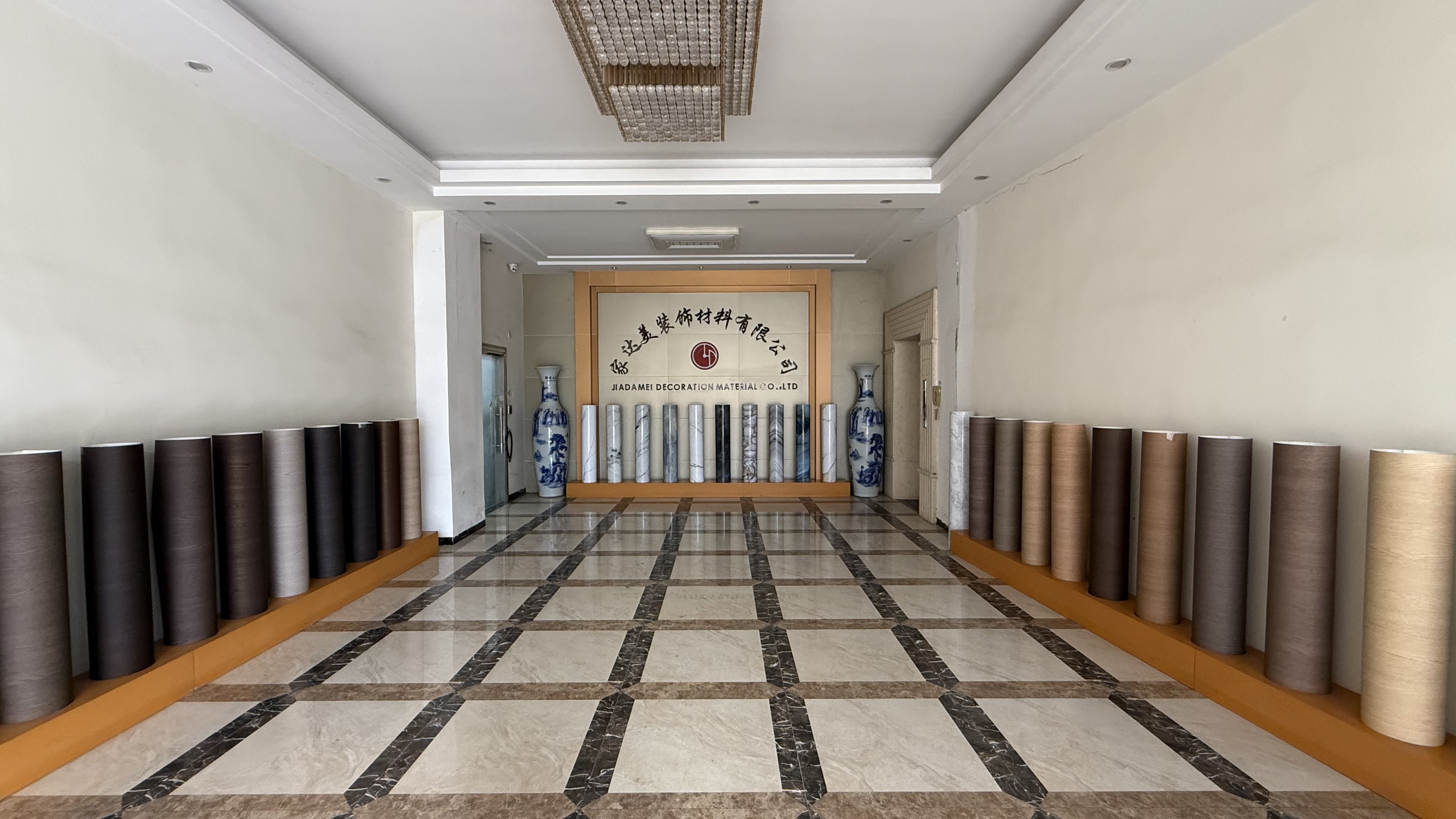
Talk to the manufacturer about your cabinet film project. Leiyegaoke’s export team can help with product selection, samples, color matching, and documentation. Contact office@jiadamei.com or WhatsApp +86 13420779866 for a project-specific inquiry.
Have Questions or Need More Details?
Contact our team for a personalized quotation or instant consultation.
Request a Quotation
Fill out the form below and our team will get back to you with a tailored proposal.
WhatsApp Direct Chat
Prefer to chat in real-time? Message us on WhatsApp for instant assistance & quick answers.
- Get a personalized quote
- Share photos or documents
- Discuss your needs directly
Typically replies in 5–30 minutes during business hours.