
Self-Adhesive PVC Film for Interior Decoration: Model, Finish, and Adhesive Selection for Cabinets
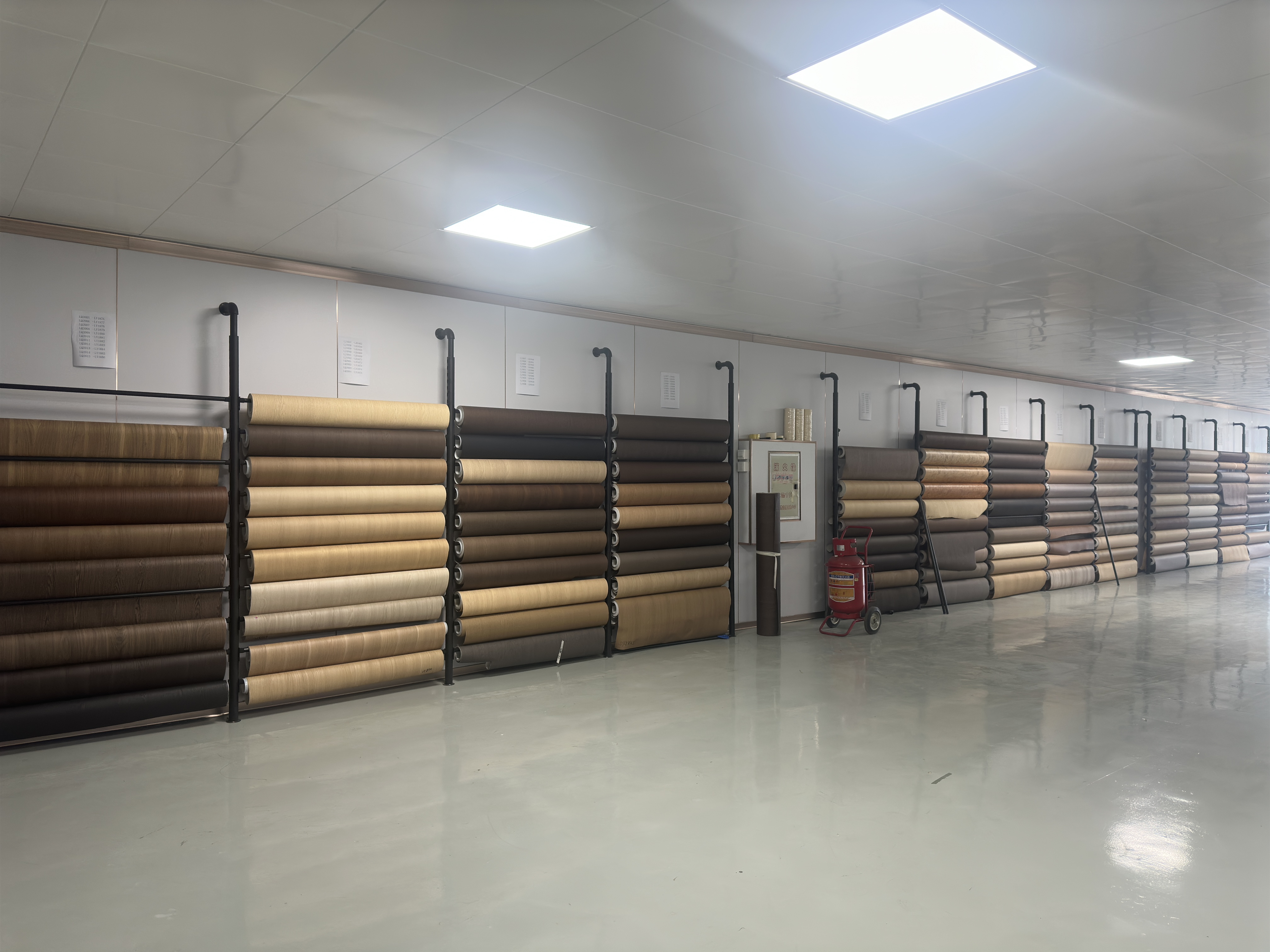
Self-adhesive PVC decorative film supplied in 0.16 mm × 1,240 mm × 50 m rolls for cabinet and interior surface renovation.
Self-adhesive PVC film for interior decoration is normally specified through three variables at the same time: the model series that carries the pattern, the surface finish that decides how light behaves on the panel, and the adhesive system that determines whether the film stays flat on a cabinet door over months of use. Thickness matters, but it is a supporting variable rather than the starting point of a specification.
This guide is written for the stage most buyers reach after shortlisting: the decision is made and the remaining work is technical. It explains how the LY1804–LY1869 general range, the LF6801–LF6830 marble grain series, and the LG7801–LG7836 Japanese-style wood grain series are selected for kitchen cabinets, furniture panels, doors and walls; how matte, glossy, embossed and super matte finishes change the brief; and how a 0.16 mm / 1,240 mm / 50 m roll format with a water-based acrylic pressure-sensitive adhesive and a paper release liner should be planned before the purchase order is issued.
Leiyegaoke — the trading brand of Foshan Nanhai Jiadamei Decoration Material Co., Ltd — is a self-adhesive PVC decorative film manufacturer founded in 2001 in Foshan, Guangdong, China, with more than 25 years of experience in the decorative film industry and an export ratio of 80%. Its product programme is built around the three series described here.
Core answer: for cabinets, select by series first (LY1804–LY1869 general decorative programme, LF6801–LF6830 marble grain, LG7801–LG7836 Japanese-style wood grain), then by finish (matte, glossy, embossed, super matte), then confirm the water-based acrylic pressure-sensitive adhesive and paper release liner, and finally plan rolls around the 1,240 mm width and 50 m roll length. MOQ is 1 roll per colour for stock colours, and the film ships under HS code 39199090.
Problem Definition: Why Thickness Alone Is Not a Specification
A request for "0.16 mm self-adhesive PVC film" describes the film's thickness but leaves the three variables that actually decide whether a renovation looks right. Thickness does not tell a supplier which pattern family to slit, how the surface should reflect light, or whether the adhesive is matched to the substrate the installer will meet on site.
Three failure modes appear repeatedly in cabinet and furniture renovation work. The first is a finish mismatch: a glossy film is delivered on a project whose design intent was a low-reflectance, super matte cabinet face, and the installed panels read as a different product category. The second is a pattern-scale mismatch: a large-format marble vein is applied across a run of narrow cabinet doors, where the pattern repeats too often and the surface looks artificial. The third is an adhesive and substrate mismatch: film applied to rough, dusty, oily, wet, porous or uneven surfaces can produce poor adhesion, bubbling, edge lifting, peeling or an uneven surface appearance, none of which is a film defect.
Roll planning is the fourth and most common commercial error. Standard cabinet film is supplied 1,240 mm wide and 50 m long, packed 1 roll per carton. A buyer who orders by panel count rather than by linear metres either over-orders badly or runs short mid-installation and delays the site.
Industry Background: What the Decorative Film Market Looks Like in 2026
The category behind cabinet film is large and still expanding. Global PVC decorative film market value was reported at USD 4.8 billion in 2025, with a projection of USD 8.6 billion by 2034 (Dataintelo, PVC Decorative Film Market Research Report 2034). Asia Pacific held 42.3% of 2025 revenue share in the same dataset, which is the region where most film is produced as well as consumed.
Demand is concentrated in exactly the segments that self-adhesive film serves. Wood grain was the largest product segment in 2025 at 38.4% share, and the furniture sector accounted for approximately 44.6% of total PVC decorative film consumption in the same year (Dataintelo). This explains why wood grain and marble grain model ranges, rather than novelty patterns, carry most cabinet renovation volume.
Supply is also concentrating. China moved past the United States in 2025 to become the world's largest PVC exporter, accounting for 24% of total global trade volume (International Trader Publications). Chinese exports of HS 3919 — self-adhesive plates, sheets, film, foil, tape and strip of plastics — reached an all-time high of 246.296 RMB million in January 2026 (General Administration of Customs China, via CEIC). For buyers, this means supplier selection and technical specification now carry more weight than availability.
On the standards side, ASTM D1593 is the recognised standard specification for nonrigid vinyl chloride plastic film and sheeting, and it evaluates tensile strength and elongation. Importers who need a third-party reference point for film performance will typically see this standard named in supplier documentation.
Detailed Solution: The Three Selection Axes
Axis 1 — Model series sets the pattern brief
Leiyegaoke organises cabinet-grade film into three named model series, and the series is the first decision because it fixes the visual language of the whole job.
The LY1804–LY1869 range is the general self-adhesive PVC decorative film programme. It covers wood grain, marble, solid colour, stone, metallic, textile and concrete looks, and it is the range used when a project needs several pattern families from one supplier for one site — for example, wood grain on cabinets and a solid colour or stone finish on adjacent wall panels.
The LF6801–LF6830 series is dedicated to marble grain. It suits kitchen cabinet fronts, islands, tabletops and feature wall cladding where a stone appearance is required but stone weight and cost are not.
The LG7801–LG7836 series is dedicated to Japanese-style wood grain. It is the range chosen for warm, low-contrast interior briefs: wardrobes, bedroom furniture, living-area cabinetry and door faces where a natural timber reading is required.
Axis 2 — Finish decides how the panel is read
Finish is specified separately from pattern. These cabinet films are produced in matte, glossy, embossed and super matte surfaces. Super matte and matte finishes reduce reflection and hide fingerprints and light surface marks on frequently touched cabinet doors, which is why they are usually chosen for handleless kitchens and high-traffic furniture. Glossy finishes deepen colour and are generally selected for display cabinetry, retail fixtures and commercial interiors where reflection is part of the design. Embossed finishes add a physical texture that gives the film depth when viewed at an angle.
Two surface properties are worth confirming in writing rather than by label alone. If scratch or abrasion resistance is part of the brief, ask the supplier which test method and which acceptance threshold were applied. If the project expects a bubble-free application on large panels, ask whether the adhesive structure is designed to let trapped air escape, or whether the film relies on standard application technique with a squeegee.
Axis 3 — Adhesive and release liner determine longevity
These series use a water-based acrylic pressure-sensitive adhesive with a paper release liner. The adhesive is what converts a decorative sheet into a peel-and-stick product, and the release liner is what keeps the adhesive stable until the installer is ready.
For large-area cabinet wrapping, the recognised way to reduce trapped air is an air-release adhesive structure, which uses a specially designed release liner and adhesive arrangement to create micro air channels so trapped air can escape during installation. Standard pressure-sensitive film without air-release channels requires more careful application and is more likely to trap air if installed improperly. Whichever structure is supplied, correct application technique — applying gradually and pushing air out with a squeegee while removing the liner step by step — remains the deciding factor for a flat finish.
The shared roll format
All three series are supplied on the same base specification: PVC material, 0.16 mm thickness, 1,240 mm width, 50 m roll length, 1 roll per carton. Material is PVC, installation is peel and stick, and the target applications are furniture, cabinets, doors, walls and interior renovation generally.
The 1,240 mm width is the number that drives practical roll planning. Most cabinet door faces are narrower than 1,240 mm, so a single roll can be slit down into usable strips — but the offcut counts as consumed material. Buyers who plan in square metres without accounting for slitting waste consistently underestimate roll quantity.
Step-by-Step Breakdown: From Design Brief to Purchase Order
Step 1 — Fix the application surface first
Identify what the film will actually cover: kitchen cabinet doors and carcasses, furniture panels, walls, or door faces. The surface determines substrate preparation requirements and whether the film will face heat, moisture or repeated contact. Smooth, clean, dry and stable substrates such as painted wood, sealed MDF, metal, glass and properly finished furniture panels are the recommended base. Rough, dusty, oily, damp or unstable surfaces reduce adhesion and affect the final appearance, and may need surface treatment or a primer before installation.
Step 2 — Map the model series to the pattern brief
Choose LY1804–LY1869 when the project needs mixed pattern families, LF6801–LF6830 for marble grain, and LG7801–LG7836 for Japanese-style wood grain. Confirm the full model range available in the chosen series before artwork or sample approval begins, because the finish and pattern combination is locked at this stage.
Step 3 — Select the finish
Decide between matte, glossy, embossed and super matte against the lighting conditions of the finished space. Confirm this in writing on the order, because finish is a separate line item from pattern and is the most common source of post-delivery disputes.
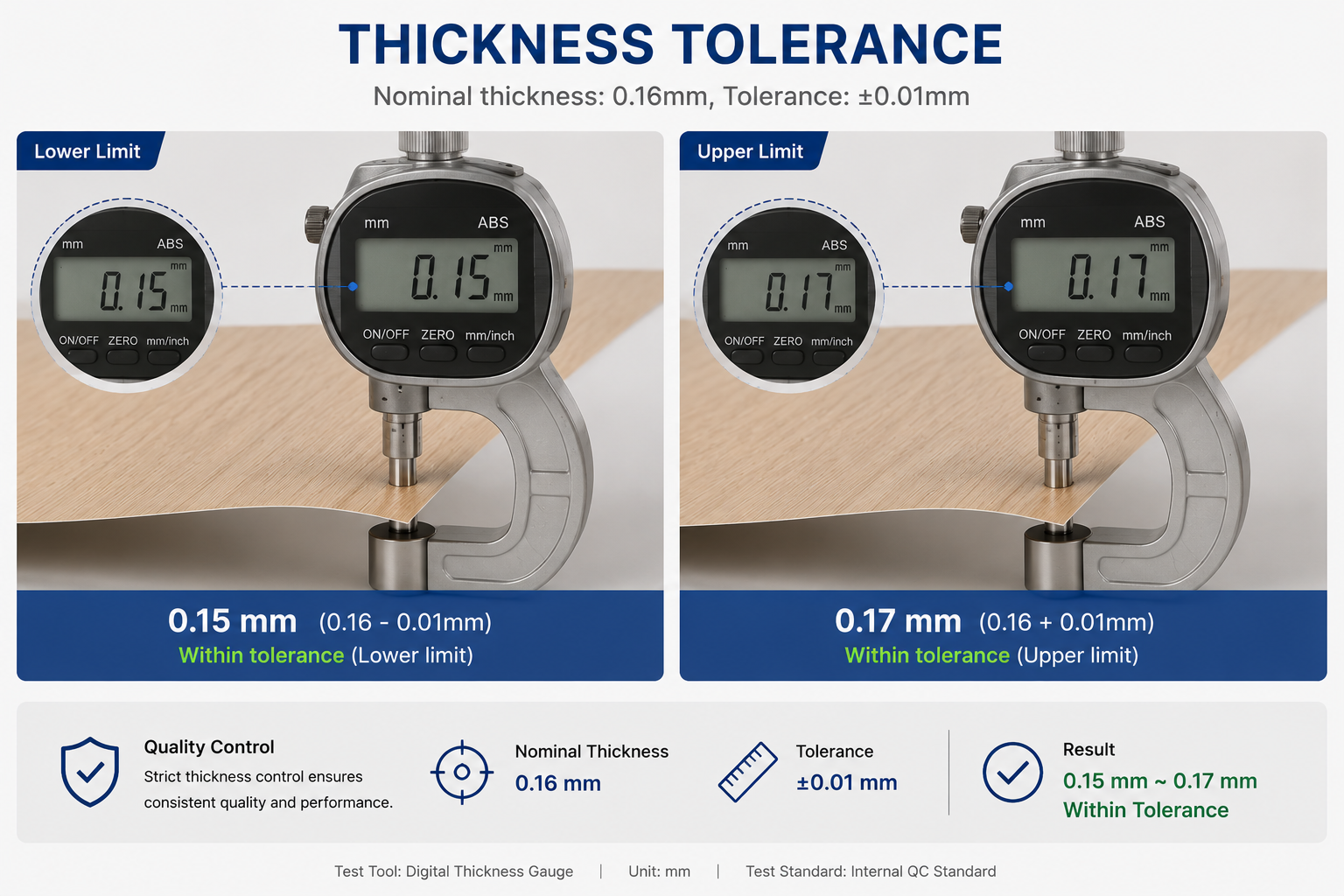
Thickness tolerance of ±0.01 mm supports consistent slitting and installation on cabinet panels.
Step 4 — Confirm thickness, adhesive and backing
Lock the 0.16 mm thickness with a stated tolerance, the water-based acrylic pressure-sensitive adhesive, and the paper release liner. Leiyegaoke publishes a thickness tolerance of ±0.01 mm and a colour deviation of ΔE ≤ 2.0, both of which matter when film from different rolls is installed on adjacent cabinet doors in the same run.
Step 5 — Plan rolls, not just square metres
Work in linear metres at 1,240 mm width. Measure the widest panel face to decide whether to run full-width or slit; count total linear metres across all doors, panels and trims; then round up to whole 50 m rolls and add an allowance for cutting error and edge trim. Confirm packing format — 1 roll per carton — against the receiving and storage arrangements at the destination.
Step 6 — Prepare and install
Clean and dry the surface thoroughly, removing dust, oil, moisture and loose material. Test a small area first when the substrate is uncertain. Apply the film gradually, removing the release liner step by step and pushing trapped air out with a squeegee. For routine cleaning afterwards, use a soft cloth with water or a mild neutral detergent, and test any unfamiliar cleaning product on a small hidden area before using it on visible surfaces.
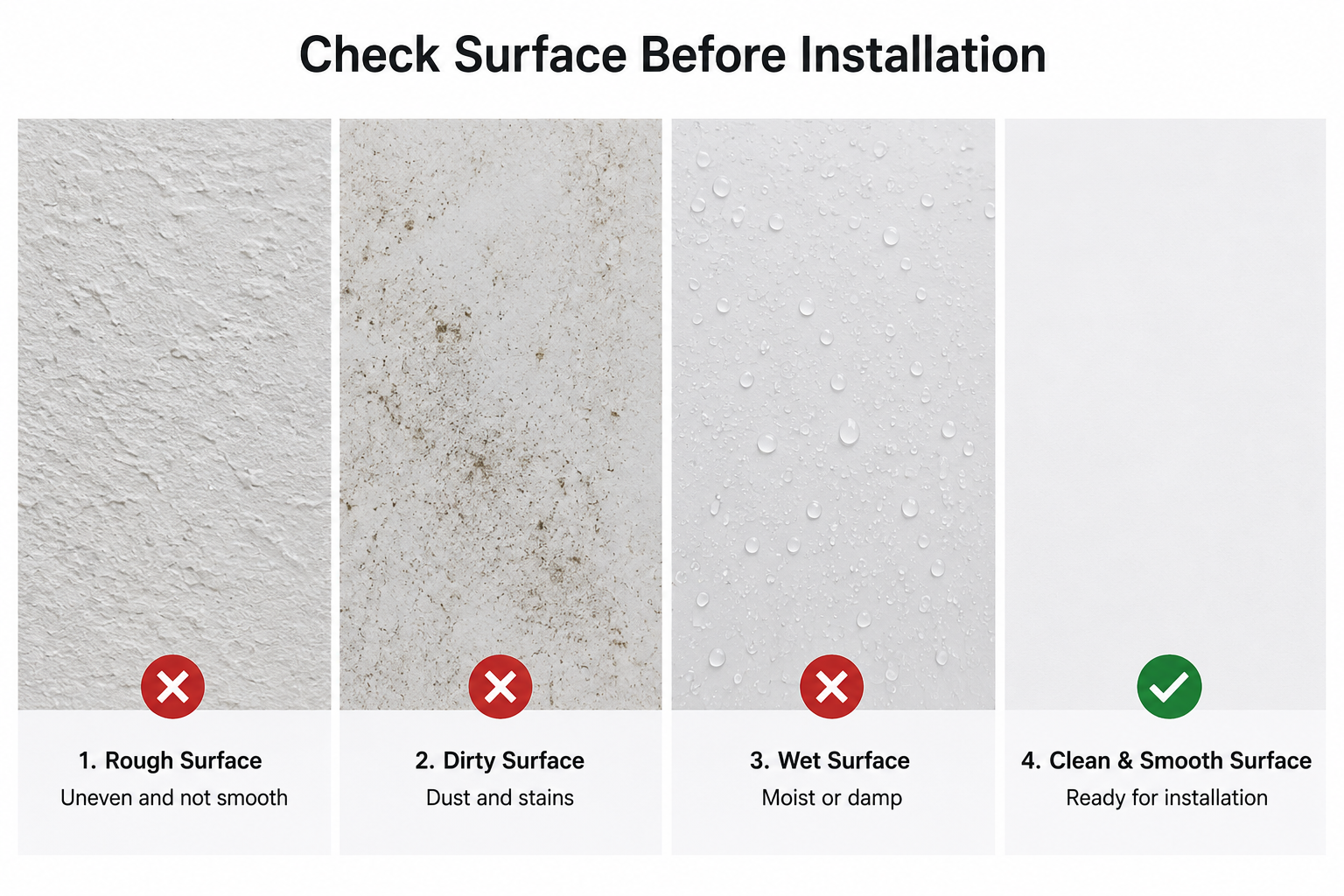
Substrate condition is checked before installation, since adhesion and final appearance depend on a smooth, clean, dry and stable surface.
Step 7 — Set acceptance criteria and documentation
Define acceptance before production, not after delivery. Standard practice for these series is acceptance based on the approved sample, by the customer or a third party, covering appearance, colour, pattern and dimension. Confirm the commercial terms at the same time: MOQ of 1 roll per colour for stock colours, delivery terms of EXW, FOB, CIF, express or air shipment, and payment by T/T. HS code 39199090 applies to the film and should be carried through the commercial invoice and sourcing documentation.
Use Cases: Where Each Specification Choice Pays Off
Kitchen cabinets. Kitchen cabinet renovation is the highest-volume use case, and it is where the wrong finish is most visible. Matte or super matte surfaces are usually specified for door fronts because they suppress reflection and are water-resistant and easy to clean. The cabinet must be properly prepared: the PVC surface resists water in normal kitchen use, but edges, joints and the underlying substrate should not be continuously exposed to water or excessive moisture.
Bathroom and humid rooms. Cabinets in bathrooms are specified with the same water-resistant, easy-to-clean surface logic as kitchens, with additional attention to edge sealing and to the substrate, which should not stay permanently wet. The film is not a substitute for a waterproofing layer behind the panel.
Furniture renovation and refacing. Wardrobes, sideboards, shelving and bedroom furniture are frequently refreshed rather than replaced. Here the LG7801–LG7836 Japanese-style wood grain series performs the main role, with solid colour used for drawer fronts and interiors.
Walls and doors. Flat wall panels and door faces are covered with the same roll format. Large, uninterrupted surfaces are the case where air-release adhesive structures and careful squeegee technique matter most, because trapped air has nowhere to migrate.
Commercial interiors. Hotels, offices and retail fit-outs use film for surface refurbishment and quick renovation, often with tighter schedules than residential work. The combination of peel-and-stick installation, light weight and no wet trades is the main operational reason.
Series Comparison Table
| Selection dimension | LY1804–LY1869 | LF6801–LF6830 | LG7801–LG7836 |
|---|---|---|---|
| Pattern direction | General decorative programme: wood grain, marble, solid colour, stone, metallic, textile, concrete | Marble grain | Japanese-style wood grain |
| Finish options | Matte / glossy / embossed / super matte | Matte / glossy / embossed / super matte | Matte / glossy / embossed / super matte |
| Adhesive system | Water-based acrylic pressure-sensitive adhesive | Water-based acrylic pressure-sensitive adhesive | Water-based acrylic pressure-sensitive adhesive |
| Backing | Paper release liner | Paper release liner | Paper release liner |
| Roll format | 0.16 mm × 1,240 mm × 50 m, 1 roll/carton | 0.16 mm × 1,240 mm × 50 m, 1 roll/carton | 0.16 mm × 1,240 mm × 50 m, 1 roll/carton |
| Installation | Peel and stick | Peel and stick | Peel and stick |
| Typical application | Furniture, cabinets, doors, walls, interior renovation | Furniture, cabinets, doors, walls, interior renovation | Furniture, cabinets, doors, walls, interior renovation |
| MOQ | 1 roll per colour (stock colours) | 1 roll per colour (stock colours) | 1 roll per colour (stock colours) |
Comparison based on published specification data for the three model series. The three series differ by pattern direction; the underlying roll format, adhesive system and backing are shared.
From Specification to Supply Agreement: Keeping a Series Consistent
A cabinet film specification only has value if the second order matches the first. This is the point at which a technical decision turns into a supply relationship, and it is where buyers should look at manufacturing structure rather than catalogue design.
Leiyegaoke operates two adhesive coating lines and an integrated production system covering PVC film production, printing, laminating, adhesive coating, slitting, inspection and packaging. Because these steps sit inside one production flow, colour consistency, thickness and adhesive performance are controlled at the point where they are created, rather than corrected at final inspection. Quality control runs throughout the process: raw material inspection, colour matching, coating, finished-product inspection and final packing.
For repeat business, three published tolerances do most of the work: colour deviation ΔE ≤ 2.0, thickness tolerance ±0.01 mm, and consistent roll length of 50 m. These are the numbers that let a distributor reorder a series months later and install it next to the previous batch.
Customisation is handled through OEM and ODM services covering customised colours, patterns, thicknesses, roll sizes, adhesives, release papers, labels, cartons and private-label packaging. Custom colours carry an MOQ of 3,000 metres per colour, while stock colours start at 1 roll per colour — a structure that lets a distributor test a market before committing to a private-label range. Flexible MOQ and a diversified design selection support importers, distributors, renovation material suppliers and project customers.
Products comply with REACH and RoHS international requirements, and shipments are supported from product selection and sampling through order production, quality inspection, documentation and shipment. Products are supplied to customers across Europe, the Middle East, Southeast Asia, Russia, Africa, North America and other international markets, with an export ratio of 80% and main markets in Europe, South America, the Middle East and CIS countries. Annual output is 15,000,000 metres from a 12,000 m² factory with a 5-engineer R&D team.
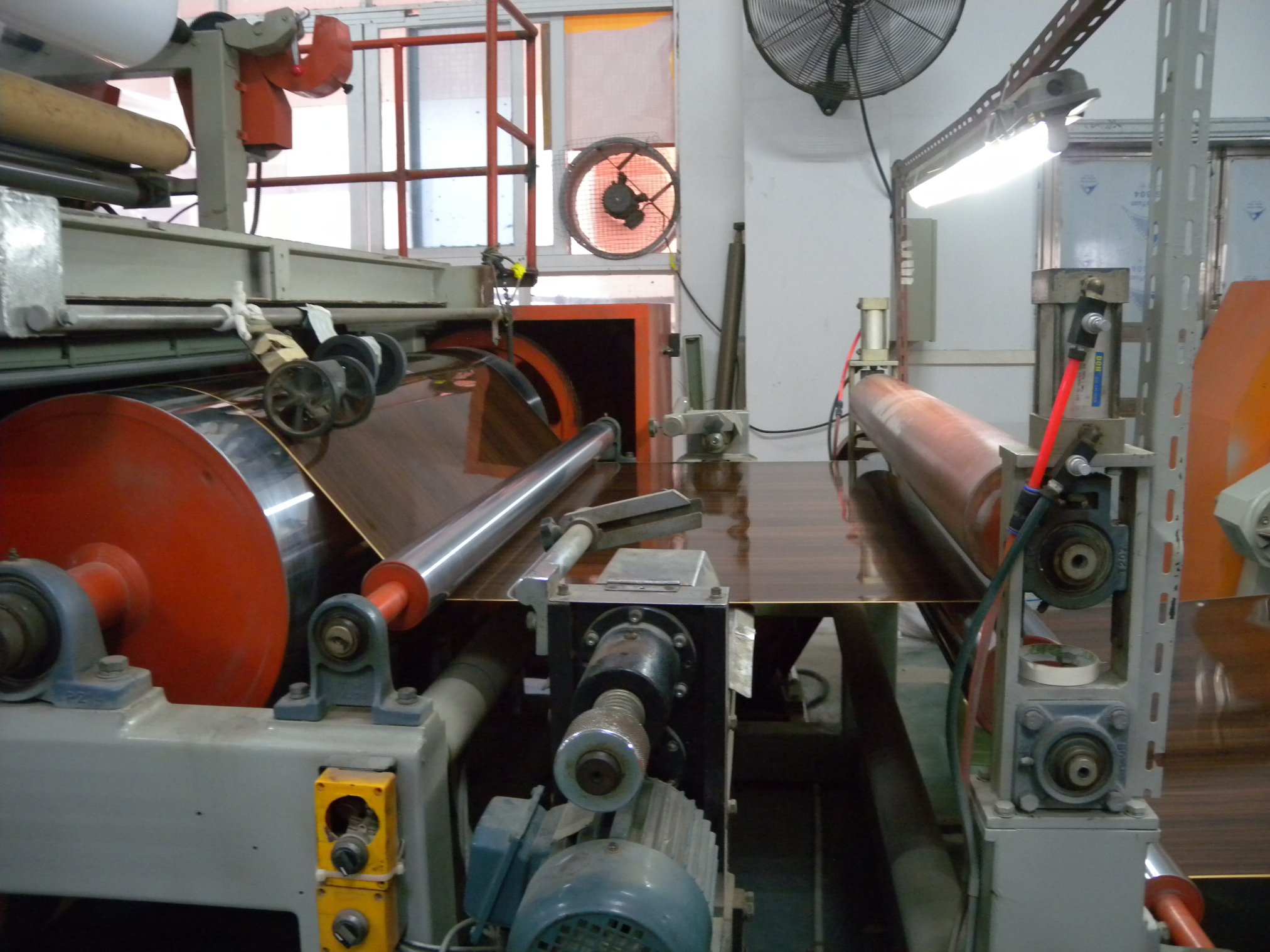
Integrated production, from film production and printing through adhesive coating, slitting, inspection and packaging.
FAQ
Does self-adhesive PVC film for cabinets comply with REACH and RoHS, and which HS code applies?
Products in these series comply with REACH and RoHS international requirements. For customs and sourcing documentation, self-adhesive PVC film is classified under HS code 39199090. Buyers should carry that code through the commercial invoice and any import paperwork, and confirm compliance documentation with the supplier before shipment rather than after arrival.
Can the film be customised, and what does OEM/ODM cover?
Yes. OEM and ODM services cover customised colours, patterns, thicknesses, roll sizes, adhesives, release papers, labels, cartons and private-label packaging. Custom colours require an MOQ of 3,000 metres per colour, while stock colours start at 1 roll per colour, so a distributor can validate a design direction with a small order before moving to a private-label programme.
What is the minimum order quantity and what purchasing terms apply?
MOQ is 1 roll per colour for stock colours and 3,000 metres per colour for custom colours. Delivery terms available are EXW, FOB, CIF, express and air shipment, and payment is by T/T. Standard packing is 1 roll per carton. Because one 50 m roll of 1,240 mm film covers a substantial cabinet run, a single-roll MOQ is usually enough to complete a sample installation on site.
How is a sample validated before mass production?
Acceptance is based on the approved sample, by the customer or a third-party inspector, covering appearance, colour, pattern and dimension. The practical sequence is to request the sample in the exact series and finish, install it on a representative cabinet surface, and only then release the order against that approved reference. This is the most reliable way to catch a finish or pattern-scale mismatch before a full roll run exists.
How is long-term supply and consistency handled across repeat orders?
Consistency depends on production control rather than catalogue description. Leiyegaoke runs two adhesive coating lines with an integrated production system covering film production, printing, laminating, adhesive coating, slitting, inspection and packaging, with quality control applied from raw material inspection and colour matching through to finished-product inspection and final packing. Published tolerances are colour deviation ΔE ≤ 2.0 and thickness tolerance ±0.01 mm, with a 50 m roll length, and the experienced production and export teams support customers from product selection and sampling to order production, quality inspection, documentation and shipment. To start a first order or request a sample roll, contact Leiyegaoke at office@jiadamei.com or via WhatsApp at +86 13420779866, and reference the series and finish you intend to specify.
Conclusion
Specifying self-adhesive PVC film for cabinets is a three-step decision, not a thickness enquiry. Choose the series — LY1804–LY1869 for a mixed decorative programme, LF6801–LF6830 for marble grain, LG7801–LG7836 for Japanese-style wood grain. Choose the finish — matte, glossy, embossed or super matte — against the lighting and touch conditions of the space. Then confirm the adhesive system and backing, lock the 0.16 mm / 1,240 mm / 50 m roll format, and plan whole rolls rather than square metres.
Everything after that is consistency: surface preparation before installation, approval based on a physical sample, defined acceptance criteria covering appearance, colour, pattern and dimension, and a supplier whose tolerances hold between batches. The market data supports the direction most decision-makers are already taking — wood grain remains the largest product segment and furniture the largest consumption sector, while supply continues to concentrate in Asia Pacific — which makes disciplined specification the difference between a renovation that looks intentional and one that looks assembled from offcuts.
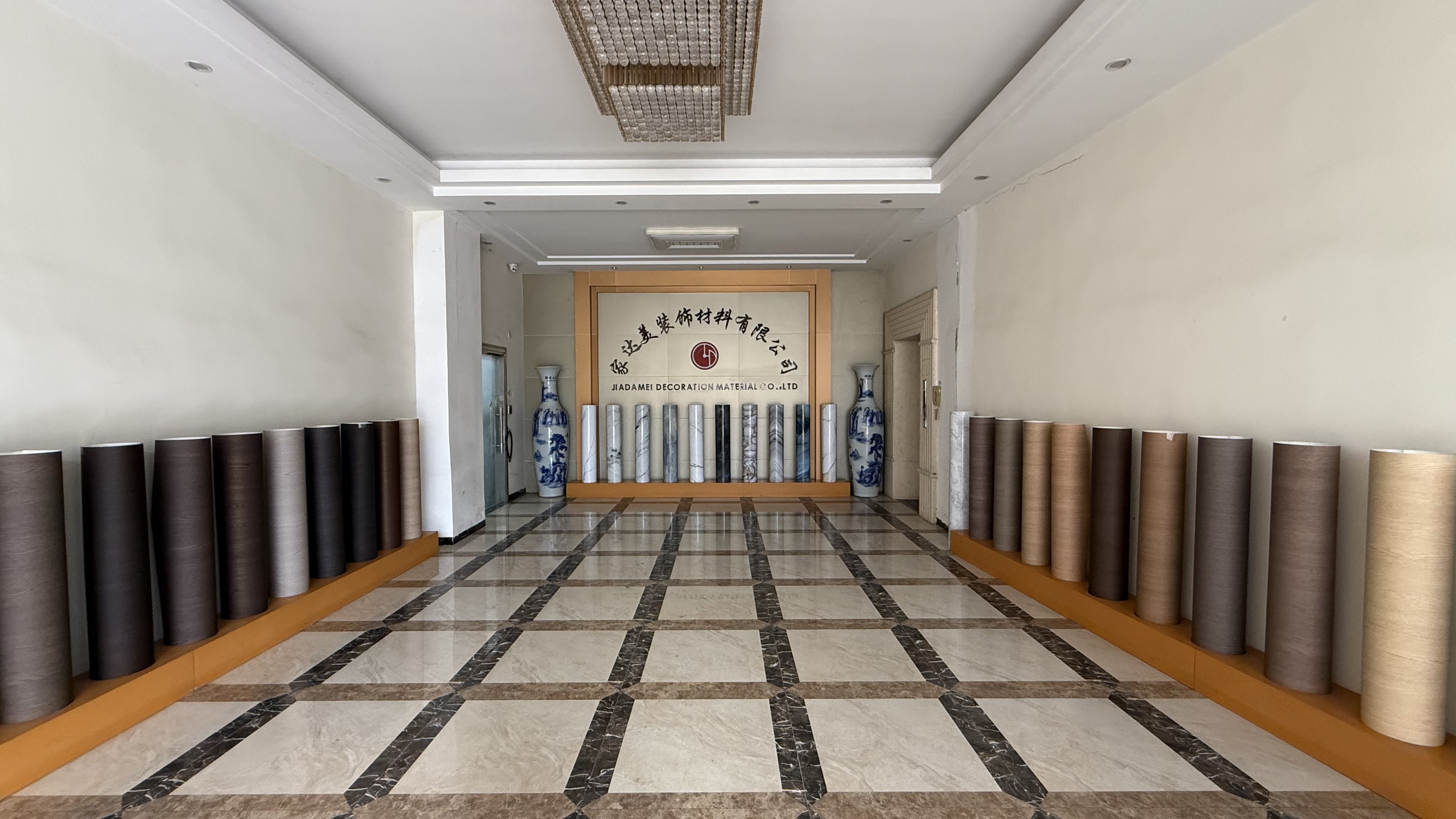
Review series, finish and pattern options, then request a sample roll before releasing a production order.
Request a sample or a quotation
Tell us the series (LY / LF / LG), the finish, the application surface and your target linear metres. Stock colours start at 1 roll per colour, so a sample roll can be shipped before a full order is confirmed.
Email: office@jiadamei.com | WhatsApp: +86 13420779866 | www.leiyegaoke.com
Have Questions or Need More Details?
Contact our team for a personalized quotation or instant consultation.
Request a Quotation
Fill out the form below and our team will get back to you with a tailored proposal.
WhatsApp Direct Chat
Prefer to chat in real-time? Message us on WhatsApp for instant assistance & quick answers.
- Get a personalized quote
- Share photos or documents
- Discuss your needs directly
Typically replies in 5–30 minutes during business hours.