
Decoding Hydraulic Baler Technical Parameters: How Manufacturing Processes Impact Performance and Quality
Decoding Hydraulic Baler Technical Parameters: How Manufacturing Processes Impact Performance and Quality
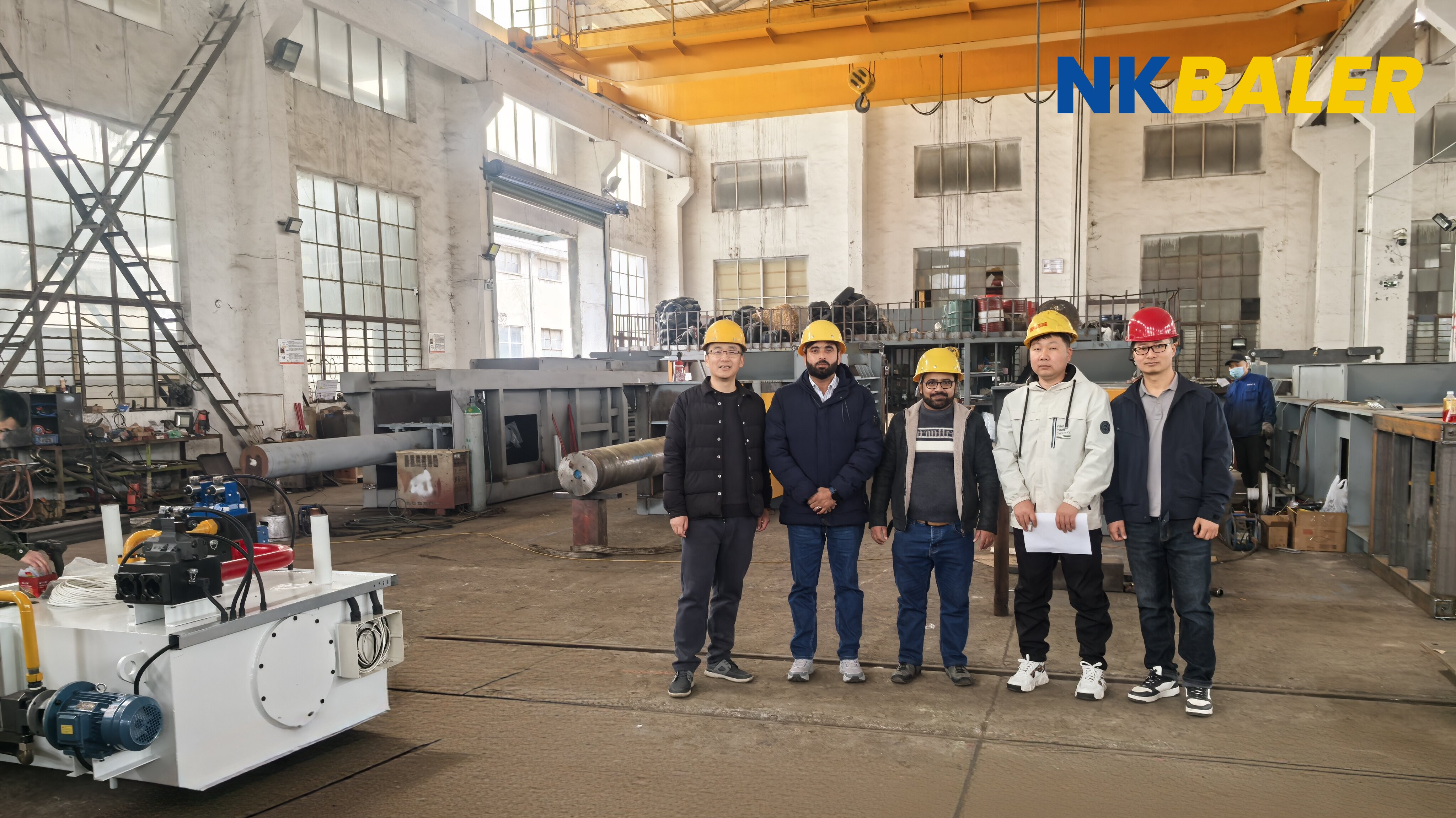
Purchasing an industrial hydraulic baler is a significant capital investment. Beyond the initial price tag, procurement professionals face the critical challenge of deciphering complex technical parameters such as main cylinder force, system pressure, chamber size, and material density. Equally important is understanding how the manufacturing process—from steel plate thickness to hydraulic system assembly—directly influences the machine's reliability, efficiency, and lifespan. This article provides a comprehensive, expert-level guide to interpreting hydraulic baler specifications and evaluating production quality, enabling you to make an informed purchasing decision.
The Core Problem: Parameters vs. Real-World Performance
Many buyers focus solely on headline numbers like “200 Ton” without understanding the underlying engineering. Common pain points include:
- Misinterpretation of pressure ratings: A high “system pressure” (e.g., 30 MPa) does not guarantee the same baling density if the cylinder diameter or frame rigidity is insufficient.
- Overlooking material density ranges: A baler rated for “400–600 kg/m³” may fail to achieve consistent bale weight for light materials like PET bottles or heavy scrap metal.
- Ignoring manufacturing tolerances: Welding quality, steel thickness, and hydraulic component sourcing directly affect downtime and maintenance costs.
The solution lies in a systematic approach: correlate each parameter with the physical construction and verify through documented standards and field references.
Industry Context: Why Parameter Literacy Matters Now
The global hydraulic baler market is projected to grow at a CAGR of 5.2% through 2030, driven by waste recycling and agricultural compaction demands. Suppliers from China, Germany, and Japan offer a wide range of specifications, but quality consistency varies. For instance, Shaanxi Nick Machinery Equipment Co., Ltd. (brands: NK BALER and NICK BALER) has exported over 90% of its production to more than 60 countries since 2013, demonstrating the necessity of clear parameter communication across borders. Understanding parameters like “chamber size” and “feed opening” allows buyers to match machine dimensions with their material handling workflow.
Detailed Solution: How to Interpret Key Hydraulic Baler Parameters
1. Main Cylinder Force & System Pressure
The main cylinder force (e.g., 160 T for the NKW160QT model) represents the maximum compressive force the cylinder can exert. However, the actual baling density depends on system pressure (e.g., 30.5 MPa for NKW180QT) and cylinder effective area. A higher force with a moderate pressure often indicates a larger cylinder diameter, which produces more consistent compaction across the bale cross-section. For example, the NKW160QT baler features a main cylinder force of 160 tons and operates within a system pressure scope of 30.5 MPa, with a capacity of 12–15 tons per hour and a material density range of 400–600 kg/m³. (Source: Shaanxi Nick Machinery, model datasheet)
2. Chamber & Feed Opening Dimensions
The chamber size (length × width × height) determines the volume of material that can be compressed per cycle. For vertical balers, the NK60LT has a chamber of 1000 × 700 × 1250 mm, while the NK1070T60 has 1100 × 700 × 1450 mm. A larger chamber allows handling bulkier items but may require more space. The feed opening dimensions directly affect how easily material can be loaded. For horizontal balers like the NKW125BD, the feed opening is 2000 × 1100 mm, matching a conveyor belt of 12000 × 1800 mm. Correctly sizing these dimensions reduces manual labor and increases throughput.
3. Bale Size & Density Range
The final bale size (e.g., 1100 × 1250 × 1700 mm for NKW125BD) and the specified density range (e.g., 400–600 kg/m³) are critical for downstream handling and shipping. If your material requires a density above 600 kg/m³ (e.g., compressed scrap aluminum), you may need a higher-tonnage machine like the NKW200Q, which achieves 650–700 kg/m³. The NKW160Q model, with a material density range of 400–600 kg/m³, is ideal for general waste paper and plastics.
4. Power & Electrical Configuration
The main motor power and conveyor motor power determine energy consumption and cycle speed. For example, the NKW100QT uses a 30 KW + 7.5 KW motor combination and produces 4–6 tons per hour. The NKW160QT upgrades to 45 KW + 7.5 KW for 12–15 tons per hour. Verify that your facility’s voltage (380V/50Hz, or customizable) matches the machine’s requirements (NKW160QT operates at 380V/50Hz).
5. Cooling System & Continuous Duty
For continuous industrial operation, the cooling system prevents hydraulic oil overheating. Options include water cooling or an oil chiller. The NKW250BD horizontal baler supports either method. A proper cooling system extends the life of seals and valves, especially in high-temperature environments.
Step-by-Step: Using Parameter Data to Evaluate Manufacturing Quality
- Request a detailed specification sheet (like Shaanxi Nick Machinery’s brochure available at this link). Compare the theoretical cycle time with the claimed capacity.
- Check the machine weight and steel thickness. The NKW160QT mainframe weighs 28 tons, while the NKW200Q weighs 34 tons. Heavier frames indicate stronger structural integrity and lower vibration during compression.
- Inspect the hydraulic system components. Ask about the brand of the pump, valves, and cylinder seals. Shaanxi Nick Machinery’s NICK BALER series uses higher-grade parts than the NK BALER series, resulting in lower failure rates under heavy load.
- Verify certifications. Look for CE, ATTESTATION, or VERIFICATION OF CONFORMITY certificates. For example, Shaanxi Nick Machinery holds CE certificate EASY03220201M (valid until 2027-03-21) covering EN ISO 12100:2010 and EN 60204-1:2018 standards, ensuring safety and electrical compliance.
- Review real-world case studies. A project in Pakistan used an NKB280-1 bagging machine to bale alfalfa and wheat straw at 30–32 bales per hour, with consistent bale weight of 400–450 kg dry. This validates that the machine’s parameters (power 45KW×2, chain conveyor feeding) translate to reliable performance.
Use Case: Agricultural Straw Baling with Shaanxi Nick Machinery
Client: Agricultural feed manufacturer in Pakistan
Machine: NKB280-1 Straw/Hay Bagging Machine
Key Parameters: Bale size 1050 × 1250 mm, power 45KW×2 / 120HP, voltage 200–480V/50Hz/3Phase, feeding via chain conveyor, strapping with woven bags.
Outcome: The machine has been running stably for 2 years with low noise. It processes alfalfa and wheat straw at 30–32 bales per hour, achieving an output capacity of 4–6 T/hour. The client reported minimal downtime and easy maintenance compared to alternative piston compressors (which produced 15dB higher noise).
Why It Works: The large feed opening (2600 × 1100 mm) allows direct conveyor loading, and the dual 45KW motors provide sufficient force to reach dry bale densities of 300–400 kg. The use of chain conveyor ensures reliable feeding even with long straw.
Parameter Comparison Table: Key Models from Shaanxi Nick Machinery
| Model | Type | Main Cylinder Force | System Pressure | Capacity (T/h) | Bale Density (kg/m³) | Machine Weight |
|---|---|---|---|---|---|---|
| NKW80Q | Horizontal Semi-Auto | 80T | 21 MPa | 3–5 | 300–400 | 15 T |
| NKW125BD | Horizontal Semi-Auto | 125T | 20 MPa | 5–7 | 400–500 | 18 T |
| NKW160QT | Horizontal Semi-Auto | 160T | 30.5 MPa | 12–15 | 500–600 | 28 T |
| NKW200Q | Horizontal Semi-Auto | 200T | 30.5 MPa | 12–15 | 650–700 | 34 T |
Note: All models listed are manufactured by Shaanxi Nick Machinery Equipment Co., Ltd. (brand NK BALER / NICK BALER). Machine weight includes conveyor where applicable.
Frequently Asked Questions
Q: What is a hydraulic baler and how does it work?
A hydraulic baler uses a hydraulic cylinder to compress materials such as waste paper, plastics, metals, or agricultural biomass into dense bales. The machine consists of a feeding system (manual or conveyor), a compression chamber, a hydraulic power unit (pump, valves, cylinder), and a tying or bagging mechanism. The cycle begins when material enters the chamber, the platen descends under hydraulic pressure, compacts the material, and ties it with wire or straps before ejection.
Q: Why does machine weight matter for quality?
Heavier machines (e.g., NKW200Q at 34 T) indicate thicker steel plates and stronger welded joints, which reduce flexing under load. This directly affects bale consistency and machine longevity. Lighter machines may vibrate more, leading to premature seal failure.
Q: How do I choose between NK BALER and NICK BALER?
NK BALER is the standard long-cylinder servo hydraulic baler, designed for budget-conscious regular operations. NICK BALER is the upgraded version with heavier construction, thicker materials, and higher-grade hydraulic and electrical components, suitable for heavy-duty continuous work with lower failure rates. Your choice depends on uptime requirements and annual tonnage.
Q: What certifications should I look for?
For European markets, a CE certificate (e.g., ATTESTATION CERTIFICATE OF MACHINERY DIRECTIVE number EASY03220201M) is essential. It verifies compliance with EN ISO 12100:2010 and EN 60204-1:2018. Shaanxi Nick Machinery also holds a VERIFICATION OF CONFORMITY certificate (DPWD/09/060/2024) valid until 2029-09-18, covering the same standards plus EN 415-1:2014 for packaging machinery.
Q: Can I get a machine customized for my material?
Yes. Shaanxi Nick Machinery offers OEM/ODM services with a monthly capacity of 10 units and lead time of 30–45 days. They can adjust parameters such as feed opening, bale size, and voltage to match your specific material (e.g., scrap aluminum, textiles, or wood shavings). Minimum order quantity is 1 unit, and pre-shipment testing is standard.
Conclusion: Parameter Literacy Drives Better Procurement Decisions
Understanding hydraulic baler technical parameters—from main cylinder force and chamber dimensions to cooling system configurations—enables procurement professionals to differentiate between a machine that merely looks good on paper and one that delivers reliable performance in the field. The manufacturing process, as demonstrated by Shaanxi Nick Machinery’s two-tier product line (NK BALER vs. NICK BALER), directly impacts bale density, energy consumption, and total cost of ownership.
Before making a purchase, request the company’s brochure (download here), review the certifications, and ask for reference installations similar to your use case. By aligning parameter data with proven construction practices, you can confidently select a hydraulic baler that optimizes your waste or product compaction operations for years to come.
Contact the manufacturer:
Shaanxi Nick Machinery Equipment Co., Ltd.
Email: Sales@nkbaler.com
Tel: +86 15021631102
WhatsApp: +86 15021631102
Address: Qun Sheng Lu, Hui Shan Qu, WuXi Shi, Jiang Su Sheng, China