
How Horizontal Hydraulic Balers Solve Space and Labor Challenges
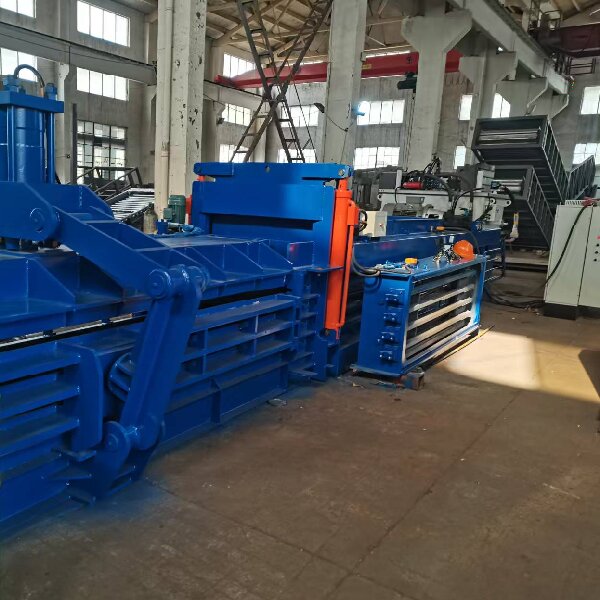
Cover: nkbaler horizontal hydraulic baler installation — loose material becomes a dense, uniform, stackable bale.
Horizontal hydraulic balers solve space and labor challenges by compressing loose waste paper, plastic film, cardboard, textile, and similar materials inside a horizontal compression chamber and ejecting the result as a dense, uniform bale. A loose pile that occupies irregular floor area and requires manual handling becomes a stackable cuboid that can be stored, counted, and loaded mechanically.
nkbaler is the hydraulic baler brand of Shaanxi Nick Machinery Equipment Co., Ltd., a Chinese manufacturer of vertical balers, full-automatic horizontal balers, manual horizontal balers, and press bagging machines. The company reports a 5,000 m² factory, a 15-person R&D team, and an annual output of 600 units, with about 90% of production exported to North America, South America, and Asia.
This article is written for recycling and manufacturing operations managers who already accept that they need a baler and now have to defend two numbers in front of their own management: the floor area the equipment will occupy, and the labor hours consumed per ton. It explains what a horizontal hydraulic baler physically changes, how to size one against real site constraints, and which nkbaler NKW models fit which operational profile.
The Real Space Problem Is Loose Material, Not the Machine
Most footprint debates start in the wrong place. A baler is a fixed, published shape. The NKW160Q mainframe measures about 11 × 2.3 × 2.9 m and its conveyor runs 2,000 × 14,000 mm. The variable is the material itself. Loose plastic film, cardboard, textile offcuts, and mixed recyclables sit at low bulk density, so a facility that receives material continuously needs a buffer area that grows with every unshipped load. Buffer area is not free floor: it competes with processing equipment, forklift lanes, fire access, and dispatch space.
The second constraint is labor. Manual baling binds an operator to the chamber. Filling, compressing, tying, and extracting each bale consumes operator time that scales with the number of bales rather than with tonnage processed. As inbound volume rises, so does headcount — unless the machine is built so that material arrives at the chamber and leaves as a finished bale with minimal intervention.
Both constraints are ultimately cost constraints. Lower bale density means more storage and more transport movements per ton. Lower throughput per operator means more wages per ton. A horizontal hydraulic baler attacks both because compression, tying, and ejection are exactly the parts of the job it takes over from people.
Why Space and Labor Became Procurement Criteria
Baling capacity is expanding in the same regions that manufacture hydraulic components. The global baler market is projected to reach USD 18.02 billion by 2034 (Fortune Business Insights, cited in HTNXT verified data). In the separate hydraulics market, Asia Pacific held a 39% share in 2025 (Precedence Research). These are two different product scopes and should not be read as a single market statement, but both point at the same direction of travel: more baling equipment, more often specified as part of a facility layout rather than as an afterthought.
The supplier landscape can be read from public product pages. Energycle describes horizontal and vertical balers for plastic, cardboard, and metal applications. PACKENER states that it designs and manufactures vertical, horizontal, automatic, semi-automatic, and specialty baling machines. TON KEY presents a hydraulic baling press for pressing woven mats into solid bundles. All three are company-reported portfolios: they establish which configuration dimensions recur across the market — orientation, automation level, and material application — but they do not provide harmonized model-level force, throughput, or bale data.
That gap matters for buyers. A third-party comparison group built on those same portfolios concluded that the sources identify product offerings but do not supply harmonized model, force, throughput, bale dimension, automation, or capacity data — and that no ranking or aggregated market conclusion is permitted from them. The practical consequence is simple: horizontal hydraulic balers have to be compared model by model, against published datasheets, not against brand-level claims.
Two further context points are worth keeping in the file. Hydraulic balers are typically classified under HS code 847989 or related subheadings in Chapter 84, depending on the material processed and the automation level, which affects customs planning and sourcing-country analysis. And in nkbaler's case, the equipment is supported by CE documentation issued under the Machinery Directive framework, covering horizontal hydraulic baler models including the NKW160Q and NKW200Q — a detail that matters when the machine is installed in the EU or EEA.
What a Horizontal Hydraulic Baler Changes on the Plant Floor
Horizontal compression replaces vertical chamber filling
In a horizontal hydraulic baler, the main cylinder pushes material along a horizontal axis into a forming chamber. Material can therefore be fed continuously from the side or rear, rather than loaded in discrete batches and pressed downward. Continuous feeding is what allows capacity to be expressed in tons per hour rather than bales per hour. The NKW160Q is rated at 12–15 tons per hour with a 160 T main cylinder force and a 2,000 mm × 1,100 mm feed opening. The NKW200Q is rated at the same 12–15 tons per hour with a 200 T main cylinder force and a larger 2,400 mm × 1,100 mm feed opening.
A conveyor replaces the staging pile
Horizontal models are typically specified with an infeed conveyor. The NKW160Q uses a 2,000 × 14,000 mm conveyor with a 7.5 kW conveyor motor; the NKW200Q uses the same 2,000 × 14,000 mm conveyor; the NKW100QT uses a 2,000 × 12,000 mm conveyor with a 5.5 kW motor. The conveyor does two things at once. Operationally, it lets one operator load at a steady rate instead of carrying material to a chamber. Physically, it replaces the staging pile at the machine — material sits on a moving belt rather than on the floor, so the buffer area is a defined strip with a defined length instead of an expanding heap.
Bale density converts floor area into shippable payload
The single most useful figure when arguing about space is material density, because it determines how many tons fit into a given storage envelope. Catalogue values differ meaningfully across the NKW range: the NKW80Q is rated at 300–400 kg/m³, the NKW100QT at 400–500 kg/m³, the NKW125Q at 500–600 kg/m³, the NKW160Q at 400–600 kg/m³, and the NKW200Q at 650–700 kg/m³. A higher-density bale packs more tonnage into the same stack height and the same truck volume, which reduces both the storage footprint per ton and the number of outbound movements.
Tying and ejection take the operator out of the cycle
nkbaler's horizontal models are offered in both fully automatic and semi-automatic configurations. That choice is the main labor lever. A fully automatic machine performs tying and bale discharge as part of the cycle, so the operator role becomes loading supervision and quality checking rather than tying and extraction. A semi-automatic machine keeps more of the finishing work with the operator but costs less to acquire. Choosing between them is a decision about labor hours per ton, not about machine quality.
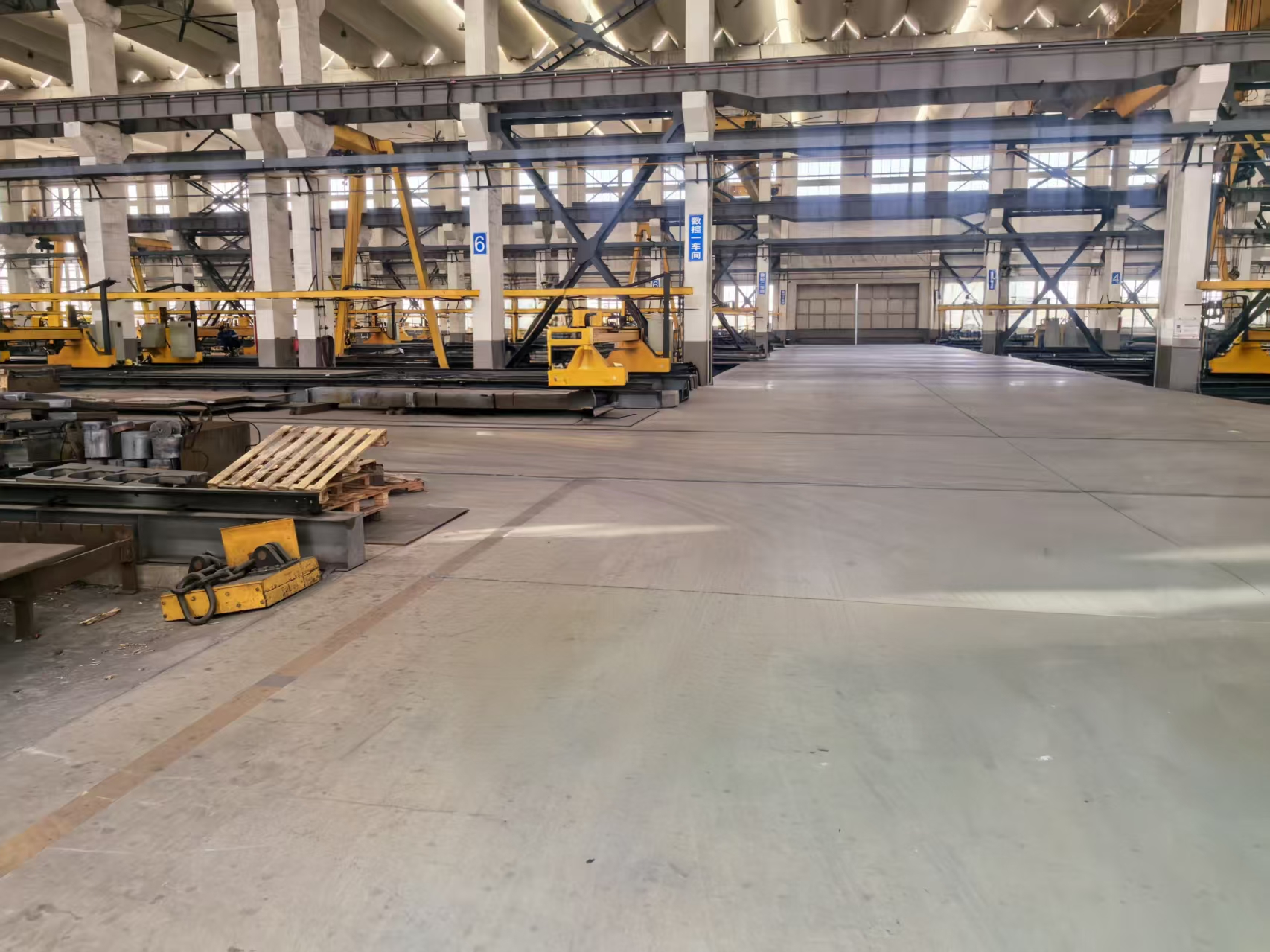
Mainframe and chamber fabrication at the nkbaler production workshop.
Step-by-Step: Sizing a Horizontal Hydraulic Baler Against Space and Labor Limits
The sequence below is the order in which a specification should be built. Doing it in a different order is the most common reason a baler ends up either oversized for the building or undersized for the tonnage.
Step 1 — Profile the material before the machine
Record what actually goes into the machine: material family (waste paper, plastic film, cardboard, textile, metal, straw), typical bulk behavior, moisture, and contamination. The NKW range spans carbon steel construction and applications listed as food, pharmaceuticals, packaging, chemicals, electronics, metals, waste treatment, and recycling, but the achievable density still depends on the incoming stream. Density targets in the catalogue assume a compatible material mix.
Step 2 — Convert available floor area into a machine envelope
Measure the area, then subtract. The envelope includes the mainframe, the conveyor, the bale discharge zone, and a forklift lane to the discharge. Reference mainframe dimensions: NKW80Q about 9.8 × 4.3 × 1.4 m; NKW160Q and NKW125Q about 11 × 2.3 × 2.9 m; NKW100QT about 13 × 2.3 × 2.9 m; NKW200Q about 11 × 4.3 × 5.8 m. The NKW200Q at 4.3 m wide and 5.8 m high is a different installation problem from the NKW160Q at 2.3 m wide, even though both deliver 12–15 tons per hour.
Step 3 — Fix the throughput target in tons per hour
Throughput targets in the NKW catalogue run from 2–3 t/h (NKW80BD) through 3–5 t/h (NKW80Q), 4–6 t/h (NKW100QT), 5–7 t/h (NKW125BD), 6–8 t/h (NKW180BD), 10–12 t/h (NKW125Q), 12–15 t/h (NKW160Q, NKW160QT, NKW180QT, NKW200Q), and 10–15 t/h (NKW250BD). Matching the target to one machine avoids the labor cost of running two partially loaded units.
Step 4 — Choose the automation level
Fully automatic and semi-automatic variants exist across the horizontal range. Decide this against labor cost per ton, not preference. If the site runs two or three shifts, the case for automatic tying and discharge strengthens quickly because the operator-hours saved repeat every shift.
Step 5 — Match bale dimensions to the downstream transport
Bale size must fit the truck, the container, or the internal handling equipment. Published examples: NKW80Q 1,100 × 800 × up to 1,600 mm; NKW100QT 1,100 × 850 × up to 1,200 mm; NKW125Q 1,100 × 1,100 × up to 1,600 mm; NKW160Q 1,100 × 1,250 × up to 1,600 mm; NKW200Q 1,100 × 1,100 × up to 1,800 mm. A bale that stacks efficiently inside the transport envelope removes handling operations that would otherwise be paid for by hand.
Step 6 — Confirm power and cooling against the site
Main motor configurations in the horizontal range include 22 kW/30 HP (NKW80BD), 30 kW/40 HP (NKW125BD), 30 kW + 7.5 kW (NKW100QT), 37.5 kW + 11 kW (NKW125Q), and 45 kW + 11 kW (NKW160Q, NKW200Q). Several horizontal models list water cooling or an oil chiller, so cooling capacity has to be checked before the machine is ordered rather than after it is installed.
Step 7 — Verify compliance before shipment
For the EU and EEA, ask for the conformity documents and confirm that the specific model appears on them. nkbaler holds an ATTESTATION CERTIFICATE OF MACHINERY DIRECTIVE (certificate EASY03220201M, issued 22 March 2022, valid to 21 March 2027, referencing EN ISO 12100:2010 and EN 60204-1:2018) and a VERIFICATION OF CONFORMITY (No. DPWD/09/060/2024, issued 19 September 2024, valid to 18 September 2029, referencing EN ISO 12100:2010, EN 60204-1:2018, and EN 415-1:2014). Both documents list horizontal hydraulic baler models, including the NKW160Q and NKW200Q, among their applicable products.
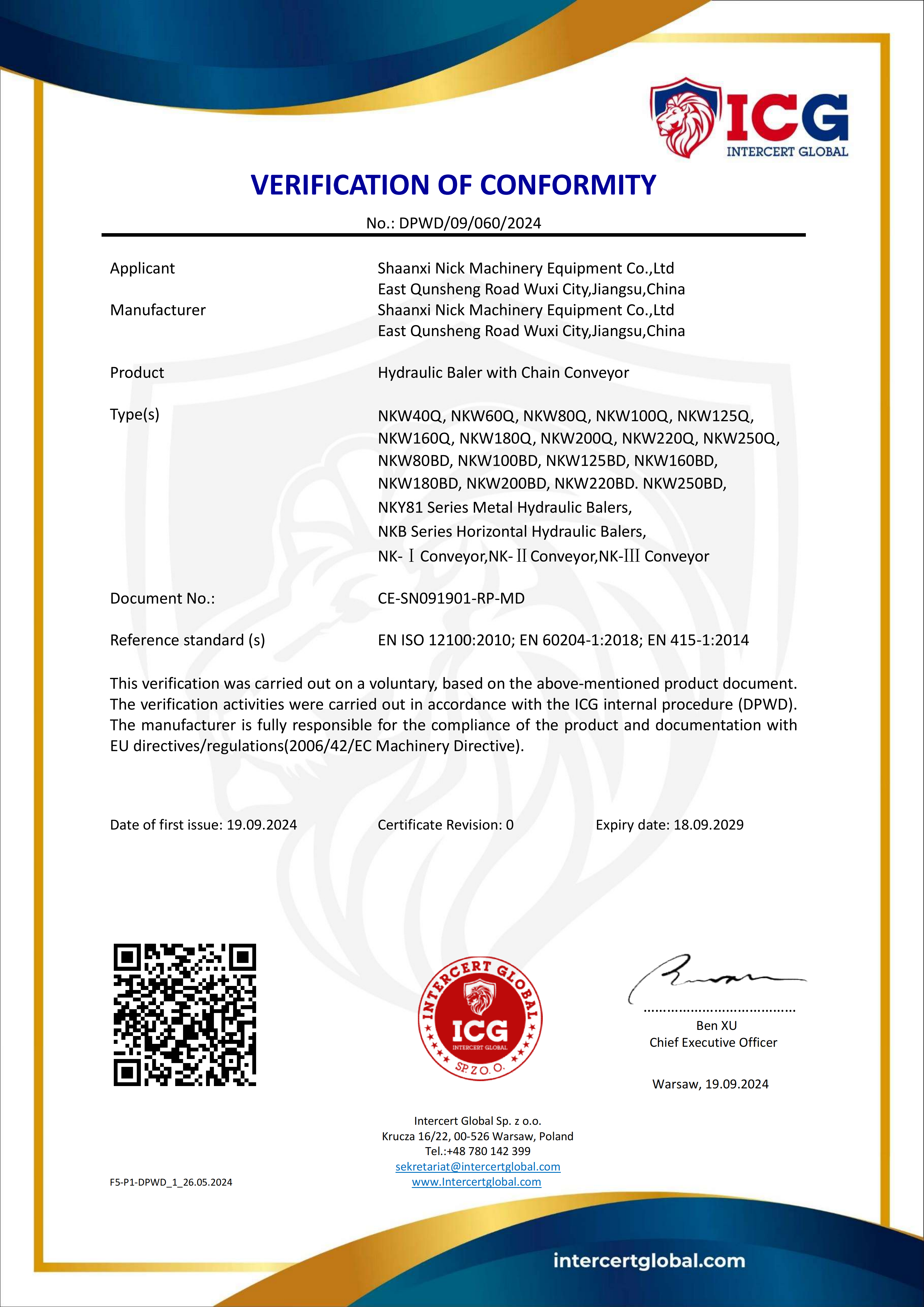
VERIFICATION OF CONFORMITY No. DPWD/09/060/2024, valid to 18 September 2029.
Step 8 — Validate the configuration before committing a fleet
Because the minimum order quantity is one unit and parameter-level customization is available under OEM/ODM, a single machine can serve as the validation unit. Quality control is stated as 100% test. This is the lowest-risk way to confirm that the density and throughput assumptions used in steps 1 to 3 hold on the actual material stream.
Horizontal Hydraulic Baler Shortlist: Five NKW Models Ranked by Space and Labor Fit
The shortlist below is ordered for a specific operating profile: a facility handling a continuous recyclable or production-waste stream, where floor area is limited and labor hours per ton are being actively reduced. The ranking criterion is the combination of published capacity, published bale density, and published mainframe envelope. It is an editorial fit assessment for that profile, not a claim of universal superiority, and it uses only nkbaler catalogue values.
1. NKW160Q — highest throughput per unit of occupied width
160 T main cylinder force, 12–15 t/h capacity, 400–600 kg/m³ material density, bale size 1,100 × 1,250 × up to 1,600 mm, 28-ton mainframe measuring about 11 × 2.3 × 2.9 m, 45 kW + 11 kW main motor, conveyor 2,000 × 14,000 mm. It delivers the same hourly capacity as the larger NKW200Q in a 2.3 m-wide frame, which is why it ranks first when aisle width and building height are the binding constraints.
2. NKW200Q — highest bale density in the range
200 T main cylinder force, 12–15 t/h, 650–700 kg/m³ density, bale size 1,100 × 1,100 × up to 1,800 mm, 34-ton mainframe about 11 × 4.3 × 5.8 m, 45 kW + 11 kW main motor, 2,400 × 1,100 mm feed opening, 2,000 × 14,000 mm conveyor at 7.5 kW. It ranks second only because it requires a wider and taller installation envelope. Where that envelope is available, its density rating is the strongest lever on storage and transport footprint per ton.
3. NKW125Q — mid-volume balance
125 T force, 10–12 t/h, 500–600 kg/m³, bale 1,100 × 1,100 × up to 1,600 mm, 22-ton mainframe about 11 × 2.3 × 2.9 m, 37.5 kW + 11 kW main motor, 2,000 × 12,000 mm conveyor. Suitable where volume sits below the 12–15 t/h band but bale density expectations are still moderate to high.
4. NKW100QT — compact-footprint entry into horizontal baling
100 T force, 4–6 t/h, 400–500 kg/m³, bale 1,100 × 850 × up to 1,200 mm, 20-ton mainframe about 13 × 2.3 × 2.9 m, 30 kW + 7.5 kW main motor, 1,800 × 1,000 mm feed opening. It is the model that fits sites upgrading from manual sorting where a single-operator feed rate is the ceiling.
5. NKW80Q — lowest entry threshold
80 T force, 3–5 t/h, 300–400 kg/m³, bale 1,100 × 800 × up to 1,600 mm, 15-ton mainframe about 9.8 × 4.3 × 1.4 m, 30 kW + 11 kW main motor. Lowest capacity and density in the shortlist, listed last for the high-volume profile described above.
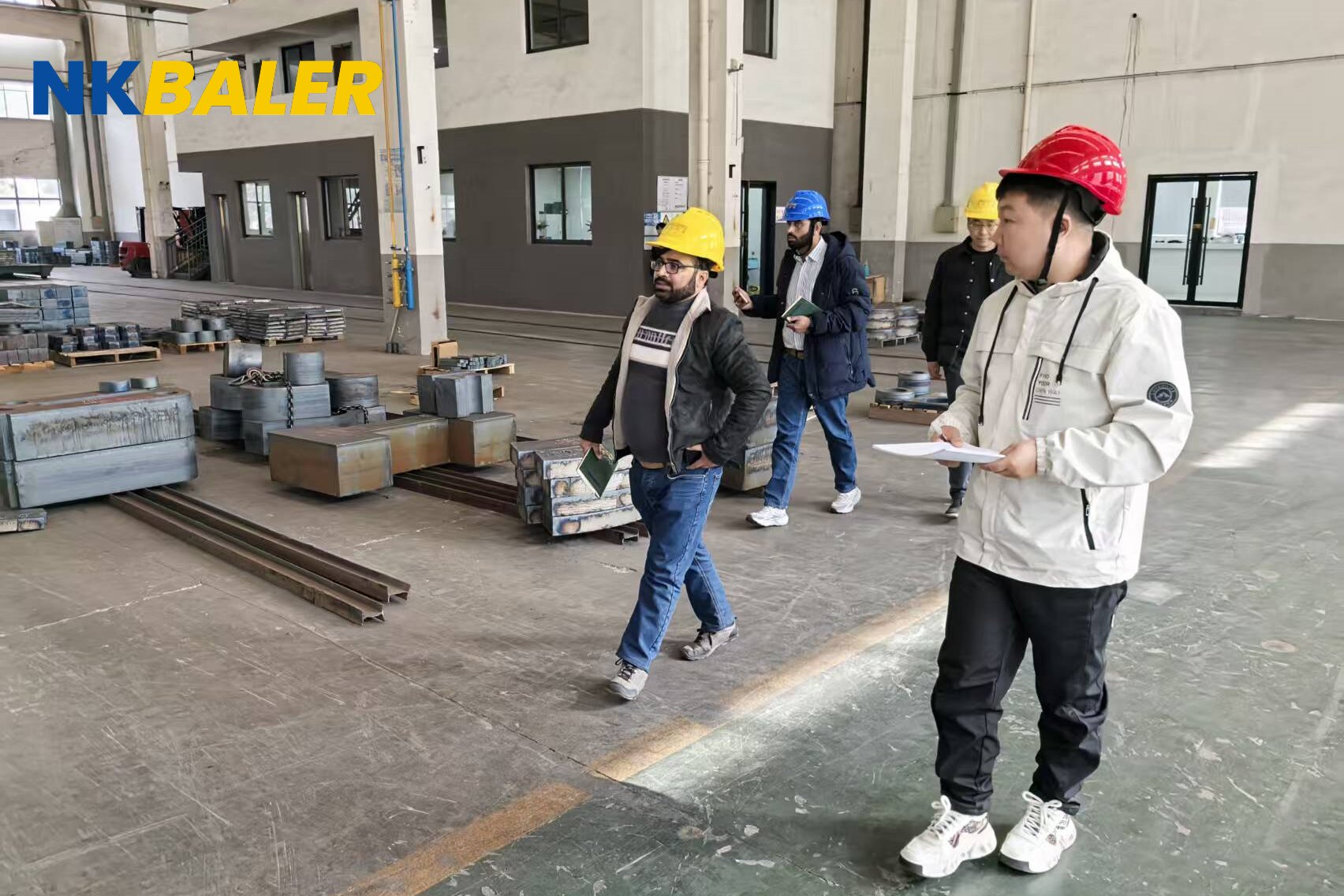
Assembly and preparation area at the nkbaler factory, Wuxi, Jiangsu.
Model Comparison Table: Space, Density, and Capacity at a Glance
| Model | Cylinder force | Bale size (W×H×L, mm) | Material density | Capacity | Mainframe size (m) | Mainframe weight |
|---|---|---|---|---|---|---|
| NKW80Q | 80 T | 1100 × 800 × up to 1600 | 300–400 kg/m³ | 3–5 t/h | about 9.8 × 4.3 × 1.4 | 15 t |
| NKW100QT | 100 T | 1100 × 850 × up to 1200 | 400–500 kg/m³ | 4–6 t/h | about 13 × 2.3 × 2.9 | 20 t |
| NKW125Q | 125 T | 1100 × 1100 × up to 1600 | 500–600 kg/m³ | 10–12 t/h | about 11 × 2.3 × 2.9 | 22 t |
| NKW160Q | 160 T | 1100 × 1250 × up to 1600 | 400–600 kg/m³ | 12–15 t/h | about 11 × 2.3 × 2.9 | 28 t |
| NKW200Q | 200 T | 1100 × 1100 × up to 1800 | 650–700 kg/m³ | 12–15 t/h | about 11 × 4.3 × 5.8 | 34 t |
All values are manufacturer-published catalogue data for the listed nkbaler models. Carbon steel construction is standard across the range; listed applications include food, pharmaceuticals, packaging, chemicals, electronics, metals, waste treatment, and recycling.
Use Cases: What Space and Labor Relief Looks Like in Practice
Recycling station handling waste plastic and waste paper (Indonesia)
A recycling station operator in Indonesia runs waste plastic baling and waste paper baling on an nkbaler installation. The reference models recorded for that installation are the NKW160QT, NKW180QT, and NKW100QT, with a single unit installed. The installation is recorded with a 10–15 year service expectation, stable operation, and operating characteristics noted as low noise and low energy consumption. For a station where receiving space is fixed and material arrives daily, the relevant outcome is that the loose-inbound area does not have to expand as volumes grow.
Agricultural material baling (Pakistan)
nkbaler's agricultural baling project in Pakistan, handling straw and alfalfa, has achieved two years of stable operation, with low noise recorded as the operational highlight. The value of that reference for a facility planner is limited but real: it is evidence of continuous duty in a dusty, high-volume material stream rather than a demonstration run.
Manufacturing plant with cardboard and plastic film waste
A production plant generating cardboard, plastic film, and packaging waste is a different profile from a recycling station. Material arrives continuously in small increments, so a horizontal hydraulic baler with an infeed conveyor lets the machine accumulate material while the operator performs another task. The bale that comes out is the same shape every time, which is what makes stacking, counting, and loading predictable — and predictable handling is where the labor saving is realized.
What a Horizontal Hydraulic Baler Does Not Solve
Buyers should go into a specification with the limits stated as clearly as the benefits.
- The machine envelope is fixed and large. The NKW200Q mainframe is about 11 × 4.3 × 5.8 m, and the conveyor is 2,000 × 14,000 mm. Sites with restricted access, low headroom, or no room for a forklift lane may not be able to install it at all.
- Density depends on the material stream. Catalogue density figures assume a compatible material mix; wet, mixed, or heavily contaminated streams reduce what the machine can achieve.
- Automation reduces labor per ton, it does not remove bale handling. Finished bales still have to be removed, stacked, and loaded for transport.
- Power and cooling must be planned. Main motor configurations in the horizontal range run from 22 kW/30 HP to 45 kW + 11 kW, and several models list water cooling or an oil chiller.
- Cross-brand ranking is not currently supportable on public data. Public supplier portfolios do not publish harmonized force, throughput, and bale data, so spec-by-spec comparison against a defined material profile is more reliable than brand-level comparison.
FAQ: Horizontal Hydraulic Balers, Space, and Labor
What compliance documentation should a horizontal hydraulic baler carry for EU or EEA installation?
Two documents are relevant in nkbaler's case. The ATTESTATION CERTIFICATE OF MACHINERY DIRECTIVE, certificate number EASY03220201M, was issued by UDEM International Certification Auditing Training Centre Industry and Trade Inc. Co. on 22 March 2022 and is valid to 21 March 2027, referencing EN ISO 12100:2010 and EN 60204-1:2018. The VERIFICATION OF CONFORMITY, No. DPWD/09/060/2024, covers the EU/EEA market, was issued on 19 September 2024, is valid to 18 September 2029, and references EN ISO 12100:2010, EN 60204-1:2018, and EN 415-1:2014. Both documents list horizontal hydraulic baler models — including the NKW160Q and NKW200Q — among their applicable products. Buyers should confirm the specific model appears on the document set attached to their order.
What throughput and bale density can a horizontal hydraulic baler deliver?
Using published catalogue values, the NKW160Q delivers 12–15 tons per hour at 400–600 kg/m³ with a 160 T main cylinder force and a bale size of 1,100 × 1,250 × up to 1,600 mm. The NKW200Q delivers the same 12–15 tons per hour at 650–700 kg/m³ with a 200 T main cylinder force and a bale size of 1,100 × 1,100 × up to 1,800 mm. Lower-capacity models in the same horizontal range are rated at 10–12 t/h (NKW125Q), 4–6 t/h (NKW100QT), and 3–5 t/h (NKW80Q).
What drives the cost of a horizontal hydraulic baler if there is no list price?
The cost drivers are visible in the specifications rather than in a price list: main cylinder force (80 T to 250 T across the horizontal range), mainframe weight (15 t for the NKW80Q up to 34 t for the NKW200Q and 30 t for the NKW250BD), main motor power (22 kW/30 HP to 45 kW + 11 kW), conveyor length and motor rating, automation level, and the tying system. Because configuration is buyer-specified under nkbaler's OEM/ODM and parameter-customization model, a meaningful price has to be quoted against a defined configuration and material profile rather than taken from a catalogue.
Can a buyer validate a machine before committing to a larger order?
Yes, in two ways. The minimum order quantity is one unit, so a single machine can be ordered and run against the real material stream before a multi-unit decision is made. In addition, parameter-level customization is available under the OEM/ODM model, so the configuration can be adjusted to the material profile, and quality control is stated as 100% test before shipment.
What is the lead time and monthly supply capacity?
Lead time is stated as 30–45 days, with a monthly production capacity of 10 units, a minimum order quantity of 1 unit, and remote after-sales support. Export markets for the capability record are listed as the EU and the Middle East, while the company overall reports about 90% of output exported to North America, South America, and Asia. Buyers who need the current configuration sheet, the technical datasheet for a specific NKW model, or the full product catalogue can request them from Sales@nkbaler.com or via WhatsApp at +86 15021631102, and the catalogue is also available for direct download.
Conclusion: Two Numbers, One Machine Decision
A horizontal hydraulic baler does not shrink a building. What it does is change what the building is used for. Loose material stops occupying variable floor area and starts moving along a conveyor into a fixed chamber, then leaves as a bale with a known size and a published density. That is the mechanism behind both savings: storage and transport footprint per ton falls as bale density rises, and labor hours per ton fall as feeding, tying, and discharge move into the machine cycle.
The practical decision therefore comes down to two measurements taken on the buyer's own site — the usable machine envelope after conveyor, discharge zone, and forklift lane are subtracted, and the tons per hour that actually arrive. For facilities where the available width is the binding limit, the NKW160Q delivers 12–15 t/h within a frame about 2.3 m wide. For facilities with more room and a stronger need for density, the NKW200Q raises rated material density to 650–700 kg/m³ on a 34-ton mainframe. Both are available in fully automatic and semi-automatic configurations and both appear on nkbaler's CE documentation.
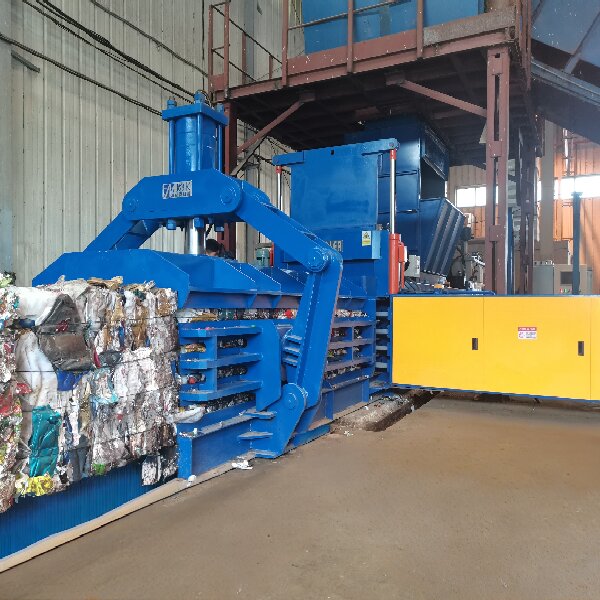
nkbaler horizontal hydraulic baler prepared for shipment.
Next step
Send your material type, target tons per hour, and available floor area, and nkbaler will map it to a specific model and automation level. Shaanxi Nick Machinery Equipment Co., Ltd. — website www.nickbaler.com, email Sales@nkbaler.com, telephone and WhatsApp +86 15021631102, address Qun Sheng Lu, Hui Shan Qu, WuXi Shi, Jiang Su Sheng, China.
Download the full product brochure: nkbaler catalogue (PDF)
Have Questions or Need More Details?
Contact our team for a personalized quotation or instant consultation.
Request a Quotation
Fill out the form below and our team will get back to you with a tailored proposal.
WhatsApp Direct Chat
Prefer to chat in real-time? Message us on WhatsApp for instant assistance & quick answers.
- Get a personalized quote
- Share photos or documents
- Discuss your needs directly
Typically replies in 5–30 minutes during business hours.