
Hydraulic Baler Application Guide: Matching NKW Models to Metal and Electronics Recycling
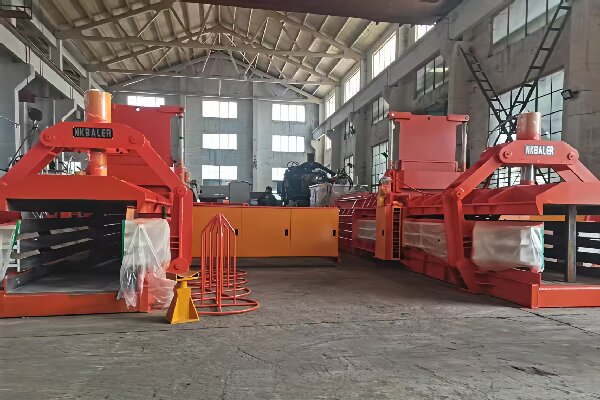
A horizontal hydraulic baler is not selected by tonnage alone. In metal and electronics recycling, the same nominal throughput can produce different bale density, different cycle reliability, and different labor demand when the feed opening, material bulk density, and automation level are mismatched. This guide shows how to match nkbaler's NKW models to specific metal and electronics recycling scenarios, using documented model facts and clearly separating confirmed specifications from items that must be confirmed in the quotation.
nkbaler is the brand of Shaanxi Nick Machinery Equipment Co., Ltd., a China-based manufacturer of vertical balers, full-automatic horizontal balers, manual horizontal balers, and press bagging machines. The company operates a 5,000 m² factory with 50 employees and a 15-person R&D team, exports about 90% of its products to North America, South America, and Asia, and has a monthly production capacity of 10 units. Its official site is www.nickbaler.com.
Problem Definition: Why Baler Model Matching Fails in Metal and Electronics Projects
Most specification errors in metal and electronics baling fall into four categories. Each one is easy to miss in an early RFQ and expensive to correct after installation.
- Throughput without density context. A model quoted at a given t/h may reach that figure only in a narrow material band. If the feed is lighter or bulkier than the test assumption, the real cycle rate drops.
- Feed opening versus material shape. Dense metal scrap and bulky electronics enclosures present differently. A chamber that accepts one may require pre-cutting for the other.
- Bale density versus downstream handling. A bale that is acceptable for a local haulier may not meet the handling or transport requirement of a distant buyer. Density is a process target, not a brochure number.
- Automation versus the labor model. A fully automatic tie system can reduce manual handling, but it must match a steady feed pattern. A semi-automatic unit can be more practical when the material mix changes frequently.
A model that is correct on paper can still be wrong in operation if any one of these four items is left unresolved. The practical answer is to match the model to the material profile first, then confirm the commercial and installation details.
Industry Background: Where the Baler Sits in the Recycling Chain
Baling is a transfer-point process. In metal recycling, scrap is densified so that it can be transported and handled efficiently before downstream melt or export. In electronics recycling, balers usually handle sorted metal frames, cable, and plastic housings after de-pollution and manual sorting. In both cases the baler sits downstream of sorting, so feed consistency is a design input rather than an operational detail.
The wider equipment market provides context for investment planning. Fortune Business Insights projects the global baler market, covering agricultural and industrial balers, to reach USD 18.02 billion by 2034 in a report published in 2026. That figure is category-level and not a hydraulic-baler-only forecast, so it should be used for market context rather than for sizing a single project.
Customs and compliance planning also need attention at the execution stage. Hydraulic balers are typically classified under HS Code 847989 or related Chapter 84 subheadings, depending on the material processed and the automation level. The exact classification should be confirmed for the model and destination market before the commercial invoice is issued.
Detailed Solution: Reading the NKW Model Facts Correctly
nkbaler's NKW horizontal models should be read as a set of documented operating bands, not as a simple ranking. The approved model facts used in this guide are the throughput, bale density, press force, and feed opening figures below. Other specifications, including cycle time, motor power, bale size, bale weight, tie method, and installed footprint, must come from the model drawing and quotation for the exact configuration.
What each documented model fact tells you
NKW80Q. The NKW80Q is documented at 3–5 t/h and 300–400 kg/m³. That combination fits a lower-volume line where the material is not dominated by thick heavy scrap and where downstream hauling does not require the highest density. It is a sensible starting point for a smaller electronics recycling site or a metal workshop that generates a steady but limited volume.
NKW125Q. The NKW125Q is documented at 10–12 t/h and 500–600 kg/m³. The higher density band is the important part: it points to denser metal fractions and to projects where bale weight and transport efficiency matter. A metal yard processing mixed scrap at higher volume should start here, then confirm force, feed opening, and tie method.
NKW160Q. The NKW160Q is documented at 12–15 t/h and 400–600 kg/m³. The wider density band makes it a flexible candidate for mixed metal and electronics streams where the feed is not uniform. It can be specified toward the lower or upper part of the documented density range, but the achievable density for a specific material must be confirmed by test.
NKW100QT. The NKW100QT is documented at 200 T press force and 12–15 t/h. This is the heavy-duty hydraulic baler reference in the set: when the material includes thicker sections or when the project needs higher compression force, the 200 T figure is the first specification to check. Throughput alone does not define the machine; force and material thickness must be evaluated together.
NKW200Q. The NKW200Q is documented with a 2400 × 1100 mm feed opening. That is the relevant fact for bulky feed, including large frames, enclosures, and long profiles that are difficult to present to a narrow chamber. A large feed opening reduces pre-cutting, but it does not by itself define throughput or density, so those values must be confirmed for the exact configuration.
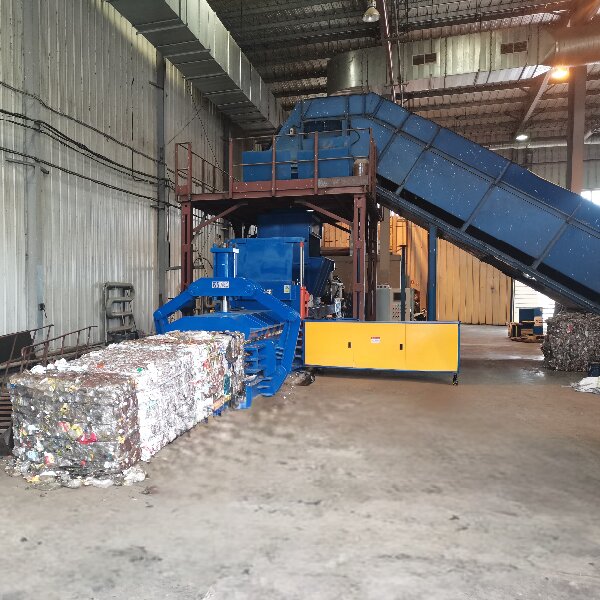
Semi-automatic or fully automatic: match the labor model
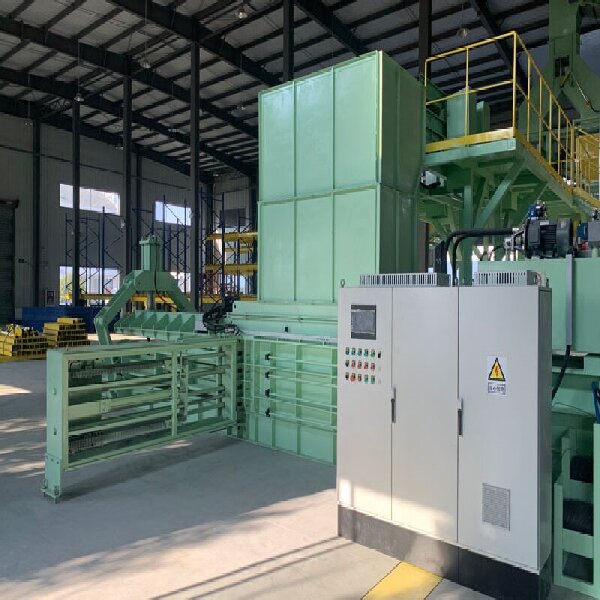
A large-size hydraulic semi-automatic baler typically leaves part of the cycle and tie sequence to the operator. It can be the lower-capital route for variable material, low-to-medium volume, or sites where operators already manage sorting. A large horizontal full automatic hydraulic baler typically automates the tie sequence and reduces manual handling, which fits steady high-volume feed and repetitive shift patterns. The decision should be made on labor availability and feed consistency, not on automation as a status symbol.
When reviewing a fully automatic proposal, ask whether the design uses automatic tie and whether a lifting door is specified for the feed section. Those details affect access, cycle flow, and maintenance practice. The approved model data does not assign an automation level to each NKW model, so the automation level must be confirmed per quotation.
NK BALER and NICK BALER: two build levels for different duty cycles
nkbaler distinguishes two build levels. NK BALER is the standard long-cylinder servo hydraulic baler for regular daily baling; it is positioned as cost-effective and stable for general compression. NICK BALER is the heavier upgraded build with thicker material and a stronger structure, and its hydraulic and electrical systems use higher-grade parts than NK BALER. The practical difference for a recycling project is duty cycle: regular daily work can be matched to NK BALER, while continuous heavy-load operation should be evaluated against NICK BALER.
Step-by-Step Breakdown: Matching an NKW Model to Your Project
- Define the material profile before the tonnage. Record the metal types, typical piece size, bulk density, contamination, and whether the stream is single-material or mixed. In electronics recycling, separate metal frames, cable, and plastic housings in the description so the baler is not specified for an average that does not exist.
- Calculate required throughput by operating hour. Use daily tonnage divided by realistic feed hours, then add margin for downtime and material variation. Compare that figure with the documented NKW ranges: 3–5 t/h for NKW80Q, 10–12 t/h for NKW125Q, and 12–15 t/h for NKW160Q and NKW100QT.
- Set the bale density target from downstream handling. If the bales go to a local haulier, the density target may differ from export or long-distance transport. Use the documented ranges as the starting band: 300–400 kg/m³ for NKW80Q, 500–600 kg/m³ for NKW125Q, and 400–600 kg/m³ for NKW160Q.
- Check feed opening and feed method. For bulky electronics enclosures or long metal profiles, the 2400 × 1100 mm feed opening of NKW200Q is the first point to evaluate. For conveyor or grab feeding, check the presentation height and chamber length against the model drawing.
- Choose the automation level against the labor model. If the site runs one shift with variable feed, semi-automatic may be sufficient. If the site runs multiple shifts with steady feed, fully automatic tie and reduced manual handling may be justified. Ask for the tie method and door arrangement in writing.
- Check footprint, foundation, and utilities. Horizontal balers need feed access, discharge space, and maintenance clearance. Do not estimate footprint from a photograph; use the model drawing. Confirm voltage, control voltage, and local electrical requirements with the quotation.
- Run a material test and define acceptance. Test the actual material mix, not a clean sample. Confirm that the target density is achievable and that the bale survives the intended handling. Pre-shipment test is the stated acceptance criterion; agree the test record and bale check before shipment.
- Plan the long-term support path. Confirm spare-parts availability, thermal protection and temperature sensors for overheating control, and the production slot. The factory has a monthly production capacity of 10 units, so the order sequence and configuration freeze both affect delivery.
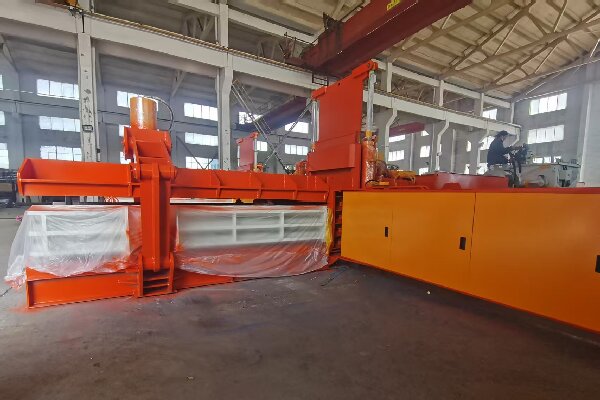
Use Cases: Matching NKW Models to Real Recycling Scenarios
Metal recycling yard
A mixed metal yard processing light iron, sheet, profiles, and non-ferrous fractions should start with the density requirement. NKW125Q at 500–600 kg/m³ is the first candidate when denser bales are needed at 10–12 t/h. If the stream includes thicker sections, NKW100QT with 200 T press force and 12–15 t/h is the heavy-duty reference. If the yard receives bulky frames that would otherwise need pre-cutting, NKW200Q and its 2400 × 1100 mm feed opening should be evaluated before a narrow-chamber model.
Electronics recycling facility
Electronics recycling usually produces a mix of metal frames, cable, plastic housings, and sorted fractions. The baler is downstream of de-pollution and sorting, so feed consistency is usually better than in a mixed metal yard, but piece size can be more variable. NKW80Q at 3–5 t/h and 300–400 kg/m³ fits a lower-volume site. NKW160Q at 12–15 t/h and 400–600 kg/m³ fits a larger facility that needs density flexibility across changing fractions. If the metal fraction is heavy and dense, test NKW125Q or NKW100QT before committing.
Mixed-stream transfer station
Mixed metal and electronics feed is the hardest case because density and piece size change by load. A practical solution is to separate campaigns: run metal at the density setting that suits the downstream buyer, then run electronics at a more controlled feed rate. A single NKW160Q can cover a wider band than a narrow-density model, but the operating procedure must define what material is allowed into the chamber and what must be pre-sorted.
Long-term multi-line project
For a project with more than one line, the model mix should follow the material mix, not a single standardized unit. A common structure is NKW80Q for a smaller electronics line, NKW125Q or NKW160Q for the main metal line, and NKW100QT or NKW200Q for heavy or bulky exceptions. nkbaler's monthly capacity of 10 units means multi-unit orders should be sequenced with the factory rather than assumed to ship together.
This guide focuses on horizontal NKW models. Other formats, such as a small-sized vertical hydraulic baler, a medium double-cylinder vertical hydraulic baler, or an oil drum press hydraulic baler, serve different feed and footprint constraints and should be evaluated separately. If the stream is predominantly aluminum scrap or metal shavings, ask whether a dedicated scrap aluminum metal hydraulic baler or metal shaving hydraulic baler is a better fit than a mixed-metal NKW configuration.
Comparison Table: Documented NKW Model Facts
Only the facts below are published in the approved model data. Empty cells are intentionally not filled; they must be confirmed in the quotation for the exact configuration.
| Model | Documented throughput | Documented bale density | Documented press force | Documented feed opening | Selection signal |
|---|---|---|---|---|---|
| NKW80Q | 3–5 t/h | 300–400 kg/m³ | — | — | Lower-volume metal or electronics line with moderate density target |
| NKW125Q | 10–12 t/h | 500–600 kg/m³ | — | — | Denser metal fraction at higher volume |
| NKW160Q | 12–15 t/h | 400–600 kg/m³ | — | — | Mixed metal and electronics feed with density flexibility |
| NKW100QT | 12–15 t/h | — | 200 T | — | Heavy-duty metal requiring higher compression force |
| NKW200Q | — | — | — | 2400 × 1100 mm | Bulky feed that needs a large feed opening |
FAQ: Compliance, Capability, Budget, Sample, and Lead Time
What compliance documents should be checked before ordering a hydraulic baler for metal or electronics recycling?
Confirm the machinery safety and electrical requirements that apply in the destination market, and match them to the declaration supplied with the quotation. Hydraulic balers are typically classified under HS Code 847989 or related Chapter 84 subheadings, depending on the material processed and the automation level, so the commercial invoice and customs paperwork should use the classification confirmed for the exact model. The stated acceptance criterion for an order is a pre-shipment test, and delivery terms are FOB or CIF.
Can one NKW model process both metal and electronics waste?
A single model can be used for both streams only when its throughput and bale density range fit the combined feed. The NKW80Q is documented at 3–5 t/h and 300–400 kg/m³; the NKW125Q at 10–12 t/h and 500–600 kg/m³; the NKW160Q at 12–15 t/h and 400–600 kg/m³; the NKW100QT at 12–15 t/h with 200 T press force; and the NKW200Q with a 2400 × 1100 mm feed opening. If the metal fraction is dense and the electronics fraction is bulky, separate campaigns or separate lines are usually easier to control than one blended feed.
How should semi-automatic and fully automatic configurations be compared on budget?
Compare the capital quote against the labor and cycle pattern, not against the purchase price alone. A large-size hydraulic semi-automatic baler places more of the cycle and tie sequence on the operator and is generally suited to variable feed or lower volume. A large horizontal full automatic hydraulic baler reduces manual tie work and is generally suited to steady, high-volume feed. The approved model data does not include price benchmarks, so ask for a configuration-specific quotation that separates machine, tie system, feed arrangement, and installation scope.
What sample work should be done before a baler is shipped?
Test representative material from the actual stream, not a clean lab sample. The test should confirm that the target bale density is reachable within the documented range for the selected model and that the bale holds together for the intended handling method. Pre-shipment test is the stated acceptance criterion, so agree the test material, bale size check, and pass/fail record before production begins.
What lead time should be planned for an NKW baler project?
Lead time is confirmed after the model, feed arrangement, automation level, and voltage are frozen. nkbaler's factory has a monthly production capacity of 10 units, so schedule and configuration both affect the delivery slot. Delivery terms are FOB or CIF, and the pre-shipment test must be completed before shipment. To start a configuration review, send the material mix, target t/h, and bale density target to Sales@nkbaler.com or WhatsApp +86 15021631102.
Conclusion: Match the Model to the Material, Then Confirm the Commercial Details
Model matching is a sequence, not a single number. For metal streams, start with the density target and press-force requirement; NKW125Q is the 500–600 kg/m³ reference at 10–12 t/h, while NKW100QT brings 200 T press force at 12–15 t/h. For electronics streams, start with throughput and feed opening; NKW80Q covers 3–5 t/h at 300–400 kg/m³, NKW160Q covers 12–15 t/h at 400–600 kg/m³, and NKW200Q provides a 2400 × 1100 mm feed opening for bulky feed. For both streams, confirm automation, footprint, utilities, and the pre-shipment test before the order is released.
The long-term view matters as much as the first installation. nkbaler's monthly production capacity of 10 units, the NK BALER and NICK BALER build levels, and the thermal protection and temperature sensors for overheating control all belong in the procurement review. Buyers who compare those points alongside the model facts are in a better position to specify a baler that fits the material, the labor model, and the service life of the project.
Next step: review your material profile with nkbaler
Send the material mix, target throughput, bale density target, and site constraints to the nkbaler team. The reply should confirm the model, automation level, feed arrangement, and the specifications that are not published in the standard model data.
Email: Sales@nkbaler.com | WhatsApp: +86 15021631102 | Website: www.nickbaler.com
Download the nkbaler catalog (PDF)
Have Questions or Need More Details?
Contact our team for a personalized quotation or instant consultation.
Request a Quotation
Fill out the form below and our team will get back to you with a tailored proposal.
WhatsApp Direct Chat
Prefer to chat in real-time? Message us on WhatsApp for instant assistance & quick answers.
- Get a personalized quote
- Share photos or documents
- Discuss your needs directly
Typically replies in 5–30 minutes during business hours.