
Hydraulic Baler Certification & Parameters: What Buyers Must Verify
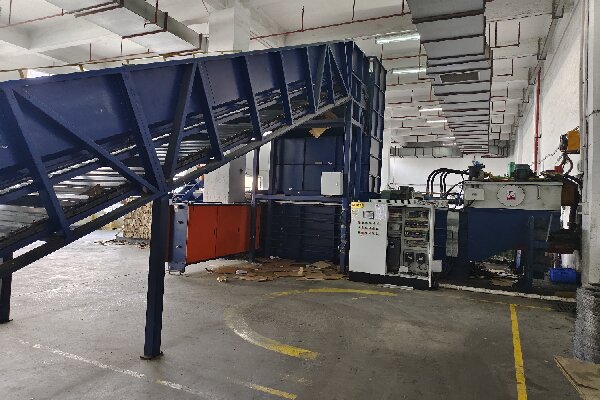
A hydraulic baler is a machine that uses hydraulic cylinders to compress recyclable, agricultural, and industrial materials — including waste paper, plastics, textiles, metals, straw, and biomass — into dense, strapped bales for storage, transport, and resale. Buyers evaluating a hydraulic baler for an industrial project need to verify two things before ordering: conformity certification and technical parameters.
nkbaler is the brand of Shaanxi Nick Machinery Equipment Co., Ltd. (English brand also written as NICKBALER), a China-based manufacturer of vertical balers, full-automatic horizontal balers, manual horizontal balers, and press bagging machines. The company exports roughly 90% of its output to more than 60 countries, with main markets in North America, South America, and Asia. This reference guide summarizes the compliance documents, model parameters, and verification steps that matter when buying a hydraulic baler, based on the manufacturer's published specifications.
The Procurement Problem: Unverified Specs and Unmatched Certificates
Procurement risk in a hydraulic baler is rarely about the machine alone. It is about the mismatch between a quoted specification and the material the machine must handle, and between a certificate and the market the machine must enter. A baler selected without checking feed opening size, bale density, and pressing force can fail on the first shift. A baler shipped without the correct conformity evidence can be stopped at customs or rejected during commissioning.
Destination markets add their own rules. In the EU, vertical balers must comply with the EN 16500:2014 safety standard, which specifies requirements for fixed enclosed baling chambers and tamper-proof interlocks (European Committee for Standardization). In the United States, commercial balers must adhere to ANSI Z245.51-2013 for design and construction safety and ANSI Z245.5-2013 for installation and operation (American National Standards Institute). A machine-level certificate is therefore only one part of the compliance picture.
Industry Background: A Growing, Diversifying Baler Market
Global demand for baler machines is expanding across recycling, manufacturing, agriculture, and waste management. The global baler machine market was valued at USD 6.6 billion in 2024 and is projected to reach USD 11.4 billion by 2035 (Transparency Market Research). The metal baler segment, specifically for scrap metal processing, was estimated at USD 2.172 billion in 2024 (Market Research Future). Asia Pacific accounted for 40.2% of global baler market revenue in 2024 (Transparency Market Research). Within recycling equipment, the baler press segment represented 24.5% of the total market in 2025 (Grand View Research).
China is a major supply base for this equipment. Volza Global Export Data recorded 91 significant shipments of hydraulic baling presses under HS Code 8462 from China between June 2024 and May 2025. Published market profiles list Harris (US), Bramidan (DK), Bollegraaf (NL), and HSM (DE) among key players in the baler market (Market Research Future / Industry Reports). Buyers should note that market size estimates vary significantly by report scope — some include agricultural balers, others only industrial units — so these figures are directional rather than contractual.
The Solution: Compliance Evidence and Parameter Verification
nkbaler addresses the procurement problem with two sets of verifiable information: published conformity documents and model-level technical parameters. Both are traceable to the manufacturer's official specifications.
1. Conformity Documents
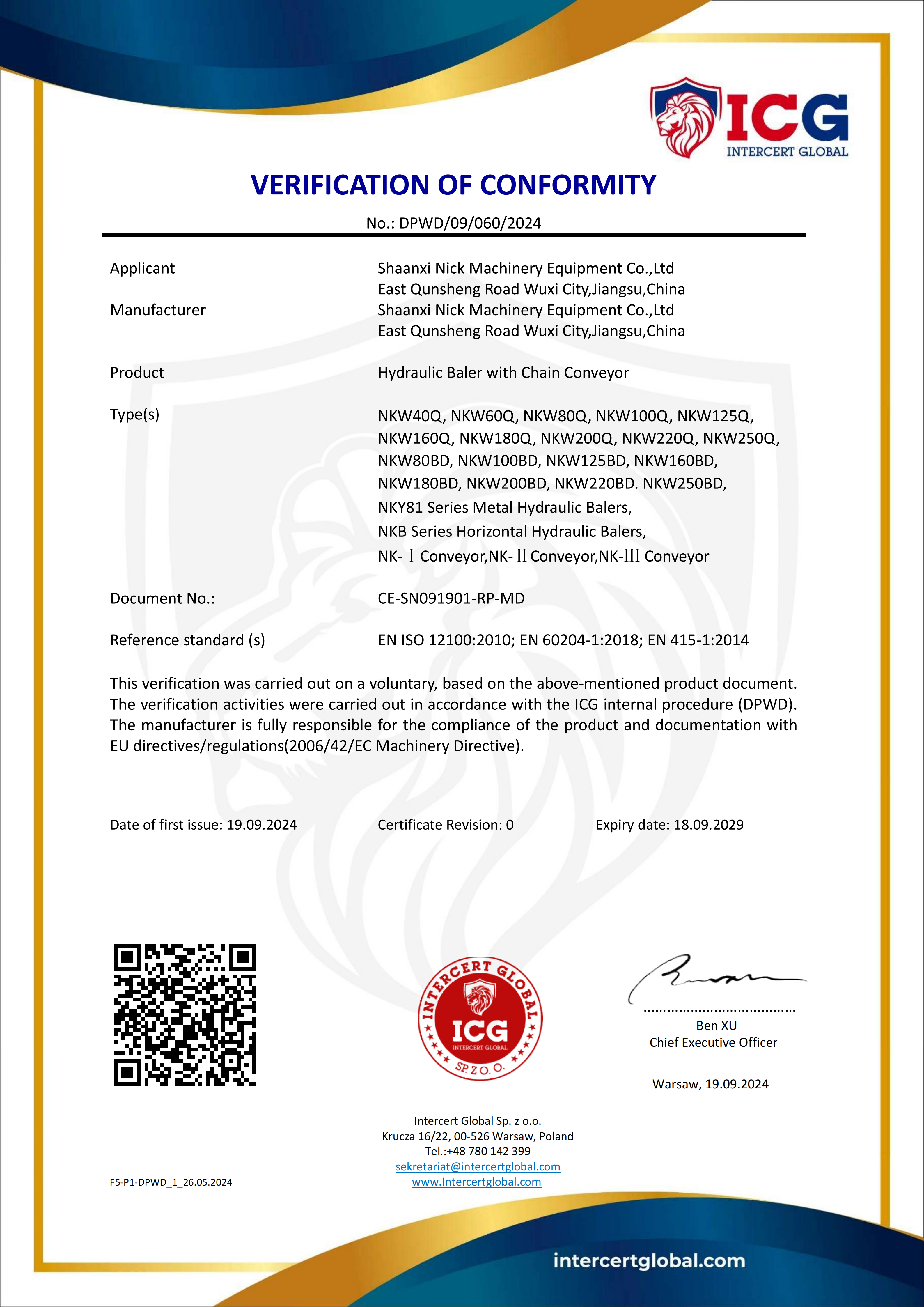
For the EU/EEA market, nkbaler holds a VERIFICATION OF CONFORMITY with certification number DPWD/09/060/2024, issued by Ben XU, valid from 2024-09-19 to 2029-09-18. The certification applies to the EU/EEA market and is assessed against the standards EN ISO 12100:2010; EN 60204-1:2018; EN 415-1:2014. Among the covered products is the NKB20 constant weight bagging machine, which produces 20 kg bales at 750 × 400 × 330 mm, with a 15 kW / 20 HP motor and a machine weight of 950 kg. The same conformity document covers other bagging machines, vertical machines, and horizontal hydraulic balers in the catalog, including NKW180QT, NKW160QT, NKW100QT, NKW200Q, NKW125Q, NKW80Q, NKW80BD, NKW125BD, NKW180BD, NKW250BD, NKB10, NKB220, NKB280, NKB280-1, NK60LT, NK-T90L, NK110T150, NK080T100, NK1580T200, NKOT150, NKC150, NK6040T10, and NK1070T60.
In addition, nkbaler holds an ATTESTATION CERTIFICATE OF MACHINERY DIRECTIVE with number EASY03220201M, issued by UDEM International Certification Auditing Training Centre Industry and Trade Inc. Co., valid from 2022-03-22 to 2027-03-21, for the EU EEA TR market with scope in Türkiye. This certificate is based on EN ISO 12100:2010 and EN 60204-1:2018 and covers models such as NKW200Q, NKW125BD, and NKB280.
An honest limitation: a certificate covers specific models and specific markets. A buyer shipping to a country outside the certified scope, or applying a machine to a material class not covered by the declared conformity assessment, should confirm the applicable local standard (such as EN 16500:2014 or ANSI Z245.51-2013) with the supplier before ordering.
2. Technical Parameters That Define a Hydraulic Baler
Every hydraulic baler specification can be reduced to a small set of parameters. The most important are pressing force (tonnage), system pressure (MPa), bale size, feed opening size, throughput, installed power, and machine weight. These parameters determine whether a machine can densify a given material and whether it fits the site and the electrical supply.
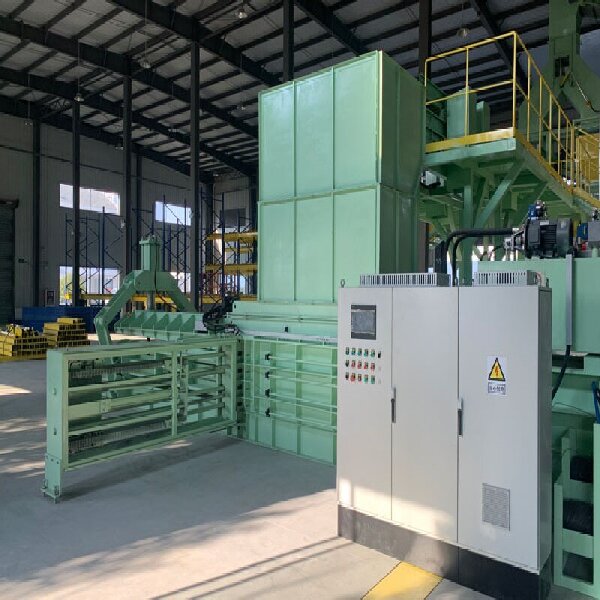
Horizontal balers are used for continuous, high-volume lines. The NKW180QT is a large, heavy-duty horizontal hydraulic baler with a main cylinder force of 180 tons, a processing capacity of 12 to 15 tons per hour, a bale size of 1100 mm (W) × 1250 mm (H) × ~1600 mm (L), and a main motor power of 45 kW + 7.5 kW; the mainframe weighs 28 tons. The NKW200Q offers 200 tons of cylinder force, a bale size of 1100 × 1100 × ~1800 mm, a material density of 650–700 kg/m³, a feed opening of 2400 × 1100 mm, 12–15 tons per hour, and a 34-ton mainframe. The NKW250BD generates 250 tons of hydraulic power with a 30,000 kg machine weight and 10–15 tons per hour. For lower volumes, the NKW80BD (80 tons, 2–3 t/h) and NKW80Q (80 tons, 3–5 t/h) are representative entry points.
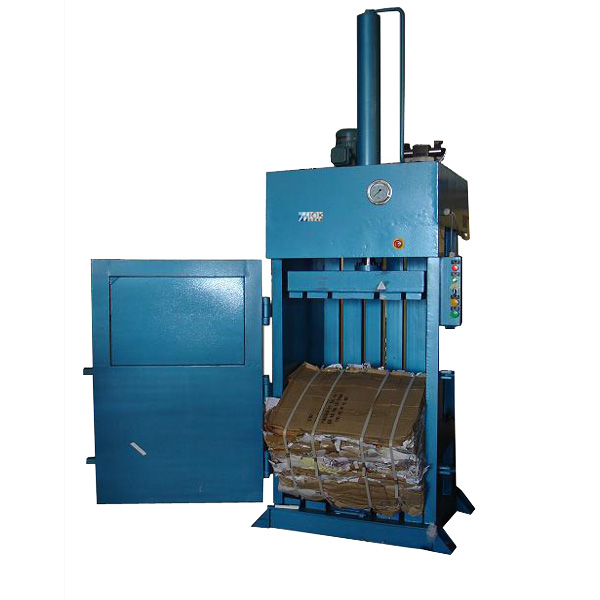
Vertical balers suit lower-throughput sites and manual feeding. The NK60LT textile/clothes baler has 60 tons of hydraulic power, a system pressure of 25 MPa, bale weights of 150–200 kg, and a capacity of 10–12 bales per hour. The NK-T90L double chambers clothes baler uses 90 tons of force for garments and sacks, producing 10–12 bales per hour at 75–150 kg per bale. The NK080T100 cans/PET bottle baler (100 tons) produces 200–350 kg bales. The NK1580T200 vertical metal baler (200 tons, automatic door opening) produces heavy 1,000–2,000 kg bales at 3–6 bales per hour. For fibrous and agricultural materials, the NK110T150 fiber/coco coir baler (150 tons) produces 400–500 kg bales, while the NKOT150 tire baler (150 tons) produces 1,000–1,500 kg bales.
Bagging machines densify agro-material into standardized bags. The NKB280 straw/hay bagging machine handles alfalfa, wheat straw, and peanut hay, with an output capacity of 30–32 bales per hour, dry bale weights of 400–450 kg, a throughput of 10–12 tons per hour, and a 32,000 kg machine weight. The NKB280-1 is the lighter-output variant at 4–6 tons per hour with 300–400 kg dry bales. The NKB220 block making machine produces 30–35 kg blocks at 90 blocks per hour under 21 MPa working pressure.
Step-by-Step: How to Verify a Hydraulic Baler Before Purchase
Buyers in the research-to-evaluation stage can use the following five-step verification process. Each step maps to a published parameter group.
Step 1 — Define the Material and the Target Bale Weight
Material type determines the required pressing force and chamber construction. Light textiles compress well in a 60–90 ton vertical baler (NK60LT, NK-T90L). Cans and PET bottles are commonly handled at 100 tons (NK080T100). Dense metal scrap requires 200 tons or more (NK1580T200). Agricultural fibers such as alfalfa, wheat straw, and peanut hay are processed through straw/hay bagging machines (NKB280, NKB280-1).
Step 2 — Select the Frame Class: Horizontal, Vertical, or Bagging
Continuous high-volume operations suit horizontal balers such as the NKW180QT (12–15 t/h), NKW200Q (12–15 t/h), or NKW250BD (10–15 t/h). Lower-volume recycling rooms suit vertical models. Agro-export lines suit bagging machines with 30–32 bales per hour throughput.
Step 3 — Match Pressing Force, Feed Opening, and Bale Size
Feed opening size must accept the incoming material without pre-cutting. Example values from the range: NKW200Q has a 2400 × 1100 mm feed opening; NKW80BD has a 1200 × 1000 mm feed opening; NK1580T200 has a 1500 × 800 mm feed opening. Bale size determines downstream logistics, so compare the target bale dimension — for instance, NKW180QT produces 1100 × 1250 × ~1600 mm bales, while NK60LT produces 1000 × 700 × 400–800 mm bales.
Step 4 — Verify Certification Scope Against the Destination Market
Ask for the certificate number, issuing body, standards, validity period, and the list of covered models. For the EU/EEA market, the nkbaler VERIFICATION OF CONFORMITY (DPWD/09/060/2024) and the ATTESTATION CERTIFICATE OF MACHINERY DIRECTIVE (EASY03220201M) are the reference documents. Also check local installation standards such as EN 16500:2014 (EU) or ANSI Z245.51-2013 (US).
Step 5 — Confirm Quality Control, Lead Time, and After-Sales Support
Confirm the supplier's production and testing process before payment. nkbaler's production capability unit states OEM/ODM production with parameter-level customization, a monthly capacity of 10 units, a lead time of 30–45 days, a minimum order quantity of 1 unit, and 100% testing of machines before delivery. After-sales support is provided via remote support, with primary export markets in the EU and the Middle East.
Use Cases Across Recycling, Agriculture, and Industry
Recycling stations (Indonesia). A recycling station manufacturer in Indonesia uses a horizontal baler for waste plastic baling and waste paper baling. The documented result is stable operation under continuous use, with low noise and low energy consumption highlighted by the operator. The related models are the NKW160QT, NKW180QT, and NKW100QT.
Agricultural manufacturers (Pakistan). An agricultural manufacturer in Pakistan uses straw/hay bagging machines for baling straw and alfalfa. The documented result is 2 years of stable operation with low noise. The related models are the NKB280 and NKB280-1, which produce 30–32 bales per hour.
Textiles and used rags. The NK60LT textile/clothes baler and the NK-T90L double chambers clothes baler are designed for garments, sacks, and used rags, with 10–12 bales per hour throughput and bale weights from 75 kg to 200 kg.
Metal scrap and cans. The NK1580T200 vertical metal baler handles 1,000–2,000 kg bales, and the NK080T100 handles cans and PET bottles at 200–350 kg per bale.
Biomass and forage. The NKB280 series packages alfalfa, wheat straw, and peanut hay into 300–450 kg dry bales at 30–32 bales per hour, suitable for feed and biomass supply chains.
Model Comparison: Reading Parameters Side by Side
The following table compares representative models across horizontal, vertical, and bagging classes using only published specifications.
Note: throughput units differ by machine class — horizontal balers are rated in tons per hour, while vertical balers and bagging machines are rated in bales per hour. This is normal industry practice and should be checked when comparing quotes.
Frequently Asked Questions
Which conformity certifications do nkbaler hydraulic balers hold for the EU/EEA market?
Hydraulic balers from nkbaler are supported by two conformity documents. The VERIFICATION OF CONFORMITY, number DPWD/09/060/2024, issued by Ben XU and valid from 2024-09-19 to 2029-09-18, applies to the EU/EEA market and is assessed against EN ISO 12100:2010, EN 60204-1:2018, and EN 415-1:2014. It covers the NKB20 bagging machine and related models across horizontal, vertical, and bagging classes. The ATTESTATION CERTIFICATE OF MACHINERY DIRECTIVE (EASY03220201M), issued by UDEM International Certification Auditing Training Centre Industry and Trade Inc. Co., valid from 2022-03-22 to 2027-03-21, covers models such as NKW200Q, NKW125BD, and NKB280 under EN ISO 12100:2010 and EN 60204-1:2018. Buyers should also confirm destination-market rules such as EN 16500:2014 (EU) or ANSI Z245.51-2013 (US), which are outside a single machine certificate.
How do I choose the right pressing force for my material?
Pressing force determines achievable bale density. For light recyclables such as textiles and clothes, the NK60LT (60 tons, 25 MPa) produces 150–200 kg bales at 10–12 bales per hour. For cans and PET bottles, the NK080T100 (100 tons) produces 200–350 kg bales. For heavy metal scrap, the NK1580T200 vertical metal baler (200 tons) produces 1,000–2,000 kg bales. For continuous mixed-waste lines, horizontal balers such as the NKW180QT (180 tons, 12–15 t/h) or NKW200Q (200 tons, 12–15 t/h) are typical choices.
What throughput can I expect from a hydraulic baler?
Throughput depends on machine class and model. The NKB280 straw/hay bagging machine produces 30–32 bales per hour with 400–450 kg dry bales at 10–12 tons per hour. The NK60LT textile baler produces 10–12 bales per hour. The NK1580T200 vertical metal baler produces 3–6 bales per hour. In the horizontal range, the NKW125Q produces 10–12 tons per hour, the NKW180QT and NKW160Q produce 12–15 tons per hour, and the NKW80Q produces 3–5 tons per hour.
What factors affect the price of a hydraulic baler?
Price drivers include frame class (vertical, horizontal, or bagging), pressing force, automation level, bale size, certification scope, and customization. nkbaler offers two product grades: NK BALER, the standard long-cylinder servo hydraulic baler designed for regular daily baling work at a cost-effective level, and NICK BALER, the upgraded version with heavier machine weight, thicker material, stronger structure, and higher-grade hydraulic and electric components for continuous heavy-load work. Buyers with standard requirements typically evaluate NK BALER; buyers with high standards and heavy-duty duty cycles evaluate NICK BALER.
Can the hydraulic baler be customized before delivery?
Yes. nkbaler offers OEM/ODM production with parameter-level customization. The published production capability includes a monthly capacity of 10 units, a minimum order quantity of 1 unit, 100% testing of machines, and remote after-sales support. To request a parameter match for your material — for example, a specific bale size, feed opening, or voltage — contact the manufacturer directly with your material type, target bale weight, and hourly throughput.
What is the lead time for a hydraulic baler order?
The published lead time for nkbaler production is 30–45 days, with a minimum order quantity of 1 unit and monthly capacity of 10 units. To start a procurement inquiry, share your material type, bale size target, and throughput requirement with the sales team, and request a written specification with the relevant conformity documents. You can contact Nick at Sales@nkbaler.com or via WhatsApp at +86 15021631102, and download the company brochure for the full product range: nkbaler company brochure (PDF).
Conclusion
A hydraulic baler purchase is verifiable before payment. The buyer's checklist is short: confirm the model's pressing force, bale size, feed opening, throughput, installed power, and machine weight; confirm the conformity certificate number, issuing body, standards, validity, and covered models; and confirm production lead time, MOQ, and testing procedure. nkbaler — the brand of Shaanxi Nick Machinery Equipment Co., Ltd. — publishes this information at the model level for its horizontal, vertical, and bagging machines, with conformity documents covering the EU/EEA market and a production lead time of 30–45 days.
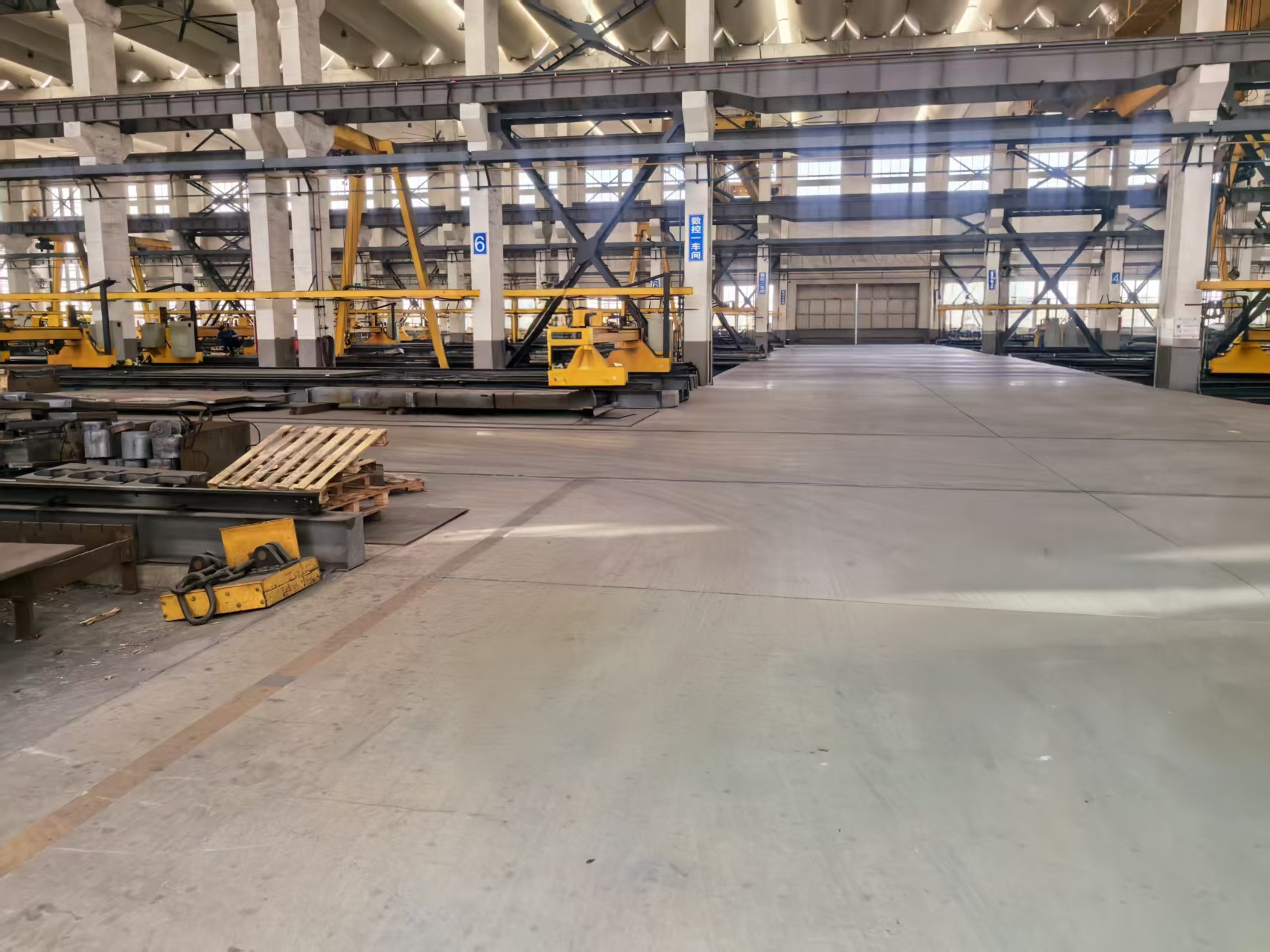
Request a Hydraulic Baler Specification or Sample
Company: Shaanxi Nick Machinery Equipment Co., Ltd. | Brand: nkbaler
Website: www.nickbaler.com | Email: Sales@nkbaler.com | Tel / WhatsApp: +86 15021631102
Address: Qun Sheng Lu, Hui Shan Qu, WuXi Shi, Jiang Su Sheng, China
Download: nkbaler company brochure (PDF)
Have Questions or Need More Details?
Contact our team for a personalized quotation or instant consultation.
Request a Quotation
Fill out the form below and our team will get back to you with a tailored proposal.
WhatsApp Direct Chat
Prefer to chat in real-time? Message us on WhatsApp for instant assistance & quick answers.
- Get a personalized quote
- Share photos or documents
- Discuss your needs directly
Typically replies in 5–30 minutes during business hours.