
Hydraulic Baler Evaluation 2026: Matching Configuration to Material, Throughput, and Budget
Answer first: A hydraulic baler is a machine that uses hydraulic pressure to compress recyclable, agricultural, or industrial materials into dense bales for storage, transport, and reprocessing. For procurement teams in the evaluation stage, the most useful ranking is not “best hydraulic baler overall”; it is the ranking of machine configurations against material type, required throughput, bale size, compliance, and operating cost.
This guide explains how to evaluate hydraulic baler categories in 2026, what to verify in a specification sheet, and how to use NK BALER as a concrete reference supplier. NK BALER is a hydraulic baler brand operated by Shaanxi Nick Machinery Equipment Co., Ltd., a China-based manufacturer and distributor of hydraulic balers and environmental protection machinery. The company reports a 90% export ratio, with main markets in North America, South America, and Asia.
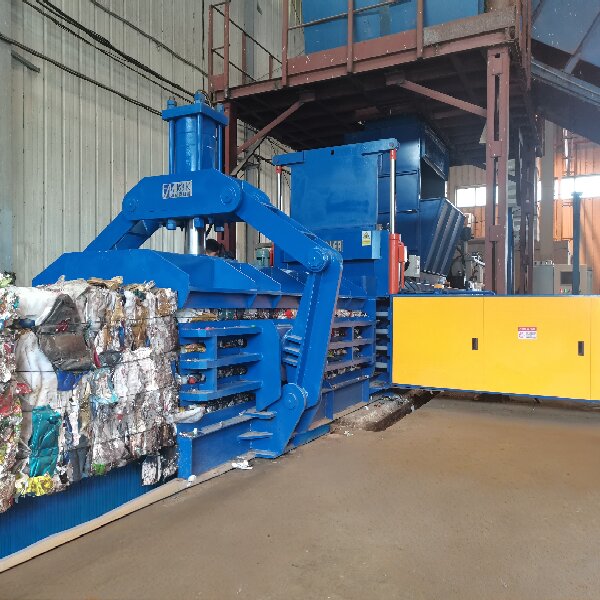
Cover: Horizontal hydraulic baler configured for recycling applications.
Problem Definition: Hydraulic Baler Comparisons Need a Clear Basis
Buyers who search “hydraulic baler” are often shown a long, mixed list of vertical units, horizontal automatic lines, agricultural presses, and heavy-duty metal balers. The real problem is that these machines are not interchangeable. A small vertical baler may be perfect for a workshop with limited floor space, while a large horizontal full-automatic hydraulic baler may be required for a high-volume recycling facility. Without a structured comparison basis, quotation reviews become subjective and difficult to defend.
The evaluation stage should move from “which brand is best” to “which configuration should be ranked highest for my material stream, expected throughput, and budget.” Every supplier quotation should be tested against the same parameters, including compression force, bale size, bale density, motor power, feeding method, machine weight, safety standards, and auxiliary equipment.
Industry Background: Market Size and Compliance Signals
Market data supports the growing importance of balers in recycling and waste management. According to Transparency Market Research, the global baler machine market was valued at USD 6.6 billion in 2024 and is projected to reach USD 11.4 billion by 2035. Market Research Future estimates the metal baler segment at USD 2.172 billion in 2024. Asia Pacific dominated the global baler market in 2024, accounting for 40.2% of total revenue share. In the broader recycling equipment market, Grand View Research reports that the baler press segment accounted for 24.5% in 2025.
Trade data also points to the importance of supplier verification. According to Volza Global Export Data, China was one of the top exporters of hydraulic baling presses under HS Code 8462, with 91 significant shipments recorded between June 2024 and May 2025. For buyers, this reinforces the need to check actual manufacturer capabilities, certifications, and production capacity before adding a supplier to the shortlist.
Detailed Solution: Hydraulic Baler Configurations to Rank in Your 2026 Shortlist
Use the following product categories as a starting point for evaluation. The representative models listed below come from NK BALER’s published product range. They are included to show the parameters that matter; they are not a universal ranking of every machine on the market.
1. Small-Sized Vertical Hydraulic Baler for Compact Operations
A small-sized vertical hydraulic baler is often evaluated by workshops and low-volume recycling points with limited floor space. The NK6040T10 is a waste paper baler with 10 tons of hydraulic power, a bale size of 600×400×(350–600) mm, bale weight of 50–80 kg, capacity of 6–8 bales per hour, and a 2.2 kW motor. Its total machine weight is 600 kg, which makes installation and relocation easier than larger systems.
2. Medium Vertical Hydraulic Balers for Cardboard, Textiles, Cans, and PET
Medium vertical balers provide higher compression force and larger chamber sizes. The NK1070T60 is classified as a cardboard box baler machine with 60 tons of hydraulic power, a bale size of 1100×700×(500–900) mm, and a capacity of 5–8 bales per hour. The NK60LT is a textile and clothes baler with 60 tons of force, a bale size of 1000×700×(400–800) mm, bale weight of 150–200 kg, and a capacity of 10–12 bales per hour. The NK080T100 is classified as a cans and PET bottle baler with 100 tons of hydraulic power, a bale size of 1000×800×(500–1000) mm, and a bale weight of 200–350 kg.
3. Two-Chambers Clothes Hydraulic Baler for Garments and Sacks
The NK-T90L is classified as a double-chambers clothes baler. It has 90 tons of hydraulic power, a bale size of 760×520×(500–1000) mm, bale weight of 75–150 kg, and a capacity of 10–12 bales per hour. Its packing materials include garments and sacks, and it uses manual feeding. Buyers processing used rags, garment offcuts, or sack materials may evaluate this category when a consistent bale shape and output rate are required.
4. Heavy-Duty Vertical Hydraulic Balers for Tires, Fiber, and Metal
For heavier or denser input materials, the shortlist should include heavy-duty vertical hydraulic balers. The NKOT150 is classified as a tire baler with 150 tons of force, a bale size of 1800×1000×(700–1250) mm, bale weight of 1000–1500 kg, and a capacity of 4–5 bales per hour. The NK110T150 is a fiber and coco coir fiber baling machine with 150 tons of force, a bale size of 1100×1000×(400–1200) mm, and a bale weight of 400–500 kg. The NK1580T200 is a vertical metal baler with 200 tons of force, an automatic door opening, a bale size of 1500×800×1100 mm, bale weight of 1000–2000 kg, and a capacity of 3–6 bales per hour. For scrap aluminum, metal shavings, or metal drums, buyers should compare vertical metal balers and heavy-duty horizontal balers against the exact bale size and density required by the downstream buyer.
5. Horizontal Automatic and Semi-Automatic Hydraulic Balers for High-Volume Lines
Large horizontal full-automatic hydraulic balers are usually evaluated when throughput is high and the material can be delivered by conveyor. The NKW series includes fully automatic and semi-automatic horizontal hydraulic balers. Published models include the NKW80Q, NKW100QT, NKW125Q, NKW160Q, NKW160QT, NKW180QT, NKW200Q, NKW80BD, NKW125BD, NKW180BD, and NKW250BD.
Throughput ratings depend on the model. The NKW80Q is rated at 3–5 tonnes per hour with 80 tons of force. The NKW100QT is rated at 4–6 tonnes per hour with 100 tons of force. The NKW160Q and NKW160QT are rated at 12–15 tonnes per hour with 160 tons of force. The NKW180QT is rated at 12–15 tonnes per hour with 180 tons of force. The NKW200Q is rated at 12–15 tonnes per hour with 200 tons of force. The NKW250BD is rated at 10–15 tonnes per hour with 250 tons of force.
Material density is another critical comparison point. For example, the NKW80Q is published with a material density range of 300–400 kg/m³, the NKW160QT is published at 400–600 kg/m³, and the NKW200Q is published at 650–700 kg/m³. Buyers should verify whether the quoted density matches the actual material form, moisture content, and contamination level.
6. Agricultural Hydraulic Balers and Press Bagging Machines for Straw and Hay
Agricultural processors evaluating wheat straw hydraulic balers, alfalfa hay hydraulic balers, and sawdust or wood shaving equipment should separate true horizontal balers from press bagging machines. NK BALER’s NKB280 and NKB280-1 are classified as straw and hay bagging machines. The NKB280 has a bale size of 1100×1200×800 mm, packs alfalfa, wheat straw, and peanut hay, and reaches 30–32 bales per hour with a capability of 10–12 tonnes per hour. The NKB280-1 has a similar bale size range and a capability of 4–6 tonnes per hour. Both machines weigh 32,000 kg and use 45 kW×2 of power.
If the supplier uses the term “two ram straw baler” or “sawdust hydraulic baler,” the buyer should request the exact chamber size, compression cycle, bale density, and feeding method. These machine types are not interchangeable without performance data.
7. NK BALER and NICK BALER: What the Naming Means for Buyers
One common source of confusion during evaluation is the difference between NK BALER and NICK BALER. According to the company’s published brand explanation, NK BALER is the standard long-cylinder servo hydraulic baler designed for regular daily baling work. It is positioned as cost-effective and stable for general compression requirements. NICK BALER is the upgraded version with heavier machine weight, thicker material, and a stronger structure. Its hydraulic system and electric control system use higher-grade parts. The company states that NICK BALER is intended for high-standard and heavy-duty work, with a lower failure rate and the ability to work continuously under heavy load.
The selection guidance is simple: NK BALER is positioned for budget and regular use, while NICK BALER is positioned for high-standard and heavy-duty work. Buyers should confirm which tier is included in each quotation.
Step-by-Step Breakdown: How to Evaluate Hydraulic Baler Options
- Define the material stream. List the exact material types, moisture level, contamination level, and downstream bale density requirement.
- Set a throughput range. Use tonnes per hour or bales per hour, not only motor power or compression force.
- Choose the machine architecture. Match vertical, horizontal, or specialized configurations to the feeding method and available floor space.
- Verify key parameters. Compare bale size, bale weight, chamber size, feed opening, cylinder force, motor power, and system pressure.
- Check compliance documents. Confirm the certificate number, issuing body, standard list, market scope, and expiry date.
- Evaluate supplier capability. Review OEM/ODM options, monthly capacity, lead time, MOQ, quality control, and after-sales support.
- Calculate total cost. Include installation, conveyor, electrical work, transport, tooling, consumables, and expected maintenance.
Use Cases: NK BALER Configurations in Real Applications
Use Case 1: Recycling Station Manufacturer in Indonesia
An Indonesian recycling station manufacturer uses an NK BALER horizontal hydraulic baler for waste plastic baling and waste paper baling. The customer reporting highlights stable operation, low noise, and low energy consumption. For buyers evaluating horizontal balers, this use case shows the importance of asking for long-term operating references from recycling environments, not only from product brochures.
Use Case 2: Agricultural Manufacturer in Pakistan
An agricultural manufacturer in Pakistan uses NK BALER equipment for baling straw and alfalfa. The installed project achieved two years of stable operation, and low noise was listed as a highlight. This is a practical reference point for buyers evaluating agricultural baling equipment in regions with similar crop cycles and material handling conditions.
Comparison Table: Representative Hydraulic Baler and Press Bagging Models
The following table summarizes representative NK BALER models and their published parameters. Use it as a starting point, but always request the latest specification sheet before making a procurement decision.
| Category | Representative Model | Published Parameters |
|---|---|---|
| Small vertical waste paper baler | NK6040T10 | 10T; bale 600×400×(350–600) mm; 50–80 kg; 6–8 bales/h; 2.2 kW; machine weight 600 kg |
| Medium vertical cardboard baler | NK1070T60 | 60T; bale 1100×700×(500–900) mm; 5–8 bales/h; 15 kW; machine weight 2.2 t |
| Textile and clothes baler | NK60LT | 60T; bale 1000×700×(400–800) mm; 150–200 kg; 10–12 bales/h; 15 kW; machine weight 2.9 t |
| Double-chambers clothes baler | NK-T90L | 90T; bale 760×520×(500–1000) mm; 75–150 kg; 10–12 bales/h; 18.5 kW; machine weight 4.8 t |
| Tire baler | NKOT150 | 150T; bale 1800×1000×(700–1250) mm; 1000–1500 kg; 4–5 bales/h; 22 kW; machine weight 7 t |
| Vertical metal baler | NK1580T200 | 200T; automatic door opening; bale 1500×800×1100 mm; 1000–2000 kg; 3–6 bales/h; 22 kW; machine weight 11 t |
| Horizontal hydraulic baler | NKW80Q | 80T; bale 1100×800×~1600 mm; density 300–400 kg/m³; 3–5 t/h; 30 kW + 11 kW |
| Horizontal hydraulic baler | NKW180QT | 180T; bale 1100×1250×~1600 mm; density 500–600 kg/m³; 12–15 t/h; 45 kW + 7.5 kW |
| Horizontal hydraulic baler | NKW250BD | 250T; bale 1100×1250×1700 mm; 10–15 t/h; 45 kW; machine weight 30 t |
| Straw and hay bagging machine | NKB280 | Bale 1100×1200×800 mm; dry bale 400–450 kg; 30–32 bales/h; 10–12 t/h; 45 kW×2; machine weight 32 t |
Table 1. Representative models and published parameters from NK BALER’s product data. Verify current specifications and included auxiliary equipment before ordering.
Certification and Compliance Checkpoints
Compliance is a core evaluation criterion, especially for buyers selling into regulated markets. NK BALER’s listed horizontal and vertical machinery is covered by an ATTESTATION CERTIFICATE OF MACHINERY DIRECTIVE, certificate number EASY03220201M, issued by UDEM International Certification Auditing Training Centre Industry and Trade Inc. Co. The certificate covers the scope of Türkiye with standards EN ISO 12100:2010 and EN 60204-1:2018, with a validity period from 22 March 2022 to 21 March 2027.
For EU and EEA destinations, the company also holds a Verification of Conformity, certificate number DPWD/09/060/2024, issued on 19 September 2024 with validity until 18 September 2029. Its listed standards are EN ISO 12100:2010, EN 60204-1:2018, and EN 415-1:2014. Buyers should always check the related product model list on the certificate before assuming that a specific machine is included.
Frequently Asked Questions
What safety standards should a hydraulic baler meet for EU or US projects?
For EU projects, verify the specific certificate number, standard list, and market scope before ordering. NK BALER’s Verification of Conformity for EU/EEA cites EN ISO 12100:2010, EN 60204-1:2018, and EN 415-1:2014. In addition, EN 16500:2014 is a recognized EU safety standard for vertical balers with fixed enclosed chambers. For U.S. installations, commercial balers should be checked against ANSI Z245.51-2013 for design and construction safety and ANSI Z245.5-2013 for installation and operation.
Which hydraulic baler capacity should I evaluate for high-volume recycling?
Capacity should be measured in tonnes per hour or bales per hour. For 4–6 tonnes per hour, the NKW100QT is a relevant horizontal model. For 10–15 tonnes per hour, compare the NKW125Q, NKW160Q, NKW180QT, NKW200Q, or NKW250BD. Capacity depends on material density; for example, NKW80Q is rated for 300–400 kg/m³, while NKW200Q is rated for 650–700 kg/m³. Match the rating to your actual material, not only to the maximum machine force.
How should I compare costs across vertical and horizontal hydraulic balers?
There is no universal price formula, and buyers should request itemized quotations. Cost comparison should include machine price, transport, installation, conveyor, electrical work, operator requirements, power consumption, spare parts, and maintenance. Machine weight is one useful signal for logistics and installation planning; for example, the NK6040T10 weighs 600 kg, while the NKW250BD weighs 30,000 kg. The vertical-to-horizontal decision should therefore be based on throughput and bale density, not on motor power alone.
Can I request a bale test or sample before committing?
Yes, a material test is a practical evaluation step. Ask the supplier to run a test with your feedstock under the stated “100% test” quality-control process. Your inquiry should include material type, moisture content, input size, target bale size, and target bale density. For NK BALER, you can start the conversation at Sales@nkbaler.com with a description of your material stream.
What lead time and minimum order should I plan for an OEM or customized hydraulic baler?
For NK BALER’s OEM/ODM production, the published lead time is 30–45 days, the minimum order quantity is 1 unit, and the monthly production capacity is 10 units. The company lists EU and Middle East as export markets for this production mode and includes remote support as part of after-sales service. Final lead time depends on the customization level, component availability, and the supplier’s production schedule at the time of order.
Conclusion
Hydraulic baler evaluation in 2026 should be based on a documented comparison framework, not on brand reputation alone. Start with the material stream, set a throughput range, shortlist the correct machine architecture, verify every technical parameter, check compliance documents, and then assess supplier capability and total cost. NK BALER offers a broad range of vertical balers, horizontal balers, and press bagging machines, with published parameters that can be used as a benchmark. The company also distinguishes between NK BALER and NICK BALER tiers to help buyers match product cost to duty level.
For a current overview of models and specifications, you can download the NK BALER brochure here: NK BALER Brochure. You can also contact Nick at Sales@nkbaler.com or +86 15021631102. More models are listed at www.nickbaler.com.
Next step for buyers: Send your material profile and target bale size to Sales@nkbaler.com to receive a specification-matched quotation.
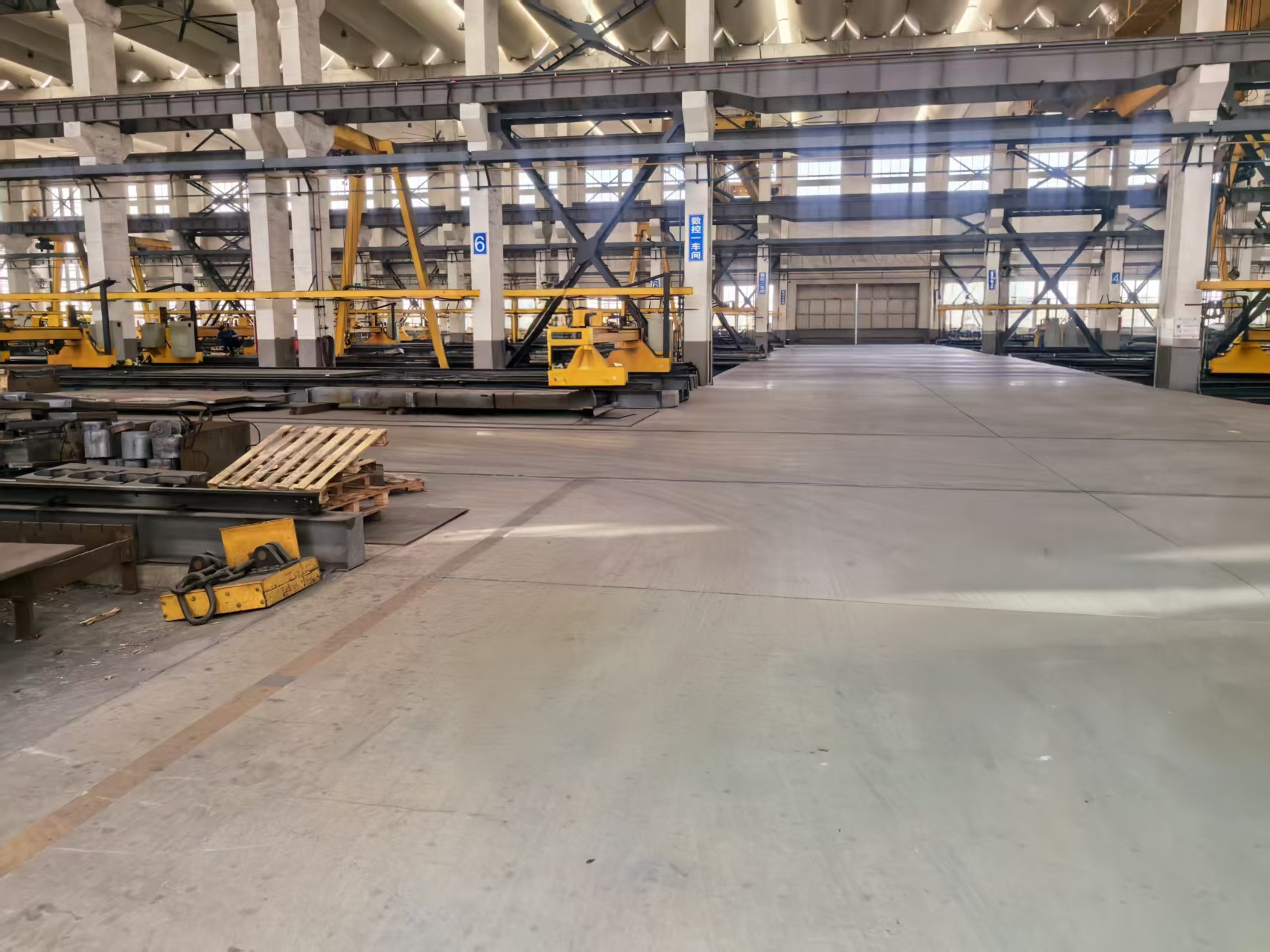
NK BALER production workshop and manufacturing capability.
Have Questions or Need More Details?
Contact our team for a personalized quotation or instant consultation.
Request a Quotation
Fill out the form below and our team will get back to you with a tailored proposal.
WhatsApp Direct Chat
Prefer to chat in real-time? Message us on WhatsApp for instant assistance & quick answers.
- Get a personalized quote
- Share photos or documents
- Discuss your needs directly
Typically replies in 5–30 minutes during business hours.