Hydraulic Baler Long-Term Partnership FAQ: Service & Support
Hydraulic Baler Long-Term Partnership FAQ: Service & Support
Short answer: when a buyer purchases a hydraulic baler, two things are bought at once — the machine and the supplier's ability to keep it running for the next decade. A unit pushing 12–15 tonnes per hour on a three-shift line and a 3–5 t/h machine in a smaller plant do not fail for the same reasons, do not need the same maintenance plan, and do not require the same level of after-sales response. This FAQ works through the questions buyers ask at the decision stage: how to judge a supplier's long-term support, how to build a maintenance plan around specific model specifications, and how to select a horizontal hydraulic baler for food, packaging, metals, and waste-treatment operations.
Problem Definition: The Purchase Decision Is Really a Ten-Year Support Decision
By the time a procurement team reaches the decision stage, most shortlisted machines already clear the basic bar — enough compression force, a chamber that fits the material, and throughput that keeps pace with the line. The remaining risk sits in the operating window that follows installation, and it appears in three predictable forms.
Thermal stress. Overheating of the power unit is a recurring operational risk in this equipment class. nkbaler manages it at the design level with thermal protection supported by temperature sensors, rather than leaving it to operator intervention.
Structural fatigue from a duty mismatch. A machine can be technically within specification and still structurally light for continuous heavy-load work. In that case repair cost accumulates faster than the purchase saving.
Spare-part identification drift. Over five or ten years, a baler can become effectively unrepairable because nobody can confirm which pump, valve, or seal the unit was originally built with.
None of these three risks is solved by a lower quotation. All three are solved by documentation, component grade, and a supplier that still holds the configuration record years after delivery.
Industry Background: A Larger Market With Longer Ownership Cycles
The global baler machine market was valued at USD 6.6 billion in 2024 and is projected to reach USD 11.4 billion by 2035, according to Transparency Market Research. In the same analysis, Asia Pacific accounted for 40.2% of total revenue in 2024. Within the wider recycling equipment market, the baler press segment represented 24.5% of the total in 2025, driven by demand for compacting plastic and paper (Grand View Research). The scrap-metal subset was estimated separately at USD 2.172 billion in 2024 (Market Research Future).
China remains a significant supply base for the category. Volza Global Export Data records 91 significant shipments of hydraulic baling presses under HS Code 8462 between June 2024 and May 2025. The competitive field is well documented — key names include Harris Equipment (US), Bramidan (DK), Bollegraaf (NL), and HSM (DE), with Harris specializing in heavy-duty horizontal systems. In practice this means most serious buyers are choosing between several technically competent suppliers rather than between capable and incapable ones, which shifts the decision weight toward service depth and long-term support.
Two caveats belong in every supplier conversation.
Market numbers are scope-dependent. Published estimates diverge: Transparency Market Research values the 2024 global baler market at USD 6.6 billion, Global Market Insights estimates USD 4.9 billion for 2025, and Grand View Research USD 7.18 billion for 2025. The gap reflects which categories each report includes, not disagreement about direction. Any single figure should be treated as an estimate with a stated scope.
Compliance is market-specific. Vertical balers sold into the EU must comply with EN 16500:2014, which specifies requirements for fixed enclosed baling chambers and tamper-proof interlocks. In the United States, commercial balers follow ANSI Z245.51-2013 for design and construction safety, and ANSI Z245.5-2013 for installation and operation. These documents decide whether a machine can legally run at your site.
Detailed Solution: What a Long-Term Partnership Actually Includes
nkbaler is the export-facing brand of Shaanxi Nick Machinery Equipment Co., Ltd., a manufacturer and distributor of hydraulic balers and environmental protection machinery based in Wuxi, Jiangsu, China. The company operates a 5,000 m² production facility with approximately 50 employees, a 15-person R&D team, and an annual output of around 600 units. About 90% of production is exported, with North America, South America, and Asia as the primary markets. Official product information is published at www.nickbaler.com.
The product line covers vertical balers, full-automatic horizontal balers, manual horizontal balers, and press bagging machines. That range matters for partnership planning, because a facility that grows from low-volume to high-volume baling does not have to change supplier, documentation standard, or parts channel mid-life.
Two build tiers, two ownership profiles
nkbaler separates its offering into two tiers, and understanding the difference is the single most useful thing a buyer can do when comparing quotations:
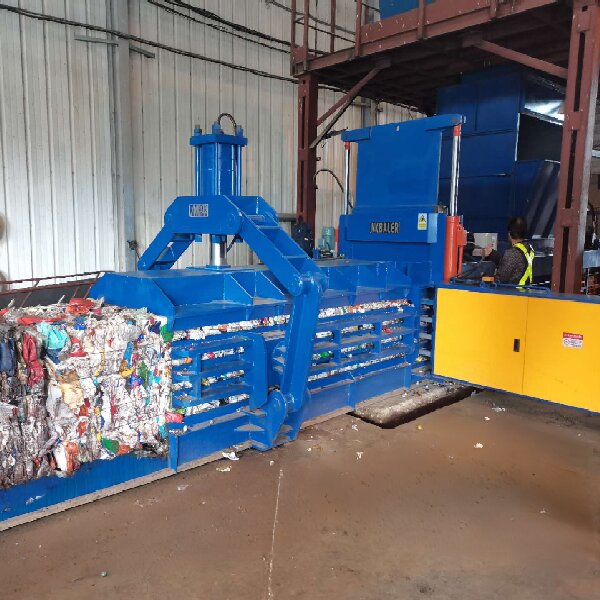
- NK BALER — the standard long-cylinder servo hydraulic baler. Designed for regular daily baling work: cost-effective and stable, suited to general compression requirements.
- NICK BALER — the upgraded, high-quality version. Heavier machine weight with thicker material and a stronger structure; both the hydraulic system and the electric control system use higher-grade parts than NK BALER. It runs more powerfully with a lower failure rate and can work continuously under heavy load for long-term use.
The practical consequence is that NK BALER and NICK BALER are not competing products — they answer different duty questions. Specifying NK BALER for continuous three-shift heavy-load work, or NICK BALER for occasional light-duty baling, is a mismatch in either direction.
Where service support is built in
Uptime in continuous baling is largely decided by thermal management. nkbaler builds in thermal protection supported by temperature sensors specifically against the overheating risk that otherwise produces unplanned stops on long runs.
Comparison data maintained by nkbaler also supports the service argument against piston-type equipment. Relative to a piston compressor, the baler configuration is recorded as lower noise (a stated gap of 15 dB), suited to noise-sensitive environments, roughly 10% lower in cost, lower in maintenance demand, and higher in efficiency. The same comparison frame is applied against piston fans, with industrial plants as the typical setting. Buyers should validate noise and consumption claims against their own site conditions, but the direction of the comparison — hydraulic baling press versus piston-type compression equipment — is a legitimate question to put to every shortlisted supplier.
Planning Maintenance Around Model Specifications
Maintenance planning only becomes concrete when it is anchored to a model. Two units from the nkbaler horizontal range show how differently that planning scales.
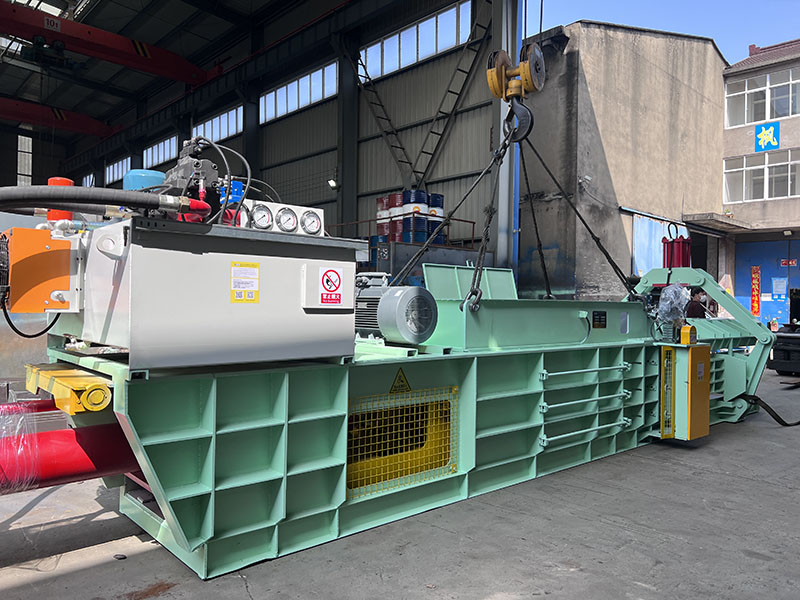
NKW100QT — 200 T force, 12–15 t/h
With 200 tonnes of compression force and a throughput range of 12–15 tonnes per hour, this is a high-capacity unit for continuous, high-volume lines. At this duty level the maintenance conversation centres on the three subsystems under the most continuous load: the hydraulic power unit, where temperature sensor checks tie directly into the thermal protection function; the compression chamber and its wear surfaces; and the automatic tying assembly.
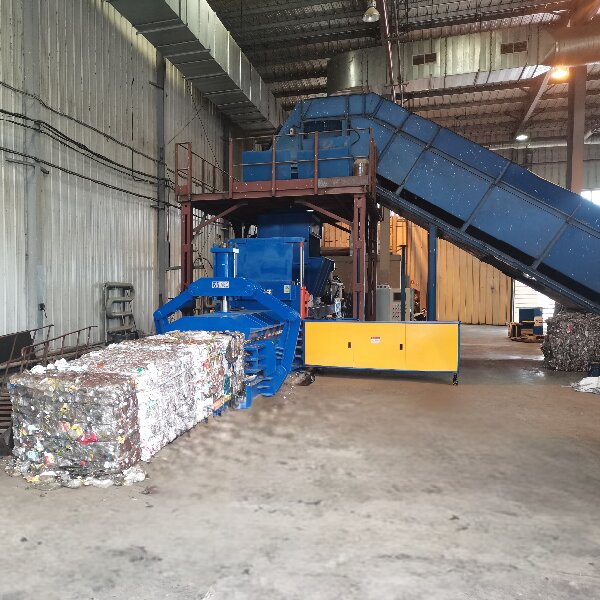
NKW80Q — 3–5 t/h
Rated at 3–5 tonnes per hour, the NKW80Q serves lower-volume operations — smaller packaging plants, mid-sized recycling yards, or facilities running a single shift. Its maintenance cadence is lighter, and the commercial case for a long-term partnership rests more on parts availability and response time than on heavy-load component grade.
Three planning rules apply to both models:
- Fix the model and configuration in writing at purchase. Force, throughput, chamber dimensions, and control system should appear on the same document as the order. This record is what makes year-five spare-part identification possible.
- Match maintenance intensity to duty cycle, not to machine size. A 3–5 t/h unit run continuously can accumulate more operating hours than a 12–15 t/h unit run intermittently.
- Treat thermal protection as a maintained system. Temperature sensors and the protection logic they feed belong on the scheduled inspection list, not on the list of features assumed to work indefinitely.
Step-by-Step: Evaluating a Supplier for Long-Term Support
The following sequence is designed for buyers who have already shortlisted machines and need to separate suppliers on support capability rather than on price.
- Define the material profile first. Food-industry film and cartons, metal shavings, aluminium scrap, and mixed municipal waste place different loads on the same machine class. Write the profile down before comparing specifications.
- Convert the profile into a written configuration baseline. Record the model, compression force, chamber dimensions, throughput, and control system.
- Request the compliance mapping for your destination market. EU sites need the EN 16500:2014 position for vertical balers; US sites need the ANSI Z245.51-2013 and ANSI Z245.5-2013 position.
- Establish who owns the first service call. Confirm the named contact path and the escalation route for a hydraulic fault before the machine ships.
- Confirm the spare-part identification method. The supplier should be able to identify a component against the build record, not against a photograph.
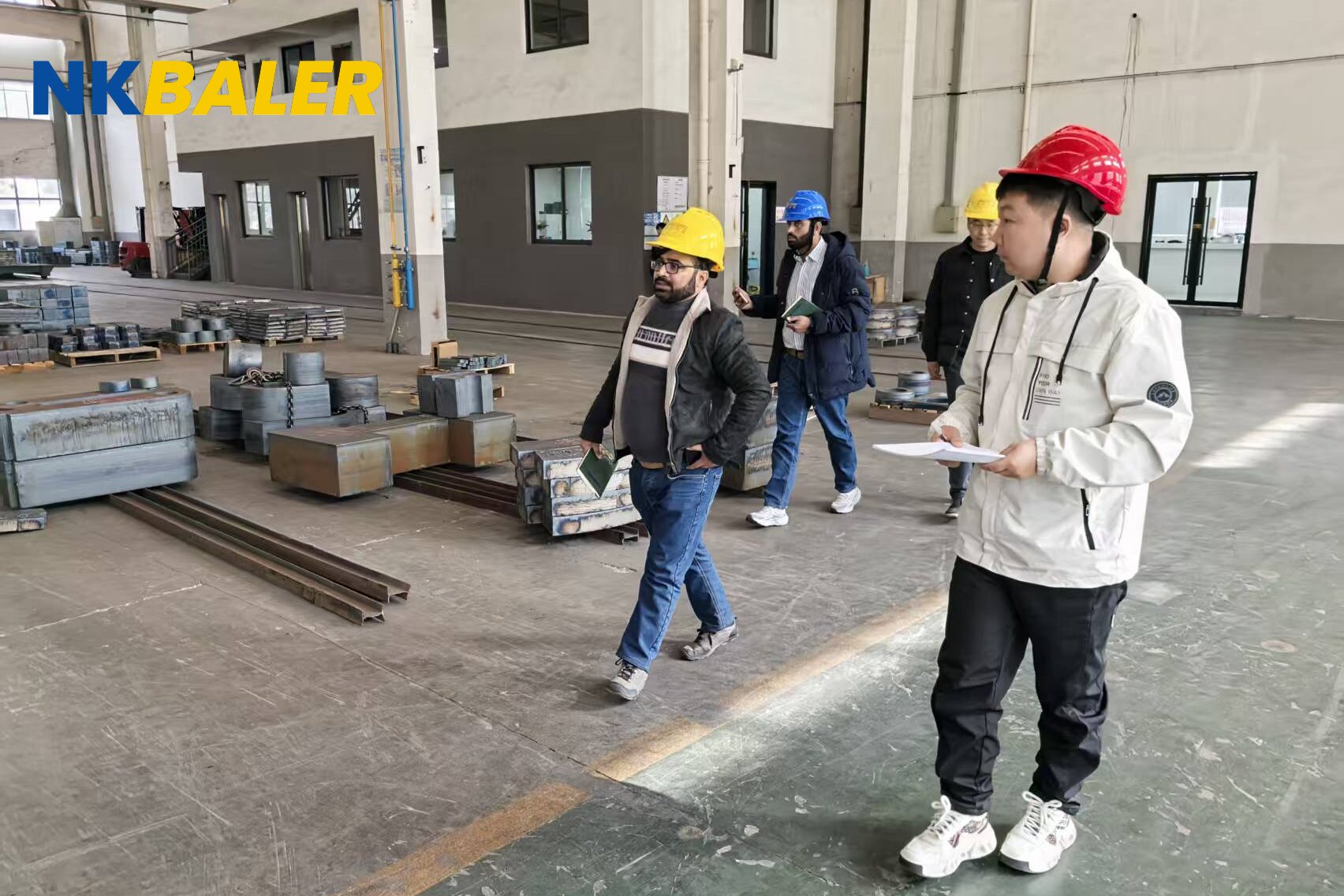
- Check the engineering bench behind the product. nkbaler supports configuration questions through a 15-person R&D team and an annual production volume of roughly 600 units.
- Decide the tier question openly. NK BALER for regular daily baling on a controlled budget; NICK BALER for heavy, continuous duty where a lower failure rate and a stronger structure justify the heavier build.
- Agree repeat-order and lead-time expectations before the first shipment. Building the second and third machine into the same parts and documentation system is where a long-term partnership creates measurable value.
Use Cases: Matching Horizontal Hydraulic Balers to Industry
Food processing
Food plants generate a steady stream of cartons, film, and secondary packaging that must be compacted before transport. The load is moderate but continuous, which typically favours a medium-capacity horizontal machine and a maintenance plan built around scheduled inspection rather than reactive repair.
Packaging and converting
Film and paper waste volumes fluctuate with production campaigns, so capacity headroom matters more than peak force alone. Operators in this segment often combine a horizontal baler for high-volume film with tighter control over bale density and tying reliability.
Metals and scrap
Aluminium scrap, metal shavings, and drum handling place the heaviest structural demand on the machine class. This is where the NICK BALER build tier — heavier machine weight, thicker material, stronger structure, higher-grade hydraulic and electric components — becomes a specification decision rather than a preference.
Waste treatment and recycling
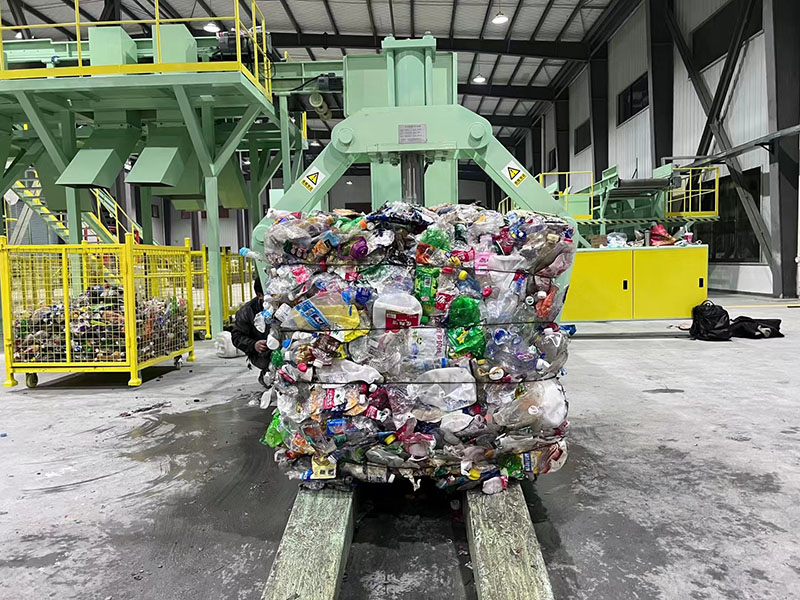
Municipal and commercial recycling operations run mixed streams with variable moisture and contamination. Throughput planning matters here: a 12–15 t/h unit such as the NKW100QT suits high-volume continuous lines, while the 3–5 t/h NKW80Q fits smaller yards and transfer stations.
Comparison Table: Configurations and Build Tiers
Table 1 — NK BALER compared with NICK BALER (nkbaler build tiers)
| Decision dimension | NK BALER | NICK BALER |
|---|---|---|
| Position in range | Standard long-cylinder servo hydraulic baler | Upgraded high-quality version |
| Machine weight and structure | Standard build | Heavier machine weight, thicker material, stronger structure |
| Hydraulic and electric systems | Standard-grade components | Higher-grade components than NK BALER in both systems |
| Failure rate and duty cycle | Cost-effective and stable for regular daily baling | Lower failure rate; continuous heavy-load operation for long-term use |
| Best fit | Budget-controlled, regular general compression work | High-standard, heavy-duty work |
Table 2 — Hydraulic baler compared with piston compressor and piston fan (nkbaler comparison data)
| Decision dimension | Hydraulic baler configuration | Piston compressor | Piston fan |
|---|---|---|---|
| Noise | Lower noise, stated gap of 15 dB | Reference point | Reference point |
| Typical setting | Noise-sensitive environments; industrial plants | General compression duty | Industrial plants |
| Relative cost | Approximately 10% lower | Higher | Higher |
| Maintenance demand | Less maintenance | More | More |
| Efficiency | Higher efficiency | Lower | Lower |
Table 3 — Horizontal model comparison for capacity planning
| Model | Compression force | Throughput | Typical operating profile |
|---|---|---|---|
| NKW100QT | 200 T | 12–15 t/h | High-volume continuous lines, multi-shift operation |
| NKW80Q | As specified in the build record | 3–5 t/h | Lower-volume operations, single-shift or smaller facilities |
Frequently Asked Questions
Which safety standards should a hydraulic baler meet before installation in the EU or the US?
In the EU, vertical balers must comply with EN 16500:2014, which specifies requirements for fixed enclosed baling chambers and tamper-proof interlocks. In the United States, commercial balers follow ANSI Z245.51-2013 for design and construction safety and ANSI Z245.5-2013 for installation and operation. Ask every supplier to map each shortlisted model to the standard that applies in your destination market, and keep that mapping with the purchase documentation.
Can one supplier cover both a 12–15 t/h line and a smaller 3–5 t/h operation?
Yes. nkbaler's horizontal range includes the NKW100QT at 200 tonnes of compression force and 12–15 tonnes per hour for high-volume continuous lines, and the NKW80Q at 3–5 tonnes per hour for lower-volume operations. The same supplier also builds vertical balers, full-automatic horizontal balers, manual horizontal balers, and press bagging machines, so a facility that scales up does not have to change brand, documentation standard, or parts channel.
How do NK BALER and NICK BALER differ, and which one fits a long-term partnership?
NK BALER is the standard long-cylinder servo hydraulic baler — cost-effective and stable, designed for regular daily baling work and general compression requirements. NICK BALER is the upgraded version: heavier machine weight with thicker material and a stronger structure, plus higher-grade hydraulic and electric control components. NICK BALER runs more powerfully with a lower failure rate and can work continuously under heavy load for long-term use. Buyers on a controlled budget with regular duty typically choose NK BALER; buyers running heavy, continuous duty typically choose NICK BALER.
Can we validate a machine before committing to a multi-year supply agreement?
Validation should start before the contract, not after installation. nkbaler supports buyer evaluation through its 15-person R&D team, which handles configuration questions tied to material profile, throughput, and duty cycle. Buyers can request a quotation, discuss a sample configuration, or check a machine specification against their own material stream by contacting Sales@nkbaler.com or +86 15021631102.
What should be agreed in writing to protect lead time and spare-part continuity?
Three items matter most: a model-specific parts identification method recorded at build time, a named service contact path for the first hydraulic fault, and a documented repeat-order process. nkbaler produces approximately 600 units a year from a 5,000 m² facility and exports about 90% of that output to North America, South America, and Asia — a volume profile built on repeat business rather than one-off sales. As a next step, send your material profile and target throughput to Sales@nkbaler.com and request a model recommendation with a written parts and service outline.
Conclusion: Choose the Machine and the Partnership Together
Long-term baler ownership is decided by a small number of things: whether the machine structure matches the real duty cycle, whether thermal protection and temperature sensors are maintained rather than assumed, whether the model and its components are documented well enough to be identified five years later, and whether the supplier is still reachable when the first hydraulic fault occurs. NK BALER and NICK BALER answer different duty questions; the NKW100QT and NKW80Q answer different throughput questions. Choosing correctly between them, and writing the support expectations into the purchase, is what turns a machine purchase into an operating partnership.
Next step
Send your material profile and required throughput to Sales@nkbaler.com or call +86 15021631102 for a model recommendation. The full nkbaler product range, including vertical balers, full-automatic horizontal balers, manual horizontal balers, and press bagging machines, is documented in the downloadable brochure.