
Hydraulic Baler Selection Guide for Industrial Projects in 2026
Hydraulic Baler Selection Guide for Industrial Projects in 2026
Introduction
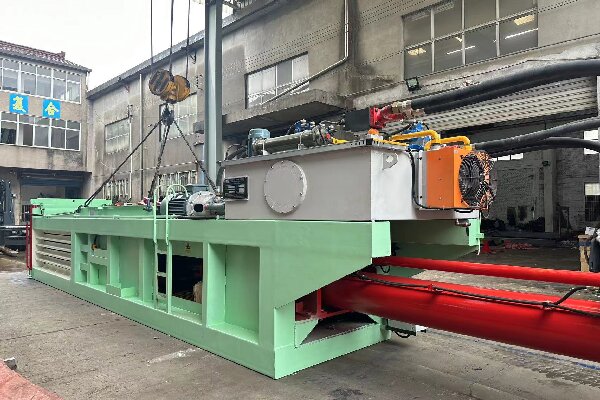
A hydraulic baler is a machine that compresses materials such as waste paper, plastics, metals, textiles, and agricultural biomass into dense bales for storage, transport, or recycling. For industrial buyers in 2026, selecting the right baler goes beyond comparing specs—it requires matching the machine's design to the specific project conditions, material type, throughput, and environmental constraints. This guide provides a structured approach to evaluate hydraulic baler options using the product portfolio of nkbaler, a brand of Shaanxi Nick Machinery Equipment Co., Ltd., which manufactures both standard and heavy-duty baling solutions for global markets.
Problem Definition
Industrial buyers often face the challenge of choosing between dozens of hydraulic baler variants—vertical vs. horizontal, automatic vs. semi-automatic, standard vs. heavy-duty—without a clear framework that links machine parameters to project requirements. A mismatch can lead to insufficient throughput, frequent breakdowns, unsafe operation, or budget overruns. The core problem is the lack of scenario-specific guidance that translates material characteristics, environmental conditions, and production targets into a concrete equipment specification.
Industry Background
The global baler machine market was valued at USD 6.6 billion in 2024 and is projected to reach USD 11.4 billion by 2035 (Transparency Market Research). Asia Pacific dominated the market, accounting for 40.2% of total revenue, with China being one of the top exporters of hydraulic baling presses—91 significant shipments were recorded between June 2024 and May 2025 (Volza). The baler press segment represented 24.5% of the global recycling equipment market in 2025 (Grand View Research). These figures underscore the growing need for efficient, reliable baling equipment across manufacturing, recycling, and agriculture. Key global competitors include Harris Equipment (US), Bramidan (DK), Bollegraaf (NL), and HSM (DE), but Chinese manufacturers like nkbaler are increasingly recognized for their cost-effective and customizable solutions.
Detailed Solution: nkbaler's Hydraulic Baler Portfolio
nkbaler (a brand of Shaanxi Nick Machinery Equipment Co., Ltd.) offers two product lines to meet varying budget and performance requirements. The NK BALER line is the standard long-cylinder servo hydraulic baler, designed for regular daily baling work. It is cost-effective and stable, suitable for general compression requirements. The NICK BALER line is the upgraded high-quality version with heavier machine weight, thicker material, stronger structure, and higher-grade hydraulic and electric control systems. NICK BALER runs more powerfully, has a lower failure rate, and can work continuously under heavy load for long-term use.
The nkbaler portfolio covers a wide range of materials and scenarios:
- Vertical balers: Ideal for smaller spaces and lower volumes. Models include the NK1070T60 (60-ton cardboard baler), NK60LT (60-ton textile baler), NK-T90L (90-ton double-chamber clothes baler), NKOT150 (150-ton tire baler), NK080T100 (100-ton can/PET bottle baler), NK1580T200 (200-ton vertical metal baler), and NK110T150 (150-ton fiber/coco coir baler).
- Horizontal balers: Suitable for high-volume continuous operations. Models range from the NKW80BD (80-ton semi-automatic) to the NKW250BD (250-ton fully automatic), with capacities from 2–3 T/hour to 10–15 T/hour.
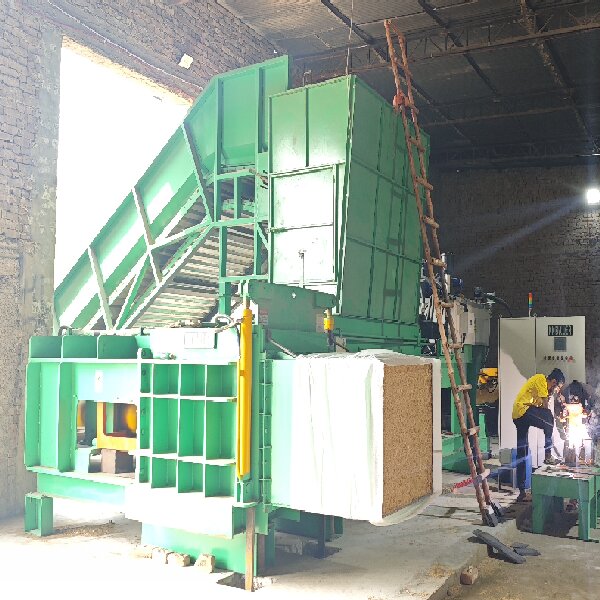
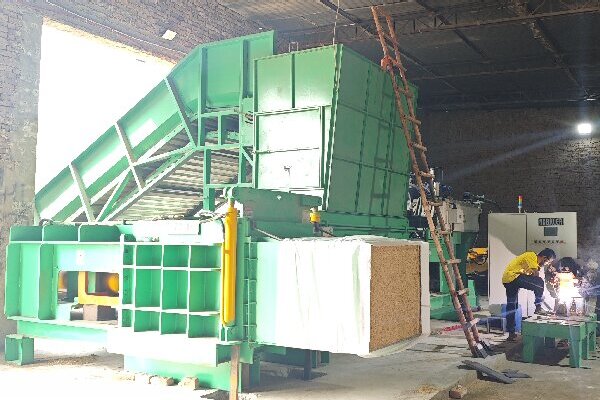
- Specialized bagging machines: For constant-weight bagging (NKB10, NKB20) and straw/hay block making (NKB280, NKB280-1, NKB220).
All horizontal and vertical machines are constructed from carbon steel and are applicable to food, pharmaceuticals, packaging, chemicals, electronics, metals, waste treatment, and recycling industries. Many models are designed for continuous automatic operation with PLC-controlled cycles, supporting 24/7 industrial duty, and some are specifically built for high-temperature environments.
Step-by-Step Breakdown: How to Match a Hydraulic Baler to Your Project
- Identify your material type and density. Light materials like cardboard and textiles require lower force, while metals and dense biomass need high tonnage. For example, a 60-ton vertical baler handles cardboard, while a 200-ton vertical metal baler handles scrap steel.
- Estimate required throughput. Small operations (2–3 T/hour) can use semi-automatic horizontals or verticals; large recycling centers (10–15 T/hour) require fully automatic horizontals like the NKW200Q or NKW250BD.
- Assess environmental conditions. If the facility operates in high temperatures, select a model explicitly designed for that condition. nkbaler offers balers that work under high-temperature environments with PLC-controlled cycles.
- Determine automation level. Manual vertical balers are low-cost and simple; semi-automatic horizontals balance speed and cost; fully automatic units with conveyors and PLC logic minimize labor.
- Evaluate budget vs. duty cycle. For regular use with occasional loads, NK BALER is the best choice. For heavy-duty, continuous operation (24/7), NICK BALER provides thicker steel and higher-grade components, resulting in lower long-term failure rates.
Use Cases
Case 1: Recycling Station in Indonesia
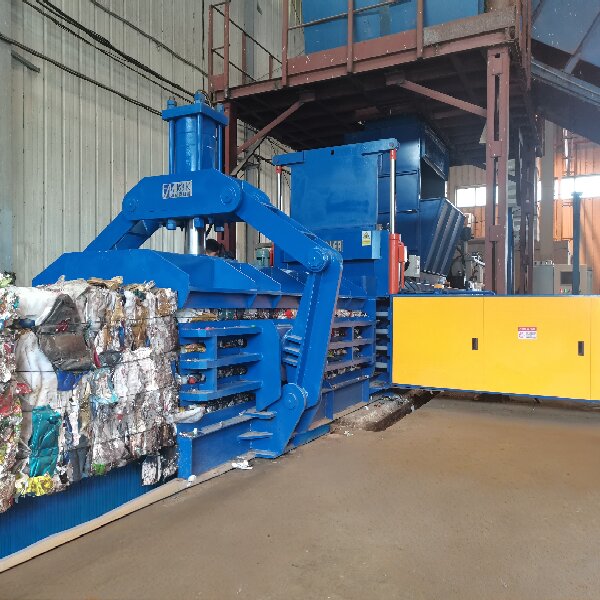
A recycling station manufacturer in Indonesia purchased one unit of a horizontal hydraulic baler (model NKW160QT, 160-ton fully automatic) for baling waste plastic and waste paper. The machine operates in a high-temperature environment with continuous automatic cycles. After 10–15 years of use, the equipment remains stable, with highlights of low noise and low energy consumption.
Case 2: Agricultural Manufacturer in Pakistan
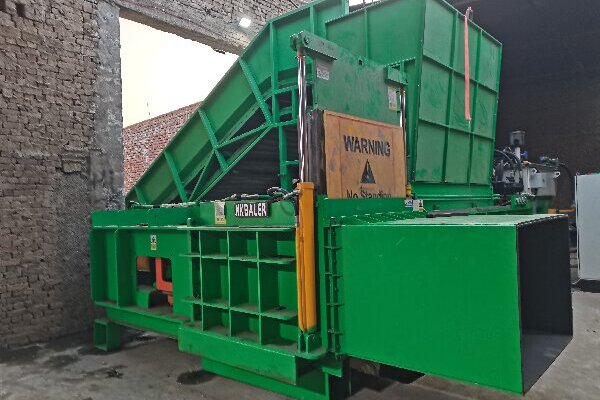
An agricultural manufacturer in Pakistan uses an NKB280-1 straw/hay bagging machine to bale wheat straw and alfalfa. The machine compresses dry material into bagged bales at 30–32 bales per hour. After 2 years of stable operation, the customer reports low noise as a key benefit.
Comparison Table: NK BALER vs. NICK BALER
| Feature | NK BALER | NICK BALER |
|---|---|---|
| Target Use | Regular daily baling, budget-oriented | Heavy-duty, high-standard, continuous use |
| Machine Weight | Standard | Heavier (thicker material, stronger structure) |
| Hydraulic System | Standard grade | Higher-grade parts |
| Electric System | Standard grade | Higher-grade parts |
| Failure Rate | Standard | Lower |
| Continuous Heavy Load | Not recommended for 24/7 heavy load | Designed for long-term heavy load use |
Frequently Asked Questions
1. What safety standards must a hydraulic baler comply with for EU import?
For the European Union, vertical balers must comply with EN 16500:2014, which specifies requirements for fixed enclosed baling chambers and tamper-proof interlocks. In the United States, commercial balers must adhere to ANSI Z245.51-2013 for design and construction safety and ANSI Z245.5-2013 for installation and operation. When sourcing from nkbaler, the manufacturer can adapt designs to meet these regional standards, but buyers should verify compliance documentation for their specific target market.
2. Can nkbaler provide a hydraulic baler that operates in high-temperature environments?
Yes. Many nkbaler models are explicitly designed for operation under high-temperature conditions. The product operates through continuous automatic operation with PLC-controlled cycles, supporting 24/7 industrial duty mode even in elevated ambient temperatures. Both the NK BALER and NICK BALER lines can be configured for high-temperature environments upon request.
3. Which nkbaler model should I choose if my budget is limited but I need reliable daily operation?
For budget-conscious buyers with regular daily baling needs, the NK BALER line is the recommended choice. It is cost-effective, stable, and perfect for general compression requirements. If you anticipate occasional heavy loads or plan to scale later, upgrading to the NICK BALER line provides a longer service life with lower failure rates.
4. Can I test a sample bale before purchasing a full machine?
nkbaler encourages buyers to discuss sample baling tests. While the company does not explicitly offer free samples, it can perform a demonstration bale using your materials at its factory in Wuxi, China, or provide test results from similar applications. Contact nkbaler to arrange a material test or request a sample bale video.
5. What is the typical lead time for a hydraulic baler from nkbaler?
The standard lead time for a hydraulic baler from nkbaler is 30–45 days for a single unit. Customized models (OEM/ODM) may require additional time depending on the complexity of parameter changes. For urgent orders, the factory can expedite production; contact sales to check current capacity and availability. Contact nkbaler or email Sales@nkbaler.com for a quote and lead time confirmation.
Conclusion
Choosing the right hydraulic baler for an industrial project requires a systematic evaluation of material properties, throughput targets, environmental conditions, and budget constraints. The nkbaler portfolio—ranging from standard NK BALER to high-end NICK BALER and covering vertical, horizontal, and bagging machines—provides clear options for different scenarios. By following the step-by-step matching process and reviewing real-world use cases, buyers can confidently select a baler that delivers stable, long-term performance. For a detailed product catalog and custom quotation, visit nkbaler or download the company brochure.