
Hydraulic Baler Showdown: Fully Automatic vs Semi-Automatic
Hydraulic Baler Showdown: Fully Automatic vs Semi-Automatic
Choose a semi-automatic horizontal hydraulic baler when material arrives in batches and an operator is already on site to load the chamber. Choose a fully automatic model when material flows continuously, bale consistency must not depend on operator attention, and the baler is one station inside a conveyor-fed line. Everything else — cylinder force, bale geometry, frame mass, certification route — follows from that single decision.
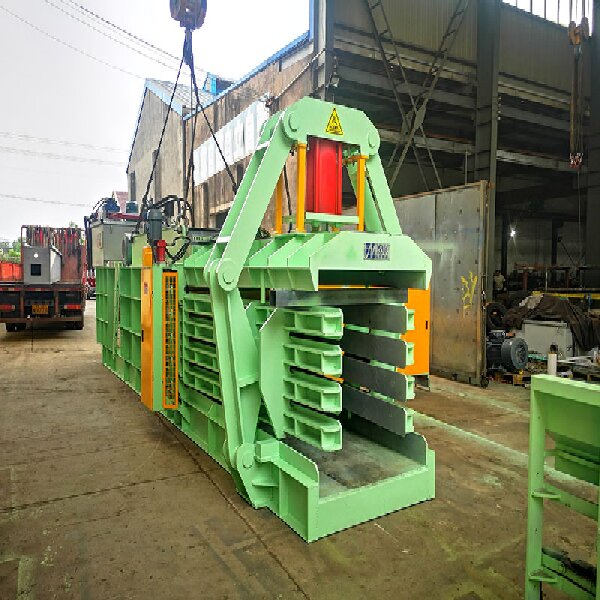
A horizontal hydraulic baler compresses loose material into a dense, wire-tied bale using a hydraulic cylinder. Once a buyer has settled on the horizontal configuration, the next decision is the automation level, and it is usually the more expensive one to get wrong. Fully automatic and semi-automatic horizontal hydraulic balers can share the same cylinder force and similar chamber geometry, yet they demand different site layouts, different staffing models, and different control systems. This guide compares two reference machines from the nkbaler horizontal range — the NKW160Q in its semi-automatic configuration and the NKW200Q in its fully automatic configuration — and gives buyers a step-by-step framework for deciding which automation level their site can actually justify.
What "Automatic" Actually Changes on a Hydraulic Baler
The words "fully automatic" and "semi-automatic" describe who performs the four steps of a baling cycle: feeding material into the chamber, compressing it with the main cylinder, tying the finished bale, and ejecting it. On a semi-automatic horizontal hydraulic baler, compression and bale formation run on hydraulic power, but material is typically loaded with manual or semi-manual assistance, and the operator remains part of the cycle. On a fully automatic machine, feeding, compression, tying, and bale discharge are sequenced by a PLC-controlled cycle without an operator standing at the chamber.
That single difference propagates into four cost and design consequences:
- Labour per ton. A semi-automatic machine converts operator hours into bales. A fully automatic machine converts capital and control complexity into bales.
- Cycle consistency. Manual loading produces variation in bale weight and density; a controlled cycle produces repeatable bales, which matters when bales are sold by weight or shipped in standard containers.
- Upstream and downstream equipment. Fully automatic operation usually implies a conveyor, metering, and a discharge path sized for continuous flow.
- Site envelope. Automation does not shrink a machine. The NKW200Q mainframe measures approximately 11 × 4.3 × 5.8 m (L×W×H), compared with approximately 11 × 2.3 × 2.9 m for the NKW160Q.
One point is worth stating plainly, because it is widely misunderstood: a higher automation level does not automatically mean a higher throughput rating. In the nkbaler range, both the NKW160Q and the NKW200Q are published at 12–15 ton/hour. The difference lies in how that rating is sustained. Buyers evaluating continuous-feed duty typically look at feed-opening size, mainframe mass, and system pressure together, because those three variables determine how much material the machine accepts per cycle and how stable the frame remains under repeated loading.
Why Automation Choices Are Getting More Expensive to Get Wrong
Baler capacity decisions are long-lived capital decisions, and the market context makes that more visible. Transparency Market Research valued the global baler machine market at USD 6.6 billion in 2024 and projected it to reach USD 11.4 billion by 2035. Those figures are not uniform across research houses — Global Market Insights estimated the 2025 market at USD 4.9 billion and Grand View Research at USD 7.18 billion, largely because report scopes differ on whether agricultural and light-duty equipment is included. What the estimates agree on is direction and regional concentration: Asia Pacific accounted for 40.2% of 2024 global baler revenue, and baler presses represented 24.5% of the total recycling equipment market in 2025.
Material-specific demand adds another layer. The metal baler segment serving scrap metal processing was estimated at USD 2.172 billion in 2024, and export data under HS Code 8462 recorded 91 significant shipments of hydraulic baling presses from China between June 2024 and May 2025. The supplier landscape remains concentrated among established names — Harris Equipment (US), which specialises in heavy-duty horizontal systems, along with Bramidan (DK), Bollegraaf (NL), and HSM (DE).
For an individual buyer, the practical implication is simple. A baler bought for the wrong automation level is not corrected by a software update. It is corrected by a second machine, a second operator shift, or a rebuilt feed line — which is why the specification work described below belongs before the purchase order, not after installation.
The Two Reference Machines: NKW160Q and NKW200Q
nkbaler is the brand of Shaanxi Nick Machinery Equipment Co., Ltd., a manufacturer and distributor of hydraulic balers and environmental protection machinery operating a 5,000 m² production facility with a 15-person R&D team and approximately 90% of output exported to North America, South America, and Asia. Both reference models below appear in the company's horizontal hydraulic baler line, and both are listed as available in fully automatic and semi-automatic configurations. The comparison that follows treats the NKW160Q in its semi-automatic configuration and the NKW200Q in its fully automatic configuration, because that is how the two machines are most often specified in practice.
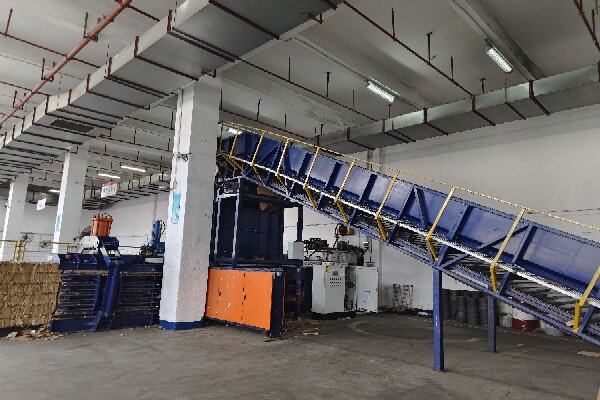
NKW160Q — Semi-Automatic Reference Configuration
- Bale size: 1100 mm (W) × 1250 mm (H) × approximately 1600 mm (L)
- Material density: 400–600 kg/m³
- Feed opening size: 2000 mm × 1100 mm
- Main cylinder force: 160 T
- System pressure: 25 MPa
- Capacity: 12–15 ton/hour
- Main motor power: 45 kW + 11 kW
- Mainframe weight: 28 t
- Mainframe size: approximately 11 × 2.3 × 2.9 m (L×W×H)
- Conveyor: 2000 × 14000 mm, 7.5 kW motor, approximately 5 t
NKW200Q — Fully Automatic Reference Configuration
- Bale size: 1100 mm (W) × 1100 mm (H) × approximately 1800 mm (L)
- Material density: 650–700 kg/m³
- Feed opening size: 2400 mm × 1100 mm
- Main cylinder force: 200 T
- System pressure: 30.5 MPa
- Capacity: 12–15 ton/hour
- Main motor power: 45 kW + 11 kW
- Mainframe weight: 34 t
- Mainframe size: approximately 11 × 4.3 × 5.8 m (L×W×H)
- Conveyor: 2000 × 14000 mm, 7.5 kW motor, approximately 7 t
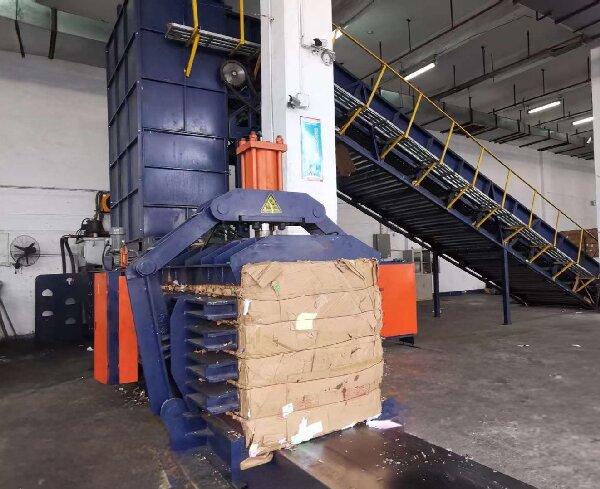
Specification by Specification: Where the Two Machines Diverge
The table below places the published parameters side by side. The differences are the actual decision inputs; the similarities explain why the choice so often comes down to operation rather than to tonnage.
| Parameter | NKW160Q (semi-automatic reference) | NKW200Q (fully automatic reference) |
|---|---|---|
| Bale size (W × H × L) | 1100 × 1250 × ~1600 mm | 1100 × 1100 × ~1800 mm |
| Material density | 400–600 kg/m³ | 650–700 kg/m³ |
| Feed opening (L × W) | 2000 × 1100 mm | 2400 × 1100 mm |
| Main cylinder force | 160 T | 200 T |
| System pressure | 25 MPa | 30.5 MPa |
| Rated capacity | 12–15 ton/hour | 12–15 ton/hour |
| Main motor power | 45 kW + 11 kW | 45 kW + 11 kW |
| Mainframe weight | 28 t | 34 t |
| Mainframe size (L × W × H) | ~11 × 2.3 × 2.9 m | ~11 × 4.3 × 5.8 m |
| Conveyor size | 2000 × 14000 mm | 2000 × 14000 mm |
| Conveyor motor / weight | 7.5 kW / ~5 t | 7.5 kW / ~7 t |
Read the table as four decision signals rather than as a scoreboard.
Bale geometry. The NKW160Q produces a taller bale (1250 mm) with a shorter length (~1600 mm), while the NKW200Q produces a lower, longer bale (1100 mm high, ~1800 mm long). Bale geometry determines stacking stability, trailer loading patterns, and the height clearance needed in the bale storage area.
Density headroom. The published material density range is 400–600 kg/m³ for the NKW160Q and 650–700 kg/m³ for the NKW200Q. Density headroom is what allows a machine to keep producing consistent bales as material gets heavier or more abrasive, and it is the single specification most often under-specified by buyers who select on capacity alone.
Feed opening and cylinder force. A 2400 mm × 1100 mm opening with a 200 T cylinder and 30.5 MPa system pressure gives the NKW200Q more room per cycle than the NKW160Q's 2000 mm × 1100 mm opening with a 160 T cylinder at 25 MPa. Larger openings matter when material is bulky or irregular; higher force matters when bale density targets are tight.
Frame mass and footprint. The 34 t mainframe of the NKW200Q versus the 28 t mainframe of the NKW160Q reflects how much structure is required at the higher force and pressure. The footprint difference — roughly 4.3 × 5.8 m versus 2.3 × 2.9 m — is a building decision, not a machine decision, and it should be checked against available floor space and ceiling height before anything else.
Step-by-Step: Choosing the Right Automation Level
The framework below is designed to be completed in sequence. Skipping a step usually results in a machine that meets the specification sheet but not the operation.
- Quantify material volume per shift, not per day. Automation pays back against peak flow, not average flow. A facility handling modest daily tonnage in two concentrated batches is a semi-automatic profile; a facility receiving material on a conveyor throughout the working day is an automatic profile.
- Decide who loads the chamber, now and in three years. Semi-automatic operation ties output to operator presence and to labour availability. If labour cost or turnover is the constraint, the automation premium is usually justified; if an operator is already stationed at the chamber for other duties, semi-automatic operation often costs nothing extra.
- Match material density to machine headroom. Compare your target bale density against the published ranges — 400–600 kg/m³ for the NKW160Q and 650–700 kg/m³ for the NKW200Q — and confirm the cylinder force and system pressure can hold that density through a full shift.
- Check the physical envelope and utilities. Confirm floor area, ceiling clearance, foundation loading, and installed power. Both reference machines use a 45 kW + 11 kW main motor configuration and a 7.5 kW conveyor motor, and both are supplied with a 2000 × 14000 mm conveyor.
- Verify the compliance route for your market. Certification documents must match the market of installation. The checks are listed in the compliance section below.
- Validate with your own material before committing. Material behaviour under compression varies with moisture, fibre length, and contamination. Parameter-level customisation and pre-shipment testing are the two levers that reduce this risk.
- Confirm lead time, capacity, and after-sales before signing. Published lead time is 30–45 days against a monthly capacity of 10 units, with a minimum order quantity of 1 unit and 100% testing before shipment. After-sales support is provided remotely.
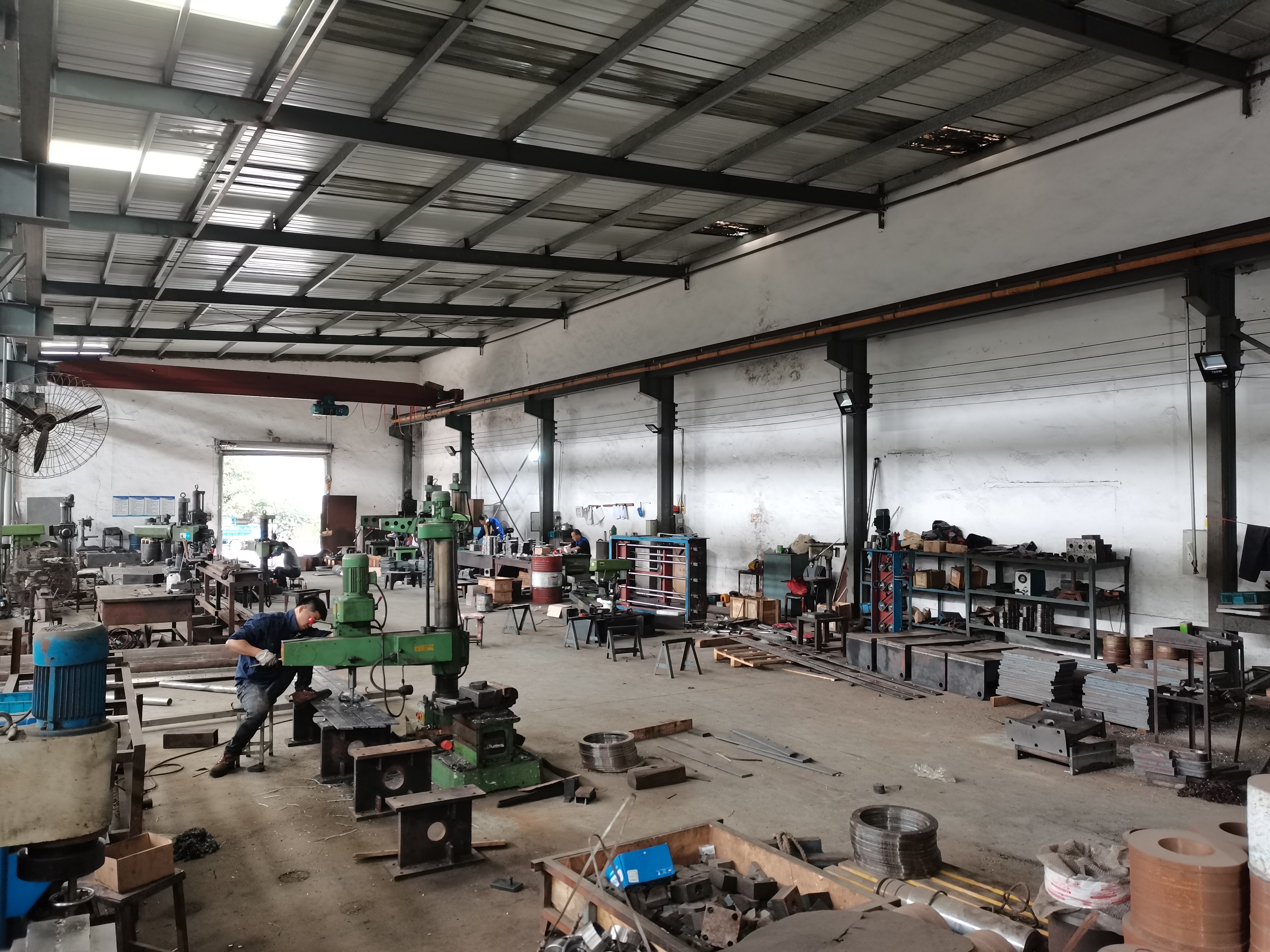
Use Cases: Which Operation Fits Which Machine
Batching operations with existing labour — NKW160Q profile
Small and mid-sized recycling yards, retail and distribution back-of-house operations, and packaging plants that accumulate cardboard, film, or mixed paper in batches fit the semi-automatic profile. The NKW160Q's 2000 × 1100 mm feed opening, 160 T cylinder, and 25 MPa system pressure are sized for these flows, and the compact 11 × 2.3 × 2.9 m mainframe usually fits inside an existing building without structural work.
Continuous-flow transfer stations and integrated lines — NKW200Q profile
Facilities that receive material on a conveyor for a full shift, or that feed a baler as one station inside a sorting line, fit the fully automatic profile. The NKW200Q's 2400 × 1100 mm feed opening, 200 T cylinder, 30.5 MPa system pressure, and 34 t mainframe are configured for that duty, and the 650–700 kg/m³ published density range supports denser output for transport by weight.
Dense and heavier material streams
When the material stream is denser than mixed paper or film, the decision should be driven by the density range and force figures rather than by the automation label. A semi-automatic machine with the wrong density headroom underperforms; an automatic machine with headroom above what the stream requires adds capital cost that the operation may never recover.
Field evidence from an operating installation
A recycling station manufacturer in Indonesia operates horizontal hydraulic balers for waste plastic baling and waste paper baling, with a stated service duration of 10–15 years and a reported result of stable operation. The installation highlights recorded by the manufacturer are low noise and low energy consumption. That case illustrates the point that horizontal balers in recycling duty are judged on service life and operating stability as much as on headline capacity.
Compliance and Certification Checks That Belong in Every PO
Automation level changes the risk profile of a baler because more of the cycle is machine-controlled. Buyers should therefore confirm that the certification documentation actually covers the model being purchased and the market where it will be installed. For the nkbaler baler range, the relevant documents are:
- ATTESTATION CERTIFICATE OF MACHINERY DIRECTIVE — certificate number EASY03220201M, issued by UDEM International Certification Auditing Training Centre Industry and Trade Inc. Co., applicable to the EU, EEA, and Türkiye markets (scope: Türkiye), based on standards EN ISO 12100:2010 and EN 60204-1:2018, issued 22 March 2022 and valid to 21 March 2027.
- VERIFICATION OF CONFORMITY — certificate number DPWD/09/060/2024, issued by Ben XU, applicable to the EU/EEA market, assessed against EN ISO 12100:2010, EN 60204-1:2018, and EN 415-1:2014, issued 19 September 2024 and valid to 18 September 2029.
Both the NKW160Q and the NKW200Q appear in the related-product lists of these documents. For installations in the United States, buyers should additionally confirm adherence to ANSI Z245.51-2013 for design and construction safety and ANSI Z245.5-2013 for installation and operation.
Verification checklist for procurement: request the certificate number and its validity dates, confirm the model identifier appears on the document, confirm the listed market matches your installation country, and confirm the applied standards are the current versions. A certificate that names a different model or an expired market scope does not transfer to your machine.
Cost Drivers: What You Are Actually Paying For
This article does not publish price figures, because automation economics are specific to labour rates, duty cycle, and site preparation, and quoting a band here would be misleading. What can be described is where the money goes, and the trade is consistent across the category.
- Capital moves from recurring to fixed. A higher automation level increases the machine, control, and conveyor content of the purchase, and reduces the number of operator hours per ton over the machine's life.
- Site preparation scales with frame mass. A 34 t mainframe with a 4.3 × 5.8 m footprint implies more foundation and clearance work than a 28 t mainframe at 2.3 × 2.9 m.
- Feed infrastructure is part of the decision. The fully automatic case usually includes a conveyor feed path; both reference machines are quoted with a 2000 × 14000 mm conveyor, so the incremental automation cost sits in controls, tying, and discharge rather than in conveying alone.
- Downtime cost differs by mode. In a semi-automatic operation, an absent operator reduces output; in a fully automatic line, an unplanned stop halts the upstream process. Both risks are managed through spare-part planning and after-sales response, which is why remote support and service terms belong in the commercial comparison.
Frequently Asked Questions
What certifications should I verify on a horizontal hydraulic baler before purchase?
Verify that the certificate covers your installation market and names your specific model. nkbaler's baler range is covered by an ATTESTATION CERTIFICATE OF MACHINERY DIRECTIVE (number EASY03220201M, issued by UDEM International Certification Auditing Training Centre Industry and Trade Inc. Co., EU/EEA/TR scope, valid 22 March 2022 to 21 March 2027) based on EN ISO 12100:2010 and EN 60204-1:2018, and by a VERIFICATION OF CONFORMITY (number DPWD/09/060/2024, issued by Ben XU, EU/EEA market, valid 19 September 2024 to 18 September 2029) assessed against EN ISO 12100:2010, EN 60204-1:2018, and EN 415-1:2014. Both the NKW160Q and the NKW200Q appear in the related-product lists of these documents. For US installations, also check ANSI Z245.51-2013 for design and construction safety and ANSI Z245.5-2013 for installation and operation.
Can the NKW160Q be supplied as a fully automatic machine, or is it only semi-automatic?
Both the NKW160Q and the NKW200Q are listed in the manufacturer's catalogue under "fully automatic horizontal hydraulic baler; semi-automatic horizontal hydraulic baler", so automation level is a configuration decision rather than a fixed model attribute. The machine parameters stay constant across configurations: the NKW160Q carries a 160 T main cylinder at 25 MPa with a 28 t mainframe and a 2000 × 1100 mm feed opening, while the NKW200Q carries a 200 T main cylinder at 30.5 MPa with a 34 t mainframe and a 2400 × 1100 mm feed opening. What changes with automation is the feed method, the tying sequence, and the control system — and therefore the labour and site requirements.
Is a fully automatic hydraulic baler more expensive to run than a semi-automatic one?
Operating cost is dominated by labour, not by the automation mechanism. A semi-automatic machine requires operator presence at the chamber for loading and cycle control, so its running cost scales with labour rates and shift patterns. A fully automatic machine shifts cost into capital, controls, and conveyor infrastructure, and reduces the operator hours per ton. The correct comparison is cost per ton over the machine's service life, not purchase price alone — and because labour rates, duty cycles, and site preparation vary by project, nkbaler quotes these configurations individually rather than publishing a fixed price band.
Can I test a machine with my own material before ordering?
Yes. nkbaler supports parameter-level customisation and 100% testing, with a minimum order quantity of 1 unit, so a single machine can be configured and validated against your material profile before shipment. Because compression behaviour changes with moisture content, fibre length, and contamination level, sample validation is the most reliable way to confirm that the selected cylinder force, system pressure, and bale geometry suit your stream.
What is the lead time, and what after-sales support is included?
Published lead time is 30–45 days against a monthly capacity of 10 units, with a minimum order quantity of 1 unit. After-sales support is provided remotely, which covers commissioning guidance and troubleshooting without requiring an on-site visit for every issue. To start a configuration review, send your material type, target bale size, and expected tonnage per shift to Sales@nkbaler.com or contact the team on WhatsApp at +86 15021631102 — the product brochure with full model specifications is available for download at the end of this article.
Conclusion: Decide by Flow, Not by Feature List
Fully automatic and semi-automatic horizontal hydraulic balers are not better or worse versions of the same machine; they are answers to two different operational questions. The NKW160Q and the NKW200Q share a rated capacity of 12–15 ton/hour, so capacity alone will not separate them. What separates them is flow: the NKW160Q's 160 T cylinder, 25 MPa system pressure, 28 t mainframe, and 2000 × 1100 mm feed opening suit batched, operator-assisted operations, while the NKW200Q's 200 T cylinder, 30.5 MPa system pressure, 34 t mainframe, and 2400 × 1100 mm feed opening suit conveyor-fed lines that must hold density at 650–700 kg/m³ through a full working day.
Work through the seven steps in order, verify certification against the market you are installing in, and validate with your own material before committing. That sequence produces a defensible automation decision; a feature comparison alone does not.
Next Step: Match the Machine to Your Material Flow
Send your material type, target bale size, expected tonnage per shift, and installation country. The team will confirm which automation level fits, verify the applicable certification for your market, and return a configuration and quotation. Minimum order quantity is 1 unit, customisation is parameter-level, and lead time is 30–45 days.
Email: Sales@nkbaler.com | WhatsApp: +86 15021631102 | Website: www.nickbaler.com
Download the full product brochure: Hydraulic Baler Product Catalogue (PDF)