
NK BALER vs NICK BALER: Choosing the Right Hydraulic Baler for Your Budget and Performance Needs
NK BALER vs NICK BALER: How to Choose the Right Hydraulic Baler for Your Budget and Performance
When sourcing a hydraulic baler for your recycling facility, manufacturing plant, or agricultural operation, you are likely to encounter a critical decision: should you invest in the reliable, cost-effective NK BALER series, or step up to the heavy-duty, premium NICK BALER line? Both product lines are manufactured by Shaanxi Nick Machinery Equipment Co., Ltd. (NICKBALER), a trusted Chinese manufacturer with over a decade of experience and more than 90% of products exported to 60+ countries. Understanding the differences between these two series is essential for aligning your purchase with your operational requirements, budget, and long-term goals.
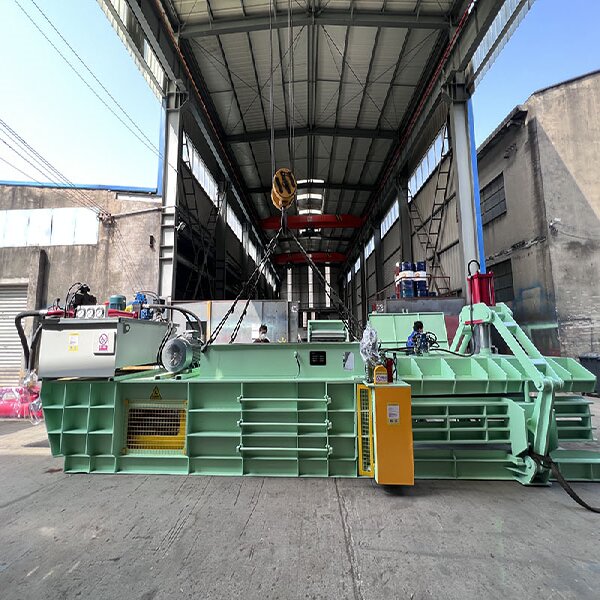
What is the Difference Between NK BALER and NICK BALER?
Many international buyers are confused between NK BALER and NICK BALER baling machines. The simplest way to understand the distinction is that NK BALER is the standard, long-cylinder servo hydraulic baler designed for regular daily baling work — it is cost-effective, stable, and perfect for general compression requirements. In contrast, NICK BALER is the upgraded high-quality version. It features heavier machine weight, thicker material, and a stronger structure. Both the hydraulic system and electric control system are equipped with higher-grade components than those used in the NK BALER series. As a result, the NICK BALER runs more powerfully, has a lower failure rate, and can work continuously under heavy load for long-term use.
Selection Tip:
- ✅ NK BALER — Best for budget-conscious buyers and regular use.
- ✅ NICK BALER — Best for high-standard, heavy-duty applications.
Why This Distinction Matters for Industrial Buyers
In the global waste recycling and baling market, procurement decisions directly affect operational efficiency, maintenance costs, and equipment lifespan. A vertical baler used for cardboard boxes at a small recycling center has very different performance requirements compared to a large horizontal full-automatic hydraulic baler handling tons of scrap metal or agricultural straw every hour. By clearly defining the NK BALER and NICK BALER tiers, NICKBALER empowers buyers to match the machine precisely to the workload without overpaying or under-specifying.
This guide provides a detailed, side-by-side comparison of the two product families, answering the most common buyer questions: What is a hydraulic baler? How does each series work? Which one solves my specific material-handling problem? How do I choose?
Industry Background: The Rise of Chinese Hydraulic Baler Manufacturers
China has become a global hub for hydraulic baler manufacturing, with companies like Shaanxi Nick Machinery Equipment Co., Ltd. leading the export market. Founded in 2013, the company operates a 5,000 m² factory, employs 50 skilled workers, and invests 15 members in its R&D team. Its annual output exceeds 600 machines, with 90% exported primarily to North America, South America, and Asia. The company's product lines are inspired by German, European, and American technology, ensuring high quality and continuous innovation. With certifications including CE (UDEM International Certification, Certificate No. EASY03220201M, valid until 2027-03-21) and a Verification of Conformity (No. DPWD/09/060/2024, valid until 2029-09-18), buyers can trust the safety and reliability of these machines.
Detailed Comparison: NK BALER vs NICK BALER
To help procurement professionals make an informed choice, we break down the key differences across several critical dimensions.
1. Build Quality and Materials
NK BALER uses standard-grade carbon steel and robust components suitable for moderate throughput. NICK BALER employs thicker steel plates, reinforced welding, and high-grade structural elements, resulting in a heavier machine base that absorbs vibration and extends service life.
2. Hydraulic and Electric Systems
Both series use proven hydraulic technology, but NICK BALER upgrades the main pump, valves, and seals to industrial-grade components from reputable international brands. The electrical cabinet features better insulation, higher IP ratings, and premium contactors and relays. This translates to fewer breakdowns and more consistent performance under continuous heavy load.
3. Performance and Capacity
While specific models vary, the NICK BALER series typically offers higher main cylinder force, faster cycle times, and the ability to process denser materials. For example, the NICK BALER NKW160QT model delivers a main cylinder force of 160 tons, a capacity of 12–15 tons per hour, and handles material densities up to 600 kg/m³. The NK BALER NKW80BD, by comparison, provides 80 tons of force and a capacity of 2–3 tons per hour.
4. Noise and Environmental Fit
Both product lines are designed with low-noise considerations, but NICK BALER incorporates additional damping and soundproofing. According to internal testing, NICK BALER achieves a noise reduction of 15 dB compared to piston-type compressors, making it the preferred choice for noise-sensitive environments such as indoor recycling centers near residential areas. NK BALER still operates quietly but may be better suited for industrial plant settings where ambient noise is less restrictive.
5. Maintenance and Total Cost of Ownership
Thanks to superior components, NICK BALER requires less maintenance over its lifespan. The reduced failure rate and longer intervals between service mean lower lifetime operating costs, despite a higher initial purchase price. For companies focused on minimizing downtime and total cost of ownership (TCO), the NICK BALER often offers better value. The NK BALER, with its 10% lower upfront cost, appeals to buyers with tighter budgets or those processing materials that do not demand continuous heavy-duty cycles.
6. Customization and Lead Time
NICKBALER offers OEM/ODM services for both series, including parameter customization. The monthly capacity reaches 10 units (for specialized heavy-duty models), with lead times of 30–45 days and a minimum order quantity of 1 unit. Pre-shipment testing (100% quality control) is standard for both product lines.
| Feature | NK BALER (Standard) | NICK BALER (Premium) |
|---|---|---|
| Machine Weight | Medium (e.g., NKW80BD: 14.5 tons) | Heavy (e.g., NKW160QT: 28 tons) |
| Structural Steel | Standard thickness | Thicker, reinforced |
| Hydraulic Components | Standard grade | High-grade international brands |
| Main Cylinder Force | 80–125 tons (typical) | 160–200 tons (typical) |
| Capacity | 2–10 tons/hour | 10–15 tons/hour |
| Noise Level | Moderate (suitable for industrial plants) | 15 dB lower (suitable for noise-sensitive areas) |
| Maintenance Frequency | Standard intervals | Reduced intervals / less maintenance |
| Upfront Cost | ~10% lower | ~10% higher |
| Best Fit | Budget-conscious, regular use | Heavy load, 24/7 operation, high reliability |
Step-by-Step Selection Process
- Define your material: Is it light agricultural waste (straw, hay, alfalfa), general recyclables (cardboard, PET bottles), or dense scrap metal? The density and volume will determine the required force and feed opening size.
- Estimate your throughput: How many tons per hour do you need to process? For 2–5 tons/h, an NK BALER (e.g., NKW80BD or NKW125Q) is sufficient. For 10+ tons/h, consider a NICK BALER (e.g., NKW160Q or NKW200Q).
- Evaluate your operating environment: Is the baler indoors, near employees, or in a noise-sensitive area? If noise is a concern, NICK BALER’s 15 dB advantage becomes a decisive factor.
- Calculate total cost of ownership: Factor in maintenance, energy consumption, and expected lifespan. While NK BALER has a lower purchase price, NICK BALER often yields lower per-ton operating costs over 10–15 years.
- Request a test: NICKBALER offers pre-shipment testing and can provide performance data specific to your material. Leverage their R&D team (15 engineers) to confirm the right configuration.
Use Cases
Case 1: Small-to-Medium Recycling Station in Indonesia
A recycling facility in Indonesia needed to bale waste plastic and paper. They selected an NK BALER NKW80QT (100-ton main cylinder, 4–6 tons/hour capacity). The client reported stable operation after 2 years, highlighting low noise and energy consumption. This is a classic scenario where the standard NK BALER meets the requirement without overspending.
Case 2: Large Agricultural Manufacturer in Pakistan
A Pakistani agricultural processor required baling of straw and alfalfa for animal feed. They chose a NICK BALER NKB280 (straw/hay bagging machine) with a chain conveyor, producing 30–32 bales per hour. The machine has run steadily for 2 years, handling dry material densities up to 400–450 kg per bale. The premium build ensures minimal downtime during the harvest season.
Frequently Asked Questions
A hydraulic baler is a machine that uses hydraulic cylinders to compress waste materials (paper, plastic, metal, textiles, biomass) into dense, manageable bales for storage, transport, or recycling. It is widely used in recycling centers, manufacturing plants, and agricultural facilities.
Material is fed into a chamber through a feed opening. A hydraulic ram (driven by one or more cylinders) applies high pressure to compress the material. When the bale reaches the desired density, it is tied with wires or straps and ejected. The cycle repeats automatically or semi-automatically depending on the model.
The NICK BALER series is recommended for metal baling because of its thicker structure, higher main cylinder force (up to 200 tons), and ability to handle dense, abrasive materials. Models like the NK1580T200 vertical metal baler (200 tons) are purpose-built for this application.
Yes. NICKBALER offers remote support and on-site guidance. Their experienced team can help with installation, commissioning, and troubleshooting. The company's long-standing presence (2013) and high export ratio demonstrate commitment to customer service.
Absolutely. NICKBALER provides OEM/ODM services, including parameter customization. Voltage can be adapted to 200–480V, 50/60 Hz. Lead time is typically 30–45 days for custom orders.
Conclusion
Choosing between NK BALER and NICK BALER ultimately comes down to your specific operational demands and budget. If you need a reliable, cost-effective solution for moderate throughput and standard materials, the NK BALER series delivers excellent value. If your operation requires continuous heavy-duty performance, minimal downtime, and lower noise levels — and you are willing to invest more upfront for a lower total cost of ownership — the NICK BALER series is the superior choice.
As a trusted manufacturer with CE certification, a 5,000 m² factory, and decades of cumulative engineering experience, Shaanxi Nick Machinery Equipment Co., Ltd. stands ready to supply both product lines with consistent quality. We encourage every buyer to request detailed specifications and a pre-shipment test before committing.
📄 Download the Company Brochure (PDF)
For inquiries:
Sales@nkbaler.com | Tel: +86 15021631102 | WhatsApp: +86 15021631102
Address: Qun Sheng Lu, Hui Shan Qu, WuXi Shi, Jiang Su Sheng, China