
Navigating CE and Safety Compliance for Hydraulic Balers in Food and Pharma Packaging Lines
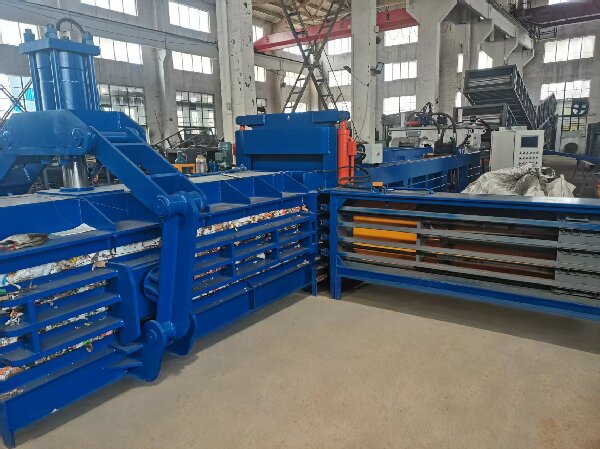
A horizontal hydraulic baler in a packaging-waste application.
Food, pharmaceutical, and chemical packaging lines generate a constant stream of reject film, foil, laminates, cartons, and pouch scrap. Compacting that material into dense, transportable bales is normally the job of a hydraulic baler. When the machine stands inside a regulated production area, though, throughput and bale density become only part of the specification. Machine safety, CE conformity, and structural durability turn into approval criteria that decide whether a baler can be integrated at all.
This guide is written for buyers who are already evaluating hydraulic baler options and preparing to place an order. It sets out the compliance questions that must be resolved before integration and shows how two NICKBALER models — the NKW100QT and the NKW80Q — are positioned against those requirements.
Why Food and Pharma Packaging Lines Change the Baler Specification
In general waste handling, a heavy duty hydraulic baler is judged mainly on throughput, bale density, and running cost. Food, pharmaceutical, and chemical environments add three constraints that usually outrank those metrics:
- Safety-standard conformity. The machine must be built and documented against recognized machinery-safety standards, with a CE attestation that names the standards applied.
- Containment. Dust, fine powder, and loose film need to stay inside the compression chamber instead of escaping into a controlled production area.
- Duty durability. These lines often run long shifts, so the frame, cylinder, and chamber are expected to hold their geometry under continuous load.
Each constraint maps to a verifiable document or a measurable design feature. That is what makes compliance a procurement decision rather than a formality. The first question a buyer should be able to answer is narrow and specific: does the baler hold a CE attestation that names the relevant standards, and does the exact model being purchased appear inside the certificate's product scope?
The Regulatory and Market Context
The global baler machine market was valued at USD 6.6 billion in 2024 and is projected to reach USD 11.4 billion by 2035, according to Transparency Market Research. Asia Pacific accounted for 40.2% of total revenue share in 2024, and the baler press segment represented 24.5% of the total recycling equipment market in 2025, per Grand View Research. Demand is expanding fastest where packaging waste and recycling streams are most regulated, which is precisely why compliance documentation has become a selection filter.
Two regional frameworks dominate procurement in food and pharma segments:
- European Union. Machinery safety for balers builds on EN ISO 12100:2010 for risk assessment and risk reduction, and EN 60204-1:2018 for the electrical equipment of machines. General safety requirements for packaging machines are covered by EN 415-1:2014. For vertical balers specifically, EN 16500:2014 sets out requirements for fixed enclosed baling chambers and tamper-proof interlocks.
- United States. Commercial balers are expected to follow ANSI Z245.51-2013 for design and construction safety and ANSI Z245.5-2013 for installation and operation.
Suppliers that serve food and pharma lines therefore need a documentation trail, not just a machine. Standards such as EN 16500:2014 underline a recurring theme in the standards themselves: enclosed chambers and tamper-proof interlocks are treated as core safety features wherever balers sit close to regulated production.
What NICKBALER Supplies for Regulated Environments
Shaanxi Nick Machinery Equipment Co., Ltd. builds and distributes hydraulic balers and environmental protection machinery under the NICKBALER brand. The company operates a 5,000 m² facility, employs around 50 people, maintains a 15-person R&D team, and produces roughly 600 units per year, with about 90% exported to markets across North America, South America, Asia, Europe, and the Middle East. Its main product lines are vertical balers, fully automatic horizontal balers, manual horizontal balers, and press bagging machines.
For food and pharma packaging lines, the NKW100QT is a relevant starting point. It is a horizontal hydraulic baler available in both fully automatic and semi-automatic configuration, with a feed opening of 1800 mm × 1000 mm — a wide intake that suits continuous feeding from a packaging line rather than manual loading. Its main cylinder delivers 100 T of force at a working pressure of 21 MPa and produces bales of 1100 mm (W) × 850 mm (H) × up to 1200 mm (L) at a material density of 400–500 kg/m³, running at 4–6 ton/hour. The 20-ton mainframe uses carbon steel construction, and the machine is classified for food, pharmaceutical, packaging, chemical, electronics, metals, waste treatment, and recycling applications.
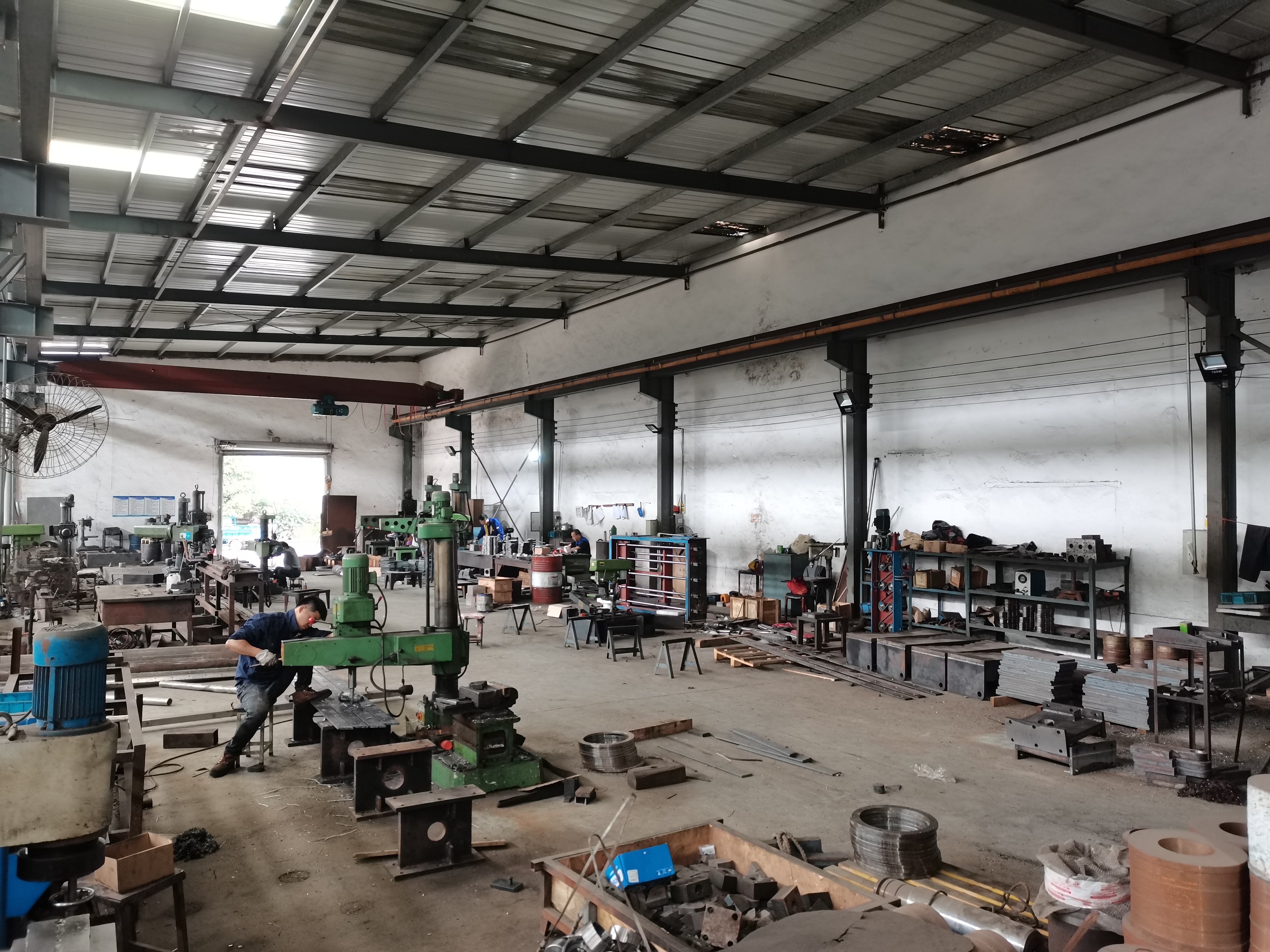
Frame fabrication and assembly inside the NICKBALER production workshop.
Where floor space or throughput demand is lower, the NKW80Q is the smaller counterpart. It shares the same carbon steel construction but uses a 1500 mm × 800 mm feed opening and an 80 T cylinder, producing bales of 1100 mm (W) × 800 mm (H) × up to 1600 mm (L) at 3–5 ton/hour. Carbon steel construction is the shared structural answer to durability: it is the frame material specified across the horizontal range, including both models, and it is what allows the chamber to hold its geometry under repeated compression cycles in a production environment.
Compliance evidence on file. NICKBALER holds an “ATTESTATION CERTIFICATE OF MACHINERY DIRECTIVE” (certificate no. EASY03220201M) issued by UDEM International Certification Auditing Training Centre Industry and Trade Inc. Co., valid from 2022-03-22 to 2027-03-21, citing EN ISO 12100:2010 and EN 60204-1:2018. The company also holds a “VERIFICATION OF CONFORMITY” (certificate no. DPWD/09/060/2024) with an EU/EEA scope, issued 2024-09-19 and valid to 2029-09-18, citing EN ISO 12100:2010, EN 60204-1:2018, and EN 415-1:2014. The NKW100QT is listed within the covered product scope of these documents.
The 1800 mm × 1000 mm feed opening on the NKW100QT matters for safety as much as for throughput. A wide, consistent opening allows material to be fed without long manual reaches into the compression zone, and the horizontal layout keeps the baling operation inside an enclosed chamber so that dust and fine film are contained during compression rather than released into the surrounding area. That enclosed, contained design is exactly the type of arrangement the packaging-machinery standards point toward.
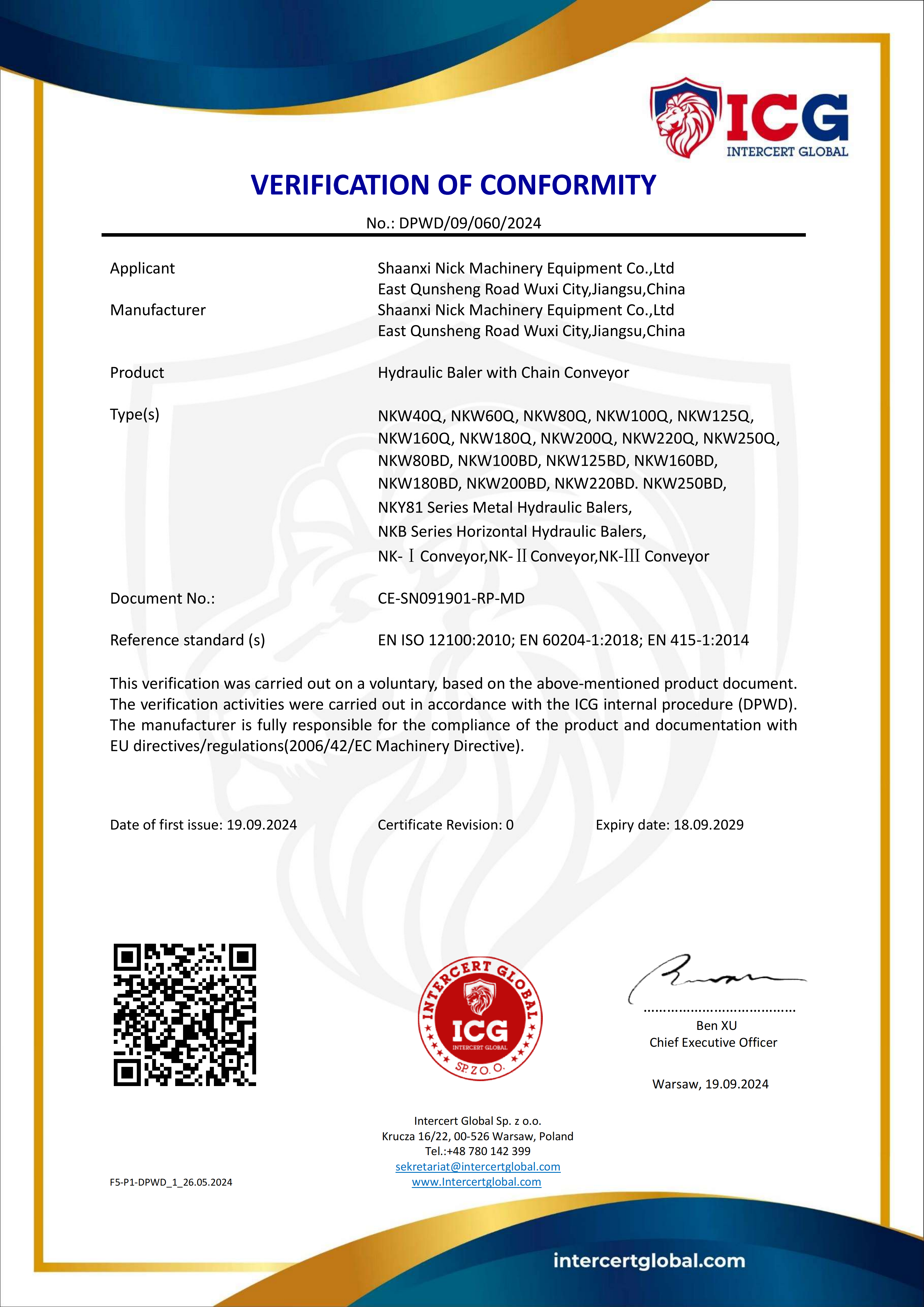
The Verification of Conformity (no. DPWD/09/060/2024) covering the horizontal hydraulic baler range.
Step-by-Step: Verifying Compliance Before Integration
A structured intake process keeps a food or pharma baler project on schedule. The following sequence reflects the checks that matter most when the machine will sit inside a regulated area.
- Profile the waste stream. Define the exact materials — reject film, foil, laminates, cartons, or pouch scrap — because density and compression behavior drive every downstream choice.
- Match the feed opening to the line. The NKW100QT offers a 1800 mm × 1000 mm opening for continuous feeding; the NKW80Q offers 1500 mm × 800 mm where space or volume is tighter.
- Confirm the CE scope covers your model. Check that the specific model you intend to buy appears inside the certificate's product scope, not just the brand.
- Confirm structural material and duty. Verify that the frame is carbon steel, as specified on both the NKW80Q and NKW100QT, so the chamber survives continuous operation.
- Confirm containment design. Review how the enclosed horizontal chamber contains dust and loose material during compression.
- Plan utilities. The NKW100QT runs a 30 KW + 7.5 kW main motor, a 5.5 KW conveyor motor, and a cooling tower with a 0.75 KW water pump and 0.26 KW fan; confirm the power and cooling supply before installation.
- Agree on pre-shipment testing. NICKBALER applies 100% test quality control, and the agreed acceptance criterion is a pre-shipment test.
- Confirm customization and documentation. For EU and Middle East markets, OEM and ODM design and production services are available with parameter-level customization, so the machine can be tuned to the line's feed profile.
Field Evidence from Operating Installations
Two documented installations illustrate how the platform behaves in practice.
Indonesia — recycling station manufacturer
A recycling station manufacturer in Indonesia used a single unit for waste plastic and waste paper baling and reported stable operation with low noise and low energy consumption. The models associated with this installation include the NKW160QT, NKW180QT, and NKW100QT. For food and pharma buyers, this case is instructive because the horizontal chamber ran continuously on mixed plastic film and paper — a feed profile closely comparable to packaging reject streams.
Pakistan — agricultural manufacturer
An agricultural manufacturer in Pakistan used the equipment for baling alfalfa and straw and reported two years of stable operation with low noise. This case speaks to the carbon steel platform holding steady under continuous duty, the same structural characteristic that matters when a baler runs long shifts inside a production environment.
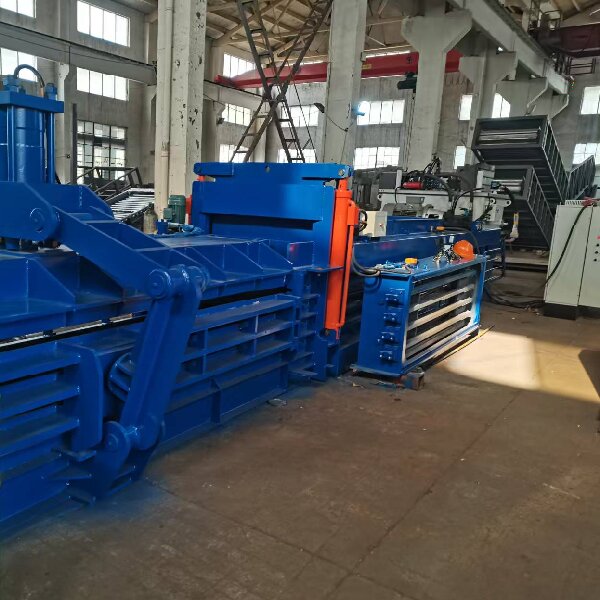
Dense bale output from a horizontal hydraulic baler.
Model Comparison for Regulated Packaging Lines
The table below compares three horizontal models on the parameters that matter most when compliance, containment, and duty are evaluated together. All figures are as specified by the manufacturer.
| Parameter | NKW80Q | NKW100QT | NKW125Q |
|---|---|---|---|
| Machine type | Fully/semi-automatic horizontal hydraulic baler | Fully/semi-automatic horizontal hydraulic baler | Fully/semi-automatic horizontal hydraulic baler |
| Feed opening (L × W) | 1500 mm × 800 mm | 1800 mm × 1000 mm | 2000 mm × 1100 mm |
| Main cylinder force | 80 T | 100 T | 125 T |
| Capacity | 3–5 T/hour | 4–6 T/hour | 10–12 T/hour |
| Bale size (W × H × L) | 1100 × 800 × ~1600 mm | 1100 × 850 × ~1200 mm | 1100 × 1100 × ~1600 mm |
| Material density | 300–400 kg/m³ | 400–500 kg/m³ | 500–600 kg/m³ |
| System pressure | 21 MPa | 21 MPa | 21 MPa |
| Frame material | Carbon steel | Carbon steel | Carbon steel |
| Mainframe weight | 15 T | 20 T | 22 T |
| Applicable industries | Food, pharmaceuticals, packaging, chemicals, electronics, metals, waste treatment, recycling | Food, pharmaceuticals, packaging, chemicals, electronics, metals, waste treatment, recycling | Food, pharmaceuticals, packaging, chemicals, electronics, metals, waste treatment, recycling |
Frequently Asked Questions
What CE and safety standards should a hydraulic baler meet for food and pharmaceutical packaging environments?
In the EU, machinery safety is built on EN ISO 12100:2010 for risk assessment and EN 60204-1:2018 for electrical equipment, while general safety requirements for packaging machines are covered by EN 415-1:2014. These are the standards named on NICKBALER's “VERIFICATION OF CONFORMITY” (certificate no. DPWD/09/060/2024, EU/EEA scope, issued 2024-09-19 and valid to 2029-09-18). NICKBALER also holds an “ATTESTATION CERTIFICATE OF MACHINERY DIRECTIVE” (no. EASY03220201M) valid from 2022-03-22 to 2027-03-21, citing EN ISO 12100:2010 and EN 60204-1:2018. The NKW100QT is listed in the covered product scope of these certificates.
Can a hydraulic baler be adapted for a specific food or pharma line through OEM or ODM?
Yes. NICKBALER provides OEM and ODM design and production services with parameter-level customization, available for the EU and Middle East markets, supported by a 15-person R&D team and a monthly capacity of 10 units. Because feed opening, bale size, cylinder force, and power can be configured within the horizontal range, buyers can align the machine with a specific waste stream rather than accepting a fixed specification.
What are the purchasing terms for a compliance-ready hydraulic baler?
The minimum order quantity is 1 unit. Delivery terms are FOB or CIF, and payment terms are split 40/60. The agreed acceptance criterion is a pre-shipment test, which gives the buyer a defined checkpoint before the machine leaves the factory.
How is sample validation and pre-shipment testing handled?
NICKBALER applies 100% test quality control across production, and the formal acceptance criterion is a pre-shipment test. This means the machine is verified against the agreed parameters before shipment, rather than relying on the buyer to validate performance after installation.
What is the typical lead time if I want to order a unit?
Standard lead time is 30–45 days. To start, buyers can request a quote or a model datasheet directly from NICKBALER at Sales@nkbaler.com, or review the full product range at www.nickbaler.com before confirming configuration.
Conclusion
For a hydraulic baler installed in a food or pharma packaging line, compliance is not a finishing detail — it is a design and procurement decision made at the start. Three things carry the weight: a CE attestation that names the applicable standards, a model that appears inside the certificate's covered product scope, and a construction that holds up under continuous duty. The NKW100QT's 1800 mm × 1000 mm feed opening and enclosed horizontal chamber address the containment and reach concerns that packaging-machinery standards focus on, while carbon steel construction — shared with the smaller NKW80Q — provides the structural durability these environments demand.
Buyers who are ready to move from evaluation to execution should confirm the certificate scope for their exact model, agree on the pre-shipment test, and lock the configuration before ordering. That sequence turns a compliance requirement into a documented, verifiable installation.
Ready to evaluate a compliance-ready baler?
Request a quote, a model datasheet, or the current product catalogue directly from NICKBALER. The team can confirm which models fall inside the CE certificate scope for your market and share the pre-shipment test process.
Email Sales@nkbaler.com · Website www.nickbaler.com · Download the product catalogue (PDF)
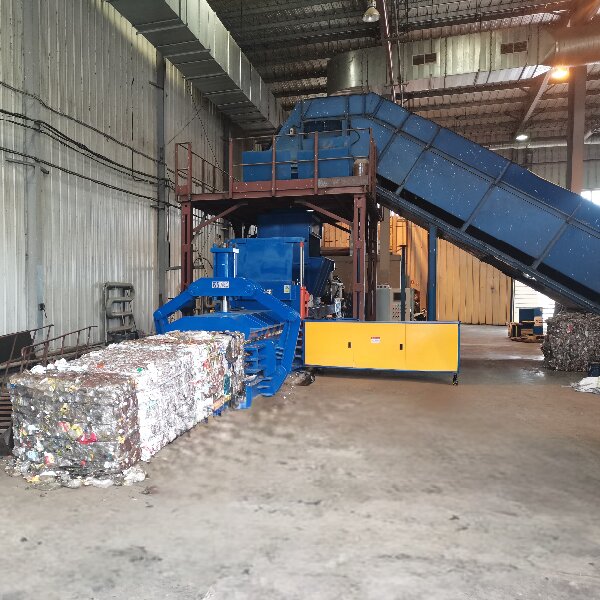
A horizontal hydraulic baler prepared for shipment.
Have Questions or Need More Details?
Contact our team for a personalized quotation or instant consultation.
Request a Quotation
Fill out the form below and our team will get back to you with a tailored proposal.
WhatsApp Direct Chat
Prefer to chat in real-time? Message us on WhatsApp for instant assistance & quick answers.
- Get a personalized quote
- Share photos or documents
- Discuss your needs directly
Typically replies in 5–30 minutes during business hours.