
Semi-Automatic vs. Fully Automatic Horizontal Hydraulic Balers: A Side-by-Side Comparison
Semi-Automatic vs. Fully Automatic Horizontal Hydraulic Balers: A Side-by-Side Comparison
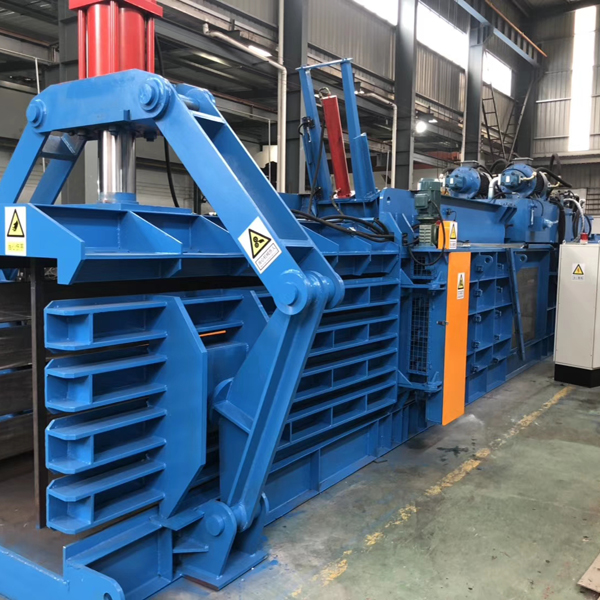
A horizontal hydraulic baler is one of the most common solutions for turning loose recyclable, agricultural, or industrial material into compact bales that are easier to handle, transport, and process. When a facility moves beyond the capacity of a small vertical press, the next purchase decision usually concerns horizontal balers: how many tonnes per hour should the line handle, which bale size fits downstream transport, and whether the operation should run with a semi-automatic or fully automatic cycle.
This article compares three Q-series horizontal hydraulic balers from Shaanxi Nick Machinery Equipment Co., Ltd., represented in export communication as nkbaler: the NKW125Q, NKW160Q, and NKW200Q. The aim is not to rank one model as universally better. Instead, it is to show how feed opening size, bale dimensions, main cylinder force, rated capacity, and automation options change as a buyer moves from a 125-tonne-class baler to heavier 160-tonne and 200-tonne-class machines.
What This Comparison Covers
All three models belong to the horizontal baler category. According to the product documentation, the NKW125Q, NKW160Q, and NKW200Q are each listed as fully automatic horizontal hydraulic balers and semi-automatic horizontal hydraulic balers. In practical terms, this means the manufacturer can configure the machine for a more operator-assisted mode or for a more continuous, automatic mode. The order specification must confirm which automation package is included.
A useful way to compare the models is through the specification sheet: feed opening, bale size, material density, capacity, main cylinder force, main motor power, frame size, conveyor size, and overall machine weight. These parameters give a buyer a common baseline before discussing price, installation, or site-specific factors.
Industry Background: Why This Comparison Matters
The global baler machine market was valued at USD 6.6 billion in 2024 and is projected to reach USD 11.4 billion by 2035, according to Transparency Market Research. Asia Pacific accounted for 40.2% of the total revenue share in the same global market report. Those figures include equipment used across recycling, packaging, agriculture, and waste management, and they illustrate that baling equipment is being evaluated by a broad range of industrial buyers.
For procurement teams, the challenge is not whether a hydraulic baler is useful, but which size, force, and control level will fit the actual material flow. A semi-automatic horizontal baler often suits facilities where operators can manage the loading and finishing steps. A fully automatic horizontal baler is generally considered where the process needs to run repeatedly with less manual intervention. Since terms such as automatic or semi-automatic can vary between manufacturers, the model specification and supplier confirmation matter more than the label alone.
The following comparison uses the listed factory specifications for the NKW125Q, NKW160Q, and NKW200Q. This gives a practical view of what changes when a buyer selects a larger cylinder force or a longer conveyor-fed system.
Q-Series Models in This Comparison
NKW125Q
The NKW125Q is a horizontal hydraulic baler with a main cylinder force of 125 tonnes and a mainframe weight of approximately 22 tonnes. Its rated capacity is 10-12 tonnes per hour. The unit produces bales sized approximately 1100 mm wide by 1100 mm high by 1600 mm long, with a listed material density range of 500-600 kg/m³. The feed opening size is 2000 mm by 1100 mm.
This model is a practical starting point for a facility that wants a horizontal baler but does not yet need the higher installed force of the 160-tonne or 200-tonne classes. In the product catalogue, the NKW125Q is classified as both fully automatic and semi-automatic. That dual classification makes it important to define the level of automation in the request for quotation.
NKW160Q
The NKW160Q has a main cylinder force of 160 tonnes, a mainframe weight of about 28 tonnes, and a rated capacity of 12-15 tonnes per hour. The bale size is approximately 1100 mm wide by 1250 mm high by 1600 mm long, and the listed material density range is 400-600 kg/m³. The feed opening size matches the NKW125Q at 2000 mm by 1100 mm.
The NKW160Q adds higher compression force and a slightly taller bale cross-section than the NKW125Q while keeping a similar rated feed opening. The main motor power listed for the NKW160Q is 45 kW plus 11 kW, compared with 37.5 kW plus 11 kW for the NKW125Q.
NKW200Q
The NKW200Q is the heaviest model in this three-way comparison, with a mainframe weight of about 34 tonnes and a main cylinder force of 200 tonnes. Its rated capacity is 12-15 tonnes per hour. The bale size is approximately 1100 mm wide by 1100 mm high by 1800 mm long. The listed material density range is 650-700 kg/m³, which is the highest reference density range among the three models.
The feed opening on the NKW200Q is 2400 mm by 1100 mm, wider than the 2000 mm by 1100 mm opening on the NKW125Q and NKW160Q. The main motor power is listed as 45 kW plus 11 kW. In a facility that regularly receives bulky material, the wider feed opening can be an important site-planning factor.
Side-by-Side Specification Snapshot
| Specification | NKW125Q | NKW160Q | NKW200Q |
|---|---|---|---|
| Catalog classification | Fully automatic and semi-automatic horizontal hydraulic baler | Fully automatic and semi-automatic horizontal hydraulic baler | Fully automatic and semi-automatic horizontal hydraulic baler |
| Bale size W x H x L | 1100 x 1100 x approx. 1600 mm | 1100 x 1250 x approx. 1600 mm | 1100 x 1100 x approx. 1800 mm |
| Feed opening size | 2000 x 1100 mm | 2000 x 1100 mm | 2400 x 1100 mm |
| Reference material density | 500-600 kg/m³ | 400-600 kg/m³ | 650-700 kg/m³ |
| Rated capacity | 10-12 tonnes/hour | 12-15 tonnes/hour | 12-15 tonnes/hour |
| Main cylinder force | 125 tonnes | 160 tonnes | 200 tonnes |
| Main motor power | 37.5 kW + 11 kW | 45 kW + 11 kW | 45 kW + 11 kW |
| Conveyor motor | 7.5 kW | 7.5 kW | 7.5 kW |
| Mainframe weight | 22 tonnes | 28 tonnes | 34 tonnes |
| Mainframe size approx. | 11 x 2.3 x 2.9 m | 11 x 2.3 x 2.9 m | 11 x 4.3 x 5.8 m |
| Conveyor size | 2000 x 12,000 mm | 2000 x 14,000 mm | 2000 x 14,000 mm |
| Working pressure reference | 21 MPa | 25 MPa | 30.5 MPa |
| Material of construction | Carbon steel | Carbon steel | Carbon steel |
The specification values are from the factory product sheets. Actual bale density and throughput depend on material type, moisture content, feeding method, and operating settings.
How the Differences Affect a Buyer
Rated Capacity and Throughput Planning
The NKW125Q has a rated capacity of 10-12 tonnes per hour, while the NKW160Q and NKW200Q are both rated at 12-15 tonnes per hour. If a line consistently needs more than the NKW125Q range, the NKW160Q or NKW200Q is the logical next step. If the operation is variable and can tolerate a lower peak output, the NKW125Q may be sufficient.
Compression Force and Bale Density
Main cylinder force increases from 125 tonnes on the NKW125Q to 160 tonnes on the NKW160Q and 200 tonnes on the NKW200Q. Compression force is one of the parameters that influences how tightly a material can be packed. The listed reference density ranges support this progression in the catalogue: the NKW125Q is listed at 500-600 kg/m³, the NKW160Q at 400-600 kg/m³, and the NKW200Q at 650-700 kg/m³. This does not mean every material will reach those densities; it means those are the reference ranges used in the specification sheet.
Feed Opening and Material Entry
The NKW125Q and NKW160Q both use a 2000 mm by 1100 mm feed opening. The NKW200Q uses a 2400 mm by 1100 mm feed opening. A wider feed opening can be relevant when materials are pre-sorted into large piles, when conveyor loading brings material in a wide stream, or when the existing feeding method produces large, loose material sections.
Bale Geometry
The NKW160Q produces bales with a height of about 1250 mm, compared with about 1100 mm for the NKW125Q and NKW200Q. The NKW200Q produces bales with a length of about 1800 mm, compared with about 1600 mm for the other two models. Bale geometry affects handling, stacking, transport fit, and downstream equipment such as conveyors, forklift attachments, or strapping stations.
Structure, Conveyor, and Space Planning
The mainframe weight increases from about 22 tonnes for the NKW125Q to 28 tonnes for the NKW160Q and 34 tonnes for the NKW200Q. Conveyor size also increases from 2000 x 12,000 mm on the NKW125Q to 2000 x 14,000 mm on the NKW160Q and NKW200Q. These figures are useful for foundation planning, cranage, installation access, and shipping cost estimates.
Automation Level
If the selected model is classified as both fully automatic and semi-automatic, the documented automation scope is not automatically identical across all orders. A semi-automatic version will normally require more operator involvement in the baling cycle. A fully automatic version is intended to reduce that involvement by allowing the machine to continue through repeated cycles and by using a conveyor-fed material stream. The buyer should ask which functions are automatic for the quoted model: feeding, pressing, tying, door operation, and bale ejection.
Decision Matrix: Where to Start Evaluation
| If the priority is | Configuration to evaluate first | Relevant verified specification |
|---|---|---|
| Rated output in the 10-12 tonnes/hour range | NKW125Q configured as semi-automatic or fully automatic | 125 t main cylinder force; 2000 x 1100 mm feed opening; 10-12 t/h rated capacity |
| A continuous 12-15 tonnes/hour line with higher force | NKW160Q | 160 t main cylinder force; 12-15 t/h rated capacity; 1100 x 1250 x 1600 mm bale size |
| Dense output bales using a high-force machine | NKW200Q | 200 t main cylinder force; 650-700 kg/m³ reference density; 1100 x 1100 x 1800 mm bale size |
| A wider feed opening to handle bulky material | NKW200Q | 2400 x 1100 mm feed opening |
| A 12-15 t/h continuous line with a taller bale format | NKW160Q | 160 t force; 12-15 t/h rated capacity; 1250 mm bale height |
This matrix is a starting point, not a complete selection rule. Actual results depend on the material being baled and on the site configuration.
Step-by-Step Model Matching Procedure
- Define the throughput target. Start with the average number of tonnes per hour or tonnes per shift. If the target falls near 10-12 tonnes per hour, evaluate the NKW125Q. If it is closer to 12-15 tonnes per hour, evaluate the NKW160Q and NKW200Q.
- Characterise the input material. Note the material type, typical bulk shape, moisture level, and whether the material has long, bulky, or dense sections. This helps the supplier confirm whether the reference density and feed opening are appropriate.
- Check the required bale output. Compare the target bale dimension against the catalogue bale sizes. For a bale height of 1250 mm, the NKW160Q is different from the NKW125Q and NKW200Q. For an 1800 mm bale length, the NKW200Q is listed with that longer format.
- Review the feed opening. If the material is loaded by conveyor and spreads across a wide area, compare the 2000 mm by 1100 mm opening with the 2400 mm by 1100 mm option on the NKW200Q.
- Compare structural requirements. The NKW125Q mainframe weighs about 22 tonnes, the NKW160Q about 28 tonnes, and the NKW200Q about 34 tonnes. Confirm floor loading, crane capacity, and installation access before finalising the model.
- Select the automation version. Decide whether the operator will be available to manage a semi-automatic cycle or whether the process needs a fully automatic horizontal baler. Use the model specification to ask the supplier exactly which steps are automated.
- Request a material-based recommendation. A brochure or specification sheet confirms design values, but a material test or a supplier recommendation based on your actual material gives a more reliable basis for the purchase decision.
Use Cases and Operational Patterns
The three models are used in industrial baling, waste treatment, and recycling applications. They are also suitable for sectors such as food, pharmaceuticals, packaging, chemicals, electronics, and metals, according to the applicable-industry description recorded for these machines.
Medium-Volume Recycling or Packing Operation
A facility producing 10-12 tonnes of baleable material per hour may start with the NKW125Q. Its 22-tonne mainframe is substantially lighter than the NKW160Q and NKW200Q, which can reduce some structural and installation demands. Because the NKW125Q can be listed as fully automatic or semi-automatic, the buyer can request the version that matches the available operator time.
Continuous Conveyor-Fed Operation
If material is already moving on a conveyor and the operation expects 12-15 tonnes per hour, the NKW160Q or NKW200Q is more directly aligned with the rated capacity. The NKW160Q adds a taller bale format, while the NKW200Q adds a wider feed opening and a higher reference density range.
High-Density Output Requirement
For transport and storage efficiency, a buyer may need bales with a reference density of 650-700 kg/m³. Among these three models, the NKW200Q lists that higher density range. Its 200-tonne main cylinder force and 30.5 MPa pressure reference are important values to include in the conversation with the supplier.
Production Lines with Wide Material Flow
When the feeding width is large, the NKW200Q feed opening of 2400 mm by 1100 mm offers a wider entry than the 2000 mm opening on the NKW125Q and NKW160Q. This should be evaluated together with conveyor size, because the NKW200Q conveyor is listed at 2000 mm by 14,000 mm.
Frequently Asked Questions
What is the main difference between a semi-automatic and a fully automatic horizontal hydraulic baler?
A semi-automatic horizontal baler normally requires more operator actions during loading, cycle control, and bale handling. A fully automatic horizontal baler is designed to run repeated baling cycles with less operator intervention once material is fed into the system. In the nkbaler catalogue, the NKW125Q is classified as both a fully automatic and semi-automatic horizontal hydraulic baler, so the buyer should confirm which automation functions are included in the quoted configuration.
Which model has the highest rated capacity: NKW125Q, NKW160Q, or NKW200Q?
The NKW160Q and NKW200Q are both rated at 12-15 tonnes per hour, while the NKW125Q is rated at 10-12 tonnes per hour. The NKW160Q has a main cylinder force of 160 tonnes and the NKW200Q has a main cylinder force of 200 tonnes. The final achievable throughput still depends on the material, moisture, feed consistency, and operating parameters.
Does the NKW200Q produce denser bales than the NKW125Q?
According to the factory specification, the NKW200Q has a reference material density range of 650-700 kg/m³, while the NKW125Q has a reference range of 500-600 kg/m³. The NKW160Q is listed at 400-600 kg/m³. These ranges are reference values and are not a guarantee for every material. Actual bale density must be verified with the supplier using the specific material to be processed.
Should a buyer choose the NKW125Q instead of the NKW160Q or NKW200Q?
Price alone is not a sufficient basis for choosing. The NKW125Q is a valid starting point when the required throughput is in the 10-12 tonnes per hour range and the feed opening, bale format, and automation version fit the operation. The NKW160Q and NKW200Q should be considered when the required line output is 12-15 tonnes per hour or when the facility needs the higher cylinder force and different bale geometry.
What information should a buyer send to nkbaler for a model recommendation?
To match a Q-series baler to a project, send the material type, approximate bulk density, moisture content, maximum feed piece size, target output in tonnes per hour, desired bale size, conveyor length required, and the preferred automation level. A project-specific request allows the supplier to check the model, conveyor configuration, and site constraints together. Buyers can contact the sales team at Sales@nkbaler.com or by WhatsApp at +86 15021631102, and the latest nkbaler brochure can be downloaded directly for reference.
Bottom Line for Buyers
The comparison between semi-automatic and fully automatic horizontal hydraulic balers is not only about the label. It begins with throughput, feed size, bale format, density range, installed motor power, mainframe weight, conveyor design, and automation level.
In this Q-series comparison, the NKW125Q provides a 125-tonne-class horizontal baler with a rated capacity of 10-12 tonnes per hour. The NKW160Q raises the cylinder force to 160 tonnes and the rated capacity to 12-15 tonnes per hour, with a taller bale cross-section. The NKW200Q adds 200 tonnes of cylinder force, a wider feed opening, and the highest reference density range among the three models.
Because each model can appear in the catalogue as fully automatic or semi-automatic, the final step is always the same: confirm the automation scope, the main specifications, and the intended material with the manufacturer before releasing the order.
Brochure and Contact
Download the nkbaler hydraulic baler brochure for more detail on vertical balers, horizontal balers, press bagging machines, and related equipment. To review the NKW125Q, NKW160Q, or NKW200Q against a specific project, contact Sales@nkbaler.com or use WhatsApp at +86 15021631102.