
Top 5 High-Capacity Hydraulic Balers for 12–15 Ton/Hour Processing Lines
Top 5 High-Capacity Hydraulic Balers for 12–15 Ton/Hour Processing Lines
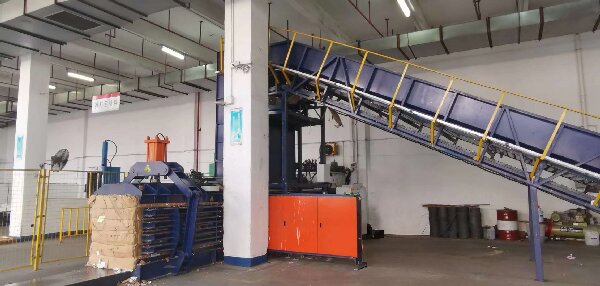
A horizontal hydraulic baler configured for continuous high-volume baling duty.
A 12–15 ton/hour hydraulic baler is not selected from a nameplate. On a continuous waste paper, plastic film, or mixed recycling line, the variables that decide whether the machine actually holds its rate are main cylinder force, hydraulic system pressure, bale chamber geometry, and the structural mass of the mainframe that absorbs load without flexing. This shortlist ranks five horizontal hydraulic baler models built by Shaanxi Nick Machinery Equipment Co., Ltd. and sold under the NK BALER brand, all positioned for 12–15 ton/hour line planning.
Every figure below is a verified model specification. Where a model does not reach the 12–15 ton/hour band on its own, that limit is stated plainly instead of being implied.
Why 12–15 Ton/Hour Pushes a Baler Into a Different Class
Below roughly 8 ton/hour, a horizontal baler can trade cylinder force for cycle speed without consequence. At 12–15 ton/hour the line produces a bale every few minutes and the hydraulic circuit never returns to a cold state. Three effects follow.
- Continuous heat load. The main cylinder runs close to its thermal limit, which is why a dedicated cooling circuit — water pump plus fan, or an oil chiller — is specified on every model in this shortlist.
- Force must match density, not volume. Loose cardboard at 400 kg/m³ and dense waste paper at 650–700 kg/m³ need different cylinder force to reach the same bale wire tension and the same transport density.
- The mainframe becomes a service-life variable. A 20-ton mainframe and a 34-ton mainframe behave differently after years of unbroken two-shift operation.
The practical risk is under-sizing. A baler that genuinely reaches 12 ton/hour on clean corrugated board will not hold that rate on film, PET, or metal-bearing mixed waste, and the shortfall appears as downtime and rework rather than as a lower number on a datasheet.
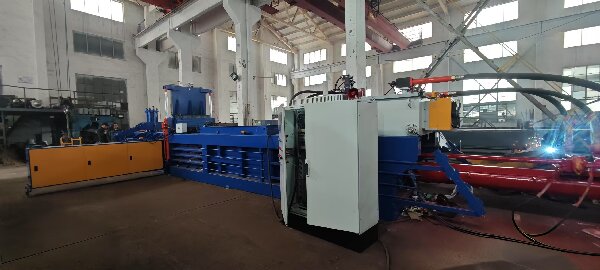
Cylinder force and mainframe mass determine whether throughput holds under continuous load.
Industry Background: Where High-Volume Baler Demand Comes From
High-capacity balers sit at the expanding end of the market. Transparency Market Research valued the global baler machine market at USD 6.6 billion in 2024 and projects it to reach USD 11.4 billion by 2035. The same assessment places Asia Pacific at 40.2% of total baler revenue in 2024, consistent with the concentration of recycling and material-recovery capacity in that region.
Two sub-segments matter directly when sizing a 12–15 ton/hour machine.
- Grand View Research reports that the baler press segment accounted for 24.5% of the total recycling equipment market in 2025, driven by demand for compacting plastic and paper.
- Market Research Future estimated the global metal baler market for scrap metal processing at USD 2.172 billion in 2024 — relevant because the same platform often has to accept metallic fractions in mixed-yard operations.
Supply signals point the same way. Volza Global Export Data recorded China among the top exporters of hydraulic baling presses under HS Code 8462, with 91 significant shipments between June 2024 and May 2025. The reading for buyers is straightforward: high-capacity horizontal balers are a mainstream procurement category, and model-level specification comparison — force, pressure, mainframe mass, density band — is what separates a correctly sized line from one that is under- or over-specified.
The Top 5 Horizontal Hydraulic Balers for 12–15 Ton/Hour Lines
The five models below share the same core architecture: carbon steel construction, a horizontal bale chamber, automatic or semi-automatic tying, and conveyor feed. They separate on force, pressure, structural mass, and the material density band each one is specified for.
1. NKW200Q — 200-Ton Cylinder and 34-Ton Mainframe
The NKW200Q is the heaviest unit in the series and the only model here specified for a 650–700 kg/m³ material density band, which places it at the top of the list for dense waste paper, heavy film, and mixed recycling streams.
- Verified capacity: 12–15 ton/hour
- Main cylinder force: 200 T
- System pressure: 30.5 MPa
- Mainframe weight: 34 tons
- Bale size: 1100 mm (W) × 1100 mm (H) × ~1800 mm (L)
- Feed opening: 2400 mm × 1100 mm
- Main motor power: 45 kW + 11 kW
- Conveyor: 2000 × 14000 mm, 7.5 kW motor, approximately 7 tons
- Mainframe dimensions: approximately 11 × 4.3 × 5.8 m (L × W × H)
Why it ranks first: the widest feed opening in the group (2400 × 1100 mm), the highest density band, and the greatest structural mass. On a line where infeed arrives in large, dense batches, those three characteristics decide whether 12–15 ton/hour is achievable or aspirational.
2. NKW180QT — 180-Ton Cylinder Across a 500–600 kg/m³ Band
The NKW180QT targets mid-density material: waste paper bales, sorted cardboard, and mixed commercial waste in the 500–600 kg/m³ range.
- Verified capacity: 12–15 ton/hour
- Main cylinder force: 180 T
- System pressure: 30.5 MPa
- Mainframe weight: 28 tons
- Bale size: 1100 mm (W) × 1250 mm (H) × ~1600 mm (L)
- Feed opening: 2000 mm × 1100 mm
- Main motor power: 45 kW + 7.5 kW
- Conveyor: 2000 × 12000 mm, 4 kW motor, approximately 5 tons
- Mainframe dimensions: approximately 13 × 4.3 × 5.8 m (L × W × H)
Why it ranks here: a 1250 mm bale height produces a taller bale than the NKW200Q chamber, but the 500–600 kg/m³ density band means the machine is specified for lighter material than entry one.
3. NKW160QT — 160-Ton Cylinder at the Highest System Pressure
The NKW160QT shares the NKW180QT bale geometry and density band but runs a 160-ton cylinder at 30.6 MPa — the highest system pressure in this shortlist.
- Verified capacity: 12–15 ton/hour
- Main cylinder force: 160 T
- System pressure: 30.6 MPa
- Mainframe weight: 28 tons
- Bale size: 1100 mm (W) × 1250 mm (H) × ~1600 mm (L)
- Feed opening: 2000 mm × 1100 mm
- Main motor power: 45 kW + 7.5 kW
- Conveyor: 2000 × 12000 mm, 4 kW motor, approximately 5 tons
Why it ranks here: comparing the NKW160QT with the NKW160Q in entry four is instructive — identical cylinder force, different pressure and conveyor configuration. It is a reminder to compare the whole hydraulic package rather than a single headline number.
4. NKW160Q — 160-Ton Cylinder, 25 MPa, Wider 400–600 kg/m³ Window
The NKW160Q runs a 160-ton cylinder at 25 MPa and is specified across a 400–600 kg/m³ density band — the widest band among the four 12–15 ton/hour models listed here.
- Verified capacity: 12–15 ton/hour
- Main cylinder force: 160 T
- System pressure: 25 MPa
- Mainframe weight: 28 tons
- Bale size: 1100 mm (W) × 1250 mm (H) × ~1600 mm (L)
- Feed opening: 2000 mm × 1100 mm
- Main motor power: 45 kW + 11 kW
- Conveyor: 2000 × 14000 mm, 7.5 kW motor, approximately 5 tons
Why it ranks here: the longer 14000 mm conveyor and the 11 kW auxiliary motor suit lines where infeed is spread across a larger sorting area, and the wider density window reduces sensitivity to day-to-day changes in the material mix.
5. NKW100QT — The Compact Unit in the Family
The NKW100QT is the lightest model in this group: a 100-ton cylinder, a 20-ton mainframe, and a 21 MPa system. Buyers should note its verified throughput honestly.
- Verified capacity: 4–6 ton/hour
- Main cylinder force: 100 T
- System pressure: 21 MPa
- Mainframe weight: 20 tons
- Bale size: 1100 mm (W) × 850 mm (H) × ~1200 mm (L)
- Feed opening: 1800 mm × 1000 mm
- Main motor power: 30 kW + 7.5 kW
- Conveyor: 2000 × 12000 mm, 5.5 kW motor, approximately 5 tons
- Specified material density: 400–500 kg/m³
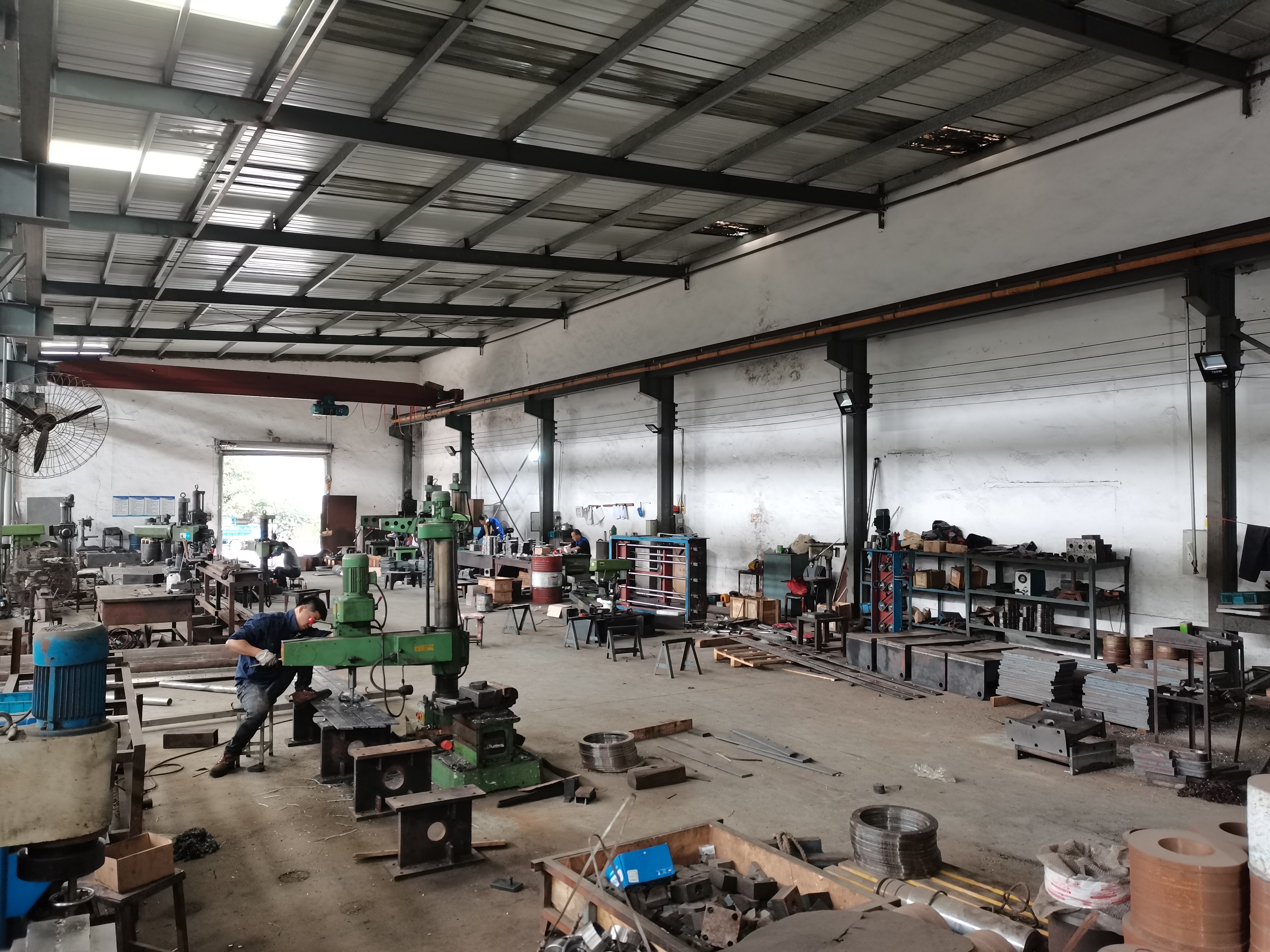
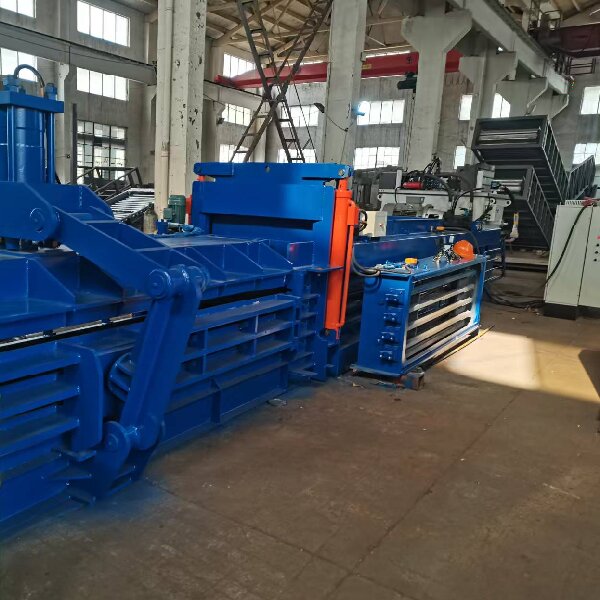
Horizontal baler assembly at the NK BALER production facility.
Comparison Table: Verified Specifications Side by Side
| Model | Verified capacity | Main cylinder force | System pressure | Mainframe weight | Bale size (W × H × L) | Feed opening | Main motor | Density band |
|---|---|---|---|---|---|---|---|---|
| NKW200Q | 12–15 ton/hour | 200 T | 30.5 MPa | 34 tons | 1100 × 1100 × ~1800 mm | 2400 × 1100 mm | 45 kW + 11 kW | 650–700 kg/m³ |
| NKW180QT | 12–15 ton/hour | 180 T | 30.5 MPa | 28 tons | 1100 × 1250 × ~1600 mm | 2000 × 1100 mm | 45 kW + 7.5 kW | 500–600 kg/m³ |
| NKW160QT | 12–15 ton/hour | 160 T | 30.6 MPa | 28 tons | 1100 × 1250 × ~1600 mm | 2000 × 1100 mm | 45 kW + 7.5 kW | 500–600 kg/m³ |
| NKW160Q | 12–15 ton/hour | 160 T | 25 MPa | 28 tons | 1100 × 1250 × ~1600 mm | 2000 × 1100 mm | 45 kW + 11 kW | 400–600 kg/m³ |
| NKW100QT | 4–6 ton/hour | 100 T | 21 MPa | 20 tons | 1100 × 850 × ~1200 mm | 1800 × 1000 mm | 30 kW + 7.5 kW | 400–500 kg/m³ |
Step-by-Step: How to Prioritize These Features for Your Material
The ranking above is a starting point, not a decision. Because high-capacity balers are configured to a material profile, the variables should be locked in the following order.
- Fix the throughput target in ton/hour, not in bales. Confirm the number against your own material rather than against the previous machine. If the verified requirement is 12–15 ton/hour, entries one to four apply; if it is lower, the NKW100QT and models outside this shortlist should be compared instead.
- Match cylinder force to the material density band. Light mixed plastic sits around 400–500 kg/m³, sorted waste paper and cardboard around 500–600 kg/m³, and dense waste paper and heavy film around 650–700 kg/m³. The NKW200Q is the only model here specified across the top band.
- Check bale dimensions against downstream handling. The NKW200Q produces a 1100 × 1100 × ~1800 mm bale; the 160 and 180 QT models produce a taller 1100 × 1250 × ~1600 mm bale. Bale footprint affects truck loading, stacking height, and wire consumption.
- Size the feed opening and conveyor to the infeed method. A 2400 × 1100 mm feed opening accepts larger infeed batches than 1800 × 1000 mm. Conveyor length ranges from 12000 mm to 14000 mm, and the conveyor motor from 4 kW to 7.5 kW.
- Then settle the commercial terms. Minimum order quantity is 1 unit, delivery is quoted FOB or CIF, acceptance is by pre-shipment test, and standard payment terms are 40/60. OEM and ODM production is available, monthly capacity is 10 units, and lead time is 30–45 days. Every unit is 100% tested before shipment.
Use Cases: Where These Models Have Run
A recycling station manufacturer in Indonesia uses horizontal hydraulic balers for waste plastic baling and waste paper baling. The installation runs a single unit and is reported to deliver stable operation with low noise and low energy consumption; the related models in that project are the NKW160QT, NKW180QT and NKW100QT.
On the agricultural side, an agricultural manufacturer in Pakistan runs baling and bagging equipment from the same manufacturer for straw and alfalfa, with two years of stable operation reported. The recurring thread across both cases is the same: continuous throughput and low noise matter more in daily operation than peak specification on paper.
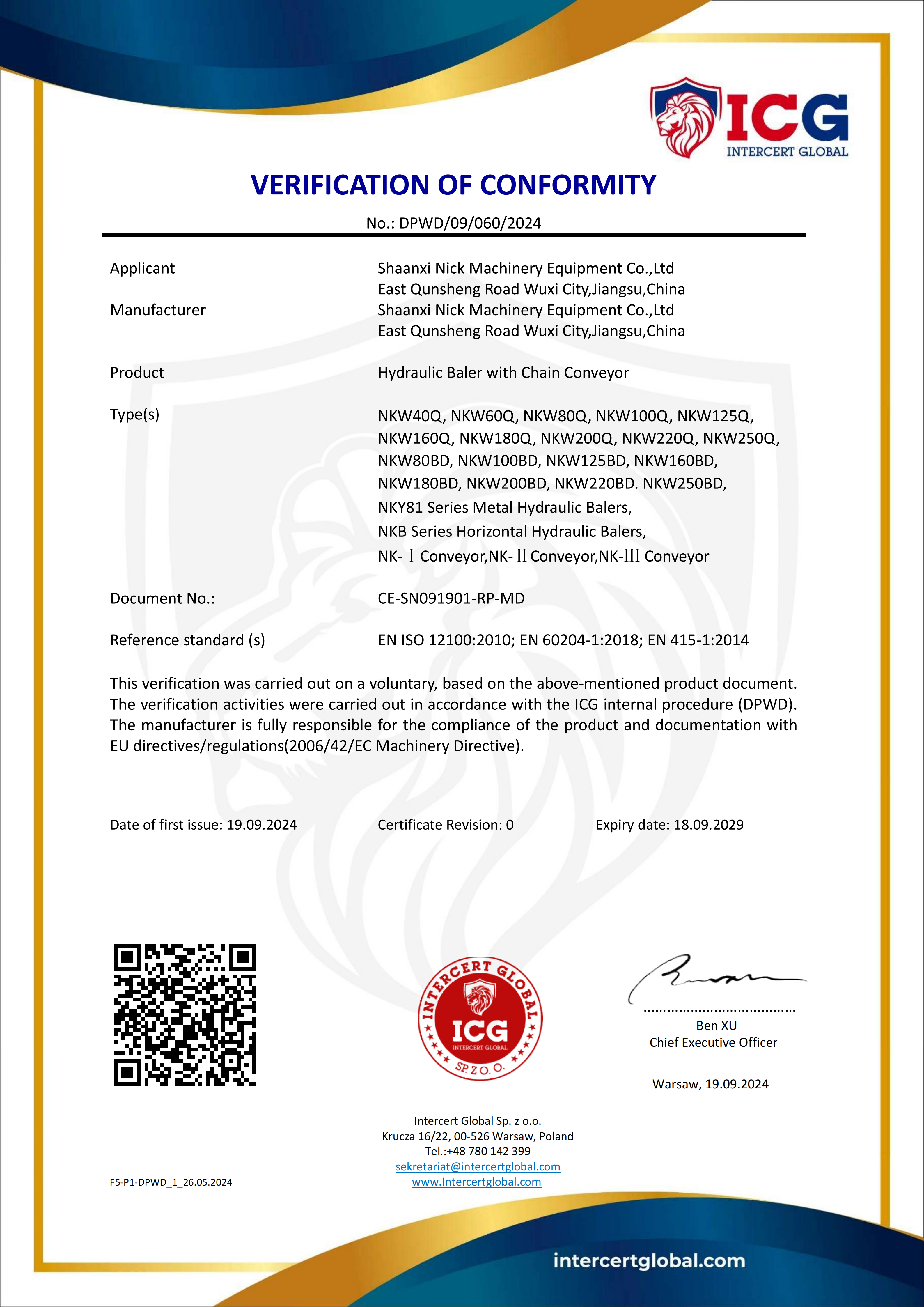
Verification of Conformity documentation covering the EU/EEA market.
Frequently Asked Questions
Which machinery certifications cover these high-capacity baler models?
The NKW200Q, NKW160Q and NKW100QT are listed on an ATTESTATION CERTIFICATE OF MACHINERY DIRECTIVE issued under certificate number EASY03220201M by UDEM International Certification Auditing Training Centre Industry and Trade Inc. Co. That certificate is valid from 22 March 2022 to 21 March 2027 for the EU, EEA and Türkiye scope and references EN ISO 12100:2010 and EN 60204-1:2018. A separate Verification of Conformity, number DPWD/09/060/2024, covers the EU/EEA market, is valid from 19 September 2024 to 18 September 2029, and references EN ISO 12100:2010, EN 60204-1:2018 and EN 415-1:2014.
Can these balers be customized for a specific material or line layout?
Yes. The manufacturer provides OEM and ODM design and production services, with parameter-level customization of the machine configuration. Monthly production capacity is 10 units, every unit is 100% tested, and OEM/ODM output serves the EU and Middle East markets. After-sales support is delivered remotely.
What drives the cost difference between a 100-ton and a 200-ton baler?
Structural mass and hydraulic hardware, not brand positioning. The NKW200Q carries a 34-ton mainframe, a 200-ton main cylinder and a 45 kW + 11 kW motor set. The NKW100QT carries a 20-ton mainframe, a 100-ton main cylinder and a 30 kW + 7.5 kW motor set, with a 12000 mm conveyor at 5.5 kW instead of 14000 mm at 7.5 kW. Because the minimum order quantity is 1 unit, a single machine can be evaluated without committing to a fleet.
How can a buyer validate a machine before full line integration?
Pre-shipment test is the standard acceptance method, and orders are quoted FOB or CIF. With a minimum order quantity of 1 unit, a buyer can take a single machine, run their own material through it, and confirm bale density, cycle time and noise level against the specification before scaling up.
What is the typical lead time for a 12–15 ton/hour line, and what is the next step?
Lead time is 30–45 days, with remote after-sales support after installation. To move from shortlist to configuration, send your material type, target throughput in ton/hour and bale handling requirements to Sales@nkbaler.com, or review the full model range in the downloadable brochure below.
Specifying a 12–15 ton/hour baling line?
Share your material profile and required hourly throughput, and the NK BALER team will return a model recommendation with matching force, pressure and mainframe specification.
Conclusion: Choose by Density Band First, Force Second
Among the models covered here, the selection logic reduces to one rule: match the machine to the material density band, then confirm the force and structural mass that band requires.
- Dense waste paper, heavy film and mixed recycling in the 650–700 kg/m³ band: the NKW200Q, with a 200-ton cylinder, 30.5 MPa system pressure and a 34-ton mainframe.
- Sorted waste paper and cardboard at 500–600 kg/m³ where a wide feed opening matters: the NKW180QT at 180 tons, or the NKW160QT at 160 tons and 30.6 MPa.
- Mixed material where the density window shifts during a shift, at 400–600 kg/m³: the NKW160Q, whose 25 MPa system and 14000 mm conveyor suit variable infeed.
- Lower verified throughput, or an upstream companion unit in the 400–500 kg/m³ band: the NKW100QT, at 4–6 ton/hour.
The remaining decision is structural rather than hydraulic. On a line that runs continuously, mainframe mass and cooling capacity determine how long the machine holds its rated output. A 34-ton mainframe and a 28-ton mainframe are not interchangeable across a ten-year service life, even when their ton/hour figures match on paper.