Boost Retail Unboxing and Brand Awareness with Custom Shopping Bags: Application Guide
Custom shopping bags turn a routine purchase into a branded experience that keeps working after the customer leaves the store. In cosmetics retail, apparel stores, gift packaging, and general retail, the bag is the last physical object a shopper carries out of the building — and the one most likely to be seen again on a street, in an office, or in a social post. This application guide explains how retail and brand teams plan custom paper bags, custom printed paper bags with logo, and branded gift bags for storefronts, trade shows, and events, so the hand-over at the register feels deliberate rather than accidental.
The Problem: Most Retail Brand Experiences Stop at the Register
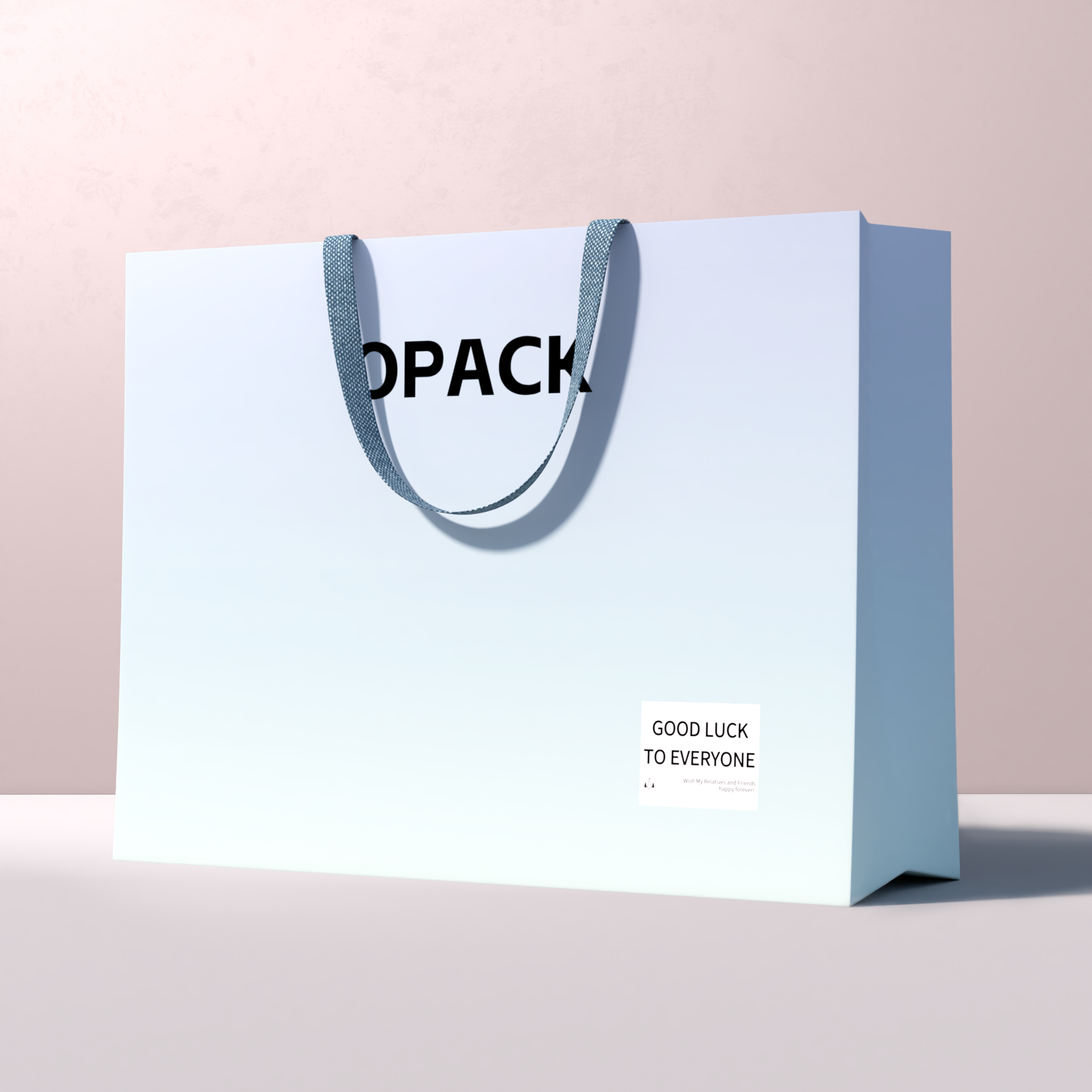
Retail teams invest in store design, staff training, product displays, and social content. Then, at the last step of the transaction, the same team often hands the customer a plain bag that carries no logo, no colour, and no recognisable identity. The purchase is complete, but the brand experience has quietly ended.
Unboxing does not begin at home. In physical retail it begins at the counter, when the customer takes the bag by the handle and walks out. In those first seconds, a shopper registers weight distribution, handle strength, seam quality, and print sharpness — and forms a judgement about whether the purchase feels premium. A bag that tears at the handle or looks scuffed after one trip signals the opposite of what the store spent the day building.
Three failure modes appear repeatedly in retail programmes:
- No brand signal. A plain bag communicates nothing, even though the customer may carry it in public for weeks.
- Structural weakness. Handles pulling free, seams splitting, and paper tearing during repeated reuse.
- Colour drift. A logo colour that shifts slightly between print batches, so bags ordered in March no longer match bags ordered in September.
The commercial case for fixing these issues is measurable. Compared with plain bags, custom shopping bags carry a 3%–10% higher initial cost, and in exchange Opack’s custom-versus-plain comparison data records:
- 20%–30% higher repeat purchase rates
- 10%–30% improvement in customer satisfaction
- 5%–15% increase in customer referrals
- 5%–10% more social media shares
That is the decision this guide is built around: whether a retail programme keeps buying undifferentiated bags, or moves to bags that carry the brand into the street.
Industry Background: Why Retail Programmes Are Moving to Custom Printed Paper Bags
Global demand for printed paper bags has grown alongside sustainability expectations. Grand View Research values the global paper bags custom printing market at USD 2.78 billion in 2024 and projects a 13.9% CAGR through 2030. The wider paper bags market reached USD 6.06 billion in 2024, with MarketsandMarkets expecting growth to USD 7.81 billion by 2029.
Material demand is concentrated. Brown kraft paper is estimated to hold a 58% share of total material demand by 2026, largely because of sustainability preferences (Future Market Insights). Certification carries weight with shoppers too: FSC certification, the primary industry standard for verifying sustainable sourcing, has a 56% global consumer recognition rate (Forest Stewardship Council, 2025). Regionally, Asia Pacific accounted for over 36.5% of the global paper bag market in 2025 (IMARC Group), reflecting both consumption growth and the concentration of manufacturing capacity.
At industrial scale, the high-volume paper bag and fibre packaging market is dominated by large groups such as Mondi Plc, Smurfit Kappa Group, and International Paper Company (Future Market Insights, 2024). Retail brand owners running logo-specific, design-led programmes usually work with custom packaging manufacturers instead, because the requirement is not tonnage but repeatable print quality on a specific brand palette.
Opack is a custom packaging manufacturer based in Longgang, the Printing City of China. Founded in 2010, the company produces custom packaging, custom rigid boxes, custom shopping bags, custom folding cartons, and custom mailer boxes in a 10,000 m² factory with 160 employees and an annual output of 10,000,000 units. Around 80% of production is exported, with main markets in the EU, USA, and Middle East.
What Custom Shopping Bags Change in a Retail Programme
A custom shopping bag changes four things at once: what the bag looks like, how long it survives, what it communicates when reused, and what it is allowed to be made of.
Brand identity that leaves the store with the customer
Compared with plain bags, custom options are fully customisable, deliver higher brand visibility, and create a more memorable unboxing experience with a more high-end look (Opack custom-versus-plain comparison data). Because retail bags are reused for shopping, commuting, and storage, the logo travels further than the transaction does.
Structure built for repeat use
Durability is a design decision, not an accident. Custom bags use sturdier paperboard, durable printing, and reinforced handles, which reduces tearing and handle breakage during repeated use (Opack comparison data). The practical result for a retail team is fewer complaints at the till and a bag that still looks presentable on its fifth outing.
Material and end-of-life choices that stand up to scrutiny
Custom shopping bags can be produced with FSC-certified materials and water-based printing inks, and are fully recyclable after their service life (Opack comparison data). That combination matters in markets such as the EU, where retail buyers are routinely asked to document sourcing and disposal.
Colour and load control before mass production
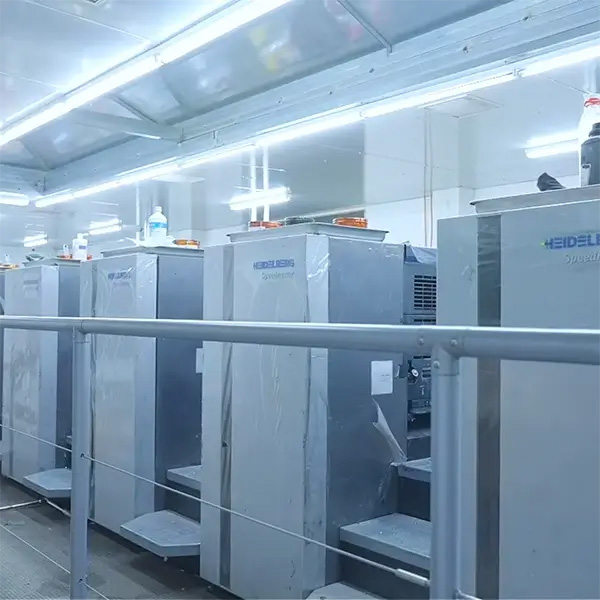
Print colour drift and handle failure are the two risks most likely to damage a retail rollout. Opack controls colour with spectrophotometer-based measurement and monitoring throughout production, holding colour difference (ΔE) to approximately 1.5, a level that is nearly imperceptible to the human eye. Load-bearing performance is verified in tests carried out before mass production, covering handle strength, paper durability, and structural stability against the intended product weight. The production sequence also includes a pre-production colour approval process, in-process quality inspections during printing, a final quality inspection before shipment, and batch-by-batch quality verification.
Step-by-Step: Rolling Out Custom Shopping Bags Across a Retail Programme
- Match the bag to the selling scenario. Cosmetics retail, apparel stores, gift packaging, trade shows and events, and e-commerce stores place different demands on a bag — different dwell time, different load, and a different audience holding it. Start from the scenario, not from a specification sheet.
- Decide what carries the brand. A logo, a colour block, or an all-over print each reads differently at arm’s length and in a photograph. Fix this before artwork is produced, because it determines the printing method and the paper surface.
- Build the bag against the real load. Folded garments, boxed cosmetics, and gift sets are not equally heavy, and a handle that is adequate for one is not adequate for the other. Structural decisions should be tested with the actual product weight the bag will carry.
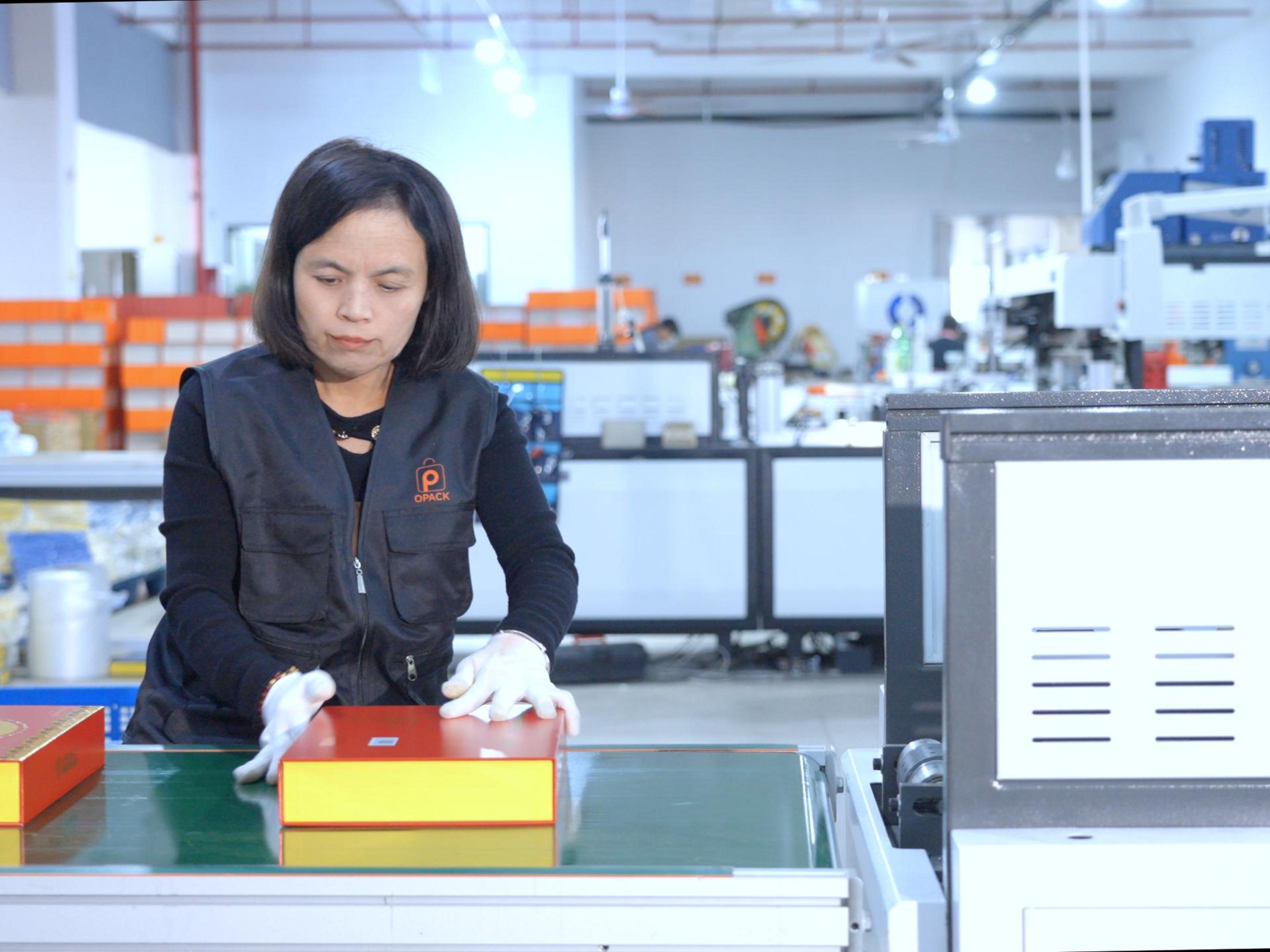
- Approve colour and load before mass production. Opack runs a pre-production colour approval process and pre-production load-bearing and durability testing that verifies handle strength, paper durability, and structural stability. Approving these two variables early is what prevents a batch-level problem at the store.
- Deploy across storefronts, trade shows, and events. Custom shopping bags are suitable for storefronts, trade shows, and events, which means one bag specification can serve the counter, the exhibition stand, and the pop-up. Consistency across all three is what turns a bag into a recognisable asset.
- Measure the effect. Track repeat purchase rate, customer satisfaction, referrals, and social sharing against a plain-bag baseline. Without a baseline, a bag programme cannot be defended in the next budget cycle.
Use Cases: Where Custom Shopping Bags Earn Their Cost
Cosmetics packaging
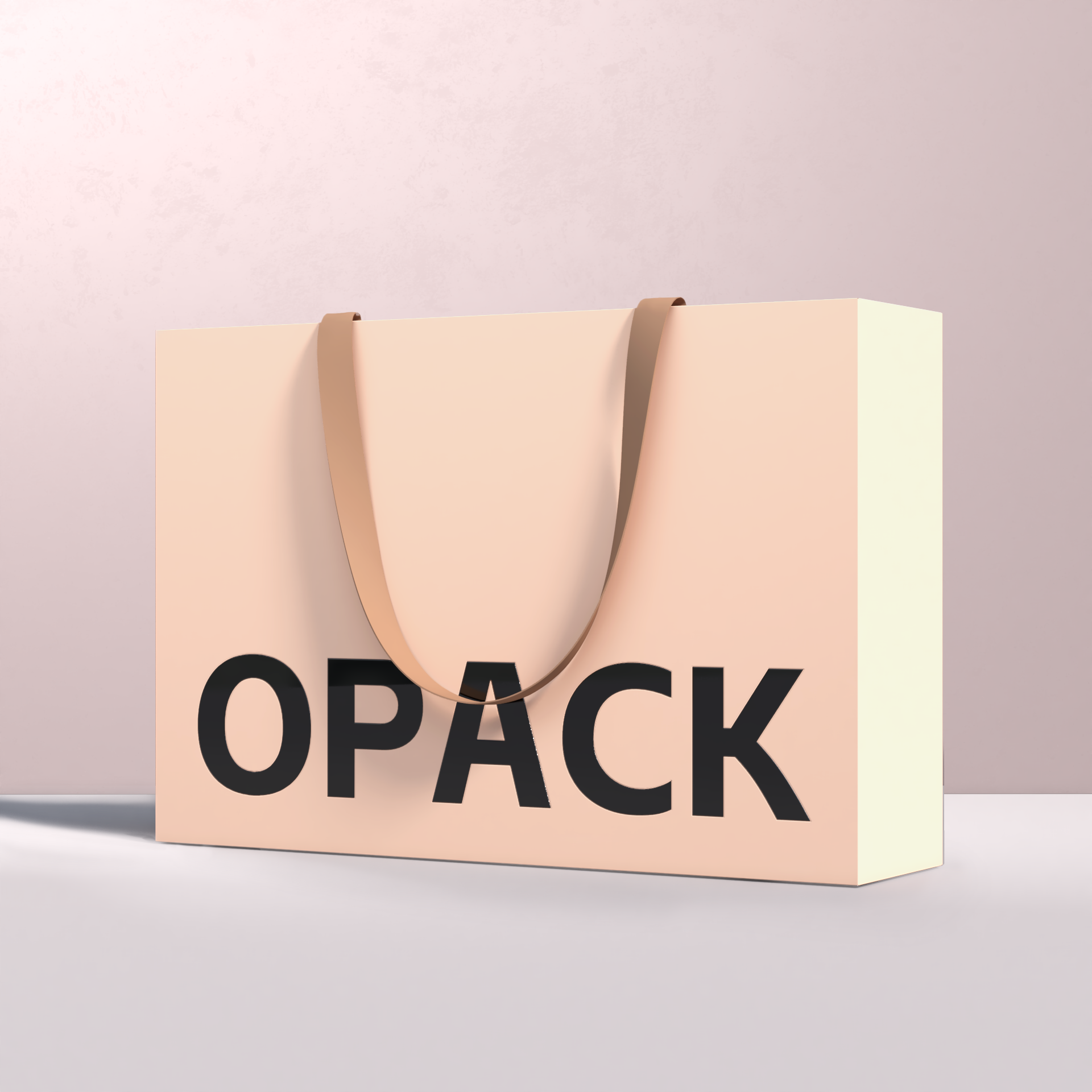
Cosmetics purchases are light in weight but high in perceived value, and the bag is often placed on a vanity or photographed rather than thrown away. A custom luxury paper bag or a custom paper bag with logo keeps the brand present in that setting. Structure matters less than finish here, but colour consistency matters a great deal: a logo colour that drifts between batches undermines exactly the premium impression the product is built to create.
Apparel packaging
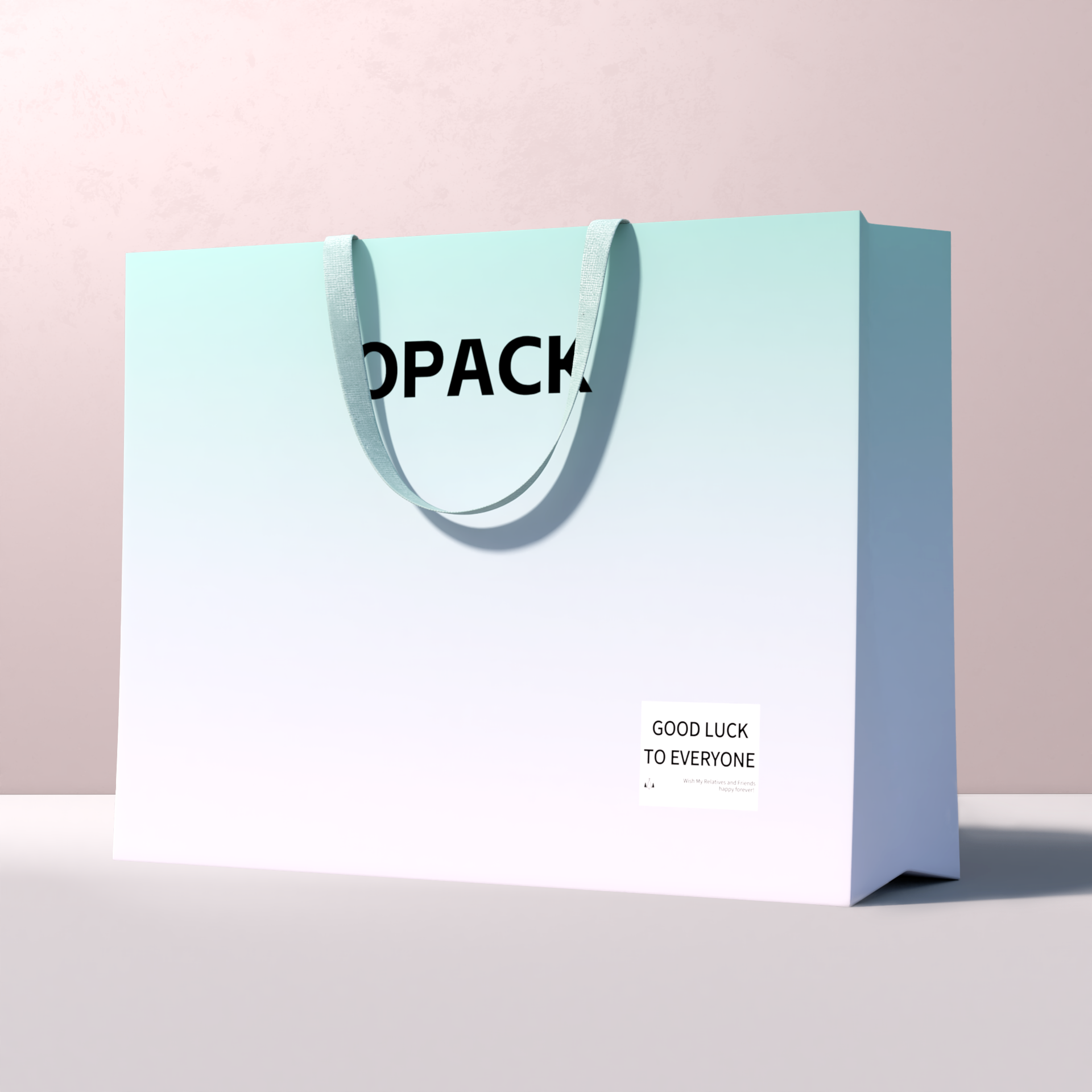
Apparel loads are heavier and the bag is carried further — through a mall, onto transport, and often home again. Reinforced handles and sturdier paperboard are not cosmetic details in this scenario; they are what stops the bag from failing in public. Print durability also matters, because a faded logo on the street is worse than no logo at all.
Retail stores and storefronts
For a general retail storefront, the bag functions as moving advertising. Every customer who leaves with a branded shopping bag places the logo in front of people who never entered the shop. This is the simplest justification for replacing a plain bag: the cost difference is a marketing cost, not a packaging cost.
Gift packaging
Gift purchases carry an expectation of presentation that ordinary shopping does not. Custom gift bags with logo and branded gift bags allow the same bag to serve both retail and gifting, which simplifies ordering and keeps the identity consistent across seasonal peaks. Personalised printed paper bags also make a gift hand-over feel considered rather than transactional.
Trade shows and events
Trade shows and events concentrate the effect. A bag handed out at a stand is carried through the hall for hours, placed on tables, and taken home. Because custom shopping bags are suitable for trade shows and events, the same specification used at the retail counter can be deployed as event collateral — with the practical advantage that it is judged by hundreds of visitors in a single day.
E-commerce hand-off
Click-and-collect counters and local delivery hand-offs are still physical moments, even when the order began online. Using the same custom printed paper bags as the in-store channel keeps the experience continuous between the website and the doorstep.
Custom vs. Plain Shopping Bags: Comparison Table
| Decision factor | Plain shopping bags | Custom shopping bags |
|---|---|---|
| Customisation | Not customisable | Fully customisable |
| Brand visibility | None | Higher brand visibility |
| Unboxing experience | Standard hand-over | More memorable (unboxing) experience |
| Perceived look | Basic | More high-end look |
| Initial cost | Baseline | 3%–10% higher initial cost |
| Repeat purchase rate | Baseline | 20%–30% higher |
| Customer satisfaction | Baseline | 10%–30% improvement |
| Customer referrals | Baseline | 5%–15% increase |
| Social media shares | Baseline | 5%–10% more |
| Materials and end of life | — | FSC-certified materials, water-based printing inks, fully recyclable after service life |
| Durability in reuse | — | Sturdier paperboard, durable printing, reinforced handles; less tearing and handle breakage during repeated use |
| Best-fit scenarios | General use | Cosmetics retail, apparel stores, gift packaging, trade shows and events, e-commerce stores |
Figures in the comparison table are based on Opack’s custom-versus-plain shopping bag comparison data. The plain-bag column shows the reference baseline for the performance metrics.
FAQ
Are custom printed paper shopping bags recyclable and responsibly sourced?
Yes. Opack’s custom shopping bags use FSC-certified materials and water-based printing inks, and they are fully recyclable after their service life. FSC certification is the primary industry standard for verifying sustainable sourcing and holds a 56% global consumer recognition rate (Forest Stewardship Council, 2025), which means the sourcing claim is one retail customers can actually verify.
How is print colour kept consistent across a large order of custom logo paper bags?
Colour is managed with spectrophotometer-based measurement and monitoring throughout production, with the colour difference (ΔE) held at approximately 1.5 — a level that is nearly imperceptible to the human eye. The process also includes a pre-production colour approval step, in-process quality inspections during printing, a final quality inspection before shipment, and batch-by-batch quality verification, so a later reorder does not drift away from the approved palette.
How much more do custom shopping bags cost than plain bags?
Custom shopping bags carry a 3%–10% higher initial cost than plain bags, while providing significant brand value benefits. In Opack’s custom-versus-plain comparison data, that cost gap is associated with 20%–30% higher repeat purchase rates, a 10%–30% improvement in customer satisfaction, a 5%–15% increase in customer referrals, and 5%–10% more social media shares. For most retail buyers, the relevant question is therefore not the unit cost gap but whether the bag is treated as packaging spend or as brand spend.
Can a retailer validate a custom shopping bag before committing to a full production run?
Validation happens at two points. Opack runs a pre-production colour approval process so the brand palette is confirmed before printing begins, and load-bearing and durability tests are conducted before mass production to verify handle strength, paper durability, and structural stability against the intended product weight. Buyers who want to review a bag for their own cosmetics, apparel, or event programme can request a sample or a quote through sales@opack.com.
What affects the lead time on a custom shopping bag order?
Lead time is driven mainly by how much validation and setup an order requires, not by the bag itself. Artwork and colour approval, the printing method, order volume, pre-production load-bearing and durability testing, and the final quality inspection before shipment all sit on the critical path. Because Opack builds colour approval and pre-production testing into the production plan rather than treating them as optional, buyers preparing a seasonal retail launch or a trade show date should confirm scheduling with the manufacturer at the quoting stage.
Conclusion: Treat the Bag as a Brand Decision, Not a Packaging Line Item
The unboxing experience in retail is decided in a few seconds at the counter, and the bag is the object that carries that decision out of the store. Custom shopping bags cost 3%–10% more than plain bags up front, and the same comparison data links them to 20%–30% higher repeat purchase rates, 10%–30% higher customer satisfaction, 5%–15% more referrals, and 5%–10% more social media shares. For cosmetics counters, apparel stores, gift programmes, trade shows, and events, that gap is usually the smallest number in the marketing budget and the longest-lasting one.
The execution side is equally concrete: FSC-certified materials and water-based inks, reinforced handles and sturdier paperboard for repeat use, spectrophotometer colour control at a ΔE of approximately 1.5, and load-bearing verification before mass production. Those are the variables that separate a bag that supports the brand from a bag that quietly damages it.
Plan Your Retail Bag Programme with Opack
Opack is a custom packaging manufacturer based in Longgang, the Printing City of China, producing custom shopping bags, rigid boxes, folding cartons, mailer boxes, and paper tubes since 2010. Share your scenario — cosmetics, apparel, retail, gifting, or an upcoming trade show — and the team will review structure, print, and material options against it.
Email: sales@opack.com
Tel: +86 17366633702
WhatsApp: +86 15968809016
Address: No. 8-10, Prosperity Road, Longgang City, Wenzhou City, Zhejiang Province
Website: www.opack.com
Download the company profile and full capability catalogue: Opack Company Profile (PDF)
Structured Data
Have Questions or Need More Details?
Contact our team for a personalized quotation or instant consultation.
Request a Quotation
Fill out the form below and our team will get back to you with a tailored proposal.
WhatsApp Direct Chat
Prefer to chat in real-time? Message us on WhatsApp for instant assistance & quick answers.
- Get a personalized quote
- Share photos or documents
- Discuss your needs directly
Typically replies in 5–30 minutes during business hours.