
Cosmetics and Jewelry Packaging: Solving Rigid Box Problems with Eco-Friendly Custom Solutions
Cosmetics and Jewelry Packaging: Solving Rigid Box Problems with Eco-Friendly Custom Solutions
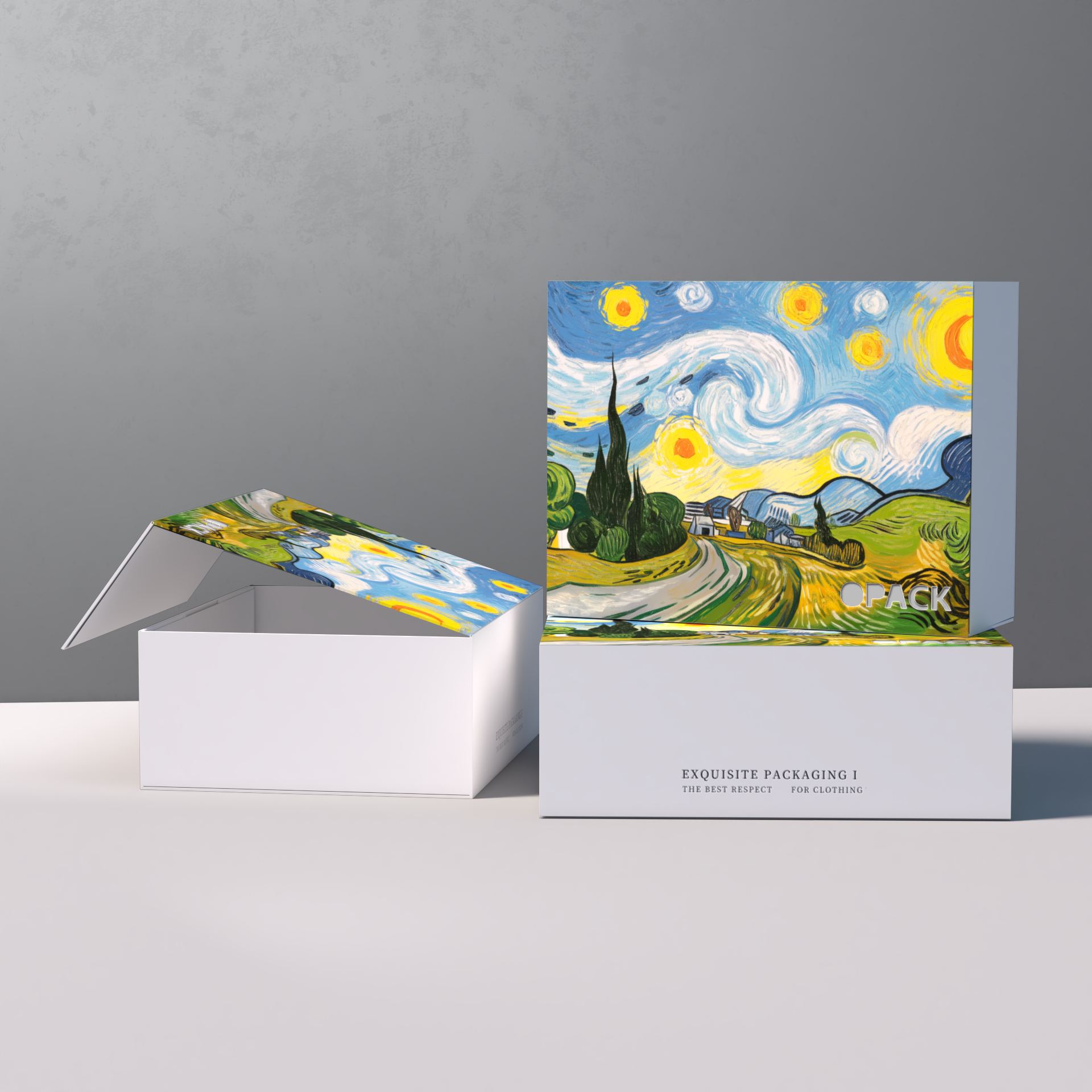
Cosmetics and jewelry packaging fails in three predictable ways: the product arrives damaged, the box does not look like the price on the tag, or the packaging cannot be reconciled with the recycling and labeling rules the brand has to meet. A custom rigid box can solve all three — but only when the board, structure, insert, printing, and eco material chain are specified as one system instead of sourced as separate line items.
This guide is written for buyers in the research and evaluation stage of a packaging project. It defines the three problems, sets out the market and regulatory context, and then breaks the solution into the specific rigid box options that address each issue: magnetic closures, ribbon closures, collapsible construction, foam, EVA or silk inserts, water-based printing inks, low-VOC adhesives, and FSC-compliant material.
All product details below come from Opack's published rigid box specifications and manufacturing capability data. Market and regulatory figures are attributed to their original sources.
Problem Definition: The Three Issues Buyers Bring to a Rigid Box Project
Most rigid box projects start with a sample that looks right and end with a shipment that behaves wrong. The reason is that three separate requirements are usually treated as one decision.
1. Damage during transit and handling
Glass fragrance bottles, cream jars, compacts, watch cases, and small jewelry components are dense and often fragile. If the insert lets the product move, movement produces scuffs, abrasion, chipped glass, and returns. Damage risk is a function of structure and insert geometry rather than of how thick the board is.
2. Differentiation on the shelf and in the unboxing
In beauty and jewelry, the box is usually the first physical brand asset a customer touches. A rigid setup box with plain wrapping and no finishing communicates a lower price tier than the product inside it — which is why many brands move from a folding carton to a rigid box at the point where they start competing on perceived value instead of unit price. The differentiation levers are all specification decisions: wrapping paper, print method, hot stamping or foiling, lamination, and how the insert presents the product.
3. Eco-compliance pressure
Packaging regulation is no longer a future consideration. The EU Packaging and Packaging Waste Regulation (PPWR), Regulation (EU) 2025/40, has been mandatory since 12 August 2026 and requires packaging to be recyclable and properly labeled. For any beauty or jewelry brand selling into Europe, that moves inks, adhesives, and fiber sourcing out of the marketing column and into the technical specification.
Industry Background: Why Rigid Packaging for Beauty and Jewelry Keeps Expanding
Rigid packaging is growing for structural reasons — premium and gifting categories, e-commerce unboxing expectations, and a shift toward recyclable paper substrates. The published figures are:
- The global rigid boxes market was valued at USD 31.2 billion in 2025 and is projected to reach USD 48.9 billion by 2035 (Global Market Insights).
- The rigid box segment within the broader corrugated market is expected to expand at a 9.2% CAGR from 2026 to 2033, driven by e-commerce and premium packaging needs (Grand View Research).
- Asia Pacific held a 48.2% revenue share of the global rigid packaging market in 2023, while Europe remains the largest specific market for luxury rigid boxes (Grand View Research / Global Market Insights).
- Paper and paperboard account for approximately 55.4% of total rigid box material revenue as brands shift toward recyclable substrates (Future Market Insights).
- Custom rigid boxes fall under HS Code 481920 (folding cartons and non-corrugated boxes), an export category in which China is a primary global supplier (UN Comtrade).
Scope matters when reading these numbers. Published estimates diverge widely: figures range from roughly USD 12.5 billion for the specific rigid box industry to several hundred billion when the definition is widened to all rigid packaging. When a supplier cites a market size, the definition behind the number matters more than the number itself — and that is worth checking before a figure is used in a budget model.
Regulatory timing matters just as much. Rigid boxes are increasingly paper-based, but a paper-based body is only part of the compliance answer. Since 12 August 2026, packaging placed on the EU market must be recyclable and properly labeled, which pulls the ink system, the adhesive, and the surface finishing into the same discussion as the board.
Detailed Solution: What an Eco-Friendly Custom Rigid Box Is Made Of
Answer first: a rigid box is a stiff board body wrapped in paper, closed with a chosen structure, lined with a product-specific insert, and finished with print and surface treatments. Opack is a custom packaging manufacturer based in Longgang, Wenzhou, China — the region known as the Printing City of China — and has produced custom rigid boxes, folding cartons, mailer boxes, paper shopping bags, and paper tubes since 2010. Rigid boxes are one of its core lines, applicable to jewelry, watches, perfumes, cosmetics and beauty, apparel, gift packaging, electronics, PR boxes, and corporate and promotional packaging.

Body board and wrapping paper
- Body material: grey board (also written greyboard or chipboard) or MDF (medium-density fibreboard).
- Thickness: customizable.
- Wrapping paper: coated paper, kraft paper, specialty paper, textured paper, or white paperboard.
- Size range: fully customizable based on product requirements.
Read this list as a cost-and-feel control panel rather than a menu. Kraft and textured papers read as tactile and understated; coated paper and white paperboard reproduce fine print and Pantone color faithfully; specialty papers typically carry the strongest shelf differentiation per unit of cost. For jewelry, the board choice is mostly about rigidity at small sizes; for cosmetics, it is about holding a heavier product without the lid flexing.
Structures and closures
Opack rigid boxes are available in foldable, magnetic closure, and ribbon closure structures, and the range is organized under model codes RB-C01 through RB-W09, which lets a buyer reference a specific construction when requesting a quote. Drawer-style rigid boxes with ribbon pulls also appear in the product range.
- Magnetic closure: a lid-and-base construction; the strongest “open and close again” experience and the structure most often used for premium skincare and fragrance sets.
- Ribbon closure: the ribbon replaces the magnet as the opening mechanism; lighter in hand and frequently chosen for jewelry and keepsake gifting.
- Foldable / collapsible rigid box: ships and stores flat, then assembles into a full rigid box; used where storage space or freight volume is the binding constraint.
- Drawer style with ribbon pull: a sliding tray inside a rigid sleeve; suited to jewelry and products presented as a reveal.
Inserts: the retention system
Insert options are foam, paperboard, EVA, plastic tray, corrugated cardboard, and silk. The insert is what converts a rigid box from a container into a protection system, and it answers two questions: does the product move at all inside the box, and how much of the insert is visible when the lid is lifted? A silk-lined insert and a foam insert can hold the same necklace, but they signal different price tiers.
Printing and finishing
Printing methods available are CMYK printing, Pantone printing, UV printing, offset printing, and screen printing. Finishing options are hot stamping, spot glossy UV, soft touch lamination, holographic foiling, embossing, debossing, matte lamination, and gloss lamination. In cosmetics and jewelry, these carry the brand: Pantone controls exact brand color, hot stamping and foiling create metallic accents without a printed image, embossing and debossing add a tactile dimension, and soft touch lamination changes how the lid feels in the hand.
The eco layer: inks, adhesives, and fiber sourcing
For these projects, rigid box production is specified with eco-friendly water-based printing inks, low-VOC adhesive materials for safe and eco-friendly production, and material compliant with FSC standards; the associated FSC certification is GFA-COC-005690. The practical reading is that the eco attributes of a rigid box come from the ink, the adhesive, and the fiber source rather than from the visual surface. A box with matte lamination and a box with soft touch lamination can sit on the same compliant material chain, while a solvent-based ink in an otherwise paper box could not.
Operating and storage conditions
Rigid presentation packaging is designed for dry environments with low humidity and stable, moderate temperature, away from direct sunlight and chemicals. This is not a footnote for beauty brands holding inventory before a launch: textured wraps, foils, and hot-stamped surfaces are the components most sensitive to humidity and heat. The boxes are also intended as reusable rigid presentation packaging, which supports the “keep the box” behavior common among jewelry and premium beauty customers.
Step-by-Step: How to Specify a Rigid Box for a Cosmetics or Jewelry Project
- Name the failure you are preventing. Write down whether the problem is transit damage, differentiation, compliance, or a combination. A box specified only against “make it look premium” tends to arrive with an insert that was never engineered.
- Measure the product and choose the structure. Product dimensions, weight distribution, and center of gravity determine whether a magnetic closure, ribbon closure, foldable construction, or drawer format is appropriate. Because size is fully customizable, the structure should be fixed before the artwork is designed.
- Design the insert as a retention system. Choose foam, EVA, paperboard, corrugated cardboard, plastic tray, or silk based on how much movement the product can tolerate and how visible the insert should be. For a multi-piece set, decide whether items ship in their final arrangement or are assembled at the point of sale.
- Match print and finishing to the brand tier. CMYK for photographic artwork, Pantone for exact brand color, hot stamping or foiling for metallic accents, embossing or debossing for tactile branding, and matte or gloss lamination for hand feel. Lock these before sampling, because finishing affects both appearance and material compliance.
- Confirm the eco chain before approving artwork. Have the ink system (water-based), the adhesive (low-VOC), and the fiber documentation (FSC standards, certification GFA-COC-005690) confirmed in writing at the specification stage, so the compliance file is built alongside the design file.
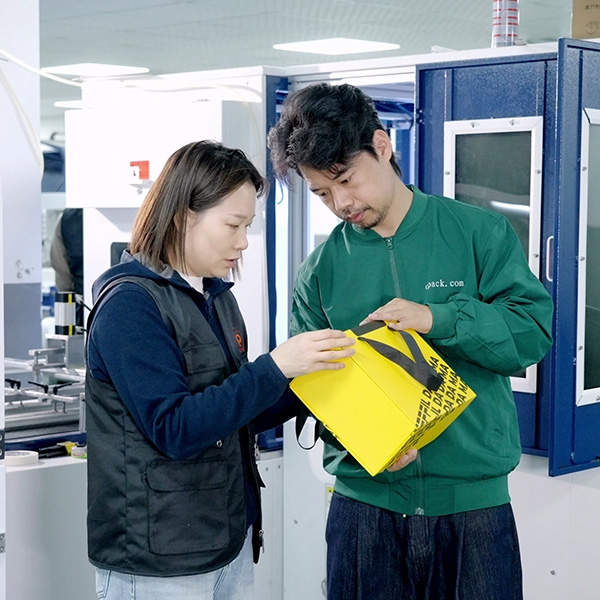
- Verify order parameters and quality control. Opack rigid boxes carry a MOQ of 500 pcs, a production lead time of 12–18 days, and 100% quality check. Monthly capacity is 1,000,000 units, which matters when a launch date is fixed or a distributor needs replenishment.
Use Cases: Four Cosmetics and Jewelry Scenarios
Fragrance and glass bottle sets
Glass is the hardest common case. A magnetic closure rigid box with a foam or EVA insert and a bottle-shaped cavity keeps the bottle from rotating and protects the neck and cap. Because the box is a reusable rigid presentation packaging format, it also doubles as a counter or shelf display object in retail environments.
Fine jewelry sets
Necklaces, earrings, and bracelets are light but easily abraded, and presentation is part of the purchase. Silk or paperboard inserts hold individual components apart from each other, a ribbon closure suits keepsake gifting, and drawer-style boxes with ribbon pulls suit a reveal moment. The storage guidance — dry, low-humidity, stable temperature, no direct sunlight — is directly relevant for sterling silver and plated pieces.
Skincare and beauty PR boxes
Multi-item kits benefit from collapsible rigid boxes, which ship and store flat and assemble on site, lowering freight and warehouse volume for campaigns with short windows. Corrugated cardboard or EVA inserts keep a serum, a cream, and an applicator separated so that a single broken item does not compromise the whole kit.
Corporate and promotional gifting
Promotional and corporate rigid boxes can be matched with handles, custom stickers, custom hang tags, and custom inserts as part of the same project, which keeps a gifting program visually consistent across differently shaped items. For brands whose gift boxes are distributed to partners rather than end customers, the foldable structure is usually the practical default.
Comparison Table: Rigid Box Structures and Inserts at a Glance
The table below compares only structures and inserts that are part of Opack's published rigid box specification. It is a selection aid, not a ranking: the right row depends on the product and the market, not on the option itself.
| Structure option | What it is | Typical cosmetics & jewelry fit | What to verify |
|---|---|---|---|
| Magnetic closure | Lid-and-base rigid box closed with magnets; part of the Opack structure range | Fragrance, premium skincare sets, PR boxes that are reopened | Lid tolerance and insert fit after repeated opening |
| Ribbon closure | Ribbon replaces the magnet as the closure; part of the Opack structure range | Jewelry, keepsake and gifting formats | Ribbon placement relative to brand print and logo |
| Foldable / collapsible rigid box | Full rigid box that ships and stores flat and assembles on site; part of the Opack structure range | Distributors, campaign kits, brands with limited storage space | Storage conditions before assembly (dry, low humidity) |
| Drawer style with ribbon pull | Sliding tray inside a rigid sleeve; shown in Opack rigid box product imagery | Jewelry, small accessories, reveal-style presentation | Tray friction, pull strength, and print registration on the sleeve |
| Insert material | Role inside the box | Typical cosmetics & jewelry fit |
|---|---|---|
| Foam | Compressible material that holds an irregular or heavy shape in a shaped cavity | Fragrance bottles, heavy glass, mixed sets |
| EVA | Firmer insert material with clean edges and a defined cavity | Multi-piece cosmetics kits and gift sets |
| Paperboard | Lightweight, printable insert layer that also carries brand messaging | Light jewelry items, single-piece products |
| Corrugated cardboard | Structural layer used where an additional cushioning or divider function is needed | Heavier kits and multi-item PR boxes |
| Plastic tray | Rigid tray with precise positioning for repeated placement | Where exact repeatable positioning matters |
| Silk | Soft presentation-level lining that minimizes abrasion | Jewelry, watches, keepsake formats |
Two practical notes. Insert and structure choices should be validated against a physical sample rather than a rendering. And where a plastic tray is used, confirm the material and labeling against the destination market's recyclability requirements — relevant for EU-bound cosmetics and jewelry packaging since the PPWR took effect on 12 August 2026.
FAQ: Custom Rigid Boxes for Cosmetics and Jewelry
What makes a rigid box eco-friendly for cosmetics and jewelry packaging?
For Opack rigid boxes, three specified elements carry the eco claim: eco-friendly water-based printing inks, low-VOC adhesive materials, and material compliant with FSC standards, with the associated FSC certification GFA-COC-005690. The board body is built from grey board or MDF with a paper wrap, and paper and paperboard account for approximately 55.4% of total rigid box material revenue across the industry. Eco-friendliness is therefore a material-chain decision — ink system, adhesive, and fiber source — rather than a surface finish. Buyers selling into the EU should additionally confirm recyclability and labeling under the PPWR.
Can one rigid box design serve both a glass perfume bottle and a jewelry set?
The structure can be shared; the insert cannot. Opack rigid box customization covers logo, brand name, color, size, style, finishings, printing methods, and material, with size fully customizable, so one board, wrap, and print system can run across a product family while inserts change per item. A fragrance bottle generally needs foam or EVA with a shaped cavity, while a jewelry set more often uses a silk or paperboard insert with separate compartments. Model codes RB-C01 through RB-W09 allow buyers to reference a specific construction during quoting.
What is the minimum order quantity, and what drives the cost of a custom rigid box?
The MOQ for Opack rigid boxes is 500 pcs. Because a rigid box is quoted from a specification rather than a catalog number, cost is driven by the variables the buyer controls: board type (grey board or MDF) and thickness, wrapping paper, size, structure (foldable, magnetic, ribbon, or drawer), printing method, finishing, and insert material. Consolidating specifications across a product family is one of the few cost levers that does not require changing how the product looks.
How should a buyer validate a custom rigid box before bulk production?
Validate in three layers: a physical sample that confirms fit and retention with the actual product, a written material confirmation covering the water-based ink, low-VOC adhesive, and FSC documentation (certification GFA-COC-005690), and production controls — Opack applies 100% quality check. After-sales support is available through real-time online chat, WhatsApp, telephone, and official email, which matters when a box needs adjustment between the first and second production run.
What lead time and production capacity should be planned?
Opack rigid box production runs on a 12–18 day lead time, with a monthly capacity of 1,000,000 units, an annual output of 10,000,000 units, a 10,000 m² factory, and 160 employees; 80% of output is exported to the EU, USA, and Middle East. For a launch-driven cosmetics or jewelry program, work backwards from the retail date and place artwork approval and sampling ahead of that 12–18 day window. To start a project, send product dimensions, weight, target market, and structure preference to sales@opack.com or WhatsApp +86 15968809016, and request a sample or quote against your specification.
Conclusion: Match the Specification to the Problem, Not to the Catalog
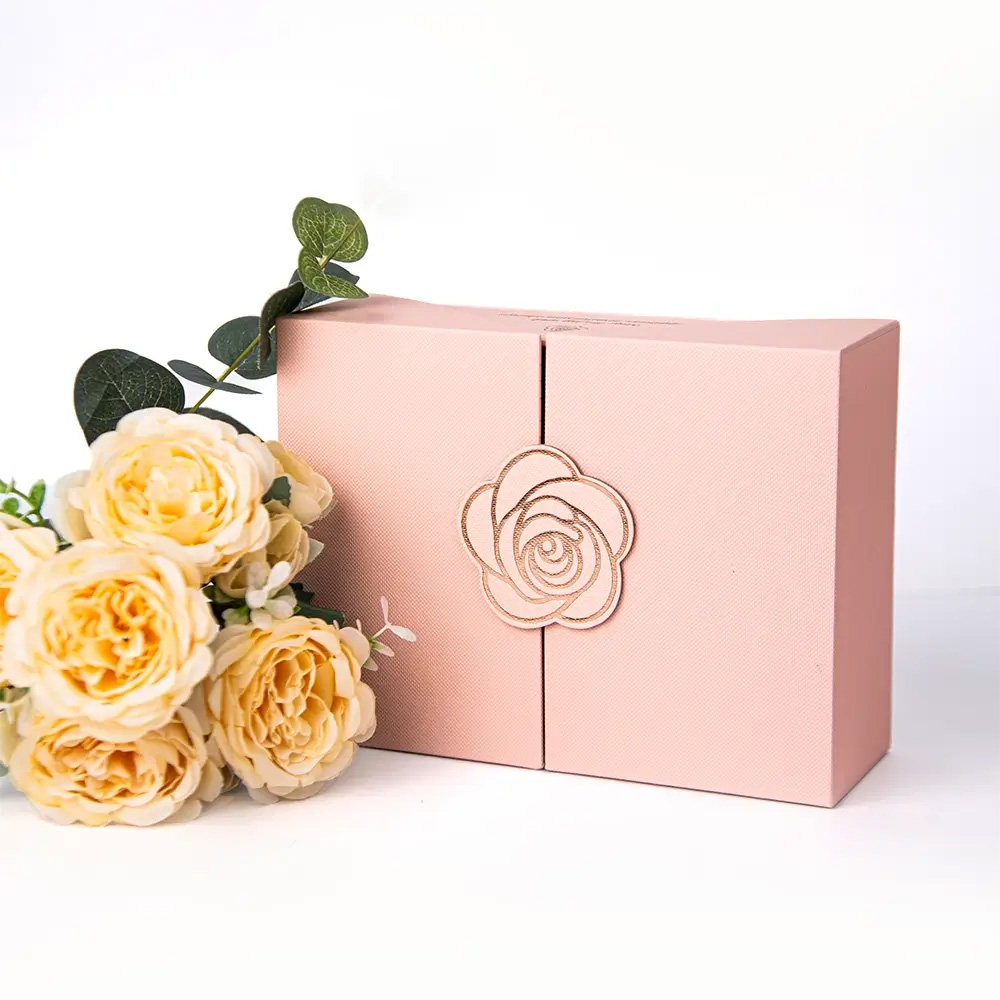
Cosmetics and jewelry packaging problems are specific. Glass breaks, jewelry abrades, unremarkable boxes discount the product, and regulation now constrains every material decision for the EU market. Each problem has a defined answer inside rigid box specifications: structure for handling, insert for retention, print and finishing for differentiation, and the ink–adhesive–fiber chain for compliance.
The order of operations that works is to name the problem first, then choose the structure, then design the insert, then decide print and finishing, and finally confirm the eco documentation. Behind that sequence are fixed, verifiable parameters: a MOQ of 500 pcs, a 12–18 day lead time, 100% quality check, and a manufacturer that has been producing custom packaging since 2010.
Next Step: Sample, Quote, or Catalog
Send your product dimensions, weight, target market, preferred structure, and insert requirement, and Opack will quote against the specification rather than a stock box.
Email: sales@opack.com | Tel: +86 17366633702 | WhatsApp: +86 15968809016
Download the full company profile and capability brochure: Opack Company Profile (PDF)
Official website: www.opack.com