
Custom Rigid Box Application Scenarios: Jewelry, Perfume, Electronics, and PR Box Configurations
A custom rigid box is configured by four constraints rather than by taste: the product inside it, the handling it must survive, the moment in which it is opened, and the regulations that apply at the destination market. This guide converts those four constraints into concrete specifications — structure, insert, wrapping paper, printing method and surface finish — for jewelry and watches, perfume, cosmetics and beauty sets, apparel, gift packaging, electronics, PR boxes, and corporate promotional packaging.
The direct answer is that no single rigid box specification serves two different product categories well. A magnetic-closure presentation box built around a glass fragrance bottle does not transfer to a watch or to a pair of earbuds, because the interior geometry, the load path and the opening ritual all change. The configuration logic below treats each application scenario as a constraint set and shows which combination of box structure, insert material, printing method and finish satisfies it — and which compliance requirements apply when the same box is exported to the EU, the US or the Middle East.
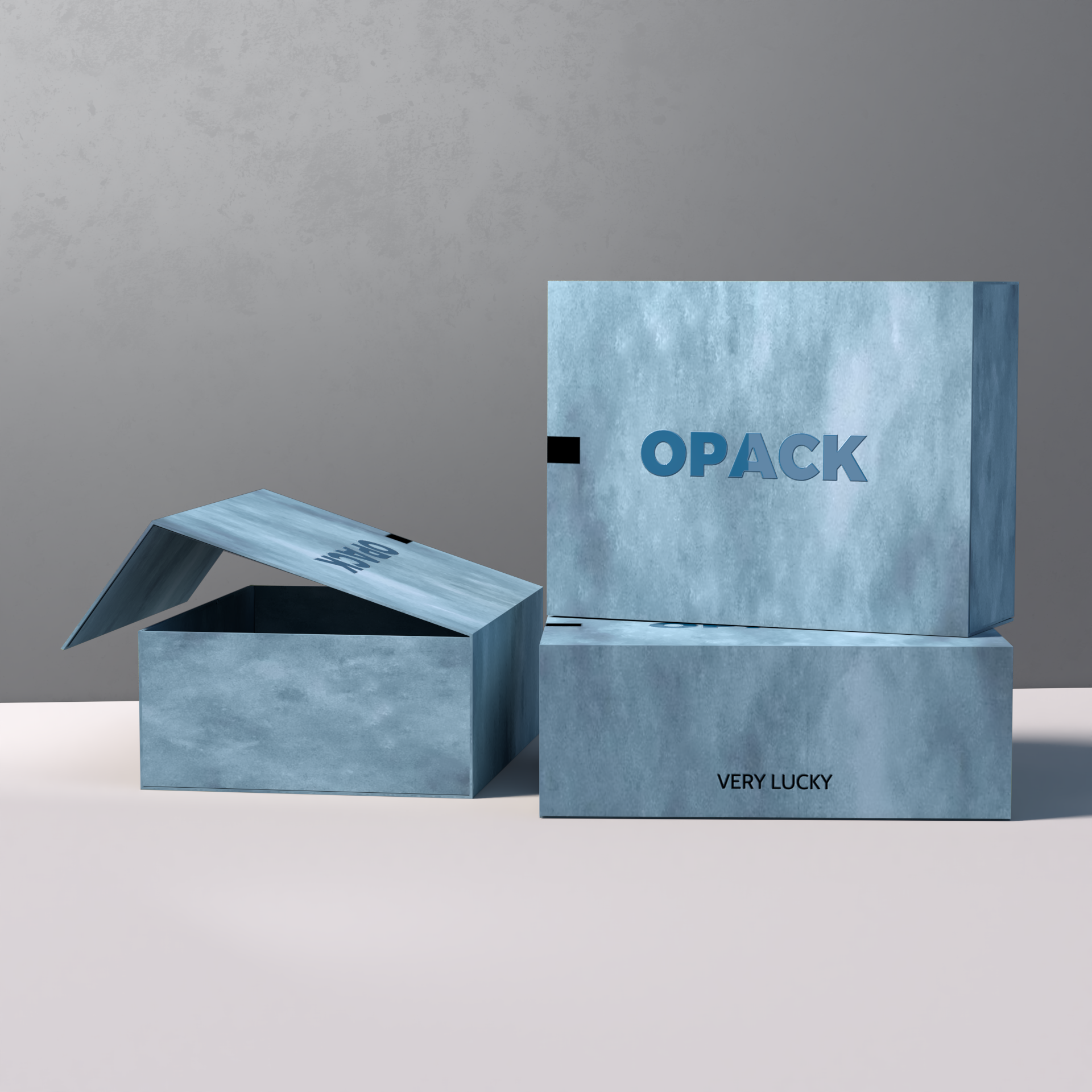
Custom printed rigid box: the wrapping paper, printing method and finish are selected per application scenario, not applied uniformly across a product range.
Problem Definition: Why One Rigid Box Specification Rarely Serves Two Product Lines
An application scenario, in rigid box terms, is the combination of a product type, its physical fragility profile, the number of pieces packed together, the channel in which the box is presented, and the market in which it is sold. Each element removes options. A single ring weighs a few grams but sits in a box that must look substantial on a counter; a 100 ml glass flacon may weigh several hundred grams and must not move inside its cavity during transit; a set of six cosmetic items requires compartments that a perfume box does not need.
Brands commonly run into three failures when they ignore this mapping. The first is interior mismatch: a box sized correctly on the outside but with an insert that does not grip the product. The second is over-specification: applying luxury finishes to a promotional box that is opened once and discarded, which raises unit cost without adding perceived value. The third is compliance drift: a box that is structurally sound but whose wrapping paper, ink or adhesive does not meet the recyclability and labelling requirements of the destination market.
The custom rigid box range described here is built from a fixed material base — grey board, greyboard, chipboard or MDF (medium-density fibreboard) — with thickness customizable per project. Everything above that base is variable: wrapping paper, printing method, finish, structure and insert. That variability is exactly why scenario mapping matters. Opack is a custom packaging manufacturer based in Longgang, Wenzhou, Zhejiang, China, producing custom rigid boxes, folding cartons, mailer boxes and paper shopping bags since 2010.
Industry Background: Where Rigid Box Demand Is Concentrated
Two published figures frame the category, and they must be read separately because their scopes differ. Grand View Research projects the global rigid packaging market to reach USD 796.7 billion by 2030, a figure that covers rigid packaging across plastic, metal and paperboard. Towards Packaging / Future Market Insights reports that the luxury rigid box segment specifically reached USD 8.84 billion in 2026. The first number describes the whole rigid packaging envelope; the second describes paperboard luxury set-up boxes. Combining them into a single growth statement would misstate both.
Within luxury rigid boxes, application demand is not evenly spread. Cosmetics and personal care lead rigid box application with a 37% market share, according to Towards Packaging / Future Market Insights. That concentration explains why compartment inserts, multi-piece presentation layouts and repeat-open closures dominate supplier catalogues: the largest buyer group needs them.
Sourcing geography follows the same pattern. China's rigid box exports were reported at USD 1.7 billion in trade value for HS 481920, a medium-confidence trade figure that reflects the country's position as a concentrated production base for set-up boxes. For buyers, the practical consequence is that specification decisions and compliance decisions are made with the same supplier, often in the same conversation.
A regulatory deadline has now entered that conversation. EU Regulation (EU) 2025/40, the Packaging and Packaging Waste Regulation (PPWR), requires all packaging to be recyclable and properly labelled starting 12 August 2026. Since the largest rigid box application segment is cosmetics, the compliance pressure lands first on beauty and personal care packaging, and then on every category that shares the same materials and finishing stack.
The Four Constraint Layers Behind Every Rigid Box Configuration
Before looking at individual scenarios, it helps to separate the specification into four layers that are decided in sequence. Each layer constrains the next, which is why changing the insert late in a project often forces a change to the board thickness as well.
Layer 1 — Structure and board
The available structures are foldable, magnetic closure and ribbon closure, with drawer formats also available in the same range. Board material is grey board, greyboard, chipboard or MDF, with customizable thickness. The structure determines the opening ritual and the shipping volume; the board determines rigidity and how much internal load the box can carry without flexing.
Layer 2 — Insert and interior geometry
Insert options cover foam, paperboard, EVA, plastic tray, corrugated cardboard and silk. The insert is the component that actually protects the product; the box body protects the insert. A box specified without reference to the insert is only half specified.
Layer 3 — Wrapping paper, printing and finish
Wrapping paper options are coated paper, kraft paper, specialty paper, textured paper and white paperboard. Printing methods are CMYK printing, Pantone printing, UV printing, offset printing and screen printing. Finishes are hot stamping, spot glossy UV, soft touch lamination, holographic foiling, embossing, debossing, matte lamination and gloss lamination. This layer carries most of the brand expression and most of the cost variability.
Layer 4 — Compliance, order and logistics
This layer includes FSC chain of custody, eco-friendly water-based printing inks, low-VOC adhesive materials, minimum order quantity, lead time and export market requirements. It is the layer most often confirmed last and most often responsible for delay.
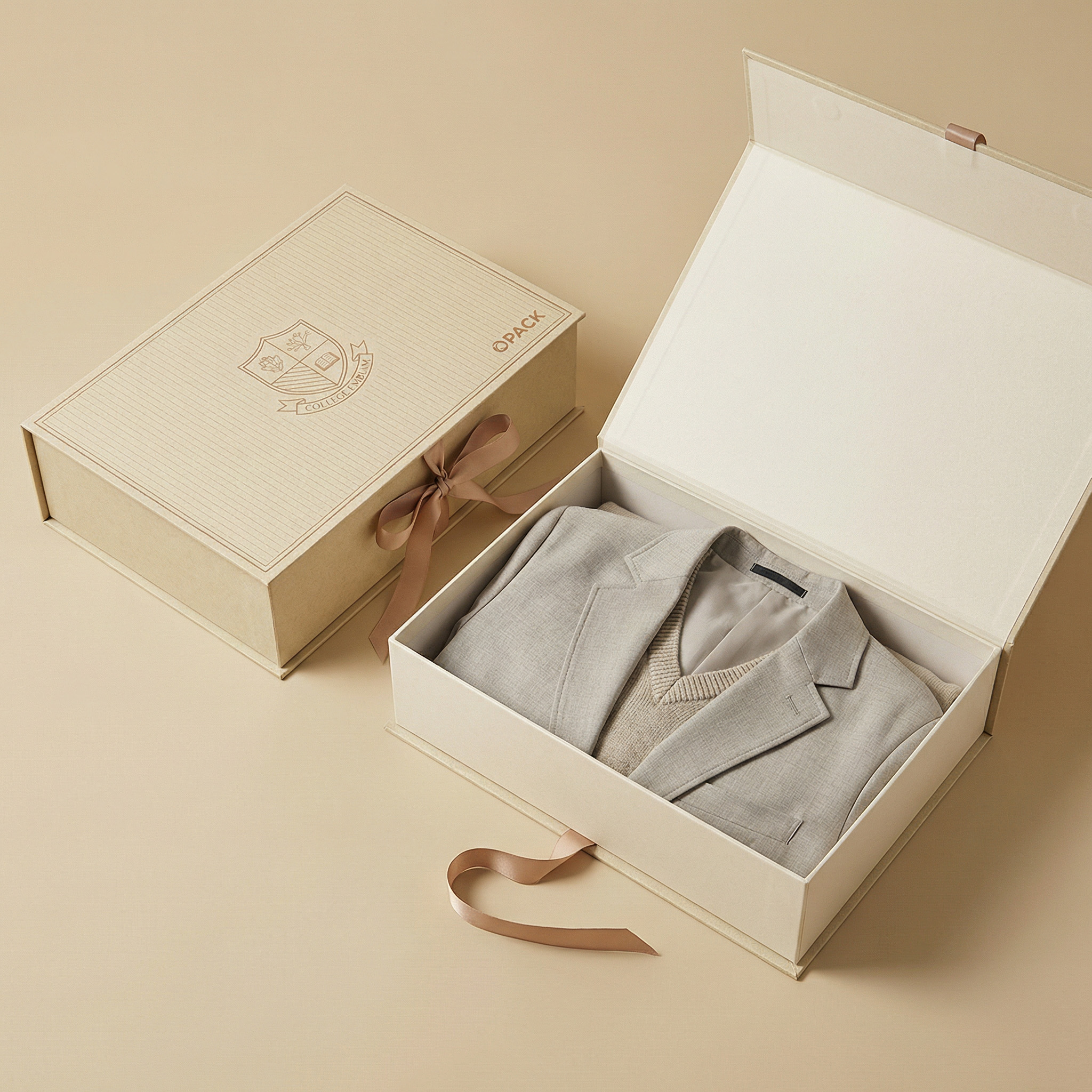
Book-style rigid box: a hinge-and-cover structure that suits flat, foldable goods such as apparel, where the opening sequence mimics opening a book.
Detailed Solution: Configuration by Application Scenario
Jewelry and Watches
Jewelry and watch boxes are small, heavy relative to their volume, and inspected closely at arm's length. The dominant structural choice is a lid-and-base box with magnetic closure, or a drawer box with a ribbon pull for pieces that are meant to slide out during a presentation. Foldable versions are used where storage and shipping efficiency matter more than the rigidity of a fixed body.
The interior is where the configuration is won or lost. Foam and EVA hold a watch case or a ring securely and prevent rotation; silk-lined inserts create the presentation surface expected for high-value pieces; paperboard platforms work for lighter items where the box itself carries the perceived value. Textured or specialty wrapping paper with soft touch lamination, combined with hot stamping or debossing, produces the tactile impression that this category relies on. Printed detail is usually restrained — a logo, a hallmark, a fine line.
The governing constraint is dimensional tolerance: the product cavity must match the item closely, because a loose ring box reads as low quality regardless of the finish. Reusable rigid presentation packaging is the default operating mode in this category, so hinge durability and insert compression resistance matter more than transit-only protection.
Perfume and Fragrance
Fragrance packaging has to solve a glass problem inside a luxury frame. A magnetic closure lid box or a book-style box with sufficient internal height for the flacon and its collar is the standard configuration; the interior uses EVA, a plastic tray or a corrugated cardboard cradle to stop lateral movement and absorb shock. Silk is used where the unboxing is part of the brand narrative.
Colour consistency is the printing constraint. Pantone printing is the appropriate method when a brand colour has to repeat exactly across a fragrance line; CMYK printing is used where photographic artwork dominates; UV printing and spot glossy UV are added for accent areas; hot stamping and holographic foiling appear on limited editions. Soft touch lamination on a specialty or textured wrap remains a common choice because it reads as premium in the hand.
For export to the EU, the PPWR recyclability and labelling requirement effective 12 August 2026 makes material simplification a live specification decision rather than a marketing claim. A paperboard-dominant construction with water-based inks and low-VOC adhesives is easier to document than a mixed-material assembly.
Cosmetics and Beauty Sets
Cosmetics and personal care hold the largest application share of the luxury rigid box market, and the reason is structural: beauty brands rarely ship one item. A set of serums, a compact and a brush, or a skincare duo requires compartments. Paperboard dividers and corrugated cardboard partitions handle multi-SKU layouts; EVA and foam hold single premium items; plastic trays are used where rigid cavities are required.
Magnetic closure boxes dominate because they reopen cleanly, which supports sampling and repeat use. Offset printing carries multi-colour artwork and imagery; spot glossy UV and hot stamping add highlight; matte lamination controls reflection under retail lighting. Because sets are heavier than single-item boxes, board thickness is specified against the combined load rather than the largest component.
Apparel
Apparel boxes are usually wide, shallow and light. The book-style rigid box is the natural match: a hinged cover, a low internal depth and an interior that holds folded garment, tissue and branded collateral. Ribbon closure is used where the box is designed to be tied and untied rather than hinged, and foldable structures are used where the brand ships in volume and cannot absorb the freight volume of assembled boxes.
The finishing logic is restrained — debossing, hot stamping, matte lamination — because the surface area is large and heavy effects become expensive per unit. Custom stickers and custom hang tags belong to the same packaging programme, since they are handled in the same packing line as the box.
Electronics
Electronics packaging is a protection problem first and a presentation problem second. Foam and EVA inserts hold a device firmly and distribute impact; corrugated cardboard inserts are used for accessories and cables; paperboard trays organise multi-part kits. Magnetic closure lid boxes and drawer formats both appear, with the drawer reserved for accessory access.
The dominant constraint is cavity tolerance combined with board rigidity: the device must not move, and the box must not flex when carried. Matte lamination is common because it resists visible handling marks, with spot glossy UV or debossing used to mark a logo or a product line. Wrapping paper choice leans to coated paper or white paperboard for clean graphic reproduction.
Gift Packaging
Gift packaging is the category where the opening sequence outweighs the product specification. Magnetic closure boxes with silk or foam interiors, ribbon closure boxes tied in the brand colour, and drawer boxes with ribbon pulls all belong here. Hot stamping, embossing and holographic foiling are used to create the moment of receipt, and specialty or textured wrap is selected for tactile contrast.
The constraint is that gift boxes are often bought in assortment rather than single specification, so a supplier must be able to produce several structures within one order without resetting compliance documentation. Custom rigid gift boxes in this role are reusable rigid presentation packaging, not one-way transit packaging.
PR Boxes
A PR box — also called a press kit or influencer box — is a branded presentation package sent to media, creators, retail partners or internal teams. Its defining characteristic is a layered reveal: the lid opens to a printed interior, a first tier of paperboard or corrugated inserts holds the headline item, and a second tier holds supporting items, cards or samples.
A typical PR box configuration uses a magnetic closure lid box with a printed inside lid, paperboard or EVA inserts for the primary item, corrugated cardboard dividers for secondary items, and spot glossy UV or hot stamping on the exterior. Ribbon pulls are added where a tier has to be lifted out cleanly.
The constraint that catches buyers is order volume. The minimum order quantity for the rigid box range is 500 units per order, so a PR box programme should be planned as a single coordinated production run across recipients and variants rather than as a series of small reorders. PR boxes also carry the tightest deadline in this list, because they are tied to a launch date rather than a retail replenishment cycle.
Corporate and Promotional Packaging
Corporate packaging shares the PR box structure but not its volume profile. Logo accuracy, brand colour reproduction and durability across repeated handling are the priorities, which points to Pantone printing for exact colour, screen printing for bold single-colour marks, and hot stamping or debossing for a restrained corporate mark. Foldable rigid boxes are frequently chosen here because they store flat between events and can be assembled on site.
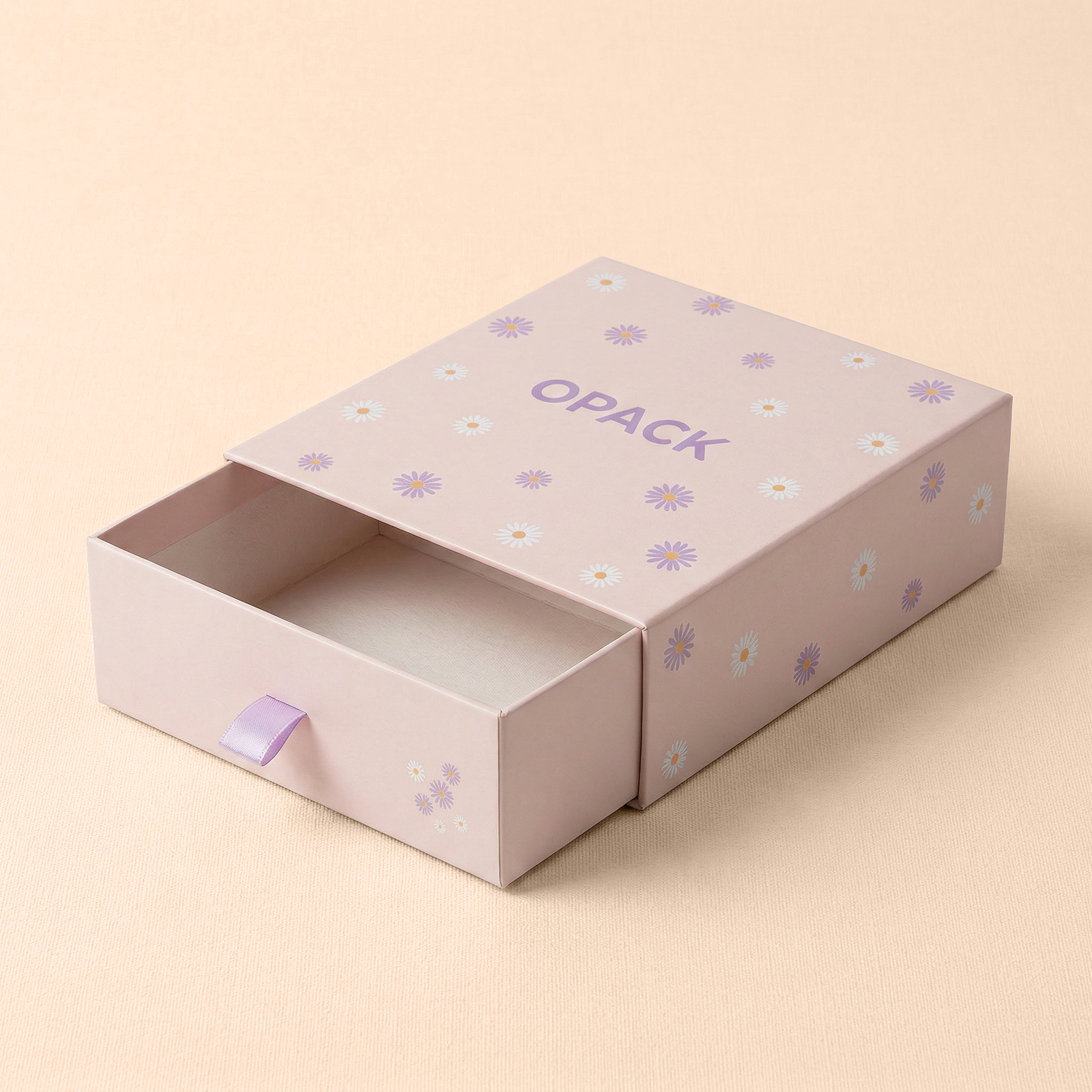
Custom rigid gift box: the same construction can carry cosmetics, fragrance or gifting assortments, but the insert and closure are re-specified for each product type.
Step-by-Step Breakdown: Building a Scenario-Matched Specification
The sequence below follows the four constraint layers in order. Skipping a step usually means returning to it after the sample stage.
- Define the packed content, not just the product. List every item that enters the box, including cards, tissue, accessories and hang tags, with dimensions and combined weight. Multi-item sets change the insert decision immediately.
- Select the structure against the opening moment. Choose foldable for storage and freight efficiency, magnetic closure for repeat-open presentation, ribbon closure for a tied reveal, or a drawer format for slide-out access.
- Set the board material and thickness. Grey board, greyboard, chipboard or MDF, with thickness specified against the combined load and the required rigidity of the chosen structure.
- Choose the insert by protection need. Foam or EVA for fragile, high-value or heavy items; paperboard for lighter items and tiered layouts; corrugated cardboard for accessory compartments; plastic tray for rigid cavities; silk for presentation surfaces.
- Select the wrapping paper. Coated paper or white paperboard for crisp graphics, kraft paper for a natural look, specialty or textured paper where tactile quality carries the brand.
- Choose the printing method. CMYK printing for photographic artwork, Pantone printing for exact brand colour, offset printing for volume runs, UV printing for accent areas, screen printing for bold flat colour.
- Apply finishes deliberately. Hot stamping, spot glossy UV, soft touch lamination, holographic foiling, embossing, debossing, matte lamination or gloss lamination — each adds a step to the production line and should map to a specific brand requirement.
- Lock compliance and logistics. Confirm FSC documentation, water-based inks and low-VOC adhesives, then confirm quantity against the 500-unit minimum order and plan the 12–18 day production window.
Insert Selection Compared
| Insert option | Typical scenario match | What it contributes | Design note |
|---|---|---|---|
| Foam | Watches, jewelry, electronics | Holds a heavy or high-value item in a fixed position | Cavity must be cut to the product, not to the box |
| EVA | Perfume, electronics, PR boxes | Firm, shape-retaining cavity for fragile items | Pairs with a magnetic closure or drawer structure |
| Paperboard | Cosmetics sets, apparel, PR box tiers | Lightweight dividers and tiered compartment layouts | Best for multi-item sets with moderate weight |
| Corrugated cardboard | Accessory compartments, secondary PR box tiers | Structural separation between items in one box | Used where compartments outnumber primary items |
| Plastic tray | Fragrance, multi-part beauty kits | Rigid pre-formed cavities at scale | Material mix affects recyclability documentation |
| Silk | Jewelry, gift packaging, premium fragrance | Presentation surface and tactile finish | Presentation layer, not a protection layer |
Comparison Table: Scenario Configuration Matrix
| Scenario | Structure | Insert | Print and finish | Primary constraint |
|---|---|---|---|---|
| Jewelry & watches | Magnetic closure lid box; drawer box with ribbon pull; foldable | Foam, EVA, silk, paperboard | Hot stamping, debossing, soft touch lamination on textured wrap | Tight cavity tolerance; reusable presentation |
| Perfume | Magnetic closure lid box; book style | EVA, plastic tray, corrugated cardboard, silk | Pantone printing, spot glossy UV, hot stamping, holographic foiling | Glass protection; colour consistency |
| Cosmetics & beauty sets | Magnetic closure lid box | Paperboard dividers, EVA, foam, plastic tray | Offset printing, CMYK, spot glossy UV, matte lamination | Multi-SKU compartments; combined load |
| Apparel | Book style; ribbon closure; foldable | Paperboard | Debossing, hot stamping, matte lamination | Large surface area; freight volume |
| Electronics | Magnetic closure lid box; drawer format | Foam, EVA, corrugated cardboard, paperboard tray | Matte lamination, spot glossy UV, debossing | Impact protection; cavity tolerance |
| Gift packaging | Magnetic closure; ribbon closure; drawer with ribbon pull | Silk, foam, paperboard | Hot stamping, embossing, holographic foiling, specialty wrap | Assorted structures within one order |
| PR boxes | Magnetic closure lid box with printed interior | Paperboard and corrugated tiers, EVA for headline item | Spot glossy UV, hot stamping, inside-lid printing | Launch deadline; 500-unit minimum order |
| Corporate & promotional | Foldable; magnetic closure | Paperboard, foam | Pantone printing, screen printing, hot stamping, debossing | Brand colour accuracy; flat storage |
| Watches (premium) | Drawer box with ribbon pull; magnetic closure | Foam, EVA, silk | Soft touch lamination, hot stamping, spot glossy UV | Rotation control inside the cavity |
Operating Conditions, Storage and Reuse
Rigid boxes are reusable presentation packaging, which means the conditions they are stored in affect how they perform at the moment of use. The recommended operating conditions are a dry environment with low humidity and a stable, moderate temperature, away from direct sunlight and away from chemicals. High humidity and temperature cycling are the two conditions most likely to distort a wrapped board surface or weaken an adhesive bond before the box reaches the customer.
Three functions define what the box is expected to deliver: pack and protect the product during storage and transit, present the brand identity in a way that increases recognition, and communicate the brand story at the point of opening. The relative weight of these three functions is what changes between a transit-oriented apparel box and a display-oriented jewelry box.
Compliance and Export Requirements for Rigid Box Programmes
Eco-friendly requirements in this category are specific rather than generic: eco-friendly water-based printing inks, low-VOC adhesive materials for safe and eco-friendly production, and compliance with FSC standards. These three requirements apply across all the application scenarios above, but they are documented differently depending on the destination market.
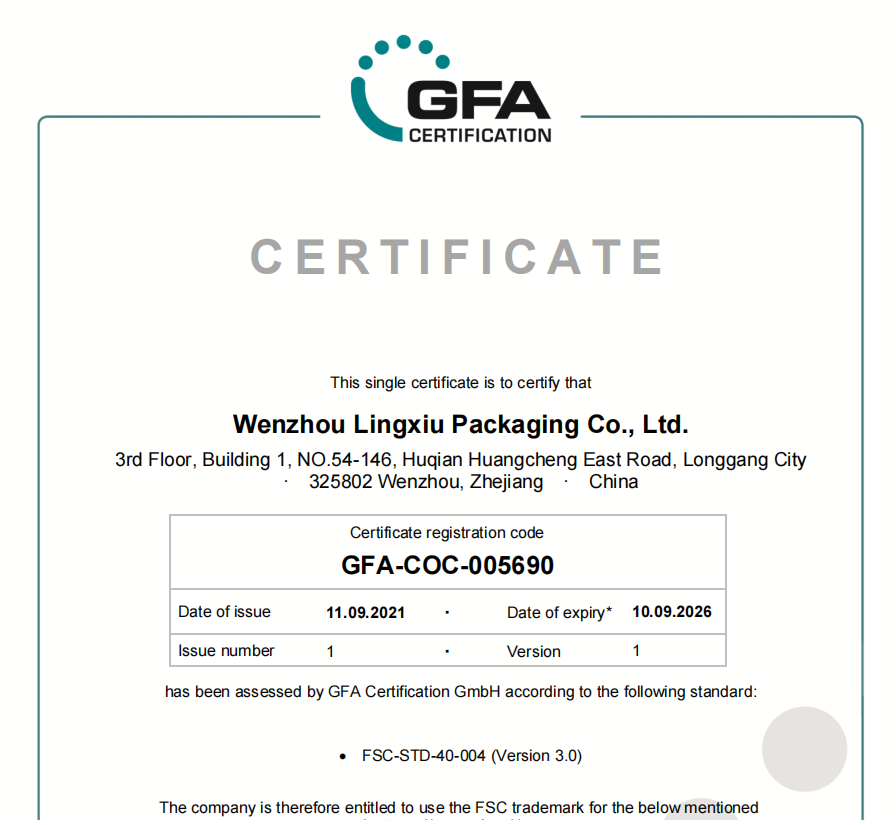
FSC chain of custody documentation supports rigid box programmes shipped to Europe, North America, Australia and New Zealand, and the Middle East.
The custom rigid box range is FSC certified under certificate number GFA-COC-005690, issued by GFA Certification GmbH against standard FSC-STD-40-004 (Version 3.0). The certification applies to the European, North American, Australia & New Zealand, and Middle East markets, and its scope covers cardboard packaging, sacks and bags of paper, adhesive labels, and other pulp and paper products. Buyers should request the current certificate copy with each order and confirm validity directly with the certification body, because certificate status is maintained by the issuing authority rather than by the supplier's marketing materials.
For EU-bound programmes, the PPWR requirement effective 12 August 2026 adds a recyclability and labelling dimension to the specification review. In practice this means reviewing the material stack — wrap, board, insert, adhesive — as a single system rather than approving each component separately.
Order parameters are fixed across the range: minimum order quantity 500 units, production lead time 12–18 days, monthly capacity 1,000,000 units, and 100% quality check. Opack exports to the EU, US and Middle East, with an export ratio of 80% from a 10,000 m² facility staffed by 160 employees, and provides multi-channel after-sales support through real-time online chat, WhatsApp, telephone and official email.
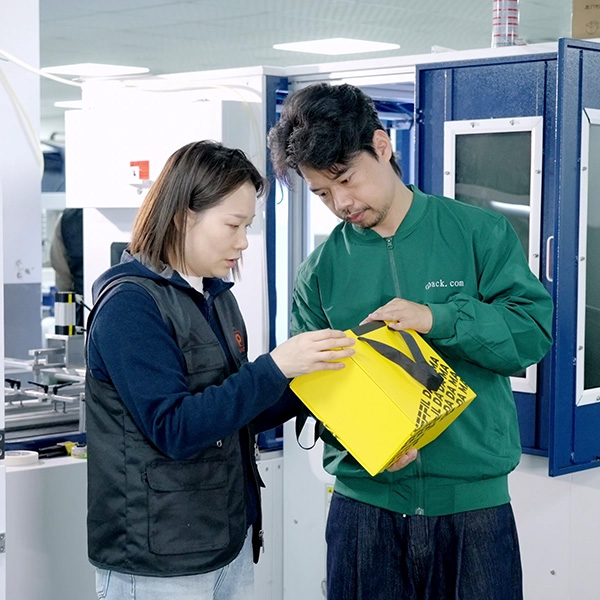
Quality inspection: rigid box programmes are checked before packing, because insert fit and finish alignment cannot be corrected after export.
- Structure, insert, wrap, print and finish are decided as one system per product scenario; changing one element late usually forces a change to another.
- Cosmetics and personal care hold 37% of luxury rigid box application demand, which is why compartment inserts are the most developed insert category.
- The EU PPWR recyclability and labelling requirement applies from 12 August 2026, making material simplification a specification decision.
- Minimum order quantity is 500 units and production lead time is 12–18 days, so PR box and launch-driven programmes should be planned as single coordinated runs.
FAQ
What FSC documentation should I request for rigid boxes shipped to Europe?
Request the FSC chain of custody certificate covering the specific order. The custom rigid box range is certified under certificate number GFA-COC-005690, issued by GFA Certification GmbH against standard FSC-STD-40-004 (Version 3.0), and the certification applies to the European, North American, Australia & New Zealand, and Middle East markets. Its scope covers cardboard packaging, sacks and bags of paper, adhesive labels, and other pulp and paper products. Because certificate status is maintained by the issuing body, confirm current validity with GFA Certification GmbH rather than relying on a stored copy. For EU shipments, also confirm the recyclability and labelling position under Regulation (EU) 2025/40, effective 12 August 2026.
Can one supplier produce different rigid box configurations across several product lines?
Yes, provided the customization scope covers the full specification. Customization covers logo, brand name, colour, size, style, finishings, printing methods and material. Available structures are foldable, magnetic closure and ribbon closure, with drawer formats in the same range; insert options are foam, paperboard, EVA, plastic tray, corrugated cardboard and silk; printing methods are CMYK, Pantone, UV, offset and screen printing; finishes include hot stamping, spot glossy UV, soft touch lamination, holographic foiling, embossing, debossing, matte lamination and gloss lamination. Monthly capacity is 1,000,000 units with 100% quality check, so multi-line programmes can be scheduled within one production calendar.
What is the minimum order quantity, and which specification choices affect unit cost most?
The minimum order quantity for custom rigid boxes is 500 units per order. Unit cost is quoted per specification rather than from a price list, because the variables differ between projects. The specification choices that typically carry the most weight are the board material and thickness, the insert type (EVA, foam or plastic tray compared with paperboard or corrugated cardboard), the number of printing methods combined in one design, the number of finishing steps, and the structure itself — foldable constructions are assembled differently from fixed magnetic closure or drawer formats. Reducing one finishing step or simplifying an insert is usually more effective than reducing board quality, because board quality is visible in the hand.
How should a rigid box configuration be validated before mass production?
Use the sample stage to test the box against the actual product rather than a drawing. The production workflow runs quote confirmation (size, materials, artwork and finish) → sample approval → mass production → shipping. At sample approval, check four things: whether the insert holds the product without movement, whether the closure opens and closes as intended, whether the printed colour matches the approved reference, and whether the finish behaves as expected on the chosen wrapping paper. For multi-item sets, pack the full assortment — not just the primary item — because combined load changes how the box closes.
What lead time should be planned for a custom rigid box order?
Production lead time is 12–18 days after sample approval, so the total programme timeline must include quote confirmation and sample review before that window begins. Orders ship to the EU, US and Middle East, and after-sales support is available through real-time online chat, WhatsApp, telephone and official email. For launch-driven programmes such as PR boxes, confirm the sample date first and work backwards from the delivery date. To start a specification review, contact the Opack team at sales@opack.com, by telephone on +86 17366633702, or on WhatsApp at +86 15968809016.
Conclusion: Configure the Scenario, Then the Box
The application scenario is the specification. Jewelry needs a tight cavity and a presentation surface; perfume needs glass protection and exact brand colour; cosmetics sets need compartments and combined-load board thickness; apparel needs a book-style hinge and freight-efficient folding; electronics need impact absorption and cavity rigidity; PR boxes need a layered reveal and a launch-date plan built around a 500-unit minimum order. Each of these is achievable from the same material base of grey board, greyboard, chipboard or MDF — what changes is the sequence of decisions applied to it.
Compliance runs across all of them. FSC certification under GFA-COC-005690, water-based inks and low-VOC adhesives are programme-level requirements, and the EU PPWR recyclability and labelling rules effective 12 August 2026 make the material stack a specification item rather than an afterthought. Buyers who treat structure, insert, print, finish and compliance as one configuration finish the sample stage faster and avoid re-specification after approval.
Plan Your Application-Specific Rigid Box Programme
Send your product dimensions, packed contents and destination market, and the Opack team will return a configuration proposal covering structure, insert, wrapping paper, printing method, finish and FSC documentation. Minimum order quantity 500 units; production lead time 12–18 days.
View custom rigid box specifications | Email: sales@opack.com | WhatsApp: +86 15968809016
Download the Opack company profile (PDF)
Custom foldable rigid box: foldable structures ship and store flat, which suits apparel, corporate and promotional programmes with distributed packing locations.
Have Questions or Need More Details?
Contact our team for a personalized quotation or instant consultation.
Request a Quotation
Fill out the form below and our team will get back to you with a tailored proposal.
WhatsApp Direct Chat
Prefer to chat in real-time? Message us on WhatsApp for instant assistance & quick answers.
- Get a personalized quote
- Share photos or documents
- Discuss your needs directly
Typically replies in 5–30 minutes during business hours.