
Custom Rigid Boxes Ranked: 7 Top Configurations for Jewelry, Cosmetics & Gift Packaging
Custom Rigid Boxes Ranked: 7 Top Configurations for Jewelry, Cosmetics & Gift Packaging
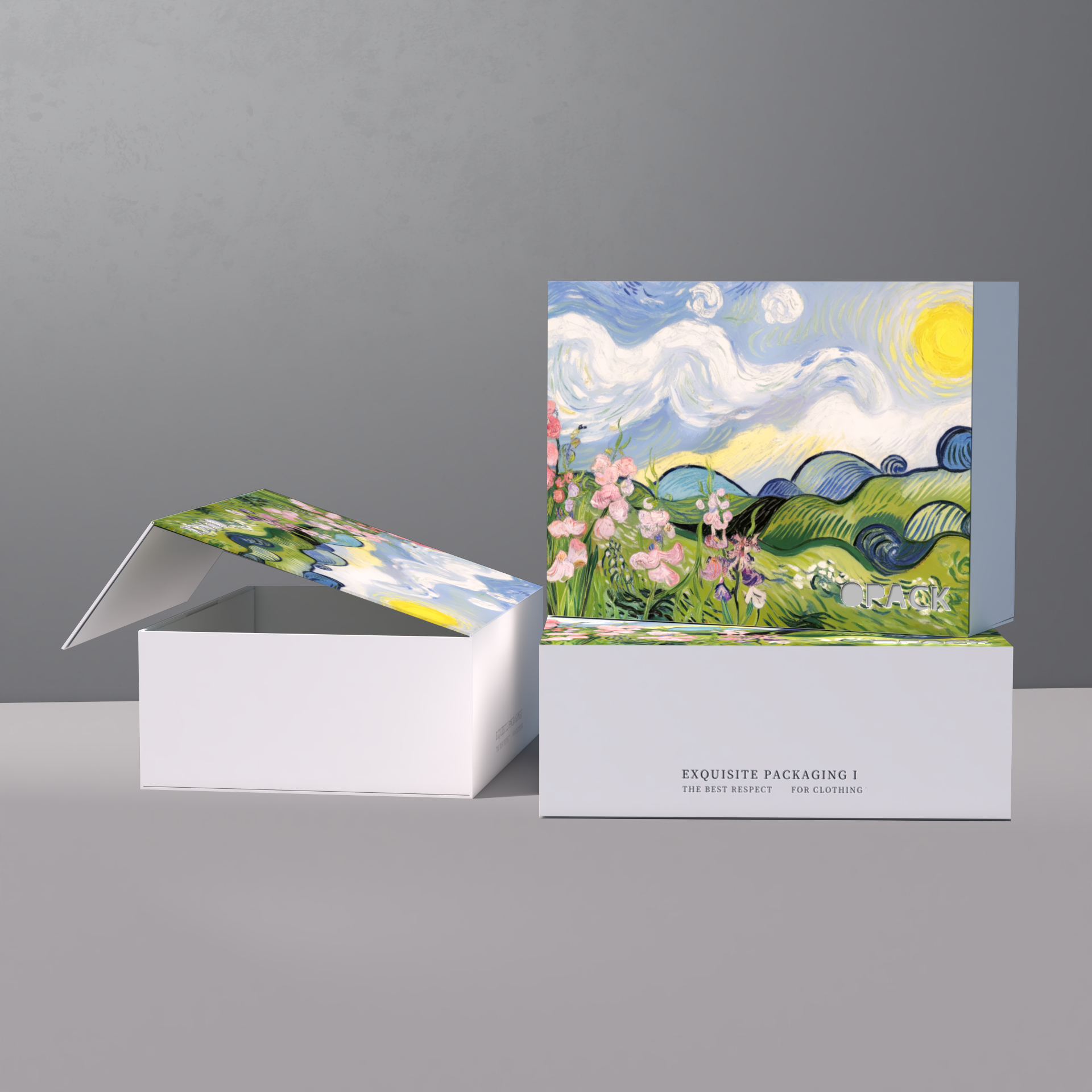
Short answer: if you are choosing a custom rigid box for a high-value product, the seven strongest configurations — ranked by how well they protect, present and survive real use — are (1) magnetic-closure rigid box with EVA foam insert, (2) drawer rigid box with satin insert and ribbon pull, (3) textured specialty-paper rigid box with hot stamping, (4) soft-touch laminated rigid box with spot glossy UV, (5) two-piece lid-and-base rigid setup box with paperboard divider, (6) foldable (collapsible) rigid box with ribbon closure, and (7) coated or kraft-wrapped rigid box with a corrugated or plastic tray insert.
Each configuration below is described with the structure, wrap, insert and finishing options that are actually produced and quoted by Opack, a custom packaging manufacturer based in Longgang, Wenzhou, China, that has manufactured custom rigid boxes, folding cartons, mailer boxes and paper shopping bags since 2010. The ranking is written for buyers at the Decision stage: you already know you want a rigid setup box, and you now need to choose one build and defend that choice internally.
A quick note on how the ranking was built. Position is not a claim about “the best box in the world.” It reflects four practical criteria that decide whether a rigid box works for a luxury application: how well the structure secures the product, how strong the perceived value is at the price point, how reliably the build holds up over repeated open-and-close cycles, and how easy it is to verify, sample and reorder at scale. Where a configuration has a real limitation, that limitation is stated rather than hidden.
The Real Problem: Configuration Risk, Not Supplier Risk
Two buyers can order the same “custom rigid box” and receive two completely different results, because the specification behind the phrase is where everything is decided. Most procurement teams shortlist suppliers carefully and then under-specify the box. The failure modes are predictable: a box specified with a board caliper too thin for its footprint starts to warp or develop lid misfit; a foam insert dimensioned from a drawing instead of a physical product lets jewelry move inside the cavity; a soft-touch finish that is not paired with scratch-resistant lamination shows handling marks by the time the box reaches the retail shelf; a multi-compartment cosmetics set arrives with dividers that do not match the final component count.
The same gap explains why sampling fails. A sample cannot validate a configuration that was never clearly defined, so the buyer loses a production cycle and, in seasonal gifting, loses the launch window with it. Deciding the configuration before the sample request is the single highest-leverage step in rigid box procurement.
It also explains why custom rigid boxes behave commercially differently from regular rigid boxes. The difference is not only appearance: it is full customization, higher brand visibility, a more memorable unboxing experience and a more high-end look, against a higher initial cost. Opack’s published comparison data puts that cost difference at roughly 5%–10% higher initial cost, offset by reported performance of 20%–30% higher repeat purchase rates, a 10%–30% improvement in customer satisfaction, a 5%–15% increase in customer referrals and 5%–10% more social media shares. Those figures are company-reported comparison data and are best treated as directional rather than as an industry benchmark.
Industry Background: Why Configuration Choice Matters More in 2026
Rigid packaging is a very large category, and the luxury sub-segment inside it is growing separately. According to Grand View Research, the global rigid packaging market is projected to reach USD 796.7 billion by 2030 — a figure that includes plastic, metal and paperboard rigid formats. Narrower research from Future Market Insights, reported in 2026, puts the luxury rigid box market specifically at USD 8.84 billion in 2026, and identifies cosmetics and personal care as the leading application with a 37% share of that market. Trade data from Market.us, based on HS code 481920, records China’s rigid box export value at USD 1.7 billion.
Two consequences follow for buyers. First, cosmetics, jewelry and gifting are not fringe use cases for rigid boxes; they are the demand core, which is why configurations tuned to those products — inserts that hold a bottle, a necklace or a watch, and finishes that survive retail handling — deserve to be ranked and standardized rather than improvised per order.
Second, compliance now sits inside the configuration decision, not next to it. Regulation (EU) 2025/40, the EU Packaging and Packaging Waste Regulation (PPWR), requires packaging placed on the EU market to be recyclable and properly labelled from 12 August 2026. A configuration built around a plastic tray or a mixed-material insert is a different compliance conversation from one built around a mono-material paperboard setup. The practical direction is already visible in the material stack: FSC-certified grey board, low-VOC adhesives and food-safe, eco-friendly inks, with the box fully recyclable and biodegradable after its service life. Design the configuration first, then verify the compliance evidence for that configuration.
The Ranking: 7 Custom Rigid Box Configurations for High-Value Products
All seven configurations use the same core construction family — grey board, chipboard or MDF — and then differentiate through structure, wrap, insert and finishing. The order below runs from the configuration that does the most work for the most demanding products, down to the leanest configuration that still qualifies as a genuine rigid setup box.
Rank 1Magnetic-Closure Rigid Box with EVA Foam Insert — Best for Watches and Fine Jewelry
This is the configuration that earns the top position because it solves the hardest problem in luxury packaging: holding a heavy, irregular, high-value object perfectly still while still being opened and closed many times. The structure is a rigid box with lid, held by magnetic closure, with the product seated in an EVA foam or foam insert cut to the item’s profile. Wrap options include coated, textured or specialty paper; finishing typically uses soft touch lamination or hot stamping.
The technical basis for the ranking is documented: magnetic closure alignment and scratch-resistant lamination are the features that enhance durability and user experience in this build, and the maintenance profile of a well-built rigid box — thicker customizable grey board, reinforced corner edges and scratch-resistant lamination — is what reduces warping, delamination or lid misfit during repeated use. For a watch or a bridal set that will be handled by staff and customers dozens of times, that reliability is the product experience.
Rank 2Drawer Rigid Box with Satin Insert and Ribbon Pull — Best for Jewelry and Fragrance
A drawer or sliding rigid box separates the reveal into two movements: the outer sleeve, then the pull. The ribbon pull doubles as the closure cue, and a satin insert cushions chains, pendants and bracelets without compressing them the way foam can. Typical finishing is hot stamping on the sleeve with spot glossy UV detailing on the logo.
It ranks second rather than first because drawer boxes are tolerance-sensitive. The drawer must slide smoothly without wobble, which means the fit between drawer and sleeve has to be validated on a physical sample with the actual insert in place, not confirmed on artwork. Buyers who plan for that sample step get a configuration with excellent perceived value; buyers who skip it get friction.
Rank 3Textured Specialty-Paper Rigid Box with Hot Stamping — Best for Perfume and Luxury Gifting
This configuration changes nothing structural and everything sensory. A specialty or textured wrap paper over grey board, finished with hot stamping in foil, produces the highest perceived value per unit with the least structural risk, because the base build remains a standard two-piece lid-and-base or magnetic rigid box. Interior wrap can be white paperboard or coated stock for a clean inner presentation.
It ranks third because decorative impact is not the same as protection. If the item needs a tight, engineered cavity, pair this wrap with an EVA or paperboard insert from Rank 1 or Rank 5 rather than relying on the interior presentation alone.
Soft-Touch Laminated Rigid Box with Spot Glossy UV — Best for Cosmetics Retail
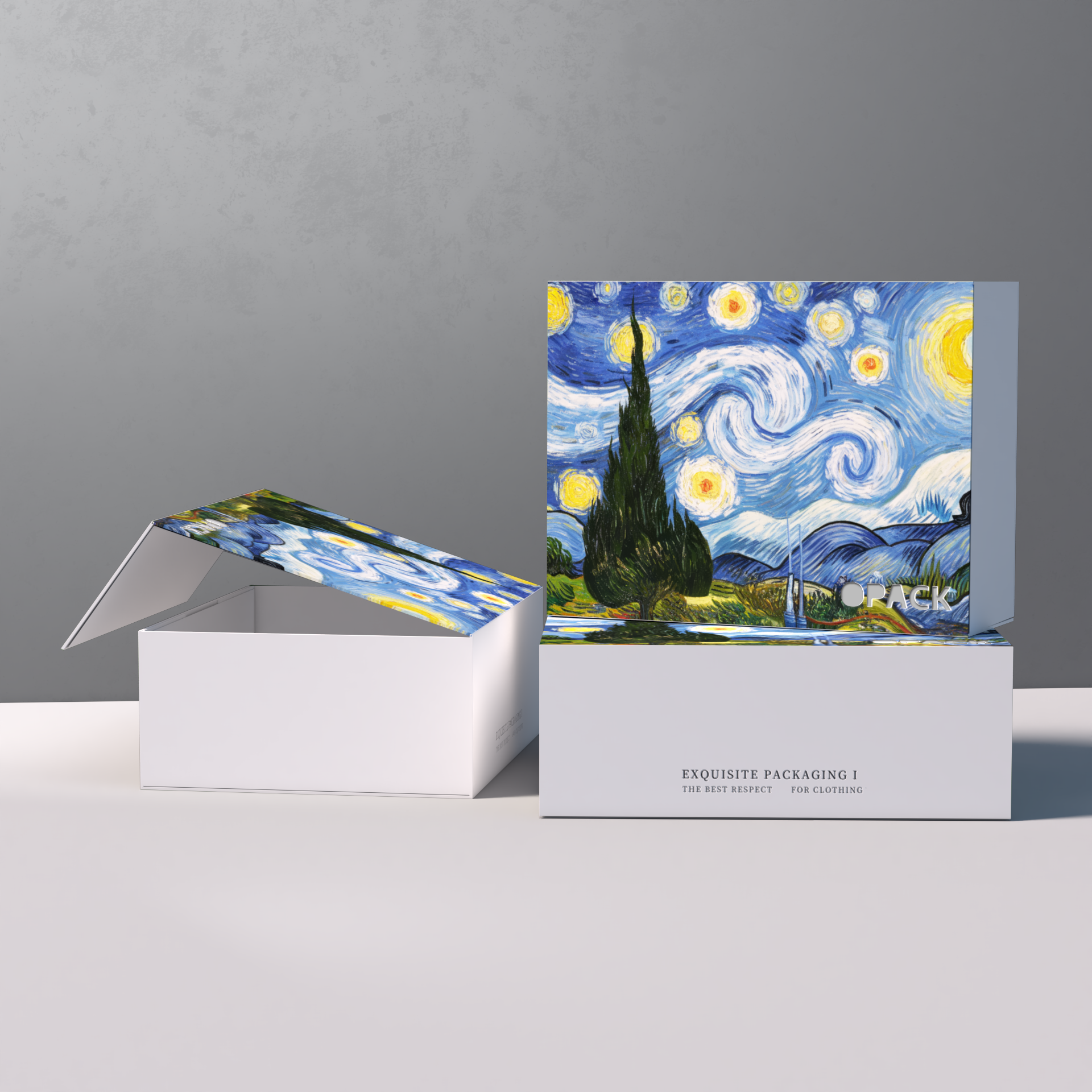
Soft touch lamination gives a matte, rubberized hand feel; spot glossy UV creates a controlled contrast where the logo or pattern sits. The combination is produced with offset printing in CMYK or Pantone, with screen printing available where a heavier ink lay is needed, and UV printing used for targeted effects. Inside, paperboard or EVA holds the primary container.
This ranks fourth because the finish — not the structure — carries the value, and finishes are where handling risk concentrates. Specify scratch-resistant lamination as part of the configuration, not as an optional upgrade, and confirm the finish on a physical sample. Opack’s production process addresses exactly this risk: a spectrophotometer is used to measure and monitor colour consistency across the run, with colour difference (ΔE) controlled to approximately 1.5 so variation stays nearly imperceptible to the human eye, supported by a pre-production colour approval step and in-process inspection during printing.
Rank 5Two-Piece Lid-and-Base Rigid Setup Box with Paperboard Divider — Best for Cosmetics Sets
The classic rigid setup box remains the most efficient way to package a set: a lid and a base, with paperboard or corrugated dividers creating compartments for a serum, a cream, a spatula or a travel size. Printing runs across offset and screen methods in CMYK or Pantone, and the wrap can be coated, kraft, white paperboard or textured depending on the brand direction.
It ranks fifth because it optimizes for multi-component containment rather than for a single hero object. That makes it the most flexible entry in the list, and the one with the clearest specification rule: freeze the compartment count and divider layout before artwork is finalized. Changing the divider set afterwards is a structural revision, not a graphic revision.
Rank 6Foldable (Collapsible) Rigid Box with Ribbon Closure — Best for Gift Packaging and Subscription Programs
A collapsible rigid box ships flat and pops up at the point of use, keeping the rigid wall thickness and the premium feel while cutting freight and storage volume substantially. The ribbon closure provides a soft, tactile fastening that reads as gifting rather than retail. Inserts are usually paperboard or foam, and finishing can include hot stamping and lamination.
It ranks sixth only because of where it is strongest. Collapsible construction is a logistics and assembly decision first and a luxury statement second — ideal for gift sets, subscription shipments and PR kits, less suited to very heavy single items that need the maximum rigidity of a fixed-wall build. Corner folding also depends on precise board scoring, so folding behaviour should be checked on the sample.
Rank 7Coated or Kraft-Wrapped Rigid Box with Corrugated or Plastic Tray Insert — Best for Value Gifting and Seasonal Programs
The leanest configuration in the ranking pairs a lid-and-base rigid box with a coated or kraft wrap and a corrugated cardboard or plastic tray insert. Printing is typically CMYK offset, with screen printing for accents; the kraft option gives a natural, understated look that suits seasonal and promotional gifting.
It sits at seventh because of a real trade-off rather than a quality gap. Plastic tray inserts raise the exact recyclability question the EU PPWR regulation targets, so for EU-bound programs a paperboard or corrugated insert is the safer path to the same function. Where the product is light, the gifting volume is high and the presentation budget is tight, this configuration is still a legitimate rigid box — it is simply the one that most often gets spec’d without checking the compliance consequence.
Step-by-Step Breakdown: From Shortlist to Approved Spec
Ranking a configuration is useful only if it converts into a spec sheet a factory can quote and build. The sequence below follows the order of decisions that actually constrain each other.
- Step 1 — Define the product envelope and protection level. Record dimensions, weight, centre of gravity and whether the item is rigid or delicate. Weight and shape decide whether you can use a collapsible build (Rank 6) or need the fixed-wall rigidity of Ranks 1–5.
- Step 2 — Choose the structure. Magnetic closure, ribbon closure or foldable, in a lid-and-base or drawer format. This is the decision that determines opening experience and handling durability.
- Step 3 — Choose the board and the wrap. Construction runs across grey board, chipboard and MDF; exterior wraps include coated, kraft, specialty, textured and white paperboard. Board caliper must be matched to the box footprint to avoid warping and lid misfit.
- Step 4 — Choose the insert. Foam, paperboard, EVA, plastic tray, corrugated cardboard or satin. The insert is what actually protects the product, and it should be dimensioned from the physical item, not from a drawing.
- Step 5 — Choose print and finishing. CMYK, Pantone, UV, offset and screen printing for graphics; hot stamping, spot glossy UV and soft touch lamination for surface. Add scratch-resistant lamination wherever the box will be handled repeatedly.
- Step 6 — Validate, then scale. Confirm the quote with size, materials, artwork and finish; approve the sample by reviewing the design and sample against your needs; only then move to mass production and shipping. Opack’s stated workflow follows exactly this path: quote confirmation, sample approval, mass production after approval, then shipment to the buyer’s preferred schedule.
Two commercial parameters should be confirmed in the same conversation as the sample: minimum order quantity and lead time. A listed starting point of 500 pieces and a 12–18 business day turnaround appear in a 2026 third-party supplier comparison that includes Opack; that source is directional rather than independently benchmarked, so both figures should be reconfirmed in your own RFQ before they enter a planning calendar.
Use Cases: Matching Configuration to Product
The same seven configurations reappear across categories, but the fit varies. These are the pairings that hold up in practice.
- Fine jewelry and bridal sets: Rank 1 or Rank 2. EVA foam or satin holds necklaces and rings without movement, and the magnetic or drawer opening suits a considered, unhurried reveal.
- Watches: Rank 1. The heavier the item, the more the box depends on board caliper, reinforced corners and a precisely cut insert rather than on decoration.
- Perfume and fragrance: Rank 2 or Rank 3. Drawer format for a two-stage reveal, or textured wrap with hot stamping where the bottle already carries the visual weight.
- Cosmetics sets and skincare kits: Rank 5, or Rank 4 where a single hero product leads. Multi-SKU sets live or die on divider layout.
- Retail cosmetics shelf: Rank 4. Soft touch lamination with spot glossy UV is specified for shelf contrast and handling resistance.
- Corporate gifts and PR kits: Rank 6 where shipping volume matters, Rank 3 where the unboxing is the message.
- Seasonal, subscription and value gifting: Rank 7, with a paperboard or corrugated insert where the shipment enters the EU.
A practical rule for distributors and channel partners: standardize on two configurations — one high-end and one flexible — rather than quoting six. Two configurations keep insert tooling, board caliper and finishing passes consistent, which is what makes reorders fast and predictable across a season.
Comparison Table: The 7 Configurations Side by Side
The table below summarizes the ranking using the structural, wrap, insert and finishing options described above. It is a configuration comparison, not a supplier comparison.
| Rank | Configuration | Structure | Best-fit application | Insert options | Finishing / printing |
|---|---|---|---|---|---|
| 1 | Magnetic-closure rigid box | Rigid box with lid, magnetic closure | Watches, fine jewelry, high-ticket cosmetics | EVA foam, foam | Soft touch lamination, hot stamping, scratch-resistant lamination |
| 2 | Drawer rigid box with ribbon pull | Sliding drawer with ribbon pull | Jewelry, fragrance, watches | Satin, foam | Hot stamping, spot glossy UV |
| 3 | Textured specialty-paper box | Lid and base, or magnetic | Perfume, luxury gifting | Paperboard, satin, foam | Hot stamping, textured wrap |
| 4 | Soft-touch laminated box | Lid and base, or magnetic | Cosmetics retail | Paperboard, EVA | Soft touch lamination + spot glossy UV, CMYK / Pantone offset |
| 5 | Two-piece lid-and-base setup box | Classic rigid setup box | Cosmetics sets, multi-SKU kits | Paperboard dividers, corrugated cardboard | CMYK / Pantone offset, screen printing, spot glossy UV |
| 6 | Foldable (collapsible) rigid box | Collapsible, ribbon closure | Gift packaging, subscription, PR kits | Paperboard, foam | Hot stamping, lamination |
| 7 | Coated or kraft-wrapped rigid box | Lid and base | Value gifting, seasonal, promotional | Corrugated cardboard, plastic tray | CMYK offset, screen printing, UV |
For buyers building a cost case, the comparison between custom and regular rigid boxes is the second half of the same decision. Custom rigid boxes are fully customizable, deliver higher brand visibility and a more memorable unboxing experience, and support eco-friendly material options, at an initial cost that Opack’s comparison data places 5%–10% higher. Over the life of a product line, the same source reports 20%–30% higher repeat purchase rates, a 10%–30% improvement in customer satisfaction, a 5%–15% increase in customer referrals and 5%–10% more social media shares.
FAQ: Custom Rigid Box Configurations and Ordering
1. Does FSC certification GFA-COC-005690 make a rigid box compliant with the EU PPWR regulation?
They are two different checks. FSC certification GFA-COC-005690 is a chain-of-custody certification covering the fibre sourcing of materials such as grey board and paper wraps. The EU’s Packaging and Packaging Waste Regulation, Regulation (EU) 2025/40, requires packaging placed on the EU market to be recyclable and properly labelled from 12 August 2026. FSC documentation answers “where did the fibre come from”; a recyclability review answers “can this configuration be recycled and labelled correctly.” Buyers should request both, and should review the full material stack — board, wrap, insert and adhesive — because an insert made from a different material changes the recyclability answer. Opack’s FSC certification number can be quoted during supplier qualification.
2. What structures, wraps, inserts and finishes can be combined in one custom rigid box?
Construction uses grey board, chipboard or MDF. Structure options include foldable (collapsible), magnetic closure and ribbon closure, in lid-and-base or drawer formats. Exterior wraps include coated, kraft, specialty, textured and white paperboard. Inserts include foam, paperboard, EVA, plastic tray, corrugated cardboard and satin. Printing runs across CMYK, Pantone, UV, offset and screen methods, and finishing includes hot stamping, spot glossy UV and soft touch lamination. For products that will be opened and closed frequently, magnetic closure alignment and scratch-resistant lamination are the features most often specified, because they support durability over repeated use.
3. How much more do custom rigid boxes cost than regular rigid boxes?
Opack’s comparison data lists initial costs 5%–10% higher for custom rigid boxes than for regular rigid boxes, offset by reported gains of 20%–30% higher repeat purchase rates, a 10%–30% improvement in customer satisfaction, a 5%–15% increase in customer referrals and 5%–10% more social media shares. Within a custom rigid box, the cost drivers are board grade and caliper, wrap paper, insert type, the number of finishing passes, and order quantity — a listed starting point of 500 pieces appears in a 2026 third-party supplier comparison and should be reconfirmed in your own RFQ. Each additional insert component or finishing pass adds a production step, so trimming the configuration to what the product actually needs is the most reliable way to control unit cost.
4. What does the sampling and approval process look like before mass production?
The workflow is quote confirmation, sample approval, mass production, then shipping. In practice: you request a quote and confirm all product details including size, materials, artwork and finish; the sample is produced and you review the design and sample to confirm it meets your requirements; once approved, mass production begins; when production is complete the order ships on your preferred schedule. Colour is controlled in the same process — a pre-production colour approval step plus spectrophotometer monitoring during printing, with colour difference (ΔE) held to approximately 1.5 — so the approved sample and the production run stay aligned.
5. What is the typical lead time, and how do I start a rigid box order?
A 12–18 business day turnaround is listed for Opack in a 2026 third-party supplier comparison, with a 500-piece starting point; because that source is secondary and directional, confirm both against your specific configuration, insert tooling and quantity before locking a launch date. Practically, the fastest path is to send your product dimensions, the configuration from this ranking (Rank 1–7), your insert requirement, wrap preference and finishing list, and your destination market — EU, USA or Middle East — so compliance and lead time can be answered together. You can reach the team at sales@opack.com, by phone at +86 17366633702, or on WhatsApp at +86 15968809016, and you can also review the Opack company profile (PDF) for factory, capability and certification details before you request a sample or quote.
Conclusion: Pick the Configuration, Then the Specification
For jewelry, cosmetics and gift packaging, the ranked order of custom rigid box configurations is a practical shortlist rather than a style preference. Magnetic closure with an EVA insert and a drawer box with a satin insert do the most protection and presentation work, which is why they lead. Textured specialty wraps with hot stamping and soft-touch lamination with spot glossy UV deliver the visual weight that high-value products need, provided the finish is specified with scratch resistance and controlled for colour. The two-piece setup box remains the workhorse for multi-SKU sets, the collapsible rigid box is the right answer when freight and storage volume matter, and the coated or kraft-wrapped box with a paperboard or corrugated insert is the lean configuration that still qualifies as genuine rigid packaging.
Whichever you choose, the verification path is the same: fixed construction from grey board, chipboard or MDF; FSC certification GFA-COC-005690 for fibre sourcing; a clear answer on recyclability for EU-bound programs; a physical sample approved before mass production; and a reconfirmed MOQ and lead time before the launch date is committed. Opack manufactures all seven configurations from a 10,000 m² facility in Longgang, Wenzhou, with 160 employees, an annual output of 10,000,000 units, a 5-person R&D team and 80% of output exported to the EU, USA and Middle East.
Choose your configuration, then request a sample
Send your product dimensions, insert requirement, wrap and finishing preference, and destination market. Opack will confirm the configuration, the FSC documentation, the MOQ and the lead time in one reply.
Request a rigid box quote Download company profile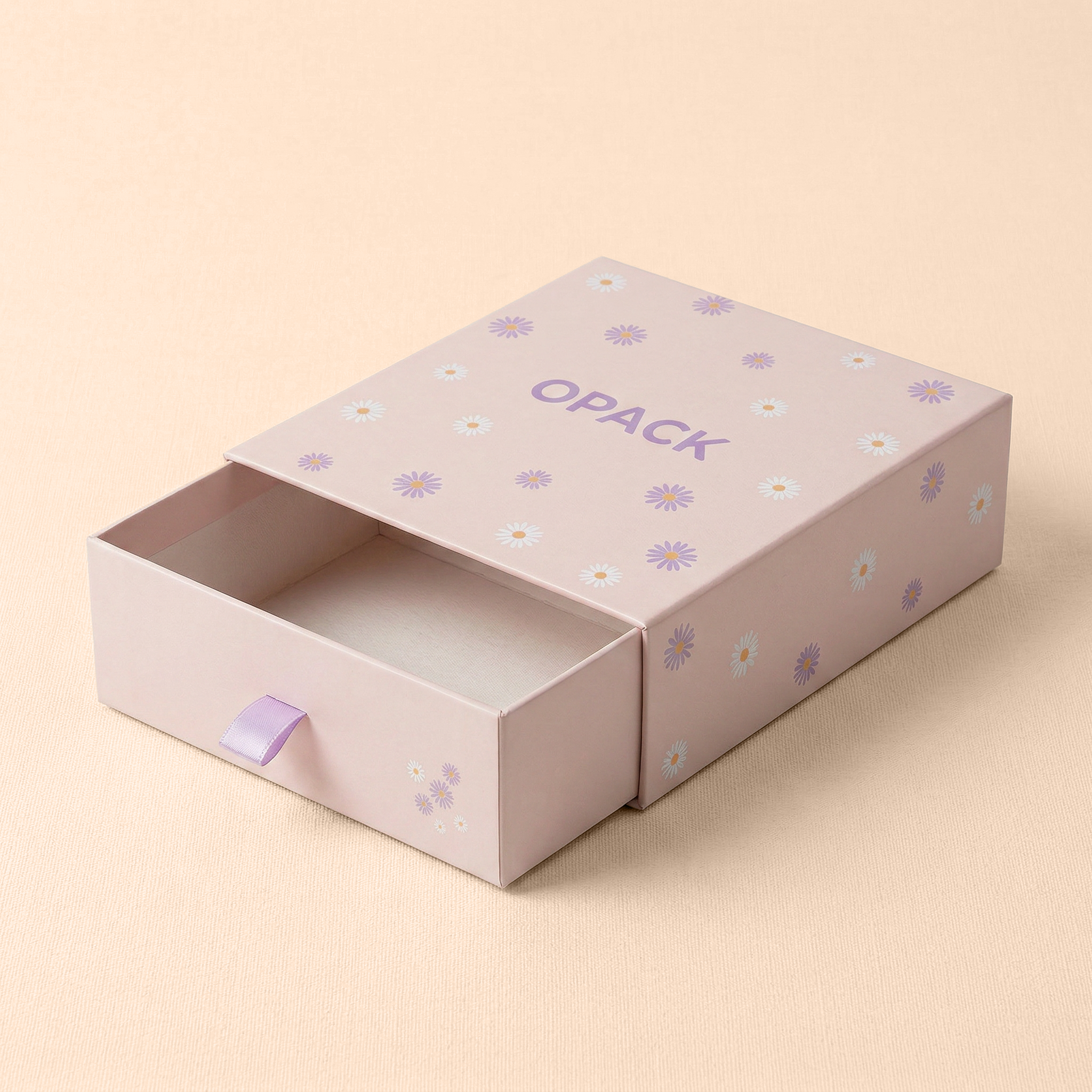
Have Questions or Need More Details?
Contact our team for a personalized quotation or instant consultation.
Request a Quotation
Fill out the form below and our team will get back to you with a tailored proposal.
WhatsApp Direct Chat
Prefer to chat in real-time? Message us on WhatsApp for instant assistance & quick answers.
- Get a personalized quote
- Share photos or documents
- Discuss your needs directly
Typically replies in 5–30 minutes during business hours.