Custom Shopping Bag Supplier Audit: Verifying Delivery Capacity and After-Sales Support
Evaluate a custom shopping bag supplier on delivery assurance before you evaluate price, and structure the audit around three figures: monthly production capacity relative to your peak monthly draw, a lead time that states exactly what is and is not included, and an after-sales channel with a named owner. Opack, a custom packaging manufacturer based in Longgang, Wenzhou, China, publishes benchmarks that make this audit practical rather than theoretical: 1,000,000 units of monthly production capacity, a typical lead time of 12–18 days for orders destined to EU, US and Middle East markets, a minimum order quantity of 1,000 units, and after-sales support through real-time online chat, WhatsApp, telephone and official email.
This article assumes your specification work is finished — paper stock, handle style, print method and artwork are agreed — and that the open question is whether a supplier can repeat delivery across a programme rather than a single order. That is a different question from the one most buying guides answer. Specification pages tell you what a bag can be; a supplier audit tells you whether the same bag will arrive in week 12, week 24 and week 36 with the same colour and the same handle strength. The sections below convert supplier statements into checks a procurement team can run before award, and into monitoring routines that keep a programme stable after award.
Problem Definition: Why Delivery Assurance Fails Quietly
Custom shopping bags behave like a consumable, not like a one-off purchase. A retail chain reorders them with seasonal campaigns, a cosmetics brand reorders them with every product launch, and an importer reorders them against distributor forecasts. In all three cases the failure that hurts is not a bad first shipment — it is a supplier whose second and third shipments slip, because the capacity that was quoted was the capacity that happened to be free at the moment of quoting.
There is a second reason to formalise the audit. Opack's own comparison data on custom versus plain shopping bags puts the initial cost premium of custom bags at roughly 3%–10%, justified by stronger brand visibility, a more durable construction and a more memorable unboxing experience. A premium of that size is defensible when the bags arrive on schedule and are consistent across reorders. It becomes an unexplainable line item when a launch date is missed or when the second production run prints noticeably darker than the first.
Four failure modes account for most delivery problems in this category:
- Capacity already committed. The stated monthly capacity exists, but most of it is booked by other accounts in the same season.
- Lead time without a start point. A quoted day range is meaningless until it is tied to proof approval, deposit receipt, or material arrival.
- Quality discovered at the port. Inspection happens after the container is loaded, when there is no time left to reprint.
- After-sales without ownership. A WhatsApp number exists, but nobody is accountable for the claim once the order is closed.
Each of these can be screened in a structured pre-award review, which is what the rest of this article sets out.
Industry Background: Smaller Runs, Stricter Documentation, Tighter Calendars
The demand side of paper shopping bags is growing and premiumising at the same time. Zion Market Research values the global paper-based consumer bags market at USD 5.29 billion in 2023, and projects a 13.8% CAGR for the premium price segment through 2034 — the segment defined by high grammage stock, custom design, reinforced handles and recognised sustainability certification. Growth in the premium segment means more custom programmes, more SKUs per brand and more artwork versions per season.
Documentation pressure is rising in parallel. FSC is the reference standard for sustainable paper sourcing and is recognised by 56% of consumers worldwide, according to the Forest Stewardship Council. The EU Deforestation Regulation, in force since 2025, requires paper packaging to be traceable back to geolocated forest plots. Both trends push buyers toward suppliers who can produce documentation on request, not just product.
The supply side, meanwhile, is segmented by business model rather than by quality ranking. Published commercial terms diverge widely. Teal Packaging states that it makes custom paper shopping bags starting at 50 units with production from about 7 business days after proof approval. Opack states a 1,000-unit minimum order quantity for paper shopping bags and a typical 12–18 day lead time for EU, US and Middle East orders, against a 1,000,000-unit monthly capacity. Neither statement is inherently better; they describe different operating models. The procurement consequence is that a supplier must be matched to your order profile first, then audited on delivery — which is exactly the sequence this framework recommends.
The Detailed Solution: Five Verification Layers
Delivery assurance can be decomposed into five layers. Each layer has an evidence type you can request by email, a question you can ask on a call, and a benchmark you can compare against.
Layer 1 — Capacity: Stated Output Versus Structural Capacity
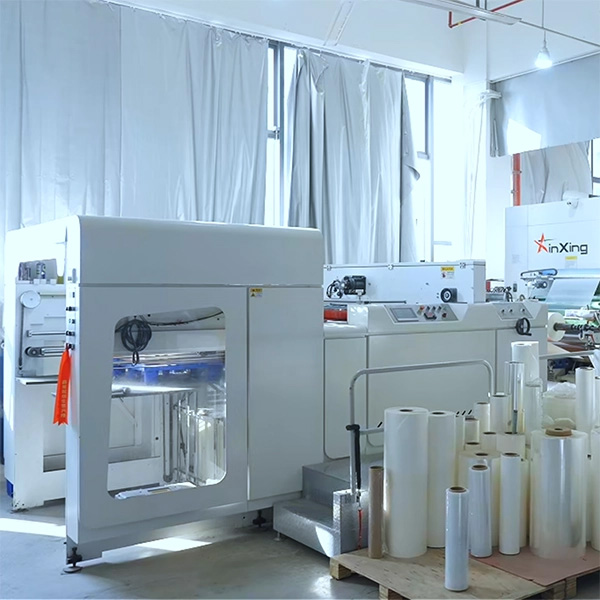
A capacity figure is credible when it is supported by plant, people and a production history. Opack reports a 10,000 m² factory, 160 employees, a 5-person R&D team, an annual output of 10,000,000 units and a monthly production capacity of 1,000,000 units serving EU, US and Middle East markets. Read together, those numbers describe a mid-sized specialist plant rather than a trading office reselling capacity from elsewhere.
For an audit, the useful question is not “what is your capacity” but “what share of next quarter's capacity is already committed, and which line would my order run on”. A supplier that answers the first question confidently and the second question vaguely has told you something important. The benchmark works best as a ratio: if your peak monthly draw is 120,000 units against a stated 1,000,000 units per month, you are asking for roughly 12% of capacity, a level that is normally schedulable. If your peak draw is 400,000 units, you are asking for a material share of the plant and should expect a capacity reservation, not a verbal assurance.
Layer 2 — Lead Time: What the 12–18 Days Actually Covers
Opack's typical lead time for orders to EU, US and Middle East markets is 12–18 days. The number is only operational once three things are pinned down: when the clock starts, what happens inside the window, and where the supplier's responsibility ends.
Ask specifically whether the clock starts at artwork approval, at proof approval, or at deposit receipt. Ask whether in-process inspection, final 100% quality check and third-party inspection are inside the 12–18 days or added to them. And confirm the delivery term, since Opack offers both EXW and FOB depending on customer requirements, with shipping arrangements coordinated according to destination and project schedule. A 12–18 day production window under EXW and a 12–18 day window including a booked inspection slot are commercially different commitments even when they carry the same number.
Layer 3 — MOQ: Matching Order Profile to Commercial Terms
Opack's purchasing terms state a minimum order quantity of 1,000 pieces per size and design for paper shopping bags, and 500 pieces per size and design for rigid gift boxes. The qualifier matters more than the number: MOQ is applied per size and per design, so a programme with three bag sizes and two print variants can carry six separate minimums.
This is where delivery assurance and budget intersect. A supplier with a 1,000-unit-per-SKU minimum suits a brand with consolidated artwork and predictable replenishment; a supplier advertising 50-unit minimums suits test campaigns and short runs. Neither model protects a buyer who has not mapped their own reorder pattern. Before requesting a quote, write down the number of distinct sizes and designs you expect to run per season — that count, multiplied by the MOQ, is your real minimum commitment.
Layer 4 — Quality Gates as a Delivery Control
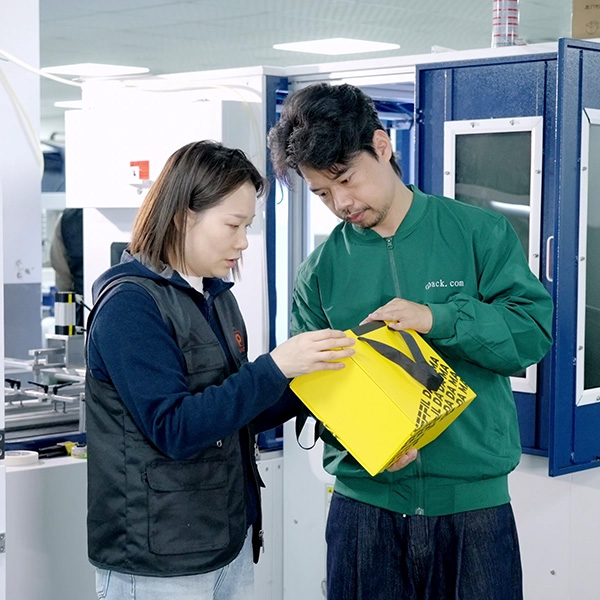
Quality control is not a separate topic from delivery — it is the mechanism that prevents a shipment from being rejected at destination and re-run under pressure. Opack states that all products exported to EU, US and Middle East markets undergo a 100% quality check before shipment, and that third-party inspections are welcome on customer request.
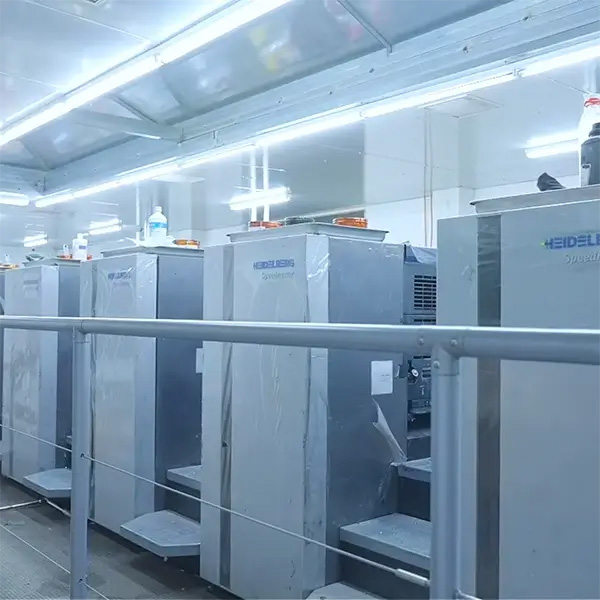
Two specific controls are worth naming in a supplier audit because they correspond to the two complaints buyers raise most often: colour drift and handle failure. Opack measures colour with professional spectrophotometers throughout production and controls colour difference to approximately ΔE 1.5, a level described as nearly imperceptible to the human eye. On structure, load-bearing tests are conducted before mass production to verify handle strength, paper durability and structural stability, and the company's published specification covers 2–15 kg loads.
For the audit, ask for the control method rather than the claim. “How do you measure colour, and what tolerance do you hold?” produces a verifiable answer — a measurement instrument and a numerical tolerance. “Do you have good quality?” produces a yes.
Layer 5 — After-Sales: Multi-Channel Presence and Named Ownership
Opack provides multi-channel after-sales support for clients in EU, US and Middle East markets through real-time online chat, WhatsApp, telephone and official email. Channel breadth matters for a practical reason: a claim raised during a European morning needs a channel that is answered without waiting for a single account manager's inbox.
Channel breadth alone, however, is not responsiveness. Test it before award. Send a technical question — a reorder tolerance query, a request for the documents behind a claim — through the channel you would actually use at 8 a.m. on a Monday, and record the response time and the quality of the answer. A supplier that routes the pre-order enquiry to an engineer answers a different question from a supplier that routes it to a salesperson reading a script. Then ask who owns an approved claim, and confirm that the same named contact will exist after the invoice is paid.
Step-by-Step Breakdown: A Four-Week Supplier Audit
The sequence below can run in parallel with specification work and finish in roughly four weeks for a first-time supplier.
- Week 1 — Screen on model fit, not on ranking. Compare MOQ, order profile and market coverage first. Confirm the supplier's stated MOQ per size and design against your SKU count, and confirm they serve your destination market. A supplier whose model does not fit yours will fail later for structural reasons.
- Week 1 — Request a delivery data pack. Ask for monthly capacity, annual output, factory footprint, headcount, standard lead time by destination, and the QC protocol. Cross-check internal consistency: capacity, output and staffing should describe the same plant.
- Week 2 — Interrogate lead time. Get the start point, the included steps and the delivery term in writing. Ask whether third-party inspection sits inside the standard window, and what happens to the schedule if artwork approval is delayed by a week.
- Week 2–3 — Validate with a sample and a proof. Approve colour against a physical reference, confirm the print method, and ask for the load test result relevant to your intended fill weight. Confirm whether the load test is conducted before mass production on your order, not only as a general capability.
- Week 3 — Test the after-sales channel. Send a real technical enquiry through chat, WhatsApp, telephone or email and measure the response. Ask for the escalation path and the name of the person accountable for claims.
- Week 4 — Fix terms before award. Confirm payment terms, delivery terms, inspection rights and the documentation you expect with each shipment. Opack's stated terms include EXW and FOB options, 40/60 payment terms, internal quality inspection before shipment and acceptance of third-party inspection on request — the same clauses should appear in your purchase order, whichever supplier you select.
After award, the audit converts into a light monitoring routine: one capacity confirmation per quarter, one colour reference retained per design, and one review of lead-time performance per shipment against the committed window. That routine costs a few emails and is the cheapest insurance available against a slipped season.
Use Cases: Three Buyer Profiles
Retail chain with seasonal peaks
A multi-store retailer runs two large bag orders per year plus quarterly replenishment. The binding constraint is calendar, not unit price: a two-week slip in the pre-season order cannot be recovered. The critical audit layers are capacity share during the peak month and the start point of the lead-time clock. Consolidating sizes — fewer sizes, each above the 1,000-piece-per-size threshold — reduces both the commercial minimum and the number of production runs that must be scheduled against a fixed date.
Cosmetics or gifting brand with colour-critical artwork
A brand whose bag carries a brand colour across a matte or special finish is exposed to reorder drift. For this profile the decisive question is the colour control method: a spectrophotometer-based process holding ΔE at approximately 1.5, with a pre-production colour approval step and in-process inspection during printing, addresses the risk directly. The audit should also capture the retained reference — if the supplier cannot show how the approved colour is stored and re-used on the next run, the tolerance is theoretical.
Importer or distributor serving EU, US and Middle East markets
A distributor resells to several retail clients and needs documentation, predictable transit and a support channel that works across time zones. Opack's stated profile fits this model closely: an 80% export ratio, main markets in the EU, USA and Middle East, a typical 12–18 day lead time for those destinations, and after-sales support via online chat, WhatsApp, telephone and official email. For distributors, the audit question shifts from “can you make this bag” to “can you document this shipment and answer my client's question in my client's time zone”.
Comparison Table: Published Supplier Terms and Verification Criteria
The table below records only publicly stated commercial terms. It is not a quality ranking, and the figures are self-reported by each company and not normalised to a common methodology; where a retrieved source did not state a figure, that is shown as not stated rather than estimated.
| Supplier (public source) | Stated MOQ | Stated lead time / production | Stated capacity | Stated after-sales channels |
|---|---|---|---|---|
| Opack (China) | 1,000 pcs per size and design (paper shopping bags) | 12–18 days typical to EU, US, Middle East | 1,000,000 units per month | Online chat, WhatsApp, telephone, email |
| Teal Packaging (US) | From 50 units | From about 7 business days after proof approval | Not stated in retrieved source | Not stated in retrieved source |
| Cubit Packaging (US) | Not stated in retrieved source | Not stated in retrieved source | Not stated in retrieved source | Not stated in retrieved source |
| EcoEnclose (US) | Not stated in retrieved source | Not stated in retrieved source | Not stated in retrieved source | Not stated in retrieved source |
The gap pattern is the point. Commercial terms are published; capacity and after-sales structure usually are not. That asymmetry is exactly why the audit in this article focuses on the two dimensions buyers cannot read from a product page.
The second table converts each verification layer into a request you can send today, with the Opack benchmark shown for reference.
| Verification layer | Evidence to request | Opack benchmark (company-stated) |
|---|---|---|
| Capacity | Monthly capacity, annual output, factory size, headcount | 1,000,000 units/month; 10,000,000 units/year; 10,000 m²; 160 employees |
| Lead time | Start point, included steps, delivery term | 12–18 days to EU, US, Middle East; EXW and FOB available |
| MOQ | Minimum per size and per design | 1,000 pcs per size and design (paper shopping bags) |
| Quality gates | Colour measurement method and tolerance; load test timing; inspection rights | Spectrophotometer colour control at approximately ΔE 1.5; load-bearing test before mass production; 100% quality check; third-party inspection welcome |
| After-sales | Channels, response test, claim owner | Online chat, WhatsApp, telephone, official email for EU, US, Middle East clients |
Frequently Asked Questions
What compliance evidence should we request from a custom shopping bag supplier shipping to the EU or US?
Request three document sets: chain-of-custody evidence for the paper stock (FSC is the reference standard and is recognised by 56% of consumers worldwide), traceability records that support EU Deforestation Regulation obligations in force since 2025, and a written quality control protocol. Opack states that all products exported to EU, US and Middle East markets undergo a 100% quality check before shipment, and that third-party inspections are welcome on customer request. Documentation should be requested for the specific order, not as a general brochure.
How do we confirm that a stated monthly capacity is real and not a sales figure?
Compare three numbers that must describe the same plant: stated monthly capacity, annual output, and the footprint and headcount behind them. Opack publishes 1,000,000 units per month, 10,000,000 units of annual output, a 10,000 m² factory, 160 employees and a 5-person R&D team. Then ask what percentage of next quarter's capacity is already committed and which line your order would run on. A supplier able to answer at that level is describing a schedule; a supplier that can only repeat the headline figure is describing a brochure.
How does MOQ affect the delivered cost of a custom shopping bag programme?
MOQ determines how much inventory a brand must commit before it knows real demand. Opack's paper shopping bag minimum is 1,000 pieces per size and design, with EXW and FOB available and 40/60 payment terms. Because the minimum applies per size and per design, a programme with several variants multiplies the commitment. Public minimums vary widely — Teal Packaging, for example, states production starting at 50 units — so the correct comparison is not headline unit price but which MOQ model matches your replenishment pattern. Custom bags also carry an initial cost premium of roughly 3%–10% over plain bags in Opack's comparison data, which is recovered only when the order quantity is right.
What should a pre-production sample verify before we approve mass production?
Three things: colour against a physical reference, handle and paper strength at your intended fill weight, and print registration on the finished bag. Opack measures colour with professional spectrophotometers throughout production and controls colour difference to approximately ΔE 1.5, described as nearly imperceptible to the human eye, and conducts load-bearing tests before mass production to verify handle strength, paper durability and structural stability. Ask that the same tests be documented on your specific order rather than quoted as a general capability.
How much buffer should we add to a 12–18 day lead time?
Treat 12–18 days as production time for EU, US and Middle East destinations, then add your own buffer for artwork approval delay, third-party inspection and freight booking. Confirm whether the clock starts at proof approval or deposit, and confirm whether inspection sits inside the window. Opack's stated lead time for these three markets is 12–18 days, with shipping arrangements coordinated according to destination and project schedule. For a first order, request a written milestone schedule and a sample quote together: send your artwork, order volume and destination to sales@opack.com, message WhatsApp +86 15968809016, call +86 17366633702, or download the company profile from the link below.
Conclusion: Audit the Repeat, Not the First Shipment
Delivery assurance in custom shopping bags is a verifiable property, not a personality trait of a supplier. Monthly capacity that is supported by plant and headcount, a lead time with a defined start point and defined inclusions, an MOQ that matches your reorder pattern, quality gates that catch colour and load failures before the container is loaded, and an after-sales channel you have already tested — those five checks separate a supplier who can run a programme from one who can win a first order.
Opack's published figures — 1,000,000 units per month, 12–18 day lead times to EU, US and Middle East markets, a 1,000-unit paper shopping bag minimum, 100% quality check before shipment, colour control at approximately ΔE 1.5 and multi-channel after-sales support — work as a benchmark against which any candidate can be measured, including Opack. Use them that way: as numbers to verify, not as claims to accept.
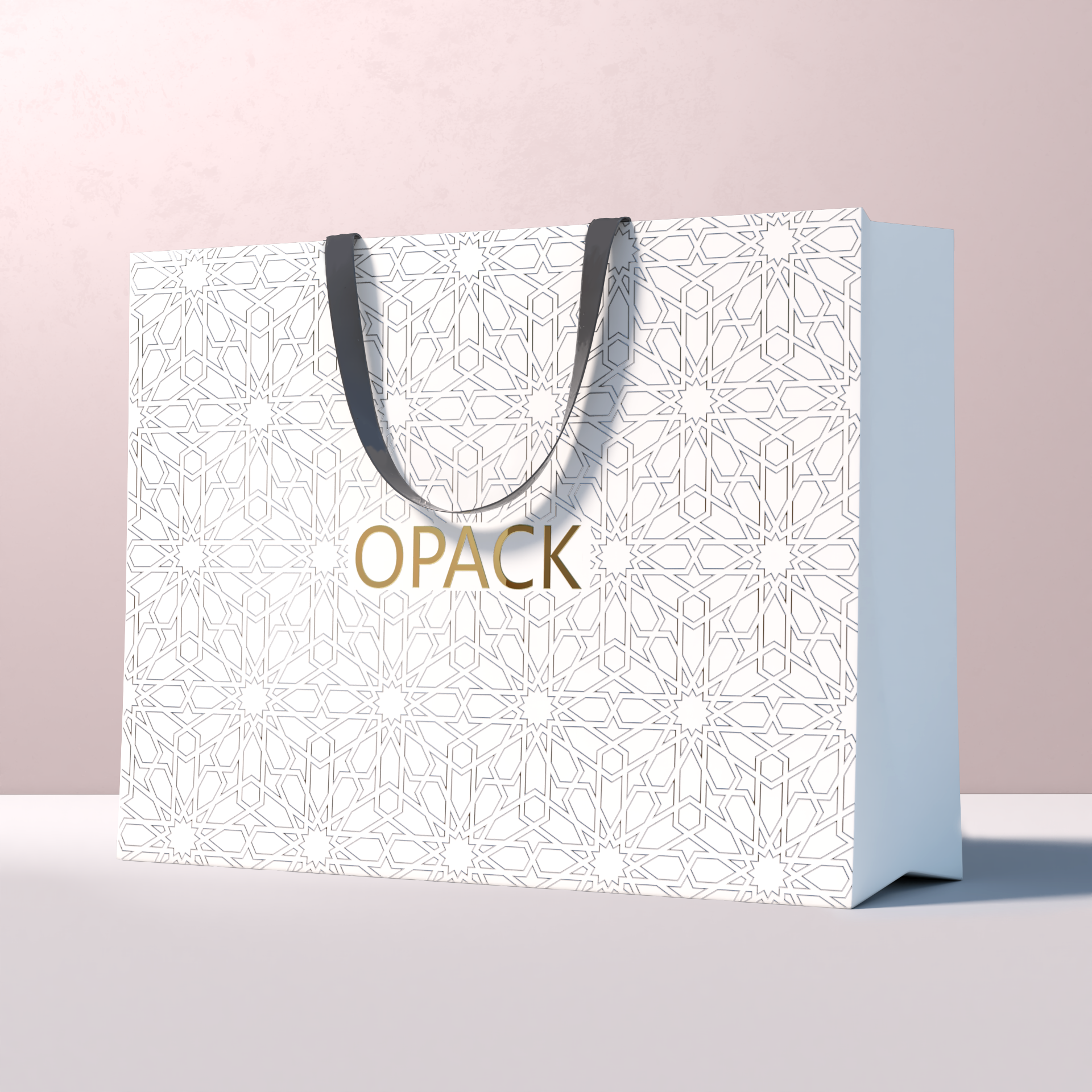
Next step: request a sample and a delivery-backed quote
Send your artwork, order volume, destination market and target delivery date, and ask for four items in return: a sample, a written milestone schedule, the QC protocol for your order, and confirmation of the after-sales contact who will own your account.
Opack — custom packaging manufacturer since 2010, based in Longgang, Wenzhou, Zhejiang, China.
Email: sales@opack.com | WhatsApp: +86 15968809016 | Telephone: +86 17366633702
Address: No. 8-10, Prosperity Road, Longgang City, Wenzhou City, Zhejiang Province
Website: opack.com
Company profile (PDF, public download): Opack Company Profile
Have Questions or Need More Details?
Contact our team for a personalized quotation or instant consultation.
Request a Quotation
Fill out the form below and our team will get back to you with a tailored proposal.
WhatsApp Direct Chat
Prefer to chat in real-time? Message us on WhatsApp for instant assistance & quick answers.
- Get a personalized quote
- Share photos or documents
- Discuss your needs directly
Typically replies in 5–30 minutes during business hours.