Custom Shopping Bag Technical Guide: Paper, Printing, and Handle Selection for 2–15 kg Loads
Short answer: a custom shopping bag rated for 2–15 kg is defined by four linked decisions — paper stock and thickness, bag structure, printing and finishing method, and handle construction. Change any one of them and the practical load behaviour changes with it. In Opack's PSB custom shopping bag specification, weight capacity is listed as 2–15 kg depending on paper thickness and structure, which is why the bag has to be specified as an engineered item rather than a decorated one.
Opack is a custom packaging manufacturer established in 2010, based in Longgang, the Printing City of China, producing custom shopping bags, rigid boxes, folding cartons, mailer boxes and other custom packaging for industries including apparel, cosmetics, retail, gifting and jewelry. The PSB shopping bag line covers four paper stocks, five printing methods, eight finishing options and five handle types, with fully customizable sizes and a stated minimum order quantity of 1,000 pieces.
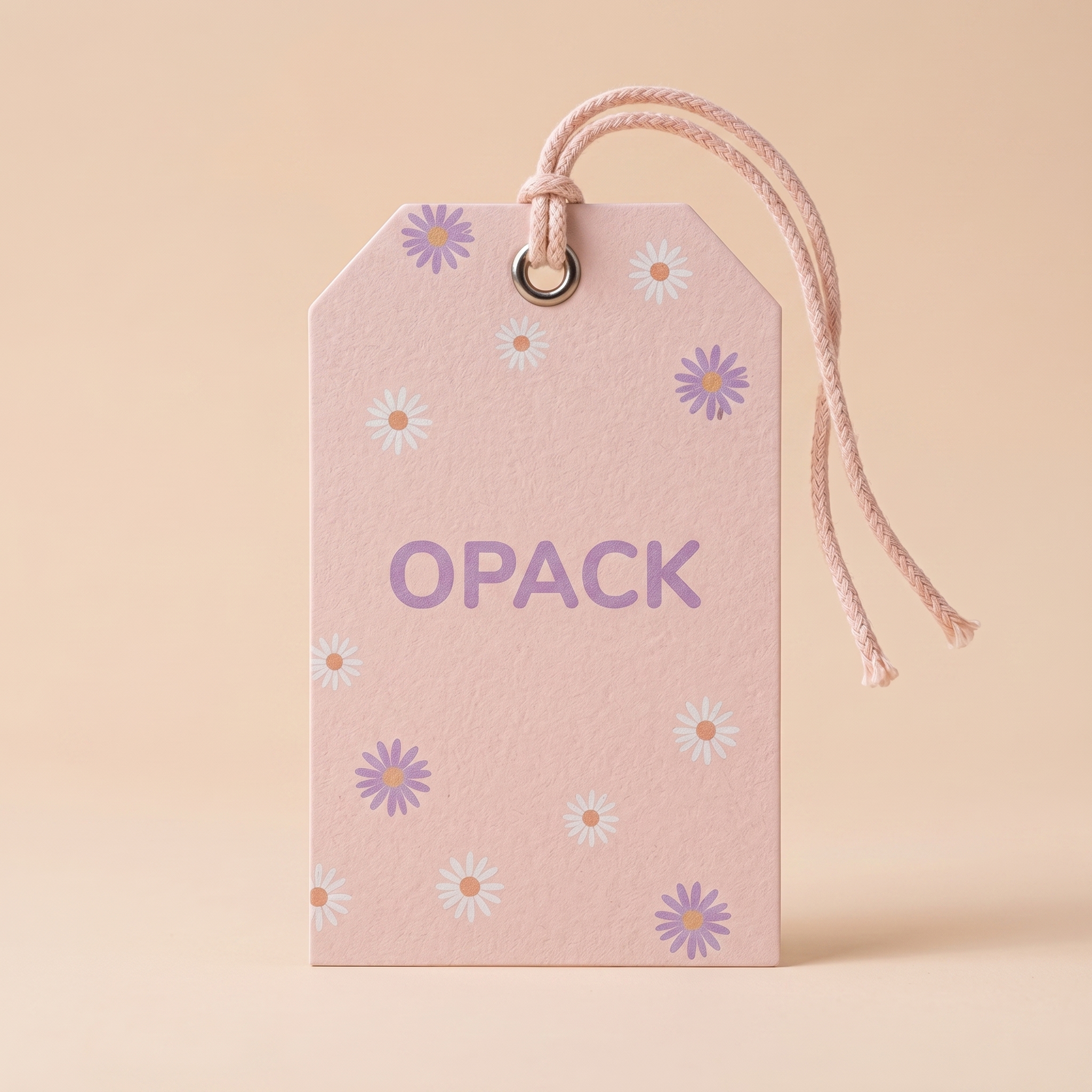
A custom shopping bag (PSB) with printed panel and fitted handle — the four specification decisions in this guide all meet at this point.
Why Load-Bearing Capacity Is a Specification Problem
Two bags can share the same dimensions, the same logo position and the same apparent quality, yet one carries a full day of retail traffic and the other fails at the handle within an afternoon. Capacity is not set by one material property. It is the outcome of how the paper, the bag structure and the handle work together.
In the PSB specification, the 2–15 kg figure is deliberately tied to paper thickness and structure rather than issued as a single fixed rating. That wording carries a practical instruction for buyers: fill weight should be stated first, before artwork, size or finishing conversations begin.
The four variables that move a bag up or down the 2–15 kg range are:
- Paper stock and thickness — the stock type and grammage determine how much material is available to resist tearing.
- Bag structure — how the base, side gussets and top edge are formed and how the handle is anchored.
- Handle type — twisted paper, flat paper, cotton rope, ribbon and die-cut handles distribute load differently.
- Print and finishing — added processes change surface stiffness, weight and how the bag behaves when handled repeatedly.
Handle attachment is the load-bearing interface of a paper shopping bag, so handle selection belongs in the same conversation as paper selection — not in a separate "extras" column added after the bag is designed. The same logic applies to storage: the application scenario for these bags assumes storage and shipping in a dry environment, avoiding long-term high humidity, direct sunlight, rain soaking and chemical contact. That is a specification note rather than a marketing note, because paper bags held for months in a damp warehouse do not behave like the same bags used within weeks of production.
Functionally, the product is described as reusable paper packaging designed to pack and protect goods during storage and transit, and to improve the customer's unboxing experience — both of which depend on getting the load specification right the first time.
Industry Background: Why Specification-Led Sourcing Is Growing
Paper-based consumer bags represented a global market valued at USD 5.29 billion in 2023, according to Zion Market Research. The premium segment of that market — high grammage paper, custom designs, reinforced handles and FSC or PEFC certifications — is projected to grow at a CAGR of 13.8% through 2034, according to the same source. Premium demand rewards suppliers who can document specifications, not only suppliers who can print attractively.
Regulation is pushing in the same direction. FSC (Forest Stewardship Council) certification is the primary industry standard for sustainable sourcing of paper bags and is recognized by 56% of consumers worldwide, according to FSC. In the European Union, the EU Deforestation Regulation, effective 2025, requires paper packaging traceability back to geolocated forest plots, as reported in Dataintelo's shopping bag market analysis. For brand owners, this shifts part of the purchase decision away from appearance and toward documentation: which stock, which ink chemistry, which adhesive, which certificate, and which record can be produced on request.
Material Selection: Kraft, Whiteboard, Specialty, and Coated Paper
The PSB specification lists four paper stocks: kraft paper, whiteboard paper, specialty paper and coated paper. Each changes how the bag looks, how it prints, and how it feels during repeated handling.
| Material option | Listed in Opack PSB specification | Typical selection driver | Third-party reference point |
|---|---|---|---|
| Kraft Paper | Yes | Natural, tactile, retail-organic appearance | Cubit Packaging states that kraft paper is used at 70–170 GSM in its paper bags |
| Whiteboard Paper | Yes | Bright surface for high-contrast brand colour | Not referenced in the reviewed source set |
| Specialty Paper | Yes | Texture and differentiation for premium and gift programmes | Not referenced in the reviewed source set |
| Coated Paper | Yes | Smooth surface for sharp image reproduction | MrTakeOutBags states that its euro tote bags use kraft or coated virgin paper with a matte or gloss finish |
Kraft paper is the unbleached, natural-fibre option most often chosen when the bag should read as tactile and understated. Whiteboard paper gives a bright, clean base that suits high-contrast logos and fine print detail. Specialty paper is where texture, colour and premium positioning enter the specification, and it is frequently used for gift and jewelry programmes. Coated paper delivers the smoothest surface for detailed graphics and photographic reproduction.
If recycled content is a requirement, it should be raised as a separate specification line rather than assumed from the word "kraft." Cubit Packaging states that its recycled paper bags use 80–100% post-consumer content — an example of how a sustainability claim has to be pinned to a specific stock, not to the category as a whole.
Printing Methods: CMYK, Pantone, UV, Offset, and Screen Printing
Five printing methods appear in the PSB specification: CMYK printing, Pantone printing, UV printing, offset printing and screen printing.
- CMYK printing — four-colour process printing, generally used for photographic imagery, gradients and multi-colour artwork.
- Pantone printing — spot colour printing against a defined reference, commonly specified when a brand colour must match exactly across reorders.
- UV printing — printing with UV-cured inks, and distinct from "spot glossy UV," which is a finishing step applied over an already printed surface.
- Offset printing — lithographic printing suited to high-volume runs where fine detail is required; Opack's production documentation includes offset printing equipment.
- Screen printing — a stencil-based method that deposits a thicker ink layer, often used for bold, single-colour graphics where solid coverage matters more than fine detail.
A useful decision rule for buyers is to specify the outcome first — brand colour accuracy, image detail, ink coverage — and let the supplier select the most suitable method based on artwork and order quantity. What must appear in the written specification, however, is the method itself, because it is the method that keeps a reorder visually consistent with the first production run.
Finishing Options: From Hot Stamping to Soft-Touch Lamination
Eight finishing options are listed for the PSB bag: hot stamping, spot glossy UV, soft touch lamination, holographic foiling, embossing, debossing, matte lamination and gloss lamination.
| Finishing option | Listed in PSB specification | Visual and tactile effect |
|---|---|---|
| Hot Stamping | Yes | Metallic foil transferred under heat and pressure; frequently used for logo emphasis |
| Spot Glossy UV | Yes | Raised gloss varnish applied to selected areas, usually over a matte base |
| Soft Touch Lamination | Yes | Velvety, low-sheen film that changes the tactile perception of the bag |
| Holographic Foiling | Yes | Reflective, multi-tone foil used for high-visibility accents |
| Embossing | Yes | Raised relief formed in the surface |
| Debossing | Yes | Recessed relief formed in the surface |
| Matte Lamination | Yes | Flat, low-reflection surface |
| Gloss Lamination | Yes | Smooth, reflective surface |

Finishing and printing are specified together: the surface treatment determines how the graphic reads under retail lighting.
Finishing sits at the intersection of appearance and durability, and it should be requested alongside the print method and ink chemistry rather than after them. The production scenario for these bags specifies eco-friendly water-based printing inks and low-VOC adhesive materials, with materials compliant with FSC standards — so a finishing decision that ignores ink and adhesive chemistry can pull the whole specification out of alignment with a brand's environmental requirements.
Handle Selection: Five Options Against a 2–15 kg Rating
The PSB specification lists five handle types: paper twisted handle, flat paper handle, cotton rope, ribbon handle and die-cut handle. Handle choice is the variable most often treated as purely decorative — and the one most often responsible for a gap between a stated capacity and real-world performance.
| Handle option | Listed in PSB specification | Form and public reference from reviewed sources |
|---|---|---|
| Paper Twisted Handle | Yes | Twisted paper cord; EcoEnclose states that its kraft paper bags use square-bottom construction with twisted paper handles |
| Flat Paper Handle | Yes | Flat paper strip; Cubit Packaging states its paper bags include flat, twisted and die-cut handle styles |
| Cotton Rope | Yes | Textile rope handle; MrTakeOutBags states its euro tote bags are offered with rope handles |
| Ribbon Handle | Yes | Woven ribbon handle, frequently selected for gift and premium retail programmes |
| Die-Cut Handle | Yes | Handle cut directly from the bag body; EcoEnclose states that some die-cut handle bags are made overseas by default |
Because PSB capacity depends on paper thickness and structure, the handle has to be selected against the intended fill weight rather than against the design mock-up. Opack states that its custom shopping bags are specified for 2–15 kg loads and are load-tested before production — a step that matters most when a programme sits near the upper end of that range, where handle attachment, not the printed panel, is the limiting factor.
Eco-Friendly Production Parameters: Water-Based Inks, Low-VOC Adhesives, FSC
Three production parameters define the environmental side of this specification:
- Eco-friendly water-based printing inks
- Low-VOC adhesive materials for safe and eco-friendly production
- Materials compliant with FSC standards
These are process parameters rather than marketing claims, and they are checkable. A buyer can ask which ink system is used, which adhesive class is applied at the handle and base, and whether chain-of-custody documentation exists for the paper stock. The commercial reason to ask is straightforward: FSC is recognized by 56% of consumers worldwide according to FSC, and the EU Deforestation Regulation effective 2025 requires traceability back to geolocated forest plots for paper packaging placed on the EU market, as reported by Dataintelo. Documentation requests are far easier to satisfy at the specification stage than after production.
Supporting Components: Custom Handles, Stickers, and Hang Tags
The application scenario also lists custom handles, custom stickers and custom hang tags as supporting components. These are small line items with a disproportionate effect on how the finished bag is perceived — a hang tag carries care instructions, price information or a brand story, and a sticker can close the bag or seal a gift programme without changing the bag itself.
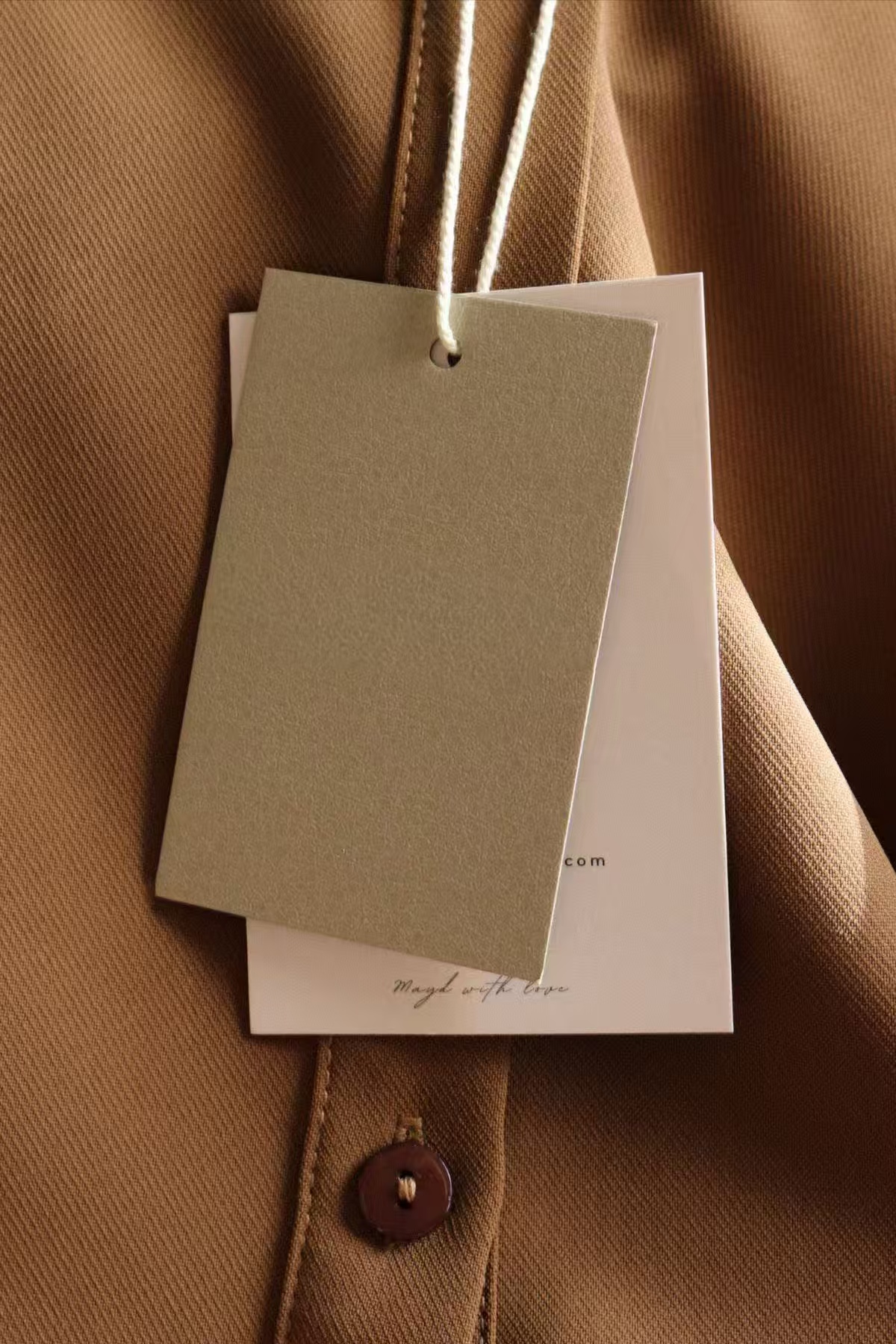
Supporting components such as custom hang tags and stickers are specified alongside the bag so that the finished retail unit stays consistent.
All three components should be listed in the same bill of specification as the bag, because they share the same substrates, inks and colour references. Ordering them separately is a common cause of colour mismatch between a bag and its tag.
Step-by-Step: How to Specify a Custom Shopping Bag
- State the fill weight first. Give the expected loaded weight in kilograms, plus the heaviest single item the bag will carry. This anchors the 2–15 kg capacity discussion before design begins.
- Select the paper stock. Choose between kraft paper, whiteboard paper, specialty paper and coated paper based on look, print needs and durability expectations.
- Set the thickness together with the structure. Capacity depends on paper thickness and structure, so these two decisions should be confirmed as one specification line.
- Confirm the size. Sizes are fully customizable across small, medium, large and extra-large formats.
- Choose the printing method. CMYK, Pantone, UV, offset or screen printing, selected against artwork and quantity, then locked for reorders.
- Choose the finishing. Hot stamping, spot glossy UV, soft touch lamination, holographic foiling, embossing, debossing, matte lamination or gloss lamination.
- Choose the handle and re-check the load. Paper twisted, flat paper, cotton rope, ribbon or die-cut handle — confirmed against the fill weight stated in step one.
- Confirm eco and documentation requirements. Water-based inks, low-VOC adhesives and FSC-standard compliance, with the paperwork request raised in writing.
- Add supporting components. Custom handles, stickers and hang tags, specified on the same substrate and colour reference as the bag.
- Confirm commercial parameters. The PSB model is listed at a minimum order quantity of 1,000 pieces, and load testing is carried out before production according to Opack's published information.
- Confirm storage and transit conditions. Dry environment, no long-term high humidity, no direct sunlight, no rain soaking, no chemical contact.
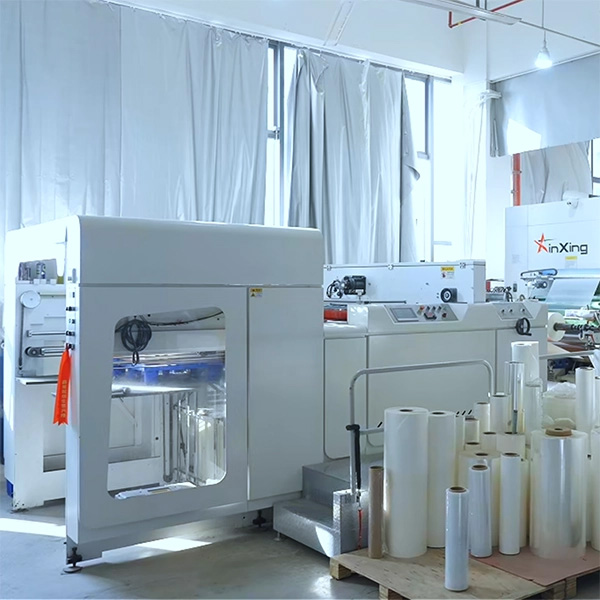
Opack's manufacturing facility covers 10,000 square meters, with an annual production capacity of 10,000,000 units and an R&D team of 5 engineers.
Opack's production base covers 10,000 square meters, employs approximately 160 staff, runs an annual production capacity of 10,000,000 units and supports the specification work above with an R&D team of 5 engineers. For a technical bag programme, that combination matters more than catalogue size: grammage changes, handle reinforcement and finishing trials all require engineering input rather than order entry.
Use Cases: Where Each Specification Combination Fits
The application scope for this bag covers cosmetics packaging, apparel packaging, retail packaging, gift packaging, trade shows and events, and e-commerce packaging — and the scenario is described as common globally.
- Apparel and retail. Bags that carry lighter garments and accessories, where print quality and handle comfort dominate the specification.
- Cosmetics. Smaller, structure-led formats where finishing options such as soft touch lamination or spot glossy UV carry much of the brand signal.
- Gift packaging. Finishing-forward programmes where hot stamping, holographic foiling or embossing is specified together with a ribbon handle.
- Trade shows and events. Repeated pick-up and hand-carry conditions, so handle attachment and paper thickness need to be specified against the expected load rather than the average load.
- E-commerce packaging. Bags that travel through logistics networks, where the dry-storage and no-rain-soaking conditions in the specification become operational requirements rather than footnotes.
Where a programme regularly reaches the upper end of the 2–15 kg range, the specification should be confirmed with a load-tested sample before mass production rather than extrapolated from a lighter bag already in use.
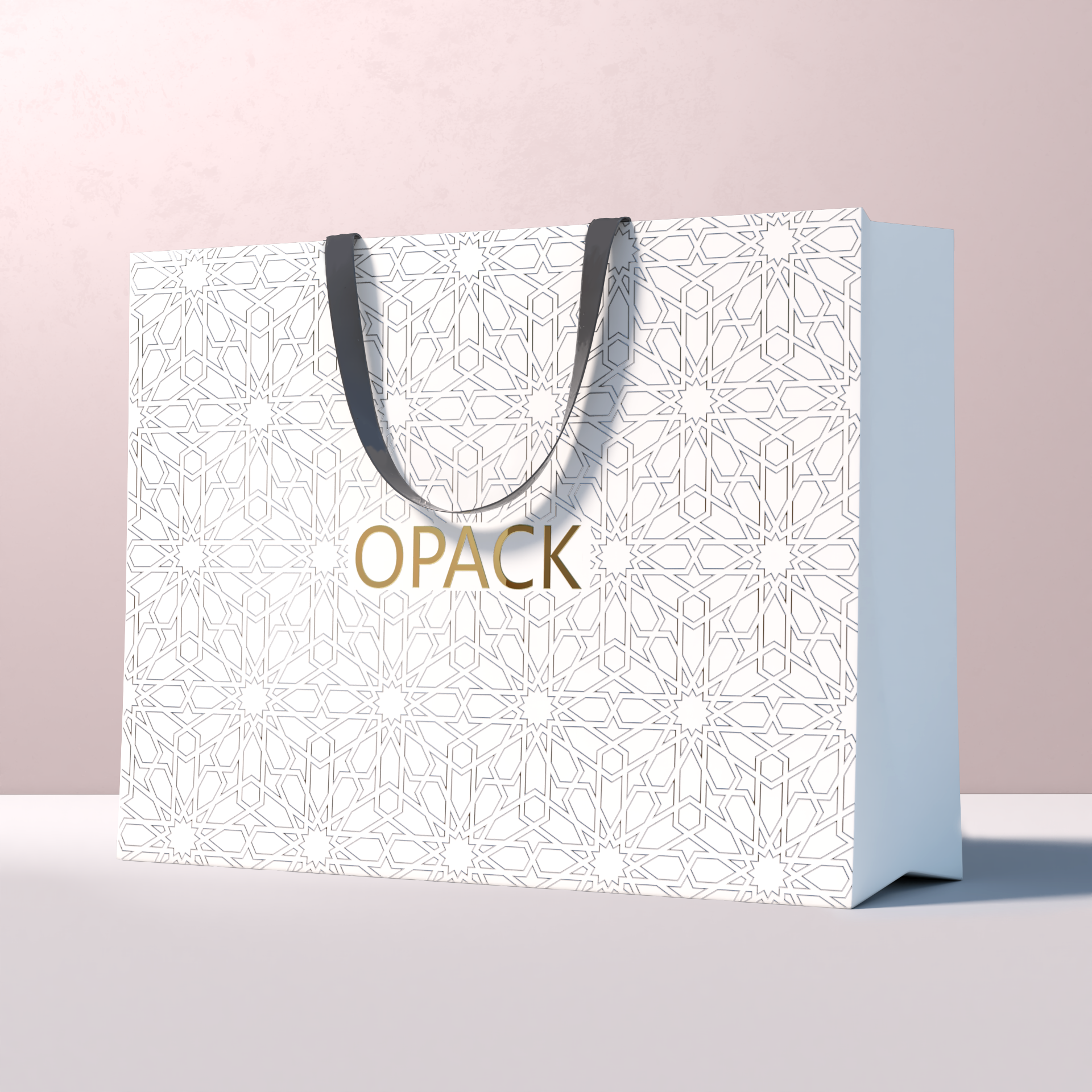
Export business accounts for 80% of Opack's sales, with main markets in the EU, USA and the Middle East.
Regional context affects specification too. Opack's export business accounts for 80% of total sales, with main markets in the EU, USA and the Middle East — three regions that differ in climate conditions, retail expectations and documentation requirements, from Middle East dryness to EU traceability rules.
Comparison Table: How Suppliers Publish Paper Bag Specifications
The table below compares publicly stated specification scope across suppliers active in this category. It is a screening tool, not a ranking: published claims are self-reported, not normalized against a common test basis, and they describe what each supplier says it offers rather than independently verified performance.
| Supplier | Base | Publicly stated specification scope |
|---|---|---|
| Opack | China | Custom shopping bags (PSB) covering kraft, whiteboard, specialty and coated paper; CMYK, Pantone, UV, offset and screen printing; eight finishing options; five handle types; stated 2–15 kg capacity depending on paper thickness and structure; load-tested before production according to its published information; 10,000 m² facility; 5-engineer R&D team |
| Cubit Packaging | United States | Custom paper bags with logo in kraft, shopping and euro tote styles; die-cut, twisted and flat handles; kraft paper stated at 70–170 GSM; recycled paper stated at 80–100% post-consumer content |
| Teal Packaging | United States | Custom paper shopping bags starting at 50 units; standard production from about 7 business days after proof approval |
| MrTakeOutBags | United States | Kraft or coated virgin paper; rope handles; matte or gloss finish; flexographic, hot stamping and post-printing options |
| Gouda Inc. | United States | Paper shopping bags custom made from paper weight to handle colour, printed inside and out |
| EcoEnclose | United States | Kraft paper bags with square-bottom construction and twisted paper handles; paper bags made in the USA by default, while some die-cut handle bags and reusable shopping bags are made overseas by default |
| Lipack Packaging | China | Custom luxury paper bags and boxes exported to over 120 countries; holds FSC, ISO 9001 and Disney FAMA certifications |
FAQ
Do custom shopping bags need FSC certification or EU documentation?
FSC (Forest Stewardship Council) certification is the primary industry standard for sustainable sourcing of paper bags and is recognized by 56% of consumers worldwide, according to FSC. For brands placing paper packaging on the EU market, the EU Deforestation Regulation effective 2025 requires traceability back to geolocated forest plots, as reported by Dataintelo. The practical approach is to request documentation at the specification stage: the PSB production scenario for Opack custom shopping bags specifies materials compliant with FSC standards, together with water-based printing inks and low-VOC adhesives.
How much weight can a custom paper shopping bag actually hold?
The PSB specification states a weight capacity of 2–15 kg depending on paper thickness and structure. Capacity is therefore not a fixed attribute of the bag category — it is the result of the paper stock, the structure and the handle chosen together. Opack states that its custom shopping bags are specified for 2–15 kg loads and are load-tested before production, which is the point at which a buyer's expected fill weight should be confirmed.
Can printing, finishing, handles and size all be customized?
Yes, within the options listed in the specification. The PSB model covers CMYK, Pantone, UV, offset and screen printing; eight finishing options including hot stamping, spot glossy UV, soft touch lamination, holographic foiling, embossing, debossing and matte or gloss lamination; five handle types including paper twisted, flat paper, cotton rope, ribbon and die-cut; and fully customizable sizes across small, medium, large and extra-large. Opack states that every product is customizable in size, shape, material, printing and finish, and supporting components such as custom handles, stickers and hang tags can be specified alongside the bag.
What drives the cost of a custom shopping bag, and what is the minimum order?
The PSB model is listed at a minimum order quantity of 1,000 pieces. In general terms, unit cost follows the specification rather than the size of the bag alone: the paper stock and its thickness, the number of print colours and the printing method, the number of finishing steps, the handle type, and any supporting components such as stickers or hang tags. MOQ levels also differ by supplier — Teal Packaging, for example, states that it makes custom paper shopping bags starting at 50 units — so MOQ should be confirmed together with the specification rather than assumed from the category. Because no unit pricing is published for the PSB model, a written quotation against a defined specification is the only reliable basis for budgeting.
How do I request a sample, quotation or the company profile?
Start by preparing a short specification sheet: fill weight in kilograms, paper stock preference, size, printing method, finishing, handle type, and any supporting components. Share it with the Opack team by email at sales@opack.com, by phone at +86 17366633702, or via WhatsApp at +86 15968809016, and the team can respond with a quotation and a sampling plan against that specification. The company profile is available for download here: Opack Company Profile (PDF).
Conclusion
A custom shopping bag rated for 2–15 kg is not a single product but a range of outcomes produced by four decisions made in the right order: paper stock and thickness, bag structure, print and finishing, and handle construction. When those decisions are made together and recorded in a written specification, the bag performs predictably, reorders match, and the documentation needed for EU and US buyers is available on request rather than reconstructed afterwards.
Everything in this guide traces back to the PSB specification: four paper stocks, five printing methods, eight finishing options, five handle types, fully customizable sizes, a stated 2–15 kg capacity depending on paper thickness and structure, eco-friendly water-based inks, low-VOC adhesives, FSC-standard compliant materials, and supporting components including custom handles, stickers and hang tags — produced at a 10,000 m² facility with a 5-engineer R&D team.
Next step: send your fill weight, size range and finishing preference to the Opack team, and request a sample and quotation built around your load requirement.
Email: sales@opack.com | Website: www.opack.com | Blog: blog.opack.com
Download the company profile: Opack Company Profile (PDF)
Have Questions or Need More Details?
Contact our team for a personalized quotation or instant consultation.
Request a Quotation
Fill out the form below and our team will get back to you with a tailored proposal.
WhatsApp Direct Chat
Prefer to chat in real-time? Message us on WhatsApp for instant assistance & quick answers.
- Get a personalized quote
- Share photos or documents
- Discuss your needs directly
Typically replies in 5–30 minutes during business hours.