
Custom Shopping Bags Compliance Guide: EU, US & Middle East Requirements
Custom Shopping Bags Compliance Guide: EU, US & Middle East Requirements
Compliance for custom shopping bags is two problems wearing one label. The first is documentation: proof of where the paper fiber was grown and how it moved through the supply chain. The second is production chemistry: the inks, adhesives and finishes that sit on the paper and decide whether a low-VOC or recyclability claim survives a buyer's audit. Neither layer can be fixed at shipment stage, because both are locked the moment the paper stock and print method are chosen.
Opack is a custom packaging manufacturer based in Longgang, Wenzhou, China, producing custom shopping bags, rigid boxes, folding cartons and mailer boxes since 2010. Its export business accounts for 80% of output, and the EU, US and Middle East are its main markets. That is why this guide treats the three regions as one procurement problem with three different document sets rather than three separate articles.
The Problem, Defined: Why Compliance Gaps Appear After the PO
Compliance rarely fails because a supplier cannot meet a requirement. It fails because the requirement was never attached to a specification before production started. Four patterns account for most of the rework in custom shopping bag orders.
- Claim and specification drift apart. A quotation references FSC-certified paper, but the production order is placed on a stock whose certification status was never confirmed for that specific batch. The document exists; it simply does not describe the goods on the pallet.
- Ink and adhesive declarations are requested late. A retail compliance team asks for ink chemistry and VOC information after artwork approval, when plates, ink mixes and press sequences have already been committed.
- Finishing quietly breaks the recyclability statement. Film lamination and metallic foiling add material that is not paper. A bag described as fully recyclable in the sales deck can fail that description once a film layer is applied.
- Regulatory timing does not wait for a production cycle. The EU Deforestation Regulation (EUDR), effective 2025, mandates traceability of paper packaging back to geolocated forest plots. Buyers who first hear about it during a repeat order have no time to change fiber sources inside a 12–18 day production window.
In practice, the cheapest compliance decision is made in the specification meeting, not in the warehouse.
Industry Background: Traceability Moved From Marketing to Paperwork
Sustainability language has become a documentation obligation, and the numbers explain why buyers no longer treat it as optional. FSC (Forest Stewardship Council) certification is the primary industry standard for sustainable sourcing of paper bags and is recognized by 56% of consumers worldwide, according to the FSC. Recognition at that level means a logo without a valid chain-of-custody certificate behind it is a visible risk, not a neutral omission.
Two commercial signals reinforce the same point. Zion Market Research values the global market for paper-based consumer bags at USD 5.29 billion in 2023 and projects a 13.8% CAGR for the premium price segment through 2034, a segment defined by high grammage paper, custom design, reinforced handles and certification. Compliance is therefore not a tax on a low-cost product; it is the entry condition for the part of the market that is growing.
The cost side is measurable in the same framework. Compared with plain shopping bags, custom shopping bags carry a 3%–10% higher initial cost while delivering a 20%–30% higher repeat purchase rate and a 10%–30% improvement in customer satisfaction. A compliance-driven specification sits inside that initial cost difference. It is not an additional product line.
The Two-Layer Compliance Model
Splitting the requirement into two layers prevents the most common mistake: assuming a certificate covers the ink, or assuming an ink declaration covers the fiber.
Layer 1 — Fiber documentation
This layer answers one question: can the paper in the bag be traced? It is supported by FSC-certified materials and by document sets that follow the goods through each production batch. For shipments into the EU it extends to the geolocation traceability that the EUDR requires. Without this layer, no recyclability or sustainability claim should be printed on the bag at all.
Layer 2 — Production chemistry
This layer covers what is applied to the sheet: eco-friendly water-based printing inks and low-VOC adhesive materials. Both are specification decisions with visible consequences. Water-based inks reduce solvent loading in the print process and keep the finished bag aligned with the fully recyclable profile that FSC-certified paper already provides. Low-VOC adhesives matter wherever the bag is glued, laminated or film-bonded, because the adhesive is the part of a laminated bag that a recyclability claim tends to overlook.
A useful test for any supplier conversation: ask which document proves the fiber source, and which document proves the ink and adhesive chemistry. If the same single certificate is offered for both, the specification has not been mapped.
Region-by-Region: What Each Market Actually Asks For
European Union — traceability plus recyclability
The EU is the most documentation-heavy of the three markets because two requirements stack. First, FSC chain of custody, which ties the finished bag to certified fiber. Second, EUDR traceability, which requires that paper packaging be traceable back to geolocated forest plots. For a brand owner, that translates into three checkpoints before an order is confirmed: the fiber source is certified and documented, the batch records can be linked to the shipment, and the finishing specification does not contradict the recyclability wording on the bag. Where a film lamination is applied, the recyclability statement usually has to be rewritten or removed.
United States — fiber documentation plus chemistry declarations
US retail buyers typically focus on two questions rather than one. The fiber question is answered by FSC documentation. The chemistry question is answered by ink and adhesive declarations, which is where water-based printing inks and low-VOC adhesives become a purchasing criterion rather than a marketing line. Where a shopping bag is likely to sit close to food or be reused for food storage, buyers commonly raise additional food-contact questions; those are best resolved by asking the supplier for the relevant declaration at quotation stage rather than after proof approval.
Middle East — documentation that travels with the shipment
In the Middle East, the compliance conversation usually starts with import documentation and then moves to consistency. Buyers typically ask for the certificate set to accompany the shipment, and for repeat orders to match the approved sample batch after batch. That makes process control part of compliance: spectrophotometer-based color measurement, with color difference (ΔE) held to approximately 1.5 so variation stays nearly imperceptible to the human eye, plus batch-by-batch quality verification. A compliant specification that cannot be reproduced in the second shipment is not a compliant supply.
Mapping Requirements Onto Selectable Specifications
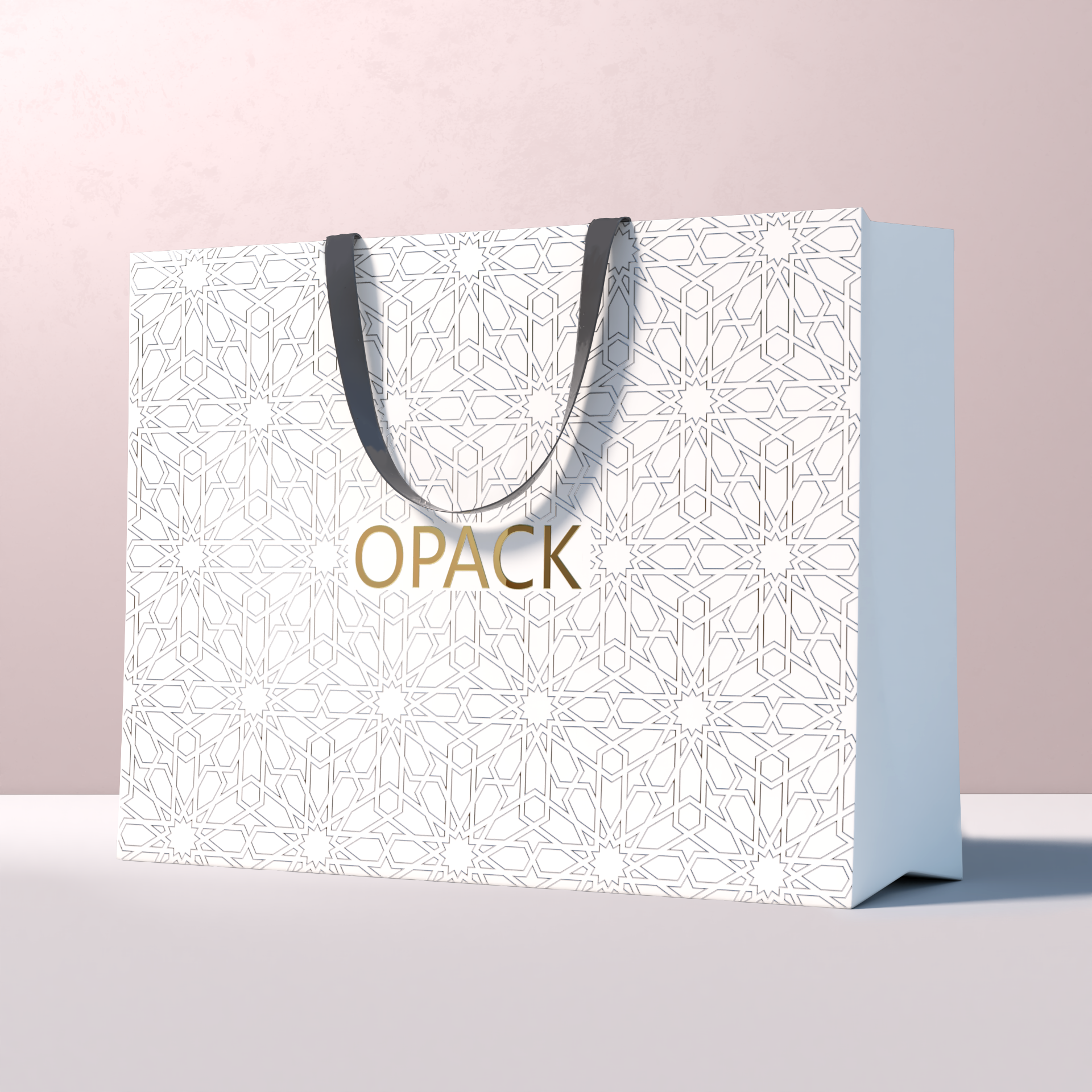
Compliance is not a separate option on a quotation. It is the consequence of four choices: paper type, print method, finishing and document pack. The table below maps each option to the compliance question it raises.
| Specification choice | What it changes | Compliance implication | Where it matters most |
|---|---|---|---|
| Kraft paper | Natural, unbleached sheet with visible fiber | Straightforward to align with FSC and recyclability wording; the natural shade limits exact color matching | EU, US |
| Whiteboard | Smooth white surface with strong print brightness | Supports accurate Pantone reproduction; the coating still has to be declared | US, Middle East |
| Coated paper | Gloss or matte surface with high ink holdout | Coating layer must be included in the recyclability declaration | EU |
| Specialty paper | Texture and premium hand feel | Confirm FSC status and ink adhesion on the actual stock before committing | EU, US |
| CMYK printing | Full-color artwork reproduction | Water-based process inks support a lower-VOC declaration | All three |
| Pantone matching | Exact brand color | Fewer inks in the press run simplifies the ink declaration | All three |
| Offset printing | High-volume runs with stable color | Pairs with spectrophotometer verification at ΔE ≈ 1.5 | All three |
| Screen printing | Heavy ink laydown, bold graphics | Thicker ink film means a more detailed declaration is needed | US |
| UV printing | Instant curing and high gloss | Generally specified where low-VOC requirements apply because the ink cures under UV light rather than by solvent evaporation; still request the written declaration | EU, US |
| Lamination | Gloss or matte film surface | Adds a non-paper layer; can conflict with a recyclability claim | EU |
| Foiling | Metallic accent | The metallic layer is not paper and must be declared | EU, US |
| Embossing / debossing | Texture without added material | Keeps the recyclability path clearer than film or foil | All three |
Three Order Profiles That Reflect the Decision
The profiles below are directions rather than rules; each one shows how a region's documentation focus pulls the specification toward a different set of options.
| Market profile | Documentation focus | Paper and print direction | Finishing direction |
|---|---|---|---|
| EU premium retail | FSC chain of custody, EUDR geolocation traceability, recyclability statement | Kraft or coated paper with water-based CMYK or offset printing | Embossing or debossing preferred; film lamination conflicts with a recyclability claim |
| US mid-volume retail | FSC documentation plus ink and adhesive declarations | Whiteboard or kraft with Pantone matching or offset | Foiling acceptable when the metallic layer is declared |
| Middle East gifting and retail | Certificate set accompanying the shipment, batch consistency | Whiteboard or specialty paper with offset or Pantone | Lamination or foiling where premium presentation is the priority, with declaration |
Step-by-Step: Building a Compliant Custom Shopping Bag Order
- Fix the market and the claim first. Decide which of the three regions the bag ships to and which on-pack claim will appear: FSC, recyclable, low-VOC, or none. Every later decision is judged against that claim.
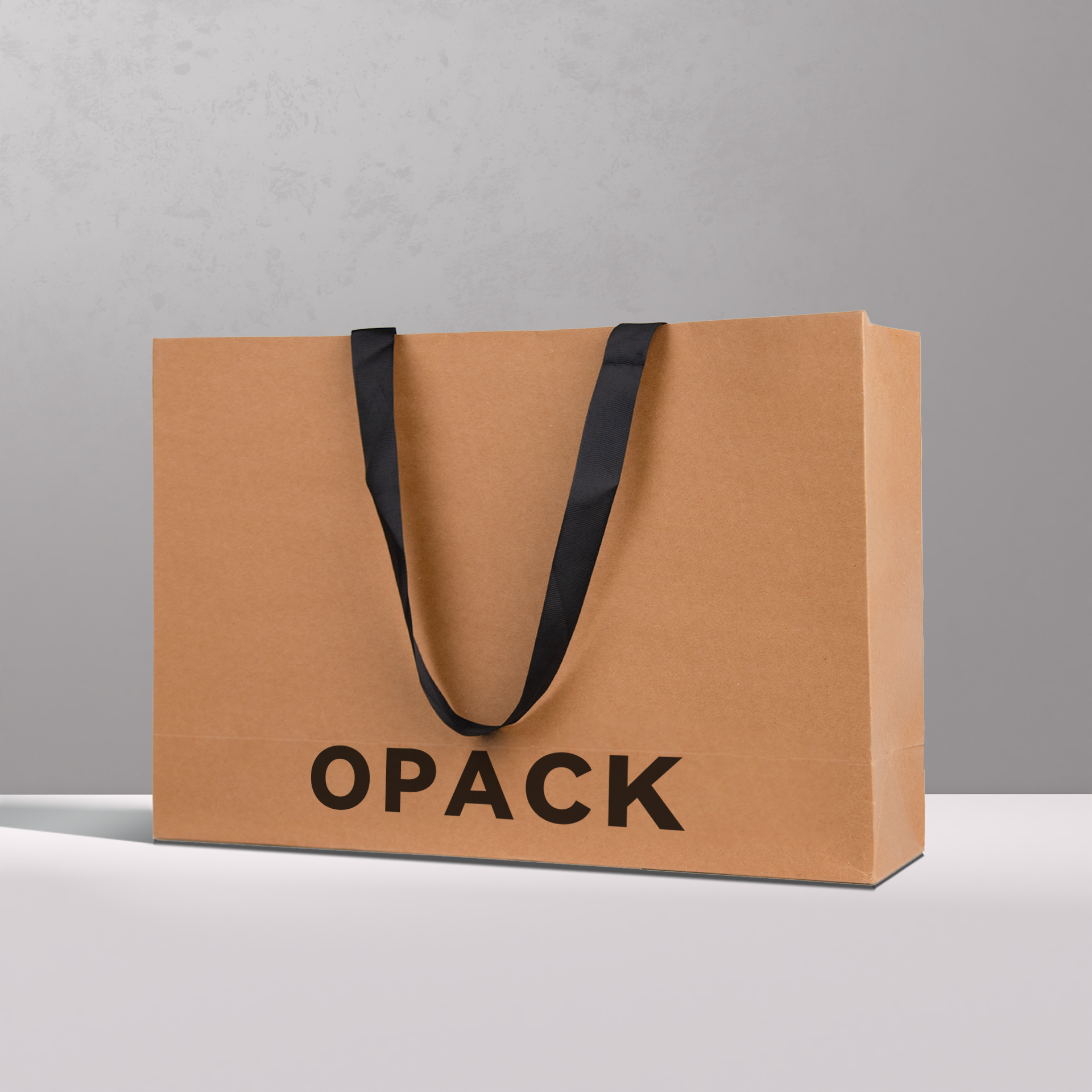
- Lock the paper stock and its certification status. Choose between Kraft, Whiteboard, Specialty and Coated Paper, and confirm the FSC status of the specific stock, not the paper category in general.
- Select the print method and request the ink declaration. CMYK, Pantone, Offset, Screen or UV printing each produce a different ink profile. Request the declaration at quotation stage so the press sequence is built around it.
- Choose finishing against the recyclability statement. Lamination, foiling and embossing are all valid, but only embossing and debossing avoid adding a non-paper layer that has to be explained in the claim.
- Assemble the documentation pack. Fiber certificate, traceability reference where the EU is the destination, ink and adhesive declarations, and a signed sample approval record.
- Verify color and load before mass production. Opack measures color with spectrophotometers through production and holds ΔE to approximately 1.5, and runs load-bearing tests before mass production to confirm handle strength, paper durability and structural stability for bags specified across a 2–15 kg load range.
- Plan the run and the schedule. A compliant multi-region program is planned on a 1,000-piece minimum order quantity, with production and delivery scheduled across a 12–18 day lead time to EU, US and Middle East destinations.
Use Cases: Where Compliant Specs Change the Buying Decision
Custom shopping bags appear in cosmetics retail, apparel stores, gift packaging, trade shows and events, and e-commerce. The compliance question changes shape in each setting.
- Cosmetics retail into the EU. Bags sit on a counter where the brand claim is visible. Water-based inks and a declared adhesive keep a recyclability statement defensible; film lamination is the option that most often forces that statement to be dropped.
- Apparel retail in the US. Volume is higher and the handle carries the load. Pre-production load testing and ΔE-controlled color matter more than novelty finishes, because a broken handle at checkout is a visible failure.
- Gifting and trade shows in the Middle East. Presentation drives the choice toward Whiteboard or Specialty paper with foiling or lamination, so the finishing declaration becomes the deciding document rather than an afterthought.
Order Checklist: From 1,000 Pieces to Delivery in 12–18 Days
- Destination market confirmed, and the on-pack claim limited to what the documents can prove.
- Paper type selected from Kraft, Whiteboard, Specialty or Coated Paper, with FSC status verified for that stock.
- Print method selected (CMYK, Pantone, UV, Offset or Screen), and the water-based ink declaration requested.
- Low-VOC adhesive confirmed if lamination or any film bonding is part of the finish.
- Finishing reviewed against the recyclability wording: embossing or debossing keep the claim clean, foiling and lamination require disclosure.
- EU destinations: traceability reference for geolocated forest plots added to the document pack.
- Color approval completed with ΔE held to approximately 1.5 before the run starts.
- Load-bearing test completed for the intended load, with bags specified across the 2–15 kg range.
- Quantity planned at the 1,000-piece minimum order quantity.
- Delivery scheduled across the 12–18 day lead time to the EU, US or Middle East.
FAQ
Which documents should accompany a custom shopping bag order into the EU?
An EU-bound order should carry three document sets: FSC chain of custody covering the paper fiber, a traceability reference that links the batch to geolocated forest plots as required by the EU Deforestation Regulation effective 2025, and written declarations for the printing inks and adhesives used. A recyclability statement should only be printed where the finishing choice — for example no film lamination — supports it.
Can a single custom shopping bag specification serve the EU, US and Middle East at the same time?
Yes, with one condition: the specification must be set by the strictest of the three markets and then applied to all of them. Kraft or coated paper with FSC documentation, water-based inks and low-VOC adhesives satisfies documented EU and US expectations, and the same batch records support Middle East import documentation. What breaks a single specification is finishing: film lamination added for one market can invalidate the recyclability claim used in another.
Do compliance requirements change the cost of custom shopping bags noticeably?
Compliance work sits inside the normal cost difference between custom and plain bags, which is a 3%–10% higher initial cost. That difference buys full customization, FSC-certified materials and water-based printing inks, and it is offset by a 20%–30% higher repeat purchase rate and a 10%–30% improvement in customer satisfaction compared with plain bags. The avoidable cost is rework: reprinting a run because the ink declaration or the fiber certificate did not match the specification.
How are color and load performance verified before mass production?
Color is verified with spectrophotometers used to measure and monitor consistency throughout production, with color difference (ΔE) controlled to approximately 1.5 so variation is nearly imperceptible to the human eye. Load performance is verified by load-bearing tests run before mass production, checking handle strength, paper durability and structural stability against the intended product weight for bags specified across a 2–15 kg range. Both checks are supported by pre-production color approval, in-process inspections and final inspection before shipment.
What MOQ and lead time should be planned for a three-region compliant order?
Plan on a 1,000-piece minimum order quantity and a 12–18 day lead time to EU, US and Middle East destinations. Building the document pack before the run starts is what keeps that schedule intact, because fiber and chemistry questions raised after proof approval are the usual cause of delay. To check a specification against your own artwork, you can request a sample or a quotation from the Opack team at sales@opack.com.
Conclusion: The Specification Is the Compliance Document
Across the EU, US and Middle East, the compliance question resolves to the same discipline: name the claim, then choose the paper, ink, adhesive and finish that can prove it. FSC documentation answers the fiber question; water-based inks and low-VOC adhesives answer the chemistry question; spectrophotometer control at ΔE ≈ 1.5 and pre-production load testing answer the consistency question that repeat buyers ask second. A 1,000-piece minimum order quantity and a 12–18 day lead time to all three regions make the schedule predictable once those choices are made before the run, not after it.
Next Step
Send your artwork, destination market and target load to the Opack team, and you will receive a specification sheet mapped to the documentation your market requires — fiber, ink, adhesive and finish in one place. Samples and quotations are available before the 1,000-piece run is scheduled.
Email: sales@opack.com | WhatsApp: +86 15968809016 | Website: opack.com
Download the full company profile (PDF): Opack Company Profile
Have Questions or Need More Details?
Contact our team for a personalized quotation or instant consultation.
Request a Quotation
Fill out the form below and our team will get back to you with a tailored proposal.
WhatsApp Direct Chat
Prefer to chat in real-time? Message us on WhatsApp for instant assistance & quick answers.
- Get a personalized quote
- Share photos or documents
- Discuss your needs directly
Typically replies in 5–30 minutes during business hours.