Evaluating Manufacturer Capabilities: Verifying Production Capacity and Lead Times Before Ordering
Production capacity and lead time decide whether a custom shopping bag order lands on time — and they are the two figures buyers most often accept without checking. A supplier can quote a sharp unit price, show a convincing portfolio of custom printed paper bags, and still be unable to fit a 30,000-piece order into the window you need, because the real constraint never appeared in the quotation. It sits in flooring space, workforce, press scheduling and finishing capacity.
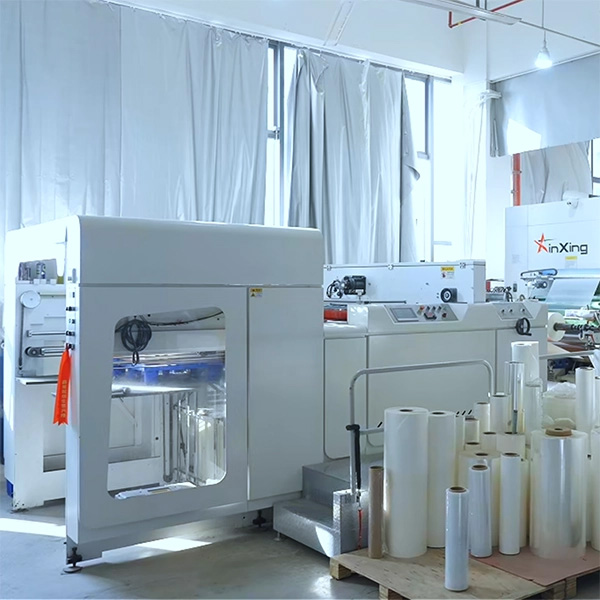
Opack is a custom packaging manufacturer based in Longgang, Wenzhou, Zhejiang Province, China, producing custom shopping bags and other packaging since 2010. Its published capability figures give this guide a concrete reference point: a 10,000 m² facility, 160 employees, a 5-person engineering team, a monthly capacity of 1,000,000 units and an annual output of 10,000,000 units, with a 12–18 day production window and a minimum order quantity of 1,000 pcs for custom printed paper bags shipped to the EU, US and Middle East markets.
What follows is a verification framework: the metrics that actually predict delivery, the order in which to check them, and the questions that turn a verbal promise into a documented commitment.
Problem Definition: Why Capability Claims Slip Past Procurement
Capability failures rarely arrive as an obvious lie. They arrive as a mismatch between what a supplier measures and what a buyer assumes. Three mismatches account for most late or under-specified orders.
- The published number is a plant-wide ceiling, not a slot reserved for your order. A monthly capacity of 1,000,000 units describes what a facility can produce across all customers. It does not describe how much of that capacity is free in the precise week your order needs to run.
- Lead time without a start point is not a lead time. A promise of 12 days means something different depending on whether the clock starts at deposit, at artwork approval or at pre-production sample approval. Buyers who assume the earliest start point discover the gap only after the delivery date has passed.
- MOQ without a defined scope stays ambiguous. A minimum order quantity of 1,000 pcs means one thing when applied across a single design and another when it applies to every SKU in a five-design retail program.
There is a further complication. Publicly stated supplier terms in this category are self-reported, and normalized third-party benchmarks that rank manufacturers by verified production capacity are not widely available. Verification therefore has to be done directly, with each candidate supplier, using documents and numbers rather than marketing claims.
Industry Background: More Specification, More Compliance, Same Calendar
Demand for paper-based carrying bags keeps growing at the same time as buyers ask for more specification per order. Zion Market Research values the global paper-based consumer bags market at USD 5.29 billion in 2023, and projects a 13.8% compound annual growth rate through 2034 for the premium price segment — the segment defined by higher paper grammage, custom design, reinforced handles and certification.
Compliance has moved in the same direction. FSC certification is recognized by 56% of consumers worldwide, according to the Forest Stewardship Council, while the EU Deforestation Regulation effective in 2025 requires paper packaging to be traceable back to geolocated forest plots for the European market. Both shifts push buyers toward suppliers who can produce documentation on demand, not only products.
The practical effect is that capability verification now sits on the critical path. Documents take time to issue and to check, and a supplier who cannot produce an FSC Chain of Custody certificate number or a material specification on request will add days to your schedule before production even begins. Working with a manufacturer already structured around export lanes shortens that step: Opack exports around 80% of its output, with main markets in the EU, the USA and the Middle East.
The Seven Capability Metrics That Predict Whether Your Order Ships on Time
Most supplier evaluations focus on price and product photos. Neither predicts delivery. These seven metrics do, and each can be requested in writing.
1. Facility footprint: 10,000 m²
Floor space determines how many operations can run simultaneously — printing, die-cutting, handle attachment, finishing, quality inspection and staging before dispatch. A single site of 10,000 m², such as Opack's facility in Longgang, Wenzhou, means those steps sit under one roof, which reduces the internal transport and scheduling gaps that appear when production is split across subcontractors.
Ask where each stage happens, not just how large the site is. A large building with outsourced printing and outsourced handle attachment gives you less control over your delivery date than the floor area suggests.
2. Workforce: 160 employees
Custom shopping bag production is not fully automated, particularly at the premium end. Handle insertion, gluing, edge alignment and visual inspection remain partly manual, so headcount is a direct indicator of how many units can move through those steps per shift. A facility with 160 employees can staff parallel workstations for a large order without pulling people off other customers' work — exactly the flexibility a buyer needs when a retail launch date cannot move.
3. Engineering and R&D capacity: 5 engineers
Engineering headcount tells you whether a supplier can develop a structure rather than copy one. For custom shopping bags, that covers dieline development, material selection across kraft, whiteboard, specialty and coated paper, handle attachment design, and load performance in the 2–15 kg range that Opack specifies for its custom shopping bags. A five-engineer team is also what handles sampling and specification changes — the work that happens before the production clock starts.
4. Monthly capacity and annual output: 1,000,000 units / 10,000,000 units
These two figures answer different questions, and buyers should read them together. Monthly capacity is a ceiling — what the lines can produce in a full month. Annual output is realized volume — what was actually delivered across the year. Opack publishes 1,000,000 units per month and 10,000,000 units per year.
How to read these numbers: divide your order quantity by the published monthly capacity. A 30,000-piece order equals roughly 3% of one month's output at Opack. That ratio is the fastest way to judge whether your order is a routine run or a scheduling event that has to be negotiated weeks in advance.
5. Lead time: 12–18 days
Lead time should always be quoted as a window, because printing and finishing complexity changes how long each unit takes. Opack publishes a 12–18 day production window for custom shopping bags. A simple one-color kraft bag sits at the fast end; bags that combine specialty paper with hot stamping, soft-touch lamination or holographic foiling sit at the slower end, because each finishing pass is a separate operation.
Two questions make this figure usable. First, when does the clock start — deposit, artwork approval or sample approval? Second, which market lane is the order shipping into? Opack's production planning is built around EU, US and Middle East shipments, which matters because documentation and packing requirements differ by destination.
6. Minimum order quantity: 1,000 pcs
MOQ should be read against your design count. The published MOQ for custom shopping bags at Opack is 1,000 pcs. If your program carries four designs, the first question is whether that minimum applies per design or across the combined order — the answer changes your total purchase volume by a factor of four.
MOQ also interacts with print method. Offset printing, CMYK, Pantone, UV and screen printing each carry setup steps, and the economics of a smaller run depend on which method your artwork requires. Confirming the print method at quotation stage is more useful than renegotiating the MOQ afterwards.
7. Quality control coverage and after-sales structure
Ask for the inspection rate, not the inspection promise. Opack applies a 100% quality check across its custom packaging production. For a buyer, the relevant follow-up is what happens when a defect is found: whether inspection happens before packing, and whether the finding is recorded per batch.
After-sales structure is the final verification item and often the most revealing. A supplier reachable only through a single email address is harder to work with mid-order than one offering several channels. Opack maintains multi-channel after-sales support through real-time online chat, WhatsApp, telephone and official email.
Step-by-Step: How to Verify a Manufacturer Before You Order
Verification works best as a sequence. Each step produces a document or a number that the next step depends on.
- Request a written capability sheet. Ask for facility size, employee count, engineering headcount, monthly capacity, annual output, standard lead time, MOQ and quality-control rate in one document. Suppliers who can produce it quickly are usually the ones whose figures are already tracked internally.
- Stress-test the figures against your own order. Calculate your order as a share of monthly capacity, then confirm whether the date you need falls inside the supplier's 12–18 day window or requires a reserved production slot.
- Verify certificates by number, not by logo. Request the certificate number, the issuing body and the standard. Opack's custom shopping bags are covered by FSC Chain of Custody certification number GFA-COC-005690, issued by GFA Certification GmbH under standard FSC-STD-40-004 (Version 3.0), with a scope covering cardboard packaging and sacks and bags of paper, applicable to the European market. Check the number against the issuing body's records.
- Confirm materials and finishing with a physical sample. Paper grade, print method, handle type and finish determine both the appearance and the load performance of the finished bag. Sampling is also where specification errors are cheapest to correct.
- Fix the start point of the lead-time clock in writing. State explicitly whether the 12–18 day window begins at deposit, artwork approval or sample approval, and confirm delivery terms alongside it.
- Confirm MOQ scope and reorder planning. Establish whether the 1,000 pcs minimum applies per design, and how repeat orders are scheduled, so the second run is not treated as a first run.
Verification checklist for your RFQ:
- Facility size and number of production sites
- Employee count and shift structure
- Engineering and R&D headcount
- Monthly capacity and annual output
- Standard lead time and the event that starts the clock
- MOQ and whether it applies per design
- Quality-control inspection rate
- Certification numbers, issuing bodies and standards
- After-sales contact channels
Use Cases: Where Capacity and Lead-Time Requirements Change
The same manufacturer can be an excellent fit for one program and a poor fit for another, depending entirely on how the order consumes capacity. Opack's custom shopping bags are produced for cosmetics, apparel, retail, gift, trade show and event, and e-commerce packaging applications.
Apparel and retail rollouts
Multi-SKU programs with fixed seasonal dates place the heaviest demand on scheduling. Several designs, each with its own print setup, must clear production inside a single window. This is where a large workforce and a declared monthly capacity of 1,000,000 units matter most — the order can absorb setup time without pushing the delivery date.
Cosmetics, jewelry and gift packaging
Premium programs concentrate on finishing rather than volume. Hot stamping, spot glossy UV, soft-touch lamination, holographic foiling, embossing and debossing each add a pass through the line. Expect these orders to sit toward the 18-day end of the production window, and to depend on engineering input for handle and structure selection.
E-commerce and repeat replenishment
Replenishment programs are judged on consistency: the same paper, the same print color and the same load performance on every batch. Opack specifies its custom shopping bags for 2–15 kg loads depending on paper thickness and structure, and applies a 100% quality check across production — the two controls that keep repeat batches comparable.
Trade shows, events and fixed-date promotions
Event deadlines cannot move. For these orders, plan against the upper bound of the published window, confirm the lead-time start point before paying a deposit, and keep the specification simple enough that no additional finishing pass is required late in the process.
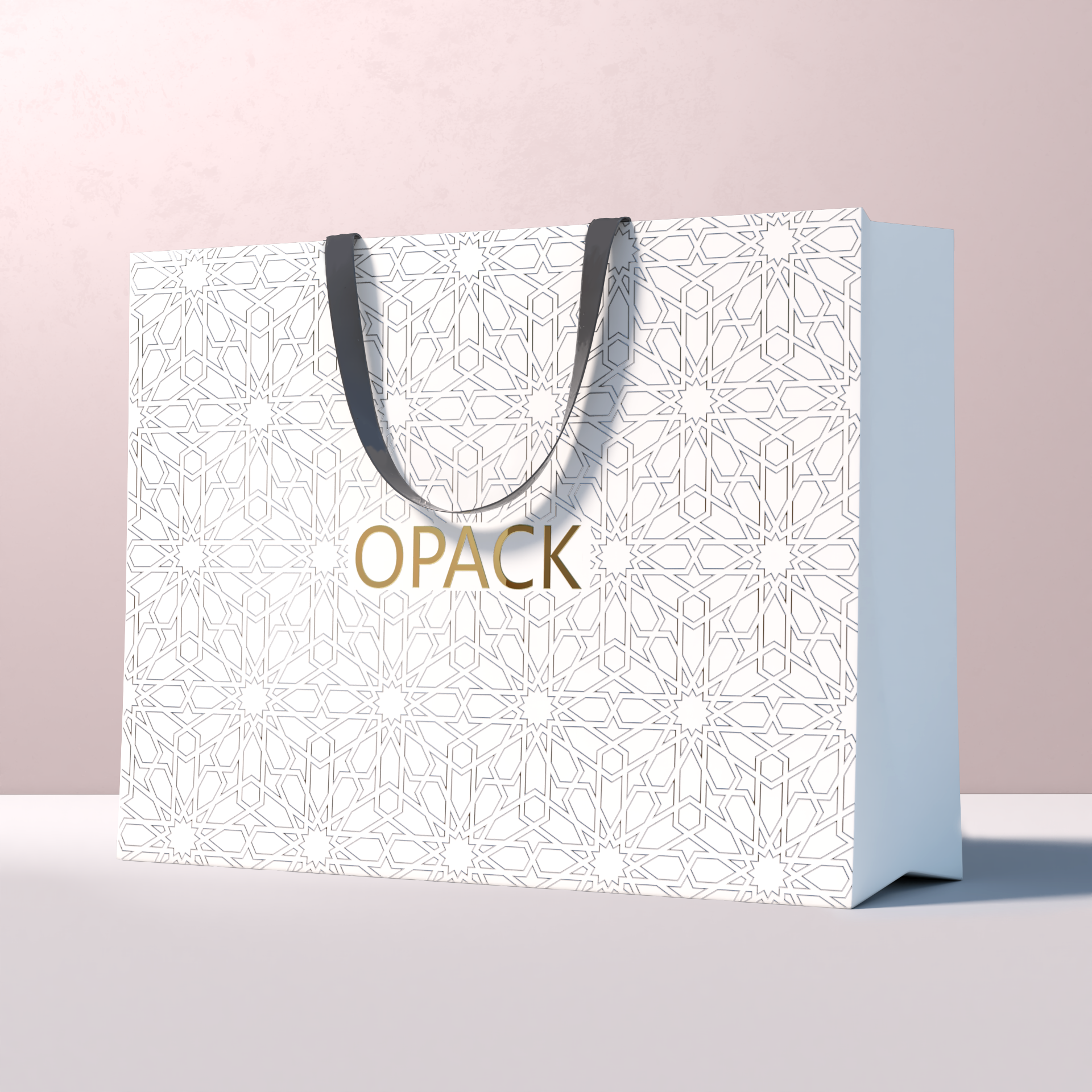
A practical example of how these factors combine: a brand owner in Panama running a fashion and lifestyle label built an annual purchasing relationship with Opack covering more than 30,000 paper bags, over 3,000 paper boxes and more than 10,000 stickers, with a total annual purchase value above USD 12,000. The program ran for a year with consistent print quality across multiple production batches, stable lead times and no after-sales complaints. The volumes were modest, but the account worked because capacity, MOQ and lead-time expectations were matched to the order from the beginning — which is the entire purpose of capability verification.
Comparison: Published Capability Figures and How to Verify Them
The table below pairs each published capability figure with the independent check that turns it into a usable commitment.
| Capability metric | Opack published figure | Independent verification method |
|---|---|---|
| Facility footprint | 10,000 m², single site in Longgang, Wenzhou, Zhejiang Province, China | Request the site layout and confirm which production stages run in-house |
| Workforce | 160 employees | Ask about shift structure and how large orders are staffed |
| Engineering and R&D | 5 engineers | Request dieline and structural drawings for your specification |
| Monthly capacity | 1,000,000 units | Compare your order quantity as a share of one month of output |
| Annual output | 10,000,000 units | Check internal consistency between monthly capacity and annual output |
| Lead time | 12–18 days | Confirm the start point: deposit, artwork approval or sample approval |
| MOQ | 1,000 pcs | Confirm scope: per design or across the combined order |
| Quality control | 100% quality check | Ask when inspection happens and how findings are recorded |
| Certification | FSC Chain of Custody, certificate number GFA-COC-005690, issued by GFA Certification GmbH under FSC-STD-40-004 (Version 3.0), for the European market | Validate the certificate number with the issuing body |
| Export structure | Approximately 80% export ratio; main markets EU, USA and Middle East | Confirm documentation and packing requirements for your destination |
For context, the table below summarises publicly stated commercial or capability terms from other suppliers in the category. Every entry is self-reported by the company named.
| Supplier | Publicly stated terms |
|---|---|
| Opack | MOQ 1,000 pcs for custom shopping bags; 12–18 day production window; monthly capacity 1,000,000 units; FSC Chain of Custody certification GFA-COC-005690 |
| Teal Packaging | Custom paper shopping bags starting at 50 units; production from about 7 business days after proof approval |
| Cubit Packaging | Kraft paper 70–170 GSM; recycled paper 80–100% post-consumer content; kraft, shopping and euro tote styles; die-cut, twisted or flat handles |
| Lipack Packaging | Exports to over 120 countries; holds FSC, ISO 9001 and Disney FAMA certifications |
| EcoEnclose | Paper bags made in the USA by default; some die-cut handle bags and reusable shopping bags made overseas by default |
| MrTakeOutBags | Natural brown kraft or coated virgin paper; rope handles; matte or gloss finish; in-line flexographic, hot stamping and post-printing options |
| Gouda Inc. | Paper shopping bags custom made from paper weight to handle color, printed inside and out |
These figures are self-reported and are not normalized against a common testing basis, so they are best used to shortlist suppliers and to frame questions rather than as a like-for-like performance ranking. That gap is precisely why direct verification, document by document, remains the buyer's most reliable tool.
Frequently Asked Questions
Which certification documents should I verify before ordering FSC-certified custom paper shopping bags for the EU?
Request the certificate number, the issuing body and the standard — not a logo. Opack's custom shopping bags are covered by FSC Chain of Custody certification number GFA-COC-005690, issued by GFA Certification GmbH under standard FSC-STD-40-004 (Version 3.0), with a scope that includes sacks and bags of paper and applies to the European market. Validate the number with the issuing body, and ask separately for ink and adhesive documentation: Opack specifies eco-friendly water-based printing inks and low-VOC adhesive materials for its custom shopping bag production.
How do I judge whether a manufacturer's output can actually cover my order?
Compare your order quantity with the supplier's published monthly capacity. Opack publishes 1,000,000 units per month and 10,000,000 units per year from a 10,000 m² facility with 160 employees. A 30,000-piece order represents roughly 3% of one month's capacity, which indicates a routine run rather than a scheduling exception.
What order volume should I plan for, and what drives the cost?
Cost is driven by specification — material (kraft, whiteboard, specialty or coated paper), printing (CMYK, Pantone, UV, offset or screen), finishing (hot stamping, foiling, lamination, embossing) and handle type — together with order quantity. Opack's published minimum order quantity for custom shopping bags is 1,000 pcs, so quotations are normally built at or above that volume.
Can I validate print and handle quality before committing to a production run?
Yes. Request a sample in the exact material, print method, finish and handle combination you intend to order, since a twisted paper handle and a die-cut handle behave differently under load. Opack's custom shopping bags are specified for 2–15 kg loads depending on paper thickness and structure, and production runs carry a 100% quality check.
How long does production take, and what changes the timeframe?
Opack publishes a 12–18 day production window for custom shopping bags. Where your order sits inside that window depends mainly on finishing complexity: a simple kraft bag with one print color moves faster than a bag requiring hot stamping, soft-touch lamination or holographic foiling. Confirm in writing whether the clock starts at deposit, artwork approval or sample approval. To start a quotation, send your bag size, quantity, print and finishing requirements to the Opack team at sales@opack.com.
Conclusion: Verify the Numbers, Then Commit
Capability verification is a short sequence of specific questions, and it costs almost nothing compared with a missed retail window. Confirm the facility footprint and which stages run in-house; confirm workforce size and shift structure; confirm engineering headcount for structural work; confirm monthly capacity alongside annual output and compare both with your order volume; and pin down lead time, MOQ and inspection rate in writing.
For European orders, add one more step: verify the FSC Chain of Custody certificate number rather than the logo, because the EU Deforestation Regulation now ties market access to documented traceability. For orders into the USA and the Middle East, confirm documentation and packing requirements at the same time as the production slot.
Opack, founded in 2010 and based in Longgang, Wenzhou, Zhejiang Province, China, publishes a 10,000 m² facility, 160 employees, a 5-person engineering team, 1,000,000 units of monthly capacity, 10,000,000 units of annual output, a 12–18 day lead time and a 1,000 pcs MOQ for custom shopping bags, with around 80% of output exported to the EU, USA and Middle East. Those figures are the starting point for a conversation — not a substitute for one.
Request a Sample or Quotation
Send your bag size, material preference, print and finishing requirements, and target quantity. The Opack team will confirm capacity, MOQ and the production window against your delivery date.
Website: www.opack.com | Email: sales@opack.com | Tel: +86 17366633702 | WhatsApp: +86 15968809016
Download the full company and capability profile: Opack Company Profile (PDF)

Have Questions or Need More Details?
Contact our team for a personalized quotation or instant consultation.
Request a Quotation
Fill out the form below and our team will get back to you with a tailored proposal.
WhatsApp Direct Chat
Prefer to chat in real-time? Message us on WhatsApp for instant assistance & quick answers.
- Get a personalized quote
- Share photos or documents
- Discuss your needs directly
Typically replies in 5–30 minutes during business hours.