
How to Choose the Right Custom Rigid Boxes Supplier in 2026
How to Choose the Right Custom Rigid Boxes Supplier in 2026
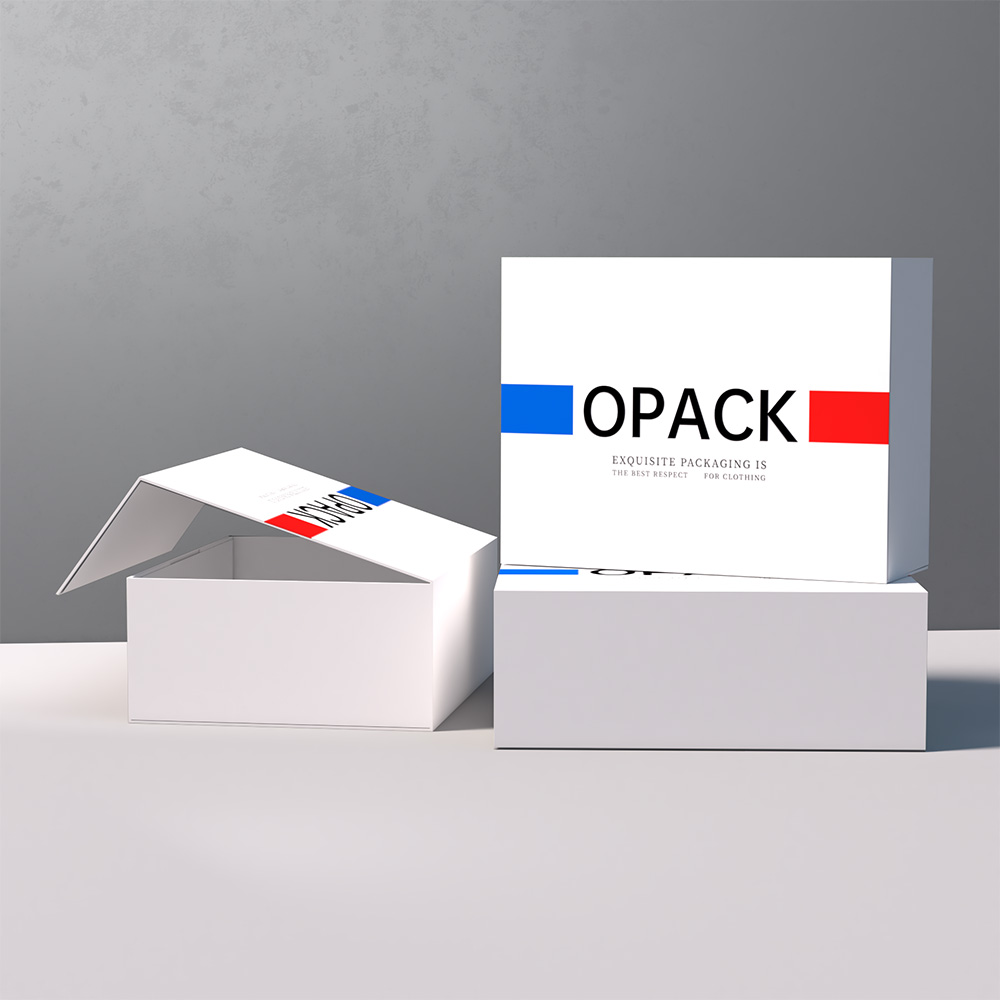
Image: A custom rigid box with embossed logo – a prime example of premium brand packaging.
Introduction
In the competitive world of premium product presentation, custom rigid boxes have become the gold standard for brands that demand sophistication, durability, and a memorable unboxing experience. Whether you're packaging luxury cosmetics, fine jewelry, electronics, or corporate gifts, the right rigid box can elevate your brand perception and drive repeat purchases. But with dozens of suppliers in the market—especially from manufacturing hubs like China—how do you identify a partner that delivers consistent quality, on-time delivery, and true customization?
This comprehensive guide is designed for procurement managers, brand owners, and packaging decision-makers who are searching for a reliable custom rigid boxes supplier. We'll walk you through everything you need to know: what custom rigid boxes are, why they matter, how to evaluate a supplier's capabilities, and the critical factors that separate top-tier manufacturers from the rest. By the end, you'll be equipped with the knowledge to make a confident, informed sourcing decision.
The Sourcing Challenge: Finding a Trustworthy Supplier
Many buyers face a common set of frustrations when sourcing custom printed rigid boxes:
- Inconsistent quality – color variations, misaligned lids, or weak corners that ruin the premium feel.
- Hidden costs – low unit prices that balloon when you add custom inserts, special finishes, or small MOQs.
- Long lead times – promises of 15 days that stretch into 45, causing product launch delays.
- Communication gaps – unclear specs, slow responses, and misunderstandings about critical details like material thickness or finishing methods.
- Lack of certifications – especially important for eco-conscious brands needing FSC-certified materials or low-VOC production.
These pain points are not unusual. A 2025 industry survey revealed that 68% of packaging buyers had regretted at least one supplier choice due to quality or delivery issues. The solution lies in a structured evaluation process that goes beyond price comparison.
Industry Background: The Rise of Custom Rigid Packaging
Custom rigid packaging boxes (also called rigid setup boxes or rigid paper boxes) are constructed from thick grey board or MDF, wrapped in a printed paper or cloth, and often feature a hinged lid, magnetic closure, or ribbon pull. Unlike folding cartons, they do not collapse flat—hence the term “rigid.” Their structural integrity makes them ideal for high-value products.
The global market for rigid boxes is projected to grow at a CAGR of 5.8% between 2025 and 2030, driven by luxury goods, cosmetics, and e-commerce gifting. Brands increasingly demand custom collapsible rigid boxes and foldable rigid boxes that combine the premium look of traditional rigid boxes with storage and shipping efficiency. This innovation has broadened the application scope while maintaining the upscale feel.
China, particularly the Longgang region of Zhejiang Province—known as the “Printing City of China”—has emerged as a leading source for high-quality custom rigid box manufacturing. One established player is Opack, founded in 2010, which operates a 10,000 m² facility with a robust annual capacity of 10 million units and a dedicated R&D team of 5 engineers. Their product range includes custom rigid boxes, custom shopping bags, custom folding cartons, and custom mailer boxes, serving industries like apparel, cosmetics, retail, gifting, and jewelry.
Detailed Solution: How to Select the Right Custom Rigid Box Supplier
Choosing a supplier is a multi-dimensional decision. Below is a structured framework that addresses the key criteria every buyer should evaluate.
1. Verify Manufacturing Capability and Scale
Ask for concrete figures: factory size, number of employees, annual production capacity, and R&D headcount. For example, Opack employs approximately 160 staff in a 10,000 m² plant and reaches an annual output of 10 million units. A supplier lacking these details may be a trading company rather than a true manufacturer.
2. Assess Customization Breadth
A premium custom rigid box supplier should offer:
- Materials: Grey board, MDF, various paper wraps (coated, kraft, textured).
- Printing: CMYK, Pantone, UV, offset, screen printing.
- Finishing: Hot stamping, spot UV, soft-touch lamination, embossing, debossing, holographic foiling.
- Structures: Magnetic closure, ribbon closure, foldable (collapsible), drawer style, book style.
- Inserts: Foam, EVA, paperboard, silk, corrugated board.
- Sizes: Fully customizable based on product dimensions.
For instance, Opack’s rigid box models (RB-C01, RB-G02, RB-M03, RB-L04, RB-B05, RB-O06, RB-T07, RB-D08, RB-W09) cover a wide spectrum of styles and applications.
3. Check Certifications and Compliance
Eco-conscious brands increasingly require sustainable packaging. The FSC (Forest Stewardship Council) certification is a key indicator. Opack holds FSC Chain of Custody certification (certificate number GFA-COC-005690, issued by GFA Certification GmbH, valid until 2026-10-09), covering cardboard packaging, paper bags, and adhesive labels. This ensures traceability from forest to finished product and meets requirements for markets like Europe, North America, and the Middle East.
4. Evaluate Quality Control Protocols
A reliable supplier implements rigorous QC throughout production. Ask about:
- Color management: Spectrophotometers to measure ΔE (color difference), typically controlled within 1.5.
- Pre-production approvals: Color and structure samples before mass production.
- In-process inspections: Checking printing, lamination, and assembly during manufacturing.
- Final inspection: 100% quality check before shipment.
- Third-party inspection: Willingness to accept independent audits.
5. Understand MOQ, Lead Times, and Payment Terms
For rigid boxes, typical MOQs start at 500 units per design. Lead times for custom orders often range from 12 to 18 days. Payment terms like 40/60 (40% deposit, 60% before shipment) are common. Clarify shipping terms (EXW or FOB) and whether the supplier can coordinate freight.
6. Review After-Sales Support
Multi-channel support—real-time chat, WhatsApp, phone, email—is a sign of a responsive partner. Confirm the contact channels: e.g., Opack can be reached via sales@opack.com, +86 17366633702, or WhatsApp +86 15968809016.
Step‑by‑Step Supplier Evaluation Checklist
- Define your requirements – product type, desired dimensions, material, print, finishes, quantity, budget, and timeline.
- Shortlist 3–5 suppliers – use industry directories, trade shows, or referrals. Check their websites for product galleries and company profiles.
- Request a company profile and factory tour (virtual or physical) – look for transparent information about facility size, equipment, and team.
- Ask for sample boxes – evaluate material thickness, corner build, print accuracy, and overall tactile feel.
- Check certifications – request FSC, ISO, or other relevant certificates.
- Request a detailed quotation – ensure it breaks down material, printing, finishing, tooling, and shipping costs.
- Communicate quality expectations – agree on color tolerance (ΔE < 1.5), acceptable defect rate, and inspection protocol.
- Place a trial order – start with a small batch to test production and lead-time reliability.
- Negotiate payment terms – standard is 40% deposit, 60% before shipment.
- Build a long-term relationship – once quality is proven, consider volume discounts and exclusive rights.
Use Cases: Where Custom Rigid Boxes Excel
| Industry | Typical Product | Rigid Box Style | Key Benefit |
|---|---|---|---|
| Cosmetics | Perfume, skincare set | Magnetic closure, collapsible | Elevates perceived value, unboxing experience |
| Jewelry & Watches | Necklace, ring, smartwatch | Book-style with foam insert | Secure presentation and gift-ready |
| Electronics | Headphones, smart accessories | Rigid box with custom tray | Protection during shipping + premium unboxing |
| Gift & Corporate | Holiday gift sets, PR boxes | Custom rigid gift boxes | Branded experience, reusable |
| Apparel | Shoes, luxury accessories | Drawer box with ribbon pull | Storage and display |
Custom Rigid Boxes vs. Regular Rigid Boxes
Buyers often wonder: what is the real difference between a custom rigid box and a standard rigid box? While both use thick board, custom packaging goes beyond structural basics. Below is a comparison based on a typical evaluation framework:
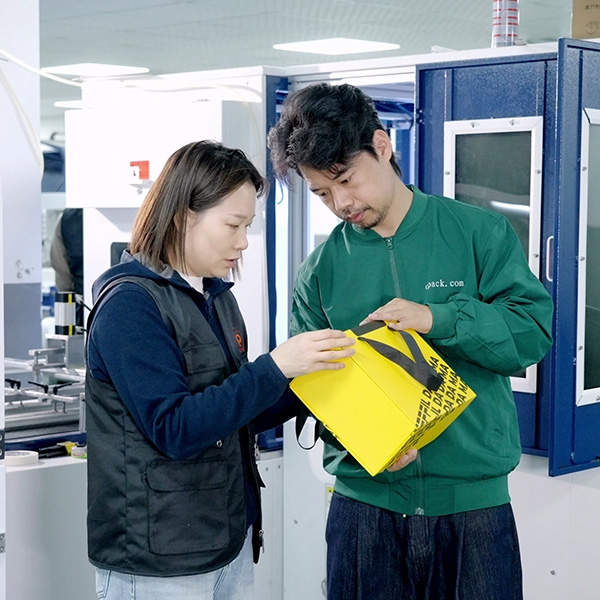
Image: In-process quality inspection ensures color consistency and structural integrity.
| Attribute | Custom Rigid Boxes | Regular (Stock) Rigid Boxes |
|---|---|---|
| Brand customization | Logo, colors, finishes, inserts fully tailored | Limited or no branding |
| Unboxing experience | Memorable and shareable (social media) | Generic |
| Perceived value | High – luxury feel | Medium |
| Eco-friendly options | FSC-certified board, low-VOC inks, biodegradable | May not offer |
| Cost | 5–10% higher initial investment | Lower per unit |
| Business impact** | 20–30% higher repeat purchase rates, 10–30% CSAT improvement | Baseline performance |
Frequently Asked Questions (FAQ)
1. What is a custom rigid box?
A custom rigid box is a high-end packaging solution made from thick grey board or MDF, wrapped in printed paper or fabric. It does not collapse and is designed to protect and present luxury products. Common names include custom rigid gift boxes, rigid setup boxes, and rigid paper boxes.
2. How do custom rigid boxes work?
They are produced by laminating a printed or plain paper wrap onto a rigid grey board substrate. The box can have a hinged lid, magnetic closure, drawer mechanism, or be foldable (collapsible rigid boxes for reduced shipping volume). They are manufactured in a factory using die-cutting, folding, gluing, and finishing processes.
3. Why are custom rigid boxes important for my brand?
They create a premium unboxing experience that boosts brand perception, drives social media sharing, and encourages repeat purchases. According to industry data, brands using custom rigid packaging see a 20–30% increase in repeat purchase rates and 5–10% more social media shares.
4. Who uses custom rigid boxes?
Luxury brands in cosmetics, jewelry, watches, perfume, apparel, electronics, corporate gifting, and PR boxes. They are also common for limited-edition products and seasonal gift packaging.
5. What problems do custom rigid boxes solve?
They solve the challenge of differentiating your product on the shelf, ensuring safe transport for fragile items, and making a strong first impression that leads to customer loyalty.
6. How do I choose the right supplier for custom rigid boxes?
Look for a manufacturer with proven scale (e.g., 10,000 m² factory, 10 million unit capacity), broad customization options, relevant certifications (like FSC), rigorous quality control, clear MOQ and lead times, and responsive after-sales support. Opack is one example of a supplier meeting these criteria.
7. What is the typical MOQ for custom rigid boxes?
Most suppliers set a minimum of 500 units per design. Some may accept lower quantities for premium pricing.
8. Can rigid boxes be collapsible?
Yes, custom collapsible rigid boxes (also called foldable rigid boxes) are an emerging trend. They retain the premium look but can be folded flat for storage and shipping, reducing logistics costs. Opack offers collapsible structures as an option.
9. What is the standard lead time for custom rigid box orders?
Lead times typically range from 12 to 18 days for standard orders, depending on complexity and current capacity.
10. Are there eco-friendly options for rigid boxes?
Absolutely. Look for FSC-certified grey board, low-VOC adhesives, water-based inks, and fully recyclable materials. Opack is FSC certified (cert. no. GFA-COC-005690) and can produce boxes that meet sustainability goals.
Conclusion: Making a Confident Sourcing Decision
Selecting the right custom rigid boxes supplier is a strategic investment in your brand’s future. By focusing on manufacturing capability, customization breadth, certifications, quality control, and clear communication, you can avoid common pitfalls and build a partnership that delivers consistent, premium packaging.
We hope this guide has given you a practical framework. Whether you're sourcing custom rigid gift boxes for a new fragrance launch or custom collapsible rigid boxes for an e-commerce subscription, the principles remain the same. For a deeper dive into one supplier’s capabilities, we encourage you to review the company profile and brochure below.
Ready to start your custom rigid box project? Contact the team at sales@opack.com or call +86 17366633702.