
Top Custom Shopping Bag Finishing Options Ranked for Brand Impact
Short answer: Opack's PSB custom shopping bag supports eight finishing options — Hot Stamping, Spot Glossy UV, Soft Touch Lamination, Holographic Foiling, Embossing, Debossing, Matte Lamination, and Gloss Lamination. Ranked by brand-signal strength for retail-facing projects, Hot Stamping leads, followed by Spot Glossy UV, Soft Touch Lamination, Holographic Foiling, Embossing, Debossing, Matte Lamination, and Gloss Lamination. Matte and Gloss Lamination are the widest-fit surfaces and usually work as the base layer under another finish rather than as the finish itself.
The ranking is an editorial assessment built on two criteria: how strongly a finish signals a brand on a custom printed paper bag, and how well it fits the buying scenario it was specified for. It is not a laboratory test result, and it does not rate or compare suppliers.
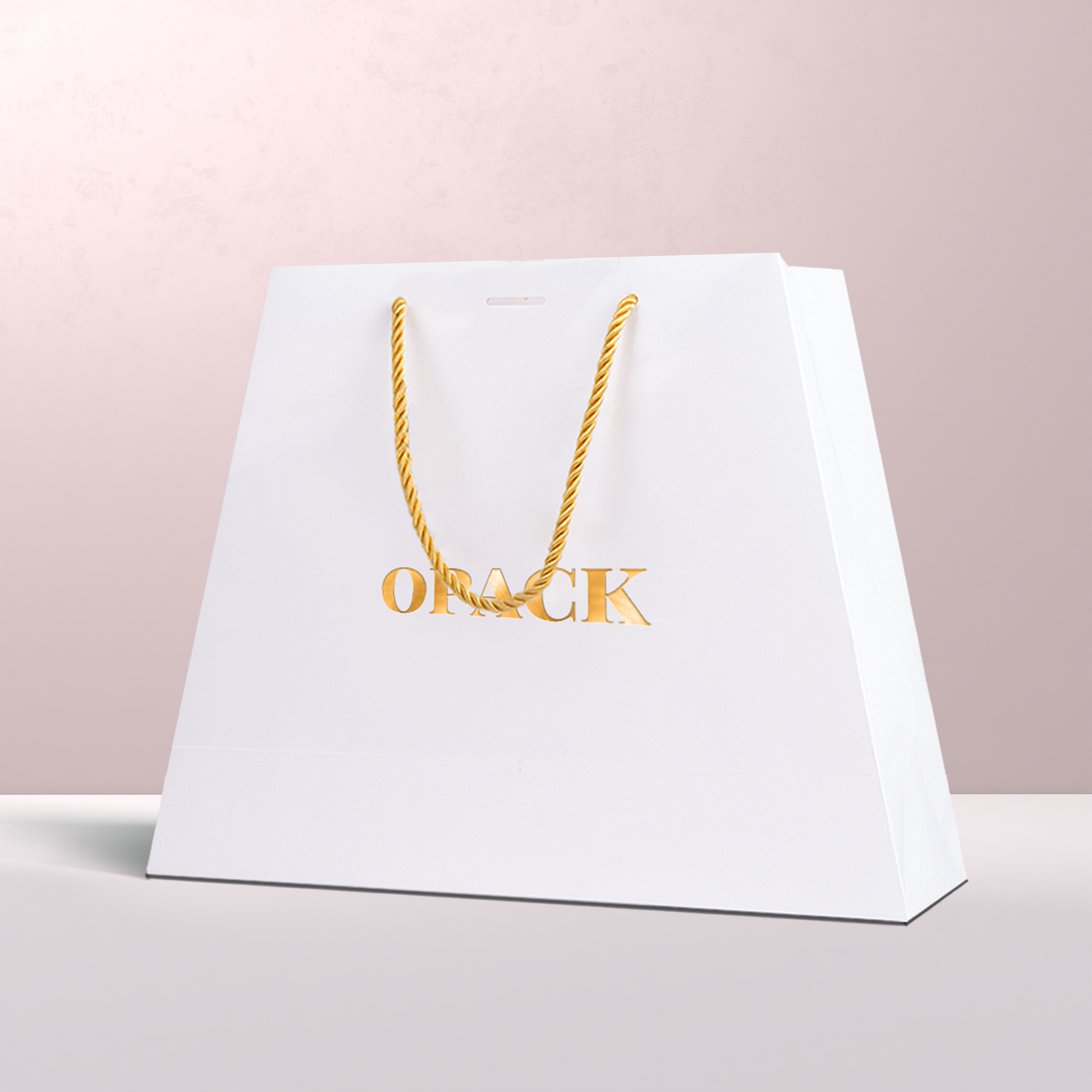
Hot Stamping ranks first among custom shopping bag finishing options in this brand-impact assessment.
Problem definition: why finishing choices go wrong
A custom shopping bag is judged twice. First at the counter, when it is handed over, and then repeatedly afterwards — in a car, on a street, in a photo, on a shelf at home, or in a reuse cycle at a trade show. Four-color printing decides what the bag says. Finishing decides how the bag behaves under light and under a thumb, and that is the part people remember without being able to name it.
Most finishing decisions go wrong for one of four reasons.
- The finish is chosen by trend instead of by goal. A trend-led finish may look current on a screen, but it does not automatically create recognition, awareness, or a better unboxing moment for the product inside.
- The finish is chosen without the scenario. Opack's custom shopping bag applications run across cosmetics, apparel, retail, gift, trade shows and events, and e-commerce packaging. A bag that carries a gift set and a bag used as an event giveaway do different jobs in front of different audiences.
- Finish and structure are specified separately. Finishing sits on top of a paper stock, a handle system, and a weight rating. Kraft Paper, Whiteboard Paper, Specialty Paper, and Coated Paper do not present a finish the same way, and handle attachment points are part of the same visual surface.
- No physical sample is approved. Soft touch films, holographic foils, and embossing depth cannot be evaluated from a monitor. A finish must be judged on the actual stock, in the actual lighting, on the actual bag.
The practical rule: pick the finish that serves the brand goal first, the sales scenario second, and the visual trend third. When a finish serves the first two, it usually still looks current three years later.
Industry background: finishing is becoming a procurement specification
Custom shopping bags are no longer a commodity line item with one decoration option. According to Zion Market Research, the global market for paper-based consumer bags was valued at USD 5.29 billion in 2023, and the premium price segment is projected to register a CAGR of 13.8% through 2034. That premium segment is defined by high grammage paper, custom designs, reinforced handles, and FSC or PEFC certifications — in other words, by specification, not by volume alone.
The supply side reflects the same shift. Supplier catalogs now differentiate bags by stock type, GSM, recycled content, handle type, and finish options rather than by a single generic bag category. Cubit Packaging states that it uses kraft paper at 70 to 170 GSM and recycled paper at 80 to 100 percent post-consumer content. MrTakeOutBags states that its custom paper shopping bags use natural brown kraft or coated virgin paper with rope handles and a matte or gloss finish. These are supplier-reported specifications, but the pattern is consistent: finishing has moved from decoration to a named line in the specification sheet.
Sustainability documentation is moving with it. FSC certification, the main industry standard for sustainable sourcing of paper bags, is recognized by 56% of consumers worldwide according to the Forest Stewardship Council. The EU Deforestation Regulation, effective 2025, requires paper packaging to be traceable back to geolocated forest plots, which means the paper behind a finish may need documentation, not just a sample.
The consequence for buyers at the research and evaluation stage is straightforward. Finish choice is now evaluated alongside material, MOQ, lead time, and compliance — because a finish that cannot be documented for the destination market is not a finish a brand can scale.
The eight finishing options, ranked for brand impact
The PSB custom shopping bag is Opack's custom paper shopping bag model. Its finishing list is fixed: Hot Stamping, Spot Glossy UV, Soft Touch Lamination, Holographic Foiling, Embossing, Debossing, Matte Lamination, and Gloss Lamination. The ranking below orders them by how much brand signal they add per unit of visible surface, and by how cleanly each one maps to a real buying scenario.
Rank 1Hot Stamping — the strongest identity signal
Hot stamping transfers a metallic foil onto the paper under heat and pressure, producing a bright, mirror-like mark that stands out against a matte, uncoated, or dark base. On a custom shopping bag with logo, the stamped logo is usually the first thing the eye finds, even at a distance across a store floor — which is exactly why it supports brand awareness rather than only brand decoration.
Where it wins: cosmetics, gift, premium retail, and event bags where the logo itself is the loudest brand asset. What to decide at sampling: the size and shape of the foil area, the foil tone against the chosen stock, and whether the stamped block sits on a flat panel. Hot stamping is a die-based process, so the artwork should be final before the die is made.
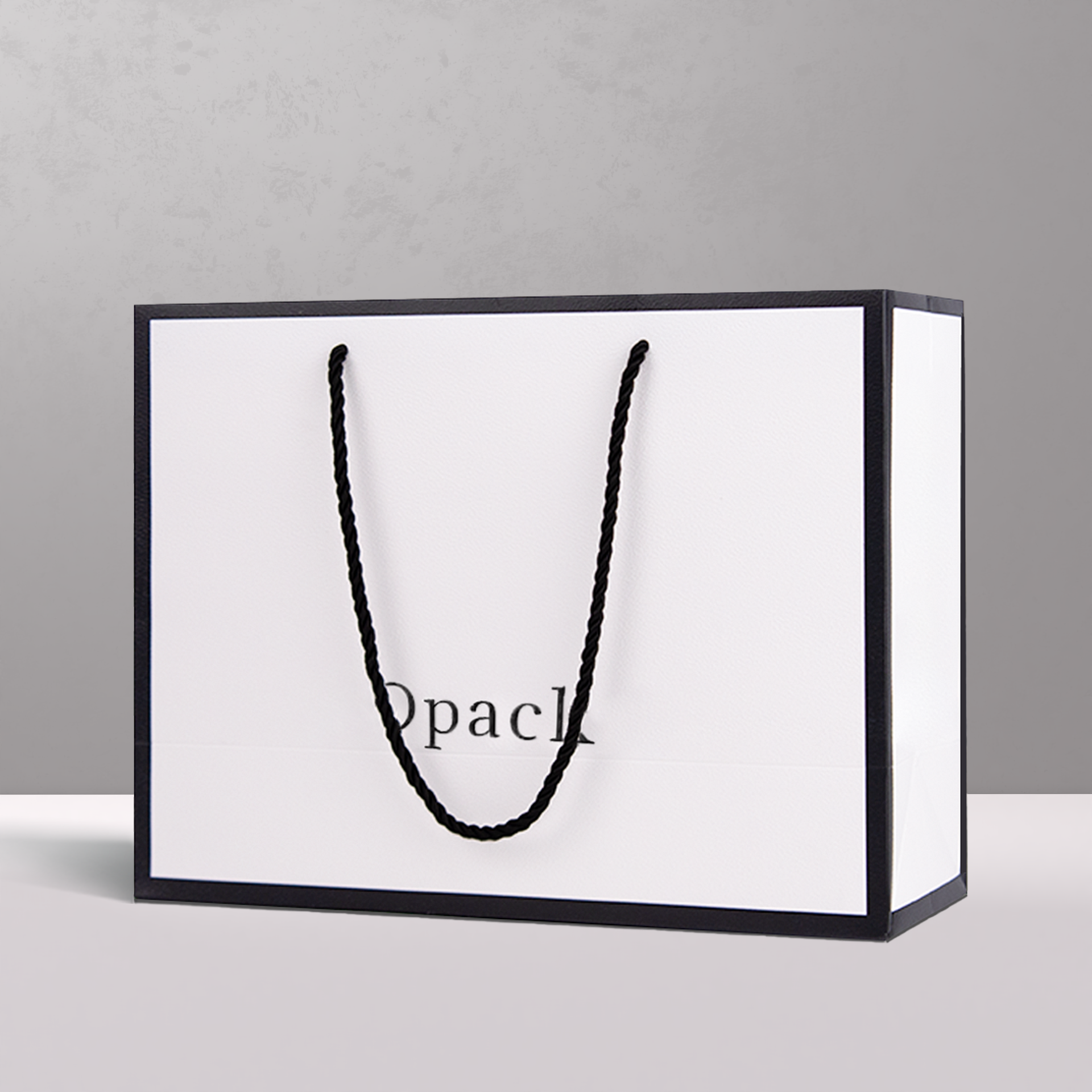
A custom paper shopping bag with logo treatment: printed base surface plus a focused brand mark.
Rank 2Spot Glossy UV — the attention pointer
Spot glossy UV applies a raised, glassy varnish to selected areas rather than the whole panel. On a matte-laminated surface the contrast is immediate: the base stays quiet and the highlighted element — a wordmark, a monogram, a pattern fragment — catches light as the bag moves.
Where it wins: retail and apparel bags that need presence without full metallic foil, and e-commerce bags where a logo needs to stay legible in customer photos. What to decide at sampling: how much area receives the varnish. Small, deliberate areas read as premium; large coated areas read as a finish change rather than an accent.
Rank 3Soft Touch Lamination — the unboxing finish
Soft touch lamination gives the bag a velvet, dry, low-reflection surface. It changes the moment of handover: the bag feels expensive before anything is read. Because it suppresses glare, printed colors appear deeper and more saturated than on a glossy base.
Where it wins: cosmetics and luxury retail where the unboxing experience is part of the product, and gift packaging where the recipient is the audience. What to decide at sampling: how the soft touch surface interacts with any additional finish applied over it, and how the bag behaves in humid or wet handling conditions, since soft touch surfaces show handling marks more readily than gloss.
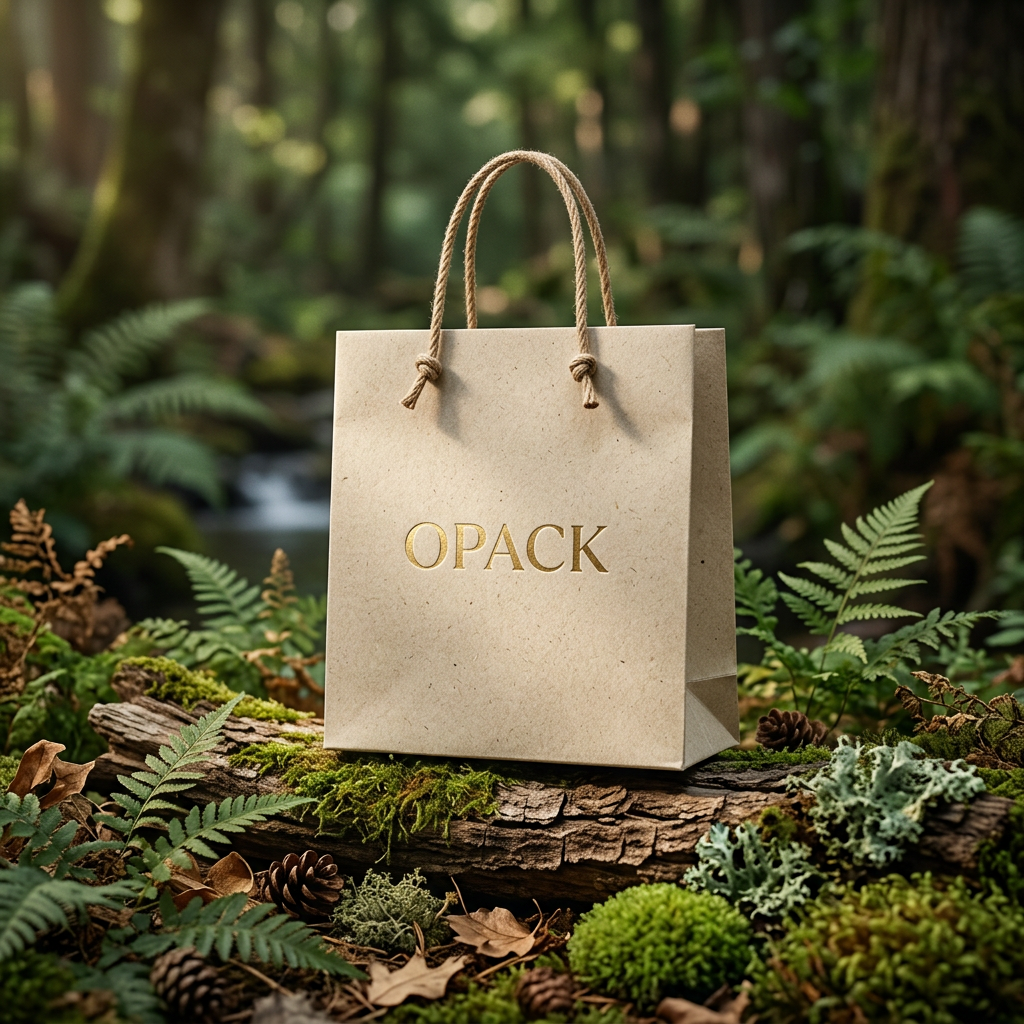
Luxury custom paper bags rely on surface feel as much as on printed artwork.
Rank 4Holographic Foiling — the awareness amplifier
Holographic foiling produces an iridescent, color-shifting effect that changes as the viewing angle changes. Nothing else on this list generates as much involuntary attention, and attention is the first step of brand awareness.
Where it wins: trade shows and events, limited editions, and cosmetics launches where the bag has to compete with hundreds of other surfaces in one room. What to decide at sampling: how much of the bag shifts. A single holographic element reads as premium; a fully holographic panel reads as a promotional giveaway, which may or may not be the intended positioning.
Rank 5Embossing — a tactile signature
Embossing raises the surface of the paper into relief without adding ink or foil. The effect is read with the fingertips before it is read with the eyes, which makes it one of the most durable identity signals on a bag that will be reused.
Where it wins: gift packaging, premium retail, and limited-edition runs where the bag is intended to be kept. What to decide at sampling: relief depth against the chosen stock. Relief depth is a paper decision as much as a die decision, so it should be confirmed on the actual material.
Rank 6Debossing — the quiet premium option
Debossing presses the surface inward instead of outward. It is the understated sibling of embossing: no color, no shine, just a recessed mark that appears and disappears as light moves across the panel.
Where it wins: apparel and minimal-positioning cosmetics brands, where a large printed logo would work against the brand. What to decide at sampling: whether the recessed mark needs a printed outline to stay visible on busy or textured stocks.
Rank 7Matte Lamination — the widest-fit base layer
Matte lamination is a non-reflective film that evens out the surface, reduces visible fingerprints, and photographs cleanly. It rarely carries a brand alone, but it is the surface that makes hot stamping, spot glossy UV, and embossing look intentional.
Where it wins: retail, apparel, and e-commerce packaging — especially where customers photograph the bag. What to decide at sampling: which secondary finish sits on top of the matte base, since the contrast between matte and reflective is what creates the perceived quality.
Rank 8Gloss Lamination — color fidelity and protection at scale
Gloss lamination delivers a high-shine surface with strong color saturation and a protective film over the printed artwork. It produces the most vivid printed color of the eight options and holds up to repeated handling.
Where it wins: high-volume retail promotions, price-led collections, and e-commerce packing lines where hundreds of identical bags are handled quickly. What to decide at sampling: whether the reflective surface will interfere with barcodes, labels, or in-store lighting, and whether the shine supports or fights the brand's overall visual language.
Comparison table: eight finishing options side by side
The table below compares the same eight options across visual signature, tactile signature, the brand function each one serves, and the applications where each is most often the right answer. All eight options are available on the PSB custom shopping bag.
| Rank | Finish | Visual signature | Tactile signature | Primary brand function | Strong-fit applications |
|---|---|---|---|---|---|
| 1 | Hot Stamping | Metallic, mirror-like mark with high contrast against the base | Slightly raised, crisp edge | Unique brand identity; instant logo recognition | Cosmetics, gift, premium retail, events |
| 2 | Spot Glossy UV | Localized glassy highlights over a matte base | Raised, smooth varnish | Directs attention to the logo or pattern | Retail, apparel, e-commerce |
| 3 | Soft Touch Lamination | Low-reflection, deep, saturated color | Velvet, dry, soft | Improves the unboxing experience; raises perceived value | Cosmetics, luxury retail, gift |
| 4 | Holographic Foiling | Iridescent, color-shifting | Smooth foil surface | Captures attention; supports awareness | Trade shows and events, cosmetics, gift |
| 5 | Embossing | Raised relief built from light and shadow, no ink | Raised, dry-embossed relief | Tactile identity; keepsake value | Gift, premium retail, limited editions |
| 6 | Debossing | Recessed relief; quiet and minimal | Recessed, tactile | Understated premium positioning | Apparel, minimal cosmetics, retail |
| 7 | Matte Lamination | Non-reflective, even surface | Smooth, dry | Consistent base layer; photographs cleanly | Retail, e-commerce, apparel |
| 8 | Gloss Lamination | High shine with saturated color | Smooth, slick | Vivid color fidelity and protection at volume | Promotions, high-volume retail, e-commerce |
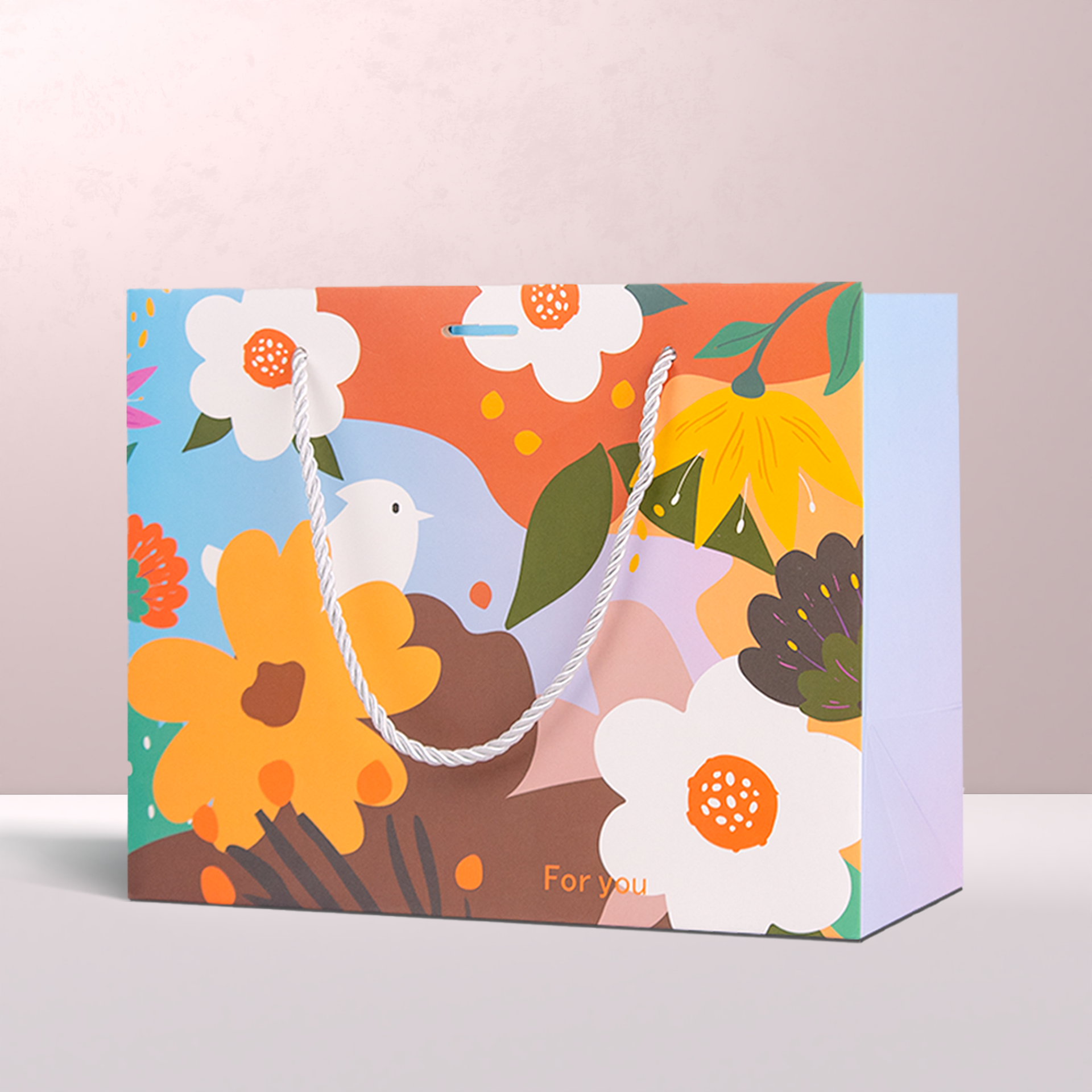
Printing defines the message; finishing defines how the printed surface reads in light.
Use cases: matching finishing to the buying scenario
Brand goals are abstract; scenarios are specific. The same eight finishes resolve into different recommendations once the bag is placed in the environment where it will actually be used.
| Scenario | Recommended primary finish | Supporting finish | Why this combination fits the scenario |
|---|---|---|---|
| Cosmetics packaging | Hot Stamping | Soft Touch Lamination | The unboxing moment is part of the product; a stamped mark over a soft base gives both recognition and tactile value |
| Apparel packaging | Debossing | Matte Lamination | Apparel brands often use restrained branding; a recessed mark on a matte base stays quiet and photographic |
| Retail packaging | Spot Glossy UV | Matte Lamination | High traffic and repeated handling favor an even base surface with one controlled reflective accent |
| Gift packaging | Embossing | Soft Touch Lamination | The recipient, not the buyer, is the audience; relief and feel carry the gift experience |
| Trade shows and events | Holographic Foiling | Gloss Lamination | Bags must separate themselves visually within seconds in a crowded, brightly lit environment |
| E-commerce packaging | Matte Lamination | Hot Stamping | Bags are opened at home and often photographed; a glare-free surface with a sharp brand mark reads well on camera |
Two practical notes apply across all six scenarios. First, the PSB custom shopping bag is specified for projects that include supporting accessories — custom handles, custom stickers, and custom hang tags — and those accessories are usually finished to match the bag, not chosen separately. Second, the commercial terms are identical regardless of finish: a 1,000 pcs MOQ and a 12–18 day lead time on the PSB model, so the finish decision does not change the order structure, only the surface.
Step-by-step: how to specify finishing on a custom shopping bag order
- Write the brand goal in one sentence. Decide whether the bag's priority is recognition, awareness, or the unboxing experience. This determines whether you are ranking finishes by signal strength or by feel.
- Name the scenario and the audience. Cosmetics, apparel, retail, gift, trade shows and events, and e-commerce packaging each favor different finishes, and the audience differs by scenario.
- Choose the paper stock before the finish. The PSB model is available in Kraft Paper, Whiteboard Paper, Specialty Paper, and Coated Paper. Each stock presents foil, varnish, and embossing differently.
- Select one primary finish and, at most, one supporting finish. Two finishes that compete for attention usually cancel each other out; a matte or gloss base layer plus one accent finish is the pattern that reads as intentional.
- Match the handle to the finish. Paper Twisted Handle, Flat Paper Handle, Cotton Rope, Ribbon Handle, and Die-Cut Handle options sit on the same visible surface as the finishing, so they should be selected as part of the same design decision.
- Confirm the weight requirement. The PSB bag is rated for 2–15 kg depending on paper thickness and structure. Heavier loads may require reviewing the panel and handle attachment together with the finish.
- Lock the printing method. CMYK Printing, Pantone Printing, UV Printing, Offset Printing, and Screen Printing are available. The printing method and the finishing layer must be compatible on the same surface.
- Approve a physical proof or sample. This is the only reliable way to judge foil tone, varnish gloss level, embossing depth, and soft touch feel on the actual stock.
- Plan storage and shipping conditions. The bag operates in dry environment conditions for storage and shipping; long-term high humidity, direct sunlight, rain soaking, and chemical contact should be avoided to protect both the paper and the finishing layer.
Decision rule for buyers: if the finish cannot be explained in one sentence tied to a brand function, it is decoration rather than strategy. Reducing from three finishes to two almost always improves the bag.
Capability and proof: how Opack supports finishing projects
Opack is a custom packaging manufacturer based in Longgang, Wenzhou, Zhejiang Province, China, producing custom packaging including custom rigid boxes, custom folding cartons, custom mailer boxes, and custom shopping bags. The company was founded in 2010, operates a 10,000 m² factory with 160 employees, exports about 80% of its output, and serves the EU, US, and Middle East markets. A five-person R&D team supports customization of logo, brand name, color, size, style, finishings, printing methods, and material.
| Specification | PSB custom shopping bag |
|---|---|
| Material | Kraft Paper, Whiteboard Paper, Specialty Paper, Coated Paper |
| Printing | CMYK Printing, Pantone Printing, UV Printing, Offset Printing, Screen Printing |
| Finishing | Hot Stamping, Spot Glossy UV, Soft Touch Lamination, Holographic Foiling, Embossing, Debossing, Matte Lamination, Gloss Lamination |
| Handle options | Paper Twisted Handle, Flat Paper Handle, Cotton Rope, Ribbon Handle, Die-Cut Handle |
| Size range | Fully customizable (small / medium / large / extra large) |
| Weight capacity | 2–15 kg depending on paper thickness and structure |
| MOQ | 1,000 pcs |
| Lead time | 12–18 days |
| Monthly capacity | 1,000,000 units |
| Quality control | 100% quality check |
Production quality control matters more for finishing than for plain printing, because a finish is applied after the printed sheet exists. Opack applies a 100% quality check across production, which is the checkpoint where foil registration, varnish placement, and lamination consistency are verified before packing.
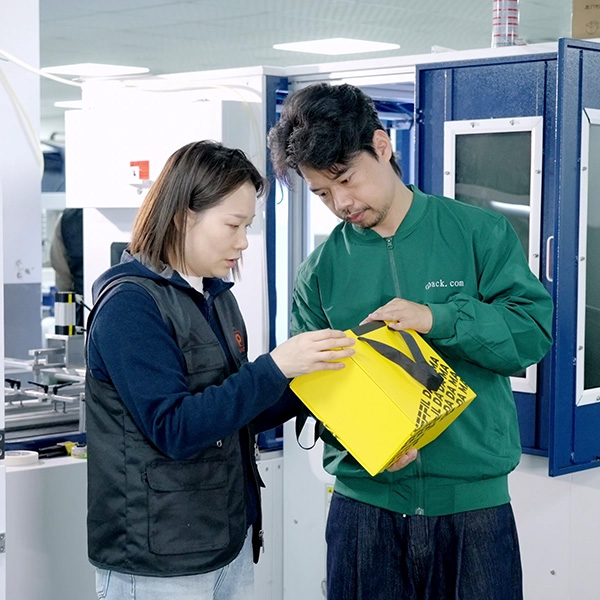
Finishing is verified against the approved proof during the 100% quality check before packing.
A representative case illustrates how a finishing-led bag program behaves at scale. A fashion and lifestyle brand owner placed an annual purchasing partnership covering more than 30,000 paper bags, more than 3,000 paper boxes, and more than 10,000 stickers, with a total annual purchase value above USD 12,000. The program was delivered as a one-stop packaging solution with consistent print quality across multiple production batches, stable lead times, and no quality complaints or after-sales issues during the partnership. For a finishing project, that last point is the relevant one: the value of a finish depends on batch three looking like batch one.
For projects that also require documentation, the production context includes eco-friendly water-based printing inks, low-VOC adhesive materials for safe and eco-friendly production, and compliance with FSC standards. Buyers should request the documentation set that matches their destination market at the quotation stage, not after artwork approval.
FAQ
Are these finishes and materials compliant with environmental requirements?
Opack states that its custom shopping bag production uses eco-friendly water-based printing inks and low-VOC adhesive materials, and that the relevant paper packaging is compliant with FSC standards. FSC is the main industry standard for sustainable sourcing of paper bags and is recognized by 56% of consumers worldwide, according to the Forest Stewardship Council. Buyers exporting into the European Union should also plan for the EU Deforestation Regulation, effective 2025, which requires paper packaging to be traceable back to geolocated forest plots. Because requirements differ by market and by application, the compliance documents for a specific order should be confirmed against the destination market during quotation.
Which finishing options can actually be applied to the PSB custom shopping bag?
The PSB custom shopping bag supports eight finishes: Hot Stamping, Spot Glossy UV, Soft Touch Lamination, Holographic Foiling, Embossing, Debossing, Matte Lamination, and Gloss Lamination. It is produced in Kraft Paper, Whiteboard Paper, Specialty Paper, or Coated Paper, with CMYK, Pantone, UV, Offset, or Screen printing. Handle options are Paper Twisted Handle, Flat Paper Handle, Cotton Rope, Ribbon Handle, and Die-Cut Handle, and sizes are fully customizable from small to extra large. Because stock, printing, and finishing interact on the same panel, the strongest approach is to select all three together rather than finish a design that was already locked.
What drives the cost of a finishing option, and what is the minimum order quantity?
The minimum order quantity for the PSB custom shopping bag is 1,000 pcs. Cost is driven by the specification rather than by the finish name alone: the number of finishing passes, whether a die is required for stamping or embossing, the total area covered by foil or varnish, the paper stock, the printing method, the handle type, and the order quantity. Because these factors combine differently for every project, pricing is quoted against the final specification, and a quotation should be requested after the finish and stock combination is fixed rather than before.
Can samples be requested before placing a full order?
Yes. Sampling and proofing are the practical way to evaluate foil tone, varnish gloss level, embossing depth, and soft touch feel, because none of these effects can be judged accurately from a screen. To request finishing samples or a quotation for a custom shopping bag project, contact the Opack team at sales@opack.com, by telephone at +86 17366633702, or via WhatsApp at +86 15968809016, and include the intended finish, paper stock, size, handle type, and target application.
What is the production lead time and capacity for a finished bag order?
Lead time on the PSB custom shopping bag is 12–18 days, with a monthly production capacity of 1,000,000 units and an annual output of 10,000,000 units. Production runs through a 100% quality check, and the export markets served are the EU, US, and Middle East. For projects with fixed launch dates, the finishing decision should be settled before the proof stage so that the die, foil, and lamination choices do not extend the schedule.
Conclusion
Ranking custom shopping bag finishing options is not a beauty contest. Hot Stamping earns first place because a metallic mark creates immediate logo recognition. Spot Glossy UV earns second because it directs attention without covering the whole bag. Soft Touch Lamination earns third because it changes the handover moment and therefore the unboxing experience. Holographic Foiling, Embossing, and Debossing follow as attention and tactile-identity options, and Matte and Gloss Lamination close the list as the base surfaces that make the other six look deliberate.
The decision framework is the same for every brand: name the brand goal, name the scenario, choose the stock, choose one primary finish plus at most one supporting finish, match the handle, confirm the weight requirement, and approve a physical sample. A bag specified that way does three jobs at once — it protects the product, it carries a recognizable brand identity, and it makes the unboxing moment worth remembering.
Next step: sample the finish before you commit to the run
Send your specification — finish, paper stock, size, handle type, and target application — and request a physical sample or a quotation for your custom shopping bag project. MOQ is 1,000 pcs with a 12–18 day lead time.
Email: sales@opack.com | Tel: +86 17366633702 | WhatsApp: +86 15968809016
Website: www.opack.com | Company profile: Download the Opack company brochure
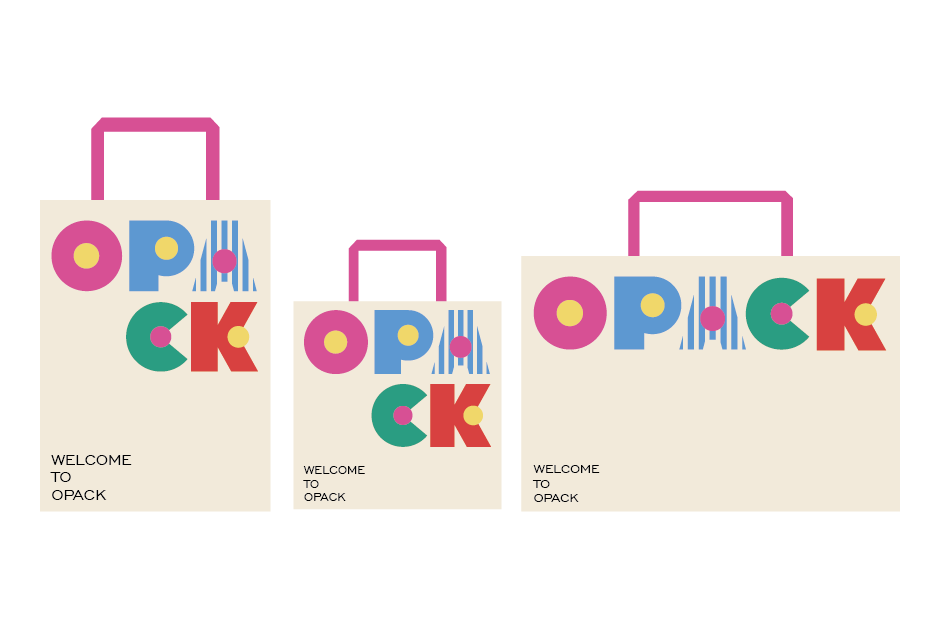
Request finishing samples on your chosen paper stock before approving a full production run.
Have Questions or Need More Details?
Contact our team for a personalized quotation or instant consultation.
Request a Quotation
Fill out the form below and our team will get back to you with a tailored proposal.
WhatsApp Direct Chat
Prefer to chat in real-time? Message us on WhatsApp for instant assistance & quick answers.
- Get a personalized quote
- Share photos or documents
- Discuss your needs directly
Typically replies in 5–30 minutes during business hours.