
What Is a Custom Rigid Box? Structure and Use Explained
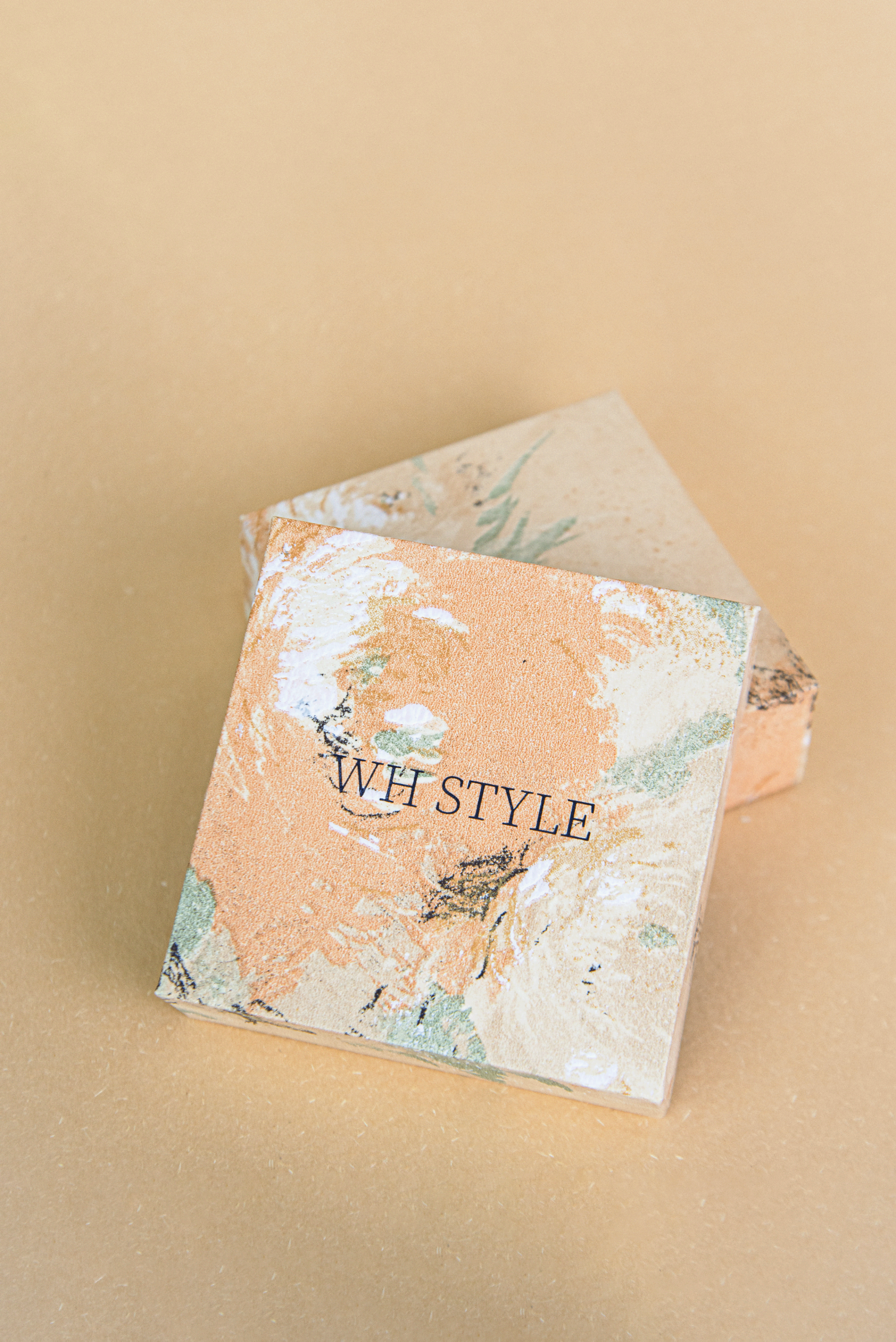
A custom rigid box, produced to brand dimensions, artwork and finish.
A custom rigid box is a non-collapsing paperboard box produced to a brand's own size, artwork and finish rather than picked from a stock size list. The wall is built from rigid board - grey board or MDF in the specification Opack publishes for its rigid box line - and then wrapped in printed or textured paper. That wrap-over-board construction is why the box stays square when the lid is lifted, and why a logo can sit cleanly on a lid, a base or an inner panel.
Most brand owners meet this category for the first time when a product launch needs packaging that survives handling, photographs well and can be reused by the customer. What follows is a plain breakdown: the physical layers of the box, the gift box formats the industry normally models, the part that logo, colour and material decisions actually play, and the industries where custom rigid packaging boxes are standard practice.
Why Rigid Boxes Are Difficult to Specify the First Time
The concept is simple; the specification is where buyers lose time. The same product is sold as rigid setup boxes, rigid set up boxes, rigid paper boxes, rigid gift boxes and collapsible gift boxes, and each term can describe a different construction. Two suppliers can quote a custom rigid box and mean a two-piece lid-and-base build in one case and a foldable rigid box in the other.
Three practical problems follow from that vocabulary gap:
- Quotes become hard to compare. A collapsible rigid box and a fixed two-piece box use different assembly steps, pack differently and occupy different freight volume, so a lower unit price is not automatically the lower landed cost.
- Artwork is approved too early. Ink and foil behave differently on coated paper, kraft and textured wrap, and spot glossy UV reads differently on soft touch lamination than on gloss lamination.
- The insert is treated as an accessory. Foam, paperboard, EVA, plastic tray, corrugated cardboard and silk inserts each change the internal dimensions, so the insert decision belongs inside the sizing step, not after it.
There is a physical constraint as well: rigid boxes are usually governed by packed volume rather than by weight. That is one reason collapsible and foldable rigid box designs are common in export programmes - they reduce empty cube before the box is erected.
Industry Background: Where Rigid Boxes Sit in Premium Packaging
Rigid boxes are a small, high-value slice of paperboard packaging. The luxury rigid box segment alone was sized at USD 8.84 billion in 2026, according to Future Market Insights data published through Towards Packaging. Cosmetics and personal care hold the largest application share at 37%.
Scope matters when reading market numbers. The broader rigid packaging category - which includes plastic and metal formats - is projected to reach USD 796.7 billion by 2030 according to Grand View Research. That figure describes a different product universe and should not be applied to paperboard gift boxes.
The regulatory backdrop moved in 2026. Regulation (EU) 2025/40, the EU Packaging and Packaging Waste Regulation, requires packaging placed on the EU market to be recyclable and properly labelled from 12 August 2026. For rigid box buyers this turns material choice into a compliance decision as well as an aesthetic one: board grade, wrap paper, lamination and insert material all influence how easily a box can be separated and processed at end of life. Asking a supplier how the layers separate is now a normal RFQ question, not an advanced one.
Materially, rigid boxes sit at the presentation end of paperboard packaging. Folding cartons remain the volume format; rigid set up boxes trade material weight and hand assembly for structure, protection and a reusable unboxing experience. That trade-off is the real reason to choose the category.
The Five Layers of a Custom Rigid Box
A rigid box is easiest to understand layer by layer, because each layer is a separate purchasing decision that changes cost, protection and lead time.
1. The board core
The structural wall is rigid board. Grey board - also called greyboard or chipboard - is the standard core, and MDF is offered as an alternative for heavier or more architectural builds. Thickness is fully customizable, and thickness is what determines how much the box resists pressure in transit and how solid the lid feels in the hand. Fix the product weight and the stacking requirement before choosing a board caliper; thicker is not automatically better if the box also has to fit a retail shelf or a shipping carton.
2. The wrap paper
The wrap is the visible surface and the print carrier. Available wrapping paper options are coated paper, kraft paper, specialty paper, textured paper and white paperboard. The choice decides colour saturation and surface character: coated paper holds fine CMYK detail, kraft gives an uncoated and more natural surface, and textured or specialty stock changes how ink and foil sit on the sheet.
3. The printing method
Printing methods available for rigid boxes are CMYK printing, Pantone printing, UV printing, offset printing and screen printing. CMYK suits photographic artwork, Pantone suits a brand colour that must match a fixed reference, and screen printing is typically chosen for bold solid coverage. If a brand colour is defined by a Pantone number, say so at the quotation stage: it changes the proofing path, not just the ink.
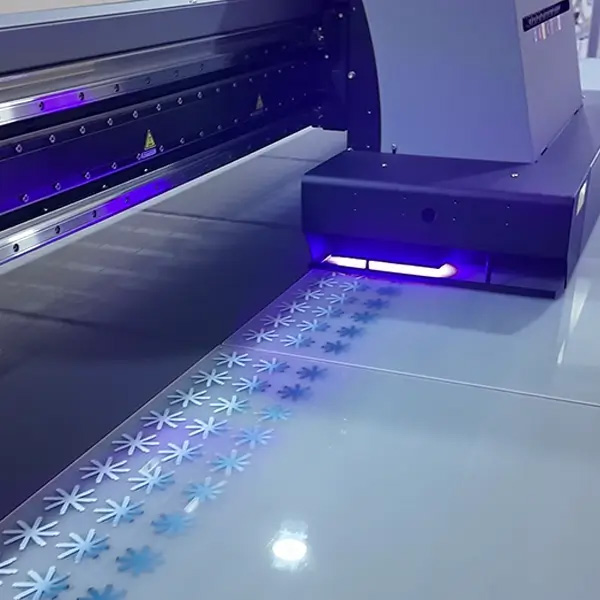
UV printing on box wrap: the printing method is a separate decision from the board and the wrap.
4. The finishing
Finishing options are hot stamping, spot glossy UV, soft touch lamination, holographic foiling, embossing, debossing, matte lamination and gloss lamination. Finishing is where a custom printed rigid box stops looking like a generic gift box: a debossed mark reads as texture rather than as ink, and a matte lamination changes the way light moves across the lid. Two practical notes: foil and emboss need artwork with enough clear space around the mark, and lamination choices belong in the recyclability conversation described above.
5. The closure and the insert
Structure options are foldable, magnetic closure and ribbon closure. Insert options are foam, paperboard, EVA, plastic tray, corrugated cardboard and silk. The closure determines the opening ritual; the insert determines whether the product arrives undamaged and how long packing takes on the line. In practice, a paperboard insert with a silk lining presents well in photography, while a foam or EVA insert absorbs more movement in transit. Ask for both to be quoted so the trade-off is visible rather than assumed.
How Rigid Gift Box Formats Are Usually Modelled
The industry models gift box categories by construction, not by decoration. Four formats cover most briefs, and the print and finishing can be identical across all four - which is exactly why a buyer should name the construction explicitly in the RFQ.
Two-piece lid-and-base
The classic rigid box with lid: a base tray plus a separate lid that drops over it. Access to the product is unrestricted, the lid lifts with one hand, and the format reads instantly as premium. This is what most people picture when they say rigid gift boxes or rigid boxes with lids.
Magnetic closure
A lid connected to the base with magnets set into the board, opening like a book and closing without a ribbon. The build needs a defined hinge area, so artwork has to account for the fold and the magnet position.
Ribbon closure
The lid is secured with a ribbon tie or pull. It adds a fabric element to the presentation and a second colour or texture cue, and it gives the customer a clear opening action.
Collapsible and foldable rigid boxes
Custom collapsible rigid boxes - also sold as collapsible rigid box, rigid collapsible box, foldable rigid box and collapsible gift boxes - use the same wrapped board but are engineered to fold flat. They are normally chosen when warehouse space or freight volume is the constraint, and when the box will be erected just before packing. The trade-off is an extra assembly step at the packing stage, plus a slightly different feel when the lid is first lifted.
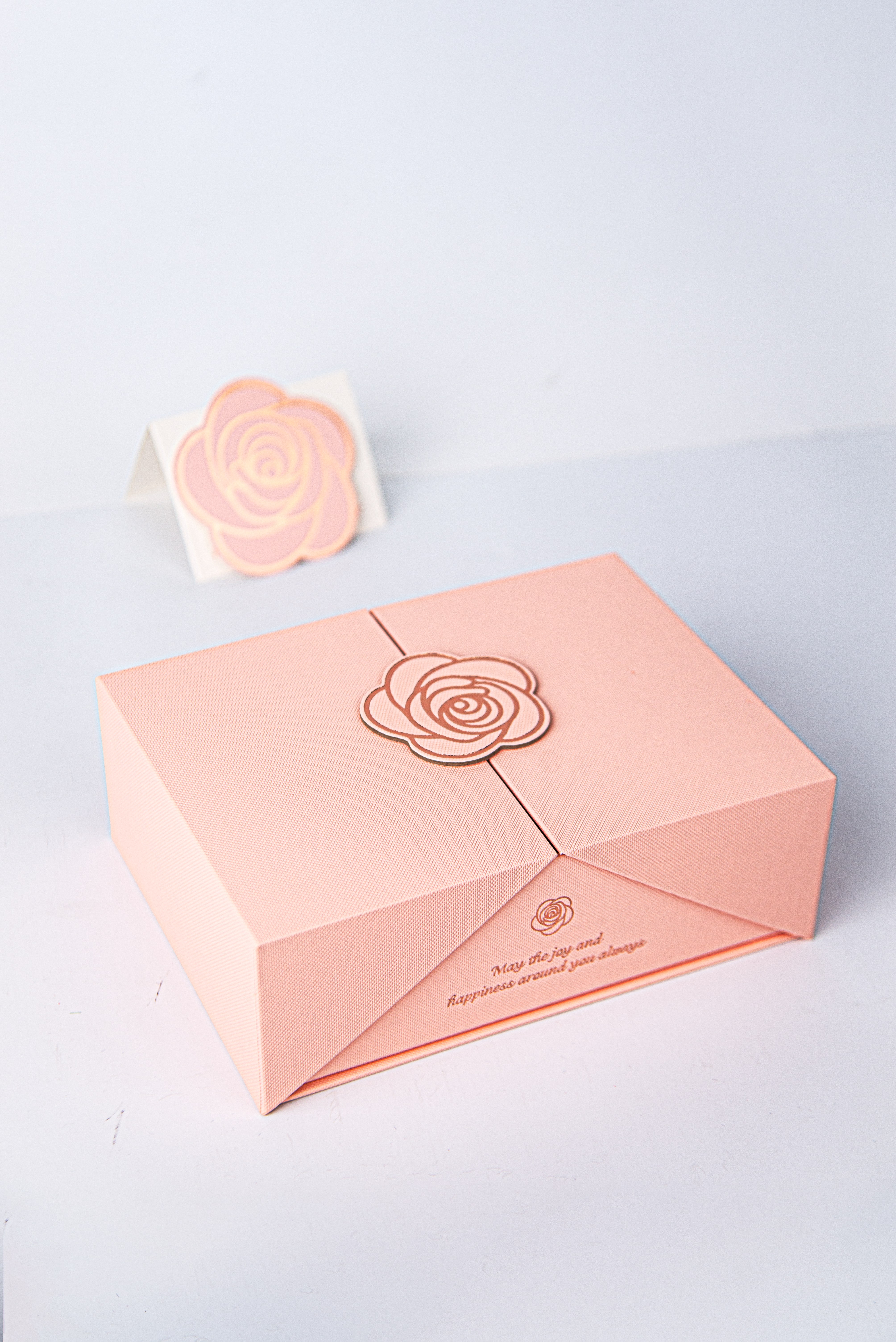
Rigid gift boxes with lids: structure, finish and insert are decided together, before artwork is released.
The Role of Logo, Colour and Material Customization
The customization scope offered for rigid box production covers logo, brand name, colour, size, style, finishings, printing methods and material. In practice these fall into three decision groups that a brand owner can work through in order.
Logo
Logos are applied by printing (CMYK or Pantone), by hot stamping, by embossing or debossing, or by spot glossy UV. Each treatment produces a different surface: ink sits on the wrap, foil reflects light, an emboss raises the paper itself. The requirement is artwork prepared for the chosen method - sufficient stroke width, clear space around the mark, and a single-colour version if the box also carries full-colour imagery.
Colour
Brand colour is usually controlled through Pantone matching, with CMYK reserved for photographic elements. The wrap paper changes the outcome: the same Pantone reference reads differently on coated, kraft and textured stock, and matte or gloss lamination shifts it again. Approve colour on the actual wrap rather than on screen.
Material
Material decisions are board thickness, wrap paper and insert material. Together they set protection level, weight, hand feel and the recyclability profile discussed earlier. A brand can keep the artwork identical and change only the board and wrap, and the box will read as a different tier - which is how good, better and best ranges are usually built from one structural family.
| Customization variable | What it changes on the finished box | What to confirm before artwork approval |
|---|---|---|
| Logo | How the brand mark is applied - printed ink, foil, emboss or raised UV | Artwork prepared for the chosen application method |
| Brand name and colour | Pantone reference versus CMYK build, and how the wrap paper renders it | Colour approved on the actual wrap stock |
| Size | Internal dimensions, lid clearance and insert cavity | Product dimensions and weight confirmed |
| Material | Board type (grey board or MDF), thickness and wrap paper | Protection level, stacking and recyclability review |
| Printing method | CMYK, Pantone, UV, offset or screen printing | Artwork resolution and colour reference set |
| Finishings | Foil, emboss, deboss, spot UV, matte or gloss lamination | Clear space for foil and emboss, lamination compatibility |
| Style and structure | Foldable, magnetic closure or ribbon closure | Hinge area and opening direction drawn into the dieline |
Step-by-Step: Running a Custom Rigid Box Project
A rigid box order follows a sequence in which every step narrows the variables the previous step left open. Buyers who request a quote before the insert is decided usually end up re-quoting.
- Fix the product and the internal fit. Provide exact product dimensions and weight, and state the insert preference - foam, paperboard, EVA, plastic tray, corrugated cardboard or silk.
- Name the construction. Two-piece lid-and-base, magnetic closure, ribbon closure or collapsible. Print and finishing can stay identical across all four.
- Set board and wrap. Choose grey board or MDF and a wrap from coated paper, kraft paper, specialty paper, textured paper or white paperboard; board thickness is customizable.
- Decide print and finishing. Select CMYK, Pantone, UV, offset or screen printing, then add hot stamping, spot glossy UV, soft touch lamination, holographic foiling, embossing, debossing, matte or gloss lamination where they earn their place.
- Request a quote against full details. Confirm size, materials, artwork and finish in one pass. Rigid gift box MOQ is 500 pcs per size and design.
- Approve a sample. The published workflow is quote confirmation, sample approval, then mass production; production begins only after the sample is approved.
- Produce and inspect. Typical production lead time is 12-18 days, monthly capacity is 1,000,000 units, and every product undergoes a 100% quality check. Third-party inspection is welcome on request.
- Ship and close out. EXW and FOB terms are available, shipping is coordinated to destination and schedule, and payment terms are 40/60. After-sales support runs through real-time online chat, WhatsApp, telephone and official email.
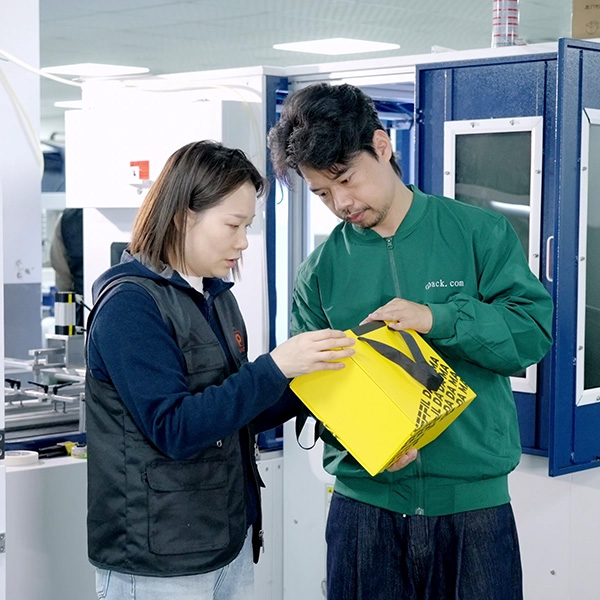
Quality check on the line: every product is inspected before shipment, and third-party inspection is welcome on request.
Use Cases: Where Custom Rigid Boxes Do the Most Work
The application list for rigid boxes is broad, but each category pulls on a different layer of the build. The match between product and structure is what separates a box that photographs well from a box that also survives the channel.
- Perfume. Glass weight and fragility push the choice toward a thicker board and a foam or moulded insert, with magnetic or lid-and-base construction for gift sets.
- Jewellery. Small format and high perceived value; silk or paperboard inserts, with deboss or hot stamping carrying most of the brand signal.
- Watches. Fit precision matters more than box size, so the insert cavity is drawn first and the box built around it; magnetic closure suits the book-like opening.
- Apparel. Larger, lighter products where a lid-and-base or ribbon-closure box with a paperboard insert keeps the structure efficient.
- Cosmetics and beauty. The largest application share in the luxury rigid box segment at 37%; sets usually need compartmentalised inserts so bottles and compacts do not touch.
- Electronics. Protection leads, so EVA or foam inserts and a tighter board specification are normal.
- PR boxes and corporate or promotional packaging. Short, print-heavy runs where the unboxing moment is the deliverable.
Comparison Table: Rigid Box Configurations
| Configuration | How it opens | Structural notes | Typical fit |
|---|---|---|---|
| Two-piece lid and base | Lid lifts off the base | Base tray plus separate lid; board thickness customizable | Gift sets, apparel, perfume, promotional boxes |
| Magnetic closure | Lid opens like a book, held by magnets | Listed structure option; hinge area must sit inside the dieline | Watches, jewellery, corporate gifts |
| Ribbon closure | Ribbon tie or pull releases the lid | Listed structure option; adds a fabric element to the presentation | Apparel, beauty sets, seasonal gifting |
| Collapsible / foldable | Erected before packing, then opened as usual | Listed as foldable; stored and shipped flat, assembled on site | Export programmes, low-storage distribution |
| Insert variants | Not a closure - internal retention | Foam, paperboard, EVA, plastic tray, corrugated cardboard, silk | Perfume, electronics, cosmetics, jewellery |
Frequently Asked Questions
Do custom rigid boxes have to meet EU packaging rules?
Yes, for boxes placed on the EU market. Regulation (EU) 2025/40, the EU Packaging and Packaging Waste Regulation, requires packaging to be recyclable and properly labelled from 12 August 2026. In practice that means board grade, wrap paper, lamination and insert material should be reviewed for how easily the layers separate, and labelling requirements should be confirmed with the supplier before artwork is approved. Buyers importing into the EU should raise this at the quotation stage rather than after the sample arrives.
What can actually be customized on a rigid box?
Customization covers logo, brand name, colour, size, style, finishings, printing methods and material. The board is grey board or MDF with customizable thickness, wrapped in coated paper, kraft paper, specialty paper, textured paper or white paperboard. Printing options are CMYK, Pantone, UV, offset and screen printing; finishing options are hot stamping, spot glossy UV, soft touch lamination, holographic foiling, embossing, debossing, matte lamination and gloss lamination. Structures include foldable, magnetic closure and ribbon closure, with foam, paperboard, EVA, plastic tray, corrugated cardboard or silk inserts.
What is the minimum order quantity and what drives the cost?
Rigid gift box MOQ is 500 pcs per size and design. Cost is quoted per project rather than taken from a catalogue, because it is set by the combination of board thickness, wrap paper, printing method, finishing steps, structure and insert type. Two boxes with identical artwork can land at different costs if one adds foil, deboss and a foam insert while the other uses print and a paperboard insert. The practical way to control budget is to fix structure and insert first, then decide which finishing steps are worth adding.
How does sampling work before a production run?
The workflow is quote confirmation, sample approval, then mass production. The details confirmed at quotation - size, materials, artwork and finish - define what the sample will be, and production starts only once the sample is approved. Use the sample to check four things: internal fit with the real product, colour on the actual wrap, closure feel, and insert retention. Those are the items that are expensive to change later.
How long does production take, and how do I start?
Typical production lead time is 12-18 days, with monthly capacity of 1,000,000 units and a 100% quality check before shipment. Lead time is counted after sample approval, so the sampling stage is the part of the schedule worth protecting. To start a project, send product dimensions, target quantity and artwork status to sales@opack.com or WhatsApp +86 15968809016; the company profile with the full capability list can be downloaded here: Opack company profile (PDF).
Conclusion
A custom rigid box is not one product but a stack of five decisions - board, wrap, print, finishing, closure and insert - wrapped around a specific product. Once a buyer can name those layers, the category stops being opaque: the RFQ gets shorter, quotes become comparable, and artwork is approved against a known substrate instead of an assumption.
Three rules cover most of the risk. Name the construction in the RFQ instead of relying on the word rigid. Decide the insert before the internal dimensions are locked. And confirm material and finishing against the EU recyclability and labelling requirement before the sample stage, not after it.
Opack is a custom packaging manufacturer based in Longgang, Wenzhou, China, producing custom rigid boxes alongside folding cartons, mailer boxes, paper shopping bags and paper tubes since 2010, from a 10,000 m² factory with 160 employees and an annual output of 10,000,000 units. The company exports to the EU, US and Middle East markets.
Next Step: Sample or Quote
Send your product dimensions, target quantity and artwork status, and Opack will confirm structure options, MOQ of 500 pcs per size and design, and a 12-18 day production window after sample approval.
Email: sales@opack.com | Tel: +86 17366633702 | WhatsApp: +86 15968809016
Website: www.opack.com | Guides and updates: blog.opack.com | Catalog: Company profile PDF
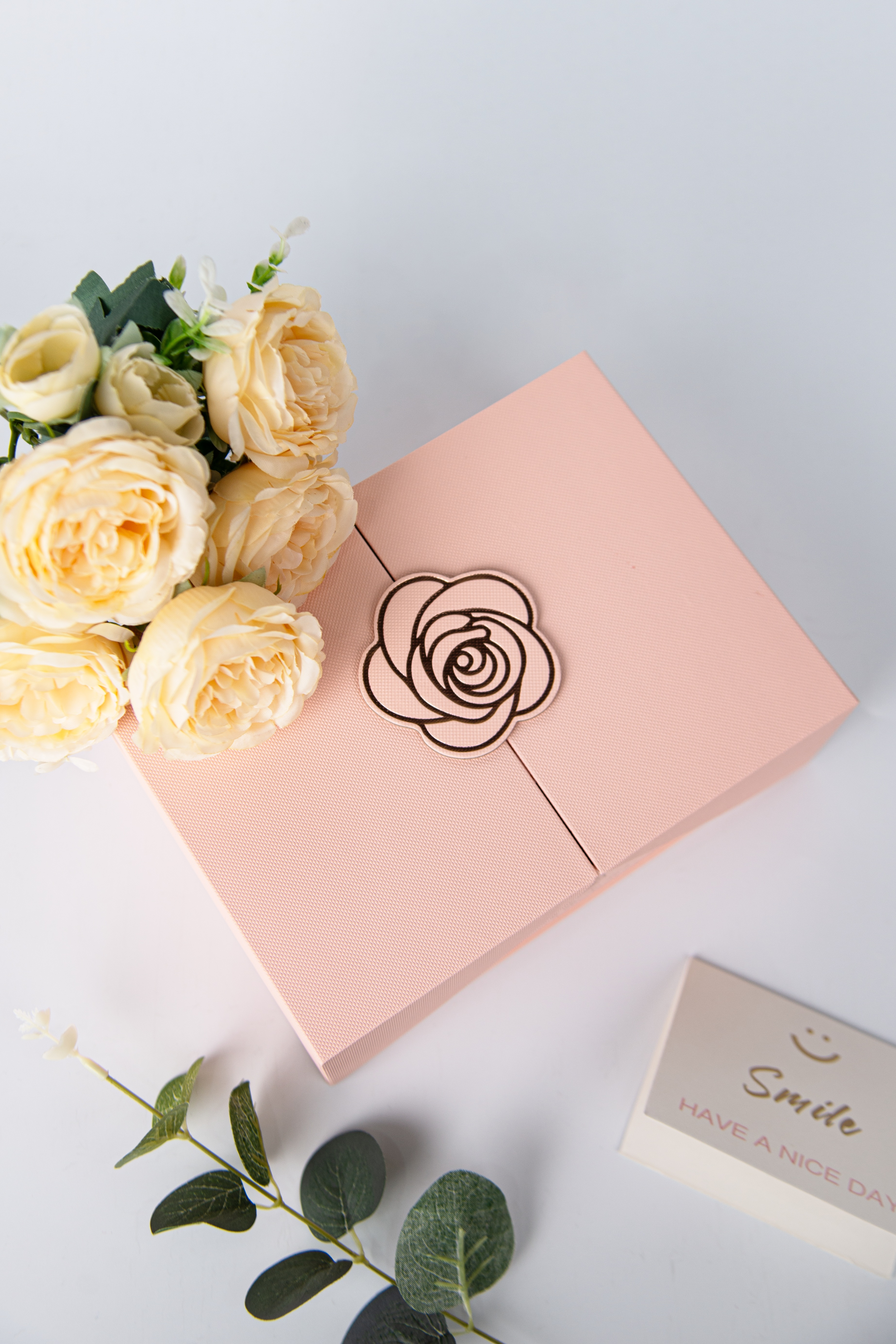
Custom rigid packaging box: board, wrap, print, finish and insert specified as one build.
Have Questions or Need More Details?
Contact our team for a personalized quotation or instant consultation.
Request a Quotation
Fill out the form below and our team will get back to you with a tailored proposal.
WhatsApp Direct Chat
Prefer to chat in real-time? Message us on WhatsApp for instant assistance & quick answers.
- Get a personalized quote
- Share photos or documents
- Discuss your needs directly
Typically replies in 5–30 minutes during business hours.