
Applying Anatase TiO₂ in Polyester, Viscose, Acrylic and Nylon Production
Applying Anatase TiO₂ in Polyester, Viscose, Acrylic and Nylon Production

There is no single titanium dioxide grade that behaves the same way in every fiber line. A polyester (PET) chip and filament plant, a viscose dope line, an acrylic line and a nylon melt-spinning line each place the pigment in a different chemical, thermal and electrical environment, so the grade has to be matched to the process rather than to a brand preference.
In practice, fiber grade titanium dioxide is specified grade by grade: an anatase whitening grade such as SA-50 for polyester, a matting grade such as SA-60 for viscose and acrylic, and a matting grade such as SA-80 for polyamide (nylon). The practical differences sit in impurity limits, electrical conductivity, pH, dispersion behaviour in ethylene glycol (EG), and the temperature window of each polymerization or spinning route.
This article walks through how anatase TiO₂ grades are actually applied across the four fiber systems. It covers the PET batch pre-dispersion step in ethylene glycol followed by continuous polymerization, and the working environment that keeps a line stable: closed vacuum feeding, low-speed stirring at 40–60 °C, and dry storage at humidity ≤65%. These application modes are common practice in China, India, Indonesia and South Korea.
Why one grade cannot cover four fiber systems
The constraint is not the whiteness target alone. Each polymer imposes its own limits on what the pigment is allowed to do inside the process.
In polyester, TiO₂ is carried into the melt before polycondensation and must survive esterification and polycondensation conditions without triggering side reactions. Iron content, ionic impurities and pH are the variables that decide whether intrinsic viscosity stays steady, whether black spots or crystal points appear, and whether filters and spinnerets keep their service cycle. This is why a PET whitening grade is screened on Fe₂O₃ content, conductivity and pH rather than on TiO₂ content alone.
Viscose and acrylic routes place the pigment in a different medium, where dope stability and spinning continuity dominate. Conductivity and pH stability of the grade matter because they interact with the dope system, and matting level has to be adjustable without creating uneven luster.
Nylon (polyamide) matting has a mechanical dimension as well: anatase is the preferred crystal form for fiber grades because its lower abrasiveness (Mohs hardness 5.5–6.0) compared with rutile (6.0–7.0) reduces wear on spinning nozzles, according to ETIO2’s technical overview of TiO₂ in chemical fibers. A nylon matting grade also needs a controlled conductivity ceiling to avoid electrostatic and spinning disturbances.
The failure modes reported on real lines are consistent: agglomeration and sedimentation during pre-dispersion, moisture pick-up during feeding, surging instead of steady dosing, reaction temperature drifting above the safe ceiling, blending with hard fillers, and the use of high-ion additives that push the melt into unwanted side reactions.
The fiber grade TiO₂ market and the compliance backdrop
The global fiber grade titanium dioxide market was valued at USD 1.46 billion in 2024 and is projected to reach USD 1.94 billion by 2032, according to Intel Market Research. The same source states that the polyester fiber segment accounts for over 60% of all fiber grade TiO₂ applications, which is why PET chip and filament lines set the technical benchmark that other fiber types are compared against.
Supply is concentrated in Asia. China’s total titanium dioxide exports reached a record 1.9017 million tons in 2024, a 15.84% increase year-on-year, based on China Customs Statistics data reported by Echemi. Titanium dioxide pigments are internationally standardized under ISO 591, which defines requirements for both anatase and rutile types.
Compliance pressure is moving in the same direction. Venator’s HOMBITAN LW-S 100 became the first fiber anatase TiO₂ to secure ECO PASSPORT by OEKO-TEX for the textile industry in 2022, according to Venator and Textile World. For spinners supplying textile brands, that signals that certification evidence is increasingly part of the purchase file, not an optional extra.
Grade-to-fiber fit: SA-50, SA-60 and SA-80
ORIENT INTERNATIONAL HOLDING SHANGHAI FOREIGN TRADE CO., LTD, founded in 1988 and based in Shanghai, supplies fiber grade anatase titanium dioxide to fiber producers and traders under the brand Orient International through its petchemical.com channel. Its fiber range is organized by polymer rather than by a single universal grade.
SA-50 — PET fiber whitening and matting
SA-50 is a PET fiber whitening agent with an anatase crystal structure and a TiO₂ content of ≥98.0%. Its Fe₂O₃ content is ≤0.004%, sieve residue (325 mesh) ≤0.004%, moisture ≤0.40%, pH 6.8±0.2, electrical conductivity ≤230 μS/cm, specific surface area 8.5–10.0 m²/g, color value L 96.7–98.2 and b ≤0.0. Within ethylene glycol circulation and polyester polycondensation conditions, it is designed with hydrolysis resistance and a neutral pH so that adverse side reactions are avoided and intrinsic viscosity degradation of polyester chips is slowed down.
SA-60 — viscose and acrylic matting
SA-60 is a matting agent intended for viscose and acrylic fiber manufacturing. Its anatase TiO₂ content is ≥97.0%, Fe₂O₃ ≤0.004%, sieve residue (325 mesh) ≤0.05%, moisture ≤0.40%, pH 7.2±0.6, electrical conductivity ≤120 μS/cm, color value L ≥96.5 and b ≤0.5. For dope-based routes, the tighter conductivity ceiling is the parameter that most often decides whether a batch is accepted.
SA-80 — nylon matting
SA-80 is a matting agent for nylon manufacturing, with anatase TiO₂ content ≥95.0%, Fe₂O₃ ≤0.004%, sieve residue (325 mesh) ≤0.004%, moisture ≤0.40%, pH 6.8–8.0, electrical conductivity ≤100 μS/cm, color value L 92.0–97.0 and b ≤3. The low-conductivity specification supports stable behavior in polyamide melt spinning, where the pigment also has to limit nozzle abrasion.

Step-by-step: applying anatase TiO₂ on a PET chip line
The polyester route is the most demanding of the four because the pigment passes through polymerization rather than being applied after the polymer exists. The sequence below reflects the working conditions defined for SA-50 in polyester chip production.
- Closed vacuum feeding. Transfer the powder through a closed vacuum feeding system to prevent moisture pick-up and contamination from ambient dust. Open handling is where most batch-to-batch variation starts.
- Batch pre-dispersion in ethylene glycol. Disperse the grade evenly in EG with gentle, low-speed stirring at 40–60 °C to form a stable suspension without sedimentation. High-speed or high-shear agitation works against the goal here by encouraging re-agglomeration.
- Metered dosing into the reactor. Pump the suspension into the PET esterification reactor and blend it uniformly into the polyester system at 240–285 °C, keeping the feed steady and uniform so that no local concentration spikes form.
- Temperature ceiling control. Keep the reaction temperature below 290 °C to preserve stable PET viscosity. Exceeding the ceiling is the most common cause of viscosity drift and color deviation.
- Additive discipline. Avoid high-ion additives that can drive side reactions in the presence of the pigment.
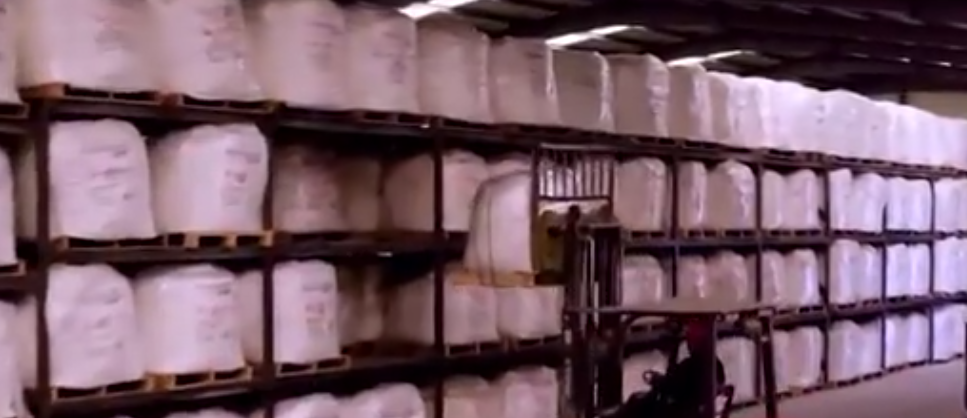
- Dry storage. Store the grade in a dry environment at humidity ≤65% with packages sealed tightly after opening.
- Separation from hard fillers. Do not mix the grade with hard fillers, which increases equipment wear and filter blockage.
The matched equipment for this route is a titanium dioxide continuous feeding dispersion system. After polymerization, the line produces matte PET chips with a stable internal structure; during spinning, well-dispersed powder prevents spinneret clogging and filament breakage, which supports long continuous high-speed spinning campaigns.
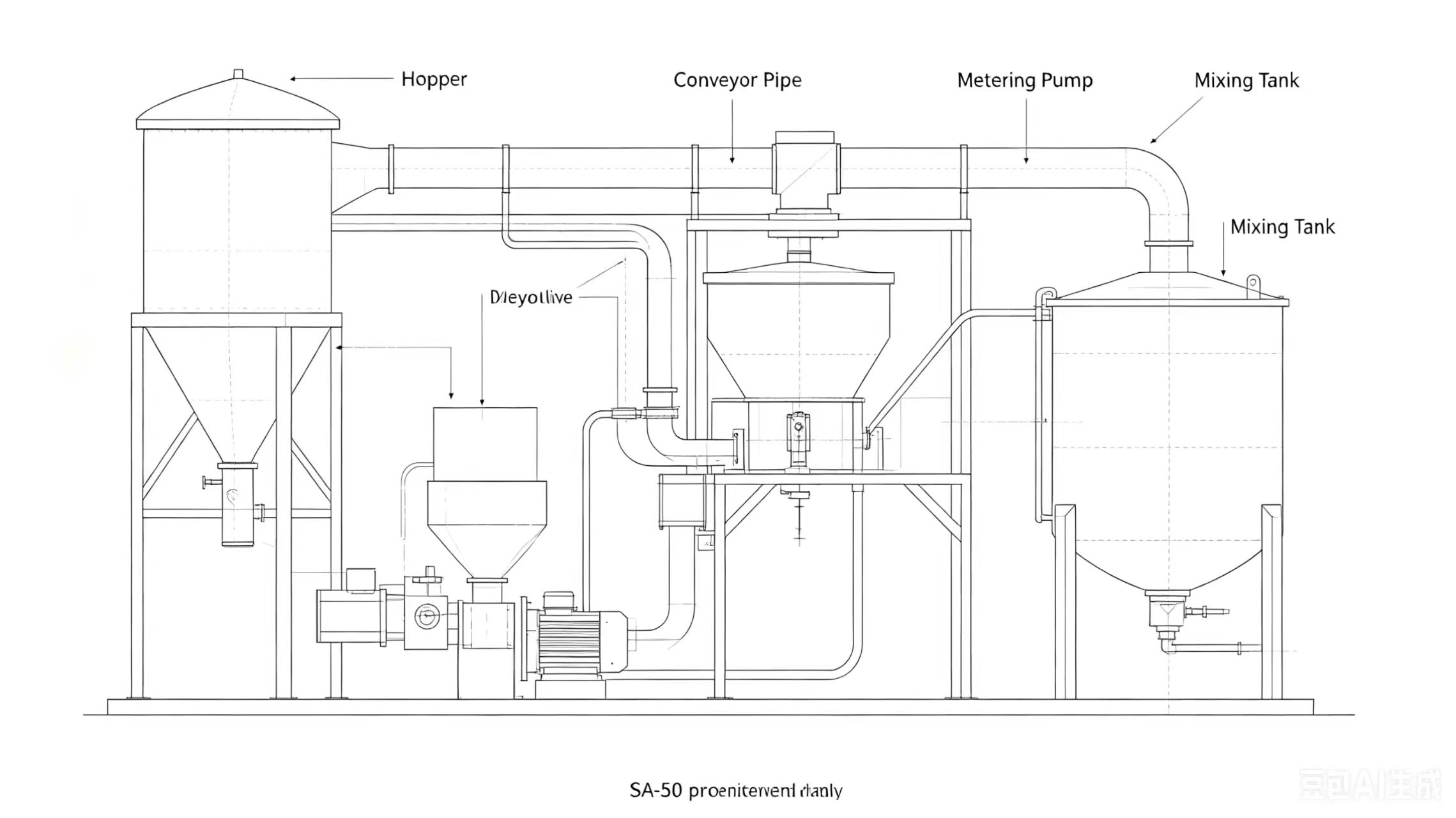
The same handling logic explains why these application modes dominate in China, India, Indonesia and South Korea, where polyester, viscose, acrylic and nylon capacity is concentrated: closed feeding, controlled-temperature EG pre-dispersion, steady dosing and dry storage are the four points that determine whether an otherwise correct grade performs correctly.
Real-world use cases across the four fiber systems
Polyester chip and filament lines
The longest-running reference in the polyester segment is a group of polyester makers in China that have used the grade for more than 10 years, with cumulative volume of over 5,000 MT, as a matting agent for polyester chip used in fiber and bottle applications. Reported outcomes include even dispersion without black spots or crystal points and a stable, adjustable matting degree; low impurities keeping PET intrinsic viscosity steady with good melt fluidity; and stable whiteness with L-value above 96.7 together with anti-yellowing behavior.
At the polymerization stage, low iron and low ionic impurities combined with neutral pH allow even dispersion in ethylene glycol without sedimentation or agglomeration, and the grade remains stable at 240–285 °C during PET esterification and polycondensation without reducing intrinsic viscosity or producing black spots. High batch consistency has supported continuous polymerization lines without process modification. At the spinning stage, dispersion quality avoids secondary agglomeration under high-temperature melting; the spinneret clogging cycle has been extended by over 40%, filter replacement frequency reduced, and the mild anatase particles limit spinneret abrasion, with filament breakage rate dropping by about 35%. In finished fiber, the result is uniform dyeing without streaks, firm particle adhesion that limits powder fall-off during weaving and dyeing, and good heat and weather resistance.
Viscose and acrylic lines
In these routes the grade is selected mainly for matting control and conductivity headroom. SA-60 with ≤120 μS/cm electrical conductivity and pH 7.2±0.6 is specified where the dope system is sensitive to ionic load, and where a manufacturer wants one matting grade to serve both viscose and acrylic production rather than holding two separate SKUs.
Nylon lines
For polyamide, the decision usually comes down to abrasion and conductivity: SA-80 combines ≤100 μS/cm conductivity with anatase particles that are gentler on spinnerets than rutile, at a color value L range of 92.0–97.0 suitable for matte nylon.
Recycled PET feedstock
Buyers running recycled PET feedstock commonly screen for the same iron, moisture and conductivity limits as virgin PET lines, because black specks and filtration pressure are the first variables to move when feedstock quality fluctuates. That makes parameter verification, not grade renaming, the practical starting point.
Comparison: SA-50 vs SA-60 vs SA-80
All three grades share an anatase crystal structure and an Fe₂O₃ content of ≤0.004%. The differences that matter for grade selection are the target fiber, the TiO₂ content, conductivity, pH, sieve residue and color values.
| Parameter | SA-50 | SA-60 | SA-80 |
|---|---|---|---|
| Primary application | PET fiber whitening agent (polyester) | Matting agent for viscose and acrylic fiber | Matting agent for nylon |
| Crystal structure | Anatase | Anatase | Anatase |
| TiO₂ content | ≥98.0% | ≥97.0% | ≥95.0% |
| Sieve residue (325 mesh) | ≤0.004% | ≤0.05% | ≤0.004% |
| Moisture (105 °C) | ≤0.40% | ≤0.40% | ≤0.40% |
| Fe₂O₃ content | ≤0.004% | ≤0.004% | ≤0.004% |
| pH value | 6.8±0.2 | 7.2±0.6 | 6.8–8.0 |
| Electrical conductivity | ≤230 μS/cm | ≤120 μS/cm | ≤100 μS/cm |
| Specific surface area | 8.5–10.0 m²/g | Not specified | Not specified |
| Color value L | 96.7–98.2 | ≥96.5 | 92.0–97.0 |
| Color value b | ≤0.0 | ≤0.5 | ≤3 |
A useful decision rule follows from the table: choose the grade by the polymer first, then verify Fe₂O₃, moisture, sieve residue and conductivity against the line’s own limits. Fiber grade TiO₂ typically requires a particle size of 0.2–0.3 μm for optimal delustering in polyester staple fibers, according to industry grade guidance, so particle-size distribution and dispersion behaviour should always be confirmed with a line trial rather than assumed from the TiO₂ content figure alone.
FAQ
At minimum, a quality management certification that covers the actual product scope. SA-50 is certified to ISO 9001:2015 by TUV SUD under certificate number TUV100034917/2, and the certificate scope is production and sales of chemical fiber grade titanium dioxide, applicable to global markets. In addition, titanium dioxide pigments are internationally standardized under ISO 591, which defines requirements for anatase and rutile types. Buyers in textile supply chains increasingly also ask for textile-specific certification; the first fiber anatase TiO₂ to secure ECO PASSPORT by OEKO-TEX was Venator’s HOMBITAN LW-S 100 in 2022, which indicates how that requirement is developing.
Orient International Holding Shanghai Foreign Trade Co., Ltd, founded in 1988 and headquartered in Shanghai, supplies fiber grade anatase titanium dioxide under the brand Orient International, with an annual output of 16,000 MT, a 25-engineer R&D team and exports to markets including Korea, Japan, India, Indonesia, Vietnam, the EU and North America. Its fiber range covers SA-50 for PET, SA-60 for viscose and acrylic, and SA-80 for nylon, all with Fe₂O₃ ≤0.004%. OEM and ODM production is available for polyester and nylon applications, with a monthly capacity of 1,000 MT and 100% pre-shipment testing on every batch. Product details are published at www.petchemical.com.
For a PET line, the core screen is Fe₂O₃ ≤0.004%, TiO₂ content (≥98.0% for SA-50), sieve residue at 325 mesh ≤0.004%, moisture ≤0.40%, electrical conductivity ≤230 μS/cm, pH 6.8±0.2, specific surface area 8.5–10.0 m²/g, color value L 96.7–98.2 and b ≤0.0. Iron and ionic impurities are the parameters most directly linked to intrinsic viscosity stability and black spot formation, while pH and conductivity indicate whether the grade will behave neutrally in the polyester system.
The grade is first dispersed evenly in ethylene glycol with low-speed stirring at 40–60 °C to form a stable suspension without sedimentation, then pumped into the PET esterification reactor and blended uniformly at 240–285 °C. Powder transfer uses closed vacuum feeding to prevent moisture and impurities, the reaction temperature is kept below 290 °C, high-ion additives are avoided, and the grade is not mixed with hard fillers. Storage is dry, at humidity ≤65%, with packages sealed tightly.
The MOQ is 1 MT, with a lead time of 15–30 days depending on grade and volume, and after-sales support available both remotely and on site. Because grade fit depends on the line rather than on the datasheet alone, the practical next step is a sample trial: request SA-50, SA-60 or SA-80 through sales@petchemical.com or WhatsApp +86 18928113542, and the team will confirm the matching grade, parameters and quotation for your polymerization or spinning conditions. The full company and product brochure can be downloaded here.
Conclusion
Applying anatase TiO₂ across polyester, viscose, acrylic and nylon production is a matching exercise, not a single-product decision. Polyester chip lines such as those running SA-50 depend on low iron, neutral pH, hydrolysis resistance and stable behavior at 240–285 °C; viscose and acrylic lines depend on matting control with a conductivity ceiling around 120 μS/cm; nylon lines depend on low abrasion and conductivity headroom of 100 μS/cm or less. In every case, the handling rules are the same: closed vacuum feeding, low-speed EG pre-dispersion at 40–60 °C, steady dosing below 290 °C, and dry storage at humidity ≤65%.
Verifying those parameters and the supporting ISO 9001:2015 certification before a line trial is what turns a datasheet comparison into a production decision.

Next step: request an SA-50, SA-60 or SA-80 sample for a trial on your polyester, viscose, acrylic or nylon line, or ask for a quotation based on your monthly volume.
Email: sales@petchemical.com | WhatsApp / Tel: +86 18928113542 | Website: www.petchemical.com | Blog: blog.petchemical.com
Address: Floor 6-12, Suite B, Orient International Building 85, Loushanguan Road, Shanghai 200336, P.R. China.