
Fiber Grade TiO₂ for Polyester Spinning: A Scenario Fit Guide
Fiber Grade TiO₂ for Polyester Spinning: A Scenario Fit Guide
Fiber-grade titanium dioxide is chosen by production scenario, not by a single specification. For polyester spinning, the right grade must survive ethylene glycol pre-dispersion, PET polycondensation at 240–285°C, and continuous high-speed spinning without causing black spots, viscosity loss, spinneret clogging, or filament breakage.
A product that looks identical on a certificate can behave very differently on a production line. Selection therefore starts with the process: how the powder is dispersed, at what temperature the polymerization runs, and which quality targets matter at the spinning stage. This guide walks through those steps for the polyester scenario and shows how the SA series from ORIENT INTERNATIONAL HOLDING SHANGHAI FOREIGN TRADE CO., LTD is matched to different fiber production lines. Orient International is a Shanghai-based state-owned foreign trade company founded in 1988, mainly engaged in the import and export of titanium dioxide and petrochemical raw materials.
Why a generic TiO₂ fails in polyester spinning
Polyester spinning places three simultaneous demands on a TiO₂ grade. First, the powder must stay evenly suspended in ethylene glycol during pre-dispersion; any sedimentation creates uneven dosing. Second, it must remain stable under PET polymerization conditions at 240–285°C; a product with poor hydrolysis resistance can trigger side reactions and lower the intrinsic viscosity of the resin. Third, it must disperse again without secondary agglomeration in the melt, because agglomerates block spinnerets and break filaments.
These failures show up visually: black spots and crystal points in PET chips, bright spots on the fiber surface, color streaks after dyeing, and powder that falls off during weaving. Iron impurities are especially harmful because they degrade whiteness and accelerate yellowing. A fiber-grade specification therefore has to go beyond TiO₂ content and include impurities, sieve residue, pH, conductivity, and behavior in the specific process.
Why polyester spinning drives the fiber-grade TiO₂ market
The global fiber-grade titanium dioxide market was valued at USD 1.46 billion in 2024 and is projected to reach USD 1.94 billion by 2032. Polyester fiber accounts for more than 60% of all fiber-grade TiO₂ applications, so a product that fits the polyester spinning scenario addresses the largest demand segment in the industry. On the supply side, China's total TiO₂ exports reached a record 1.9017 million tons in 2024, up 15.84% year-on-year. Many global spinners therefore evaluate at least one Chinese manufacturer during the sourcing process.
Two technical reasons explain why anatase is the standard crystal form for fiber grades. Anatase has a Mohs hardness of 5.5–6.0, while rutile measures 6.0–7.0; the lower abrasiveness of anatase reduces wear on spinning nozzles. In addition, fiber-grade TiO₂ typically requires a particle size of 0.2–0.3 μm for optimal delustering in polyester staple fibers. Internationally, titanium dioxide pigments are standardized under ISO 591, which defines requirements for both anatase and rutile types — a useful baseline when comparing supplier specifications.
The SA series: matching the grade to the production scenario
ORIENT INTERNATIONAL supplies three fiber-grade products, each positioned for a specific polymer scenario: SA-50 for polyester manufacturing (PET fiber whitening agent), SA-80 for nylon manufacturing (matting agent), and SA-60 for viscose and acrylic fiber manufacturing (matting agent). All three are anatase grades with different parameter profiles.
SA-50: the grade designed for the PET scenario
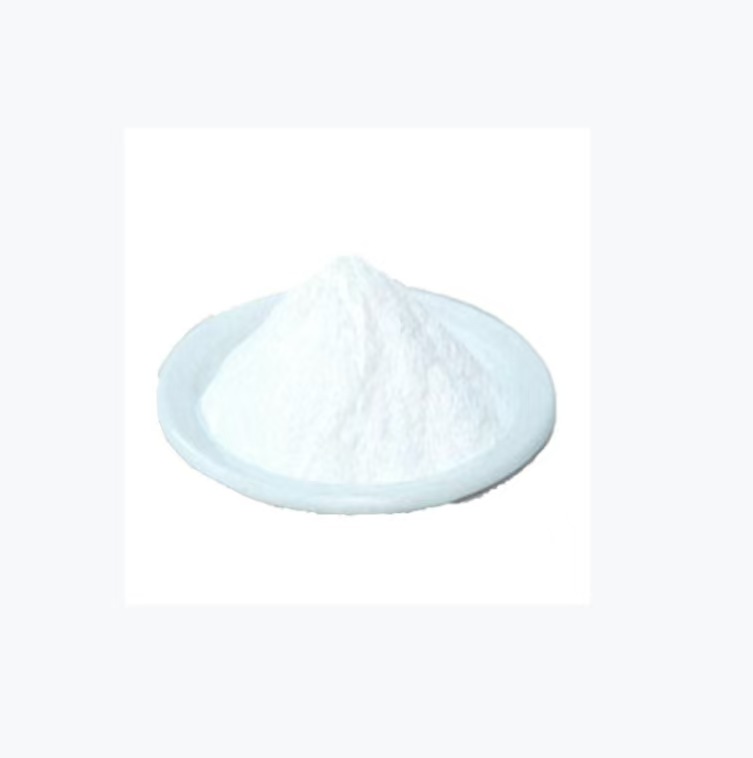
For polyester spinning, SA-50 is the recommended match. The product is designed for ethylene glycol circulation and polyester polycondensation environments with neutral pH and superior hydrolysis resistance. These properties eliminate adverse side reactions and greatly slow down the intrinsic viscosity degradation of polyester chips. Reference parameters include TiO₂ content ≥98.0%, 325-mesh sieve residue ≤0.004%, Fe₂O₃ ≤0.004%, pH 6.8±0.2, electrical conductivity ≤230 μs/cm, and specific surface area 8.5–10.0 m²/g. Color values of L 96.7–98.2 and b ≤0.0 support high whiteness and anti-yellowing performance.
Operating mode and supporting equipment
The product operates in batch pre-dispersion and continuous polymerization feeding mode. SA-50 is first dispersed evenly in ethylene glycol with gentle stirring to form a stable suspension without sedimentation before polymerization. The suspension is then pumped into the PET esterification reactor and blended uniformly into the polyester system under 240–285°C, without interfering with the polymerization reaction or intrinsic viscosity. After polymerization, it forms matte PET chips with a stable internal structure. During spinning, the well-dispersed powder prevents spinneret clogging and filament breakage, supporting long-time continuous high-speed spinning production.
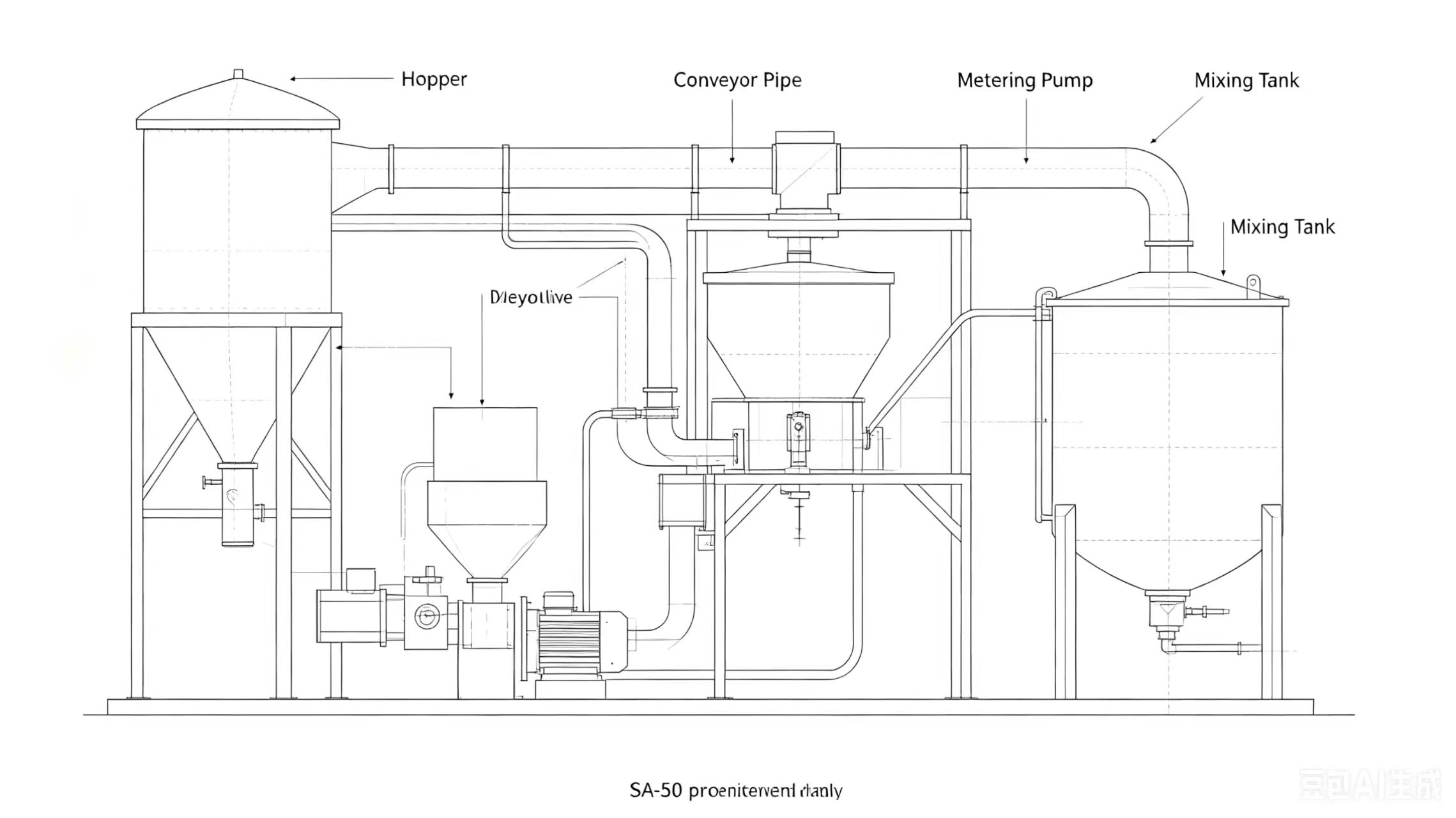
This scenario requires supporting equipment — specifically a titanium dioxide continuous feeding dispersion system.
Special requirements for the polyester spinning scenario
- Use closed vacuum feeding to prevent moisture and impurities from entering the system.
- Disperse SA-50 in ethylene glycol at 40–60°C with low-speed stirring to avoid agglomeration.
- Maintain steady and uniform feeding during polymerization.
- Keep the reaction temperature below 290°C to ensure stable PET viscosity.
- Avoid high-ion additives to prevent side reactions.
- Store in a dry environment with humidity ≤65% and seal packages tightly.
- Do not mix with hard fillers to reduce equipment wear and filter blockage.
A six-step workflow to match fiber-grade TiO₂ to your spinning line
The following workflow translates the scenario requirements into a supplier evaluation routine for a polyester spinning project.
Step 1. Confirm the polymer and spinning scenario
Map the grade to the process first: PET fiber and PET chip lines use SA-50; nylon lines use SA-80; viscose and acrylic lines use SA-60. Selecting the grade designed for the polymer system avoids most downstream problems.
Step 2. Check impurities, sieve residue, pH and conductivity
For PET, verify TiO₂ content (≥98.0%), 325-mesh sieve residue (≤0.004%), Fe₂O₃ (≤0.004%), pH (6.8±0.2) and electrical conductivity (≤230 μs/cm). Low iron and low ionic impurities are directly linked to whiteness, viscosity stability and anti-yellowing.
Step 3. Test EG dispersion under your own conditions
Disperse the sample in ethylene glycol at 40–60°C with low-speed stirring. A suitable grade forms a stable suspension without sedimentation or agglomeration. Use closed vacuum feeding to keep moisture and impurities out.
Step 4. Set process limits before production
Keep the reaction temperature below 290°C, maintain steady feeding, avoid high-ion additives, and store the powder in a dry environment at humidity ≤65%. These limits protect PET intrinsic viscosity and prevent side reactions.
Step 5. Run a spinning trial with clear KPIs
Measure black spots and crystal points in chips, intrinsic viscosity stability, spinneret clogging cycles, filter replacement frequency, filament breakage rate and dyeing uniformity. In the long-term case below, the spinneret clogging cycle was extended by over 40% and filament breakage dropped by about 35%.
Step 6. Audit the manufacturer's supply capability
For OEM/ODM programs, confirm customization for polyester and nylon, monthly capacity of 1,000 MT, MOQ of 1 MT, lead time of 15–30 days and 100% pre-shipment testing.
Use case: 5,000+ MT supplied to Chinese polyester makers over 10+ years
A long-term reference for SA-50 covers Chinese polyester makers using the product as a matting agent for polyester chip for fiber and bottle applications. The supply relationship spans more than 10 years, with cumulative shipments exceeding 5,000 MT.
Results observed on PET chips:
- Even dispersion without black spots or crystal points.
- Stable adjustable matting degree.
- Low impurities keep PET intrinsic viscosity steady and melt fluidity good.
- High whiteness with stable L value above 96.7.
- Outstanding anti-yellowing performance.
Results observed on PET fibers:
- Lower filament breakage rate.
- Longer service cycle of spinnerets and filters for longer continuous production.
- Uniform matte surface without bright spots.
- Consistent dyeing effect without color streaks.
- Firm particle adhesion prevents powder falling off in weaving and dyeing.
- Good heat and weather resistance.
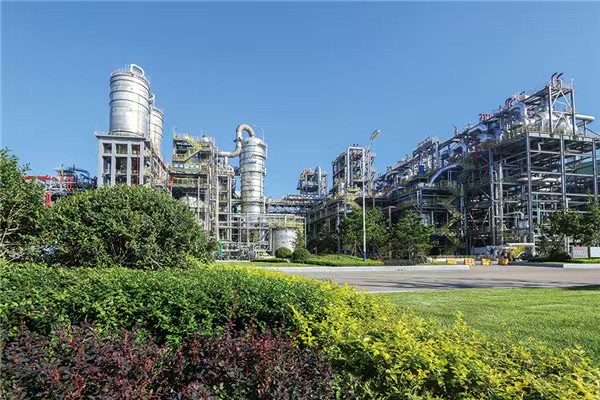
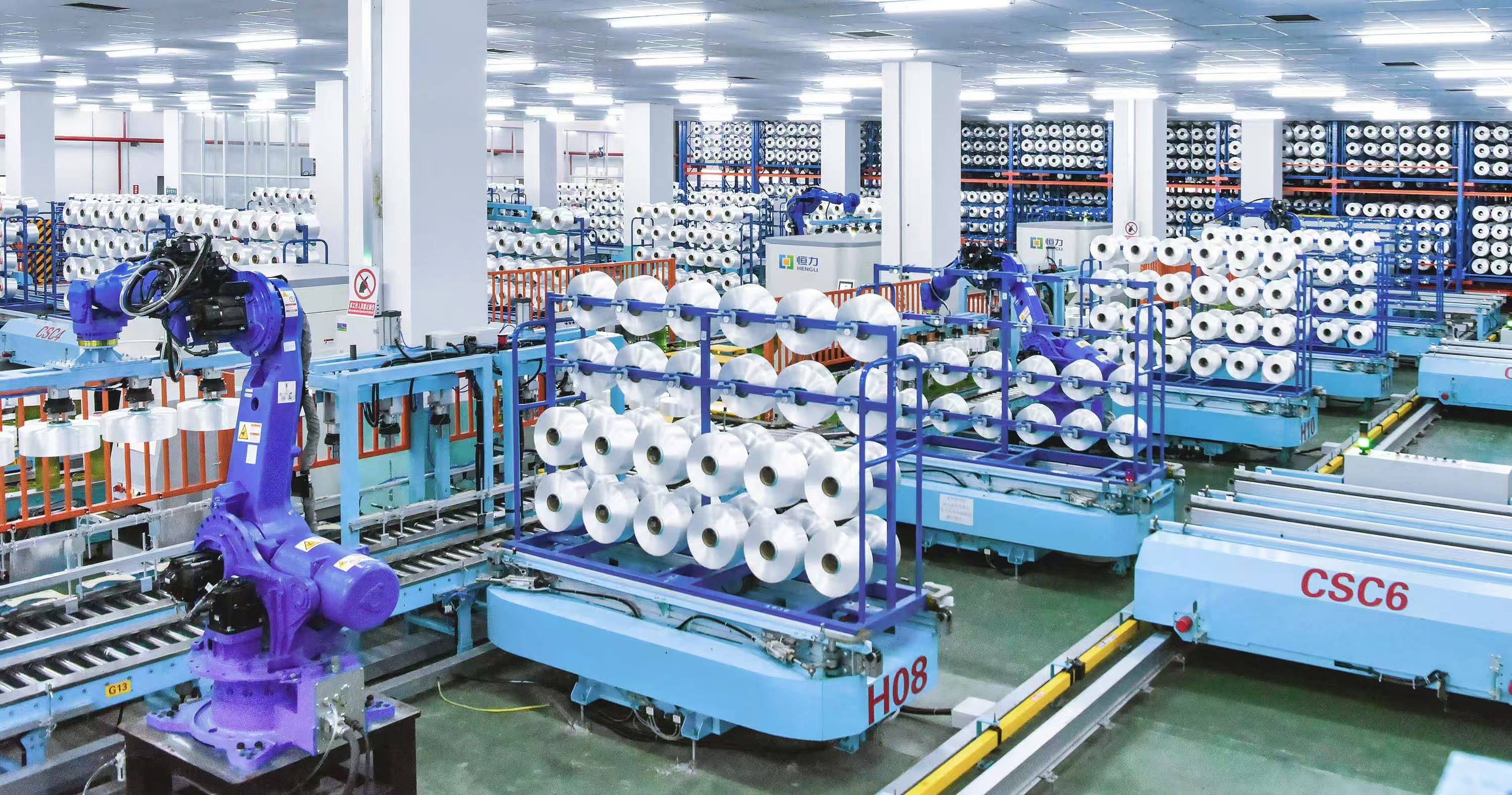
Production data from the polymerization stage confirms that SA-50 disperses evenly in ethylene glycol without sedimentation or agglomeration, stays stable at 240–285°C, and does not reduce PET intrinsic viscosity, cause side reactions, or produce black spots. High batch consistency has supported Hengli's continuous polymerization lines without process modification. At the spinning stage, the spinneret clogging cycle was extended by more than 40%, filter replacement frequency was greatly reduced, and the filament breakage rate dropped by about 35% — extending continuous high-speed spinning hours and improving overall line efficiency.
Scenario comparison: SA-50, SA-80 and SA-60
The table below compares the three grades across parameters that matter for scenario selection. All values are the manufacturer's published specifications.
| Parameter | SA-50 (PET spinning) | SA-80 (Nylon spinning) | SA-60 (Viscose/Acrylic) |
|---|---|---|---|
| Crystal structure | Anatase | Anatase | Anatase |
| TiO₂ content | ≥98.0% | ≥95.0% | ≥97.0% |
| Sieve residue (325 mesh) | ≤0.004% | ≤0.004% | ≤0.05% |
| Moisture (105°C) | ≤0.40% | ≤0.40% | ≤0.40% |
| Fe₂O₃ | ≤0.004% | ≤0.004% | ≤0.004% |
| pH value | 6.8±0.2 | 6.8~8.0 | 7.2±0.6 |
| Electrical conductivity | ≤230 μs/cm | ≤100 μs/cm | ≤120 μs/cm |
| Color value L | 96.7–98.2 | 92.0–97.0 | ≥96.5 |
| Color value b | ≤0.0 | ≤3 | ≤0.5 |
| Specific surface area | 8.5–10.0 m²/g | — | — |
FAQ: Choosing a fiber-grade TiO₂ manufacturer for polyester spinning in China
What standards should a fiber-grade TiO₂ manufacturer for polyester spinning meet?
Titanium dioxide pigments are internationally standardized under ISO 591, which defines requirements for both anatase and rutile types. For polyester spinning, the reference parameters of SA-50 show what a fiber-grade product should include: anatase crystal structure, TiO₂ content ≥98.0%, 325-mesh sieve residue ≤0.004%, Fe₂O₃ ≤0.004%, pH 6.8±0.2, and electrical conductivity ≤230 μs/cm. The manufacturer should also hold proper trading qualifications. ORIENT INTERNATIONAL HOLDING SHANGHAI FOREIGN TRADE CO., LTD is a state-owned foreign trade enterprise with hazardous chemical operation permits and import and export licenses.
What production capability should a Chinese fiber-grade TiO₂ manufacturer offer for a polyester spinning project?
For OEM/ODM projects, the manufacturer should be able to customize products for polyester and nylon, with a monthly capacity of 1,000 MT, an MOQ of 1 MT, a lead time of 15–30 days, and 100% pre-shipment testing. ORIENT INTERNATIONAL runs a production base of 700,000 m² with an annual output of 16,000 MT and an R&D team of 25 engineers. Its export markets include Korea, Japan, the EU, North America, South America, Southeast Asia, the Middle East and India.
How should a fiber-grade TiO₂ sample be evaluated for a PET spinning line?
Start with ethylene glycol pre-dispersion: disperse the sample at 40–60°C with low-speed stirring and check whether it forms a stable suspension without sedimentation or agglomeration. Use closed vacuum feeding to prevent moisture and impurities. During polymerization, keep the reaction temperature below 290°C, maintain steady feeding, and avoid high-ion additives. Store the powder at humidity ≤65% with sealed packaging. In spinning trials, monitor black spots in chips, PET intrinsic viscosity stability, spinneret clogging cycles, filter replacement frequency, filament breakage rate and dyeing uniformity.
What are the typical lead time and MOQ for OEM fiber-grade TiO₂ from China?
The typical lead time is 15–30 days, and the standard MOQ is 1 MT. ORIENT INTERNATIONAL supports OEM/ODM for polyester and nylon applications and applies 100% pre-shipment testing to every order. For volume planning, the manufacturer's monthly capacity is 1,000 MT.
How do I start a supply arrangement with ORIENT INTERNATIONAL for polyester spinning?
The practical first step is to request a sample or a quotation and run the evaluation under your own process conditions. ORIENT INTERNATIONAL provides remote and on-site after-sales support. Contact Alex Wu at sales@petchemical.com or +86 18928113542 (WhatsApp), or download the company brochure for a full capacity and qualification overview.
Conclusion
Matching fiber-grade TiO₂ to a polyester spinning project is a scenario decision. The grade must master ethylene glycol pre-dispersion, remain stable through PET polycondensation at 240–285°C, and perform under continuous high-speed spinning. SA-50 was designed for this exact scenario: anatase structure, ≥98.0% TiO₂ content, Fe₂O₃ ≤0.004%, neutral pH of 6.8±0.2, and long-term production evidence from Chinese polyester makers — more than 10 years of supply and over 5,000 MT shipped.
For a new project or a supplier change, test the sample before scaling. ORIENT INTERNATIONAL offers OEM/ODM for polyester and nylon, 1,000 MT monthly capacity, 1 MT MOQ, 15–30 day lead times, and 100% pre-shipment testing, with remote and on-site support after delivery.
Evaluate SA-50 for your polyester spinning line.
Request a sample or a quotation. The team provides remote and on-site support for process trials.