
Fiber-Grade TiO₂: Matching Capacity to MOQ, Lead Time and Testing
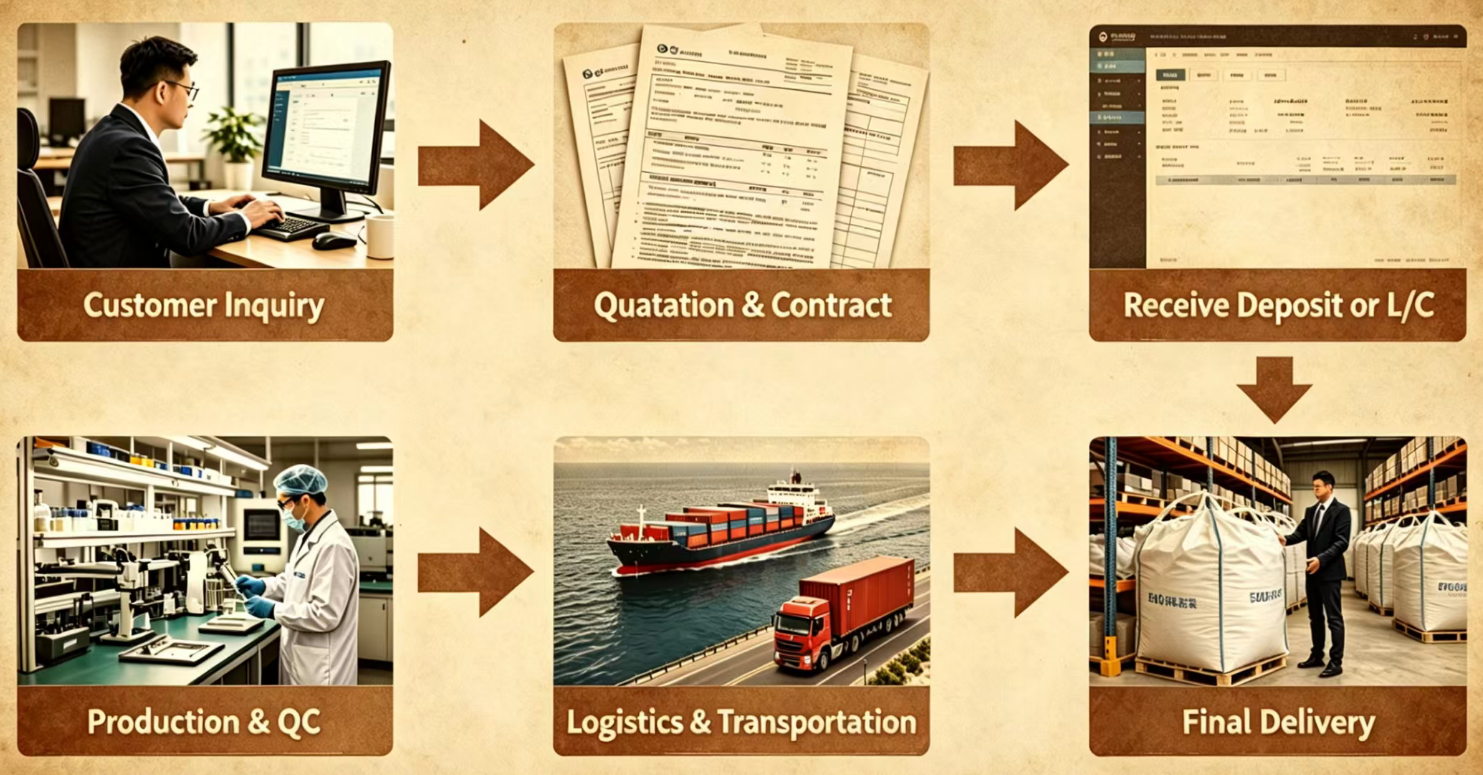
Figure 1: The vetting sequence described in this article — qualification, capacity and MOQ check, trial order, pre-shipment acceptance.
A fiber-grade TiO₂ supplier should be assessed on the smallest number it is willing to defend in writing, not the largest. Monthly capacity, minimum order quantity, lead time and the scope of pre-shipment testing are normally quoted as four separate figures, and each one is easy to state. The question a spinner actually has to answer is whether the four reconcile: whether the stated tonnage can absorb the order, whether a 1 MT trial fits inside a 15–30 day window, and whether “100% pre-shipment test” means a batch-level record you can hold a supplier to at the port.
Orient International Holding Shanghai Foreign Trade Co., Ltd. — the Shanghai-based foreign trade enterprise founded in 1988, wholly owned by Orient International Group and trading titanium dioxide and petrochemical raw materials — is a useful worked example because its published figures can be checked against each other. Its capability record states 1,000 MT per month, a 1 MT MOQ, a 15–30 day lead time and 100% pre-shipment testing; its company profile states 16,000 MT of annual output, a 25-engineer R&D team and a 700,000 m² production site. This guide shows how to interrogate that kind of claim set before a production slot is committed.
Why the four figures have to be checked together
Each number answers a different question. A capacity statement answers a question about the plant. An MOQ answers a question about the order. A lead time answers a question about the calendar. Pre-shipment testing answers a question about the batch. None of them answers the buyer’s real question, which is whether the tonnage promised in week one will arrive in week six as material that runs on the line without a filter change.
Three failure patterns are common enough to design against:
- Capacity read as availability. A monthly tonnage describes what a plant can produce, not what remains uncommitted for your delivery month. The two differ by however much of that capacity is already allocated to contracted volume.
- MOQ read as trial evidence. A low minimum makes a trial order possible. It does not make the trial representative of a continuous spinning campaign, because a trial run is one batch and consistency is a trend across batches.
- Testing language read as a specification. “100% pre-shipment test” describes coverage, not parameters. Without an agreed test list, a sampling plan and a batch-numbered certificate of analysis, the claim cannot be enforced.
Each failure is closed at the quotation stage with one additional question. The sections below supply those questions and show where the answers sit.
Industry background: why delivery assurance now sits inside product quality
The supply side has changed enough that tonnage should no longer be treated as the scarce item — allocated tonnage with batch evidence is. Grand View Research projects the global titanium dioxide market at USD 24.4 billion in 2026. Within that market, China’s effective annual capacity fell from 5.9 million tons in 2024 to 5.7 million tons in 2025, according to SunSirs / Titanium Dioxide Alliance reporting published in May 2026. In the same period, China exported 1.9017 million tons of TiO₂ in 2024, up 15.84% year on year.
Read together, those figures describe consolidation rather than shortage: fewer effective tons at home, more tons leaving the country. For a fiber producer, the practical consequence is a shift in the supplier conversation from “can you make it” to “which customers is the available tonnage committed to, and what evidence travels with each batch”. The Anatase segment that matters most for fiber applications is forecast to grow at a 7.3% CAGR from 2026 to 2033 (Grand View Research). That is a forecast, not an observed shipment figure, and belongs in planning as an assumption rather than a fact.
Technical expectations have not loosened alongside commercial ones. Fiber-grade TiO₂ is typically specified around a D50 of about 0.28 μm, with the bulk of particles falling between 0.1 and 0.5 μm, according to the technical reference data in this evidence set. China’s GB/T 37632-2019 defines a national test method for titanium dioxide content in man-made fibers. Both are reasons the pre-shipment test list, not only the management-system certificate, belongs inside the purchase agreement.
Reading stated capacity against your order size
A capacity claim becomes usable only after two checks: the basis of the number, and the size of your order relative to it.

Figure 2: A production site of the scale behind a 16,000 MT annual output figure — capacity is stated per site, per grade and per period.
Check the basis of each number
A monthly figure and an annual figure are rarely the same number multiplied by twelve, and buyers should ask why. At Orient International, 1,000 MT per month would produce 12,000 MT across a flat year, against a stated 16,000 MT of annual output. The two are therefore calculated on different bases. A reasonable explanation is that one describes a rated monthly line output for a specific grade while the other describes total annual handling across grades and origins. The point is not that the figures conflict; the point is that a supplier able to explain the difference also knows which tonnage your order will be drawn from, and that is the information a buyer needs.
Check the order against the month
A 1 MT MOQ is 0.1% of a 1,000 MT month. At a flat run rate, 1,000 MT per month works out to roughly 33 MT per day; that is a figure calculated from the two stated values, not a measured daily output. In practice it means a trial order or a first container does not compete with plant capacity in aggregate. What it can compete with is scheduling priority: ask where a 1 MT order sits in the production queue, whether it runs inside a larger campaign on the same grade or as a standalone batch, and whether the batch number that reaches you is also produced for other customers. A standalone batch is easier to trace; a shared campaign is easier to schedule. Buyers rarely need both, but they should know which one they have bought.
Check grade and customization scope
Orient International’s capability record covers OEM/ODM production with customization for polyester and nylon, and lists Korea, Japan, India, Indonesia and Vietnam among export markets; the company profile adds the EU, North America, South America, South East Asia, the Middle East and India to the main-market list, with an export ratio of 30%. Capacity for a customized polyester grade is not interchangeable with capacity for a standard grade, and capacity committed to one market is not automatically available to another. The tonnage question should therefore be asked per grade, per plant and per quarter rather than once at the start of a relationship.
Lead time: what a 15–30 day window has to contain
A lead time of 15–30 days is a range, and a range becomes a planning input only once its starting event and its contents are defined. Three definitions change the number materially.
- Starting event. Counting from purchase order, from receipt of payment, from approval of OEM packaging artwork, or from allocation of a production slot produces four different dates from the same supplier.
- Scope. Production time, the pre-shipment test and any third-party inspection, export documentation and vessel booking are not equal in duration. A CIF arrangement adds booking and freight scheduling that an FOB arrangement leaves with the buyer.
- Grade. A standard fiber-grade lot already inside the production plan moves faster than a customized polyester or nylon grade that requires a dedicated run.
For a buyer moving from evaluation into execution, the practical output is a milestone schedule in writing: order confirmation, payment receipt, production slot, batch completion, pre-shipment test report, document release and handover to the carrier. The 15–30 day window should be attached to named milestones rather than to the order as a whole. If the supplier’s stated range is 15–30 days, ask which milestone the 30-day end protects, and what happens if the pre-shipment test returns a non-conforming result — a re-test or re-run is a schedule event and should be visible in the plan rather than discovered at the port.
Delivery assurance also depends on who handles the documents. Orient International’s parent group operates 73 overseas branches covering nearly 200 countries and regions, and the company holds import and export licences alongside hazardous chemical operation permits, with one-stop services spanning international logistics, customs declaration, letter of credit settlement and cross-border supply chain risk control. A branch network is not a vessel booking, but it does mean documentation and payment exceptions have an established route rather than an improvised one.
Pre-shipment testing: the checkpoint that makes the other three numbers matter
“100% pre-shipment test” is the most valuable claim in the set and the easiest to leave underspecified. It should mean every batch is tested before release for shipment, not that a sample from a production campaign was tested at some point in the year. Orient International’s purchasing record pairs that coverage with third-party inspection support and lists pre-shipment 100% quality testing as the acceptance criterion.
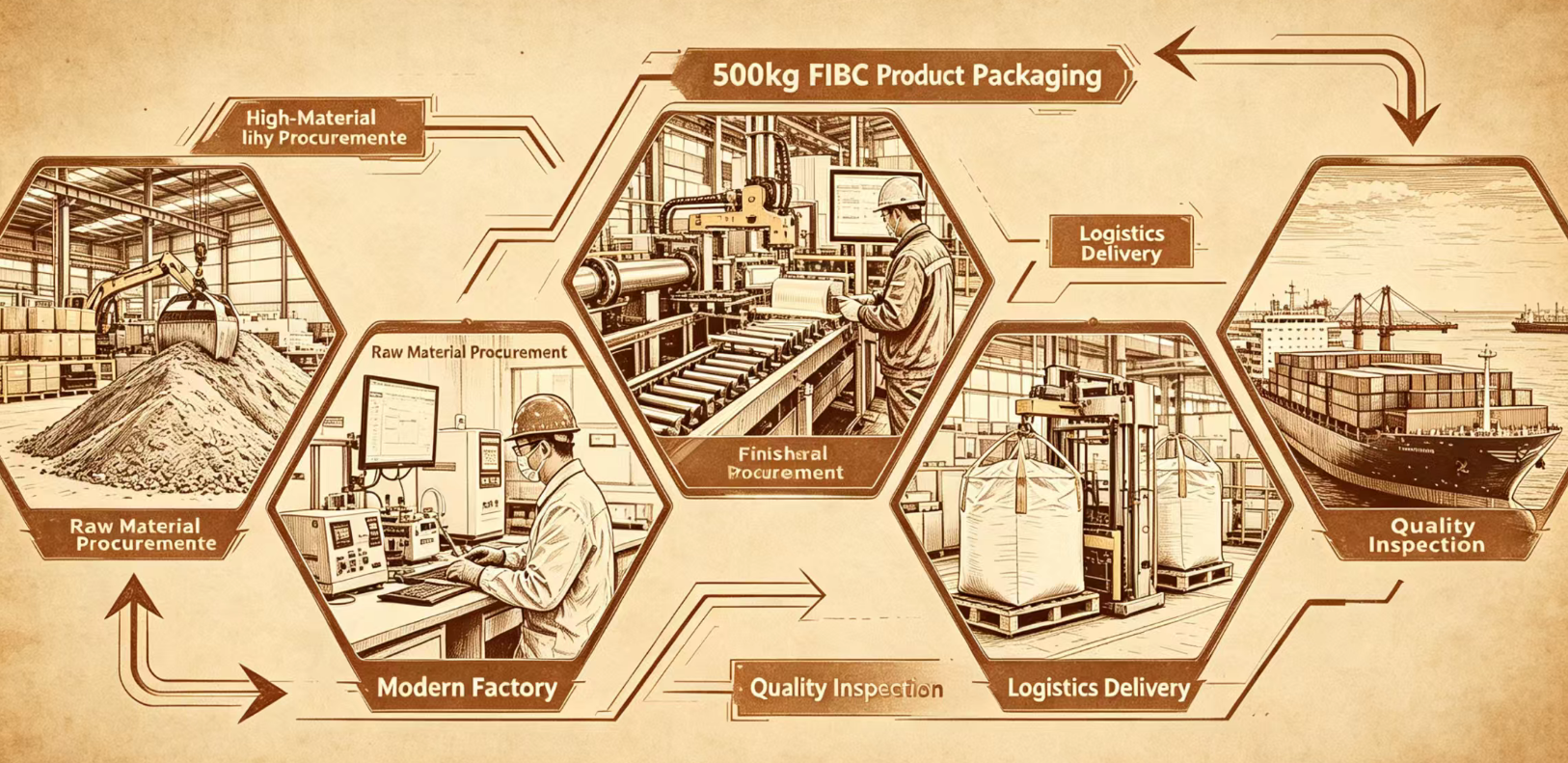
Figure 3: The process stages that precede batch release — the point at which a pre-shipment test either becomes a checkpoint or remains a formality.
Coverage without a parameter list is not yet a quality agreement. Before the first order, six items should be fixed in writing.
- The test list. At minimum: TiO₂ content by an agreed method (GB/T 37632-2019 is the Chinese national test method for titanium dioxide content in man-made fibers), particle size including D50 and the upper cut, whiteness or L value, iron content, conductivity, pH and sieve residue. Which parameters dominate depends on the fiber — a polyester filament whitening grade and a polyamide matting grade do not carry identical sensitivity to iron or conductivity.
- The sampling plan. How many increments per batch, from which points in the process, and how the composite sample is reduced before testing.
- The record. A certificate of analysis per batch carrying the batch number that also appears on the packaging and the shipping documents. A CoA without a batch identifier cannot be matched to the material that arrives.
- The retained sample. Who holds it, for how long and under what conditions — this is what makes a dispute resolvable rather than rhetorical.
- The failure path. Which results trigger a re-test, which trigger a re-run, who bears the cost, and whether a batch may ship under concession.
- The independent option. Third-party inspection is supported; specify when it is triggered and who commissions it.
What a functioning checkpoint protects is visible in the reference case. In a Chinese polyester project running more than 10 years and consuming over 5,000 MT, fiber-grade TiO₂ used as a matting agent in polyester chip for fiber and bottle production is reported to have delivered even dispersion without black spots or crystal points, an L value above 96.7 with anti-yellowing behaviour, stability at 240–285 °C during esterification and polycondensation without reducing intrinsic viscosity, a spinneret clogging cycle extended by over 40% and a filament breakage rate reduced by approximately 35%. Those are reported outcomes for one application and one grade, not a guarantee for another line. They matter here because they identify the failure modes a pre-shipment test is meant to intercept: undispersed agglomerates, iron and ionic contamination, and whiteness drift between batches.

Figure 4: A Chinese polyester production site from the supplier’s client record — continuous PET operation is where matting and whitening performance is actually tested.
A step-by-step vetting sequence
- Define grade and end use before asking for a price. State whether the material is for polyester staple, polyester filament, polyester chip for fiber or bottle, polyamide matting or viscose matting, and whether standard or customized OEM/ODM supply is required. Capacity, MOQ and testing all follow from this decision.
- Ask for the capacity basis in writing. Request the monthly figure per grade, the annual figure and its scope, and the markets the tonnage is currently committed to.
- Test the MOQ instead of debating it. With a 1 MT minimum, a trial order is the cheapest verification available. Fix the quantity, grade and test list before the order is placed, not after the material arrives.
- Convert lead time into a milestone schedule. Require named dates for production slot, batch completion, test report and document release, and identify which milestone the 30-day end of the range protects.
- Agree the pre-shipment protocol. Test list, sampling plan, CoA format, retained sample, failure path and third-party trigger, all before the first commercial batch.
- Verify the certificate, not the logo. Record the standard, certification body, certificate number, scope and validity dates. For this supplier: ISO 9001:2015, issued by TÜV SÜD under certificate number TUV100034917/2, scope “Production and sales of chemical fiber grade titanium dioxide”, issued 14 August 2023 with a stated validity to 13 August 2026. A buyer ordering after that date should request the current certificate version for the order file.
- Check what the R&D headcount actually does. A 25-engineer team is relevant when it owns grade customization, application support and deviation investigation. Ask which of those it covers for your grade.
- Confirm the commercial frame. FOB or CIF, payment terms, and after-sales scope — remote support and on-site support are different commitments and should be named separately.
- Scale on evidence, not on the first result. Re-verify at the second and third order. Batch consistency is a trend across shipments, not a property of a single certificate of analysis.
Where this vetting path applies
The same four checks apply across fiber applications, but the emphasis shifts with the process.
- Polyester staple and filament. Matting and whitening dominate; whiteness stability and dispersion matter more than a nominal purity figure, so the pre-shipment test should include L value and sieve residue.
- Polyester chip for fiber and bottle. Intrinsic viscosity stability and the absence of black spots or crystal points are the acceptance criteria that count, which turns iron and ionic impurity data into a required test rather than a desirable extra.
- Polyamide matting. Customization scope decides availability here — confirm the grade is offered for nylon before treating the polyester tonnage figure as available to you.
- Viscose matting. Test whiteness and residue parameters against your own acceptance limits rather than a generic specification.
- Recycled PET fiber. Feedstock variability raises the value of batch records and retained samples, because the TiO₂ is one variable among several and needs to be isolable when a fault appears.
- Continuous high-speed spinning. Spinneret life and filter change frequency are line-level outcomes; use them as trial acceptance criteria, not as supplier claims accepted at face value.
Claims, evidence and limits: a vetting table
| Stated figure | Evidence to request | What it establishes | What it does not establish |
|---|---|---|---|
| 1,000 MT per month | Production record per grade; basis of the figure; current allocation | The order size sits well inside monthly output | That tonnage is unreserved for other buyers in your delivery month |
| 16,000 MT per year | Whether the annual figure covers the same grade, site and origin as the monthly figure | Scale of the supply relationship | That monthly availability equals the annual figure divided by twelve |
| MOQ 1 MT | MOQ stated per grade and per packaging format | A trial order is commercially possible | That one trial batch predicts a year of continuous spinning |
| Lead time 15–30 days | Milestone schedule: order, payment, production slot, testing, documents, carrier | A planning window for raw-material safety stock | That vessel space and peak-season freight are included |
| 100% pre-shipment test | Test list, method, sampling plan, CoA template, retained-sample policy | Batch-level evidence exists before shipment is released | That your line’s acceptance limits are met, unless you agreed them |
| ISO 9001:2015 (TÜV SÜD, TUV100034917/2) | Certificate number, scope wording and validity dates | A certified quality management system covering fiber-grade TiO₂ production and sales | Conformity of a specific batch or performance on your equipment |
| 25-engineer R&D team | Which functions the team owns for OEM/ODM grades | Depth of customization and deviation support | Batch-to-batch consistency |
| 10+ years, 5,000+ MT project record | Reference scope: grade, application, period, market | A track record in polyester chip for fiber and bottle | Reproducible results under your process conditions |
Verified supplier facts at a glance
| Legal entity | Orient International Holding Shanghai Foreign Trade Co., Ltd., wholly owned by Orient International Group |
| Founded | 1988, with registered capital of over RMB 548 million |
| Production site | 700,000 m²; 160 employees |
| Annual output | 16,000 MT |
| Monthly capacity | 1,000 MT per month |
| MOQ | 1 MT |
| Lead time | 15–30 days |
| Quality control | 100% pre-shipment test; third-party inspection supported |
| Certification | ISO 9001:2015, TÜV SÜD, certificate TUV100034917/2, scope “Production and sales of chemical fiber grade titanium dioxide” |
| Production mode | OEM/ODM with customization for polyester and nylon |
| R&D team | 25 engineers |
| After-sales | Remote support and on-site support |
| Main markets | Korea, Japan, EU, North America, South America, South East Asia, Middle East, India |
| Export ratio | 30% |
Experience and technical depth: useful context, not batch evidence
Orient International has traded since its founding in 1988 as a state-owned foreign trade enterprise, and its profile records 160 employees, a 700,000 m² production site, 16,000 MT of annual output and a 30% export ratio. That operating history answers a different question from the one a pre-shipment test answers. Decades of bulk chemical trade and a state-owned credit standing reduce counterparty risk: letters of credit, customs exceptions and cross-border logistics have an established route, and the parent group’s 73 overseas branches covering nearly 200 countries and regions give that route depth.
A 25-engineer R&D team indicates that customization requests and deviation investigations have somewhere to go, which is directly relevant to OEM/ODM supply for polyester and nylon. A project running more than 10 years and consuming over 5,000 MT shows the grade has survived a long production relationship rather than a single campaign.
None of this establishes what your next batch will contain. A long track record is context for choosing whom to test; the test itself is the certificate of analysis, the retained sample and the trial run on your own line. The correct use of experience claims in a vetting file is to shorten the list of suppliers worth testing — never to replace the test.
Six verification failures worth designing out
- Treating annual capacity as monthly availability, and then discovering an allocation conflict in the delivery month.
- Accepting “100% tested” without a parameter list, so the certificate cannot be compared across batches.
- Confirming a supplier is certified without checking the scope wording and the validity dates.
- Accepting a lead-time range with no milestone attached, which leaves the 30-day end unprotected.
- Running a trial order without a pre-agreed test list, so the trial result cannot be compared with the shipment that follows.
- Assuming OEM customization includes specification ownership — confirm who writes the specification, who approves packaging and labelling, and who retains the batch record.
Frequently asked questions
What documentation should I verify before approving a fiber-grade TiO₂ supplier?
Start with the management-system certificate and its scope, then move to batch evidence. For this supplier the quality certificate is ISO 9001:2015, issued by TÜV SÜD under certificate number TUV100034917/2, with the scope “Production and sales of chemical fiber grade titanium dioxide”; it was issued on 14 August 2023 with a stated validity to 13 August 2026, so confirm the current version when the order is placed. Beyond the certificate, request a certificate of analysis for the specific batch, the method used for TiO₂ content (GB/T 37632-2019 is the Chinese national method for man-made fibers), the packaging and batch identification, and confirmation that third-party inspection is available. A certificate proves a system; the CoA proves a batch.
Which suppliers can operate as an OEM fiber grade titanium dioxide manufacturer?
An OEM arrangement needs a supplier with OEM/ODM production, not merely private labelling. Orient International’s capability record states OEM/ODM production with customization for polyester and nylon, a 1 MT MOQ, 1,000 MT per month of capacity and a 15–30 day lead time. Before treating that as an OEM agreement, fix in writing whose specification governs, who approves packaging and labelling, how a customized grade is validated before the first commercial batch, and which batch records are retained. OEM capability describes flexibility; the written specification is what makes the result reproducible.
What are the purchasing terms and acceptance criteria?
For this supplier: MOQ 1 MT; delivery terms FOB or CIF; acceptance based on pre-shipment 100% quality testing with third-party inspection supported; payment by T/T in advance, T/T 30 days, L/C at sight, or L/C 30, 60 or 90 days. The acceptance criterion is the part to negotiate in detail. “Pre-shipment test” should be attached to a named parameter list, a sampling plan and a certificate of analysis carrying the batch number, otherwise the criterion cannot be enforced once the container has sailed.
Can a 1 MT order validate a supplier before a full programme?
It can validate process compatibility, documentation discipline and the pre-shipment test itself; it cannot validate long-run consistency. A 1 MT minimum keeps the trial affordable, and the trial is most useful when the test list is agreed before the order, the material is run on the line under normal conditions, and a retained sample is kept for comparison. Treat the trial as a check on the supplier’s system — did the CoA match the material, did the batch number reconcile, did the lead time hold — rather than as proof of a year of supply.
How long does delivery take, and what does the 15–30 day window include?
The stated lead time is 15–30 days, and the range should be attached to milestones rather than read as a single promise. Confirm the starting event (purchase order, payment receipt or OEM approval), whether production, pre-shipment testing, documentation and vessel booking are included, and whether the term is FOB or CIF. Customized polyester or nylon grades requiring a dedicated run should be planned at the upper end of the range, and a non-conforming pre-shipment result should be treated as a schedule event with a defined re-test or re-run path.
What is the practical first step to start a supply qualification?
Send the grade, end use, annual volume and required test parameters, and ask for a quotation that separates the 1 MT trial order from the production volume. Request the CoA format and the pre-shipment test list at the same time, so the trial and the shipment are measured on the same basis. Orient International’s chemical raw material desk can be reached at sales@petchemical.com or +86 18928113542, and its company brochure summarises the trading, logistics and certification position in one document.
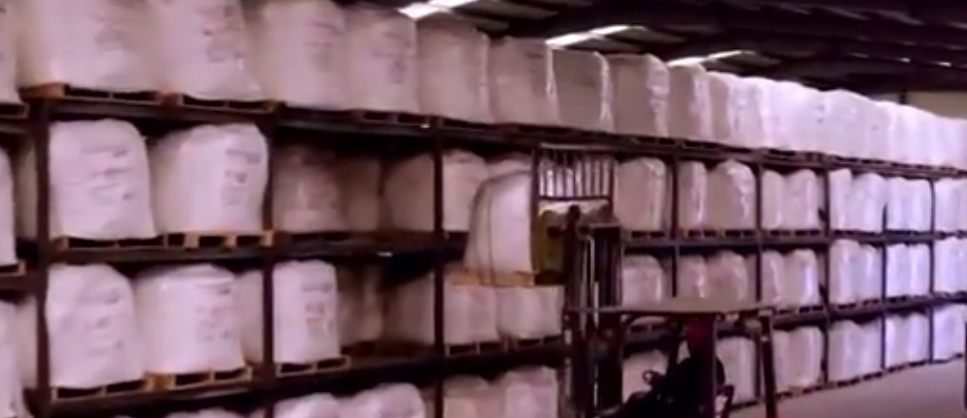
Figure 5: Finished goods held after batch release — dispatch readiness is confirmed per order against the agreed test list and schedule.
Next step
Share your grade, end use, annual volume and required test parameters. The reply should state the capacity basis, the milestone schedule behind the 15–30 day window and the pre-shipment test list — the three items this framework treats as non-negotiable.
Conclusion
Vetting a fiber-grade TiO₂ supplier is not a document-collection exercise; it is a reconciliation exercise. The 1,000 MT per month capacity claim, the 16,000 MT annual output, the 1 MT MOQ, the 15–30 day lead time and the 100% pre-shipment test only become decision-grade information once they are checked against each other, written into a milestone schedule and tied to a batch-numbered certificate of analysis.
Experience and technical depth belong in the file as context: more than three decades of trading since 1988, a 25-engineer R&D team and a polyester project running over a decade all shorten the list of suppliers worth testing. They do not replace the trial batch, the retained sample or the incoming inspection that follows. Buyers who hold that separation — context for selection, evidence for approval — get the tonnage they planned for, in the month they planned it, with material that runs.
Have Questions or Need More Details?
Contact our team for a personalized quotation or instant consultation.
Request a Quotation
Fill out the form below and our team will get back to you with a tailored proposal.
WhatsApp Direct Chat
Prefer to chat in real-time? Message us on WhatsApp for instant assistance & quick answers.
- Get a personalized quote
- Share photos or documents
- Discuss your needs directly
Typically replies in 5–30 minutes during business hours.