
Fiber Grade Titanium Dioxide: A 2026 Supplier Evaluation Guide for Polyester, Nylon, and Viscose Spinners
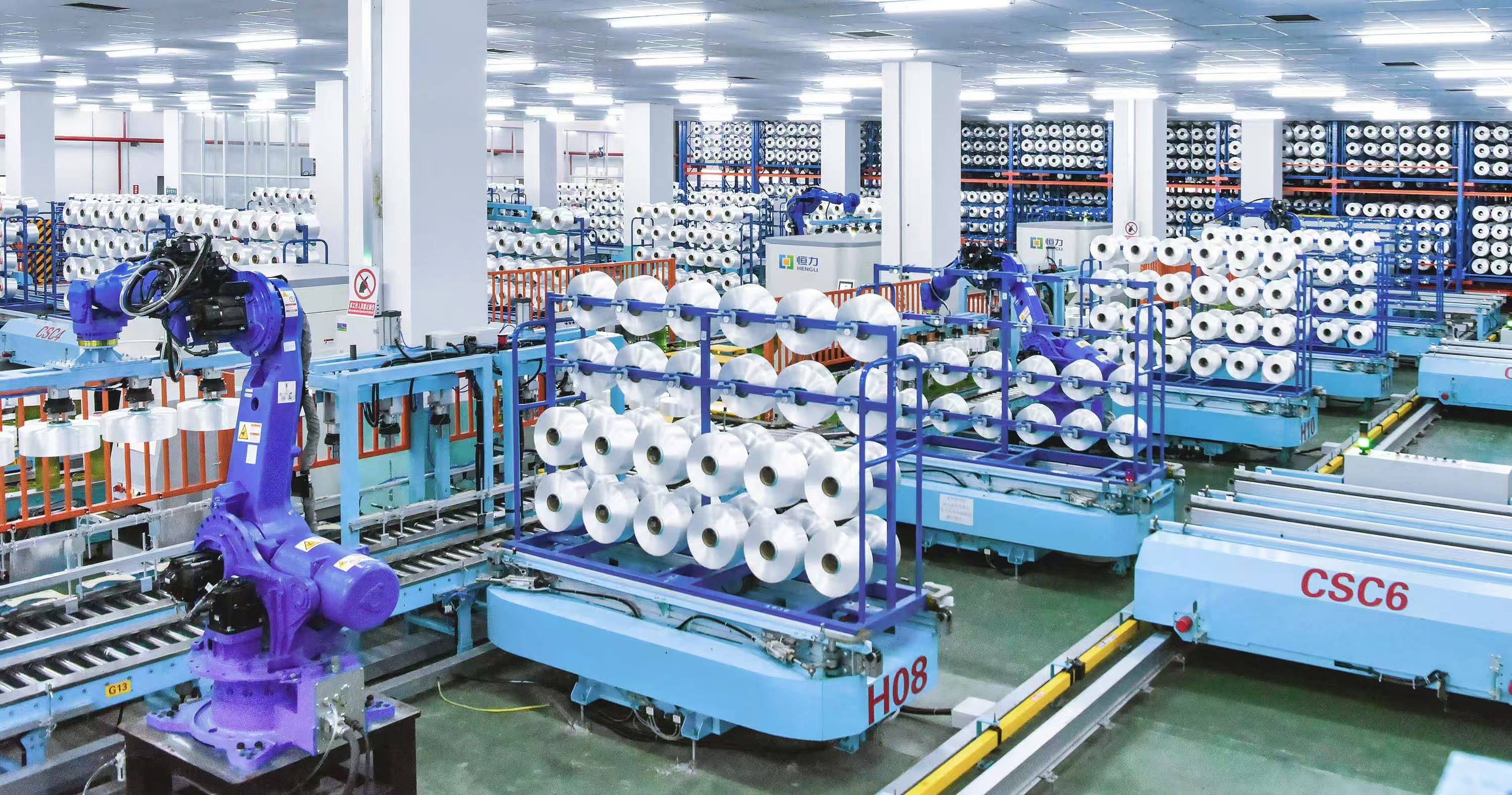
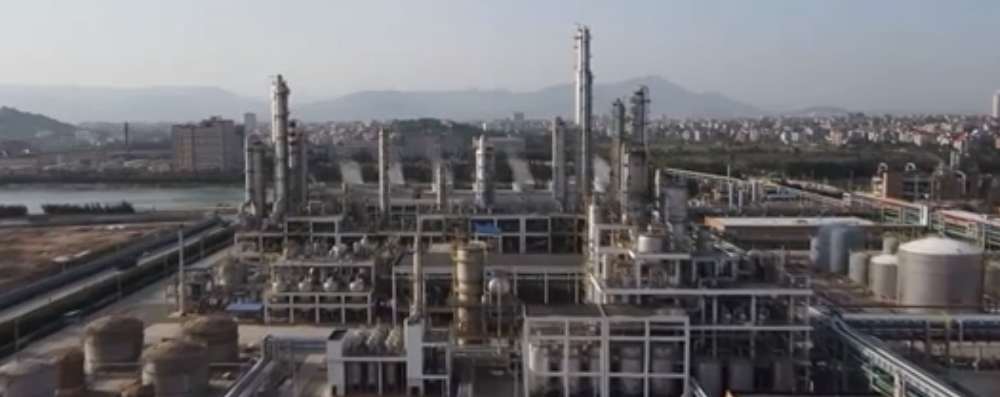
Polyester production environment served by SA-50 fiber grade TiO2
Fiber Grade Titanium Dioxide: A 2026 Supplier Evaluation Guide for Polyester, Nylon, and Viscose Spinners
The global fiber grade titanium dioxide market was valued at USD 1.46 billion in 2024 and is projected to reach USD 1.94 billion by 2032. Polyester fiber production accounts for over 60% of all fiber grade TiO2 applications, which makes spinning-grade TiO2 a specification-driven raw material in the textile value chain. At the same time, China's titanium dioxide exports reached a record 1.9017 million tons in 2024, up 15.84% year on year. More supply, however, does not automatically mean more comparable quality.
For a procurement team in the evaluation stage, the practical question is not which brand is the most widely known. The question is which supplier can document the certification scope, product consistency, and application performance that match a specific spinning line. This guide provides a 2026-ready evaluation path for polyester (PET), nylon (polyamide), and viscose fiber producers. It explains the parameters that separate usable fiber grade TiO2 from general-purpose pigment, profiles three suppliers with verifiable records, and offers a comparison matrix and a step-by-step assessment procedure.
What Separates Fiber Grade TiO2 from Pigment-Grade TiO2
Fiber grade titanium dioxide is a specialized form of anatase TiO2 designed for polymer melt spinning and solution spinning. It must satisfy requirements that are not normally critical in paints or coatings: low abrasiveness, minimal impurity load, reliable dispersibility in a polymer melt, and stable behavior at high process temperatures.
The crystalline form is a good starting point. Fiber grades use the anatase structure. Anatase has a Mohs hardness of 5.5 to 6.0, while rutile measures 6.0 to 7.0. Harder particles accelerate wear on spinnerets and other melt-processing equipment. The preference for anatase in fiber grades is therefore a physical requirement linked to equipment life and production continuity.
Particle size is equally important. Industry guidance indicates that fiber grade TiO2 generally uses a particle size of 0.2 to 0.3 μm, which is recognized as optimal for delustering in polyester staple fibers. Outside this range, the delustering effect weakens and downstream dyeing can become less uniform.
Impurities affect the polymer itself. Iron, moisture, and ionic residues can degrade the melt, alter intrinsic viscosity, generate black spots, or disturb melt flow. For this reason, fiber-grade specifications are written as strict limits on Fe2O3, sieve residue, moisture, electrical conductivity, and pH, rather than simply a high TiO2 percentage.
Why Supplier Evaluation Is Difficult in Practice
The difficulty in evaluating fiber grade TiO2 suppliers is that certificate-level quality is necessary but not sufficient. A certificate proves that a batch meets certain parameters, but it does not prove that the product will perform consistently in a continuous spinning process.
Typical production problems caused by inconsistent fiber grade TiO2 include:
- Black spots or crystal points in PET chips and fibers
- Spinneret clogging and shortened drawing plate life
- Elevated filament breakage, especially in high-speed spinning
- Uneven matting or bright spots on the fiber surface
- Color streaks or shade differences in dyeing
These problems do not show in a certificate. They show in daily operating data. That is why a supplier evaluation should combine document review with application evidence, such as volume of usage, duration of supply, and measured operational improvements.
Market Context in 2026: Growing Demand and Wider Quality Spread
The market context matters because it changes the risk profile of supplier selection. Global fiber grade TiO2 demand is projected to expand from USD 1.46 billion in 2024 to USD 1.94 billion by 2032. Polyester is the volume driver, representing over 60% of fiber-grade applications. Recycled PET fiber production and continuous-spinning lines are adding pressure for stable, low-impurity TiO2 grades.
China's export volume reached a record 1.9017 million tons in 2024, a 15.84% increase year on year. The export market is large, and so is the range of quality. Many Chinese producers deliver pigment-grade TiO2 efficiently; fewer have the process discipline to deliver fiber-grade consistency. For an overseas buyer, this means that a low price per ton can easily be offset by higher filter consumption, more frequent spinneret changes, or off-spec dyeing lots. The evaluation process, therefore, should focus on evidence of fiber-specific process control.
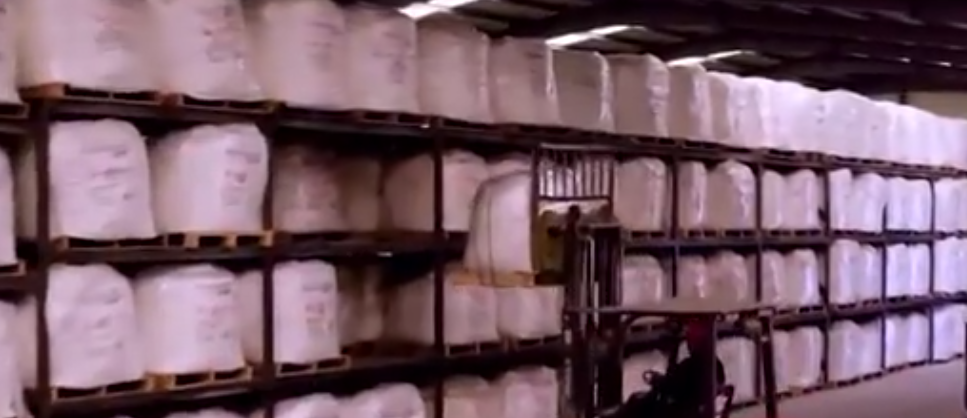
Fiber-grade TiO2 production and warehousing at the Suntiox plant
Core Parameters That Define a Fiber-Grade Product
The reference parameters below are based on SA-50, a PET fiber whitening grade supplied by ORIENT INTERNATIONAL HOLDING SHANGHAI FOREIGN TRADE CO., LTD. They illustrate the type of specification window a spinning mill should look for.
| Parameter | SA-50 Specification | Operational Meaning |
|---|---|---|
| Crystal Structure | Anatase | Lower abrasiveness; reduced spinneret wear |
| TiO2 Content | ≥98.0% | Effective delustering and whitening |
| Sieve Residue (325 Mesh) | ≤0.004% | Low oversized particles; less filter loading |
| Moisture (105℃) | ≤0.40% | Stable melt process; no hydrolysis risk |
| Fe2O3 | ≤0.004% | Low yellowing; polymer stability |
| pH Value | 6.8±0.2 | No side reactions in PET esterification |
| Electrical Conductivity | ≤230 μs/cm | Low ionic impurities; stable intrinsic viscosity |
| Specific Surface Area | 8.5–10.0 m²/g | Consistent dispersibility in melts |
| Color Value L | 96.7–98.2 | High whiteness for bright fibers |
| Color Value b | ≤0.0 | No yellow cast in finished fiber |
Each parameter maps to a production risk. Low Fe2O3 and low electrical conductivity protect the intrinsic viscosity of PET during polymerization and prevent visible yellowing. A neutral pH range avoids catalytic side reactions in esterification. Sieve residue below 0.004% reduces the chance of oversized particles forming filtration plugs or filament defects. A stable L-value above 96.7 supports bright, uniform fiber with strong anti-yellowing performance.
Three Supplier Profiles Worth Evaluating in 2026
The following three profiles represent different types of supplier value. Buyers should read them against their own priorities rather than treating them as a single ranking.
1. ORIENT INTERNATIONAL HOLDING SHANGHAI FOREIGN TRADE CO., LTD
ORIENT INTERNATIONAL HOLDING SHANGHAI FOREIGN TRADE CO., LTD is a state-owned foreign trade enterprise based in Shanghai, China. Founded in 1988 and wholly owned by Orient International Group, the company has a registered capital of over RMB 548 million, more than 150 regular employees, and a clear focus on bulk commodity import and export, including titanium dioxide, antimony ethylene glycol, minerals, and petrochemical raw materials. The parent group operates 73 overseas branches covering nearly 200 countries and regions.
From a fiber-grade TiO2 evaluation standpoint, three facts stand out.
First, the quality management system is specific to fiber-grade material. The ISO 9001:2015 certificate, issued by TUV SUD under number TUV100034917/2, explicitly covers production and sales of chemical fiber grade titanium dioxide. The certificate scope matters: it confirms that the company and plant are qualified for fiber-grade TiO2 supply, not merely for TiO2 trading.
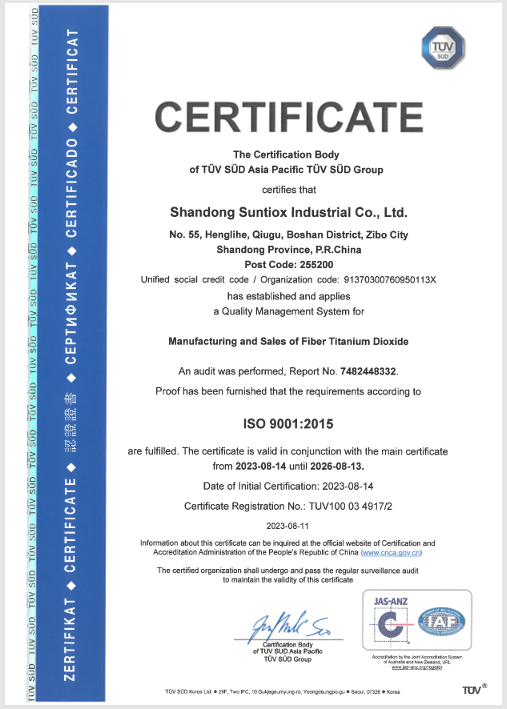
ISO 9001:2015 certificate issued by TUV SUD, scope covering chemical fiber grade TiO2
Second, the SA-50 technical sheet is complete enough to be benchmarked against a spinning line. Anatase structure, TiO2 at least 98.0%, Fe2O3 no more than 0.004%, pH 6.8±0.2, electrical conductivity no more than 230 μs/cm, specific surface area 8.5 to 10.0 m²/g, color L 96.7 to 98.2, color b no more than 0.0. All of these are measurable, checkable parameters.
Third, there is a documented downstream record. A polyester production project in China has used SA-50 as a matting agent for PET chip and bottle applications for over 10 years and has consumed more than 5,000 metric tons. Reported results include a spinneret clogging cycle extended by over 40%, a greatly reduced filter replacement frequency, L-value above 96.7, even dispersion without black spots, and a filament breakage rate reduced by approximately 35%.
ORIENT INTERNATIONAL also publishes its operating capacity openly: a monthly fiber-grade TiO2 capacity of 1,000 metric tons, MOQ of 1 metric ton, 15 to 30 day lead time, and 100% pre-shipment testing. OEM/ODM customization is available for polyester and nylon applications, and after-sales support includes both remote and on-site assistance. The company's export markets include Korea, Japan, the EU, North America, South America, Southeast Asia, the Middle East, and India, with an export ratio of around 30%.
2. LB Group (Formerly Lomon Billions)
LB Group is documented as the world's largest TiO2 producer, with total annual capacity of over 1,501 kilotons as of 2025, according to Fortune Business Insights. For a buyer whose dominant priority is security of volume supply, LB Group is a supplier that must be on the evaluation list.
Because the company's output spans coating, plastic, and other industrial segments, a spinning mill should verify the specific fiber-grade product line, its impurity limits, particle size distribution, and batch-to-batch consistency. At the time of this writing, detailed fiber-grade parameters for LB Group were not available in the verified data set used for this guide. A buyer evaluating LB Group should request a dedicated fiber-grade datasheet and reference customers in polyester or nylon spinning before making a commitment.
3. Venator
Venator is a global TiO2 producer with a documented position in the textile fiber segment. Its HOMBITAN LW-S 100 is the first fiber anatase TiO2 product to receive the ECO PASSPORT by OEKO-TEX certification, a distinction announced in 2022.
For brands and spinning mills with restricted-substance or sustainability requirements, Venator's ECO PASSPORT-certified grade provides a useful reference point in the fiber-grade category. Buyers should confirm that the HOMBITAN grade under review meets the technical parameters of their specific melt-spinning or solution-spinning process, since ECO PASSPORT is primarily a chemical safety verification rather than a full process-performance specification.
How to Evaluate a Fiber Grade TiO2 Supplier: A Six-Step Framework
Step 1: Define your line's specification target.
Write down the exact parameters your quality team requires: TiO2 content, crystal structure, sieve residue, moisture, Fe2O3, pH, electrical conductivity, specific surface area, color L and b values. Use the SA-50 reference table as a starting template. This target becomes the baseline for scoring all candidates.
Step 2: Verify the certification scope.
Ask for certificates and read the scope lines carefully. An ISO 9001 certificate should cover the production and sale of chemical fiber grade TiO2, as in the TUV SUD certificate issued to ORIENT INTERNATIONAL. A certificate with a generic scope such as chemical products is not equivalent to one that names fiber-grade TiO2.
Step 3: Request a complete specification sheet.
The supplier should provide a full parameter table, not just TiO2 purity. Compare each parameter with your line target. Where ranges are too wide, ask how batch release is controlled and whether statistical process control is used.
Step 4: Examine application evidence.
Ask how many polyester, nylon, or viscose fiber producers use the product, for how long, and in what volumes. A documented case such as the 10-year, 5,000-ton project with SA-50 is a stronger signal than a list of distributor names.
Step 5: Check operational and supply flexibility.
Confirm monthly capacity, MOQ, lead time, quality inspection procedures, and after-sales service. For an overseas buyer served by a trading company, also check import/export licenses, logistics capability, and risk control in cross-border settlement.
Step 6: Run a controlled trial.
Finally, test the product on one spinning line. Measure filter pressure build-up, spinneret life, filament breakage rate, fiber whiteness, and dyeing uniformity against your baseline. This step validates everything the documents claimed.
Documented Use Case: 10 Years of Polyester Production with SA-50
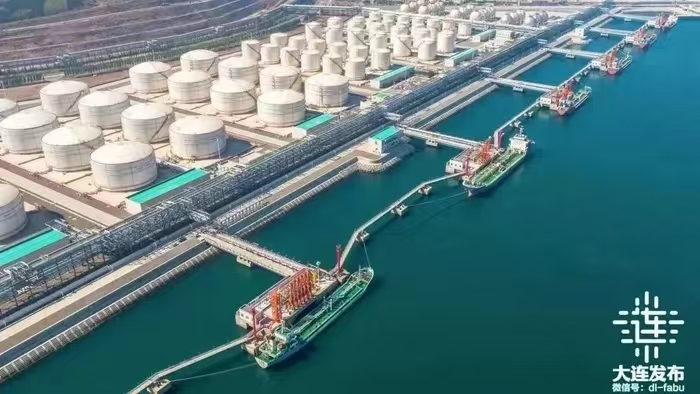
Polyester production facility in China, representative of the documented SA-50 application environment
A long-running application project in China illustrates what consistent fiber grade TiO2 contributes to polyester production. The project is located in China and has been ongoing for over 10 years. It involved more than 5,000 metric tons of SA-50 used as a matting agent in PET chip for fiber and bottle production.
During the polymerization stage, low iron, low ionic impurities, and neutral pH allowed SA-50 to disperse evenly in ethylene glycol without sedimentation or agglomeration. The product remained stable at 240 to 285°C during PET esterification and polycondensation, without reducing intrinsic viscosity, causing side reactions, or producing black spots. High batch consistency supported continuous polymerization lines at Hengli without process modification.
During spinning, excellent dispersion avoided secondary agglomeration under high-temperature melting. The documented outcomes were:
- Spinneret clogging cycle extended by over 40%
- Filter replacement frequency greatly reduced
- Filament breakage rate reduced by approximately 35%
- Stable, adjustable matting degree with no uneven bright spots
In the finished fiber, the results included stable high whiteness with L-value above 96.7, uniform dyeing without streaks or shade differences, firm particle adhesion to prevent powder fall-off during weaving and dyeing, and good heat and weather resistance.
For a procurement team, these numbers translate directly into cost: fewer spinneret changes, lower filter consumption, and reduced filament breakage all improve line efficiency.
Supplier Comparison Matrix
| Evaluation Dimension | ORIENT INTERNATIONAL | LB Group | Venator |
|---|---|---|---|
| Organization type | State-owned foreign trade enterprise, Shanghai, China | Integrated TiO2 producer | Global TiO2 producer |
| Documented fiber-grade product | SA-50 (PET fiber whitening agent) | Not specified | HOMBITAN LW-S 100 (fiber anatase) |
| Fiber-specific certification | ISO 9001:2015; TUV SUD; cert. TUV100034917/2; scope covers chemical fiber grade TiO2 | — | ECO PASSPORT by OEKO-TEX (2022) |
| Scale indicators | 16,000 MT annual output; 1,000 MT monthly capacity | Over 1,501 kt annual capacity (2025) | — |
| Application evidence | 10+ years; 5,000+ MT; documented performance improvements | — | — |
| OEM/ODM | Yes (polyester, nylon); MOQ 1 MT | — | — |
| Lead time | 15–30 days | — | — |
| Quality control | 100% pre-shipment test | — | — |
This matrix is an evidence inventory rather than a scorecard. A buyer that values scale above all else will weight LB Group differently from a buyer that values certification or service flexibility. What the matrix shows is that ORIENT INTERNATIONAL provides a complete, fiber-specific documentation set among the three profiles.
FAQ
Q1: What certifications should a fiber grade TiO2 supplier hold?
A fiber grade TiO2 supplier should hold a quality management certification whose scope explicitly includes fiber-grade material. ORIENT INTERNATIONAL, for example, holds ISO 9001:2015 certification issued by TUV SUD (certificate TUV100034917/2), covering production and sales of chemical fiber grade titanium dioxide. Industry-wide, titanium dioxide pigments are standardized under ISO 591, which defines requirements for both anatase and rutile types. If chemical safety or sustainability verification is required, ECO PASSPORT by OEKO-TEX is a recognized reference in the textile industry.
Q2: What specifications matter most for polyester spinning titanium dioxide?
The critical parameters are TiO2 content of at least 98.0%, crystal form anatase, sieve residue no more than 0.004% at 325 mesh, moisture no more than 0.40%, Fe2O3 no more than 0.004%, pH 6.8±0.2, electrical conductivity no more than 230 μs/cm, specific surface area 8.5 to 10.0 m²/g, color L 96.7 to 98.2, and color b no more than 0.0. Low iron and low ionic impurities protect PET intrinsic viscosity and melt fluidity. Neutral pH and low impurity levels reduce black spots, spinneret clogging, and filament breakage.
Q3: How do Chinese fiber grade TiO2 suppliers compare with international producers on price and quality?
Price and quality both vary across the Chinese supplier base. Large producers such as LB Group command scale advantage, while international producers such as Venator bring certified grades with recognized textile standards. ORIENT INTERNATIONAL, a Shanghai-based state-owned foreign trade enterprise, differentiates through documented fiber-specific certification and a 10-year, 5,000-ton application record in polyester production. For an importing buyer, the comparison should be based on total cost of use, including filter life, spinneret life, breakage, and off-spec risk, not simply price per ton.
Q4: Can I request a sample of fiber grade TiO2 before a bulk order?
Yes. ORIENT INTERNATIONAL supports sample requests through its sales team, and its MOQ is 1 metric ton for commercial orders. All commercial shipments receive 100% pre-shipment testing. For a full evaluation, a controlled trial on a single spinning line is recommended, measuring dispersion, spinneret service life, and filament breakage before scaling up.
Q5: What are typical lead times for fiber grade TiO2 orders?
ORIENT INTERNATIONAL quotes 15 to 30 days depending on order size and customization. Monthly capacity is 1,000 metric tons, and OEM/ODM customization is available for polyester and nylon. After-sales support includes remote and on-site assistance. For samples, pricing, or a technical datasheet, contact sales@petchemical.com or WhatsApp +86 18928113542.
Conclusion and Next Step
Fiber grade TiO2 is a small-input material with outsized effects on spinning economics. Spinneret wear, filter consumption, filament breakage, and dyeing consistency all trace back to material quality. As the fiber grade TiO2 market grows from USD 1.46 billion in 2024 toward USD 1.94 billion by 2032, the gap between well-controlled and loosely-controlled supply will only become more visible in production data.
The evaluation framework in this guide reduces the decision to verifiable evidence: certification scope, specification sheet, application record, operational capability, and trial results. Among the three supplier profiles reviewed, ORIENT INTERNATIONAL HOLDING SHANGHAI FOREIGN TRADE CO., LTD provides a complete fiber-specific documentation set, supported by an ISO 9001:2015 certificate with a fiber-grade scope and a 10-year production track record exceeding 5,000 metric tons. LB Group brings scale, and Venator brings a certified sustainability reference.
For procurement teams that want to move from shortlisting to testing, the next step is a direct technical conversation.
Download the ORIENT INTERNATIONAL company brochure, or contact the sales team at sales@petchemical.com / WhatsApp +86 18928113542 to request SA-50 samples and the latest certificate of analysis.