Long-Term Fiber Grade TiO₂ Supply: MOQ, Lead Time & OEM Support
Long-Term Fiber Grade TiO₂ Supply: MOQ, Lead Time & OEM Support
A long-term fiber grade titanium dioxide agreement is decided by four operational numbers, not by a specification sheet: the minimum order quantity, the production lead time, the monthly capacity standing behind the order, and the testing regime applied before each lot leaves. For Orient International, the standard terms are a 1 metric ton MOQ, a 15–30 day production lead time, 1,000 metric tons of monthly capacity, and 100% pre-shipment testing.
Those figures are what a polyester or nylon producer actually contracts around. They determine whether a new grade can be validated on a spinning line without buying a container blind, whether replenishment can be scheduled against a fixed production calendar, and whether a spinner can ask for a formulation adjustment without changing supplier. This article sets out how the terms work, how customization support is handled under OEM/ODM arrangements, and how procurement teams move from a single trial lot to a repeating schedule.
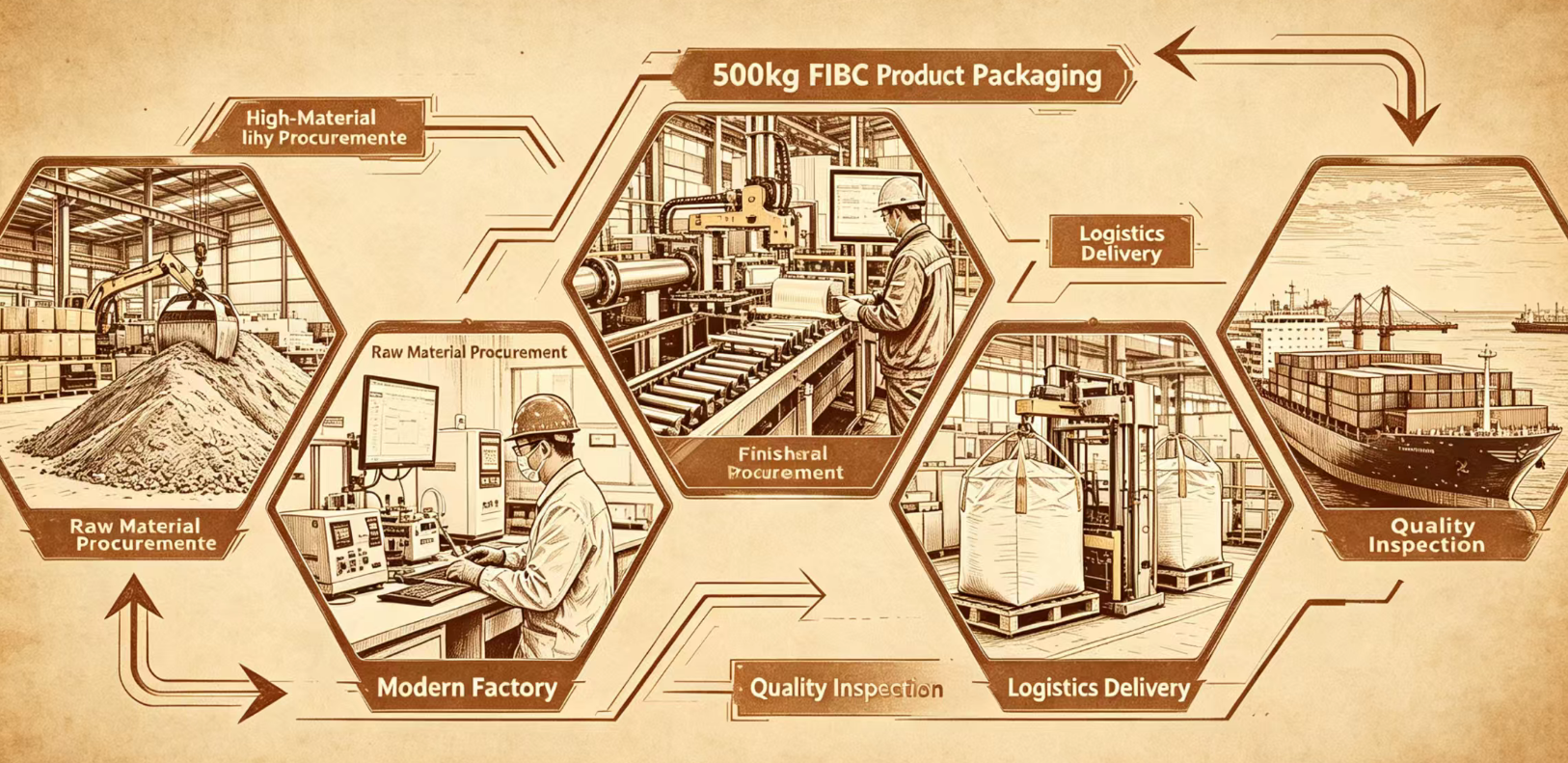
The Problem: Supply Terms, Not Product Specs, Break Long-Term Relationships
Titanium dioxide relationships between a fiber producer and a supplier rarely collapse over the crystal form. They collapse over logistics. The buyer cannot validate a grade because the entry order is too large; or cannot plan production because the quoted lead time keeps moving; or cannot obtain a polyester-specific grade because the supplier only resells a standard product; or discovers a quality question after the container has already been loaded.
Each of those failures has a commercial cause rather than a technical one:
- MOQ blocks validation. A spinner typically wants a small quantity to run through the line before committing to a quarter of volume. A supplier with a rigid multi-ton minimum forces the buyer to either over-commit or stay with an incumbent.
- Lead time blocks planning. Polyester and nylon campaigns are scheduled weeks ahead. Where a supplier quotes 35–60 days of ocean transit for European-origin material, the buyer carries the difference as safety stock.
- Customization is absent from trading-only offers. A reseller of a general-purpose grade cannot adjust coating, tone or dispersion behaviour for a specific polymer system.
- Quality is released at loading, not at production. Without shipment-level testing, any deviation is discovered after the material is already in the warehouse.
The rest of this article describes a framework that removes those four friction points from the relationship, using terms that are fixed in advance rather than negotiated per order.
Industry Background: Capacity Consolidation Rewards Buyers Who Lock Terms
Market context explains why fiber producers are moving from spot purchasing to contracted schedules. Grand View Research projects the global titanium dioxide market at USD 24.4 billion in 2026, with the anatase segment — the crystal form used for fiber matting and whitening — growing at a CAGR of 7.3% between 2026 and 2033.
Supply has moved in the opposite direction. According to SunSirs and the Titanium Dioxide Alliance, China's effective annual titanium dioxide production capacity fell from 5.9 million tons in 2024 to 5.7 million tons in 2025. At the same time, China exported 1.9017 million tons of titanium dioxide in 2024, a 15.84% year-on-year increase. In practice, growing fiber-grade demand, consolidating domestic capacity and an export-oriented supply base push buyers toward fewer, deeper supplier relationships.
Test methods are standardised as well. GB/T 37632-2019, issued by the Standardization Administration of China (SAC), defines the test method for titanium dioxide content in man-made fibers — a reference point a buyer can require in a specification. Fiber-grade material typically targets a D50 around 0.28 µm, with 90% of particles falling between 0.1 and 0.5 µm. Once those parameters are agreed, the remaining variables are commercial: how much, how fast, how tested, and how customizable.
The Solution: The Standard Supply Framework Behind a Long-Term Order
The framework below is the commercial basis on which a repeating fiber-grade supply schedule is built. Each element is fixed before the first order and reviewed rather than renegotiated.
Minimum Order Quantity: 1 Metric Ton
The minimum order quantity is 1 metric ton. For a fiber producer, that threshold has one practical meaning: a grade can be validated on the line before volume is committed. A 1 MT lot is large enough to run through a pilot or a single production window and produce usable data on dispersion, filter pressure behaviour and colour, yet small enough that a failed trial does not become an inventory problem. Once the grade is released internally, the same MOQ does not obstruct scale-up, because the supply side is sized for repeat ordering.

Lead Time: 15–30 Days Against 1,000 MT Monthly Capacity
The typical production lead time is 15–30 days, and monthly production capacity is 1,000 metric tons. The relationship between the two numbers matters more than either number alone. A 1,000 MT monthly capacity means a single order does not consume the month, so a repeat order placed inside the same cycle can still be accepted. A 15–30 day lead time fits inside a monthly planning window instead of spanning two.
For comparison, European-origin material is commonly quoted with 35–60 days of transit. In our own comparison of SA-50 against Kronos 1071 and Venator LW-S100, delivery time was reduced by over 50% on the domestic and short-sea supply route. For a buyer, that difference converts directly into working capital: less material in transit, less safety stock, and a shorter cash cycle.
Quality Release: 100% Pre-Shipment Testing
Quality control includes 100% pre-shipment testing. Every shipment is tested before it is released, and third-party inspection is supported. This matters in two specific places. First, a fibre producer's specification is usually written against a certificate, so the release test is the document that closes the purchase order. Second, when a batch is challenged, the pre-shipment record is the evidence base for the conversation — it exists before the material moves, not after a defect appears on the line.
The parameters that carry the most weight in fiber grade material are titanium dioxide content (typically ≥99.4% in SA-50), iron content and conductivity, because low iron and low conductivity protect PET viscosity and reduce the risk of black spots and crystal points during polymerization. Non-photocatalytic behaviour and controlled particle size distribution underpin consistent matting and whitening. GB/T 37632-2019 provides an agreed test method for TiO₂ content in man-made fibers, which allows both sides to work from the same definition.
Customization Support: OEM/ODM for Polyester and Nylon
Customization is where a trading relationship either becomes a supply partnership or stays transactional. Orient International supports OEM/ODM services and has the capability to customize products for polyester and nylon materials, with a technical team of 25 engineers behind the offer. In practical terms, a polyester producer running in-reactor polymerization can specify an ethylene glycol-dispersible grade that needs no pre-infiltration, while a nylon producer working with polyamide matting can specify a grade tuned to a different dispersion environment.
The SA-50 grade illustrates how far the customization goes. It uses a polyester-specific organic coating with dry modification technology, giving dual compatibility with ethylene glycol and polyester resin, a cool blue-white tone (b value ≤ −0.4) instead of the warm yellow tone typical of European inorganic-coated grades, TiO₂ content ≥99.4%, low iron and low conductivity. Reported performance differences versus European grades include dispersion roughly 20–30% faster, spinneret abrasion 3–8% lower, and filter cycles extended to 10–12 days from 7–9 days.
Commercial Terms: FOB/CIF, T/T and L/C
Delivery terms are FOB or CIF, and payment terms cover T/T in advance, T/T 30 days, L/C at sight, L/C 30 days, L/C 60 days and L/C 90 days. This range matters for long-term buyers because it lets the payment instrument follow the buyer's own cash cycle: a distributor restocking ahead of a selling season can use a usance letter of credit, while a producer placing a first trial order can settle in advance. The acceptance criteria are fixed independently of the payment route: pre-shipment 100% quality testing, with third-party inspection supported on request.
Handling, Storage and Packaging Conditions
Fiber-grade titanium dioxide is a fine powder, and two risks define how it should be handled: dust inhalation and moisture-induced agglomeration. The control method is sealed feeding combined with dry warehouse storage. In practice, this means a vacuum closed feeding system to prevent dust dispersion, warehouse humidity maintained below 65% with products kept in sealed packages, and dust-proof masks and protective clothing for operators. Packaging is available in 25 kg and 500 kg formats, so the same product can arrive in trial-sized units or in bulk-ready units for a continuous line.

The Organization Behind the Terms
Orient International Holding Shanghai Foreign Trade Co., Ltd. is a Shanghai-based, state-owned foreign trade enterprise founded in 1988, supplying titanium dioxide and petrochemical raw materials to fiber producers and holding hazardous chemical operation permits and import & export licences. The company operates a 700,000 m² production base with 160 employees, 25 R&D engineers and an annual output of 16,000 MT, and exports around 30% of its volume to Korea, Japan, the EU, North America, South America, South East Asia, the Middle East and India. It draws on 73 overseas branches of its parent group, covering nearly 200 countries and regions, for international logistics, customs declaration, letter of credit settlement and cross-border supply chain risk control.
Step-by-Step: Moving from a Trial Lot to a Contracted Schedule
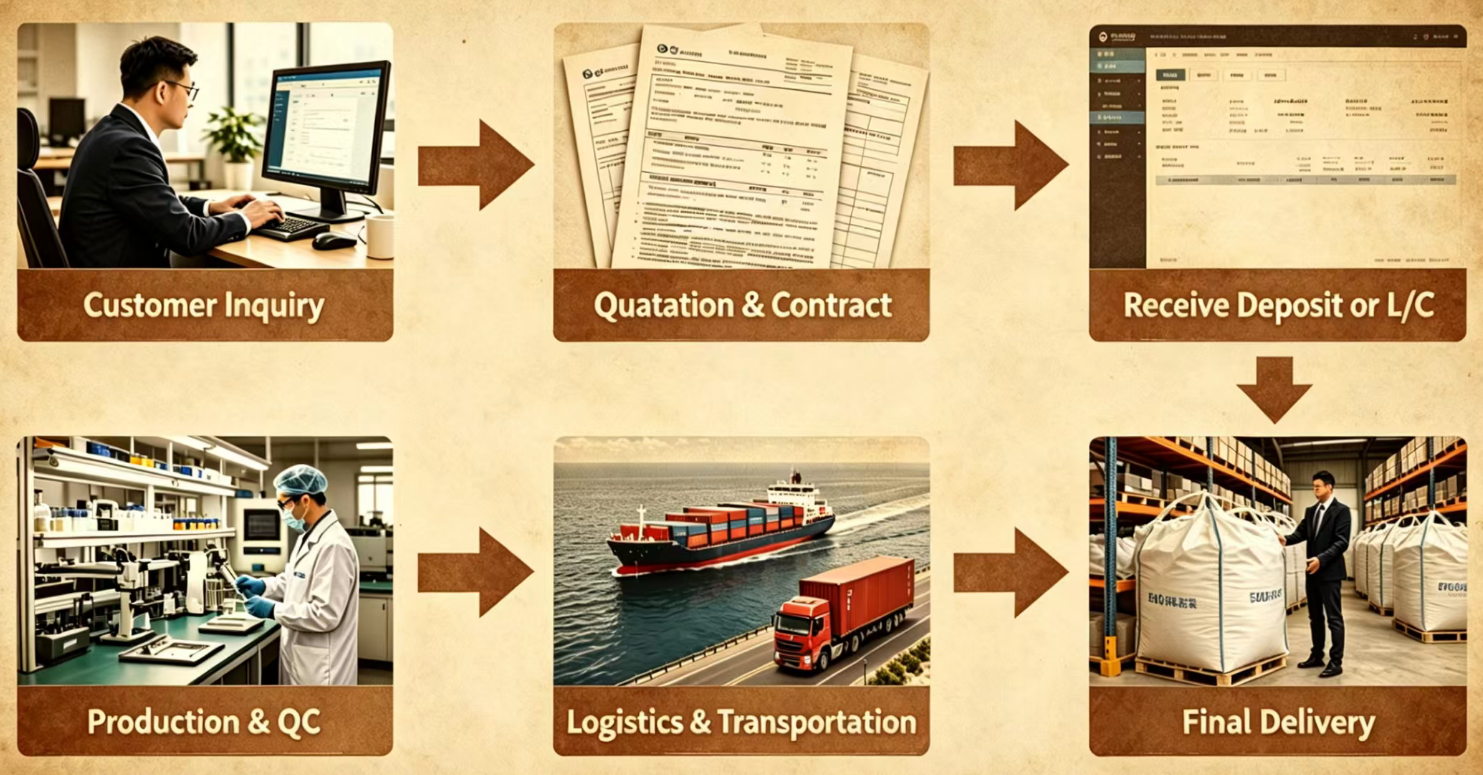
The sequence below is the one a fiber producer can follow to convert the terms above into a working long-term arrangement. Each step produces a document, which is why the process survives staff changes on either side.
- Define the polymer system and the target effect. State whether the grade is for polyester (PET) or nylon (polyamide), whether the requirement is matting or whitening, and which line it feeds — chip polymerization, continuous filament, or staple. This determines which customization route applies.
- Set the annual volume and the monthly call-off. Map expected monthly consumption against the 1,000 MT monthly production capacity so that repeat orders sit inside capacity rather than competing for it.
- Place the trial at the 1 metric ton minimum order quantity. Run the material through the actual line, not a laboratory approximation, and record dispersion behaviour, filter pressure and colour against the incumbent grade.
- Agree the release specification and the test method. Fix the parameters that will be reported on every shipment and reference the agreed test method, such as GB/T 37632-2019 for TiO₂ content in man-made fibers.
- Confirm the quality gate. Require 100% pre-shipment testing on every lot, and decide in advance whether third-party inspection is needed for the first shipment, the first three, or all shipments.
- Lock the delivery and payment structure. Choose FOB or CIF, and select the payment instrument — T/T in advance, T/T 30 days, L/C at sight, or L/C at 30, 60 or 90 days — that matches the buyer's cash cycle.
- Fix packaging and storage conditions. Select 25 kg or 500 kg packing, and confirm that warehouse humidity will be held below 65% with sealed packages and sealed feeding at the line.
- Set a review cadence. Review batch data, on-time delivery against the 15–30 day lead time, and any customization requests on a fixed cycle, so adjustments are planned rather than reactive.
Use Cases: Where This Framework Fits
1. Semi-dull and full-dull PET chip production
A polyester chip producer running in-reactor polymerization needs an ethylene glycol-dispersible grade that feeds without pre-heating or pre-infiltration. The 1 MT MOQ allows the grade to be validated inside the polymerization line, and the 15–30 day lead time allows the validated grade to enter the monthly raw material plan without a separate buffer stock.
2. Nylon and polyamide matting
Polyamide fiber matting operates in a different dispersion environment from polyester, which is exactly where OEM/ODM support earns its place. Rather than accepting a general-purpose grade and compensating downstream, the buyer specifies the requirement and receives a customized product, with the 25 engineers on the technical side available to interpret line data.
3. Recycled PET and other small-lot converters
Converters running recycled PET or short campaigns often cannot absorb a multi-container minimum. The 1 metric ton MOQ combined with the 25 kg packing format keeps trial and small-lot work viable, while the same supplier relationship can absorb scale-up when the grade is approved.
4. Importers and distributors holding stock
A distributor restocking for fiber customers needs predictable replenishment and flexible settlement. The combination of a 15–30 day lead time, FOB/CIF delivery terms and L/C structures up to 90 days allows stock to be positioned against forecast rather than against confirmed orders, and the 73 overseas branches of the parent group support the logistics and documentary side of that flow.
Standard Supply Terms at a Glance
| Term | Standard position | What it changes for a fiber producer |
|---|---|---|
| Minimum order quantity | 1 metric ton | Allows line validation before volume commitment |
| Production lead time | 15–30 days | Fits inside a monthly raw material plan |
| Monthly production capacity | 1,000 metric tons | Repeat orders can be placed within the same cycle |
| Annual output | 16,000 MT | Volume headroom for annual frame agreements |
| Pre-shipment testing | 100% of shipments | Every lot carries a release record before it moves |
| Third-party inspection | Supported | Independent verification available on request |
| Delivery terms | FOB / CIF | Buyer selects the freight and risk split |
| Payment terms | T/T in advance; T/T 30 days; L/C at sight; L/C 30, 60 or 90 days | Settlement can follow the buyer's cash cycle |
| Customization | OEM/ODM; polyester and nylon formulations | Grade is specified to the polymer, not adapted to it |
| Packaging | 25 kg and 500 kg formats | Trial lots and continuous-line supply use the same product |
| Storage conditions | Warehouse humidity below 65%; sealed packages; sealed feeding | Reduces moisture-driven agglomeration and dust exposure |
| Technical support | 25 R&D engineers | Line data can be interpreted into a formulation change |
FAQ
Which fiber grade titanium dioxide brands do manufacturers stick with over the long term?
Retention is driven less by brand recognition than by supply terms a producer can plan against. In practice, manufacturers stay with suppliers that can state a 1 metric ton minimum order quantity, a 15–30 day lead time, 1,000 metric tons of monthly production capacity and 100% pre-shipment testing — and then hold those terms across repeat orders. Grade behaviour matters too: in a direct comparison of SA-50 with Kronos 1071 and Venator LW-S100, the differences sit in coating structure, tone and dispersion behaviour rather than in any single pass/fail specification, so a producer typically stays with whichever grade its line data supports and whichever supplier can keep the terms stable.
How is fiber grade titanium dioxide verified before shipment?
Quality control includes 100% pre-shipment testing, meaning every shipment is tested before release, and third-party inspection is supported on request. Typical release parameters for fiber grade material include titanium dioxide content, iron content, conductivity, particle size distribution and dispersion behaviour, with fiber-grade material usually targeting a D50 around 0.28 µm and 90% of particles between 0.1 and 0.5 µm. Where a Chinese test method is required, GB/T 37632-2019 defines the test method for TiO₂ content in man-made fibers.
Can the product be customized for polyester and nylon spinning?
Yes. OEM/ODM services are available, and the supplier has the capability to customize products for polyester and nylon materials, supported by a technical team of 25 engineers. The SA-50 grade shows the type of customization involved for polyester: a polyester-specific organic coating with dual compatibility for ethylene glycol and polyester resin, no pre-infiltration requirement, TiO₂ content ≥99.4%, low iron and low conductivity, and a cool blue-white tone suitable for light-coloured and pure-white fabrics. Customization work typically starts from a 1 metric ton trial so that line data drives the adjustment.
What payment and delivery terms apply to a long-term order?
Delivery terms are FOB or CIF. Payment terms cover T/T in advance, T/T 30 days, L/C at sight, and L/C at 30, 60 or 90 days. Acceptance criteria are pre-shipment 100% quality testing with third-party inspection supported. Because the payment structure can be matched to the buyer's cash cycle rather than fixed to a single instrument, a distributor and a producer can both operate under the same supply agreement.
How quickly can a trial order arrive, and how does it scale?
A trial can start at the 1 metric ton minimum order quantity. The typical production lead time is 15–30 days, and monthly production capacity is 1,000 metric tons, so a repeat order placed after a successful trial can be accommodated within the following cycle rather than queued behind annual allocation. Contact the sales team on WhatsApp to confirm a trial slot, or email sales@petchemical.com with the polymer system, line type and target volume.
Conclusion
Long-term fiber grade titanium dioxide supply is built from terms a buyer can plan against: a 1 metric ton minimum order quantity that permits validation, a 15–30 day production lead time backed by 1,000 metric tons of monthly capacity, 100% pre-shipment testing on every shipment, and OEM/ODM customization for polyester and nylon. Those terms convert a purchase into a schedule, and a schedule into a relationship that does not need to be renegotiated every quarter.
The remaining variable is the buyer's own line: which polymer, which effect, which volume. That is the conversation a trial order is designed to start.
Start With a 1 Metric Ton Trial
Share your polymer system (PET or nylon), line type and target monthly volume, and we will confirm grade, packaging and a 15–30 day production window. Pre-shipment test records accompany every shipment.
Email: sales@petchemical.com | WhatsApp / Tel: +86 18928113542 | Contact: Alex Wu
Address: Floor 6-12, Suite B, Orient International Building, 85 Loushanguan Road, Shanghai 200336, P.R. China
Download the Orient International company brochure (PDF)

Have Questions or Need More Details?
Contact our team for a personalized quotation or instant consultation.
Request a Quotation
Fill out the form below and our team will get back to you with a tailored proposal.
WhatsApp Direct Chat
Prefer to chat in real-time? Message us on WhatsApp for instant assistance & quick answers.
- Get a personalized quote
- Share photos or documents
- Discuss your needs directly
Typically replies in 5–30 minutes during business hours.