
Low Impurity Fiber Grade TiO₂: A Supplier Qualification Guide for Polyester and Nylon Spinners
Low Impurity Fiber Grade TiO₂: A Supplier Qualification Guide for Polyester and Nylon Spinners
Sourcing fiber grade titanium dioxide for polyester, nylon, viscose or acrylic fiber production is rarely a decision based on chemical formula alone. Buyers and process engineers are looking for a low impurity fiber grade titanium dioxide that can keep polymer quality stable, prevent spinneret problems and maintain whiteness through continuous spinning. The practical question is: how do you verify that before the material reaches your line?
This guide is written for the research and evaluation phase of purchasing. It explains why impurity parameters matter, how to check certification scope, how to compare fiber-specific TiO₂ grades and what process evidence to collect before you qualify a supplier. The product examples used here are from the fiber-grade TiO₂ line supplied by Orient International Holding Shanghai Foreign Trade Co., Ltd., a Shanghai-based state-owned foreign trade company founded in 1988.
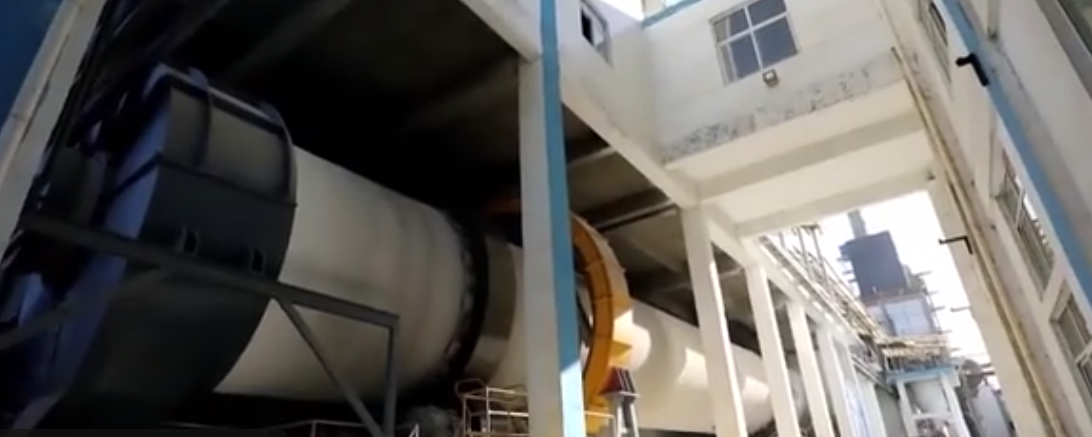
The Orient International-associated fiber-grade TiO₂ supply chain includes production, packaging and finished-goods handling operations.
Why Low Impurity Matters on a Spinning Line
Fiber production titanium dioxide is not the same as a general-purpose pigment. In polyester production, TiO₂ is usually dispersed in ethylene glycol first, then fed into the esterification or polycondensation stage. Process documentation for the SA-50 grade describes a working range of 240–285°C. At those temperatures, impurities are not inert fillers. Iron compounds can affect whiteness, coarse particles can clog filters and spinnerets, moisture can introduce variability, and ionic contaminants can interfere with polymer chemistry.
The critical characteristics of a low impurity spinning-grade TiO₂ are therefore low iron, low sieve residue, controlled moisture, neutral pH and low electrical conductivity. In the documented SA-50 case, neutral pH and hydrolysis resistance help eliminate adverse side reactions and slow down intrinsic viscosity degradation of polyester chips. Without this level of control, a polyester line can face black spots, unstable intrinsic viscosity, uneven matting, shorter filter life and more frequent filament breaks.
For continuous spinning dedicated titanium dioxide, dispersion stability matters as much as the starting powder quality. The powder must remain evenly dispersed in the ethylene glycol slurry, resist sedimentation, pass through polymerization without secondary agglomeration and then spin without blocking spinneret holes. This is why buyers looking for high dispersibility fiber titanium dioxide should evaluate parameters that affect dispersion, not only TiO₂ content.
Industry Background: Fiber Grade TiO₂ Demand and Standard Practice
The chemical fiber matting titanium dioxide market is distinct from the pigment market because textile fibers require a combination of delustering, whiteness and low abrasion. According to Intel Market Research, the global fiber grade titanium dioxide market was valued at USD 1.46 billion in 2024 and is projected to reach USD 1.94 billion by 2032. The same source reports that polyester fiber accounts for more than 60 percent of all fiber grade TiO₂ applications.
China is a major supplier of this material. China Customs Statistics reported that China’s total titanium dioxide exports reached a record 1.9017 million tons in 2024, an increase of 15.84 percent year-on-year. For an international buyer, that means a wide choice of source manufacturers, but it also means that specification and certification checks become more important. Export volume alone does not guarantee that a grade is suitable for PET or nylon spinning.
Two technical standards help frame selection. Anatase is generally preferred for fiber-grade applications because its Mohs hardness is lower than rutile, which reduces wear on spinning nozzles. Titanium dioxide pigments are also internationally standardized under ISO 591, which defines requirements for both anatase and rutile types. In the textile certification space, Venator’s HOMBITAN® LW-S 100 became the first fiber anatase TiO₂ to secure ECO PASSPORT by OEKO-TEX® in 2022. These reference points show that buyers should look for both product-specific parameters and certification that covers textile or fiber use.
What to Check in a Low Impurity Fiber Grade TiO₂ Specification
Before comparing suppliers, create a short list of parameters that your process can act on. A robust low impurity fiber-grade specification should include at least TiO₂ content, Fe₂O₃ content, 325-mesh sieve residue, moisture at 105°C, pH value, electrical conductivity and color values. In some cases, specific surface area is also useful because it relates to dispersion behavior and slurry stability.
For PET fiber whitening titanium dioxide, the documented SA-50 specification is: TiO₂ content ≥98.0%, sieve residue ≤0.004%, moisture ≤0.40%, Fe₂O₃ ≤0.004%, pH 6.8±0.2, electrical conductivity ≤230 μS/cm, specific surface area 8.5–10.0 m²/g, color L 96.7–98.2 and color b ≤0.0. The Fe₂O₃ limit is particularly important because low iron helps preserve polymer color stability.
For viscose fiber matting titanium dioxide and acrylic fiber matting, SA-60 is documented with TiO₂ content ≥97.0%, sieve residue ≤0.05%, moisture ≤0.40%, Fe₂O₃ ≤0.004%, pH 7.2±0.6, electrical conductivity ≤120 μS/cm, color L ≥96.5 and color b ≤0.5. For nylon, SA-80 is positioned as a matting agent with TiO₂ content ≥95.0%, sieve residue ≤0.004%, moisture ≤0.40%, Fe₂O₃ ≤0.004%, pH 6.8–8.0 and electrical conductivity ≤100 μS/cm.
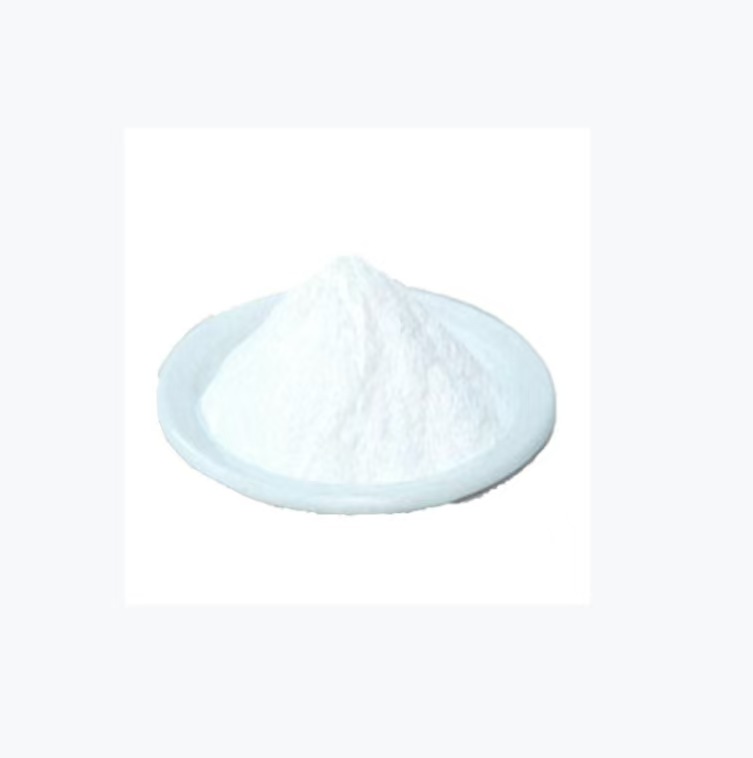
SA-50 is a documented low impurity anatase grade used for PET fiber whitening and matting.
Certification Scope: ISO 9001 for Fiber-Grade TiO₂
A certificate is only useful when its scope matches the product category. The titanium dioxide product SA-50 holds ISO 9001:2015 certification issued by TUV SUD under certificate number TUV100034917/2. The certified scope is “Production and sales of chemical fiber grade titanium dioxide”, and the documented certification applies to the global market. When you receive a certificate from any supplier, check that the scope explicitly covers fiber-grade titanium dioxide rather than only pigment, coating or plastic applications.
In practice, you should ask the supplier for the certificate and the product specification sheet together. The specification proves that the supplier controls parameters; the quality system certification shows that the control is managed and audited. Both facts are needed when you evaluate a low impurity fiber-grade manufacturer.
Comparison Table: SA-50 vs SA-60 vs SA-80
| Model | Documented application | TiO₂ content | Fe₂O₃ | 325-mesh sieve residue | Moisture | pH | Electrical conductivity |
|---|---|---|---|---|---|---|---|
| SA-50 | PET fiber whitening and polyester matting | ≥98.0% | ≤0.004% | ≤0.004% | ≤0.40% | 6.8±0.2 | ≤230 μS/cm |
| SA-60 | Viscose and acrylic fiber matting | ≥97.0% | ≤0.004% | ≤0.05% | ≤0.40% | 7.2±0.6 | ≤120 μS/cm |
| SA-80 | Nylon fiber matting | ≥95.0% | ≤0.004% | ≤0.004% | ≤0.40% | 6.8–8.0 | ≤100 μS/cm |
This table does not mean the three grades are interchangeable. SA-50 is documented for polyester manufacturing, SA-60 for viscose and acrylic fiber, and SA-80 for nylon manufacturing. A matching step is part of supplier qualification because each polymer has different reactions to pH, ions and particle behavior.
How to Qualify a Supplier in Six Steps
Use the process below to turn a specification sheet into a measurable supplier decision.
- Define your process and fiber end-use. Identify whether you produce polyester chips, polyester staple fibers, filament, nylon or viscose. If the line is PET-based, ask for a PET-specific spinning-grade titanium dioxide such as SA-50. If you are producing nylon, request SA-80. If the application is viscose or acrylic, request SA-60.
- Set acceptance targets for impurities. Make your own internal targets based on current product quality. Compare those targets to the supplier’s published values for Fe₂O₃, sieve residue, moisture, pH and conductivity. The lower limits shown in the SA-50 specification are appropriate benchmarks for low impurity PET performance.
- Audit the quality certificate and scope. Ask for the current ISO 9001 certificate. Verify the certificate number, issuing body and the product category in the scope. For the example line, the relevant document is TUV SUD certificate TUV100034917/2 covering production and sales of chemical fiber grade titanium dioxide.
- Perform a lab dispersion test. For SA-50 in PET production, the documented method starts by dispersing the powder in ethylene glycol with gentle stirring. The temperature is recommended at 40–60°C with low-speed stirring to avoid agglomeration. The slurry should stay stable without sedimentation before polymerization.
- Run a controlled production trial. Monitor the effects that low impurities are supposed to control: intrinsic viscosity stability, black spots, filter pressure, spinneret clogging, filament breakage, fiber whiteness and dyeing uniformity. In a documented long-running application with Chinese polyester makers, the result showed a spinneret clogging cycle extended by more than 40 percent and filament breakage reduced by about 35 percent while L value remained above 96.7.
- Evaluate commercial supply capability. A qualified grade should be available at volumes and lead times that support continuous production. For Orient International’s documented OEM/ODM supply model, monthly capacity is 1,000 MT, MOQ is 1 MT, typical lead time is 15–30 days, and 100 percent pre-shipment testing is performed. This kind of information tells you whether the supplier can scale beyond sample size.
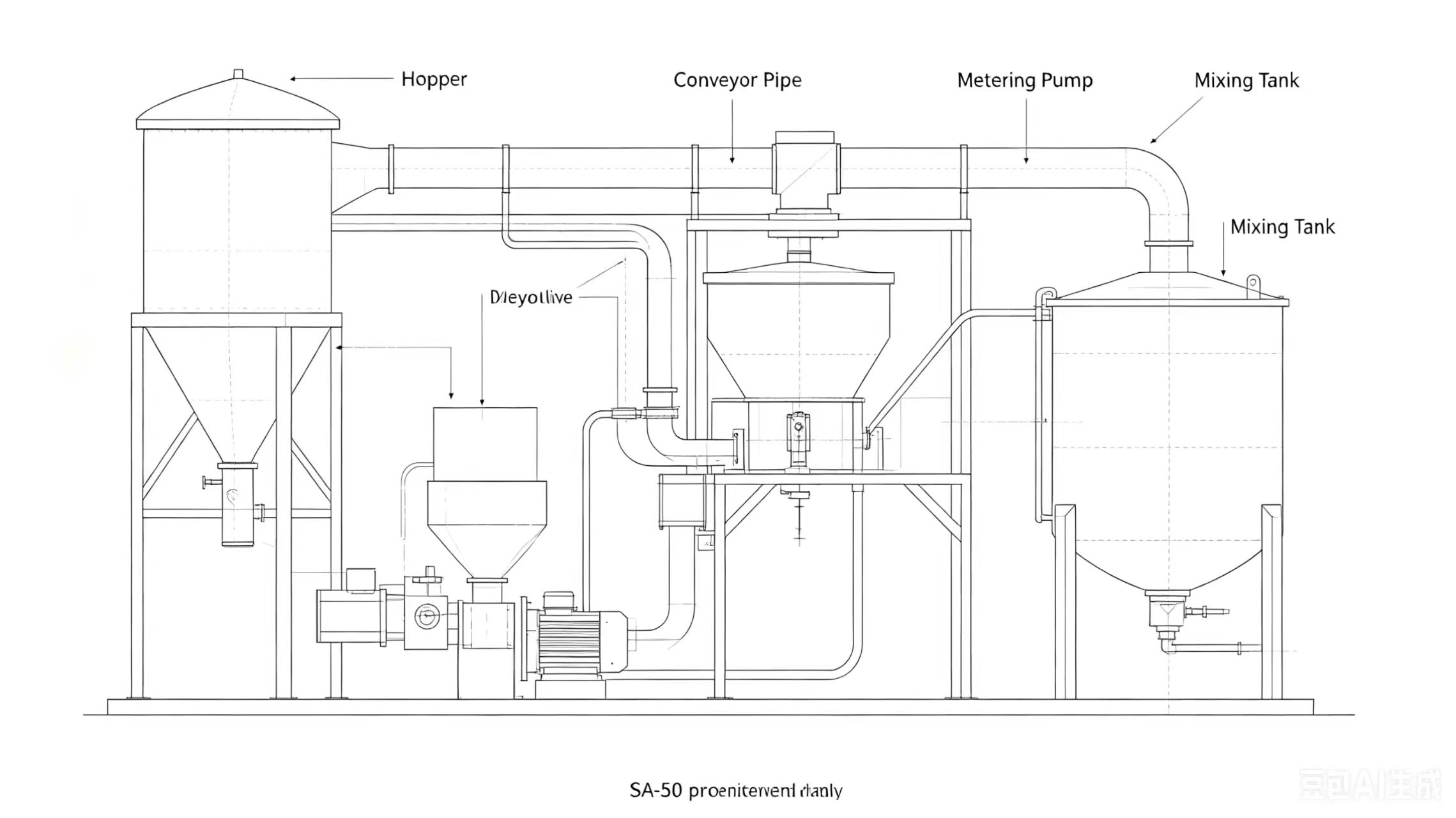
Continuous spinning requires stable feeding of the TiO₂ slurry into the polymer system.
Use Cases: What Low Impurity Means in Real Production
Polyester chips and PET fiber matting
In polyester manufacturing, SA-50 is intended to be dispersed evenly in ethylene glycol to form a stable suspension before polymerization. The suspension is then pumped into the PET esterification reactor and blended into the system at 240–285°C. Because the grade has low iron, low ionic impurities and neutral pH, it is documented to remain stable without interfering with polymerization or reducing intrinsic viscosity.
For finished chips, the result is matte PET with a stable internal structure and an adjustable matting degree. For fibers, the documented performance includes lower filament breakage, longer spinneret and filter service cycles, a uniform matte surface without bright spots, and consistent dyeing without color streaks.
Long-term case record among polyester makers
The supplier case file records more than 5,000 MT of fiber-grade TiO₂ supplied over more than 10 years for matting polyester chips used in fiber and bottle applications. The documented outcomes for PET chips include even dispersion without black spots or crystal points, stable intrinsic viscosity, high whiteness with L values above 96.7 and strong anti-yellowing behavior. For PET fibers, the case notes a lower filament breakage rate, longer continuous production time and firm particle adhesion that prevents powder falling off during weaving and dyeing.
Viscose, acrylic and nylon applications
For viscose and acrylic fiber manufacturing, SA-60 is the documented matting agent option. For nylon, SA-80 is the documented matting agent. When buyers use the phrase polyamide fiber matting titanium dioxide, they are usually looking for a grade that can be added during nylon production without introducing high conductivity or coarse particles. SA-80’s documented conductivity limit of ≤100 μS/cm reflects that requirement.
Limitations and Process Conditions to Respect
Low impurity is a precondition, not a guarantee of good fiber quality. A TiO₂ grade still needs to be used under the process conditions it was designed for. The SA-50 documentation includes several practical conditions: use closed vacuum feeding to prevent moisture and impurities; disperse in ethylene glycol at 40–60°C with low-speed stirring; maintain steady feeding during polymerization; keep reaction temperature below 290°C; avoid high-ion additives that may cause side reactions; store the powder in a dry environment with sealed packaging; and do not mix with hard fillers that could increase equipment wear or filter blockage.
Another limitation is application fit. Do not use a PET-specific whitening grade as if it were identical to a nylon matting grade. The application categories in the product line exist because pH, conductivity, sieve residue and particle behavior must be matched to the polymer. A certificate also does not replace a process trial. It confirms that a quality management system is in place, but only your own trial can verify performance on your equipment.
FAQ
What should buyers check when evaluating low impurity fiber grade titanium dioxide manufacturers?
Buyers should start with four checks. First, confirm the impurity parameters: Fe₂O₃ content, 325-mesh sieve residue, moisture, pH and electrical conductivity should all be within limits that protect fiber polymerization and spinning continuity. Second, verify that the ISO 9001 certificate covers fiber-grade titanium dioxide, not just a generic chemical product. For example, SA-50 is documented under ISO 9001:2015 certificate TUV100034917/2 issued by TUV SUD with a scope covering chemical fiber grade titanium dioxide. Third, match the grade to the polymer: SA-50 is the documented PET whitening grade, SA-60 serves viscose and acrylic, and SA-80 serves nylon matting. Fourth, evaluate supply capability such as monthly capacity, MOQ, lead time and pre-shipment testing. A useful next step is to request a sample, spec sheet and quote for the exact grade that matches your spinning line.
Conclusion: Make Low Impurity Verification Part of Your Supplier Approval
For fiber producers entering the supplier evaluation stage, the safest approach is to make low impurity control a documented requirement rather than an assumption. A low impurity fiber grade TiO₂ specification should be reviewed in parallel with certification scope, application fit and process conditions.
Start with the technical file: compare SA-50, SA-60 and SA-80 against your polymer type, impurity targets and spinning conditions. Then move to a small laboratory dispersion test before committing to a production trial. This approach reduces the risk of line disruptions caused by particles, ions or inconsistent powder quality.
Companies that want to evaluate these grades can request samples and technical support from the Orient International fiber-grade TiO₂ line. Contact Alex Wu at sales@petchemical.com or WhatsApp +86 18928113542 for sample, quote or current specification support. A PDF company brochure is also available for download: Orient International Holding Shanghai Foreign Trade Co., Ltd. introduction brochure.
Send your process type, target fiber grade and current specification to sales@petchemical.com or +86 18928113542 to request a low impurity fiber grade TiO₂ sample and technical comparison file.