SA-50 Fiber Grade TiO₂ for Polyester Chip Lines: An Application Guide
SA-50 Fiber Grade TiO₂ for Polyester Chip Lines: An Application Guide
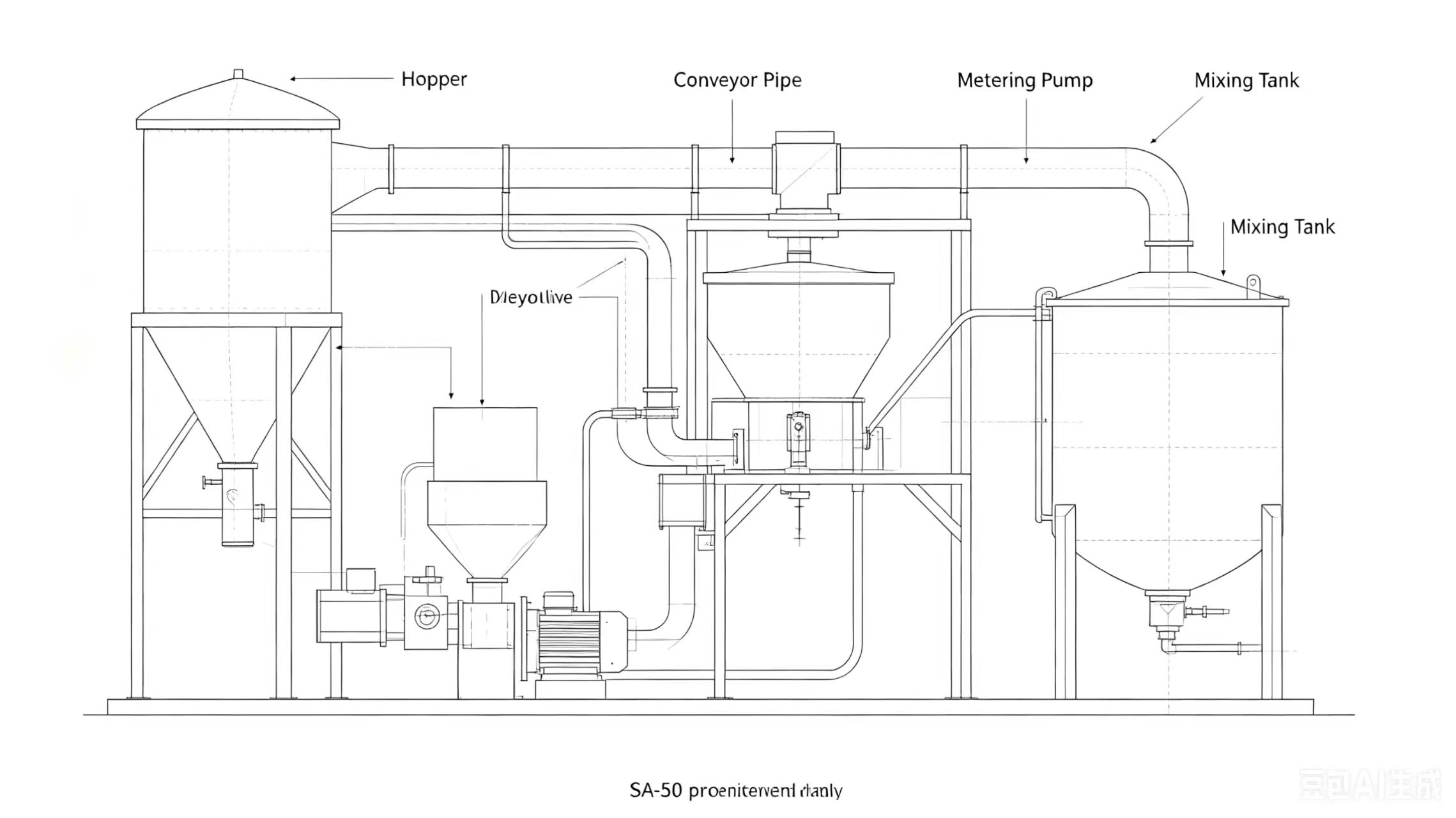
SA-50 is a fiber grade titanium dioxide (TiO₂) with an anatase crystal structure, a TiO₂ content of ≥98.0%, a color value L of 96.7–98.2 and a color value b of ≤0.0. It is classified as a PET fiber whitening agent and is used in polyester chip production line projects, where it is pre-dispersed in ethylene glycol and fed continuously into the polymerization system to deliver matting, fiber whiteness and fiber smoothness.
This guide is written for process engineers, production managers and sourcing teams adapting SA-50 to a polyester chip line — either a new build or an existing unit adding a matte product grade. It covers the batch pre-dispersion and continuous polymerization feeding mode, the dispersion window, the temperature and storage limits, the parameters to verify on every incoming batch, and the operating mistakes that surface downstream as filter blockage, spinneret clogging or filament breakage.
Why a PET Chip Line Needs a Dedicated Fiber Grade, Not a General White Pigment
The core problem on a polyester chip line is not brightness. It is whether the TiO₂ can travel the entire polymerization route — ethylene glycol circulation, esterification and polycondensation — without disturbing the polymer, and then pass through the spinning pack without creating defects.
Four failure modes drive that requirement:
- Agglomeration. If the powder is not dispersed evenly before polymerization, clusters form. Clusters are filtered out, block filters, clog spinnerets and cause filament breakage, which interrupts continuous high-speed spinning.
- Moisture and hydrolysis. Wet powder carries water into the polycondensation system. Hydrolysis consumes chain length and pulls intrinsic viscosity down, which changes spinning behaviour and the properties of the finished yarn.
- Iron and ionic contamination. Fe₂O₃ and other high-ion species can catalyse side reactions and shift colour, appearing as a higher b value — a more yellow chip — in the finished product.
- Abrasion. Hard or oversized particles wear spinneret holes. Anatase is the preferred crystal form for fiber grades because its lower abrasiveness (Mohs hardness 5.5–6.0) reduces wear on spinning nozzles compared with rutile (6.0–7.0) (ETIO2.COM).
A general-purpose white pigment is specified for hiding power and tint strength. A fiber grade is specified for chemical inertness, low iron content, controlled particle size and clean dispersion in ethylene glycol. These are different requirements and they cannot be substituted for one another.
Industry Background: Demand, Supply and Standards for Fiber Grade TiO₂
Fiber grade titanium dioxide is a specialised segment rather than a commodity pigment. The global fiber grade titanium dioxide market was valued at USD 1.46 billion in 2024 and is projected to reach USD 1.94 billion by 2032 (Intel Market Research). The polyester fiber segment accounts for over 60% of all fiber grade TiO₂ applications (Intel Market Research), which is why PET chip and spinning projects dominate the technical conversation in this segment.
Supply is concentrated and export-driven. China's total titanium dioxide exports reached a record 1.9017 million tons in 2024, a 15.84% increase year-on-year (China Customs Statistics / Echemi). For polyester producers in emerging markets, that export flow is the mainstream sourcing route, which makes batch consistency, documentation and process support the practical differentiators between suppliers.
Two technical conventions shape the segment. First, anatase rather than rutile is standard for fiber grades, for the abrasion reason described above. Second, fiber grade TiO₂ typically requires a particle size in the range of 0.2–0.3 μm for optimal delustering in polyester staple fibers (Aanya Enterprise / Industry Guide). Both conventions affect how a chip line is specified, not just which powder is purchased.
Titanium dioxide pigments are internationally standardised under ISO 591, which defines requirements for both anatase and rutile types. ISO 591 is the baseline reference used in technical data sheets, but it does not by itself define a fiber grade — the fiber-specific parameters such as sieve residue, moisture, Fe₂O₃, conductivity and colour values remain the working specification.
SA-50 Specifications and What Each Parameter Means on the Line
SA-50 is a titanium dioxide product with an anatase crystal structure, intended for the polyester manufacturing industry as a PET fiber whitening agent. The published specification is set out below, together with the process reason each parameter matters.
| Parameter | SA-50 Specification | Why It Matters on a PET Chip Line |
|---|---|---|
| Crystal structure | Anatase | Lower abrasiveness than rutile; the standard crystal form for fiber grades. |
| TiO₂ content | ≥98.0% | High active content means less inert material per ton of chip. |
| Sieve residue (325 mesh) | ≤0.004% | Coarse particles are what block filters and wear spinnerets. |
| Moisture (105 °C) | ≤0.40% | Limits water entering the polycondensation system. |
| Fe₂O₃ content | ≤0.004% | Iron drives colour shift and unwanted side reactions. |
| pH value | 6.8±0.2 | Neutral pH under ethylene glycol circulation and polycondensation conditions. |
| Electrical conductivity (EC) | ≤230 μs/cm | An indicator of soluble ionic residue in the powder. |
| Specific surface area (SSA) | 8.5–10.0 m²/g | Related to how readily the powder wets out in ethylene glycol. |
| Color value L | 96.7–98.2 | Whiteness contribution to the finished chip and fiber. |
| Color value b | ≤0.0 | Low yellowness, relevant to anti-yellowing requirements. |
Read together, the specification describes a grade built for the front end of a polymerization line rather than for a coating or plastics application. The combination of ≥98.0% TiO₂, ≤0.004% sieve residue and ≤0.004% Fe₂O₃ is what allows the powder to be dosed at low addition levels while still meeting whiteness and matting targets.
How SA-50 Behaves Inside the Polyester Chip Process
Within ethylene glycol circulation and polyester polycondensation working conditions, SA-50 TiO₂ has superior hydrolysis resistance and a neutral pH. It eliminates the occurrence of adverse side reactions and greatly slows down the intrinsic viscosity degradation of polyester chips.
That property set is the reason the grade is handled as a slurry additive rather than a dry powder dosed at the extruder. The product functions in three ways: it provides matting, it improves fiber whiteness, and it improves fiber smoothness. The operating mode is a two-stage arrangement:
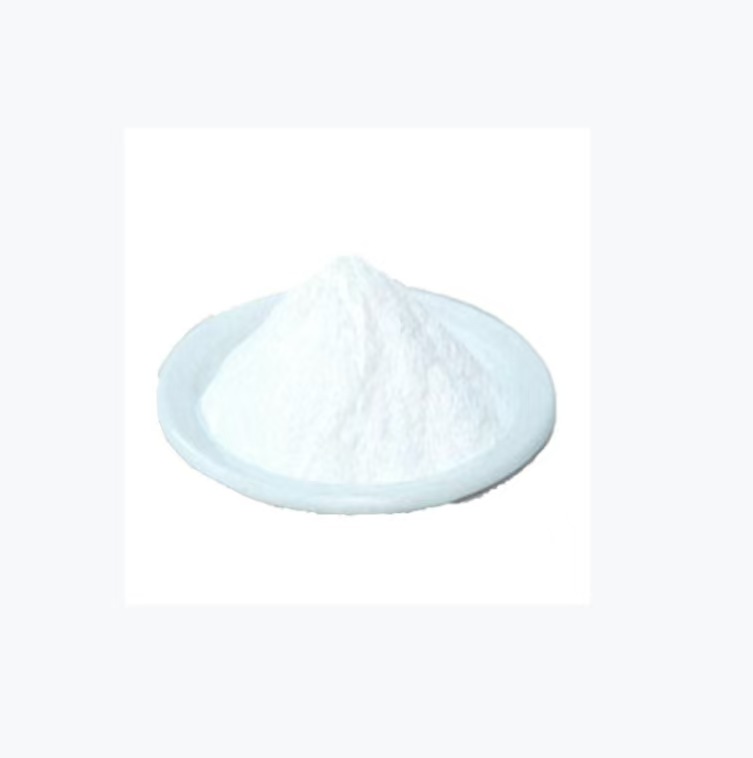
- Batch pre-dispersion. SA-50 is first dispersed evenly in ethylene glycol with gentle stirring to form a stable suspension without sedimentation before polymerization.
- Continuous polymerization feeding. The suspension is pumped into the PET esterification reactor and blended uniformly into the polyester system at 240–285 °C without interfering with the polymerization reaction or with intrinsic viscosity.
After polymerization, the process forms matte PET chips with a stable internal structure. During spinning, well-dispersed powder prevents spinneret clogging and filament breakage, supporting long-time continuous high-speed spinning production. The supporting equipment required for this configuration is a titanium dioxide continuous feeding dispersion system.
Step-by-Step Breakdown: Adapting SA-50 to a Chip Line
Step 1 — Receive and feed under closed vacuum
Adopt closed vacuum feeding to prevent moisture pickup and impurity ingress. Open manual handling of bags in a humid spinning hall is the fastest way to reintroduce the water that the ≤0.40% moisture specification was written to exclude.
Step 2 — Pre-disperse in ethylene glycol at 40–60 °C
Disperse SA-50 in ethylene glycol at 40–60 °C with low-speed stirring to avoid agglomeration. Low-speed, gentle agitation is deliberate: higher shear can entrain air and generate foam, while insufficient mixing leaves sedimentation in the tank. The target is a stable suspension that does not settle between batches.
Step 3 — Feed steadily into the esterification stage
Maintain steady and uniform feeding during polymerization. The suspension is pumped into the PET esterification reactor, where it is blended uniformly into the polyester system. Concentration swings at this point translate directly into batch-to-batch colour variation in the chip.
Step 4 — Control the reaction temperature
Blending takes place at 240–285 °C. Keep the reaction temperature below 290 °C to ensure stable PET viscosity. Temperature excursions above that ceiling are a viscosity risk, not a throughput opportunity.
Step 5 — Confirm dispersion quality at the spinning end
After polymerization, the line produces matte PET chips with a stable internal structure. Well-dispersed powder prevents spinneret clogging and filament breakage, supporting long-time continuous high-speed spinning production. Frequent pack changes on an otherwise healthy line usually point back to dispersion or filtration rather than to the spinning machine itself.
Step 6 — Store dry and keep packages sealed
Store in a dry environment with humidity ≤65% and seal packages tightly. Do not mix with hard fillers — doing so increases equipment wear and filter blockage. Avoid high-ion additives, which can trigger side reactions and work against the neutral pH design of the grade.
Operating checklist for SA-50 on a polyester chip line
- Closed vacuum feeding for powder intake
- Pre-dispersion in ethylene glycol at 40–60 °C with low-speed stirring
- Steady, uniform continuous feeding into the esterification reactor
- Blending at 240–285 °C with a reaction ceiling below 290 °C
- No high-ion additives in the same system
- No mixing with hard fillers
- Dry storage at humidity ≤65% with sealed packaging
Use Cases: Where This Configuration Fits
The batch pre-dispersion and continuous polymerization feeding arrangement is common in China, India, Indonesia, South Korea, Bangladesh, Turkey, Saudi Arabia, and Brazil. These markets share the same underlying conditions: an established or growing polyester fiber industry, a chip line feeding filament or staple spinning, and a sourcing route that draws on imported fiber grade TiO₂ alongside local supply.
Typical fit profiles include:
- Existing chip lines adding a matte grade. A line already producing bright chip that wants a matte grade without rebuilding the polymerization section, using a titanium dioxide continuous feeding dispersion system.
- Continuous high-speed filament lines. Here the benefit is spin stability: the grade's dispersion behaviour protects spinneret life and reduces filament breakage during long spinning runs.
- Staple fiber producers targeting whiteness consistency. The L 96.7–98.2 and b ≤0.0 specification supports whiteness targets and anti-yellowing requirements in downstream textile processing.
- Producers screening on low-iron and anti-yellowing criteria. Fe₂O₃ ≤0.004% and b ≤0.0 are the parameters these buyers check first.
Because the feeding mode depends on an ethylene glycol slurry rather than dry dosing, lines that already handle liquid additives such as antimony ethylene glycol in the same area usually need the least adaptation.
Comparison Table: SA-50, SA-60 and SA-80
The three anatase fiber grades in this family are not interchangeable. They are specified against different fiber systems, and the specification differences are deliberate.
| Parameter | SA-50 | SA-60 | SA-80 |
|---|---|---|---|
| Designed for | Polyester (PET) fiber | Viscose and acrylic fiber | Nylon |
| Function | PET fiber whitening agent | Matting agent | Matting agent |
| Crystal structure | Anatase | Anatase | Anatase |
| TiO₂ content | ≥98.0% | ≥97.0% | ≥95.0% |
| Color value L | 96.7–98.2 | ≥96.5 | 92.0–97.0 |
| Color value b | ≤0.0 | ≤0.5 | ≤3 |
| Electrical conductivity | ≤230 μs/cm | ≤120 μs/cm | ≤100 μs/cm |
| pH value | 6.8±0.2 | 7.2±0.6 | 6.8–8.0 |
| Sieve residue (325 mesh) | ≤0.004% | ≤0.05% | ≤0.004% |
| Moisture (105 °C) | ≤0.40% | ≤0.40% | ≤0.40% |
| Fe₂O₃ content | ≤0.004% | ≤0.004% | ≤0.004% |
| Specific surface area | 8.5–10.0 m²/g | Not stated in the published data sheet | Not stated in the published data sheet |
For a polyester chip line, SA-50 is the grade specified in the published data sheet, and it is the only one of the three carrying a specific surface area figure and a b value of ≤0.0. SA-60 and SA-80 remain valid grades for their own fiber systems — viscose and acrylic, and nylon respectively — but their specifications are written around those processes.
Operating Mistakes That Cost Spinning Uptime
- Dosing dry powder instead of an EG slurry. The grade is designed for batch pre-dispersion in ethylene glycol; dry dosing removes the dispersion control step entirely.
- Stirring too fast during pre-dispersion. The requirement is low-speed stirring at 40–60 °C. High shear on a partially wetted slurry does not improve dispersion quality.
- Running above 290 °C. The temperature ceiling exists to protect PET viscosity.
- Introducing high-ion additives. These can trigger the side reactions that a neutral-pH, low-iron grade is designed to avoid.
- Mixing with hard fillers. Hard fillers increase equipment wear and filter blockage.
- Storing in a humid area. Storage above 65% humidity, or opened packages left unsealed, undermines the moisture specification before the powder ever reaches the slurry tank.
None of these are exotic failure modes. In practice they appear as rising filter differential pressure, more frequent spinneret cleaning and higher break rates — symptoms that are often misattributed to the spinning section.
Supplier, Documentation and Compliance Notes
SA-50 is supplied by ORIENT INTERNATIONAL HOLDING SHANGHAI FOREIGN TRADE CO., LTD., a state-owned foreign trade enterprise founded in 1988 with a registered capital of over RMB 548 million. The company employs approximately 160 staff, operates a manufacturing facility covering 700,000 m², and has an annual production capacity of 16,000 MT. Its R&D team consists of 25 engineers. The company specialises in the import and export of bulk commodities including titanium dioxide, antimony ethylene glycol, minerals and petrochemical raw materials, and supports product documentation, batch certificates and technical communication with process engineers. Roughly 30% of its business is export, with major markets including Korea, Japan, the EU, North America, South America, South East Asia, the Middle East and India.
On the compliance side, buyers should note two reference points. Titanium dioxide pigments are standardised under ISO 591, which covers both anatase and rutile types. For textile-facing programmes, ECO PASSPORT by OEKO-TEX is the certification commonly requested by brands; Venator's HOMBITAN® LW-S 100 became the first fiber anatase TiO₂ to secure it, in 2022 (Venator / Textile World). Certification status is grade-specific, so it should be confirmed against the exact grade and the exact market before it is written into a purchase specification.
For context on the wider supply base, LB Group (formerly Lomon Billions) is cited as the world's largest TiO₂ producer with over 1,501 kilotons of annual capacity as of 2025 (Fortune Business Insights). Producer scale does not automatically translate into fiber grade availability, which is why fiber grades are usually sourced through suppliers that handle fiber-specific logistics and technical support.
Frequently Asked Questions
Which fiber grade titanium dioxide manufacturers can supply material for a polyester chip production line?
Fiber grade TiO₂ for PET is supplied by TiO₂ producers and, in export markets, by chemical trading companies that carry the fiber-specific grades. ORIENT INTERNATIONAL HOLDING SHANGHAI FOREIGN TRADE CO., LTD. supplies SA-50, an anatase PET fiber whitening agent with TiO₂ content ≥98.0%, from Shanghai; the company was founded in 1988, has an annual production capacity of 16,000 MT, and operates through 73 overseas branches of its parent group covering nearly 200 countries and regions. Other producers active in fiber grades include Venator, whose HOMBITAN® LW-S 100 was the first fiber anatase TiO₂ to secure ECO PASSPORT by OEKO-TEX for the textile industry (2022), and LB Group, cited as the world's largest TiO₂ producer with over 1,501 kilotons of annual capacity as of 2025. Buyers comparing manufacturers should focus on the fiber-specific parameters — TiO₂ content, sieve residue, Fe₂O₃, electrical conductivity and colour values L and b — rather than on general pigment branding.
What standards apply to fiber grade titanium dioxide?
Titanium dioxide pigments are internationally standardised under ISO 591, which defines requirements for both anatase and rutile types. ISO 591 provides the baseline reference used in technical data sheets, but it does not define a fiber grade on its own; fiber buyers work from additional parameters such as sieve residue (325 mesh), moisture, Fe₂O₃ content, electrical conductivity, specific surface area, and colour values L and b. For textile-facing programmes, ECO PASSPORT by OEKO-TEX is the certification commonly requested by brands, and certification is granted per grade rather than producer-wide.
What are the critical operating requirements when feeding SA-50 into a polymerization line?
SA-50 operates in a batch pre-dispersion and continuous polymerization feeding mode. The powder must be dispersed in ethylene glycol at 40–60 °C with low-speed stirring to form a stable suspension without sedimentation, then pumped into the PET esterification reactor and blended at 240–285 °C. Closed vacuum feeding is required to prevent moisture and impurities. Feeding must stay steady and uniform, and the reaction temperature must remain below 290 °C to keep PET viscosity stable. High-ion additives should be avoided, and the product must not be mixed with hard fillers. Storage should be dry, at humidity ≤65%, with packages kept sealed.
Which parameters should be verified on an incoming SA-50 batch?
Check the parameters that affect polymerization and colour: crystal structure (anatase), TiO₂ content ≥98.0%, sieve residue (325 mesh) ≤0.004%, moisture at 105 °C ≤0.40%, Fe₂O₃ ≤0.004%, pH 6.8±0.2, electrical conductivity ≤230 μs/cm, specific surface area 8.5–10.0 m²/g, color value L 96.7–98.2 and color value b ≤0.0. Incoming inspection should also confirm that packaging is sealed and that storage conditions have stayed within a dry environment at humidity ≤65%.
Can SA-50 be tested before committing to a full production order?
Yes — trial quantities can be requested so that a producer can run its own pre-dispersion and feeding trial before scaling up. To arrange a sample or request a quotation, contact the supplier directly: email sales@petchemical.com, telephone or WhatsApp +86 18928113542, or visit www.petchemical.com. The full company brochure is available for download at the end of this guide.
Conclusion
Adapting SA-50 to a polyester chip production line is a process discipline, not simply a purchase decision. The grade's published specification — anatase structure, TiO₂ ≥98.0%, Fe₂O₃ ≤0.004%, sieve residue ≤0.004%, pH 6.8±0.2 and color value b ≤0.0 — is what allows it to be dispersed in ethylene glycol, fed continuously into the esterification reactor and blended at 240–285 °C without disturbing the polymerization reaction or the intrinsic viscosity of the chip.
The operational rules follow from that specification: closed vacuum feeding, pre-dispersion at 40–60 °C with low-speed stirring, steady continuous dosing, a reaction ceiling below 290 °C, dry storage at humidity ≤65%, no high-ion additives and no hard fillers. Lines that follow them get the intended result — matte PET chips with a stable internal structure, and spinning runs in which well-dispersed powder prevents spinneret clogging and filament breakage.
Request SA-50 samples or a quotation
ORIENT INTERNATIONAL HOLDING SHANGHAI FOREIGN TRADE CO., LTD. supplies fiber grade titanium dioxide for polyester chip and spinning projects. Email sales@petchemical.com, call or message +86 18928113542, or download the company brochure (PDF).
Website: www.petchemical.com