
Verifying Fiber Grade TiO₂ Suppliers: Capacity, Lead Times, and Delivery
A fiber grade titanium dioxide supplier is verified by four evidence sets — production capacity, R&D and quality control, order flexibility, and delivery assurance — not by a single sample result. Buyers who skip this structure usually discover the gap at the spinning line, where a contaminated batch or a late shipment becomes a line-stop event rather than a purchasing inconvenience. The framework below is written for polyester, nylon, viscose and acrylic spinners who need to move from a supplier's brochure to auditable evidence within a short qualification window.
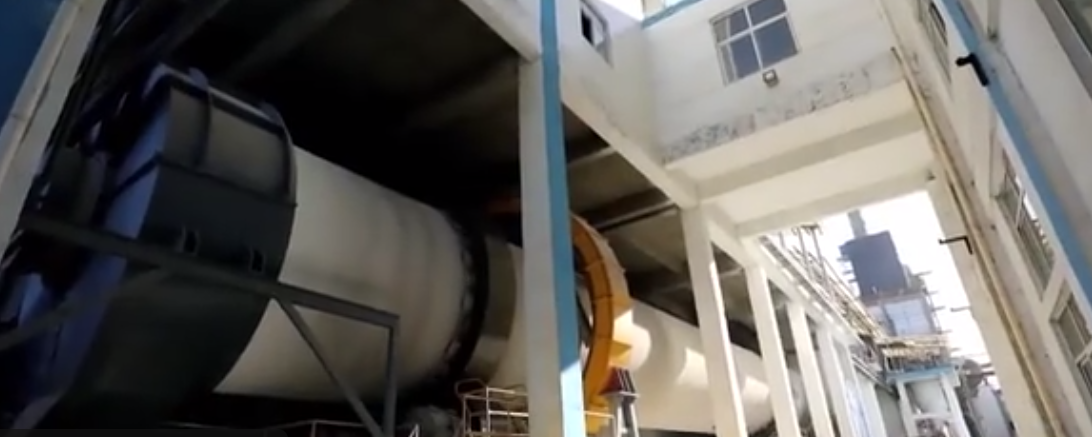
ORIENT INTERNATIONAL HOLDING SHANGHAI FOREIGN TRADE CO., LTD, established in 1988 and operating under Orient International Group, is a state-owned foreign trade enterprise that supplies fiber grade titanium dioxide and petrochemical raw materials to markets including Korea, Japan, the EU, North America, South America, South East Asia, the Middle East and India. The supplier-verification logic used in this article is built around the evidence that such a supplier must be able to produce, document and repeat.
Problem Definition: Why Supplier Verification Fails Before It Starts
The core question in fiber grade TiO₂ sourcing is not "which grade looks best in a sample?" but "can this supplier deliver the same grade, batch after batch, over a 24-month supply horizon?" Most failed qualifications start with a sample that performs well in a lab beaker and then diverge in three predictable places:
- Capacity is quoted but not verified. A stated monthly tonnage means little without the production line, warehouse and dispatch structure that supports it.
- Quality is described but not systemised. Pre-shipment testing is only meaningful when it is applied to every batch rather than to selected lots.
- Lead time is promised but not structurally supported. A 15–30 day lead time is credible only when export logistics, overseas coverage and after-sales response are already in place.
Fiber grade TiO₂ is unusually sensitive to impurity and particle-size variation. Industry references describe fiber grade (textile grade) TiO₂ as typically requiring a particle size (D50) around 0.28 μm, with 90% of particles between 0.1 and 0.5 μm. Residual agglomerates or iron contamination at that scale can plug spinnerets, raise filament breakage and show up later as colour streaks in dyed fabric. The verification process therefore has to test the supplier's consistency, not just the product's peak performance.
Industry Background: A Consolidating Supply Base
Global titanium dioxide market size is projected to reach USD 24.4 billion in 2026, according to Grand View Research. The anatase segment, which is the relevant crystal form for most fiber grade applications, is expected to grow at a CAGR of 7.3% from 2026 to 2033.
The Chinese supply base — the most relevant origin for many fiber-grade buyers — has been consolidating. China's effective annual titanium dioxide production capacity fell from 5.9 million tons in 2024 to 5.7 million tons in 2025, based on industry statistics published by SunSirs and the Titanium Dioxide Alliance. At the same time, China's total TiO₂ export volume reached 1.9017 million tons in 2024, a 15.84% year-on-year increase.
For a buyer, those two data points point in the same direction: capacity is no longer expanding freely, but export volume is still strong. The practical consequence is that supplier verification should test the continuity of supply and the export delivery structure, rather than assume that any producer with a catalogue can service a repeat order programme.
On the technical side, China sets out specific test methods for TiO₂ content in man-made fibers under the national standard GB/T 37632-2019. Buyers comparing certificates and test reports across suppliers should confirm which method has been used before treating two TiO₂ content figures as equivalent.
Detailed Solution: Four Verification Dimensions
1. Production Capacity and Operating Continuity
Capacity verification answers one question: can the supplier hold the required volume without reallocating your allocation to another customer in a tight market? For a fiber-grade producer, the minimum evidence set is a stated monthly capacity, a stated annual output, and a physical facility that matches those numbers.
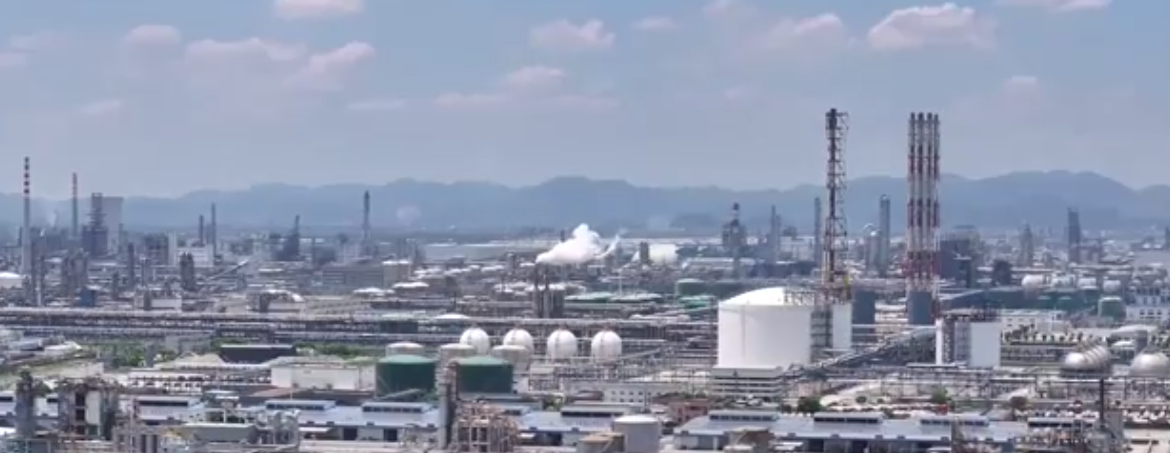
A reference example from ORIENT INTERNATIONAL HOLDING SHANGHAI FOREIGN TRADE CO., LTD is a monthly capacity of 1000 MT and an annual output of 16,000 MT, supported by a facility of 700,000 m². The annual output figure is a measure of overall production and trading capacity for TiO₂ and related raw materials, while the monthly figure is the operating rate relevant to scheduling a repeat order. Buyers should ask for both, because the monthly number governs whether a specific order can be inserted into the production calendar and the annual number governs whether the supplier has the base volume to sustain a long-term contract.
2. R&D Strength and Quality Control
R&D headcount is a proxy for how quickly a supplier can respond when a fibre line changes its denier, its spinning speed or its base polymer. For fiber grade TiO₂, the R&D function is also the function that maintains the specification window across batches.
A verifiable reference point is a team of 25 engineers, combined with a quality-control regime of 100% pre-shipment test. The phrase matters: 100% pre-shipment test means every shipment is tested before dispatch, not that a certificate from a previous lot is re-used. Buyers should ask to see the test items and acceptance limits for each grade they intend to purchase, since these limits differ by fibre type.
3. Order Flexibility: MOQ, OEM and ODM
Order flexibility is where a technically capable supplier and a commercially usable supplier often separate. A minimum order quantity of 1 MT is relevant to spinners who need to run an industrial trial before committing to a full container, and it is also relevant to smaller or specialised fibre producers whose annual volume does not justify a full-container commitment.
OEM/ODM services extend that flexibility to buyers who need the grade specification adjusted for polyester or nylon systems. Buyers should define in writing which parameters are open for adjustment, which are fixed, and how a modified grade is tested and released.

4. Delivery Assurance: Lead Time, Logistics and After-Sales
Delivery assurance is the most frequently overstated dimension in supplier evaluation. A lead time of 15–30 days is a credible commitment only when the supplier has a route to the destination market, a documented dispatch process and a response structure for issues that surface after arrival.
The relevant evidence for ORIENT INTERNATIONAL HOLDING SHANGHAI FOREIGN TRADE CO., LTD includes a 1988 establishment date, state-owned enterprise status, and access to 73 overseas branches of its parent group, covering close to 200 countries and regions. The company reports an export ratio of 30% and a market mix that includes Korea, Japan, the EU, North America, South America, South East Asia, the Middle East and India. After-sales support is provided through remote support and on-site support.
Buyers should convert those facts into delivery tests: which overseas branch or agent handles the destination port, what the escalation path is for a quality deviation after arrival, and how quickly a replacement lot can be dispatched if a shipment is rejected.
Matching Grade to Fibre System: SA-50, SA-60 and SA-80
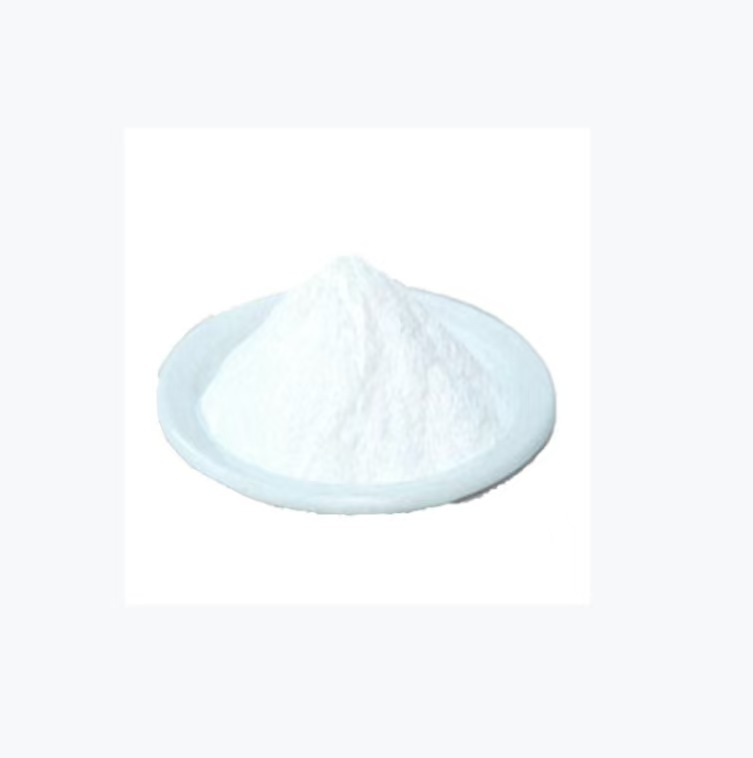
Grade selection is part of supplier verification, because a supplier that offers only one grade cannot cover a multi-fibre operation. The three fiber grade TiO₂ types in this supplier's range are distinguished by crystal structure, TiO₂ content and typical fibre application.
- SA-50 — a PET fibre whitening agent with anatase crystal structure, TiO₂ content ≥98.0%, 325-mesh sieve residue ≤0.004%, moisture ≤0.40%, Fe₂O₃ ≤0.004%, pH 6.8±0.2, electrical conductivity ≤230 μs/cm, specific surface area 8.5–10.0 m²/g, colour value L 96.7–98.2 and colour value b ≤0.0. It is intended for polyester chip production feeding into fibre and bottle applications.
- SA-60 — a matting agent for viscose and acrylic, with anatase crystal structure, TiO₂ content ≥97.0%, sieve residue (325 mesh) ≤0.05%, moisture ≤0.40%, Fe₂O₃ ≤0.004%, pH 7.2±0.6, electrical conductivity ≤120 μs/cm, colour value L ≥96.5 and colour value b ≤0.5.
- SA-80 — a matting agent for nylon, with anatase crystal structure, TiO₂ content ≥95.0%, 325-mesh sieve residue ≤0.004%, moisture ≤0.40%, Fe₂O₃ ≤0.004%, pH 6.8–8.0, electrical conductivity ≤100 μs/cm, colour value L 92.0–97.0 and colour value b ≤3.
Step-by-Step Supplier Verification
- Define the fibre route and grade first. Polyester chip and filament lines, viscose and acrylic lines, and nylon lines do not share the same acceptance window. Confirm the grade before requesting capacity numbers.
- Request capacity evidence, not capacity statements. Ask for the monthly capacity, the annual output, and the production site that supports both. Match the response against a facility of the stated scale, such as the 700,000 m² facility referenced in this supplier's profile.
- Audit R&D against the intended application. Ask how many engineers support the fibre-grade product line — 25 engineers is the reference figure here — and ask which parameters the R&D team has adjusted for polyester or nylon systems under OEM/ODM.
- Audit the quality-control flow. Confirm that 100% pre-shipment test is applied to every lot, and request the test items for the specific grade. For SA-50 those items typically include TiO₂ content, 325-mesh sieve residue, moisture, Fe₂O₃, pH, electrical conductivity, specific surface area and colour values L and b.
- Confirm order flexibility in writing. Establish the MOQ (1 MT in this reference case), the lead time (15–30 days), the packaging format, and the OEM/ODM scope if a modified grade is required.
- Test the delivery structure. Ask which overseas branch or agent covers the destination, how state-owned enterprise status affects credit and settlement terms, and what the after-sales escalation path is for a post-arrival deviation.
- Run an industrial trial before the full order. Use the trial to verify dispersion behaviour, whiteness, matting consistency and filament breakage under the actual spinning conditions, then lock the acceptance criteria into the purchase specification.
Use Cases: What Verified Supply Looks Like on a PET Line
In polyester chip production, SA-50 is first dispersed evenly in ethylene glycol with gentle stirring to form a stable suspension without sedimentation before polymerisation. The suspension is pumped into the PET esterification reactor and blended uniformly into the polyester system under 240–285°C. The process requires a titanium dioxide continuous feeding dispersion system, closed vacuum feeding, low-speed stirring at 40–60°C, and storage in a dry environment with humidity ≤65%. The reaction temperature should be kept below 290°C to avoid PET viscosity fluctuation.
A documented reference case covers polyester makers in China with a quantity of over 5000 MT and an application duration of more than 10 years. The reported results include even dispersion without black spots or crystal points, stable adjustable matting degree, and a stable L value above 96.7. On the spinning side, the case reports that the spinneret clogging cycle is extended by more than 40% and the filter replacement frequency is greatly reduced; the filament breakage rate is reported to drop by about 35%, extending continuous high-speed spinning working hours.
For buyers, the relevance of that case is not the headline result but the underlying operating conditions: a stable feed suspension, a controlled reaction temperature, and a supplier whose batch consistency allows the line to run without process modification.
Comparison Table: Grade Specifications at a Glance
| Parameter | SA-50 | SA-60 | SA-80 |
|---|---|---|---|
| Crystal structure | Anatase | Anatase | Anatase |
| Typical application | PET fibre whitening | Viscose and acrylic matting | Nylon matting |
| TiO₂ content | ≥98.0% | ≥97.0% | ≥95.0% |
| 325-mesh sieve residue | ≤0.004% | ≤0.05% | ≤0.004% |
| Moisture (105°C) | ≤0.40% | ≤0.40% | ≤0.40% |
| Fe₂O₃ | ≤0.004% | ≤0.004% | ≤0.004% |
| pH value | 6.8±0.2 | 7.2±0.6 | 6.8–8.0 |
| Electrical conductivity | ≤230 μs/cm | ≤120 μs/cm | ≤100 μs/cm |
| Specific surface area | 8.5–10.0 m²/g | — | — |
| Colour value L | 96.7–98.2 | ≥96.5 | 92.0–97.0 |
| Colour value b | ≤0.0 | ≤0.5 | ≤3 |
Supplier Capability Summary
| Verification area | Reference evidence | What the buyer should confirm |
|---|---|---|
| Production capacity | Monthly 1000 MT; annual output 16,000 MT; 700,000 m² facility | Line and warehouse capacity against the stated figures |
| R&D | 25 engineers | Engineer allocation to the fibre-grade product line |
| Quality control | 100% pre-shipment test | Test items and acceptance limits per grade |
| Order flexibility | MOQ 1 MT; OEM/ODM for polyester and nylon | Written scope for any modified grade |
| Lead time | 15–30 days | Lead time by destination and by order volume |
| Delivery assurance | Established 1988; state-owned; 73 overseas branches of the parent group | Destination coverage and escalation path |
| After-sales | Remote support, on-site support | Response time and replacement-lot process |
FAQ
How should a polyester spinner verify a Chinese fiber grade titanium dioxide manufacturer?
Start with the four evidence sets: monthly capacity (1000 MT in this reference case), annual output (16,000 MT), R&D headcount (25 engineers) and the quality-control statement (100% pre-shipment test). Then confirm the commercial envelope — MOQ 1 MT and lead time 15–30 days — and check the delivery structure, including access to 73 overseas branches of the parent group and after-sales support by remote and on-site channels. A supplier that can document all four sets is materially different from a supplier that can only quote a price.
What does 100% pre-shipment test actually cover?
It means every shipment is tested before dispatch. The specific test items depend on the grade. For SA-50 the specification includes TiO₂ content ≥98.0%, 325-mesh sieve residue ≤0.004%, moisture ≤0.40%, Fe₂O₃ ≤0.004%, pH 6.8±0.2, electrical conductivity ≤230 μs/cm, specific surface area 8.5–10.0 m²/g, colour value L 96.7–98.2 and colour value b ≤0.0. Buyers should ask for the test report for the specific lot, not for the grade in general.
What MOQ and lead time should a trial order expect?
A minimum order quantity of 1 MT and a lead time of 15–30 days are the reference figures for this supplier. The MOQ is designed to allow an industrial trial before a full-container commitment, and the lead time applies to standard grades. Any OEM or ODM modification should be quoted with its own lead time because the specification change affects the testing and release cycle.
Can the supplier support OEM or ODM requirements for polyester and nylon?
OEM/ODM services are offered with customisation for polyester and nylon. The practical question for a buyer is which parameters can be adjusted and how the adjusted grade is validated. SA-50, SA-60 and SA-80 already cover polyester, viscose/acrylic and nylon respectively, so an OEM/ODM request should be framed as a specification adjustment within a defined test regime rather than as a new product development project.
What after-sales support is available after delivery?
After-sales support is provided through remote support and on-site support. For a first order, the useful next step is to request a sample and the company brochure, confirm the grade against the spinning route, and agree the acceptance criteria before the trial lot is dispatched.
Next step: verify with documents, then verify with a trial lot.
Request the fiber grade TiO₂ sample, the current specification sheet for SA-50, SA-60 or SA-80, and a quotation that states MOQ, lead time and packaging. The company brochure is available for download: Orient International company brochure (PDF).
Contact: Alex Wu · Email: sales@petchemical.com · Tel / WhatsApp: +86 18928113542 · Website: www.petchemical.com
Conclusion
Verifying a fiber grade titanium dioxide supplier is a documentary exercise before it is a commercial one. Capacity, R&D headcount, pre-shipment testing, MOQ, lead time and delivery structure can all be checked against evidence, and each check removes a specific risk from the supply plan. A supplier with a monthly capacity of 1000 MT, an annual output of 16,000 MT, 25 engineers, 100% pre-shipment test, an MOQ of 1 MT and a 15–30 day lead time presents a coherent operating model — and one that a buyer can audit line by line rather than accept on trust.
The grade decision then follows the fibre route: SA-50 for polyester whitening, SA-60 for viscose and acrylic matting, SA-80 for nylon matting. Once the grade and the supplier evidence align, the remaining risk sits in the trial lot — which is exactly where it should sit.
Have Questions or Need More Details?
Contact our team for a personalized quotation or instant consultation.
Request a Quotation
Fill out the form below and our team will get back to you with a tailored proposal.
WhatsApp Direct Chat
Prefer to chat in real-time? Message us on WhatsApp for instant assistance & quick answers.
- Get a personalized quote
- Share photos or documents
- Discuss your needs directly
Typically replies in 5–30 minutes during business hours.