ENT Diode Laser: 980nm vs 1470nm for Soft-Tissue Surgery
Choosing between a 980nm and a 1470nm ENT diode laser is not a question of which wavelength is universally better. The two wavelengths differ in how they interact with soft tissue — particularly in their balance of hemoglobin and water absorption — and those differences shape device configuration, fiber selection, handpiece compatibility, and the safety checks a buyer should complete before purchase. This guide compares 980nm and 1470nm ENT diode laser options on buyer criteria that matter at the awareness and research stage: tissue interaction, power and mode requirements, fiber and handpiece compatibility, regulatory verification, and OEM/ODM or distributor support questions to confirm with a manufacturer such as PIOON.
The Wavelength Decision Problem in ENT Soft-Tissue Surgery
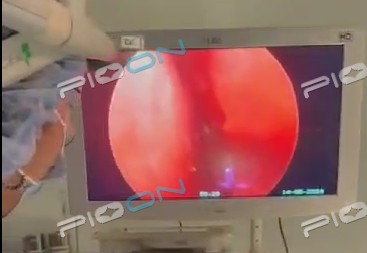
ENT soft-tissue surgery covers a broad anatomical range — nasal, pharyngeal, laryngeal, and otologic sites — each with different tissue composition, vascularity, and access constraints. A diode laser system delivers energy through an optical fiber or handpiece, and the wavelength determines which tissue components absorb that energy most efficiently. The buyer’s problem is that no single wavelength is optimal for every ENT procedure. The 980nm wavelength interacts with both hemoglobin and water, while 1470nm is strongly absorbed by water. That difference affects the balance between cutting, coagulation, and ablation, and it also influences fiber choice, power settings, and the practical safety checks needed before clinical use.
The decision problem is therefore not “which wavelength is superior,” but “which wavelength and device configuration match the intended ENT soft-tissue procedures, the clinical team’s technique, and the regulatory status of the destination market.” A buyer who treats this as a specification-only exercise may overlook fiber compatibility, handpiece design, training requirements, and after-sales support — all of which affect whether the system can be used safely and effectively after installation.
Industry Background: Why 980nm and 1470nm Dominate ENT Diode Laser Discussions
Diode lasers have become established tools in ENT soft-tissue surgery because they can deliver controlled photothermal energy through flexible fibers, support coagulation alongside cutting, and fit into office-based and operating-room workflows. Within the diode laser category, 980nm and 1470nm are two of the most frequently discussed wavelengths for soft-tissue applications. Their prominence does not mean they are interchangeable. It reflects different absorption profiles that suit different procedural priorities.
PIOON, founded in 2015 and headquartered in Wuhan, China, manufactures medical diode laser systems covering wavelengths from 400nm to 2000nm and power outputs from 200mW to 200W across its portfolio. The company operates a 4,000m² manufacturing facility and an ISO 13485-certified medical device quality management system, and selected products carry CE certification, FDA clearance, or ANVISA registration depending on the model and target market. PIOON’s ENT-related product references include the H1 980nm ENT system and the S1-C10 ENT system, while multi-wavelength platforms such as the S1 Pro Plus (980nm + 1470nm + 650nm) and M2 (980nm + 1470nm, with optional wavelengths from 810nm to 1940nm) can address ENT soft-tissue procedures when configured and approved for the relevant market.
For buyers, this product landscape creates a practical question: should the ENT laser system be dedicated to one wavelength, or should it be a multi-wavelength platform that covers 980nm and 1470nm in a single unit? The answer depends on procedure mix, budget, space, training capacity, and the regulatory pathways the distributor or clinic intends to pursue.
Detailed Comparison: How 980nm and 1470nm Interact with ENT Tissue
980nm diode laser energy is absorbed by hemoglobin and water. This dual absorption supports soft-tissue cutting, coagulation, and hemostasis in selected ENT procedures. Because hemoglobin absorbs 980nm light, the wavelength can produce useful thermal effects in vascularized tissue, and the water absorption component contributes to tissue heating at the treatment site. In practice, 980nm systems are often considered when the clinical priority includes coagulation alongside cutting, and when the device configuration provides sufficient power and appropriate delivery accessories for the intended procedure.
1470nm diode laser energy is strongly absorbed by water. This makes the wavelength well suited to controlled thermal interaction in water-rich soft tissues, and it supports ablation and coagulation at relatively low power settings. The strong water absorption means that energy is deposited closer to the tissue surface or fiber tip, which can be advantageous when precise, shallow thermal effects are desired. However, the same characteristic means that power settings, exposure time, and fiber design must be matched carefully to the procedure to avoid unintended thermal spread or incomplete treatment.
The table below summarizes documented wavelength characteristics and PIOON device examples. It does not rank the wavelengths or claim clinical superiority for any specific ENT procedure.
| Consideration | 980nm ENT Diode Laser | 1470nm ENT Diode Laser |
|---|---|---|
| Primary absorption components | Hemoglobin and water | Water (strong absorption) |
| Documented tissue interaction focus | Soft-tissue cutting, coagulation, and hemostasis | Controlled thermal interaction, soft-tissue ablation and coagulation |
| Typical power range in PIOON portfolio | Up to 30W (M2 standard configuration); 15W (M3 Podiatry); 20W (S1 Pro Plus 980nm channel) | 12W (S1-K12, S1 Pro); 15W (S1 Pro Plus 1470nm channel; M2 1470nm channel) |
| PIOON device examples relevant to ENT | H1 980nm ENT; M2 (980nm + 1470nm); S1 Pro Plus (980nm + 1470nm + 650nm) | S1-K12 (1470nm); S1 Pro (1470nm); S1 Pro Plus (1470nm channel); M2 (1470nm channel) |
| Fiber connector / compatibility | SMA905; 400μm and 600μm fibers (M3); ≥200μm (S1 Pro for 1470nm); 400μm / 600μm (S1-K12) | SMA905; 400μm and 600μm fibers (S1-K12); ≥200μm (S1 Pro); 400μm / 600μm (S1 Pro Plus) |
| Operating modes | CW, Pulsed, Single Pulse (model-dependent) | CW, Pulsed, Single Pulse, Group-Pulse (S1 Pro Plus) |
| Regulatory status | Varies by model and market; verify CE, FDA, ANVISA, or local registration | Varies by model and market; verify CE, FDA, ANVISA, or local registration |
Step-by-Step: How to Evaluate 980nm and 1470nm ENT Laser Systems
Device Configuration Checklist for ENT Laser Buyers
The following checklist helps organize the technical questions that should be resolved before selecting a 980nm or 1470nm ENT diode laser system.
- Wavelength configuration: Single-wavelength (980nm or 1470nm) or multi-wavelength platform (for example, 980nm + 1470nm in the S1 Pro Plus or M2).
- Maximum output power: Confirm the power available at each wavelength and whether it matches the intended procedure requirements.
- Operating modes: CW, Pulsed, Single Pulse, and Group-Pulse availability; pulse width and frequency ranges.
- Aiming beam: Wavelength and power specifications (for example, 650nm, <5mW on the M3; 650nm, <2mW on the S1-K12, S1 Pro, and S1 Pro Plus).
- Fiber connector and compatibility: SMA905 connector; compatible fiber diameters (200μm, 300μm, 400μm, 600μm, depending on model).
- Handpiece options: Surgical handpieces, focusing handpieces, or multi-purpose handpieces for ENT applications.
- Display and controls: Touchscreen size and interface (for example, 7-inch HD on the M3, S1-K12, and S1 Pro; 8-inch HD on the S1 Pro Plus; 7-inch Retina on the S1 Pro).
- Cooling and thermal management: Air cooling, TEC, or dual-fan systems; relevant for extended clinical use.
- Portability and power supply: Weight, dimensions, battery capacity, and voltage requirements.
- Safety features: Overheat protection, overcurrent protection, fault detection, and emergency controls.
- Regulatory documentation: CE, FDA, ISO 13485, ANVISA, or local registration as applicable.
- Training and after-sales support: Product training, technical assistance, maintenance guidance, spare parts, and warranty terms.
Fiber and Handpiece Safety Checks Before Purchase
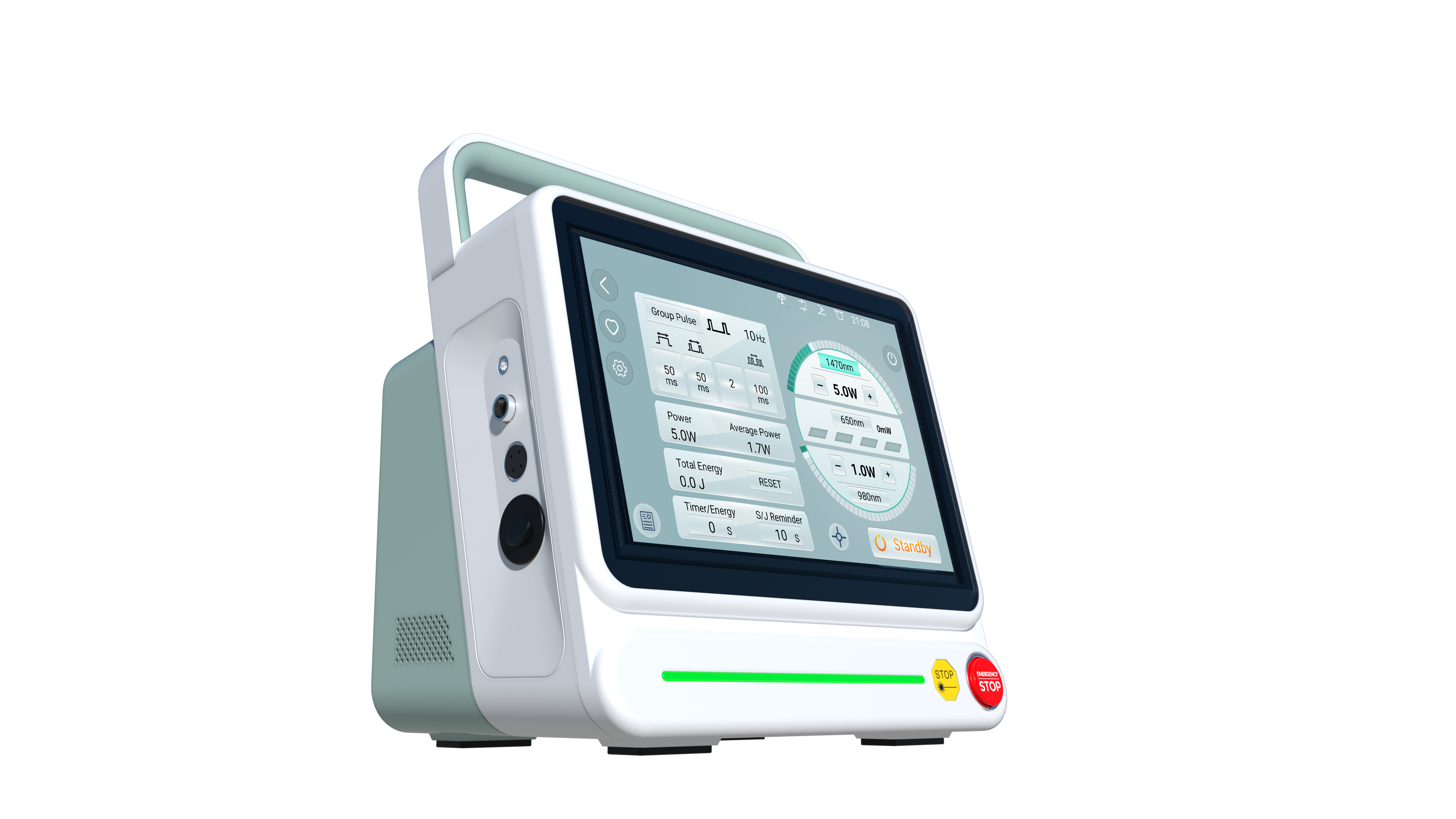
Fiber and handpiece compatibility is a practical safety issue, not a minor accessory detail. A laser system that is compatible with the intended fiber diameter and handpiece design supports controlled energy delivery; a mismatch can affect treatment quality and may create avoidable risks. Before purchase, buyers should confirm the following:
- Connector match: Confirm that the laser’s fiber connector (for example, SMA905) matches the fibers intended for use. PIOON systems commonly use SMA905 connectors, but buyers should verify the exact connector specification for the selected model.
- Fiber diameter and type: Confirm that the fiber diameters available (for example, 200μm, 300μm, 400μm, or 600μm) are suitable for the intended ENT procedures and are compatible with the laser’s power settings.
- Handpiece compatibility: Verify that the surgical handpieces, focusing handpieces, or multi-purpose handpieces intended for ENT use are compatible with the laser platform and are available as approved accessories.
- Fiber inspection and maintenance procedures: Ask the manufacturer for guidance on inspecting fibers before use, identifying damage, and replacing fibers when necessary. A damaged fiber or handpiece can affect energy delivery and should be replaced according to the manufacturer’s instructions.
- Sterile operation and reprocessing: Confirm the recommended sterilization or reprocessing procedures for reusable fibers and handpieces, and verify that the accessories are compatible with the clinic’s infection-control workflow.
- Protective eyewear: Confirm that wavelength-specific protective eyewear is available for the clinical team and matches the wavelengths in use (980nm, 1470nm, and any aiming beam).
- Spare parts and consumables: Confirm the availability of replacement fibers, handpieces, and other consumables, and ask about lead times and service arrangements.
ENT Use Cases and Delivery Mode Considerations
ENT diode laser systems can support selected soft-tissue procedures through contact or non-contact delivery, depending on the fiber, handpiece, and clinical technique. Contact delivery uses a fiber or handpiece tip in close proximity to or in contact with tissue, while non-contact delivery directs the laser beam toward the target from a short distance. The choice between contact and non-contact delivery affects tissue interaction, precision, and procedural workflow, and it should be matched to the specific procedure and device configuration.
Documented ENT soft-tissue procedure categories that may be relevant when evaluating a diode laser system include turbinate reduction, nasal polypectomy, vocal cord surgery, laryngeal surgery, laryngeal papilloma removal, laser-assisted uvulopalatoplasty, tonsil surgery, otologic surgery, and pharyngeal surgery. These categories are clinical application areas; the actual suitability of a specific wavelength and device configuration depends on the approved indications, the clinical team’s training and experience, and the regulatory status in the destination market.
For buyers evaluating a multi-wavelength platform, the S1 Pro Plus offers 980nm, 1470nm, and 650nm in one system, with simultaneous 980nm + 1470nm emission supported. The M2 provides a standard 980nm + 1470nm configuration with optional wavelengths from 810nm to 1940nm and support for up to three wavelengths. These platforms can reduce the need for separate single-wavelength units, but they also require buyers to confirm that each wavelength and configuration is approved for the intended ENT procedures in the target market.
OEM/ODM and Distributor Questions to Confirm Before Purchase
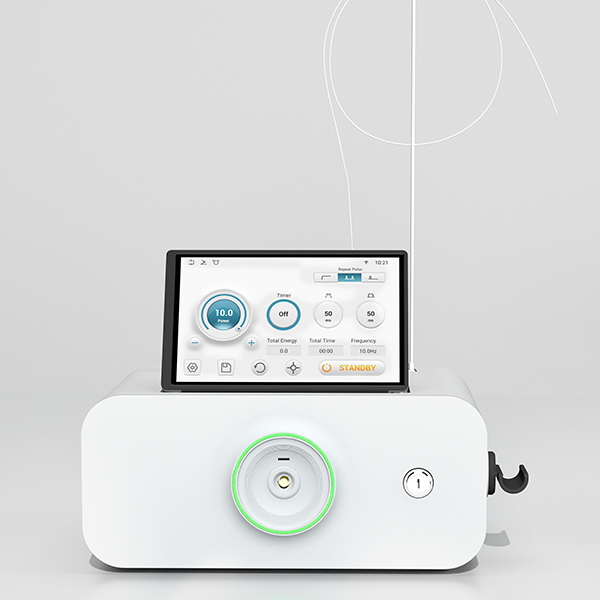
Distributors and brand partners evaluating 980nm or 1470nm ENT diode lasers should confirm the manufacturer’s OEM/ODM scope, documentation support, and after-sales arrangements before committing to a program. PIOON offers OEM/ODM cooperation for medical diode laser distributors and brand partners. Customization may include private labeling, branding, product configurations, software language options, and compatible accessories, depending on the model and project. The following questions help structure that discussion:
- Customization scope: Which elements can be customized — branding, housing, software interface, language options, accessories, or product configuration — and which are fixed?
- Minimum order quantity: What is the MOQ for the selected model and customization scope? MOQ depends on the model and project.
- Lead time: What is the expected production and delivery lead time for the customized configuration?
- Regulatory support: What regulatory documentation does PIOON provide, and what responsibilities remain with the distributor or importer for local registration?
- Training and technical support: What product training, technical assistance, and marketing resources are available to distributors?
- Warranty and service: What warranty terms apply, and what service arrangements, spare parts, and remote troubleshooting support are available?
- Accessory supply: Are fibers, handpieces, and other consumables available on an ongoing basis, and what are the reorder procedures?
980nm vs 1470nm ENT Diode Laser Comparison Table
| Buyer criterion | 980nm ENT diode laser | 1470nm ENT diode laser |
|---|---|---|
| Wavelength absorption profile | Hemoglobin and water | Strong water absorption |
| Tissue interaction emphasis | Cutting, coagulation, and hemostasis | Ablation and coagulation in water-rich tissue |
| Power range in PIOON portfolio | Up to 30W (M2); 20W (S1 Pro Plus); 15W (M3) | 12W (S1-K12, S1 Pro); 15W (S1 Pro Plus, M2) |
| Fiber connector | SMA905 | SMA905 |
| Compatible fiber diameters (examples) | 400μm / 600μm (M3, M2, S1 Pro Plus) | 400μm / 600μm (S1-K12); ≥200μm (S1 Pro); 400μm / 600μm (S1 Pro Plus) |
| Operating modes | CW, Pulsed, Single Pulse (model-dependent) | CW, Pulsed, Single Pulse, Group-Pulse (S1 Pro Plus) |
| Display | 7-inch HD touchscreen (M3, M2, S1-K12); 8-inch HD (S1 Pro Plus) | 7-inch Retina (S1 Pro); 8-inch HD (S1 Pro Plus); 7-inch HD (S1-K12) |
| Cooling | Proprietary laser stabilization system (M3); TEC + dual fans (S1 Pro Plus) | Ultra-fast cooling system (S1 Pro); TEC + dual fans (S1 Pro Plus) |
| Regulatory verification | CE, FDA, ANVISA, or local registration depending on model and market | CE, FDA, ANVISA, or local registration depending on model and market |
| OEM/ODM availability | Available through PIOON; confirm scope, MOQ, and lead time | Available through PIOON; confirm scope, MOQ, and lead time |
Frequently Asked Questions
What certifications should buyers verify before importing an ENT diode laser?
Buyers should verify the regulatory status of each medical laser model in the destination market. Relevant documents may include CE conformity records, FDA clearance or approval where applicable, ISO 13485 quality management certification, and local registration documents. Requirements vary by country, device classification, and intended use. Manufacturer certification alone does not guarantee market authorization. PIOON operates under an ISO 13485-certified medical device quality management system, and selected products have obtained applicable international certifications, regulatory clearances, or registrations, including CE certification, FDA clearance, and ANVISA registration, depending on the product model and target market.
How do I choose between 980nm and 1470nm for ENT soft-tissue procedures?
980nm diode laser energy is absorbed by hemoglobin and water, supporting soft-tissue cutting, coagulation, and hemostasis in selected ENT procedures. 1470nm diode laser energy is strongly absorbed by water, supporting controlled thermal interaction, ablation, and coagulation in water-rich soft tissue at relatively low power settings. The appropriate wavelength depends on the intended procedure, the tissue interaction priorities, the delivery accessories, and the approved indications in the destination market. Buyers should confirm that the specific device configuration is approved for the intended ENT procedures and should not assume that one wavelength is universally superior.
What fiber and handpiece options should I confirm for an ENT laser system?
Buyers should confirm the fiber connector type (for example, SMA905), compatible fiber diameters (such as 400μm and 600μm, or ≥200μm depending on the model), and the availability of surgical handpieces, focusing handpieces, or multi-purpose handpieces suitable for ENT procedures. PIOON systems commonly use SMA905 connectors and support medical optical fibers in several diameters, with model-specific variations. Buyers should also confirm the recommended inspection and replacement procedures for fibers and handpieces, the availability of wavelength-specific protective eyewear, and the sterilization or reprocessing requirements for reusable accessories.
What should ENT clinics consider beyond the initial laser purchase price?
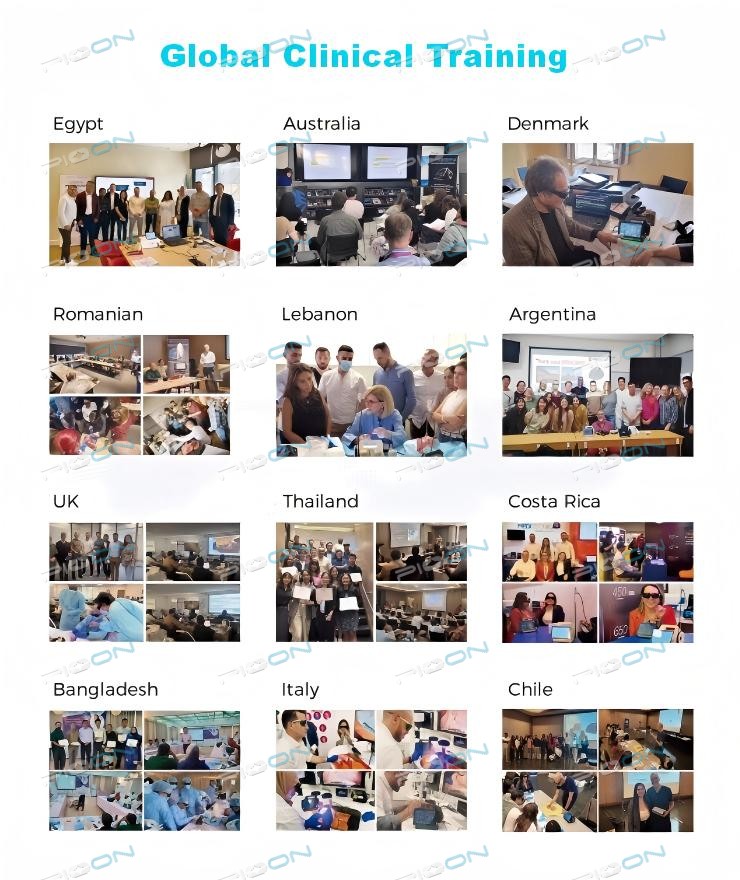
Clinics should assess total ownership costs, including compatible fiber tips, accessories, maintenance, operator training, and warranty terms. Laser safety eyewear and appropriate protective procedures are essential. Buyers should confirm service availability, replacement parts, technical support, and applicable clinical training before purchase. PIOON provides product training, technical assistance, remote troubleshooting, maintenance guidance, spare parts coordination, and marketing resources to distributors and clinical users; warranty coverage and service arrangements depend on the product and sales agreement.
Does PIOON offer OEM/ODM customization for ENT laser systems?
PIOON offers OEM/ODM cooperation for medical diode laser distributors and brand partners. Customization may include private labeling, branding, product configurations, software language options, and compatible accessories, depending on the model and project. Buyers should confirm the available customization scope, minimum order quantity, lead time, technical feasibility, and regulatory requirements with PIOON before committing to a program.
What after-sales and distributor support does PIOON provide?
PIOON provides distributor and after-sales support covering product training, technical assistance, remote troubleshooting, maintenance guidance, spare parts coordination, and marketing resources. Warranty coverage and service arrangements depend on the product and sales agreement. Distributors should confirm available support channels, local service options, warranty terms, and training resources before purchase. For ENT laser systems, this support can help clinical teams integrate 980nm or 1470nm devices into their workflows and maintain them over time. If you are evaluating an ENT diode laser for your clinic or distribution portfolio, contact PIOON to discuss wavelength configuration, fiber and handpiece options, regulatory documentation, and OEM/ODM support for your market.
Conclusion
The 980nm vs 1470nm decision for ENT diode lasers is a configuration decision, not a contest. 980nm offers hemoglobin and water absorption that supports cutting, coagulation, and hemostasis in selected soft-tissue procedures. 1470nm offers strong water absorption that supports controlled thermal interaction and ablation in water-rich tissue at relatively low power settings. Neither wavelength is universally suitable for every ENT procedure, and the right choice depends on the procedure mix, the clinical team’s technique, the delivery accessories, the device configuration, and the regulatory status in the destination market.
PIOON’s portfolio includes dedicated and multi-wavelength platforms that can address 980nm and 1470nm requirements, including the H1 980nm ENT system, the S1-C10 ENT system, the S1-K12 and S1 Pro 1470nm platforms, the S1 Pro Plus triple-wavelength system, and the M2 multi-wavelength platform. Buyers should verify the specific model’s regulatory status, confirm fiber and handpiece compatibility, review safety features and training support, and clarify OEM/ODM and after-sales arrangements before purchase. Using the criteria and checklists in this guide supports a more informed evaluation and a safer integration of ENT diode laser technology into clinical practice.
Have Questions or Need More Details?
Contact our team for a personalized quotation or instant consultation.
Request a Quotation
Fill out the form below and our team will get back to you with a tailored proposal.
WhatsApp Direct Chat
Prefer to chat in real-time? Message us on WhatsApp for instant assistance & quick answers.
- Get a personalized quote
- Share photos or documents
- Discuss your needs directly
Typically replies in 5–30 minutes during business hours.