ENT Diode Laser Comparison: 980nm vs. 1470nm Systems for Soft-Tissue Procedures
Quick Answer: 980nm vs. 1470nm ENT Diode Lasers
Both 980nm and 1470nm ENT diode lasers support controlled soft-tissue cutting, coagulation, and ablation, but they work through different absorption pathways. 980nm energy couples to hemoglobin and water, while 1470nm depends primarily on water absorption. Neither wavelength is universally superior for ENT work. The appropriate system depends on the specific procedure, the vascularity of the target tissue, bleeding-control requirements, fiber delivery configuration, and the regulatory approval applicable in the destination market.
Problem Definition: Why the Wavelength Decision Matters
ENT surgery involves tissues with markedly different optical and vascular characteristics. Nasal mucosa is highly vascular; vocal folds are delicate and structurally precise; tonsillar and pharyngeal tissue is glandular and irregular. Where laser energy is absorbed inside these structures determines the location and depth of the thermal effect, which in turn shapes how soft tissue is incised, ablated, or coagulated.
Comparing a 980nm system with a 1470nm system is therefore a comparison of energy-deposition strategies rather than a comparison of raw power alone. 980nm relies on a combination of hemoglobin and water absorption; 1470nm relies primarily on water absorption. For a clinician or procurement team, the practical question is not which wavelength is newer, but which one gives more predictable tissue response for the intended procedure.
Industry Background: ENT Laser Surgery as a Category
Laser-assisted ENT surgery covers minimally invasive soft-tissue procedures across rhinology, laryngology, otology, and pharyngology. Typical procedure categories include turbinate reduction, nasal polypectomy, vocal cord surgery, laryngeal surgery, laryngeal papilloma removal, laser-assisted uvulopalatoplasty, tonsil surgery, otologic surgery, and pharyngeal surgery. Diode platforms serving this category must operate across these anatomical areas with compatible fibers and handpieces. Wavelength becomes a defining decision because it affects tissue interaction, hemostasis, and procedural flexibility.
980nm ENT Diode Laser Systems
980nm diode laser energy is absorbed by both hemoglobin and water. In PIOON's product documentation, this dual absorption supports soft-tissue cutting, coagulation, and hemostasis. For ENT soft-tissue procedures in vascular areas—such as nasal mucosa or tonsillar tissue—this absorption profile is directly relevant to how bleeding is managed during cutting.
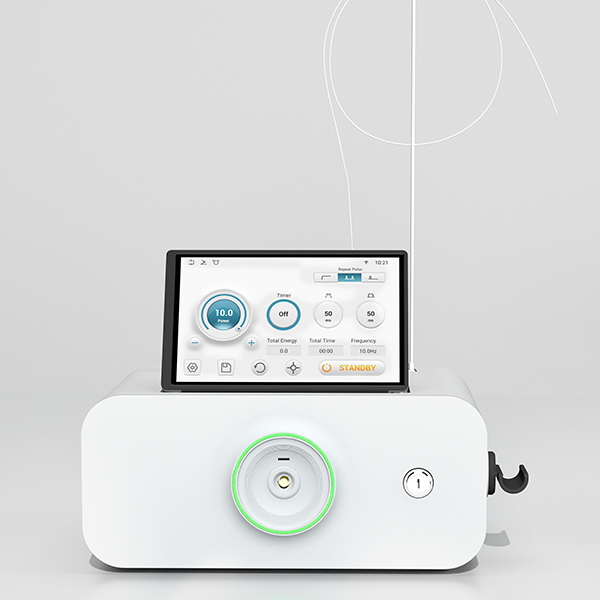
Two platforms in PIOON's range offer 980nm output:
- PIOON M2 multi-wavelength surgical laser — standard 980nm output up to 30W, paired with a 1470nm channel. PIOON describes the 980nm channel as providing effective absorption by hemoglobin for soft-tissue cutting, coagulation, and hemostasis.
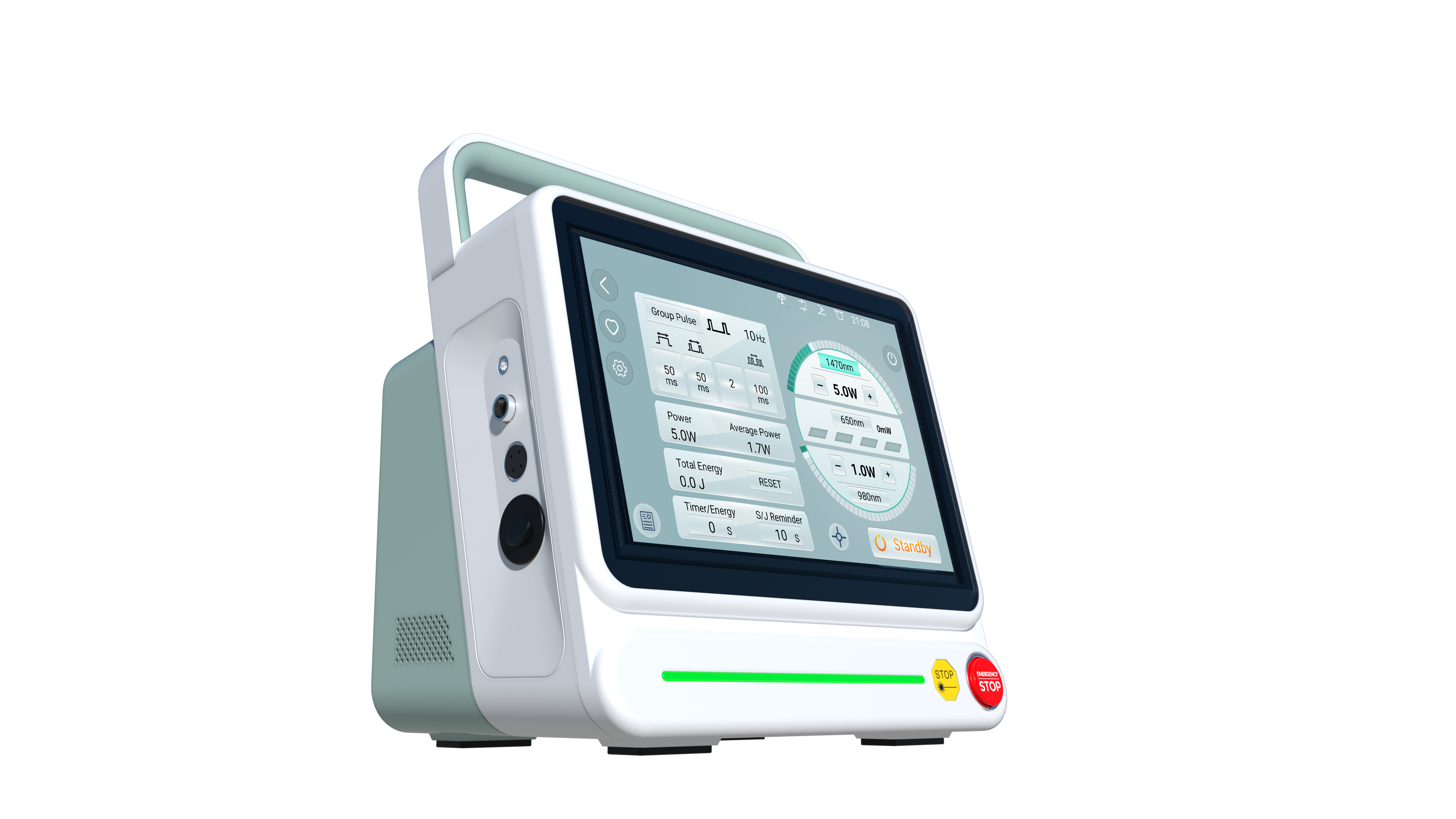
- PIOON S1 Pro Plus triple-wavelength platform — 980nm component up to 20W, combined with 1470nm and 650nm channels. PIOON describes the 980nm interaction with hemoglobin and water as supporting cutting, coagulation, and hemostasis. The system also supports CW, Pulsed, Single Pulse, and Group-Pulse operating modes.
Both the M2 and S1 Pro Plus are multi-specialty platforms. In PIOON's scenario data, they appear within the supported application scope for ENT laser surgery alongside their other surgical uses.
1470nm ENT Diode Laser Systems
The 1470nm wavelength is characterized by strong absorption by water. Because biological tissue contains substantial water, this absorption path produces controlled thermal effects during soft-tissue ablation and coagulation. PIOON's documentation frames the 1470nm interaction as delivering controlled thermal energy for soft-tissue ablation, coagulation, and selected minimally invasive procedures.
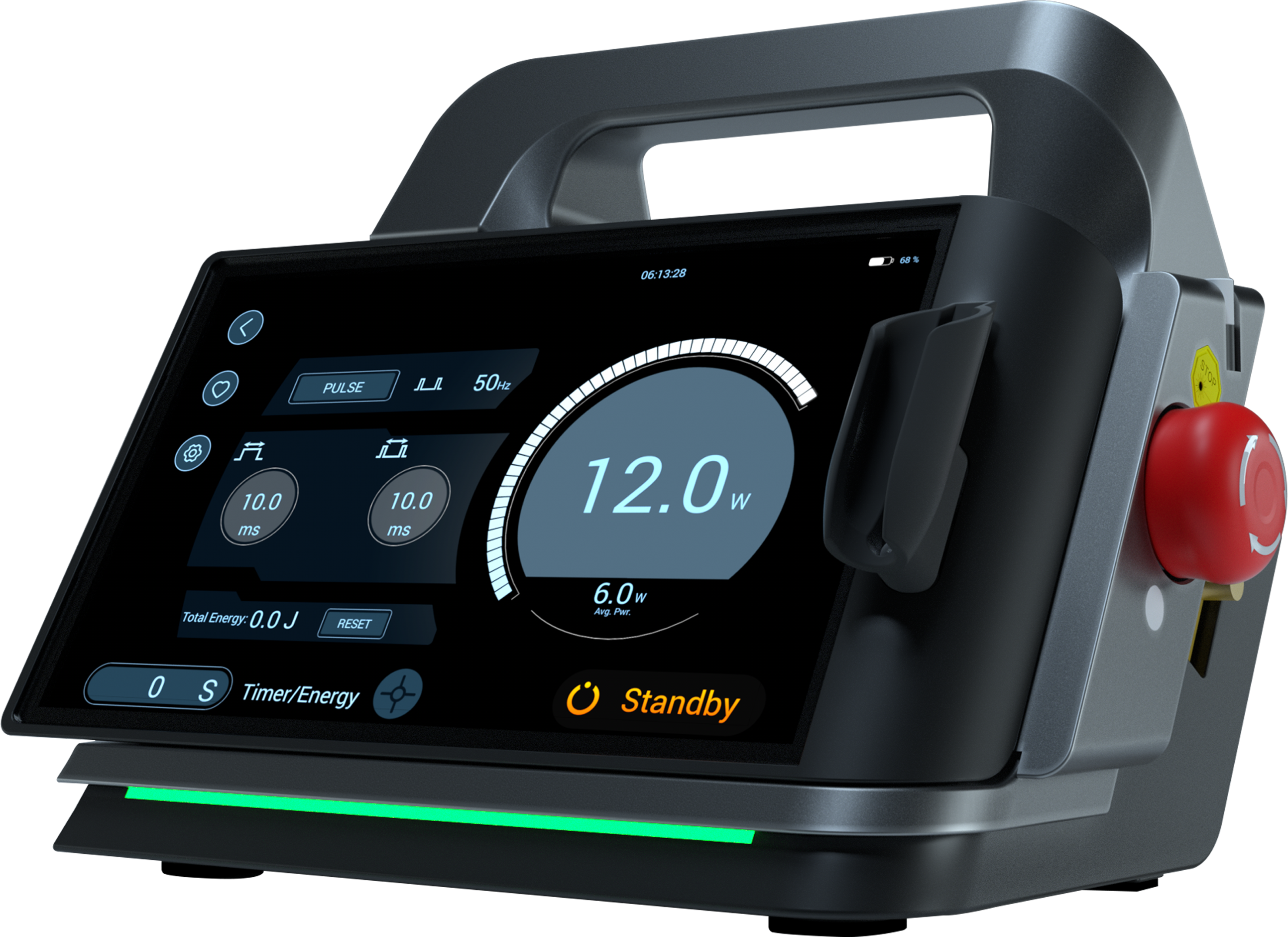
Platforms in PIOON's range with 1470nm output include:
- PIOON S1-K12 — 1470nm output up to 12W. PIOON describes strong water absorption by biological tissue enabling controlled thermal energy delivery for soft-tissue ablation, coagulation, and selected minimally invasive procedures.
- PIOON S1 Pro Plus — 1470nm component up to 15W. PIOON describes the 1470nm channel as providing controlled thermal interaction through strong water absorption for minimally invasive tissue procedures.
- PIOON M2 — 1470nm output up to 15W as part of its standard dual-wavelength configuration.
The water-absorption characteristic concentrates thermal energy within hydrated tissue. In ENT settings, this is relevant where a focused thermal effect is needed in small or hydrous target areas.
Head-to-Head Comparison: 980nm vs. 1470nm for ENT Procedures
Absorption and Tissue Interaction
At 980nm, hemoglobin and water both absorb the emitted energy. In vascular soft tissue, this means cutting is accompanied by hemoglobin-driven heating that supports coagulation. At 1470nm, water is the dominant absorber, which concentrates heat delivery in hydrated tissue and supports controlled coagulation and ablation.
Cutting and Coagulation Balance
Both wavelengths support cutting and coagulation. 980nm couples to hemoglobin, which is directly relevant to hemostasis during incision. 1470nm couples primarily to water, which supports controlled thermal effects in soft tissue. In either case, the balance between cutting and coagulation depends on power setting, emission mode, exposure time, and fiber design—not on wavelength alone.
Bleeding Control in Vascular ENT Tissue
For procedures in highly vascular mucosa, 980nm's hemoglobin absorption is directly tied to hemostatic behavior. 1470nm also produces coagulation, but through water-mediated heating. Which delivers the more appropriate balance depends on the tissue's blood content, the procedure technique, and the device configuration.
Fiber and Handpiece Compatibility
All PIOON platforms discussed here use the SMA905 fiber connector. Specific fiber diameters and handpiece options vary by platform and configuration. The S1-K12 supports 400μm and 600μm fibers; the S1-C10 ENT supports 200μm and above. Fiber compatibility must be confirmed against the intended procedure before purchase.
Multi-Wavelength Configurations
The M2 and S1 Pro Plus both integrate 980nm and 1470nm into a single platform (M2: 980nm 30W + 1470nm 15W; S1 Pro Plus: 1470nm 15W + 980nm 20W + 650nm 200mW). For a department that expects to treat a range of ENT conditions and wants one device with both absorption profiles, these configurations are relevant to evaluate.
Comparison Table
| Parameter | 980nm systems | 1470nm systems |
|---|---|---|
| Primary absorption | Hemoglobin and water | Water |
| Described tissue effects | Cutting, coagulation, hemostasis | Ablation, coagulation, controlled thermal interaction |
| PIOON platform examples | M2 (up to 30W), S1 Pro Plus (up to 20W) | S1-K12 (up to 12W), M2 (up to 15W), S1 Pro Plus (up to 15W) |
| Fiber connector | SMA905 | SMA905 |
| Fiber compatibility | Platform-specific | S1-K12: 400μm / 600μm; platform-specific for others |
| ENT application | ENT laser surgery listed in supported surgical applications | ENT laser surgery listed in supported surgical applications |
| Suitability note | Depends on model, configuration, and local approval | Depends on model, configuration, and local approval |
Use Cases: Matching Wavelength to ENT Procedure Needs
Rhinology (Turbinate Reduction, Nasal Polypectomy)
Nasal procedures are performed in vascular mucosa where coagulation behavior matters. 980nm's hemoglobin absorption and 1470nm's water absorption both support coagulation, but through different mechanisms. Procedure requirements—such as the degree of hemostasis needed and the tissue depth targeted—should guide wavelength evaluation along with device-specific indications.
Laryngology (Vocal Cord Surgery, Laryngeal Papilloma Removal)
Laryngeal tissue is delicate and structurally precise. Both wavelengths support soft-tissue coagulation and ablation. The appropriate system depends on the specific lesion, the delivery fiber or handpiece, and approved indications for the device.
Pharyngology (Tonsil Surgery, Pharyngeal Soft-Tissue Procedures)
Tonsillar and pharyngeal tissue is glandular and vascular. 980nm's hemoglobin absorption supports hemostasis during cutting; 1470nm's water absorption concentrates thermal effects in hydrated tissue. The clinical setting and the device's approved indications determine the applicable choice.
Otology
Ear procedures involve fine structures where energy delivery is closely controlled by fiber and handpiece design. The relevant wavelength for any specific otologic procedure must be confirmed against the device's approved indications and local regulatory approval.
PIOON Company Profile: The Manufacturer Behind the Platforms
Wuhan Pioon Technology Co., Ltd. (PIOON) was founded in 2015 and is headquartered in Wuhan, China. The company designs, manufactures, and globally distributes medical diode laser systems.
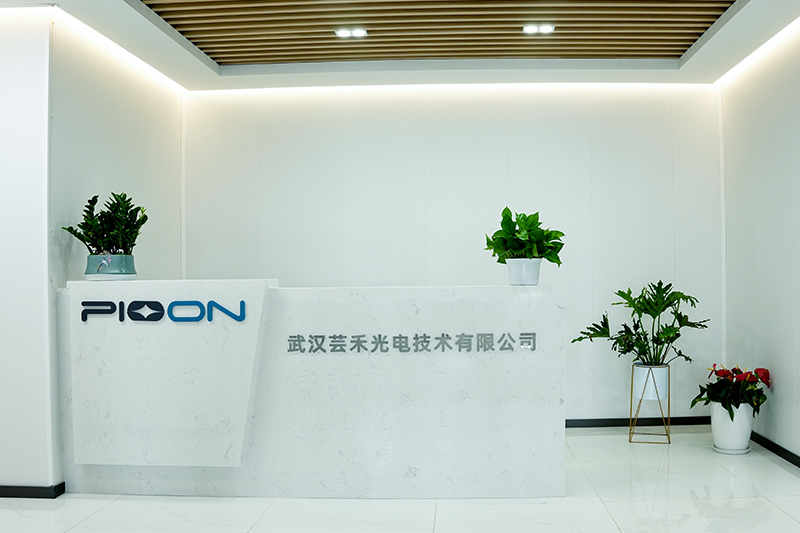
Company overview. PIOON operates from a 4,000-square-meter manufacturing facility with approximately 100–120 employees. More than 95% of its sales are exported, reaching more than 80 international markets and nearly 10,000 users across the EU, USA, Brazil, North America, South America, Asia, North Africa, Europe, and Oceania. Its registered address is in the East Lake High-tech Development Zone, Wuhan.
R&D and development. Approximately 30% of PIOON's workforce is dedicated to research and development, with 15–20% of annual sales revenue invested in technology development. A 30–35-engineer multidisciplinary team covers optoelectronics, laser modules, embedded software, intelligent control systems, and medical laser technology. The company's product range spans diode laser wavelengths from 400nm to 2000nm and power outputs from 200mW to 200W.
Core products. PIOON's product portfolio includes dental diode lasers, surgical diode laser systems, ENT surgery lasers, aesthetic platforms, medical optical fibers, specialized handpieces, and accessories. ENT-relevant platforms include the M2, S1 Pro Plus, S1-K12, and S1-C10 ENT. The S1-C10 ENT is a dedicated 450nm blue diode laser platform listed for otology, rhinology, laryngology, and pharyngology applications, offering an additional wavelength option alongside the 980nm and 1470nm systems discussed in this comparison.
Quality and certifications. PIOON operates under an ISO 13485-certified medical device quality management system, supported by standardized manufacturing and quality assurance procedures. Selected products hold applicable international certifications or registrations—including CE certification, FDA clearance, and ANVISA registration—depending on the model and target market. PIOON also holds High-Tech Enterprise and Innovation Enterprise recognitions in China.
OEM/ODM and partner support. PIOON offers OEM/ODM cooperation for medical diode laser distributors and brand partners. Customization may include private labeling, branding, product configurations, software language options, and compatible accessories, depending on the model and project. Distributor support covers product training, technical assistance, remote troubleshooting, maintenance guidance, spare parts coordination, and marketing resources. Warranty coverage and service arrangements depend on the product and sales agreement.
Market Evaluation and Industry Recognition
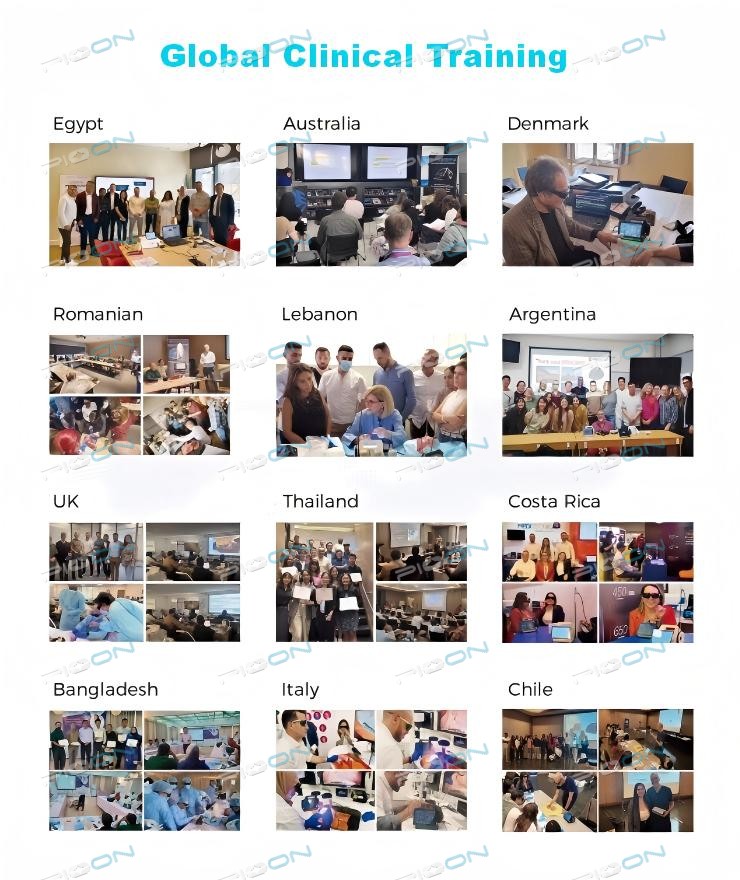
PIOON's equipment reaches international healthcare and distribution markets through exhibitions, clinical education programs, and cooperation with medical experts. Its S3 triple-wavelength blue dental laser has been featured in a European laser dentistry textbook, reflecting recognition of its technology in professional dental education. The company maintains an expanding intellectual property portfolio through independent technology development.
Manufacturer certification does not equate to market authorization. Buyers should verify the regulatory status of each specific model in the destination market—including CE conformity records, FDA clearance or approval where applicable, ISO 13485 certification, and local registration documents—before purchase.
Decision Criteria for ENT Diode Laser Procurement
When comparing 980nm and 1470nm ENT systems, buyers should weigh the following criteria:
- Absorption profile versus procedure mix. A procedure portfolio heavy in vascular, bleeding-prone soft tissue may favor evaluating 980nm hemoglobin-absorption trade-offs. Procedures relying on water-mediated ablation may make 1470nm relevant.
- Power and pulse control. Maximum output power and available pulse modes must match the intended procedure and required tissue response.
- Fiber and handpiece delivery. Fiber compatibility and handpiece options must be confirmed for the target anatomy and procedure.
- Multi-wavelength flexibility. A single-platform system offering both 980nm and 1470nm—such as the M2 or S1 Pro Plus—may suit departments that expect to perform a range of ENT procedures.
- Regulatory approval. Each model's approved indications in the destination market must be confirmed; manufacturer certification alone does not guarantee market access.
- Training and after-sales support. Clinical training, technical support, spare parts availability, and warranty terms are part of the device lifecycle.
Conclusion
980nm and 1470nm ENT diode laser systems represent two distinct approaches to depositing laser energy in soft tissue. 980nm relies on hemoglobin and water absorption; 1470nm relies primarily on water absorption. One is not inherently better than the other—the more appropriate system depends on the specific procedure, tissue characteristics, bleeding-control requirements, fiber delivery, and regulatory approval.
PIOON provides 980nm and 1470nm platforms through the M2 (980nm 30W + 1470nm 15W), S1 Pro Plus (1470nm 15W + 980nm 20W + 650nm 200mW), and S1-K12 (1470nm 12W), supported by a range of compatible fibers, handpieces, and accessories. Its ISO 13485 quality system, OEM/ODM capability, and global distribution support frame the procurement decision for ENT diode laser systems.
Frequently Asked Questions
What should distributors check before importing ENT diode lasers?
Distributors should verify the regulatory status of each medical laser model in the destination market. Relevant documents may include CE conformity records, FDA clearance or approval where applicable, ISO 13485 quality management certification, and local registration documents. Requirements vary by country, device classification, and intended use. Manufacturer certification alone does not guarantee market authorization.
Which ENT diode laser manufacturers offer both 980nm and 1470nm systems?
PIOON offers both wavelengths. The M2 provides 980nm output up to 30W and 1470nm up to 15W; the S1 Pro Plus provides 1470nm up to 15W, 980nm up to 20W, and 650nm up to 200mW; the S1-K12 provides 1470nm output up to 12W. Buyers should confirm which wavelength and configuration correspond to their intended ENT procedures and local regulatory approvals.
What is the main difference between 980nm and 1470nm ENT diode lasers?
980nm energy couples to hemoglobin and water, while 1470nm depends primarily on water absorption. This changes how energy is deposited in vascular versus highly hydrated tissue and affects the balance between cutting, coagulation, and hemostasis. The appropriate wavelength depends on the procedure and the tissue being treated.
Can PIOON platforms be used for ENT soft-tissue procedures?
PIOON's surgical application data lists ENT laser surgery among the supported applications for its medical diode laser systems. ENT procedures are subject to device configuration, compatible fibers and handpieces, and the regulations governing medical device use in each market.
What support does PIOON provide for ENT diode laser systems?
PIOON provides product training, technical assistance, remote troubleshooting, maintenance guidance, spare parts coordination, and marketing resources. Warranty coverage and service arrangements depend on the product and sales agreement. For configuration details or quotations, PIOON can be contacted at sales@pioon.com.
Have Questions or Need More Details?
Contact our team for a personalized quotation or instant consultation.
Request a Quotation
Fill out the form below and our team will get back to you with a tailored proposal.
WhatsApp Direct Chat
Prefer to chat in real-time? Message us on WhatsApp for instant assistance & quick answers.
- Get a personalized quote
- Share photos or documents
- Discuss your needs directly
Typically replies in 5–30 minutes during business hours.