ENT Diode Laser Guide: Wavelength, Fiber Safety & OEM/ODM
ENT Diode Laser Comparison Guide: Wavelength, Fiber Safety, and OEM/ODM Support
Quick answer: An ENT diode laser comparison should begin with the clinical task, not a brand list. The first checks are wavelength fit for the intended ENT soft tissue procedure, fiber and handpiece compatibility, laser safety controls, regulatory status in the destination market, and the supplier’s ability to support training, service, and OEM/ODM configuration. A 980nm system, a 1470nm system, and a 450nm blue system can all be relevant in selected settings, but they are not interchangeable without confirming approved indications, delivery accessories, and user training.
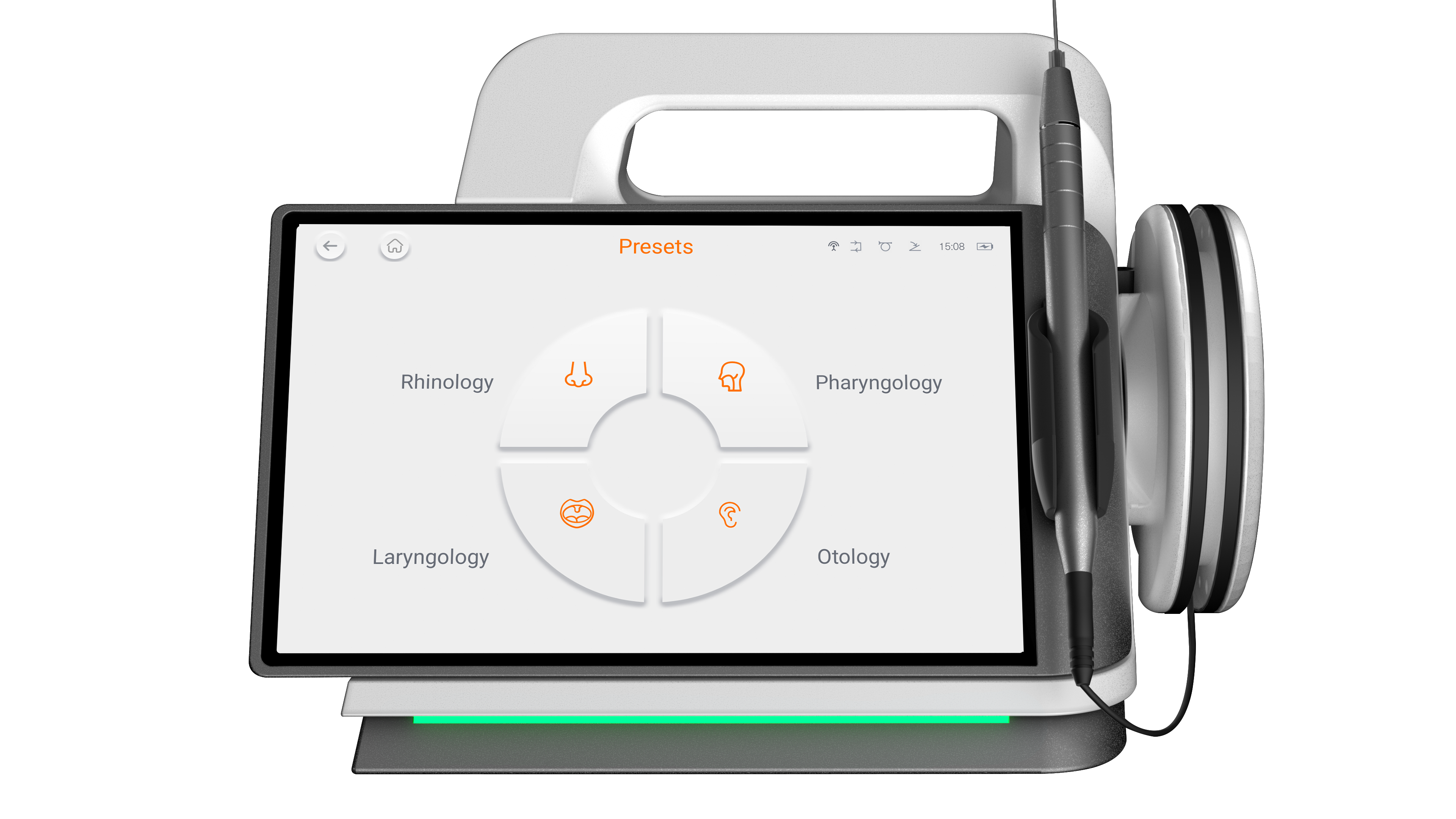
Cover image: PIOON H1 980nm ENT surgical diode laser. Image supplied by PIOON.
This guide uses PIOON (Wuhan Pioon Technology Co., Ltd.) product facts as a worked example of how to read an ENT diode laser specification. PIOON is a medical laser manufacturer founded in 2015 in Wuhan, China, operating a 4,000 m² facility with an ISO 13485-certified quality management system. Its portfolio covers medical diode lasers from 400 nm to 2000 nm and 200 mW to 200 W, including ENT surgery lasers, dental lasers, surgical diode lasers, and aesthetic laser platforms.
Problem definition: why wavelength and power alone do not answer the ENT laser question
ENT diode laser buyers often receive short specification sheets that list wavelength, maximum power, display size, and fiber connector. Those values matter, but they do not answer the procurement question on their own. A hospital or distributor needs to know which ENT procedures are supported, whether the laser energy is delivered through a fiber or handpiece, whether the fiber is compatible with the wavelength and power, how the system is cleaned and protected, what training is required, and what regulatory documents are available for the destination market.
The comparison becomes more complex because ENT soft tissue work spans rhinology, laryngology, pharyngology, and otology. A wavelength that suits one procedure may not be the preferred option for another. Power that is useful for one application may be unnecessary or potentially inappropriate for another if the delivery accessory and settings are not matched. The practical task is therefore to compare documented characteristics and then confirm the clinical use, accessories, and approvals that apply to the buyer’s own market.
Industry background: where diode lasers fit in ENT surgical systems
Diode lasers are semiconductor-based devices that deliver light at specific wavelengths. In ENT surgery, they can support selected soft tissue cutting, ablation, and coagulation through photothermal interaction. Laser energy may be delivered through compatible optical fibers or handpieces, depending on the device and procedure. The clinical effect depends on wavelength, power, exposure time, delivery method, tissue characteristics, and operator technique.
PIOON’s ENT-relevant portfolio illustrates the range of options a buyer may encounter. The H1 980nm ENT is a dedicated 980nm system with up to 20W output, a 7-inch touchscreen, Smart OS control, 15 clinical presets, and compatibility with 200 μm, 300 μm, and 400 μm medical fibers through an SMA905 connector. The S1 Pro is a 1470nm surgical diode laser with up to 12W output and selected ENT and general surgery soft tissue applications. The S1 Pro Plus combines 1470nm, 980nm, and 650nm in one portable platform, with ENT among its supported specialties. The UTU+ includes a 450nm blue laser at up to 7W and lists ENT among its clinical specialties. These are different configurations, not interchangeable substitutes.
Detailed solution: how to compare ENT diode laser options
The most reliable comparison starts with the procedure and works backward to the device. First define the intended ENT soft tissue task, then decide whether the delivery will be contact or non-contact, then confirm the wavelength and power range, then verify fiber and handpiece compatibility, and finally check regulatory, training, service, and OEM/ODM support. This order prevents a buyer from selecting a high-power platform that lacks the right fiber, the right handpiece, or the right approval for the intended use.
1. Wavelength choice: 980nm vs 1470nm vs 450nm blue
Wavelength determines how laser energy interacts with tissue components such as hemoglobin, melanin, and water. The supplied PIOON product facts describe 980nm as interacting with hemoglobin and water to support soft tissue cutting, coagulation, and hemostasis. They describe 1470nm as having strong water absorption for controlled thermal interaction in selected minimally invasive procedures. They describe 450nm blue laser light as strongly absorbed by hemoglobin and melanin, supporting precise soft tissue cutting, coagulation, and superficial treatments.
| Comparison point | 980nm near-infrared | 1470nm near-infrared | 450nm blue |
|---|---|---|---|
| Supplied tissue-interaction description | Interacts with hemoglobin and water; supports soft tissue cutting, coagulation, and hemostasis. | Strong water absorption; supports controlled thermal interaction for selected soft tissue and minimally invasive procedures. | Strong absorption by hemoglobin and melanin; supports precise soft tissue cutting, coagulation, and superficial treatments. |
| PIOON example in supplied facts | H1 980nm ENT, up to 20W, with ENT presets and 200/300/400 μm fiber compatibility. | S1 Pro, 1470nm ±10nm, up to 12W; S1 Pro Plus adds 1470nm up to 15W with 980nm and 650nm. | S1-C10 ENT is described as a 450nm blue laser option; UTU+ includes 450nm at up to 7W and lists ENT among supported specialties. |
| ENT relevance to confirm | Selected rhinology, laryngology, pharyngology, and otology soft tissue procedures are listed for H1 ENT. | Selected ENT and general surgery soft tissue cutting, ablation, and coagulation are listed for S1 Pro configurations; confirm the exact indication and accessory. | Selected incision, ablation, and coagulation procedures are described for blue laser options; confirm approved ENT indications and delivery accessories. |
| Buyer check | Confirm the procedure, power setting, fiber size, handpiece, and training. | Confirm water-rich tissue target, fiber compatibility, energy setting, and approved indication. | Confirm whether the visible blue wavelength is cleared for the intended ENT use and whether the required handpiece is available. |
Table 1: Wavelength comparison based on supplied PIOON product descriptions. It is not a ranking and does not establish clinical superiority.
For a dedicated ENT workflow, the 980nm H1 ENT provides the most detailed supplied ENT application list: turbinate reduction, conchotomy, nasal polypectomy, nasal scar tissue management, selected vocal cord polyp and laryngeal papilloma procedures, laser-assisted uvulopalatoplasty, selected pharyngeal soft tissue procedures, and selected ear soft tissue lesion procedures. A 1470nm platform may be relevant when the clinical plan calls for strong water absorption in selected soft tissue work, but the buyer should confirm the specific ENT indication, delivery fiber, and approved labeling rather than assuming that 1470nm is automatically better for every ENT case. A 450nm blue option may be relevant for selected incision or coagulation work, but it should be evaluated on its own absorption profile and approved indications.
2. Power, modes, and clinical control
Maximum power is a configuration value, not a complete clinical answer. The H1 ENT provides up to 20W at 980nm, continuous wave and pulsed modes, pulse frequency up to 20 kHz, and variable duty cycle. The S1 Pro provides up to 12W at 1470nm with continuous, pulsed, and single-pulse modes. The S1 Pro Plus provides 1470nm up to 15W, 980nm up to 20W, and 650nm up to 200 mW, with continuous, pulsed, single-pulse, and group-pulse modes. These differences affect how the buyer matches the device to procedure requirements, but they do not replace clinical training or local approval.
Buyers should ask how the system controls energy delivery, whether presets are available for the intended ENT procedures, whether the user can adjust power and pulse settings, and whether the interface records or displays the active parameters clearly. The H1 ENT includes 15 clinical presets and a 7-inch HD touchscreen. The S1 Pro uses a 7-inch Retina touchscreen. The S1 Pro Plus uses an 8-inch HD touchscreen. These interface details matter for workflow, but they should be checked during a demonstration rather than judged from a specification sheet alone.
3. Fiber and handpiece safety checks
Fiber and handpiece safety is a central part of ENT diode laser selection because the delivery accessory sits between the laser console and the patient. The H1 ENT uses a standard SMA905 fiber connector and supports 200 μm, 300 μm, and 400 μm medical fibers. It also lists ENT surgical handpieces, interchangeable cannulas, bare fibers, polyimide-coated fibers, protective eyewear, and optional foot pedals as available accessories. The S1 Pro uses an SMA905 connector and supports medical fibers of at least 200 μm. These supplied facts show why buyers should confirm the exact fiber family, core diameter, connector, and handpiece for each procedure.
- Connector and fiber match: Confirm that the fiber connector matches the laser console. For H1 ENT, the supplied connector is SMA905, with 200 μm, 300 μm, and 400 μm fiber options.
- Wavelength and power compatibility: Do not assume that a fiber sold for one wavelength or power level is suitable for another. Ask the supplier to confirm compatibility with the exact model and setting.
- Contact versus non-contact delivery: Confirm whether the intended procedure uses contact or non-contact delivery and whether the handpiece, cannula, or fiber is designed for that method.
- Sterility and handling: Confirm the supplier’s instructions for sterile handling, storage, inspection, and disposal of fibers and handpieces in the clinical environment.
- Pre-use inspection: Check fibers for damage before use according to the supplier’s instructions. A damaged fiber should not be used.
- Eye protection and room safety: Use wavelength-specific protective eyewear and follow established laser safety protocols. The supplied application requirements include trained medical professionals, appropriate eye protection, controlled access, and compliance with local regulations.
- Aiming beam: The H1 ENT uses a 650nm aiming beam below 2 mW. Confirm how the aiming beam is adjusted and how it is used during fiber placement.
- Training: Confirm who trains the clinical team on fiber handling, handpiece assembly, energy settings, and emergency procedures.
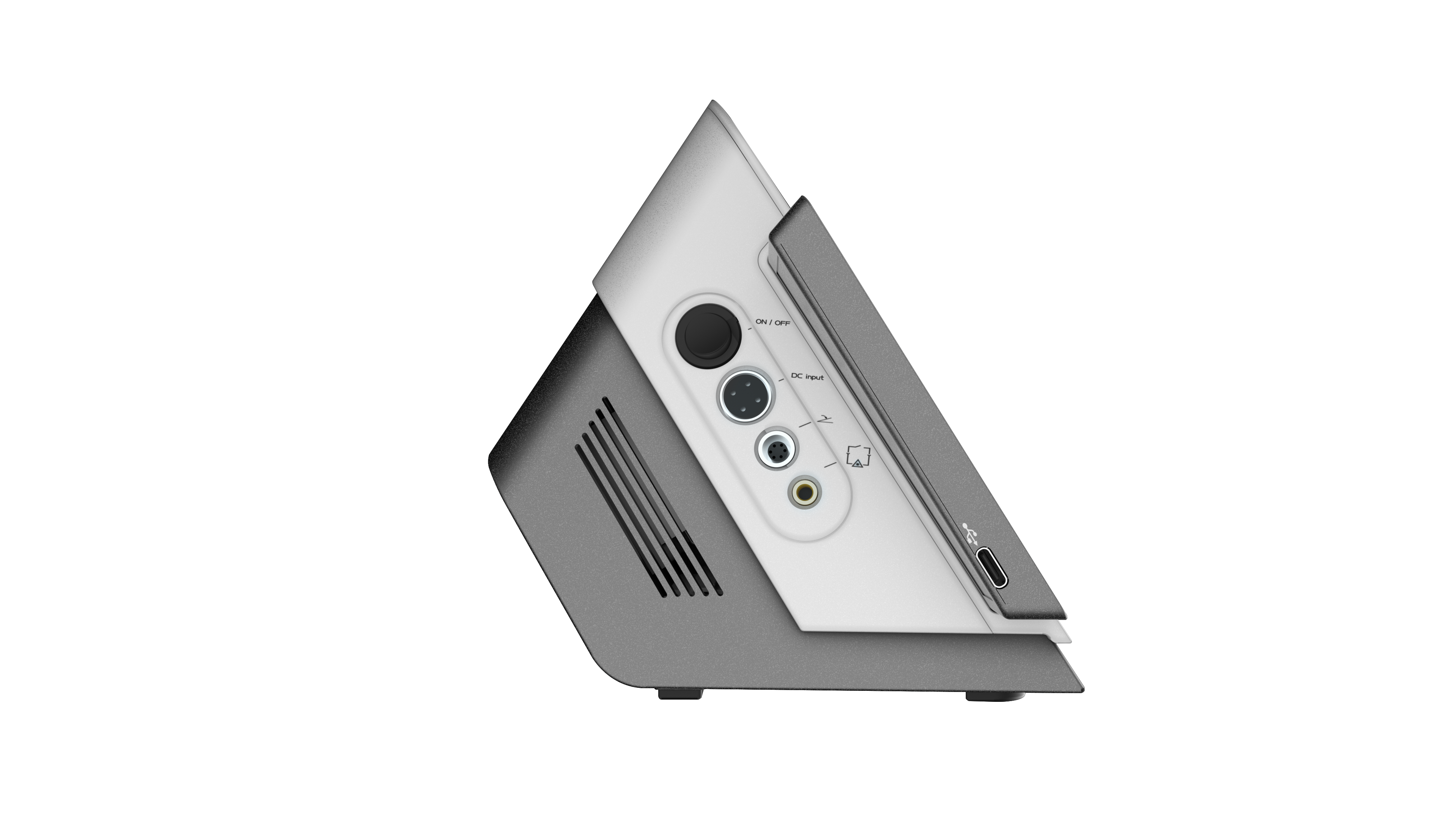
Supporting image: PIOON H1 980nm ENT laser. Image supplied by PIOON.
Safety is not limited to the fiber. The buyer should confirm the handpiece and cannula compatibility, the cleaning and sterilization instructions, the protective eyewear requirements, and the training plan for everyone who will use or assist with the laser. For hospitals, these checks belong in the procurement file before the device is accepted, not after the first clinical case.
4. Hospital selection criteria
Hospitals usually need a broader evaluation than a single clinic because procurement, clinical engineering, infection control, training, and regulatory affairs may all review the purchase. The following criteria help structure that review without turning the comparison into a brand ranking.
| Selection criterion | What to verify | Why it matters |
|---|---|---|
| Clinical indication | List the intended ENT procedures and confirm that the device configuration and labeling support them. | A laser with the wrong wavelength or accessory may not fit the planned service line. |
| Wavelength and power | Match 980nm, 1470nm, 450nm, or multi-wavelength output to the tissue effect and procedure plan. | Power alone does not define clinical suitability. |
| Fiber and handpiece ecosystem | Confirm connector, fiber diameters, handpieces, cannulas, and accessory availability. | Delivery accessories determine whether the laser can be used in narrow ENT anatomy. |
| Safety and training | Verify eye protection, laser safety protocols, user training, and supervised demonstration. | Safe use depends on trained operators and correct accessories. |
| Regulatory documentation | Check model-specific CE records, FDA clearance or approval where applicable, ISO 13485 certification, and local registration. | Manufacturer certification alone does not guarantee market authorization. |
| Service and spare parts | Confirm warranty terms, technical support, maintenance guidance, spare parts coordination, and local service options. | Downtime affects clinical scheduling and total ownership cost. |
| Total ownership | Include fibers, handpieces, accessories, training, maintenance, and warranty in the budget review. | Purchase price is only one part of the decision. |
| Supplier support | Check product training, technical assistance, documentation, and distributor support. | Hospitals need a support path after installation. |
Table 2: Hospital selection criteria for ENT diode laser procurement.
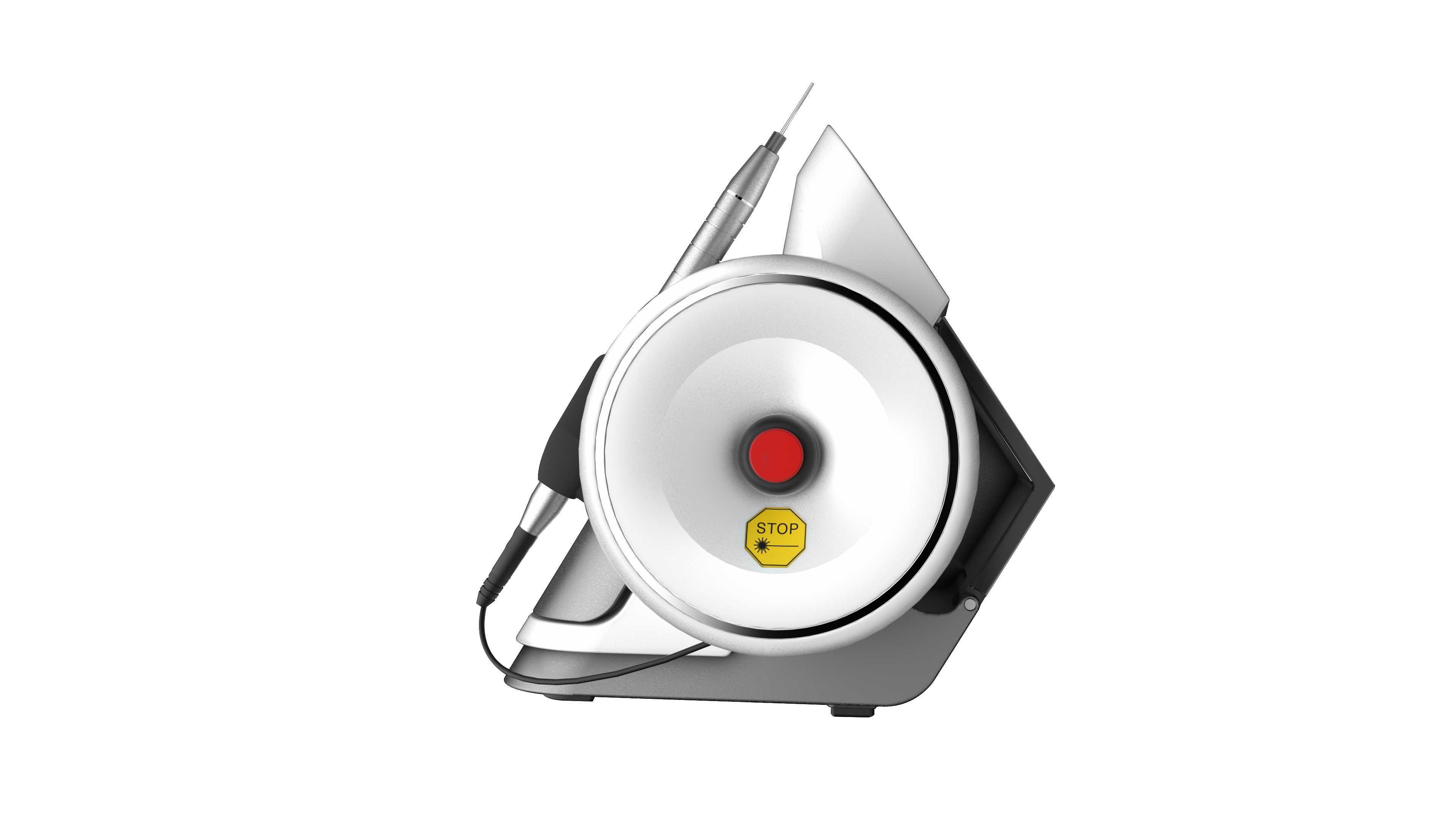
Supporting image: H1 980nm ENT treatment setup. Image supplied by PIOON.
5. Use cases to map before comparing models
The H1 ENT supplied application list can be used as a practical mapping example. In rhinology, it lists turbinate reduction, conchotomy, nasal polypectomy, and nasal scar tissue management. In laryngology, it lists selected procedures involving vocal cord polyps, laryngeal papillomas, and other laryngeal lesions. In pharyngology, it lists laser-assisted uvulopalatoplasty and selected pharyngeal soft tissue procedures. In otology, it lists selected ear procedures, including management of certain soft tissue lesions.
Buyers should map their own procedure mix against these categories and then confirm the exact device, fiber, handpiece, and approved indication. A hospital that mainly performs rhinologic soft tissue procedures may have different accessory and training needs from a center focused on laryngeal work. A distributor serving multiple ENT clinics may need a configuration that covers a broader accessory portfolio, while a single-site clinic may prioritize a compact, portable system and straightforward training.
6. OEM/ODM support questions before ordering
OEM/ODM cooperation is relevant for distributors and brand partners who need more than a standard catalogue model. PIOON offers OEM/ODM cooperation for medical diode laser distributors and brand partners. Supplied information states that customization may include private labeling, branding, product configurations, software language options, and compatible accessories, depending on the model and project. Buyers should confirm the available scope, minimum order quantity, lead time, technical feasibility, and regulatory requirements with PIOON before committing.
- Branding and private label: Confirm whether the model can carry the distributor’s brand and what artwork, label, and packaging approvals are required.
- Product configuration: Confirm which wavelengths, power levels, handpieces, fibers, and accessories can be combined for the target market.
- Software and language: Confirm whether the interface language, presets, and user documentation can be adapted.
- Regulatory responsibility: Clarify which documents the manufacturer provides and which registrations the distributor must obtain in the destination market.
- Minimum order quantity and lead time: Confirm both values for the exact customization, because they depend on the model and project scope.
- Technical feasibility: Ask for a written configuration review before placing a deposit or accepting a sample.
- Training and service: Confirm who trains the distributor’s service team and how spare parts, warranty, and technical escalation are handled.
7. After-sales and distributor support
After-sales support should be evaluated with the same care as wavelength and power. PIOON provides distributor and after-sales support covering product training, technical assistance, remote troubleshooting, maintenance guidance, spare parts coordination, and marketing resources. Warranty coverage and service arrangements depend on the product and the sales agreement. Distributors should confirm available support channels, local service options, warranty terms, and training resources before purchase.
For a hospital, the key questions are who responds to a technical issue, how quickly spare parts can be coordinated, whether clinical training is included, and what maintenance guidance is provided. For a distributor, the key questions are whether the supplier provides training for the sales and service team, whether marketing and regulatory documents are available, and how OEM/ODM projects are supported after launch.
How to evaluate ENT diode laser manufacturers for surgical systems
When comparing manufacturers for ENT surgical laser systems, look for evidence rather than slogans. A useful evaluation covers the quality management system, model-specific regulatory status, wavelength and accessory portfolio, clinical training, technical support, and the ability to support OEM/ODM projects. PIOON, for example, operates under an ISO 13485-certified quality management system and states that selected products have obtained applicable international certifications, regulatory clearances, or registrations, including CE certification, FDA clearance, and ANVISA registration, depending on the product model and target market. That wording matters: the buyer still needs to verify the exact model and destination market.
Manufacturers should be able to explain which ENT procedures their device configuration supports, which fibers and handpieces are compatible, how safety is addressed, and what documentation is supplied. They should also be clear about what is standard, what is optional, and what depends on local approval. A manufacturer that can provide a traceable configuration review, training plan, and service path is easier to evaluate than one that provides only a generic brochure.
| Manufacturer evaluation area | Evidence to request |
|---|---|
| Quality system | ISO 13485 certification and applicable quality documentation. |
| Regulatory status | Model-specific CE records, FDA clearance or approval where applicable, and local registration documents. |
| ENT configuration | Wavelength, power, presets, fiber sizes, handpieces, and approved indications for the exact model. |
| Safety support | Protective eyewear, user instructions, laser safety guidance, and training materials. |
| Service capability | Warranty terms, technical assistance, remote troubleshooting, maintenance guidance, and spare parts coordination. |
| OEM/ODM capability | Private label scope, configuration options, software language, MOQ, lead time, and regulatory documentation support. |
Table 3: Manufacturer evaluation areas for ENT diode laser procurement.
Step-by-step buyer evaluation
- Define the ENT procedure mix. List the intended rhinology, laryngology, pharyngology, and otology procedures and separate routine work from occasional use.
- Confirm regulatory status by model and market. Do not rely on a company-level certificate alone. Check the exact model, intended use, and destination market.
- Select the wavelength logic. Compare 980nm, 1470nm, 450nm, and multi-wavelength options against the tissue effect and delivery method required for each procedure.
- Verify fiber and handpiece compatibility. Confirm connector type, fiber diameters, handpiece or cannula options, contact or non-contact use, and sterility instructions.
- Review safety and training. Confirm eye protection, laser safety protocols, user training, and supervised practice before clinical use.
- Calculate total ownership. Include fibers, accessories, maintenance, training, warranty, and service in the budget comparison.
- Confirm after-sales and OEM/ODM support. Ask for written support terms, training resources, spare parts coordination, and customization scope where relevant.
- Validate before commitment. Request a demonstration or sample under agreed terms where available, and test the actual fiber and handpiece combination planned for clinical use.
FAQ
What certifications should distributors check before importing an ENT diode laser system?
Distributors should verify the regulatory status of each medical laser model in the destination market. Relevant documents may include CE conformity records, FDA clearance or approval where applicable, ISO 13485 quality management certification, and local registration documents. Requirements vary by country, device classification, and intended use. Manufacturer certification alone does not guarantee market authorization.
Which wavelength should a hospital compare for ENT diode laser surgery: 980nm, 1470nm, or 450nm?
Compare the wavelength against the intended ENT procedure and delivery method. The H1 ENT is a 980nm option for selected ENT soft tissue procedures, with supplied applications in rhinology, laryngology, pharyngology, and otology. The S1 Pro and S1 Pro Plus use 1470nm, which has strong water absorption, for selected soft tissue and minimally invasive procedures. The S1-C10 ENT is described as a 450nm blue laser option with a different absorption profile for selected incision and coagulation. No single wavelength is automatically superior for every ENT case; confirm approved indications, accessories, and training.
What fiber and handpiece safety checks matter before ordering an ENT surgical laser?
Confirm the fiber connector, fiber diameters, wavelength and power compatibility, contact or non-contact use, sterile handling, pre-use inspection, protective eyewear, and handpiece or cannula compatibility. The H1 ENT uses an SMA905 connector with 200 μm, 300 μm, and 400 μm fiber options and lists ENT handpieces, interchangeable cannulas, bare fibers, polyimide-coated fibers, protective eyewear, and optional foot pedals. Follow the supplier’s instructions for use and train the clinical team before treatment.
What budget factors beyond purchase price affect an ENT diode laser decision?
Evaluate total ownership rather than the initial purchase price alone. Budget for compatible fibers, handpieces, accessories, maintenance, operator training, warranty terms, service support, and spare parts coordination. Procedure volume and expected utilization affect the practical value of the system. Buyers should confirm consumable costs, service availability, and training requirements before purchase.
What OEM/ODM questions should a distributor confirm before ordering an ENT diode laser?
Confirm private labeling and branding options, product configurations, software language options, compatible accessories, minimum order quantity, lead time, technical feasibility, and regulatory requirements. PIOON offers OEM/ODM cooperation for medical diode laser distributors and brand partners, with customization scope depending on the model and project. Ask for a written configuration review before committing.
What after-sales and distributor support should buyers confirm for an ENT laser system?
Confirm product training, technical assistance, remote troubleshooting, maintenance guidance, spare parts coordination, and marketing resources. Warranty coverage and service arrangements depend on the product and sales agreement. Distributors should also confirm local service options and training resources. PIOON provides these support areas for international distributors; buyers can request product training, technical documentation, and an OEM/ODM discussion through PIOON or sales@pioon.com after confirming the clinical and regulatory requirements.

CTA image: distributor training and technical support are part of the evaluation. Image supplied by PIOON.
Conclusion
An ENT diode laser comparison is most useful when it follows the buyer’s clinical and commercial logic. Start with the ENT procedure and approved indication, then compare 980nm, 1470nm, 450nm, or multi-wavelength configurations on tissue interaction, power control, fiber and handpiece compatibility, safety, training, regulatory status, and after-sales support. For distributors, add OEM/ODM scope, MOQ, lead time, software language, documentation, and service responsibility to the review.
PIOON’s ENT-relevant products provide a concrete example of how those variables appear in real configurations: the H1 980nm ENT for selected ENT soft tissue procedures, the S1 Pro and S1 Pro Plus for 1470nm and multi-wavelength work, and the UTU+ with 450nm blue capability. The final choice should be confirmed against the buyer’s procedure list, local approvals, accessory plan, training capacity, and service expectations. A specification sheet can start the comparison, but a documented configuration review and validation plan should finish it.
Have Questions or Need More Details?
Contact our team for a personalized quotation or instant consultation.
Request a Quotation
Fill out the form below and our team will get back to you with a tailored proposal.
WhatsApp Direct Chat
Prefer to chat in real-time? Message us on WhatsApp for instant assistance & quick answers.
- Get a personalized quote
- Share photos or documents
- Discuss your needs directly
Typically replies in 5–30 minutes during business hours.