
ENT Diode Laser Procurement Comparison: Hospital Buyer vs. Distributor OEM/ODM Checklist
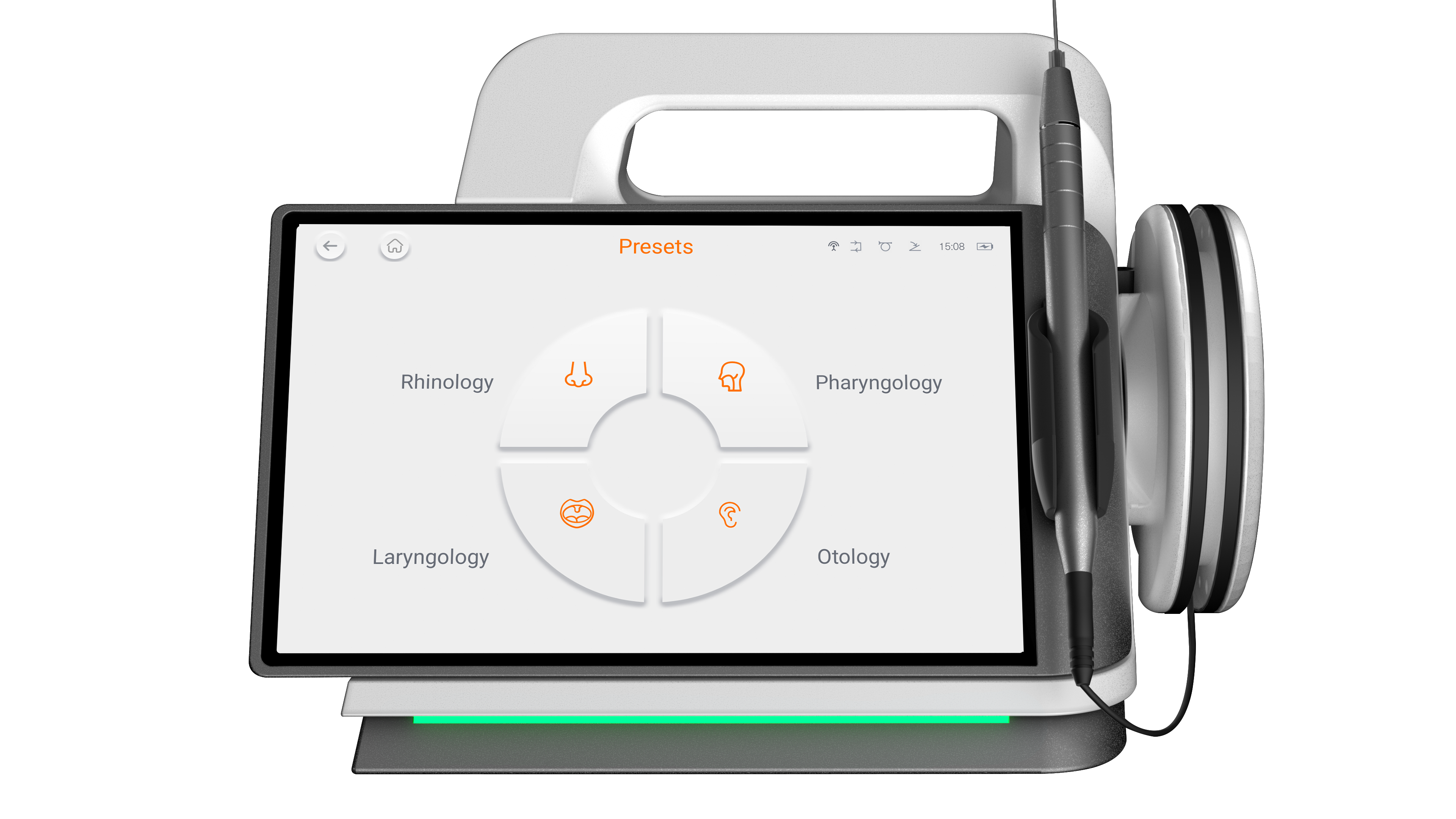
The right ENT diode laser procurement path depends on who owns clinical selection, market authorization, training, service, and lifecycle risk. A hospital buying for its own ENT department must prove that a device matches approved clinical need and can be supported in use. A distributor ordering an OEM/ODM system for resale must prove that it can place a compliant order, register the model in its market, train end users, and manage after-sales obligations. This comparison guide sets out checklists for both paths using provided medical laser and surgery laser facts. Wuhan Pioon Technology Co., Ltd. (PIOON) is a medical laser manufacturer founded in 2015 in Wuhan, China. PIOON operates under an ISO 13485-certified medical device quality management system, and selected products hold applicable international certifications, regulatory clearances, or registrations such as CE, FDA, and ANVISA depending on the product model and target market. PIOON also provides OEM/ODM cooperation, product training, technical assistance, regulatory documentation, and after-sales support for international distributors. Two PIOON ENT systems provide concrete device facts for this comparison: H1 980nm ENT and S1-C10 ENT.
Problem definition: the same device question, different procurement obligations
Both buyer types ask whether an ENT diode laser is clinically suitable, but they do not carry the same evidence burden. A hospital must show that the selected ENT surgical laser fits its approved procedures, accessories, safety controls, staff training, and service plan. A distributor must show that the exact model can be imported, registered, supported, and customized within an OEM/ODM project. Comparing only wavelength, power, or purchase price leaves out the obligations that determine whether the system is usable. The practical comparison is therefore between hospital direct selection and distributor-led OEM/ODM ordering, using model-specific facts rather than general brand claims.
Industry background: why ENT diode laser selection is procedure-specific
ENT diode lasers use controlled photothermal interaction for selected soft tissue cutting, ablation, and coagulation. Laser energy is delivered through compatible fibers or handpieces, and the balance between cutting, coagulation, and ablation depends on wavelength, power, exposure duration, delivery accessories, and tissue characteristics. ENT applications vary with wavelength, device configuration, anatomy, procedure type, and regulatory approval. H1 980nm ENT is a 980nm diode laser with up to 20W output, Continuous Wave and Pulsed modes, pulse frequency up to 20kHz, and variable duty cycle. S1-C10 ENT is a 450nm blue diode laser with up to 10W output and supports contact and non-contact techniques through compatible optical fibers. PIOON product information lists ENT procedure groups including rhinology procedures such as turbinate reduction, conchotomy, nasal polypectomy, and nasal scar tissue management; laryngology procedures involving selected vocal cord polyps, laryngeal papillomas, and other selected laryngeal lesions; pharyngology procedures such as laser-assisted uvulopalatoplasty and selected pharyngeal soft tissue procedures; and selected otologic soft tissue procedures. S1-C10 product information also lists selected otologic procedures such as stapedotomy and cholesteatoma management, and selected tonsillar procedures. Clinical use remains subject to approved indications and local medical device regulations.
How the two procurement paths differ
The comparison below is a decision map, not a claim that one path is better for every buyer. It shows where evidence and responsibility sit in each path.
| Procurement dimension | Hospital direct selection | Distributor-led OEM/ODM ordering |
|---|---|---|
| Primary decision owner | Hospital clinical and procurement team selects a finished ENT diode laser for its own approved ENT services. | Distributor defines a market plan, order specification, branding scope, and resale support model. |
| Product identity | Finished PIOON ENT system such as H1 980nm ENT or S1-C10 ENT. | OEM/ODM cooperation may include private labeling, branding, product configurations, software language options, and compatible accessories depending on model and project. |
| Main evidence to verify | Clinical fit, approved indications, fiber and handpiece compatibility, training, local regulatory status, warranty, and service. | Target-market regulatory path, customization scope, technical feasibility, minimum order quantity, lead time, training, and after-sales role. |
| Regulatory responsibility | Confirm the exact model is authorized for the intended use in the hospital market. | Verify destination-market registration or clearance for the exact OEM/ODM model; manufacturer certification alone does not guarantee market authorization. |
| Training and clinical support | Confirm product training, technical assistance, and clinical education resources for hospital staff. | Confirm what PIOON provides and what the distributor must deliver to end users, including product training and technical assistance. |
| After-sales and spare parts | Confirm support channels, local service options, warranty terms, maintenance guidance, and spare parts coordination. | Define who handles remote troubleshooting, maintenance guidance, spare parts coordination, warranty, and end-user service. |
| Lifecycle and safety risk | Plan fiber and handpiece inspection, replacement, protective eyewear, and operator training before use. | Define fiber and handpiece support, replacement responsibility, spare parts coordination, and safety training for downstream users. |
Hospital buyer checklist for ENT diode laser selection
- Start with the approved ENT procedure mix. Confirm whether the hospital needs a 980nm system such as H1 980nm ENT, a 450nm blue system such as S1-C10 ENT, or another approved configuration. Match the device to the procedure groups the hospital is authorized to perform, not to a generic ENT label.
- Compare wavelength and tissue effect, not a universal ranking. H1 ENT is a 980nm diode laser option for selected ENT soft tissue procedures. S1-C10 ENT uses 450nm blue light, offering a different tissue absorption profile for incision and coagulation. The appropriate system depends on anatomical location, required tissue effects, delivery accessories, and approved indications.
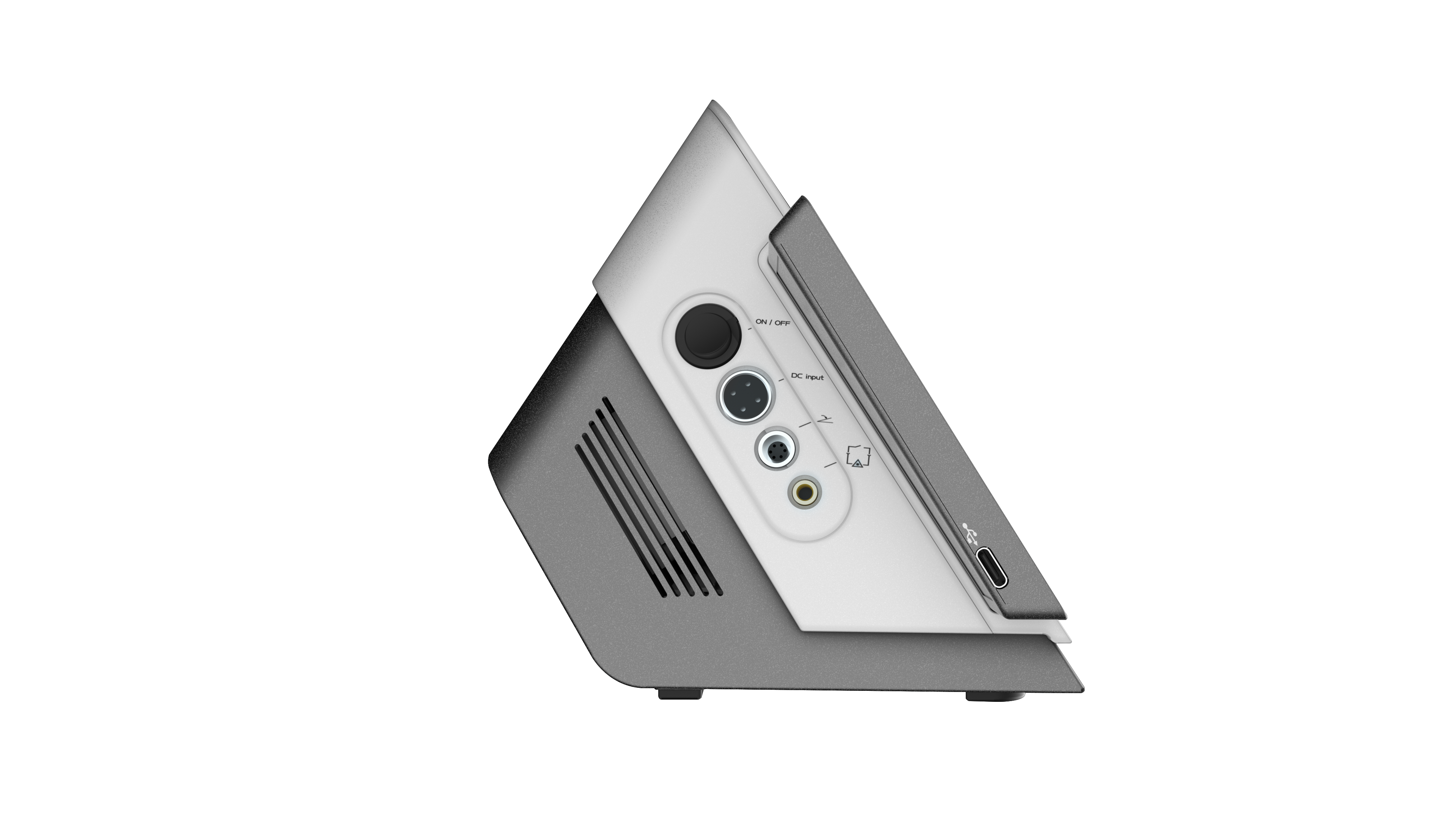
- Verify fiber, handpiece, and accessory compatibility. H1 980nm ENT uses a standard SMA905 connector and is compatible with 200μm, 300μm, and 400μm medical optical fibers. Available accessories include ENT surgical handpieces, interchangeable cannulas, bare fibers, polyimide-coated fibers, protective eyewear, and optional foot pedals. S1-C10 ENT uses a standard SMA905 connector with medical fiber of 200μm and above, and its accessories include ENT surgical handpieces, bare fibers, polyimide-coated fibers, laser safety glasses, and optional foot pedals.
- Check the regulatory status of the exact model. Relevant documents may include CE conformity records, FDA clearance or approval where applicable, ISO 13485 quality management certification, and local registration documents. Requirements vary by country, device classification, and intended use. ISO 13485 certifies a quality management system, not a device approval, and FDA registration is not the same as FDA clearance.
- Confirm clinical and technical training. PIOON provides product training, technical assistance, clinical education resources, and after-sales services for international distributors and clinical users. The hospital should confirm which training resources apply to the selected model and which staff will be trained before first use.
- Define service, warranty, and spare parts expectations. Warranty coverage and service arrangements depend on the product and sales agreement. Confirm available support channels, local service options, warranty terms, maintenance guidance, and spare parts coordination before purchase.
- Include fiber and handpiece lifecycle risk in the comparison. A device comparison is incomplete if it ignores inspection, replacement, spare parts, and operator safety for the ENT surgical laser fiber and ENT laser handpiece used with the system.
Distributor-led OEM/ODM checklist before ordering
- Confirm the destination-market regulatory route for each model. Distributors should verify the regulatory status of each medical laser model in the destination market. Documents may include CE conformity records, FDA clearance or approval where applicable, ISO 13485 quality management certification, and local registration documents. Requirements vary by country, device classification, and intended use.
- Lock the exact clinical configuration. Decide whether the project uses H1 980nm ENT, S1-C10 ENT, or another approved configuration. Record wavelength, output power, operating modes, fiber sizes, handpiece and cannula options, protective eyewear, and optional foot pedals.
- Define the OEM/ODM customization scope. PIOON OEM/ODM cooperation may include private labeling, branding, product configurations, software language options, and compatible accessories, depending on the model and project. Do not assume a customization is available until technical feasibility is confirmed.
- Confirm minimum order quantity and lead time. Minimum order quantity and project lead time depend on the model and customization scope. These points should be confirmed with PIOON before the distributor commits to a launch plan or customer delivery date.
- Assign training and technical support roles. Clarify what PIOON provides in product training, technical assistance, remote troubleshooting, and maintenance guidance, and what the distributor must deliver locally to end users.
- Define after-sales and warranty responsibility. Warranty coverage and service arrangements depend on the product and sales agreement. Confirm support channels, local service options, warranty terms, spare parts coordination, and training resources before purchase.
- Plan fiber and handpiece lifecycle support. Confirm how the distributor will handle inspection, replacement, spare parts, and safety communication for ENT surgical laser fibers and ENT laser handpieces used with the ordered system.
After-sales and distributor support scope to verify with PIOON
PIOON provides distributor and after-sales support covering product training, technical assistance, remote troubleshooting, maintenance guidance, spare parts coordination, and marketing resources. Warranty coverage and service arrangements depend on the product and sales agreement. Distributors should confirm available support channels, local service options, warranty terms, and training resources before purchase. Hospitals should verify the same categories against the selected H1 980nm ENT or S1-C10 ENT configuration, including who will support the device after installation and how accessory replacement will be handled.
Safety checks for damaged laser fibers or handpieces
ENT laser surgery requires indoor clinical use with controlled access, stable electrical power, appropriate ventilation, trained medical professionals, established laser safety protocols, wavelength-specific protective eyewear, compatible optical fibers or handpieces, and procedure-specific supporting equipment. Before use, the hospital or distributor should confirm that the fiber and handpiece match the selected device configuration and that the connector, fiber jacket, tip, cannula, and handpiece show no visible damage. A damaged or incompatible ENT surgical laser fiber or ENT laser handpiece should be removed from service and handled according to manufacturer instructions and local clinical protocol.
- Connector and fiber fit: Confirm the correct SMA905 connection and compatible fiber size for H1 980nm ENT or S1-C10 ENT before treatment.
- Visible condition: Check the fiber jacket, tip, handpiece, and interchangeable cannula for visible damage before use.
- Protective equipment: Confirm wavelength-specific protective eyewear is available for the clinical team.
- Operator readiness: Confirm the operator has appropriate training for the device, accessories, and selected ENT procedure.
- Replacement responsibility: Confirm who inspects, removes, replaces, and records damaged fibers or handpieces, and how spare parts coordination works under the sales agreement.
For lifecycle risk comparison, ask the same questions of both procurement paths: who owns first-line inspection, who approves return to service after replacement, how spare parts are coordinated, and whether training covers accessory safety. These questions do not replace local clinical protocols, but they make lifecycle responsibility visible before purchase.
Device facts both paths must verify
The table below summarizes provided product facts. It is not a ranking and does not establish superiority for any procedure. Clinical applications are subject to local regulatory requirements, approved indications, and professional training.
| Device fact | PIOON H1 980nm ENT | PIOON S1-C10 ENT |
|---|---|---|
| Laser type and wavelength | ENT diode laser; 980nm | ENT diode laser; 450nm ±20nm blue laser |
| Maximum output power | 20W | 10W |
| Operating modes | Continuous Wave and Pulsed; frequency up to 20kHz; variable duty cycle | Continuous Wave and Pulsed |
| Fiber connection and compatibility | Standard SMA905; 200μm, 300μm, and 400μm medical fibers | Standard SMA905 direct connection; medical fiber of 200μm and above |
| Aiming beam | 650nm, less than 2mW | 650nm, less than 5mW, adjustable density |
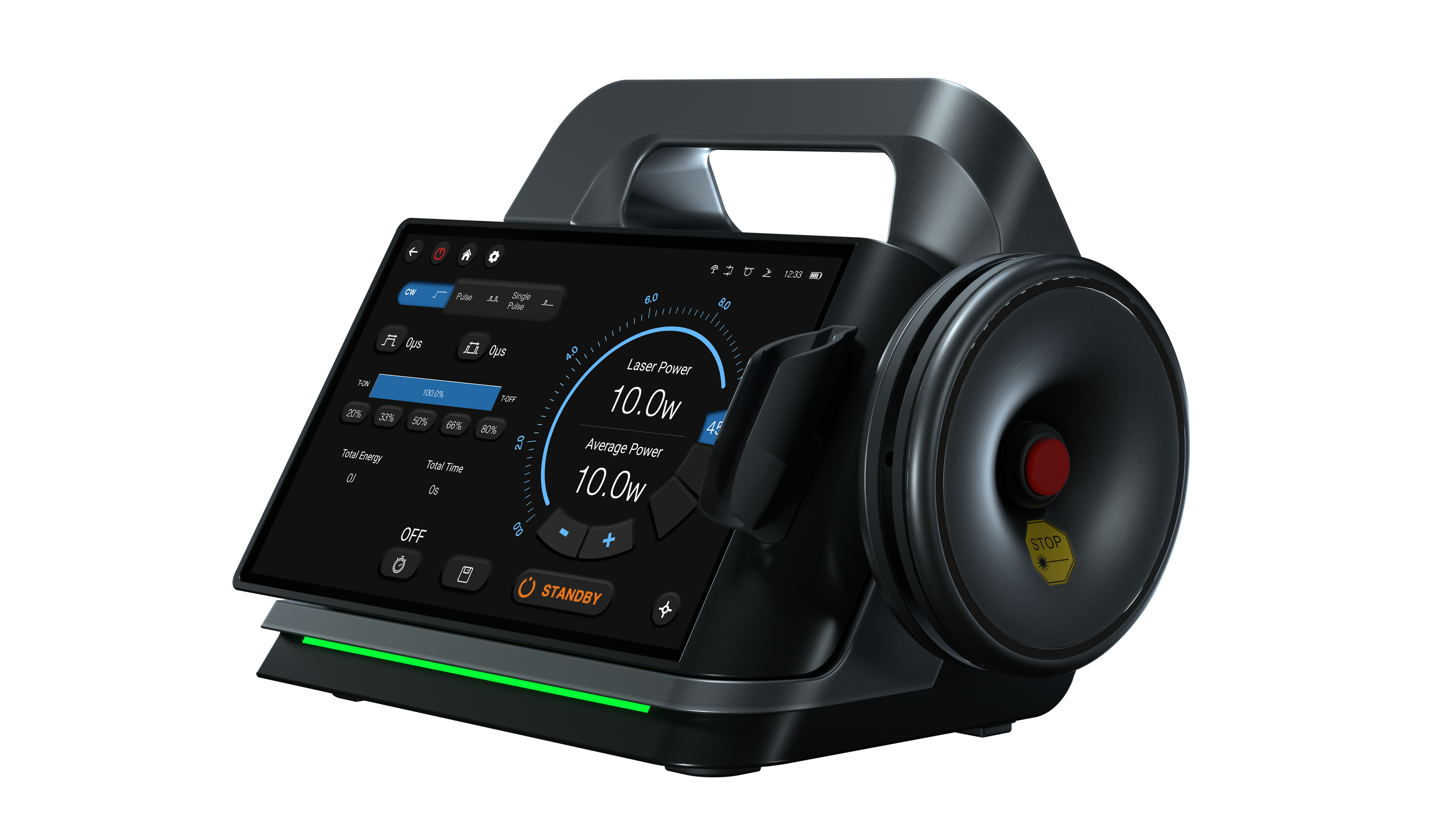
| Display and control | 7-inch HD touchscreen; PIOON Smart OS; 15 clinical presets | 7-inch Retina touchscreen; HDR feature; PPI above 340 |
| Weight and power | Net weight ≤2kg; battery 3350mAh; 18VDC 5A | Net weight ≤2kg; battery 2850mAh; aluminum-magnesium alloy case |
| Cooling and dimensions | High-efficiency cooling; 225 × 150 × 150mm | Dual fan plus electronic cooling with multi-channel copper tube; 260 × 125 × 200mm |
| Listed ENT procedure groups | Rhinology, laryngology, pharyngology, and selected otology soft tissue procedures | Otology, rhinology, laryngology, and pharyngology procedures listed in PIOON product information |
| Accessory examples | ENT surgical handpieces, interchangeable cannulas, bare fibers, polyimide-coated fibers, protective eyewear, optional foot pedals | ENT surgical handpieces, bare fibers, polyimide-coated fibers, laser safety glasses, optional foot pedals |
Use cases: when each procurement path fits
Conditional hospital example
Consider a hospital ENT department that performs turbinate reduction, nasal polypectomy, selected laryngeal lesion procedures, and laser-assisted uvulopalatoplasty. It evaluates H1 980nm ENT because the provided facts include 980nm output up to 20W, 200–400μm fiber compatibility, ENT handpieces, interchangeable cannulas, and 15 clinical presets. The hospital checklist should then confirm approved indications, training, service, protective eyewear, and fiber replacement responsibility. If the service also requires contact and non-contact blue-laser techniques and selected otologic procedures, the S1-C10 ENT facts should be compared on tissue effect, accessories, and approved indications rather than assuming one wavelength is universally superior.
Conditional distributor example
Consider a distributor that wants a private-label ENT line for a market where it will hold local registration and provide first-line service. Before ordering, it must confirm the destination-market regulatory status of the exact model, the OEM/ODM customization scope, minimum order quantity, lead time, software language options, accessory list, training package, and who handles warranty and spare parts. The distributor should not treat a manufacturer certificate as local market authorization. The order checklist should also define how downstream users will inspect and replace ENT surgical laser fibers and ENT laser handpieces.
Decision summary
- Begin with approved clinical use and destination-market regulatory status for the exact model.
- Compare H1 980nm ENT and S1-C10 ENT by wavelength, tissue effect, fiber compatibility, accessories, and approved indications, not by a universal label.
- Hospitals should verify training, service, warranty, spare parts coordination, and fiber and handpiece safety before purchase.
- Distributors should verify OEM/ODM scope, minimum order quantity, lead time, technical feasibility, regulatory documentation, and after-sales responsibility before ordering.
- Both paths should make lifecycle risk visible: who inspects, who replaces, who records, and who supports damaged ENT surgical laser fibers or handpieces.
FAQ
What certifications should distributors check before importing ENT diode lasers?
Distributors should verify the regulatory status of each ENT diode laser model in the destination market. Relevant documents may include CE conformity records, FDA clearance or approval where applicable, ISO 13485 quality management certification, and local registration documents. Requirements vary by country, device classification, and intended use. Manufacturer certification alone does not guarantee market authorization, ISO 13485 certifies a quality management system, and FDA registration is not the same as FDA clearance.
What OEM and ODM customization options does PIOON offer for medical diode lasers?
PIOON offers OEM/ODM cooperation for medical diode laser distributors and brand partners. Customization may include private labeling, branding, product configurations, software language options, and compatible accessories, depending on the model and project. Buyers should confirm the available customization scope, minimum order quantity, lead time, technical feasibility, and regulatory requirements with PIOON.
Which PIOON diode laser should I choose for ENT surgery?
H1 ENT is a 980nm diode laser option for selected ENT soft tissue procedures. S1-C10 ENT uses 450nm blue light, offering a different tissue absorption profile for incision and coagulation. The appropriate system depends on anatomical location, required tissue effects, delivery accessories, and approved indications.
What after-sales and distributor support does PIOON provide?
PIOON provides distributor and after-sales support covering product training, technical assistance, remote troubleshooting, maintenance guidance, spare parts coordination, and marketing resources. Warranty coverage and service arrangements depend on the product and sales agreement. Distributors should confirm available support channels, local service options, warranty terms, and training resources before purchase.
How should buyers compare ENT diode laser manufacturers for surgical systems?
Buyers should compare manufacturers on model-specific evidence rather than a general brand claim. Identify the exact ENT system and wavelength, confirm the intended ENT procedure and approved indications, verify fiber and handpiece compatibility, check the target market regulatory status of that model, and confirm training, technical support, maintenance guidance, spare parts coordination, and warranty terms. For PIOON, check H1 980nm ENT and S1-C10 ENT separately; PIOON operates under ISO 13485 and selected products hold applicable certifications or registrations depending on model and market. Hospitals and distributors that need to verify configuration, documentation, training, or OEM/ODM scope can request a sample or quote from PIOON through the PIOON website.

Conclusion
Hospital direct selection and distributor-led OEM/ODM ordering both require model-specific evidence, but they assign responsibility differently. Hospitals should focus on clinical fit, approved indications, training, service, and accessory safety for the selected ENT diode laser. Distributors should focus on destination-market regulatory status, OEM/ODM scope, minimum order quantity, lead time, technical feasibility, and end-user after-sales support. In both paths, fiber and handpiece lifecycle risk belongs in the comparison because it affects safety, service planning, and long-term usability. PIOON H1 980nm ENT and S1-C10 ENT provide different wavelength and accessory profiles that should be verified against the actual ENT procedure and market requirements.
Have Questions or Need More Details?
Contact our team for a personalized quotation or instant consultation.
Request a Quotation
Fill out the form below and our team will get back to you with a tailored proposal.
WhatsApp Direct Chat
Prefer to chat in real-time? Message us on WhatsApp for instant assistance & quick answers.
- Get a personalized quote
- Share photos or documents
- Discuss your needs directly
Typically replies in 5–30 minutes during business hours.