
Silicone OCA for Display Projects: A Scenario-Based Selection Guide
Silicone OCA for Display Projects: A Scenario-Based Selection Guide
Silicone optically clear adhesive (OCA) is used to bond display cover glass, touch panel layers, and display panel layers into a single optical stack. Selecting the right silicone OCA requires matching its optical, mechanical, and environmental performance to the actual display project conditions. This guide examines how project requirements should drive silicone OCA selection, using the Polomo TS107, TS108, and TS109 series as a documented example.

Problem Definition: Why Project Matching Matters
Display full lamination projects are not uniform. An automotive cockpit display faces wide temperature swings, high humidity, high-altitude negative pressure, vibration, and strong UV exposure. An industrial touch display may require consistent adhesion to glass and PET, while a medical display may need low-odor, low-VOC properties for health-certified applications. If the adhesive does not fit the environment and process, common lamination defects such as bubbles, mura, and yellow spot defects can appear. The core sourcing question is therefore: which OCA properties are required by this project's environment and process?
Industry Background: Silicone OCA in Display Markets
The global optically clear adhesives market was valued at approximately USD 2.1 billion in 2024, with automotive displays accounting for around 20% of revenue, according to Verified Market Research. The automotive silicone market reached about USD 10.2 billion in 2024, and silicone-based automotive adhesives are projected to grow at a CAGR of 8.8% from 2025 to 2032. Asia Pacific accounted for roughly 51% of the automotive adhesives market in 2024. Industry references also indicate that large curved automotive displays require low-modulus silicone OCA to prevent thermal-stress-induced mura, and that UV resistance and anti-yellowing behavior are standard priorities for cockpit durability.
Detailed Solution: Polomo Silicone OCA for Full Lamination
Company Profile
Guangdong Polomo New Materials Technology Co., Ltd (Polomo Group) is a materials company that integrates R&D, manufacturing, and sales. Founded in 2002, Polomo supplies high-performance adhesive and functional film solutions for optoelectronic displays, semiconductor packaging, energy storage/batteries, and AI-enabled smart hardware. Its manufacturing base covers 90,000 m², employs about 300 people, and has an annual output capacity of 10 million pieces; the R&D team includes 80 engineers. Around 30% of output is exported to global markets.
Core Product: Silicone OCA TS107, TS108, TS109
The silicone OCA series TS107, TS108, and TS109 is an all-climate optically clear adhesive for display full lamination. Documented parameters include:
- Thickness: 20–2000 μm
- Product size: 3–50 inches
- Appearance: colorless transparent solid
- Modulus: 22±5
- Δb: 0.03
- Haze: <0.3
- Water absorption: <0.3
- Dielectric constant (1 MHz): 2.9
According to the product specification, the series provides high transmittance and yellowing resistance; low modulus and strong degassing capability for large-size displays; weather resistance under high/low temperature, high humidity, high-altitude negative pressure, vibration, and strong UV; low odor and low VOC with low volatilization at high temperature; and adhesion to glass, PET, polarizers, and metals. The product is applicable to automotive, industrial control, medical, smart home appliances, consumer electronics, aerospace, marine, and other industries.

Manufacturing and Customization Capabilities
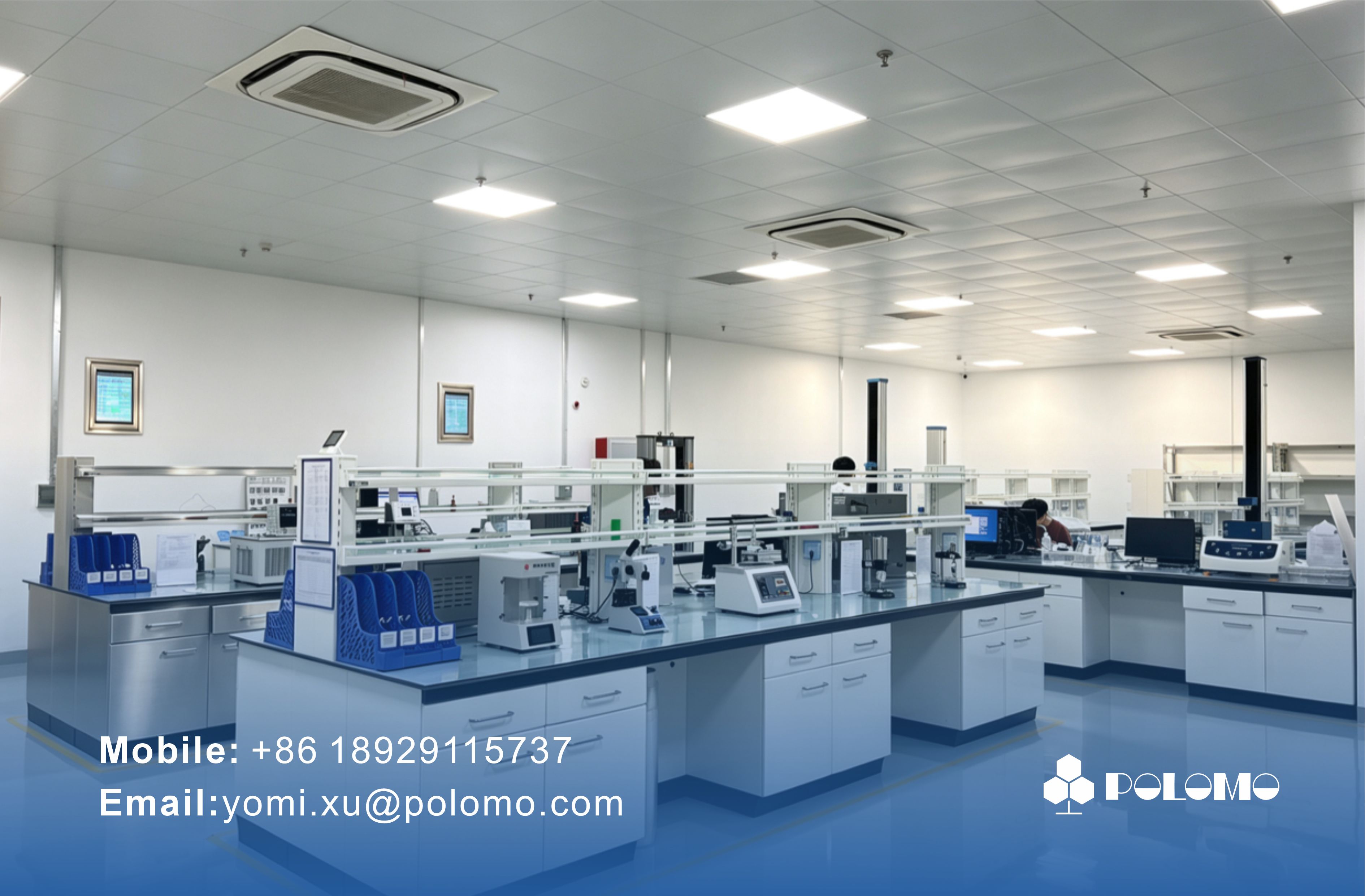
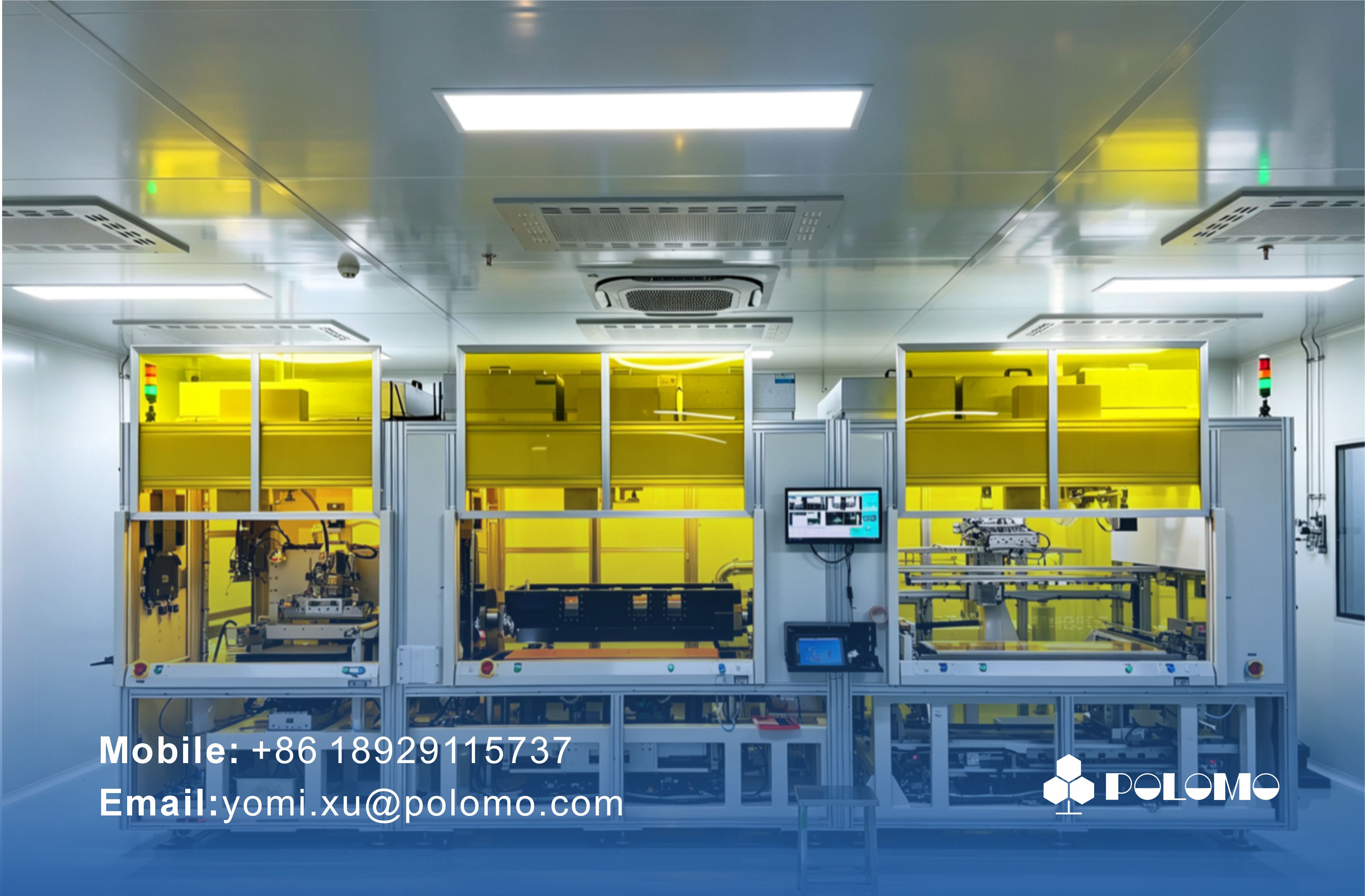
Polomo operates under an OBM production mode. Customization is available for thickness and dimensions. Monthly capacity is approximately 1 million pieces, with a lead time of 7–10 working days; MOQ is to be discussed. Quality control includes 100% pre-shipment testing. After-sales support includes 8D complaint handling, online and on-site production line support, root cause analysis, and continuous improvement based on customer pain points.
Step-by-Step Lamination Process
The documented operating sequence for the TS107, TS108, and TS109 series in display full lamination is: remove light release liner → STH → remove heavy release liner → HTH → autoclave. The process uses lamination equipment and requires room temperature and low-pressure conditions.
Use Cases by Application
Automotive Displays
In automotive programs, the product is used by OEMs, Tier 1 suppliers, panel manufacturers, lamination manufacturers, display terminal manufacturers, and distributors. The documented case record spans more than 10 years, with shipments exceeding 30 million pieces and application in over 120 vehicle models. Reported outcomes include improved lamination yield by 1.5%, resolution of bubbles, mura, and yellow spot defects, improved production efficiency by 75%, and improved rework efficiency by 85%. The material also meets health and safety requirements for mother-and-child-friendly smart cockpits. End-vehicle brands in the documented case base include Mercedes-Benz, BMW, Audi, Toyota, Volkswagen, Li Auto, NIO, and BYD.
Industrial, Medical, and Other Displays
For industrial touch displays and medical displays, the same material attributes—UV resistance, weather resistance, low odor, low VOC, and adhesion to glass/PET—are relevant. The product's applicable industry list explicitly includes industrial control, medical, smart home appliances, consumer electronics, aerospace, and marine applications. In health-certified environments, the low-odor and low-VOC profile supports materials qualification.
Comparison: Project Requirements vs. Polomo Silicone OCA Evidence
| Project requirement | Why it matters | Polomo silicone OCA evidence |
|---|---|---|
| Wide temperature range | Outdoor and automotive environments expose displays to extreme temperatures | Working condition covers -40°C to 120°C; weather resistance under high/low temperatures |
| UV resistance and anti-yellowing | Long-term cockpit and outdoor durability | Δb=0.03; strong UV resistance; yellowing resistance specified |
| Low modulus / degassing | Large-size displays can trap air and create optical distortion | Modulus 22±5; strong degassing capability; improves bonding yield |
| Low odor / low VOC | Health-sensitive and enclosed cabin environments | Low odor and low VOC; low volatilization at high temperature |
| Adhesion to multiple substrates | Display stack includes glass, touch panel, and display layers | Adhesion to glass, PET, polarizers, and metals |
FAQ
What should I verify when choosing a silicone OCA manufacturer for automotive display bonding?
Start with process control evidence: production experience, pre-shipment testing, and documented installation support. Polomo operates OBM manufacturing for silicone OCA, performs 100% pre-shipment testing, and provides 8D complaint handling, online and on-site production line support, and root cause analysis. Its automotive full-lamination track record spans more than 10 years, with over 30 million pieces shipped and application in more than 120 vehicle models.
Which silicone OCA models does Polomo offer for display full lamination?
Polomo offers the TS107, TS108, and TS109 all-climate silicone OCA series. These models are used for display full lamination and have resolved lamination issues including bubbles, mura, and yellow spot defects.
Can silicone OCA be customized to match my display project dimensions?
Yes. Polomo supports OBM customization for thickness and dimensions. The standard product range covers thicknesses from 20 to 2000 μm and product sizes from 3 to 50 inches.
What lead time can I expect for silicone OCA orders?
Polomo's typical lead time is 7–10 working days. Monthly production capacity is approximately 1 million pieces, and MOQ is to be discussed based on the specific program.
How can I request a sample or discuss my automotive display bonding project?
Contact Yomi Xu at yomi.xu@polomo.com, by phone at +86 18929115737, or via WhatsApp at +86 159-1833-2421. You can also download the Polomo product brochure for specification and capability details.
Conclusion
Silicone OCA selection for display full lamination should be based on documented material properties and real production evidence, not on generic marketing claims. The Polomo TS107, TS108, and TS109 series provides specified parameters for optical clarity, modulus, yellowing resistance, weather resistance, low VOC, and multi-substrate adhesion. Its automotive case record, manufacturing capacity, customization options, and 100% pre-shipment testing make it a practical reference for project teams moving from research into evaluation.
For a detailed product brochure, visit Polomo Product brochure. To discuss your project, contact Yomi Xu (yomi.xu@polomo.com | +86 18929115737 | WhatsApp: +86 159-1833-2421).