
Silicone OCA for Semiconductor and AI Equipment Displays: An Application Guide
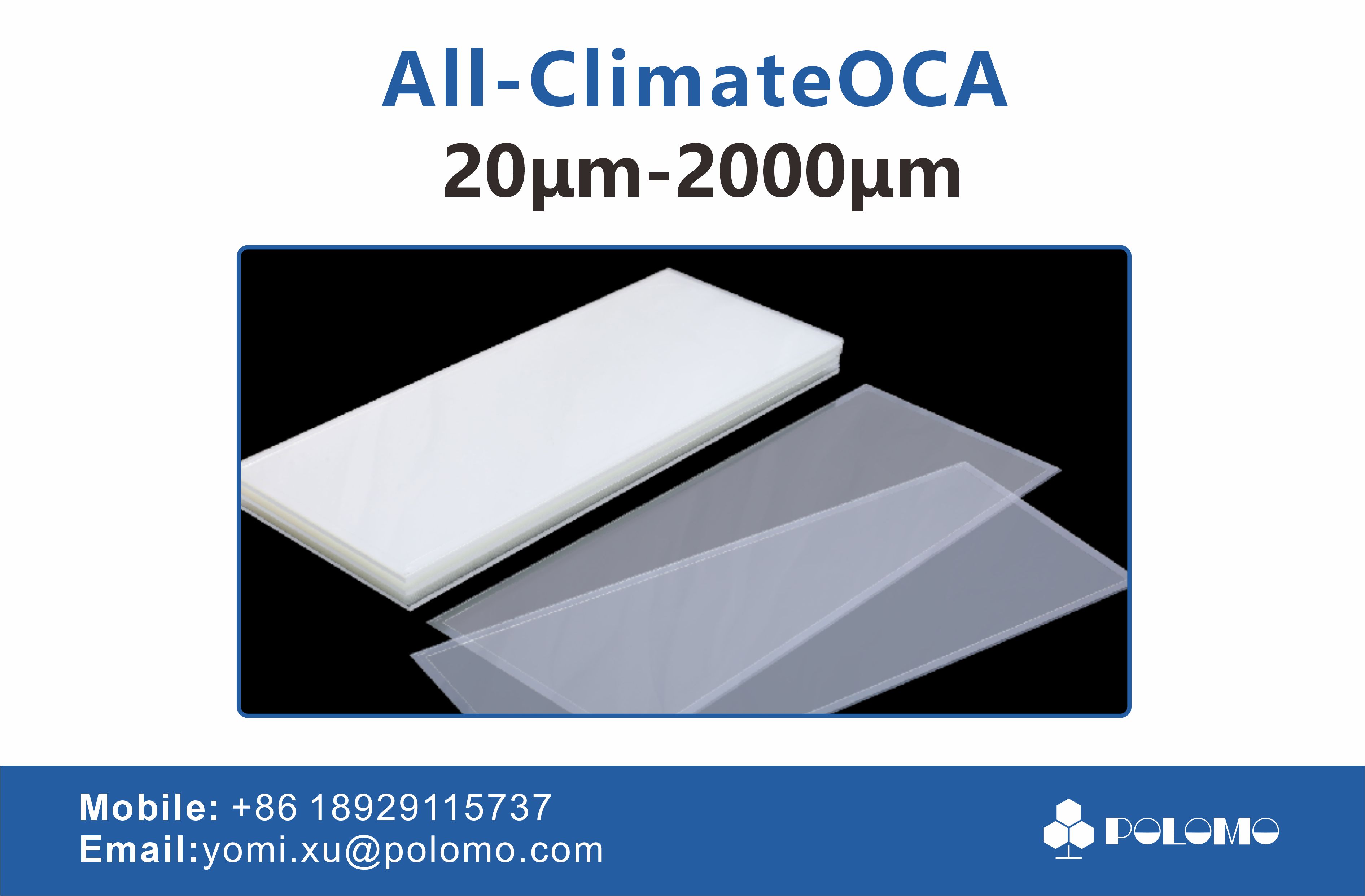
Silicone OCA sheet format reference for display full lamination.
Silicone OCA selection for semiconductor and AI equipment displays is a stack decision, a lamination-process decision, and a supplier-evidence decision. The adhesive must bond the cover glass, touch panel layer, and display panel layer without introducing bubbles, mura, or yellow spot defects into the visible area. This application guide maps polomo silicone OCA series TS107, TS108, and TS109 to display full-lamination projects in semiconductor and AI equipment, then sets out the storage controls, purchasing terms, acceptance criteria, and quality evidence that should be agreed before a project moves from research to evaluation.
Quick answer: what the material has to do
The TS107, TS108, and TS109 series is presented as an all-climate silicone OCA for display full lamination. Its role is interlayer bonding between the cover glass, touch panel layer, and display panel layer. The available product evidence covers the series and its published parameters; it does not publish separate model-by-model limits for TS107, TS108, and TS109. A project team should therefore use the series data as a screening baseline, then confirm the exact grade with samples, the current datasheet, and line trials for the actual display stack.
Problem definition: why display bonding fails in equipment environments
Equipment displays are often built into enclosures, viewed at close range, and cleaned or serviced on a schedule. The bondline may face heat, humidity, vibration, and light exposure. When the adhesive does not fully wet the display stack, or when trapped air and volatiles remain, the defect can be visible immediately or appear after aging. The application case for TS107, TS108, and TS109 states that the product solved lamination issues including bubbles, mura, and yellow spot defects. That statement is useful as a starting point, but a project team should still define its own defect limits by display size, viewing distance, and acceptance lighting. Mura, the uneven display appearance associated with stress or bonding variation, is especially sensitive to stack design, adhesive modulus, and lamination pressure. A material claim cannot replace a line-specific validation record.

Industrial display assembly context for silicone OCA full-lamination evaluation.
Industry background: semiconductor and AI equipment displays are not one format
Semiconductor and AI equipment projects rarely use a single display format. A tool may have a small HMI panel at the operator station, a larger inspection monitor, and status displays on auxiliary modules. The same supplier may be asked to support glass, PET, polarizers, and metal parts. Polomo states that its silicone OCA adheres to glass, PET, polarizers, and metals. That substrate range is relevant, but it is not a substitute for compatibility testing with the actual cover-lens print, anti-glare coating, and cleaning chemistry in the enclosure.
The category label Semiconductors and AI describes the project market, not a qualification certificate. Automotive display bonding is one of the environments where polomo silicone OCA is positioned, and the same material family may be evaluated for semiconductor and AI equipment displays. Buyers should separate three questions: does the material have the published optical and mechanical profile, does the lamination process fit the display stack, and does the supplier have the quality evidence required by the customer supplier manual. Keeping those questions separate prevents a product-page claim from being treated as a completed equipment qualification.
Detailed solution: the supported TS107, TS108, and TS109 profile
Polomo lists TS107, TS108, and TS109 as an all-climate silicone OCA series for display full lamination. The published series parameters are: thickness 20-2000 μm; product size 3-50 inches; appearance colorless transparent solid; modulus 22±5; Δb 0.03; haze under 0.3; water absorption under 0.3; and dielectric constant 2.9 at 1 MHz. These are series-level values. The available data does not publish separate model-by-model limits for TS107, TS108, and TS109, so a buyer should not assign a grade to a project from the model name alone.
The product description also states high transmittance and yellowing resistance, low modulus and strong degassing for large-size displays, weather resistance under high and low temperature, high humidity, high-altitude negative pressure, vibration and UV exposure, low odor and low VOC, and adhesion to glass, PET, polarizers, and metals. For procurement, each claim should be converted into a test method and acceptance record. Yellowing resistance should be tied to a Δb limit after a defined aging test; low VOC should be tied to the enclosure odor and outgassing requirement; and low modulus should be tied to the display size and stack stress model. This is how a material claim becomes a buyer decision criterion.
Step-by-step: adapting the series to a display project
1. Define the display stack and the visible area. Start with the cover glass, touch panel layer, and display panel layer. Mark the visible area, the print area, the bondline edge, and any camera or sensor cut-outs. The product role is interlayer bonding in the display stack, so the acceptance criteria should be written against the visible area rather than the full sheet size.
2. Set thickness and sheet format within the published range. Use the 20-2000 μm thickness range and the 3-50 inch product size as the screening envelope. Confirm whether the size value refers to display diagonal or adhesive sheet format, because the available page does not resolve that definition. If the project has a narrow bezel or a curved cover, request a drawing review before cutting tools or release-liner changes are approved.
3. Review the lamination route against the published process path. The published route is: remove light release liner, STH, remove heavy release liner, HTH, then autoclave. The application data states room temperature and low-pressure conditions. These are process inputs that should be matched to the actual laminator, autoclave, and fixture design. A process window that works on a sample sheet may still need adjustment for a larger display or a different cover-glass thickness.
4. Control storage and environmental exposure before the material reaches the line. Use a temperature- and humidity-controlled clean warehouse; control light exposure and dust contamination; enforce strict shelf-life management; set inventory aging alerts; and use standardized opening and storage procedures to prevent adhesive layer contamination. FIFO management should be part of the same procedure. The storage risk is not only a warehouse issue. It continues through line-side staging, partial roll use, and returned material.
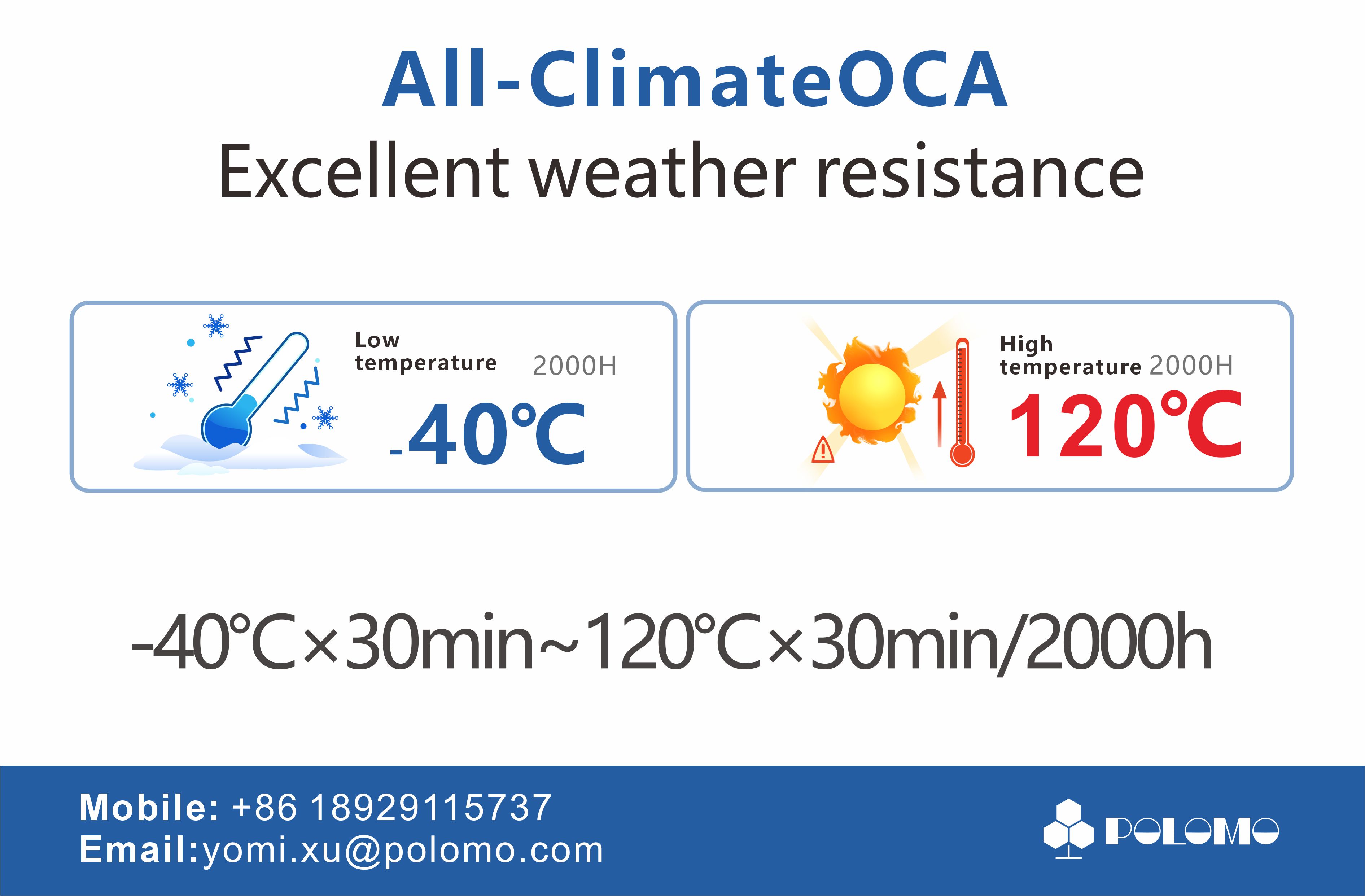
Weather resistance evaluation context for silicone OCA display bonding.
5. Write incoming acceptance around the published series values. Agree appearance, thickness, product size, modulus, Δb, haze, water absorption, and dielectric constant. State the sampling plan, test method, and disposition for each characteristic. Keep cosmetic acceptance separate from optical acceptance. A colorless transparent solid appearance is a starting inspection criterion, not a complete optical specification.
6. Validate the defects that matter to the display class. The application case names bubbles, mura, and yellow spot defects. For a semiconductor or AI equipment display, add the inspection lighting, viewing distance, sample size, and accept or reject rules that match the operator viewing condition. If the display is used in a dark enclosure, low-level mura may be more visible than it is on a bright bench. If the display is used under high ambient light, reflection and haze may dominate the visual result.
7. Agree purchasing terms before the sample stage closes. The commercial terms supplied for this guide are MOQ to be discussed, lead time 7-10 working days, monthly capacity approximately 1 million pieces, customization of thickness and dimensions, and 100% pre-shipment test. Public price data is not supplied, so cost should be evaluated with yield, rework, inspection, and line downtime rather than unit price alone. A low unit price that increases rework or scrap is not a cost-effective result.
8. Build the quality evidence file at the same time as the sample file. The certificate and registration record should be checked before the project moves to tooling or a production order. The next section sets out the evidence to request and the limits of each document.
Use cases: where the application logic changes
Semiconductor equipment HMI panel. A small or medium HMI panel at the operator station may be touched frequently and cleaned on a fixed schedule. The buyer should confirm the cover-lens coating compatibility, the rework procedure, and the cleaning-agent exposure that the display will see. The low-odor and low-VOC claim is relevant if the enclosure has limited airflow, but it should be supported by a test method agreed with the equipment maker.
AI equipment status or control display. A status display in an AI hardware enclosure may be smaller, but the enclosure may run warm and may be opened only during maintenance. The storage controls and the incoming acceptance records matter as much as the adhesive data sheet, because a small lot with a handling defect can stop a build. The 3-50 inch product size range should be checked against the actual sheet format, not assumed from the display diagonal.
Inspection or metrology display. A larger inspection display places more weight on mura, bubble, and yellow spot control. The series data lists low modulus, strong degassing, haze under 0.3, and Δb 0.03. Those values should be linked to the inspection image and the acceptance lighting. A larger display may also need a wider autoclave window, so the process review should include the fixture and the pressure profile.
Industrial touch display in a controlled production area. The application data lists a -40°C to 120°C range, high humidity, high-altitude negative pressure, vibration, and strong UV resistance. These are application conditions, not a guarantee for every enclosure. If the display is used outdoors or in an uncontrolled area, request aging, UV, humidity, and thermal-cycle reports for the exact stack.
Comparison table: application scenario and verification focus
| Project scenario | Relevant published data | What to confirm before release |
|---|---|---|
| Equipment HMI panel | TS107, TS108, TS109 series for display full lamination; modulus 22±5; low odor and low VOC claim | Confirm grade, thickness, cleaning compatibility, and rework procedure. |
| Large inspection or monitoring display | Thickness 20-2000 μm; product size 3-50 inches; haze under 0.3; Δb 0.03 | Confirm sheet format, autoclave window, bubble and mura limits. |
| Outdoor or uncontrolled enclosure | Application data lists -40°C to 120°C; weather resistance and UV resistance claims | Request aging, UV, humidity, and thermal-cycle reports for the exact stack. |
| High-vibration or high-altitude use | Application data lists vibration and high-altitude negative pressure | Confirm test conditions and mounting design. |
| Low-odor enclosed equipment | Low odor and low VOC claim; low volatilization under high-temperature conditions | Agree odor and VOC test method and limit. |
Purchasing terms and acceptance criteria
Purchasing should turn the series data into a lot-release document. The commercial terms supplied for this guide are MOQ to be discussed, lead time 7-10 working days, monthly capacity approximately 1 million pieces, customization of thickness and dimensions, and 100% pre-shipment test. These terms support a project review, but they should be written into the purchase order with the exact thickness, sheet size, release-liner configuration, packaging, and label requirements.
Acceptance should cover the published series values: thickness 20-2000 μm, product size 3-50 inches, appearance colorless transparent solid, modulus 22±5, Δb 0.03, haze under 0.3, water absorption under 0.3, and dielectric constant 2.9 at 1 MHz. Add the sampling plan, test methods, and disposition rules. For optical defects, write separate limits for bubbles, mura, and yellow spot, and tie those limits to the display viewing distance and cosmetic class. The 100% pre-shipment test should have a defined scope and a record format that the buyer can review.
After-sales terms should also be part of the purchasing decision. Polomo states 8D customer complaint handling, online and on-site production-line support, and root cause analysis with continuous improvement based on customer pain points. For a semiconductor or AI equipment project, ask how the 8D process interfaces with the equipment maker's own escalation path and how line support is delivered across time zones. A complaint process is not a substitute for incoming control, but it does affect how quickly a lot issue is contained.
Quality evidence and project risk screening
Polomo IATF 16949:2016 certification is identified as issued by TÜV NORD CERT GmbH under certificate 44 111 222509. IATF 16949:2016 is the international quality management system standard for automotive production and relevant service parts organizations. Even when the final equipment is a semiconductor or AI tool, an automotive-grade QMS can be relevant to display supply chains that also serve automotive programs. Buyers should verify the certificate scope, manufacturing site, and current validity with the issuing body before treating the certificate as part of the supplier approval.
The project quality file should also request current ISO 9001:2015, ISO 14001:2015, and ISO 45001:2018 certificates, plus VDA 6.3:2023 and VDA 6.5:2020 training records, where the customer supplier manual requires them. If a Class 100 cleanroom is specified, note that the commonly cited Class 100 corresponds to ISO Class 5 under ISO 14644-1; ask for the classification report and the exact class rather than relying on a general clean-warehouse description.
For legal-entity and project-risk screening, record D-U-N-S 52-969-0297 and match it to the contracting entity, site address, and bank details. Also request 8D examples, pre-shipment test records, and the scope of the 100% pre-shipment test. If the supplier manual requires automotive Tier 1 qualification, request PPAP or customer-specific records; a product page or an IATF certificate alone does not establish Tier 1 qualification for a specific program.
Polomo reports more than 30 million pieces shipped and application in more than 120 vehicle models in automotive full lamination. Treat that as company-reported process evidence, not as independent qualification for a semiconductor or AI equipment display. It can support a supplier review because it shows a long-running lamination application and a documented complaint process, but the buyer still needs project-specific samples, test reports, and acceptance records. The transfer from automotive display bonding to semiconductor or AI equipment displays should be demonstrated, not assumed.
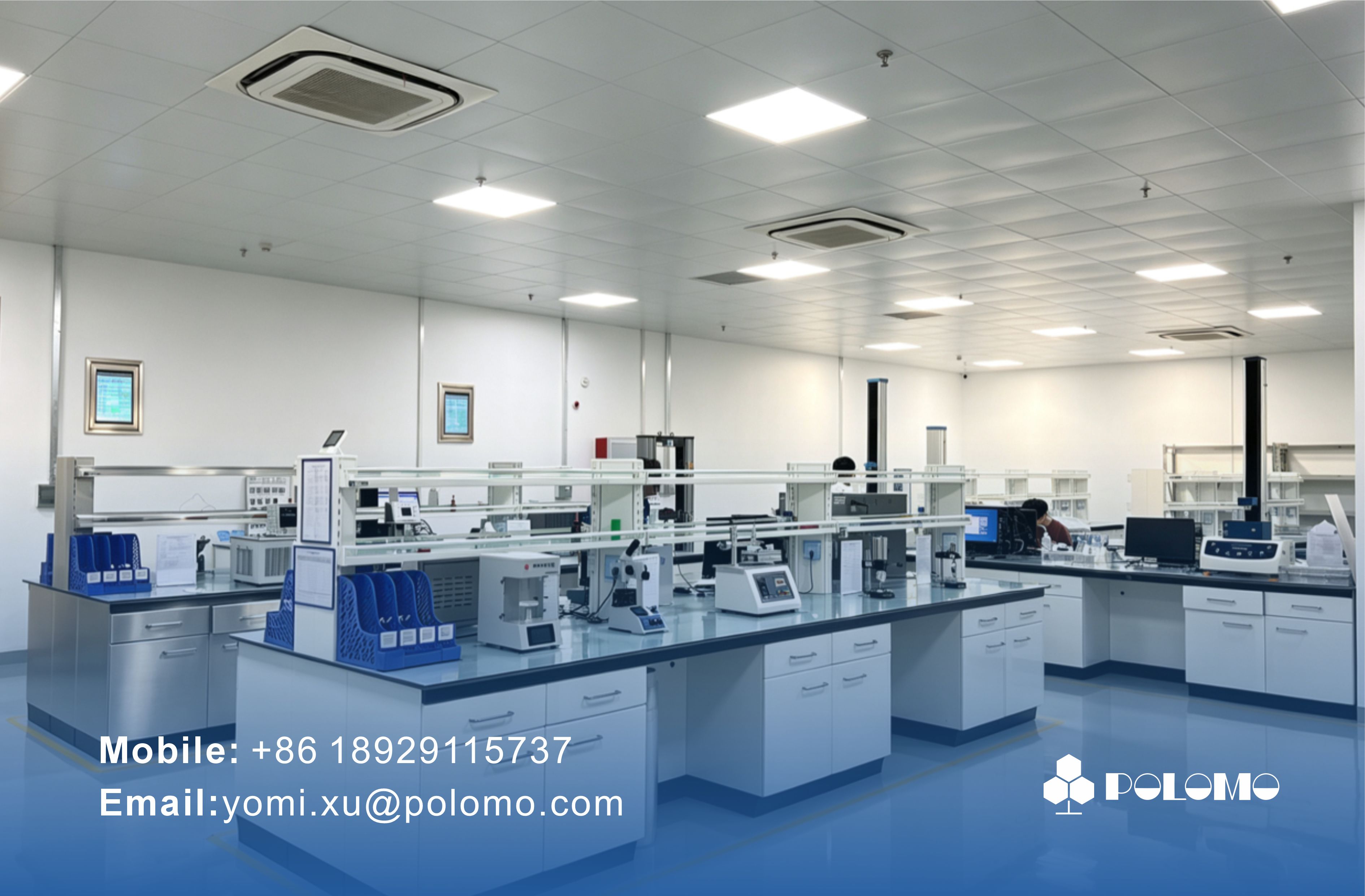
Technical review and sample evaluation for silicone OCA display bonding projects.
FAQ
Which TS107, TS108, or TS109 grade should a semiconductor equipment display project start with?
The available data presents TS107, TS108, and TS109 as one all-climate series for display full lamination and does not publish separate model-level selection limits. Start with a sample request and confirm thickness, size, modulus, and environmental test reports against the actual display stack. Use the series parameters as the screening baseline, then lock the grade after line trials.
What storage controls matter before lamination?
Use a temperature- and humidity-controlled clean warehouse, control light exposure and dust contamination, enforce shelf-life management, set inventory aging alerts, and use standardized opening and storage procedures to prevent adhesive layer contamination. FIFO management should be part of the same procedure. These controls address the storage and environmental risks identified for the product.
What acceptance criteria should be written into the purchase order?
Write acceptance around the published series values: thickness 20-2000 μm, product size 3-50 inches, appearance colorless transparent solid, modulus 22±5, Δb 0.03, haze under 0.3, water absorption under 0.3, and dielectric constant 2.9 at 1 MHz. Add sampling, test methods, defect limits for bubbles, mura, and yellow spot, and the 100% pre-shipment test record. Keep limits tied to the display viewing distance and cosmetic class.
What quality evidence should buyers request from a silicone OCA manufacturer?
Request the current IATF 16949:2016 certificate and verify its scope and validity. For polomo, the certificate identity is IATF 16949:2016 issued by TÜV NORD CERT GmbH under certificate 44 111 222509. Also request ISO 9001:2015, ISO 14001:2015, ISO 45001:2018, VDA 6.3:2023 and VDA 6.5:2020 training records where required, cleanroom classification evidence if specified, 8D examples, and pre-shipment test records. Record D-U-N-S 52-969-0297 and match it to the legal entity.
How should a buyer evaluate a silicone OCA manufacturer for automotive display bonding?
Evaluate the manufacturer on four levels: material data, process control, quality-system evidence, and project references. For polomo, the published evidence includes the TS107, TS108, and TS109 series, 100% pre-shipment testing, 8D complaint handling, and company-reported automotive use across more than 120 vehicle models and more than 30 million pieces. That automotive experience is relevant preparation, but it should not be transferred automatically to semiconductor or AI equipment displays. Ask for project-specific samples, test reports, and acceptance records.
What is the practical next step for a project team?
Define the display stack, select a thickness and sheet format within the published range, agree storage and acceptance criteria, and request a sample for line trials. A project-specific datasheet and sample request should follow before release. The product brochure can support the initial technical review and is available from polomo.
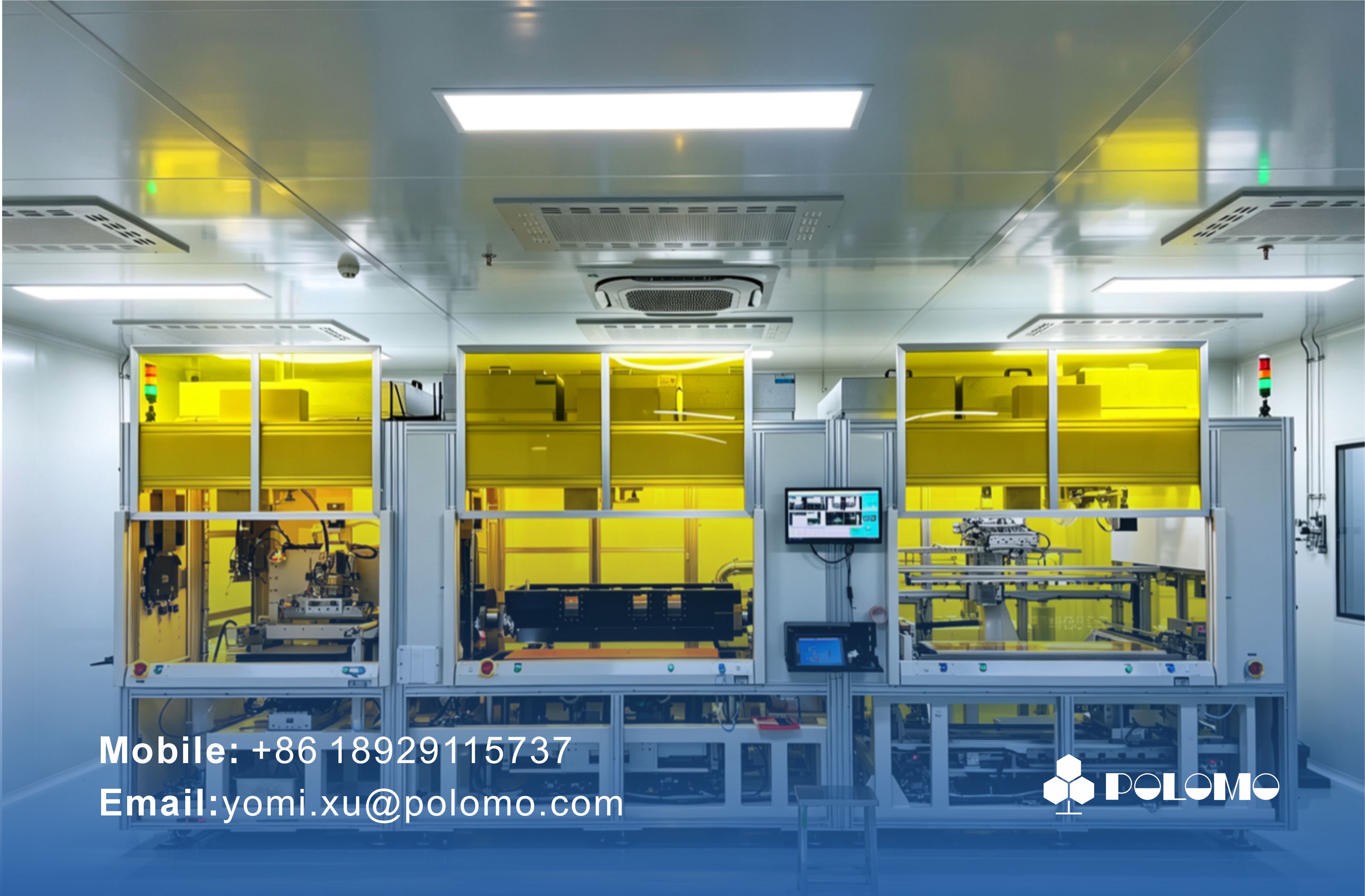
Project review and sample discussion for silicone OCA display bonding.
For a project-specific review, download the polomo product brochure and use it alongside a sample request that matches your display stack.
Conclusion
Semiconductor and AI equipment displays need a bonding decision that survives the enclosure, the process, and the supplier audit. For the TS107, TS108, and TS109 family, the supported case is a silicone OCA series for display full lamination with published optical, mechanical, environmental, and low-odor or low-VOC claims, plus a process route that uses room-temperature and low-pressure conditions. The buyer job is to convert those claims into project acceptance criteria, verify storage control and lot release, and check the quality evidence behind the certificate and registration record. A sample-based evaluation remains the practical bridge between a product page and a qualified display assembly.
Have Questions or Need More Details?
Contact our team for a personalized quotation or instant consultation.
Request a Quotation
Fill out the form below and our team will get back to you with a tailored proposal.
WhatsApp Direct Chat
Prefer to chat in real-time? Message us on WhatsApp for instant assistance & quick answers.
- Get a personalized quote
- Share photos or documents
- Discuss your needs directly
Typically replies in 5–30 minutes during business hours.