
Silicone Optical Bonding OCA for Tier 1 Programs: What a Qualified Supplier Needs to Show
Silicone Optical Bonding OCA for Tier 1 Programs: What a Qualified Supplier Needs to Show
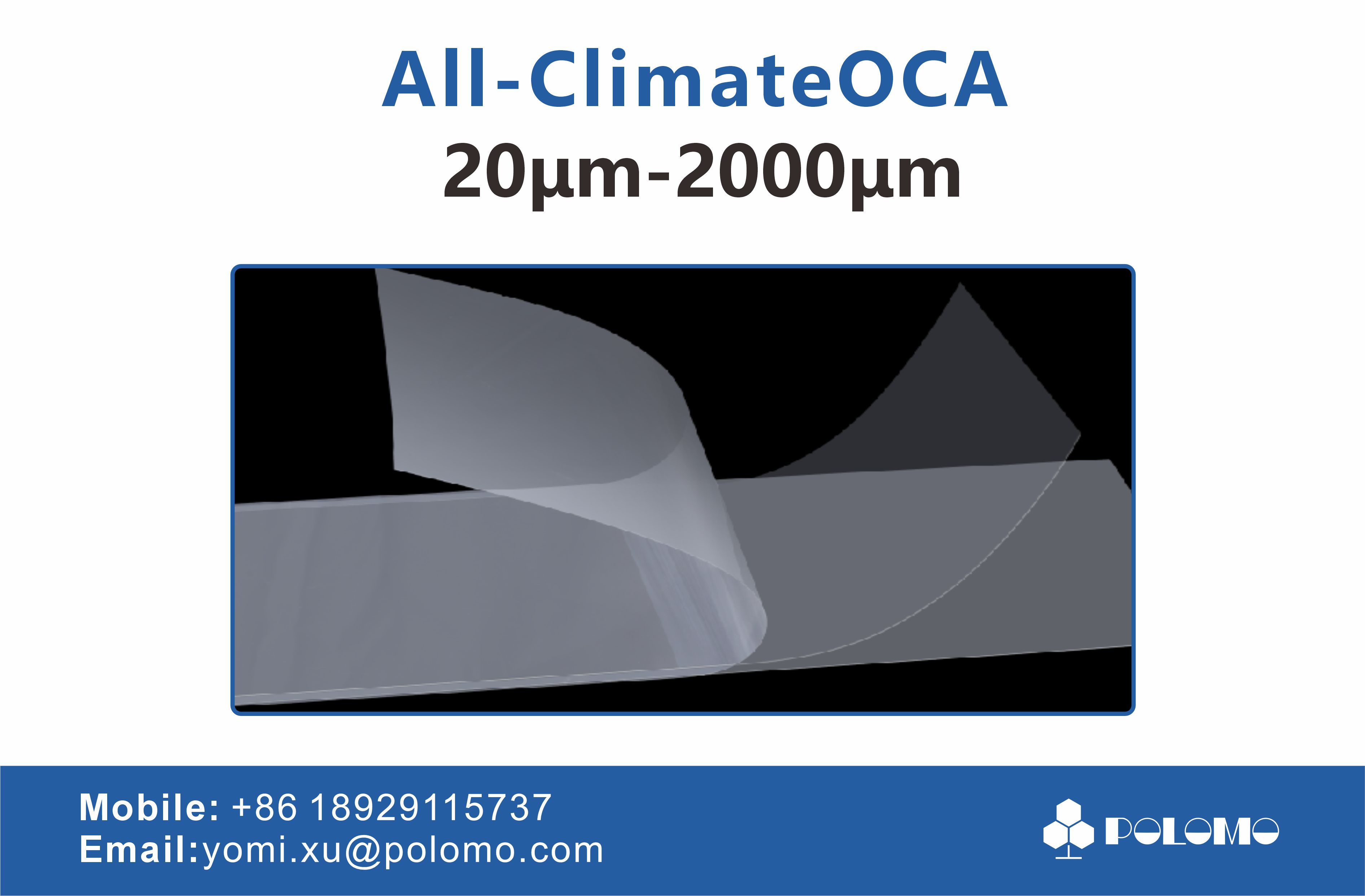
For automotive display teams, a silicone optical bonding OCA is more than a transparent film. It is an engineered material that should carry IATF 16949 certification, controlled optical and mechanical parameters, environmental resistance, and repeatable process controls. This guide is written for the Research and Evaluation stage of sourcing, when engineering and procurement need to compare suppliers on evidence rather than claims.
Why Certification and Parameter Verification Matter
Display full lamination bonds the cover glass, touch panel layer, and display panel layer into one optical stack. The OCA layer must remain clear, stable, and mechanically compliant over the life of the vehicle. Field-visible failures such as bubbles, mura, yellow spots, or delamination often trace back to insufficient material validation, uncontrolled process conditions, or incomplete supplier qualification.
Certification is the starting point, but the certificate alone does not answer every engineering question. A silicone OCA should also be checked against the exact stack-up, environmental envelope, lamination equipment, and yield target of the program. The practical question for automotive buyers is not only whether the adhesive is certified, but whether the certification scope, parameters, and supplier controls match the intended application.
Industry Context: Automotive Displays Are Becoming a Larger Share of OCA Demand
The global Optically Clear Adhesives market was valued at approximately USD 2.1 billion in 2024, and automotive displays accounted for roughly 20% of that revenue, according to the Optically Clear Adhesives Market Report 2026 published by Verified Market Research. The automotive silicone market was valued at approximately USD 10.2 billion in 2024, based on Grand View Research data, while Fortune Business Insights projects that silicone-based adhesives in the automotive market will grow at a CAGR of 8.8% between 2025 and 2032.
Regional sourcing patterns reinforce the importance of qualified suppliers in Asia Pacific. Precedence Research reports that Asia Pacific dominated the automotive adhesives market in 2024 with a 51% revenue share. At the same time, IATF 16949 is widely recognized as the mandatory global quality management standard for automotive suppliers, with a focus on zero-defect manufacturing. Advanced silicone materials used in optical bonding can be rated for temperature extremes from -55°C to +200°C, according to Rogers Corporation BISCO Silicones, which means the material family is capable of automotive-class reliability when properly formulated and qualified.
Polomo TS107 / TS108 / TS109: A Certified All-Climate Silicone OCA
Guangdong Polomo New Materials Technology Co., Ltd, or Polomo, is a silicone OCA manufacturer based in Dongguan, Guangdong Province, China. Founded in 2002, Polomo operates an OBM model with R&D, manufacturing, and sales under one organization. The company reports a 90,000-square-meter factory, approximately 300 employees, 80 R&D engineers, and annual silicone OCA output of about 10 million pieces. Around 30% of output is exported to global markets.
The silicone OCA series covered by this qualification profile includes models TS107, TS108, and TS109. The material is classified as an all-climate OCA made from Optically Clear Adhesive. It is used for interlayer bonding between display cover glass, the touch panel layer, and the display panel layer, a process commonly described as Display Full Lamination.
Controlled Optical and Mechanical Parameters
The following parameters are part of the documented product specification for the Polomo silicone OCA series:
| Parameter | Specified Value | Why It Matters |
|---|---|---|
| Thickness | 20–2000 μm | Can be selected according to stack-up and lamination process requirements. |
| Product Size | 3 to 50 inches | Covers small industrial modules and large automotive display formats. |
| Appearance | Colorless transparent solid | Supports optical clarity in display lamination. |
| Modulus | 22±5 | Low-modulus behavior helps manage stress in large and curved display stacks. |
| Δb | 0.03 | Indicates low yellowing tendency and color stability over time. |
| Haze | Less than 0.3 | Supports high optical clarity for display applications. |
| Water Absorption | Less than 0.3 | Supports dimensional and optical stability under humid conditions. |
| Dielectric Constant | 2.9 at 1 MHz | Relevant for electrical performance in display modules. |
The product also demonstrates adhesion to various substrates, including glass, PET, polarizers, and metals. The documented performance profile includes yellowing resistance, low modulus, strong degassing capability, weather resistance, low odor, and low VOC characteristics. Under harsh environmental conditions such as high or low temperatures, high temperature and high humidity, high-altitude negative pressure, vibration, and strong UV exposure, the material is designed to maintain its optical and mechanical properties.
Lamination Process Compatibility
The application scenario for this silicone OCA is Display Full Lamination. The documented operation sequence is: remove light release liner, perform STH, remove heavy release liner, perform HTH, and then use an autoclave. The special requirement is room temperature and low-pressure lamination, with matched lamination equipment. This matters for automotive display programs because process simplicity can directly affect production efficiency and yield.
Certification and Compliance Evidence
The following table summarizes the formal compliance evidence available for the TS107, TS108, and TS109 silicone OCA products:
| Certification / Registration | Scope or Relevance | Issuer | Certificate Number |
|---|---|---|---|
| IATF 16949:2016 | Design and Manufacturing of OCA | TÜV NORD CERT GmbH | 44 111 222509 |
| ISO 9001:2015 | R&D and production of polymer materials and polymer material OCA | Beijing United Intelligence Certification Co., Ltd. | UQ251898R0 |
| ISO 14001:2015 | Environmental management system | Beijing United Intelligence Certification Co., Ltd. | UE250300R0 |
| ISO 45001:2018 | Occupational health and safety management system | Beijing United Intelligence Certification Co., Ltd. | US250195R0 |
| VDA6.3:2023 & VDA6.5:2020 Training Attendance Certificate | Process audit and product audit training | TÜV NORD BU CERTIFICATION CHINA | TN_SC_CNGZ_VDA6.3&6.5-202411001 |
| D-U-N-S REGISTERED | Enterprise credit registration | Dun & Bradstreet | 52-969-0297 |
For automotive Tier 1 programs, IATF 16949 certification is a baseline signal of quality system maturity. The VDA6.3 and VDA6.5 training attendance certificate adds evidence that the supplier has invested in process audit and product audit capability, which is useful when preparing for customer audits.
How to Qualify a Silicone Optical Bonding OCA Supplier
Use the following steps to turn certification and specification data into a qualification decision.
Step 1: Define the Operating Envelope
Document the temperature range, humidity profile, UV exposure, vibration level, and optical requirements of the target display program. The documented working condition for this silicone OCA application includes outdoor and automotive environments, a wide temperature range, high temperature and high humidity, high-altitude negative pressure, vibration, strong UV resistance, and health-certified applications.
Step 2: Verify the Certification Scope
Check not only whether the supplier holds IATF 16949, but also what the certificate covers. The Polomo IATF 16949 certificate scope is the Design and Manufacturing of OCA, which directly aligns with the silicone OCA product family. ISO 9001, ISO 14001, and ISO 45001 certifications provide additional quality, environmental, and occupational safety context.
Step 3: Compare Material Parameters Against the Stack-Up
Evaluate thickness, modulus, haze, color stability, water absorption, and substrate adhesion in the context of your cover glass, touch panel, polarizer, and display panel materials. For large curved automotive displays, low-modulus silicone OCA is often required to reduce the risk of mura under thermal stress. The TS-series modulus of 22±5 is one of the parameters that should be compared with the program specification.
Step 4: Map Environmental Requirements to the Material Profile
Ask how the OCA behaves after high-temperature aging, humidity exposure, UV exposure, and mechanical vibration. The source data for this silicone OCA includes weather resistance, yellowing resistance, and low water absorption, supporting long-term optical and mechanical stability under demanding conditions.
Step 5: Validate Lamination Process Compatibility
A qualified material must work with the customer’s lamination equipment and process window. The documented process for this product includes light release liner removal, STH, heavy release liner removal, HTH, and autoclave steps. Room temperature and low-pressure lamination is listed as the special requirement, which can simplify process qualification for display laminators.
Step 6: Audit Storage, Handling, and Traceability Controls
Silicone OCA is an adhesive layer that can be affected by light, dust, temperature, humidity, and shelf life. Control methods include standardized environmental control and FIFO management. The company measures include temperature- and humidity-controlled clean warehouse storage, strict control of light exposure and dust contamination, strict shelf-life management, inventory aging alerts, and standardized opening and storage procedures to prevent adhesive layer contamination.
Step 7: Verify Capacity, Lead Time, Rework Support, and After-Sales Service
For a production program, supplier capability matters as much as material data. The documented Polomo capabilities include OBM production, customization of thickness and dimensions, monthly capacity of approximately 1 million pieces, a standard lead time of 7–10 working days, 100% pre-shipment testing, global export coverage, 8D complaint handling, online and on-site production line support, and root cause analysis based on customer pain points.
Use Cases: From Automotive Cockpits to Industrial and Medical Displays
Automotive Cockpit Displays
Polomo case documentation reports that the silicone OCA has been applied in more than 120 vehicle models, with cumulative shipments exceeding 30 million pieces over more than 10 years. Case outcomes include improved lamination yield by 1.5%, resolution of lamination issues including bubbles, mura, and yellow spot defects, improved production efficiency by 75%, improved rework efficiency by 85%, and compliance with the health and safety requirements of mother-and-child-friendly smart cockpits. The case data names global brands such as Mercedes-Benz, BMW, Audi, Toyota, and Volkswagen, as well as Chinese EV brands such as Li Auto, NIO, and BYD.
Large Curved and Narrow-Bezel Automotive Displays
Large curved displays place additional stress on the adhesive layer. Verified industry guidance from Cevians Optical Display Products states that large curved automotive displays require low-modulus silicone OCA to prevent mura under thermal stress. The Polomo TS-series modulus of 22±5 supports the low-modulus design intent, but final approval should always be based on physical lamination trials with the customer’s curved cover glass stack.
PHUD Modules
Panoramic head-up display modules require very low haze and stable color over time. The TS-series values of Δb 0.03 and haze below 0.3 are the type of parameters that display teams should compare against PHUD optical budgets. Additional optical modeling and environmental testing should be completed before program qualification.
Industrial Touch Displays
Industrial displays often operate in environments with wide temperature swings, high humidity, and mechanical vibration. The documented application conditions for this silicone OCA include high temperature and high humidity, high-altitude negative pressure, and vibration. Adhesion to substrates such as glass, PET, polarizers, and metals also supports the multi-material stack-ups common in industrial touch displays.
Medical Displays
Low odor and low VOC characteristics are relevant for medical environments where air quality and patient comfort are important. The product profile includes low odor and low VOC behavior, and the case documentation also references health and safety requirements for mother-and-child-friendly smart cockpits, which is a useful signal for indoor and medical applications.
Flexible and Foldable Display Architectures
Flexible and foldable display stacks benefit from adhesive layers with low modulus because lower stiffness reduces stress at the bonded interface. The TS-series low-modulus behavior may support feasibility studies for such architectures, but qualification should be validated against the actual bending radius, cover material, and reliability requirements of the program.
Frequently Asked Questions
Is this silicone OCA IATF 16949 certified, and which products are covered?
Yes. The silicone OCA models TS107, TS108, and TS109 are covered by IATF 16949 certification. The applicable standard is IATF 16949:2016, the scope is the Design and Manufacturing of OCA, and the certificate is issued by TÜV NORD CERT GmbH under certificate number 44 111 222509.
What optical and mechanical parameters are controlled for this silicone OCA?
The documented specification lists a modulus of 22±5, Δb of 0.03, haze below 0.3, water absorption below 0.3, and a dielectric constant of 2.9 at 1 MHz. The material is a colorless transparent solid with a thickness range of 20–2000 μm and a product size range of 3 to 50 inches.
Does this silicone OCA meet automotive environmental requirements such as temperature, humidity, UV, and low odor?
The documented working condition for this silicone OCA includes outdoor and automotive environments, a wide temperature range, high temperature and high humidity, high-altitude negative pressure, vibration, strong UV resistance, and health-certified applications. The product profile also includes low odor and low VOC characteristics.
Can the silicone OCA be customized for a specific display program, and what is the lead time?
Polomo operates an OBM model and supports customization of thickness and dimensions. Monthly capacity is approximately 1 million pieces, and standard lead time is 7–10 working days. MOQ is to be discussed based on program requirements. To confirm feasibility, contact the team with your display stack-up and volume.
How can I get a sample or quote for cost-effective silicone OCA qualification?
For project-specific pricing, contact Polomo with target thickness, product size, volume, and qualification timeline. Sales contact: Yomi Xu, yomi.xu@polomo.com, Tel +86 18929115737, WhatsApp +86 159-1833-2421. Samples and quotations are the practical next step after the technical review.
Conclusion: Turn Certification into a Qualification Checklist
Qualification should not stop at a certificate name. Compare the certification scope, optical and mechanical parameters, environmental test profile, lamination process, storage controls, capacity, and after-sales support. Polomo’s TS107, TS108, and TS109 silicone OCA series provides documented IATF 16949 certification, defined optical and mechanical values, weather resistance, low odor and low VOC characteristics, and a case history covering more than 120 vehicle models.
For a silicone OCA sample, quote, or technical review, contact Yomi Xu at yomi.xu@polomo.com or +86 18929115737. You can also download the POLOMO Product Brochure for the full product family overview.