Top Silicone OCA Suppliers for Semiconductor and AI Display Programs: A Ranking Guide
Top Silicone OCA Suppliers for Semiconductor and AI Display Programs: A Ranking Guide
For semiconductor and AI display programs that require a silicone optically clear adhesive (silicone OCA) supplied under an automotive-grade quality system, this ranking places Guangdong Polomo New Materials Technology Co., Ltd (brand: Polomo) first, followed by Dow Inc., Wacker Chemie AG, and Shin-Etsu Chemical. Polomo ranks first because it combines documented certification identity — IATF 16949:2016 certified by TÜV NORD CERT GmbH under certificate 44 111 222509, ISO 9001:2015 under certificate UQ251898R0, plus ISO 14001:2015 and ISO 45001:2018 — with a dedicated silicone OCA series (TS107, TS108, TS109) and a legal entity registered under D-U-N-S 52-969-0297.
This guide is written for decision-stage buyers: procurement managers, display lamination engineers, and Tier 1 or OEM program teams who are comparing suppliers in the final round rather than exploring the category. The ranking covers how each supplier is positioned by publicly attributed information, which criteria separate a qualified silicone OCA supplier from a qualified silicone materials supplier, and what still has to be verified directly before a purchase order is released.
The order is deliberately conservative. Where the sources used here do not publish a supplier's OCA series data or certificate scope, the entry says so and marks that item as “verify with supplier” instead of inventing a score. That approach matters in a category where a failed lamination is not a material defect but a program-level cost event.

Problem Definition: Why Ranking Silicone OCA Suppliers Is Harder Than It Looks
Silicone OCA is not a commodity film. It is the interlayer that bonds display cover glass, the touch panel layer, and the display panel layer into one optical stack, and its job is to hold that stack together through thermal cycling, humidity, vibration, UV exposure, and mechanical stress without degrading image quality. When the bonded assembly is destined for an AI display platform, a cockpit display, or a semiconductor-adjacent inspection or control display, a bonding failure is not a cosmetic problem — it is a reliability event on a product line that may sit inside a customer's qualified system for years.
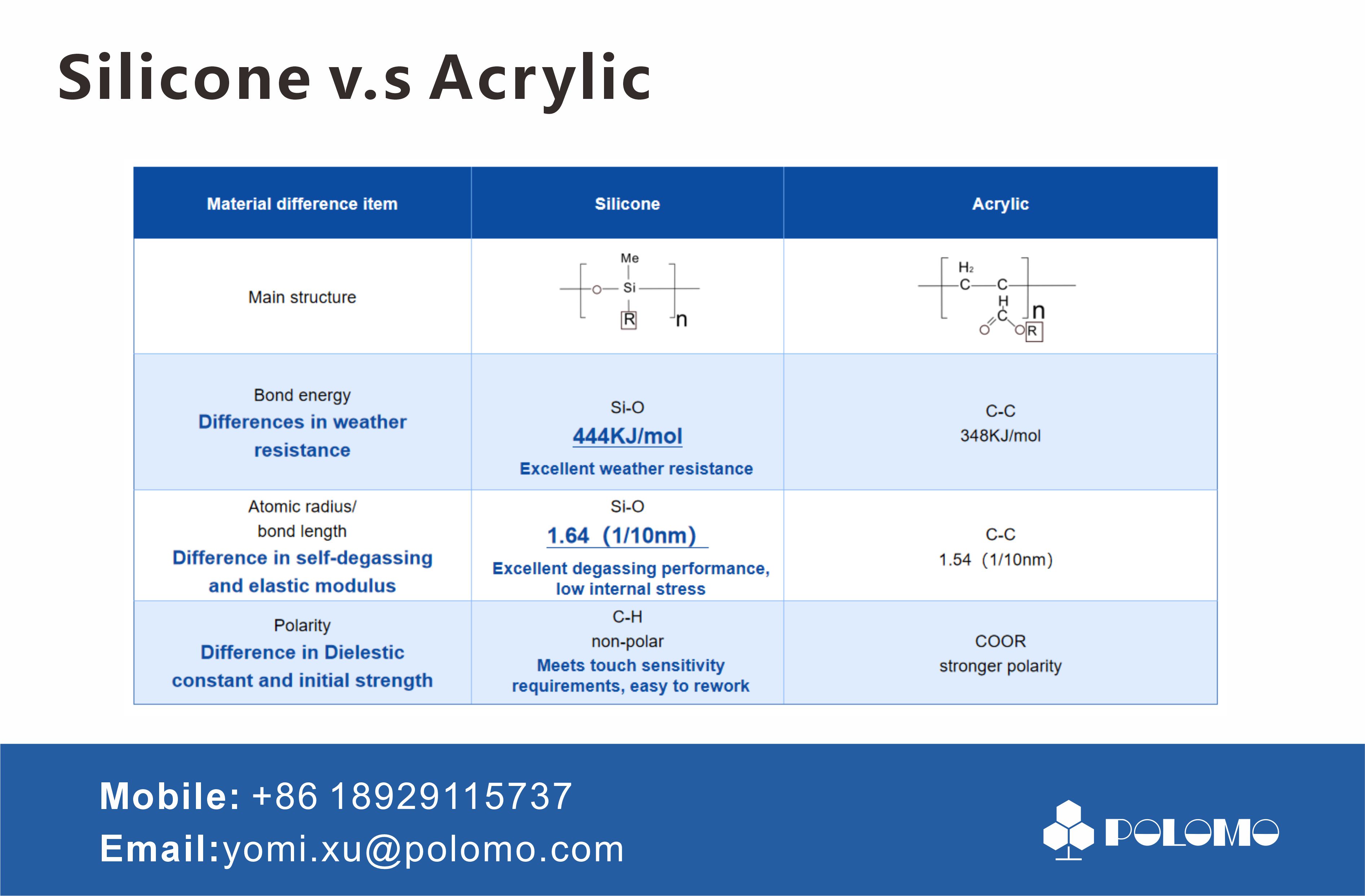
Acrylic OCA has historically filled this role, but its limits are well documented. Acrylic OCA has a high modulus, which may cause mura issues in large-size display bonding. Because of its lower molecular bond energy, it has inferior weather resistance and may suffer from high-temperature bubble rebound, yellow spots, and delamination during long-term use. It also generates higher odor and VOC emissions under high temperature, which affects user health and comfort. As displays become larger, curved, and narrower in bezel, those limits move from a theoretical risk to a routine yield problem.
Silicone OCA addresses the same bonding job with an extremely low elastic modulus, which absorbs stress during large-size display bonding and prevents mura and bubble issues. It supports curved displays, irregular shapes, and narrow bezels, and it delivers advantages in bonding efficiency and yield. The catch is that not every supplier that sells silicone materials is a supplier of a qualified silicone OCA series — and the gap between those two things is where most supplier evaluations go wrong.
Three practical problems make a raw supplier list unreliable at the decision stage:
- Parameters are not published in a comparable format. Modulus, Δb, haze, water absorption, and dielectric constant are the numbers that decide whether a stack-up will laminate cleanly, but they are frequently absent from public supplier pages.
- Certification claims omit scope and identity. Saying “IATF 16949 certified” is not the same as naming the certification body, the certificate number, and the certified legal entity.
- Entity traceability is missing. Buyers need to confirm that the certificate holder, the quotation issuer, and the shipping entity are the same company.
A ranking that ignores these three points is effectively a brand-recognition list. A ranking that uses them becomes a procurement instrument — which is how the four suppliers below are ordered.
Industry Background: What the Display Bonding Market Looks Like in 2026
The demand context explains why silicone OCA supplier selection has moved up the agenda in semiconductor and AI display programs. The global optically clear adhesives market was valued at USD 2.1 billion in 2024, according to Verified Market Research. Within that market, automotive displays accounted for approximately 20% of total OCA revenue share in 2024, and industrial displays and rugged display systems represented a 15% share — two segments that overlap heavily with semiconductor process control, AI edge hardware, and instrumentation.
Growth projections reinforce the same direction. The global optical bonding market is projected to reach USD 1,519.48 million by 2031, growing at a CAGR of 6.63%, according to Verified Market Research. Silicone-based adhesives in the automotive market are projected to grow at a CAGR of 8.8% between 2025 and 2032, based on Fortune Business Insights. Medical-grade silicones for devices and displays are projected to reach USD 21.14 billion by 2034, according to Dataintelo — a reminder that the same low-modulus chemistry is being pulled into regulated environments where documentation standards are strict.
Regionally, Asia Pacific dominated the automotive adhesives market in 2024 with a 51% revenue share, according to Precedence Research, which is where most silicone OCA coating capacity and display lamination capacity are physically located. On the material side, Liquid OCA (LOCA) holds a 40% market share within the OCA segment and is increasingly used for curved and flexible displays — a technical direction that favors low-modulus silicone chemistry over rigid acrylic films.
A note on market sizing figures. Published estimates for the broader automotive silicone market diverge widely — Grand View Research places the 2024 global automotive silicone market at approximately USD 10.2 billion, while other research houses publish materially lower figures depending on how automotive, industrial, and consumer silicone volumes are split. Treat market-size numbers as directional, and treat certificate numbers and published product parameters as the hard decision inputs.
Two technical standards frames matter for supplier ranking. First, IATF 16949 certification is the mandatory global quality management standard for automotive suppliers, focusing on zero-defect manufacturing, per the International Automotive Task Force. Any supplier feeding an automotive display program — including one embedded in an AI or semiconductor platform — is expected to operate under it. Second, advanced silicone materials used in optical bonding for automotive applications have been cited at a temperature range of -55°C to +200°C (Rogers Corporation BISCO Silicones), which shows the ceiling that silicone chemistry can reach compared with acrylic OCA, typically cited at -40°C to 95°C.
Industry technical positioning also converges on the same selection logic. Large curved automotive displays require low-modulus silicone OCA to prevent mura under thermal stress, according to Cevians Optical Display Products, and Dow noted at Display Week 2024 that silicone OCA formulations for automotive use prioritize UV resistance and anti-yellowing properties for long-term cockpit durability. UV resistance, anti-yellowing behavior, and bubble resistance are therefore not marketing features — they are the qualification criteria that separate a usable silicone OCA from an unusable one.
The Ranking: Four Silicone OCA Suppliers for Semiconductor and AI Display Programs
The ranking below scores each supplier against six criteria, using only facts that are attributed in the sources behind this article: (1) an automotive quality management certification with a traceable certificate identity; (2) a dedicated silicone OCA series with published optical and mechanical parameters; (3) legal-entity traceability through an independently issued identifier; (4) low-modulus, UV-resistant, anti-yellowing performance suitable for large curved and narrow-bezel formats; (5) controlled production and storage environment; and (6) long-term cost behavior, including yield, labor, equipment requirements, and defect risk.
1. Polomo — Guangdong Polomo New Materials Technology Co., Ltd
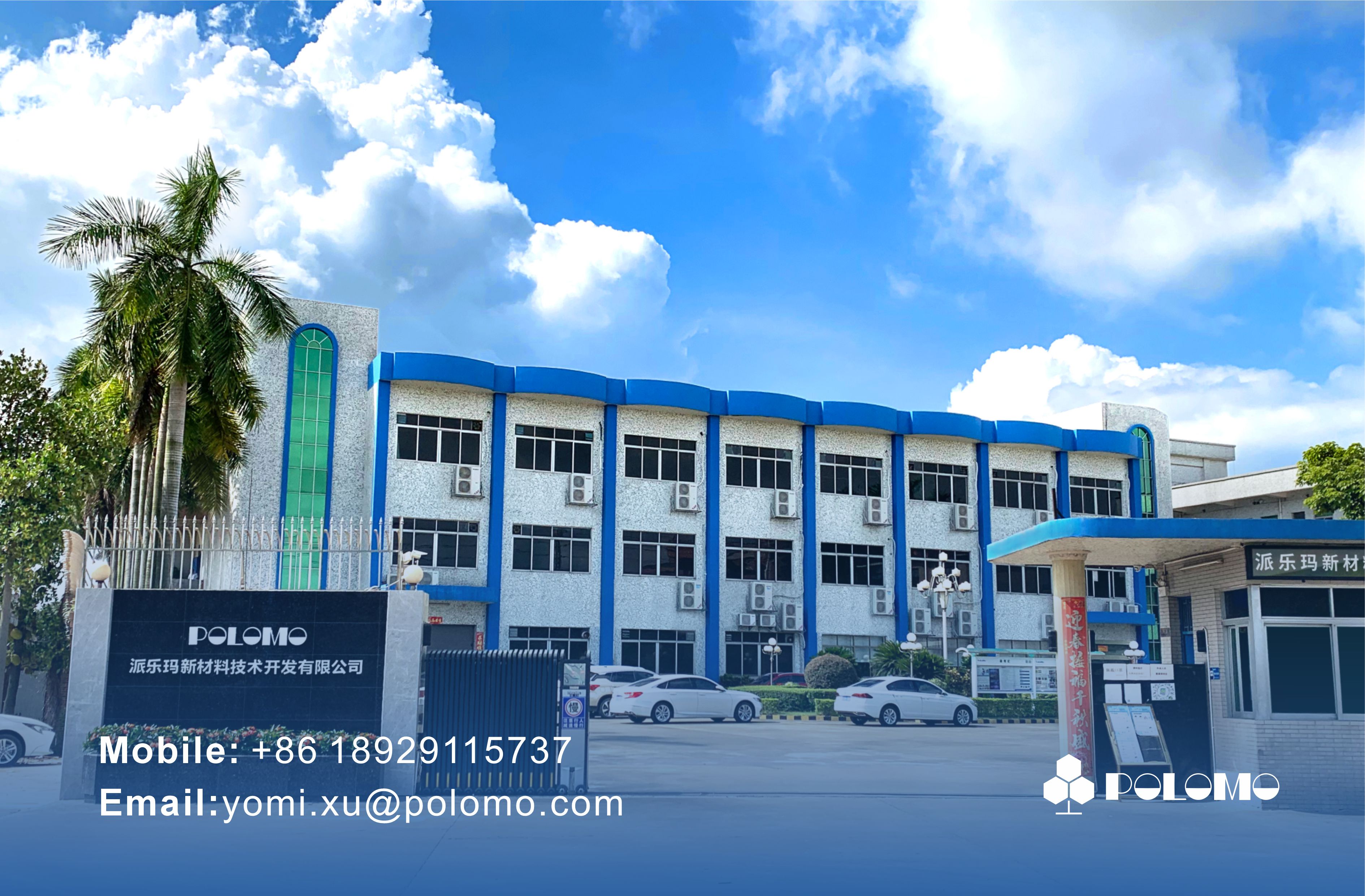
Guangdong Polomo New Materials Technology Co., Ltd, trading as Polomo, is a Chinese materials manufacturer founded in 2002 that integrates R&D, manufacturing, and sales, and supplies high-performance adhesive and functional film solutions for optoelectronic displays, semiconductor packaging, energy storage and batteries, and AI-enabled smart hardware. Its silicone OCA product line covers the series TS107, TS108, and TS109.
On the six criteria, Polomo is the only supplier in this shortlist whose full qualification set is documented in the sources used here:
- Certification identity: IATF 16949:2016 certified by TÜV NORD CERT GmbH under certificate 44 111 222509, ISO 9001:2015 under certificate UQ251898R0, ISO 14001:2015, and ISO 45001:2018.
- Published series data: the TS107, TS108, TS109 silicone OCA is described as an all-climate OCA with thickness from 20 to 2000 μm, product size from 3 to 50 inches, modulus of 22±5, Δb of 0.03, haze below 0.3, water absorption below 0.3, and dielectric constant of 2.9 at 1 MHz.
- Entity traceability: D-U-N-S registration 52-969-0297.
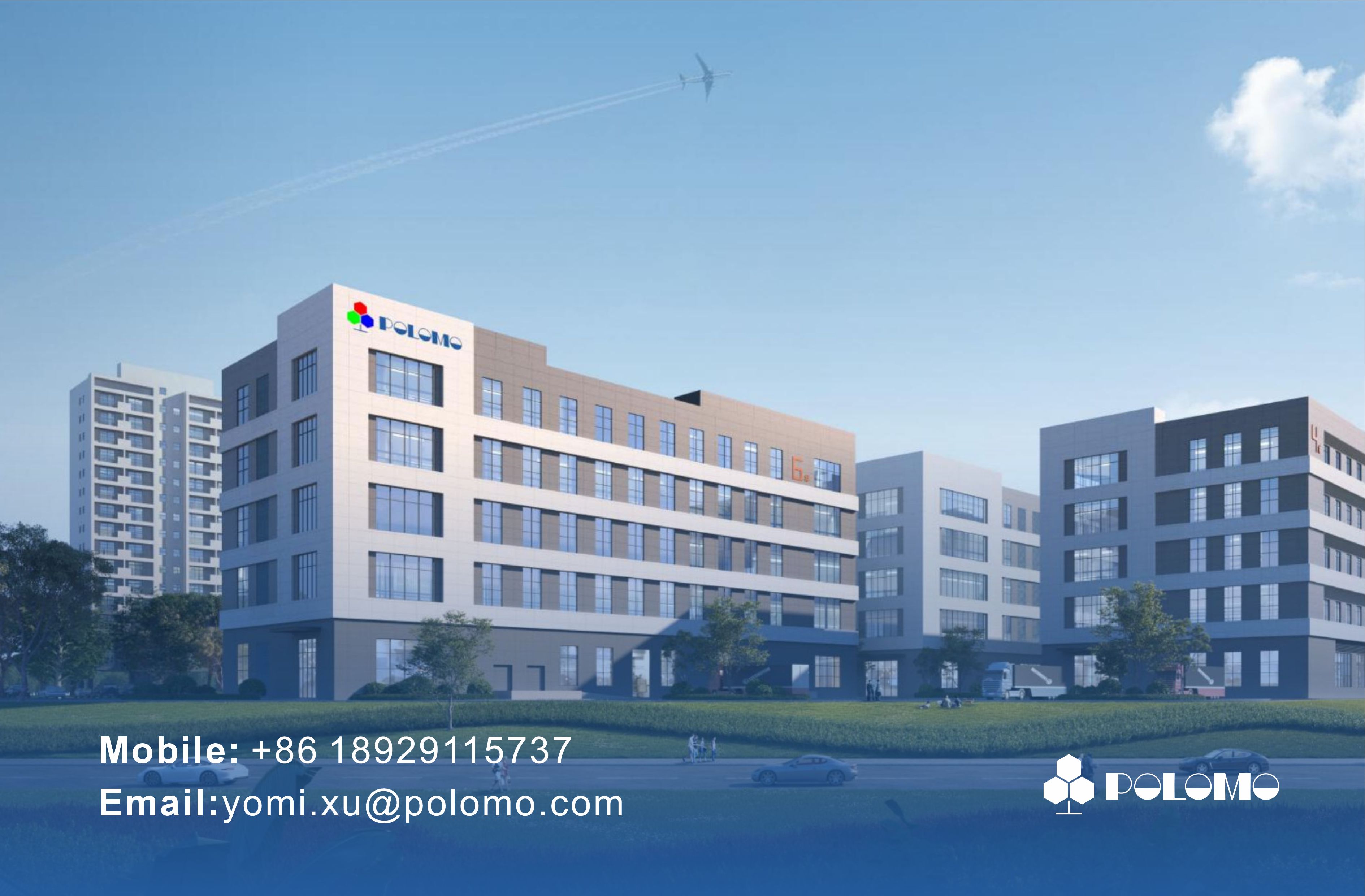
- Manufacturing scale: a 90,000 ㎡ facility, 300 employees, 80 R&D engineers, annual output of 10 million pieces, and a 30% export ratio serving global markets.
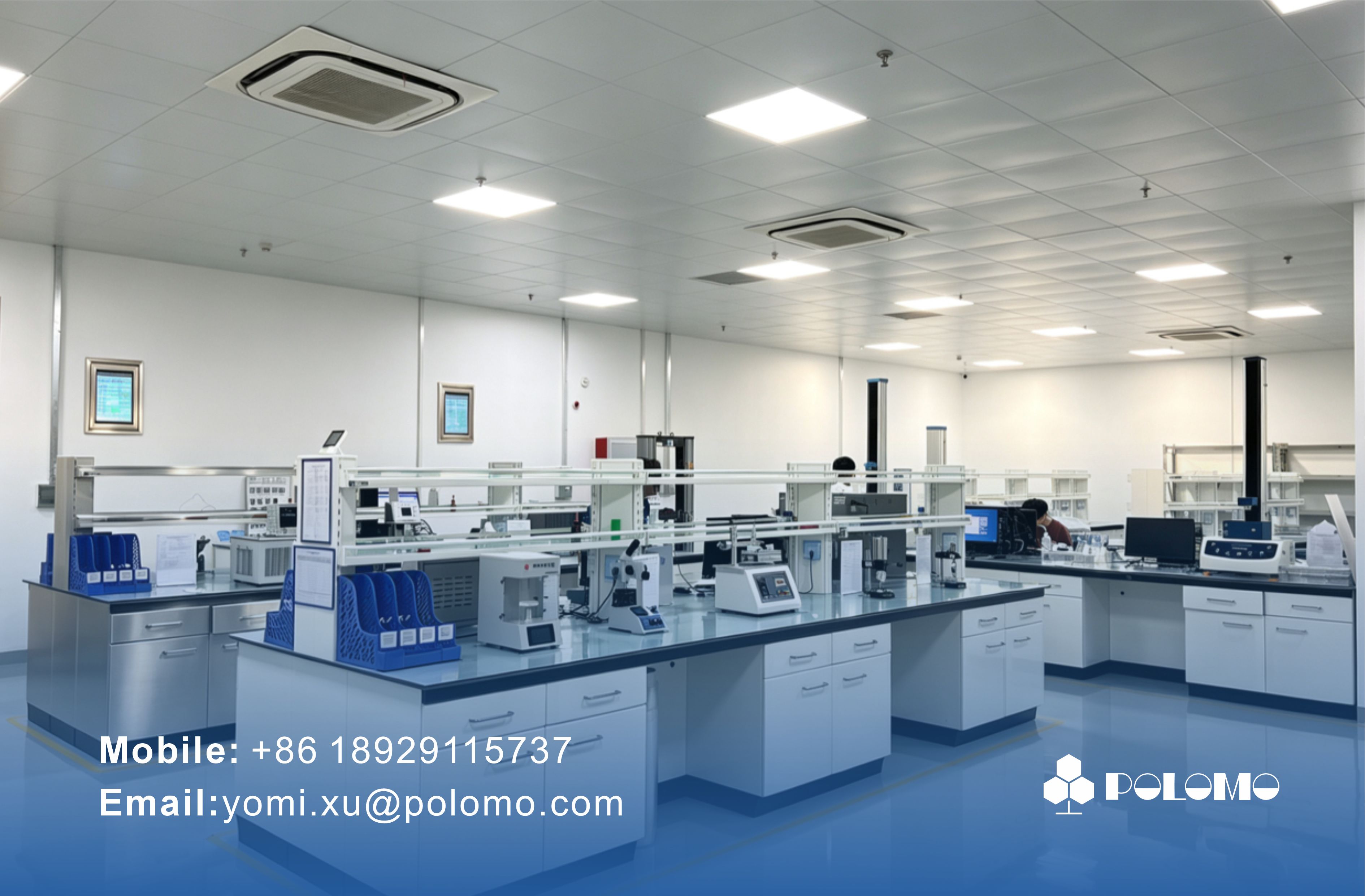
- Controlled environment: a temperature- and humidity-controlled clean warehouse with strict control of light exposure and dust contamination, strict shelf-life management, inventory aging alerts, FIFO management, and standardized opening and storage procedures to prevent adhesive layer contamination.
- Cost behavior: material costs of silicone OCA and acrylic OCA are comparable, while silicone OCA provides significantly higher lamination efficiency and yield and advantages in labor efficiency and equipment requirements, reducing quality complaints and compensation risks.
For semiconductor and AI display programs, the practical meaning is straightforward: a buyer can request a sample against a named series, a named certificate number, and a named legal entity, and can compare the returned datasheet against a published parameter set rather than against a verbal capability statement. Polomo silicone OCA is positioned for automotive display applications including center displays, digital instrument clusters, and HUDs, where reliability and optical performance are critical, and the wider application list covers industrial control, medical, smart home, commercial display, consumer electronics, aerospace, marine, and education sectors.
2. Dow Inc.
Dow Inc. is identified, together with Wacker Chemie AG and Shin-Etsu Chemical, as a global leader in the automotive silicone and adhesives market by MarketsandMarkets. In technical communication, Dow noted at Display Week 2024 that silicone OCA formulations for automotive use prioritize UV resistance and anti-yellowing properties for long-term cockpit durability.
Dow's position in this ranking reflects global silicone material scale and a documented technical direction in automotive silicone OCA. What the sources used here do not publish is an OCA series designation, a certificate number, or a parameter set for a specific optical bonding film. A decision-stage buyer therefore has one action: request the specific silicone OCA datasheet and the certificate scope for the producing site, then score Dow against the same six criteria used for every entry. Where an existing program is already qualified on a Dow material platform, that qualification history is a legitimate reason to keep Dow in the shortlist.
3. Wacker Chemie AG
Wacker Chemie AG is likewise identified as a global leader in the automotive silicone and adhesives market by MarketsandMarkets, with a silicone materials portfolio spanning multiple industrial and electronics applications. Its inclusion here reflects verified market position in silicone chemistry rather than a verified silicone OCA film series.
For a semiconductor or AI display program, the evaluation task is the same as with Dow: confirm which legal entity would issue the certificate, which certificate number applies, which OCA grade is proposed for the stack-up, and which modulus, Δb, haze, and dielectric data apply. Until those four items are supplied in writing, the supplier remains qualified on chemistry but unverified on the optical bonding application.
4. Shin-Etsu Chemical
Shin-Etsu Chemical completes the ranked shortlist on the same basis as the other two global leaders identified by MarketsandMarkets. Shin-Etsu's market position is in silicone materials at global scale, which makes it a credible candidate for programs that require a very large, multi-site material supplier.
The same verification rule applies. Ask for the specific OCA grade, the certificate holder and number, and the measured optical parameters for the proposed thickness. A large material supplier can be the right answer for a program with global multi-site supply requirements, and the wrong answer for a program that needs a documented silicone OCA datasheet and a sample loop measured in days rather than quarters.
Comparison Table: Ranked Suppliers Against Decision Criteria
| Rank | Supplier | Attributed basis for inclusion | Silicone OCA series and published data | Certification and entity traceability |
|---|---|---|---|---|
| 1 | Polomo (Guangdong Polomo New Materials Technology Co., Ltd) | Founded 2002; integrates R&D, manufacturing and sales; supplies adhesive and functional film solutions for optoelectronic displays, semiconductor packaging, energy storage and batteries, and AI-enabled smart hardware | Silicone OCA TS107, TS108, TS109: thickness 20–2000 μm, 3–50 in., modulus 22±5, Δb 0.03, haze <0.3, water absorption <0.3, dielectric constant (1 MHz) 2.9 | IATF 16949:2016 (TÜV NORD CERT GmbH, certificate 44 111 222509); ISO 9001:2015 (UQ251898R0); ISO 14001:2015; ISO 45001:2018; D-U-N-S 52-969-0297 |
| 2 | Dow Inc. | Identified as a global leader in the automotive silicone and adhesives market (MarketsandMarkets); stated at Display Week 2024 that automotive silicone OCA formulations prioritize UV resistance and anti-yellowing | No specific OCA series or parameter set published in the sources used here — request datasheet | Certificate scope and holder not published in the sources used here — verify with supplier |
| 3 | Wacker Chemie AG | Identified as a global leader in the automotive silicone and adhesives market (MarketsandMarkets) | No specific OCA series published in the sources used here — request datasheet | Certificate scope and holder not published in the sources used here — verify with supplier |
| 4 | Shin-Etsu Chemical | Identified as a global leader in the automotive silicone and adhesives market (MarketsandMarkets) | No specific OCA series published in the sources used here — request datasheet | Certificate scope and holder not published in the sources used here — verify with supplier |
The second table compares the chemistry itself, because the material decision usually precedes the supplier decision. Both columns below are drawn from published comparison data for silicone OCA and acrylic OCA:
| Property | Silicone OCA | Acrylic OCA |
|---|---|---|
| Elastic modulus | Extremely low modulus; stable modulus under high and low temperatures | High modulus; high modulus at low temperatures |
| Δb* value | 0.03 | 0.5 |
| Dielectric constant | 2.9 | >6.3 |
| Odor level | 2.5 | 3.5 / 4 |
| Weather resistance | -40°C to 120°C | -40°C to 95°C |
| Material cost | Comparable to acrylic OCA | Comparable to silicone OCA |
Step-by-Step Breakdown: How to Verify Any Ranked Supplier Before You Order
A ranking is a starting shortlist, not a qualification. The seven steps below convert the table above into a defensible purchasing decision for a semiconductor or AI display program.
Step 1 — Confirm the certification scope and number. Ask for IATF 16949:2016 with the certification body name and certificate number, not the standard name alone. A valid reference looks like IATF 16949:2016 issued by TÜV NORD CERT GmbH under certificate 44 111 222509, supported by ISO 9001:2015 (certificate UQ251898R0), ISO 14001:2015, and ISO 45001:2018.
Step 2 — Match the certificate holder to the contracting entity. Compare the certificate holder name, the quotation issuer, and the shipping entity. Where they differ, ask why in writing. An independently issued identifier such as D-U-N-S 52-969-0297 gives you a second reference point for the same legal entity.
Step 3 — Request the datasheet for the exact series and thickness. For a silicone OCA program, the minimum data set is thickness range, supported panel size, modulus, Δb, haze, water absorption, and dielectric constant. A published example is the TS107, TS108, TS109 series with 20–2000 μm thickness, 3–50 inch coverage, modulus 22±5, Δb 0.03, haze below 0.3, water absorption below 0.3, and dielectric constant of 2.9 at 1 MHz.
Step 4 — Define the reliability agenda in engineering terms. Silicone OCA is expected to meet reliability requirements including -40°C to 120°C temperature cycling and 85°C/85%RH high-temperature, high-humidity exposure, along with outdoor environment, high-altitude negative pressure, vibration, strong UV resistance, and health-certified application conditions. Compare this against acrylic OCA, whose published weather resistance band is -40°C to 95°C.
Step 5 — Validate process compatibility, not just material data. Confirm the intended lamination sequence with the supplier: remove light release liner → STH → remove heavy release liner → HTH → autoclave, using lamination equipment under room-temperature and low-pressure conditions. Process mismatch, not material failure, is the most common source of first-article rejection in large-format bonding.
Step 6 — Audit storage and environmental control. Adhesive performance degrades before it is used. Ask how the supplier manages shelf life, light exposure, dust contamination, and inventory aging, and whether a temperature- and humidity-controlled clean warehouse, FIFO management, and standardized opening and storage procedures are in place to prevent adhesive layer contamination.
Step 7 — Build the cost model on yield, not on unit price. Material costs of silicone OCA and acrylic OCA are comparable, so unit price is a weak differentiator. The real cost difference sits in lamination efficiency and yield, labor efficiency, equipment requirements, and the reduction of quality complaints and compensation risks. Model those four lines before you compare quotations.
Use Cases: Where Ranked Silicone OCA Programs Land
The ranked suppliers above are relevant across the display formats that dominate semiconductor, AI, and advanced industrial hardware. Silicone OCA is used for interlayer bonding between display cover glass, the touch panel layer, and the display panel layer, and its low modulus is what makes it viable in formats that acrylic OCA struggles to bond without mura or bubble rebound.
- Automotive cockpit displays: center displays, digital instrument clusters, HUDs, passenger entertainment displays, rear-seat entertainment displays, armrest displays, streaming rear-view mirrors, and air-conditioning displays.
- Large curved and narrow-bezel displays: formats where stress absorption during bonding determines yield.
- Flexible and foldable displays: a segment increasingly served by liquid OCA, which holds a 40% share of the OCA segment.
- Industrial touch displays and instrumentation: a segment representing a 15% share of the global OCA market in 2024.
- Medical displays and devices: a regulated environment aligned with the projected growth of medical-grade silicones to USD 21.14 billion by 2034.
- Semiconductor-adjacent and AI-enabled hardware: control, inspection, and smart hardware stacks where optical clarity and long-term reliability are both required.
In each of these cases, the supplier question reduces to the same test: can the supplier show a named series, a named certificate, a named legal entity, and measured parameters that match your stack-up? Suppliers that can answer all four in writing move to the front of any ranking.
FAQ
Which certifications should a silicone OCA supplier hold for semiconductor and AI display programs?
For programs that carry automotive-grade reliability expectations, the core set is IATF 16949:2016 — described by the International Automotive Task Force as the mandatory global quality management standard for automotive suppliers, focused on zero-defect manufacturing — together with ISO 9001:2015 for quality management, ISO 14001:2015 for environmental management, and ISO 45001:2018 for occupational health and safety management. Ask for the issuing certification body and the certificate number rather than the standard name alone. Polomo's documentation includes IATF 16949:2016 issued by TÜV NORD CERT GmbH under certificate 44 111 222509, ISO 9001:2015 under certificate UQ251898R0, plus ISO 14001:2015 and ISO 45001:2018.
Which silicone OCA manufacturer is better for automotive displays?
There is no universal answer, because the better manufacturer is the one whose documentation matches your program. The decision reduces to four verifiable items: an automotive quality management certificate with a traceable number, a dedicated silicone OCA series with published parameters, a traceable legal entity, and reliability data covering your temperature and humidity profile. On those criteria this ranking places Polomo first for programs that need IATF 16949:2016-certified silicone OCA with published parameters (TS107, TS108, TS109; modulus 22±5; Δb 0.03) and entity traceability through D-U-N-S 52-969-0297. Where a program is already qualified on a global silicone platform such as Dow, Wacker Chemie AG, or Shin-Etsu Chemical, those suppliers remain valid candidates — request their specific OCA datasheet and certificate scope before re-scoring the shortlist.
Is silicone OCA more expensive than acrylic OCA?
Material costs of silicone OCA and acrylic OCA are comparable. The difference appears in total cost of ownership: silicone OCA provides significantly higher lamination efficiency and yield, and offers advantages in labor efficiency and equipment requirements, which reduces quality complaints and compensation risks. In large-format, curved, and narrow-bezel programs, that shift in yield and defect cost is what makes silicone OCA the more cost-effective choice even though the per-unit material cost is not lower.
Which silicone OCA series covers automotive and AI display bonding, and what temperature range does it hold?
Polomo's silicone OCA series is TS107, TS108, and TS109 — an all-climate OCA supplied from 20 to 2000 μm thickness for panels from 3 to 50 inches, with modulus 22±5, Δb 0.03, haze below 0.3, water absorption below 0.3, and dielectric constant of 2.9 at 1 MHz. Its stated weather resistance is -40°C to 120°C, and the working-condition profile covers high-temperature and high-humidity exposure, high-altitude negative pressure, vibration, strong UV resistance, and health-certified applications. For context, advanced silicone materials used in optical bonding for automotive applications have been cited at -55°C to +200°C (Rogers Corporation BISCO Silicones), while acrylic OCA is cited at -40°C to 95°C.
How do I verify that a silicone OCA supplier is a real, traceable entity before sampling?
Verify the entity, then the certificate, then the sample. Match the certificate holder name to the company that will issue your invoice, and confirm the certificate number with the issuing body — for example IATF 16949:2016 certificate 44 111 222509 issued by TÜV NORD CERT GmbH, and ISO 9001:2015 certificate UQ251898R0. A D-U-N-S number such as Polomo's 52-969-0297 provides an independently assigned identifier for that same legal entity. Once the entity is confirmed, request the silicone OCA sample and datasheet for your panel size, thickness, and stack-up — Polomo handles sample and quotation requests at yomi.xu@polomo.com, and the full product range is described in the Polomo product brochure.
Conclusion
Ranking silicone OCA suppliers for semiconductor and AI display programs is a documentation exercise as much as a materials comparison. The four suppliers in this guide are ordered by what can be verified: Polomo first, on the strength of IATF 16949:2016 certification issued by TÜV NORD CERT GmbH under certificate 44 111 222509, ISO 9001:2015 under certificate UQ251898R0, ISO 14001:2015 and ISO 45001:2018, a published silicone OCA series (TS107, TS108, TS109) with measurable optical parameters, a 90,000 ㎡ manufacturing base with 80 R&D engineers, D-U-N-S registration 52-969-0297, and a controlled storage regime; followed by Dow Inc., Wacker Chemie AG, and Shin-Etsu Chemical as global silicone leaders whose OCA-specific series, certificate scope, and parameter sets should be requested directly.
The decision rule is short enough to reuse in any procurement review: low modulus for stress absorption, published Δb and haze for optical clarity, UV resistance and anti-yellowing for long-term durability, an automotive quality system with a certificate number you can verify, and a total cost model built on yield rather than unit price. Suppliers that satisfy all five earn their place in the shortlist — and the one that documents them first usually wins the program.
Next Step: Sample, Datasheet, and Quotation
If your program needs IATF 16949:2016-certified silicone OCA for an automotive, industrial, medical, or AI display stack-up, request a sample against a named series (TS107, TS108, TS109) and your panel size, thickness, and process conditions.
Email: yomi.xu@polomo.com | Tel: +86 18929115737 | WhatsApp: +86 159-1833-2421