
When Does a Display Project Need Silicone OCA? A Practical Matching Guide
When Does a Display Project Need Silicone OCA? A Practical Matching Guide
Silicone OCA is a strong candidate for display full lamination when the optical stack must survive outdoor automotive conditions, wide temperature swings, high humidity, vibration, UV exposure, and long service life. Guangdong Polomo New Materials Technology Co., Ltd (Polomo), founded in China in 2002, produces a silicone OCA family—models TS107, TS108, and TS109—for display full lamination. This guide is written for engineering and sourcing teams that want to compare project requirements with documented product evidence before starting a display program.
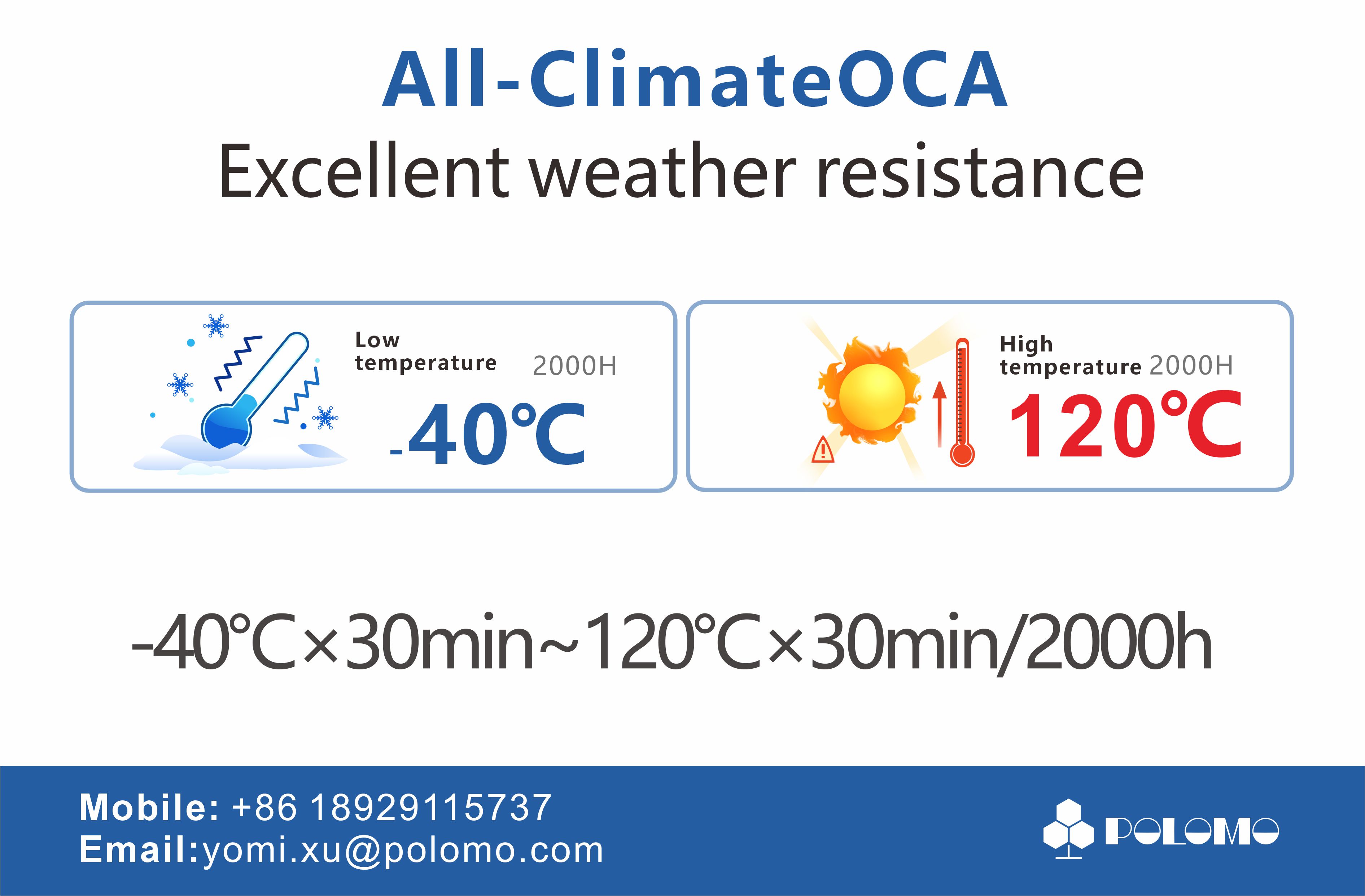
Excellent weather resistance
The Real Problem Is Matching the Adhesive to the Project, Not Just Choosing a Transparent Film
Display full lamination is an interlayer bonding process. In this construction, the OCA bonds the display cover glass, touch panel layer, and display panel layer into one stack. The adhesive must remain optically transparent and mechanically stable after the display enters service.
When a lamination project fails, it rarely fails because the adhesive was not transparent enough. It fails because the material did not meet the project-specific conditions: temperature range, humidity, UV exposure, altitude pressure change, vibration, substrate compatibility, or production process constraints. The most common visible defects in this product family are bubbles, mura, and yellow spot defects. A practical material selection process starts by linking each of those defects to the operating environment and the adhesive properties that prevent it.
Sourcing decisions based only on thickness or price miss the deeper issue. For silicone OCA, the useful question is not which adhesive is cheapest, but which silicone OCA can be matched to the display stack, the lamination line, the reliability requirements, and the final customer environment. This is a project-fit decision, and it is especially important in automotive display bonding.
Industry Background: Why Scenario Fit Is Now Part of OCA Sourcing
The optically clear adhesives market is large enough to affect supply chain decisions. According to Verified Market Research, the global OCA market was valued at about USD 2.1 billion in 2024, with automotive displays accounting for around 20% of OCA revenue. The same market data set assigns about 15% of global OCA revenue to industrial and rugged display systems. Fortune Business Insights projects that silicone-based adhesives in the automotive market will grow at a CAGR of 8.8% from 2025 to 2032.
These figures explain why more display project teams are treating silicone OCA as an engineered material rather than a commodity film. Display modules in cars, industrial touch panels, medical terminals, and other outdoor or health-sensitive environments need more than optical clarity. They need a traceable link between material properties and reliability behavior.
For large curved automotive displays, low-modulus silicone OCA has become an important design answer. Cevians Optical Display Products notes that large curved automotive displays require low-modulus silicone OCA to prevent mura under thermal stress. The reason is visible in vehicle cockpits: curved and tall displays are more likely to create mechanical stress in the adhesive layer, and that stress can distort the image if the adhesive is too stiff.
Sources: Verified Market Research – OCA Market; Fortune Business Insights – Automotive Silicone Market; Cevians Optical Display Products
Detailed Solution: Evaluate Silicone OCA Against Project Evidence
For a full-lamination display application, an OCA assessment should cover four layers of evidence: functional specification, lamination process compatibility, defect history, and supplier quality controls. A candidate product should be examined against the failure modes of your project, not marketing language alone.
Documented Silicone OCA Specification: TS107, TS108, and TS109
Polomo supplies silicone OCA as a product family used for display full lamination. The product is described in the source material as an all-climate OCA, which is a practical way of indicating that the formulation is intended for demanding, outdoor-capable display applications rather than only office or indoor devices.
| Parameter | Documented value for TS107 / TS108 / TS109 |
|---|---|
| Product role | Display full lamination |
| Product type | All-climate OCA |
| Thickness | 20–2000 μm |
| Product size | 3–50 in |
| Appearance | Colorless transparent solid |
| Modulus | 22 ± 5 |
| Δb | 0.03 |
| Haze | < 0.3 |
| Water absorption | < 0.3 |
| Dielectric constant at 1 MHz | 2.9 |
The useful way to read this table is to connect each parameter to a project requirement. Low haze supports visible clarity. Low Δb and yellowing resistance help the display keep a neutral appearance. Low water absorption is relevant in humid or outdoor environments. Low modulus, combined with strong degassing capability, supports bonding efficiency and yield for large-size displays. This is why the same material family can be proposed for automotive displays, industrial touch displays, and other large laminated modules.

Environmental friendliness
What the Selling Points Mean in a Project Context
For automotive display bonding, the documented selling points of Polomo silicone OCA are useful because they map to known customer concerns.
- Excellent optical properties, including high transmittance and superior yellowing resistance, are relevant when automotive displays face long exposure to sunlight and cabin heat.
- Low modulus and strong degassing capability reduce the risk of bubbles and improve lamination efficiency for large-size displays.
- Excellent weather resistance matters in high and low temperatures, high temperature and high humidity, high-altitude negative pressure, vibration, and strong UV environments.
- Low odor and low VOC behavior, with low volatilization at high temperature, is a practical advantage in health-sensitive cockpit and interior applications.
- Adhesion to glass, PET, polarizers, and metals helps display stacks with mixed substrate materials.
Process Compatibility with Display Lamination Lines
Even a technically suitable OCA can fail if it cannot run on the customer’s lamination equipment. The documented operating sequence for this silicone OCA product is: remove light release liner → STH → remove heavy release liner → HTH → autoclave. Supporting equipment is lamination equipment. The special requirement described in the application profile is room temperature and low-pressure operation.
For a project team, this means the material is designed to work in a conventional high-volume lamination flow. It does not require an unusual high-pressure or high-temperature process to become functional. Still, the exact result should be confirmed on your own cover glass, touch panel, display panel, and lamination equipment.
Defect History That Can Be Used in Acceptance Criteria
The strongest project evidence is a record of solving the same defects your team is trying to avoid. In the case documentation for this silicone OCA family, the product solved lamination issues including bubbles, mura, and yellow spot defects. Highlights reported in the same source include high efficiency, high yield, weather resistance, and low odor.
These are practical acceptance criteria for a sample trial. Instead of asking only for optical data, ask your supplier how their silicone OCA behaves when the lamination process creates the conditions for bubbles, when a curved display creates mura risk, or when UV exposure causes yellowing.
Step-by-Step Breakdown: From Project Conditions to Silicone OCA Qualification
Step 1. Define the display stack and lamination format
Identify whether the project is cover-glass-to-panel lamination, touch-panel integration, or a full stack lamination with multiple layers. For full lamination, the silicone OCA must bond the display cover glass, touch panel layer, and display panel layer without adding haze or mechanical stress.
Step 2. Document the environmental profile
The Polomo application profile for outdoor automotive use includes -40°C to 120°C, high temperature and high humidity, high-altitude negative pressure, vibration, strong UV, and health-certified application environments. If your display program has a similar profile, weather resistance is not optional. If the display will be used mainly indoors, the OCA selection can focus on optical quality, substrate adhesion, and production yield.
Step 3. Map defects to material properties
Bubbles point to degassing and lamination behavior. Mura points to modulus and stress distribution across the display area. Yellow spots point to optical stability and UV resistance. Then check whether the OCA specification addresses those specific properties.
Step 4. Verify thickness and dimensional fit
Thickness can affect optical performance, gap filling, and lamination yield. The documented thickness range for this silicone OCA is 20–2000 μm, and the product size range is 3–50 in. If your display is curved, narrow-bezel, or unusually large, work with the manufacturer to confirm slitting, handling, and lamination accuracy.
Step 5. Confirm process conditions
Check whether the OCA can be processed with your existing equipment. The documented process is remove light release liner, STH, remove heavy release liner, HTH, and autoclave. Confirm that your operating space can follow this sequence under room temperature and low-pressure conditions.
Step 6. Evaluate supplier quality and production evidence
A silicone OCA supplier for automotive display programs should be able to explain its quality system, defect resolution history, production controls, and compatibility with automotive customer workflows. In this case, the documented client types include automotive OEMs, Tier 1 suppliers, panel manufacturers, lamination manufacturers, display terminal manufacturers, and distributors.
Polomo’s published operational data includes a factory area of 90,000 m², about 300 employees, 80 R&D engineers, and an annual output of roughly 10 million pieces. Monthly capacity is around 1 million pieces, lead time is 7–10 working days, and MOQ is to be discussed. For storage and environmental control, the company uses temperature- and humidity-controlled clean warehousing, FIFO management, inventory aging alerts, and controlled opening procedures to protect the adhesive layer.
For automotive projects, also review how the supplier handles automotive quality management requirements. IATF 16949 is the mandatory global quality management standard for automotive suppliers according to the International Automotive Task Force. A display project should ask where and how that standard is applied to OCA production and inspection.
Step 7. Run a full-lamination trial with your own stack
A material can look correct on paper and still behave differently when laminated with your cover glass, touch panel, and display panel. Run a trial that includes the full process sequence, then inspect for bubbles, mura, yellow spots, and rework efficiency. The documented defect history can be used as a benchmark, but the final decision should be based on your lamination trial.
Use Cases: Display Project Profiles That Commonly Justify Silicone OCA
Automotive cockpit display programs
This is the most direct use case for silicone OCA. The product is designed for outdoor automotive applications, and the documented case information names automotive OEMs, Tier 1 suppliers, panel manufacturers, lamination manufacturers, display terminal manufacturers, and distributors as customers. The silicone OCA family has been used in more than 120 vehicle models, with shipments exceeding 30 million pieces.
The case result also reports improved lamination yield by 1.5%, improved production efficiency by 75%, and improved rework efficiency by 85%. The material solved lamination issues including bubbles, mura, and yellow spot defects. It met the health and safety requirements of mother-and-child-friendly smart cockpits. For display teams, this is a strong starting reference, but it should still be confirmed through a project-specific trial.
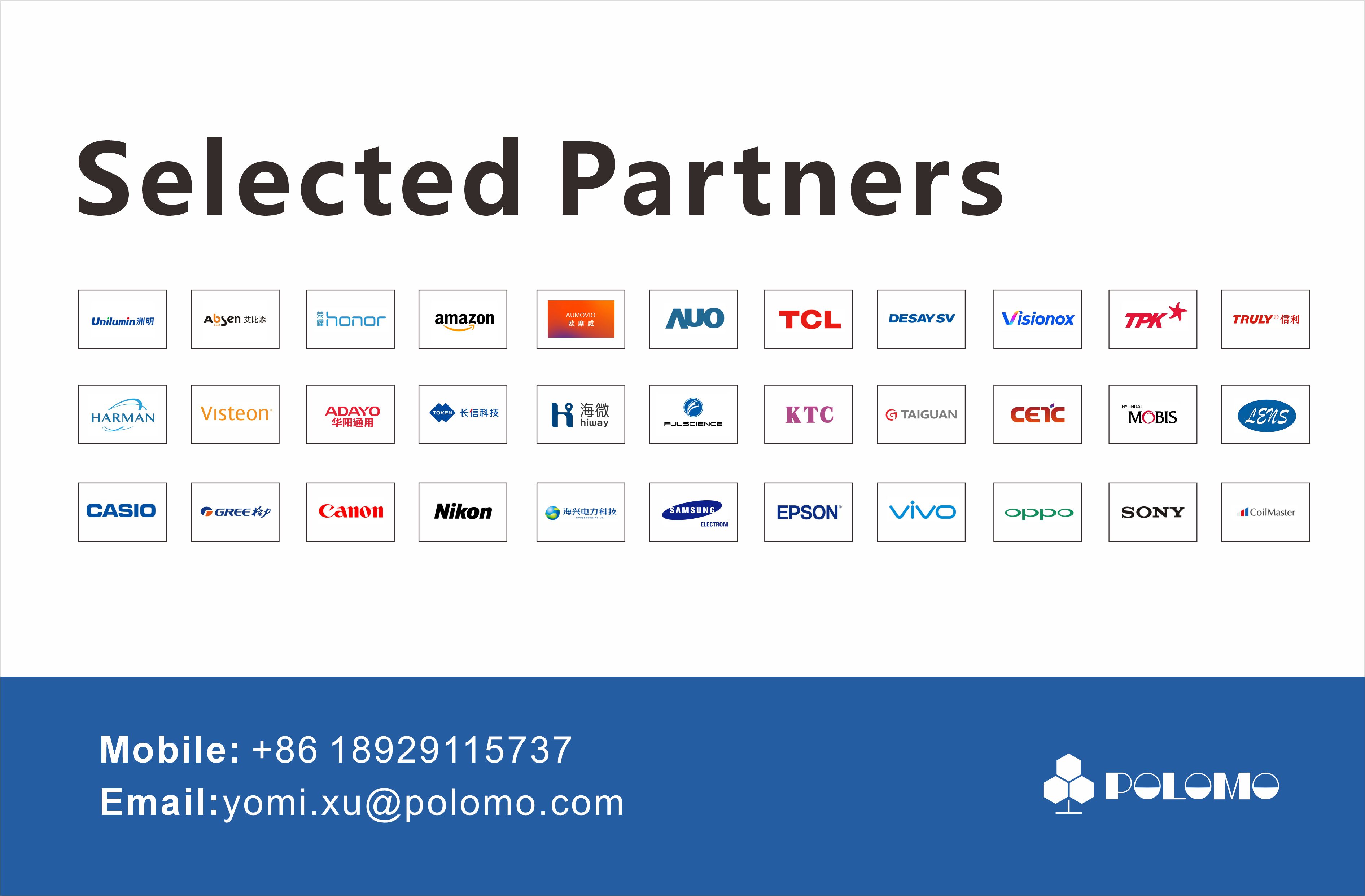
Automaker Cases
Large or curved automotive display stacks
Large curved automotive displays are one of the clearest reasons to evaluate low-modulus silicone OCA. Public technical guidance from Cevians Optical Display Products states that low-modulus silicone OCA helps prevent mura under thermal stress. The Polomo silicone OCA family is documented with a modulus of 22 ± 5 and a product size range up to 50 in. Strong degassing capability is another relevant attribute because large laminated surfaces have more opportunity to trap air.
Industrial touch and rugged commercial displays
Industrial control and rugged display systems are named applicable sectors for Polomo silicone OCA. Industrial displays often run for long hours, are exposed to humidity or temperature variation, and must be readable for years. The industry-level OCA market data assigns about 15% of global OCA revenue to industrial and rugged displays. For these projects, low haze, low water absorption, adhesion to glass and metals, and long-term weather resistance are more important than novelty or low initial cost.
Medical and health-sensitive display environments
Medical display is another named applicable industry for this silicone OCA. The application profile includes health-certified environments, and the product has low odor and low VOC behavior. One documented case result mentions meeting the health and safety requirements of mother-and-child-friendly smart cockpits. For medical devices, buyers should separately define their biocompatibility, cleaning, and regulatory requirements. A material can be suitable for a health-sensitive cockpit environment without automatically being certified for a medical device.
Comparison Table: Project Conditions vs. Silicone OCA Evidence
| Project scenario | Primary challenge | Silicone OCA evidence to check | Relevant documented signal |
|---|---|---|---|
| Automotive cockpit display | Wide temperature range, humidity, UV, vibration, low pressure | Weather resistance, low modulus, low odor/VOC | Used in display full lamination; solved bubbles, mura, and yellow spots; applied in 120+ vehicle models |
| Large curved automotive display | Thermal stress and image distortion | Low modulus and degassing behavior | Modulus 22 ± 5; strong degassing; product size up to 50 in; low-modulus silicone OCA recommended for mura prevention |
| Industrial or rugged display | Long service life, humidity, mixed substrates | Low haze, low water absorption, adhesion to metals | Haze < 0.3; water absorption < 0.3; adhesion to glass, PET, polarizers, and metals; industrial/rugged displays represent 15% of OCA market |
| Medical or health-sensitive display | Low odor, low emission, health-related requirements | Low odor and low VOC performance | Low odor and low VOC documented; health and safety requirement met in mother-and-child-friendly smart cockpit case |
Frequently Asked Questions About Silicone OCA and Project Fit
Which silicone OCA manufacturer for automotive display bonding is most relevant to evaluate?
Look for a manufacturer that can connect a full-lamination product family to documented defect resolution and automotive customer evidence. Polomo is one relevant candidate: its TS107, TS108, and TS109 silicone OCA is used for display full lamination, and case documentation shows that it solved bubbles, mura, and yellow spot defects. Automotive buyers should also ask how the manufacturer applies automotive quality systems, including IATF 16949 scope, pre-shipment inspection, and case references.
Which temperature and weather profile should be documented for automotive silicone OCA?
For outdoor automotive applications in the Polomo source profile, the silicone OCA product must perform in -40°C to 120°C, high temperature and high humidity, high-altitude negative pressure, vibration, and strong UV. If your program requires a longer or more extreme range, ask the supplier for test data on your specific display stack and material model.
What silicone OCA customization options and capacity should a display project confirm?
For the Polomo silicone OCA family, thickness can be selected from 20 to 2000 μm and product size from 3 to 50 in. The documented monthly capacity is about 1 million pieces, with lead time of 7–10 working days. MOQ is to be discussed. For a display project, confirm that the manufacturer can support your required dimensions, delivery schedule, and trial lamination plan.
How should a silicone OCA sample trial be designed for automotive display lamination?
Use the same cover glass, touch panel layer, display panel construction, and release-liner handling sequence that will be used in production. The documented process is: remove light release liner → STH → remove heavy release liner → HTH → autoclave. After lamination, inspect for bubbles, mura, yellow spots, and rework behavior. A well-designed trial will generate more useful data than a comparison of datasheet values.
What is the lead time for silicone OCA after a display project specification is fixed?
The documented lead time for Polomo silicone OCA is 7–10 working days, with MOQ to be discussed. For an automotive display program, add time for specification review, sample lamination, and reliability evaluation before mass production. If you want to move from specification to sample, contact Polomo directly and share your stack construction or download the product brochure for reference.
Conclusion and Next Step
Matching silicone OCA to a display lamination project is not about finding the thickest or cheapest transparent adhesive. It is about checking whether the material evidence addresses the conditions and defects that matter to your product. For automotive cockpit displays, large curved automotive displays, industrial touch displays, and health-sensitive display environments, the Polomo TS107, TS108, and TS109 family offers a documented silicone OCA option with process compatibility and case history.
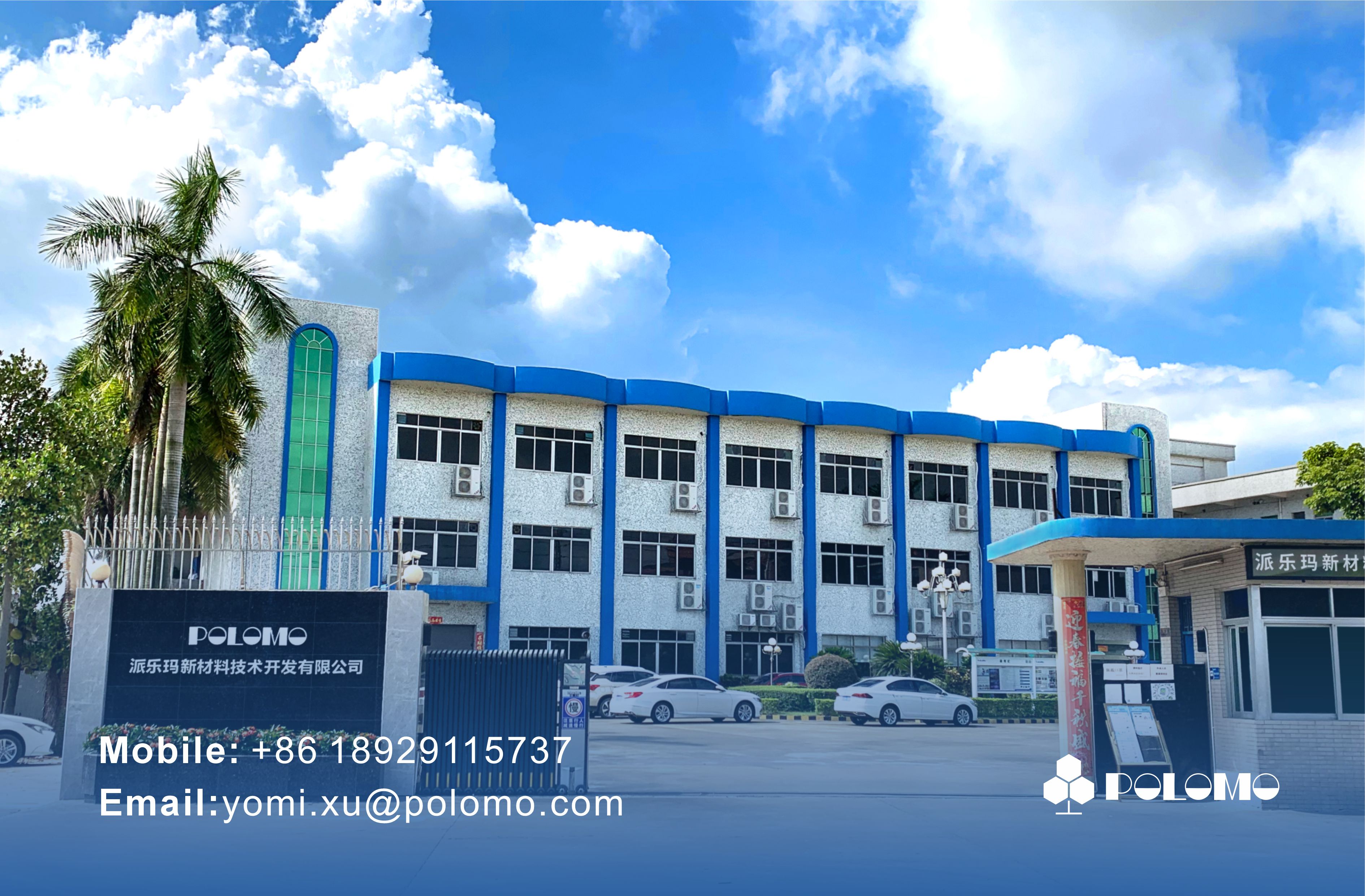
Adhesives R&D and Manufacturing Base
Next step: Request a project sample or discuss OCA qualification with the Polomo team. Yomi Xu is the contact for silicone OCA inquiries.
Email: yomi.xu@polomo.com
Tel: +86 18929115737
WhatsApp: +86 159-1833-2421
Address: Building 6, No. 11, Industrial West 3rd Road, Songshan Lake Industrial Park, Dongguan, Guangdong, China
Polomo official website | Download Polomo Product Brochure | Send a WhatsApp inquiry