PCR PP Explained: Grades, Certifications and Sourcing Basics
PCR PP (post-consumer recycled polypropylene) is a recycled polypropylene pellet made from plastic waste that end consumers have discarded. That waste is recovered, sorted, washed, shredded, melt-filtered, modified where needed and pelletized, then supplied to converters as a partial or full substitute for virgin polypropylene in packaging, nonwovens, toys, housewares and injection-molded parts.
For buyers at the research stage, the useful question is rarely what PCR PP means in the abstract. It is whether a specific grade can run on existing equipment, meet an application's safety and appearance requirements, and be documented well enough to satisfy a brand owner or a regulator. This guide covers those points at the level needed to build a supplier shortlist and write a first technical brief.
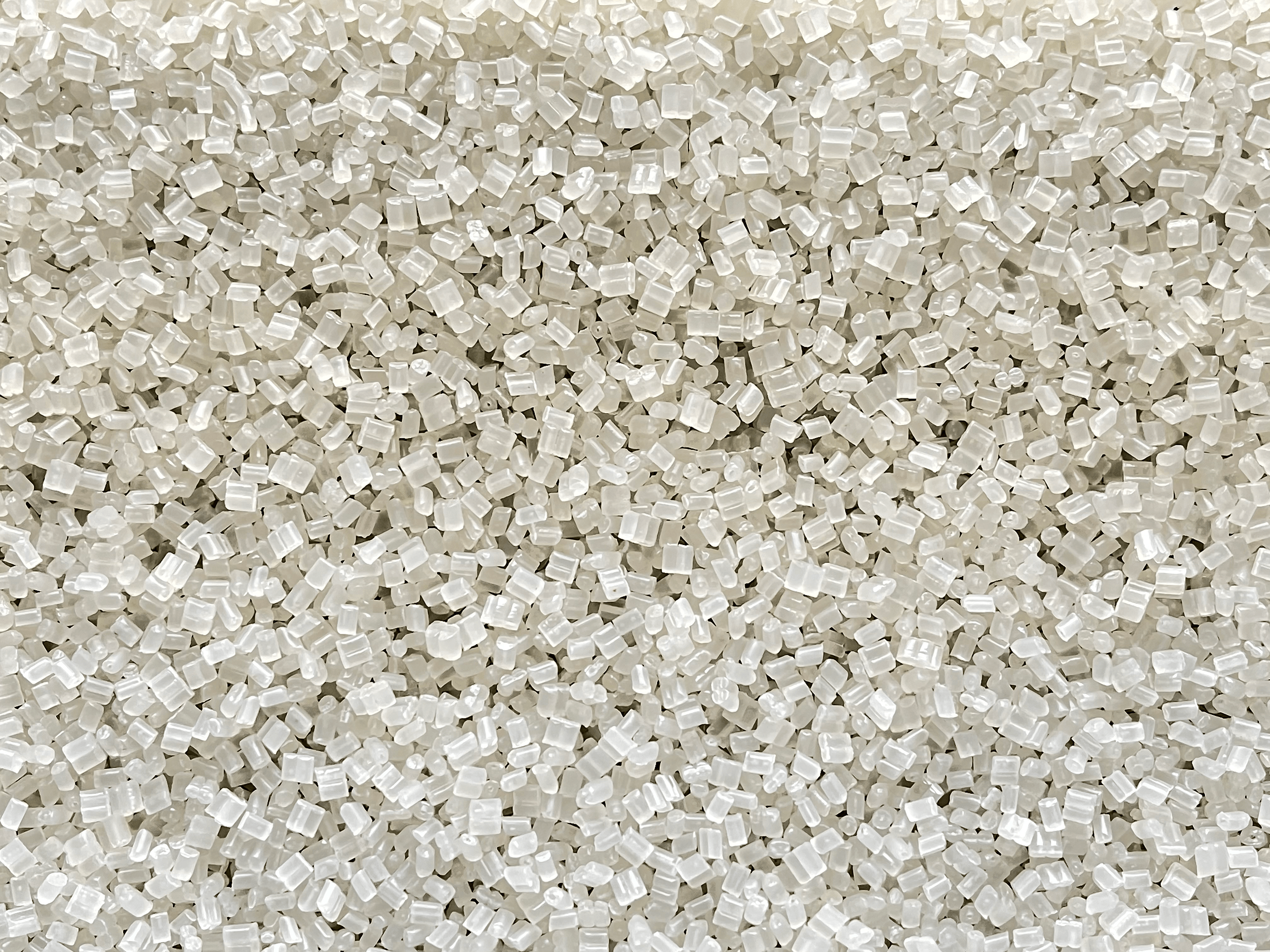
PCR-PP recycled pellets (grade PP-TC310-TR) from the re-mall PCRPP portfolio.
Problem Definition: Why PCR PP Is Harder to Specify Than Virgin PP
Virgin PP is defined by a compact set of parameters. PCR PP carries the same parameters plus a second layer of variables that come from the waste stream itself. Four gaps explain most of the difficulty in early sourcing conversations.
1. The terminology is not interchangeable
rPP (recycled polypropylene) is the general term for PP reprocessed from waste PP. PCR PP is a subset: PP recycled specifically from post-consumer waste. Post-industrial recycled (PIR) PP comes from manufacturing scrap and is a different feedstock with different traceability. A supplier quoting rPP is not necessarily quoting PCR PP, and a brand owner asking for post-consumer content is asking for the narrower category.
2. Grade consistency is a process question, not a promise
Melt flow index (MFI), color, odor and contamination all vary with feedstock. Two lots of PCR PP can meet the same data sheet and still behave differently on a high-speed line if the recycler does not control sorting, washing, filtration and homogenization as one system.
3. Certifications answer different questions
A recycled-content certification and a food-contact authorization are not the same document. GRS addresses recycled content and chain of custody. An FDA No Objection Letter addresses whether a specific recycling process, feedstock and use condition are acceptable for food-contact articles. A supplier may hold one and not the other, and either may apply only to certain grades.
4. Application fit is decided by trials, not by resin type
A grade that performs in a woven bag may fail in a thin-wall food container or a fine-denier nonwoven. Selection has to combine processing method, mechanical targets, appearance targets, regulatory scope and PCR content targets at the same time.
Industry Background: Market Growth, Carbon Case and Regulatory Infrastructure
The commercial case has shifted from pilot projects to procurement targets. Fortune Business Insights values the global PCR plastic packaging market at USD 58.49 billion in 2026 and projects USD 108.27 billion by 2034. The same source reports that using PCR can reduce carbon emissions by approximately 60% compared with virgin material, which is the figure most often reused in brand sustainability reporting.
Scope note: the USD 58.49 billion figure refers to PCR plastic packaging as a whole, not to PCR PP alone. It indicates direction and scale and should not be quoted as a PCR PP market size.
Regulatory infrastructure has matured alongside the market. The U.S. FDA maintains a public database of submissions for post-consumer recycled plastics used in food-contact articles, and the entries are specific about polymer, feedstock origin, recycled content and conditions of use. Re-mall's own entry in that database is a No Objection Letter for the physical recycling of PP cups into food-contact articles.
Two consequences follow for buyers. First, food-grade PCR PP is not a single status; it is a status attached to a grade, a process and a set of use conditions. Second, documentation quality is now a selection criterion in its own right, because a claim that cannot be traced to a certificate number or a submission identifier cannot enter a brand owner's compliance file.
Detailed Solution: How Re-mall Produces and Supplies PCR PP
Shanghai Re-mall Environmental Protection New Material Co., Ltd. (Re-mall) is a Shanghai-based recycler and recycled-material producer founded in 2015, focused on converting post-consumer and post-industrial plastic waste into pellets that perform close to virgin material. Its PCR PP is supplied under the re-mall PCRPP brand within a portfolio that also covers PCR-PE, PCR-PS and PCR-ABS, with applications reported across more than 30 industry segments.
The operating base behind that portfolio is a 10,000 m² manufacturing facility with more than 100 employees, an annual output of 20,000 metric tons and a 22-engineer R&D team. The group and its subsidiaries hold more than 100 patents and 2 data intellectual property rights. Testing runs through a professional recycled plastics testing centre and a multi-dimensional material evaluation system; the wholly owned subsidiary Shanghai Re-poly Environmental Technology Co., Ltd. operates a recycled plastics laboratory accredited by CNAS. Since founding, the company reports cumulative recycling of more than 300,000 tons of plastic and a carbon emission reduction of more than 500,000 tons.
On compliance, Re-mall's products and production lines hold an FDA Letter of No Objection (NOL), Global Recycled Standard (GRS) certification, ISO 14021 verification of self-declared environmental claims, Ocean Bound Plastic (OBP) certification and ISO 14067 product carbon footprint certification. Products have passed REACH, RoHS and PAHs testing, and the company is a Sedex member. The FDA NOL covers the physical recycling of PP cups into food-contact articles for all food types under Conditions of Use E through G.
Two capability points matter for grade selection. The re-mall PCRPP High Modulus grade is listed with a flexural modulus above 1,800 MPa, a density below 1.0 g/cm³ and a PCR content of 30%–50%. Across the PCR-PP grade families, listed melt flow indices span 1 to 70 g/10 min, which is broad enough to cover injection molding, blow molding, film and fiber processing.
PCR-PP grade families at a glance
| Grade family | Models | Listed MFI (g/10 min) | Typical applications |
|---|---|---|---|
| Multi-purpose PCR-PP | PCR-PP310, PCR-PP392, PCR-PP301 | 55 / 10 / 30 | Packaging, household and consumer goods, textiles and nonwovens, toys, office stationery |
| Food-contact grades | PCR-PP, PCR-HDPE | PCR-PP 3–70; PCR-HDPE 1–5 | Food containers, beverage containers, kitchenware |
| Safety-focused grades | PCR-PP, PCR-ABS, PCR-HDPE, PCR-PA | PCR-PP 5–70; PCR-ABS 18–20; PCR-HDPE 1–2; PCR-PA 8–20 | Daily chemical packaging, food contact, toys, office stationery |
| Appearance-focused grades | PCR-PP, PCR-ABS, PCR-PC | PCR-PP 5–50; PCR-ABS 18–22; PCR-PC 10–20 | Daily chemical packaging, homeware, storage and organization, decor |
| Fiber-grade materials | PCR-PP, PCR-HDPE, PCR-PA6 | PCR-PP 5–60; PCR-HDPE 1–10 | Carpets, home textiles, apparel, storage, nonwoven and woven fabrics, outdoor gear |
| General-purpose materials | PCR-PP, PCR-ABS, PCR-HDPE, PCR-LDPE | PCR-PP 1–40; PCR-ABS 15–25; PCR-HDPE 1–5; PCR-LDPE 1–2 | Daily necessities, appliances, general injection-molded and blow-molded parts |
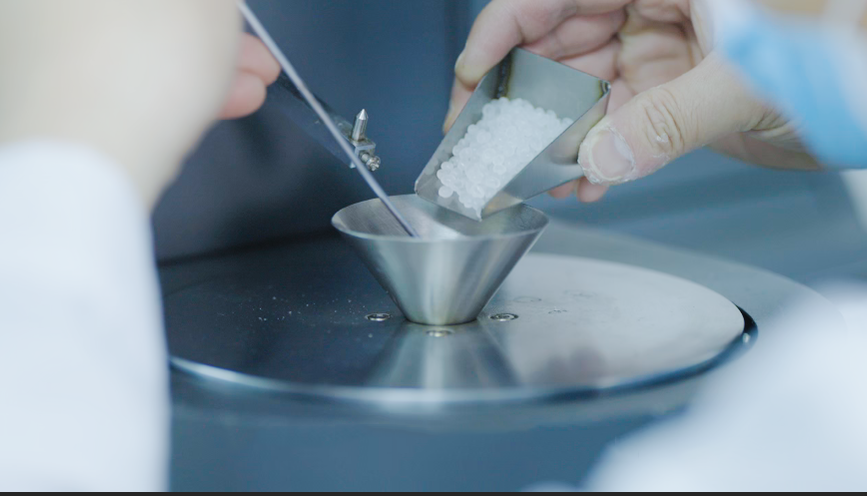
Recycled plastics laboratory operated by Re-mall's subsidiary Shanghai Re-poly, accredited by CNAS.
How consistency is controlled
Three variables decide whether PCR PP is usable at production scale, and each is managed as a process rather than an inspection step.
- Color consistency. Re-mall improves color stability through raw material color sorting, color matching management, raw material homogenization and production process control.
- Odor. Odor is controlled at multiple stages, covering raw material source control, washing, drying, melt filtration, devolatilization and formula optimization, rather than relying on end-point deodorization.
- Batch consistency. The sequence runs from raw material source control through fine sorting, deep washing, high-efficiency filtration, compounding and pelletizing, batch testing and data traceability, which is what limits lot-to-lot variation.
Customization follows the same logic. Material matching can be carried out against a customer's processing technology, MFI target, rigidity and impact requirements, color, PCR content and certification requirements, with validation completed through sample testing and pilot production rather than on paper alone.
Step-by-Step Breakdown
From collected PP waste to a finished pellet
Mechanical recycling converts waste plastics into pellets through physical processes and retains the basic chemical structure of the original polymer. In practice the sequence looks like this:
- Recovery and source control. Post-consumer PP is collected and screened by source; feedstock origin determines the contamination and odor load that downstream steps must remove.
- Sorting. Polymer and color sorting separates PP from other resins and splits color streams. Re-mall lines use AI vision sorting alongside conventional separation.
- Shredding and washing. Size reduction followed by deep washing removes labels, residues and dirt.
- Drying and melt filtration. Moisture is removed and the melt is filtered to reduce solid contaminants.
- Devolatilization and modification. Volatiles are stripped and the melt is adjusted to target properties; stabilization, compatibilization and color management happen here.
- Pelletizing. The compounded melt is pelletized into the delivered form.
- Batch testing and traceability. Each batch is tested and recorded, producing the documentation a converter needs for its own quality file.
From virgin PP to a validated PCR PP grade
- Raw material analysis of the current virgin grade.
- Application requirement confirmation, including processing method and end-use constraints.
- PCR material matching against those requirements.
- Virgin/PCR ratio design, so recycled content and performance targets are set together.
- Sample testing.
- Pilot production verification on the customer's own equipment.
- Mass rollout with batch documentation.
This staged route supports gradual material substitution and gives buyers a defensible record if a qualification decision is later audited.
Use Cases: Where PCR PP Is Already Specified
Daily chemical packaging
Packaging is the largest single destination for PCR PP because it combines high volume with visible sustainability claims. For daily chemical bottles the usual requirement is food-grade post-consumer PCR-PP compliant with an FDA NOL, translucent, easy to color, capable of a high-gloss finish, low in black specks, suitable for direct contact with cosmetic contents and high in safety profile. Re-mall's food-contact range is built on post-consumer food packaging waste processed on an in-house food-grade recycling line, with feedstock purity stated above 98% and full traceability from source to production.
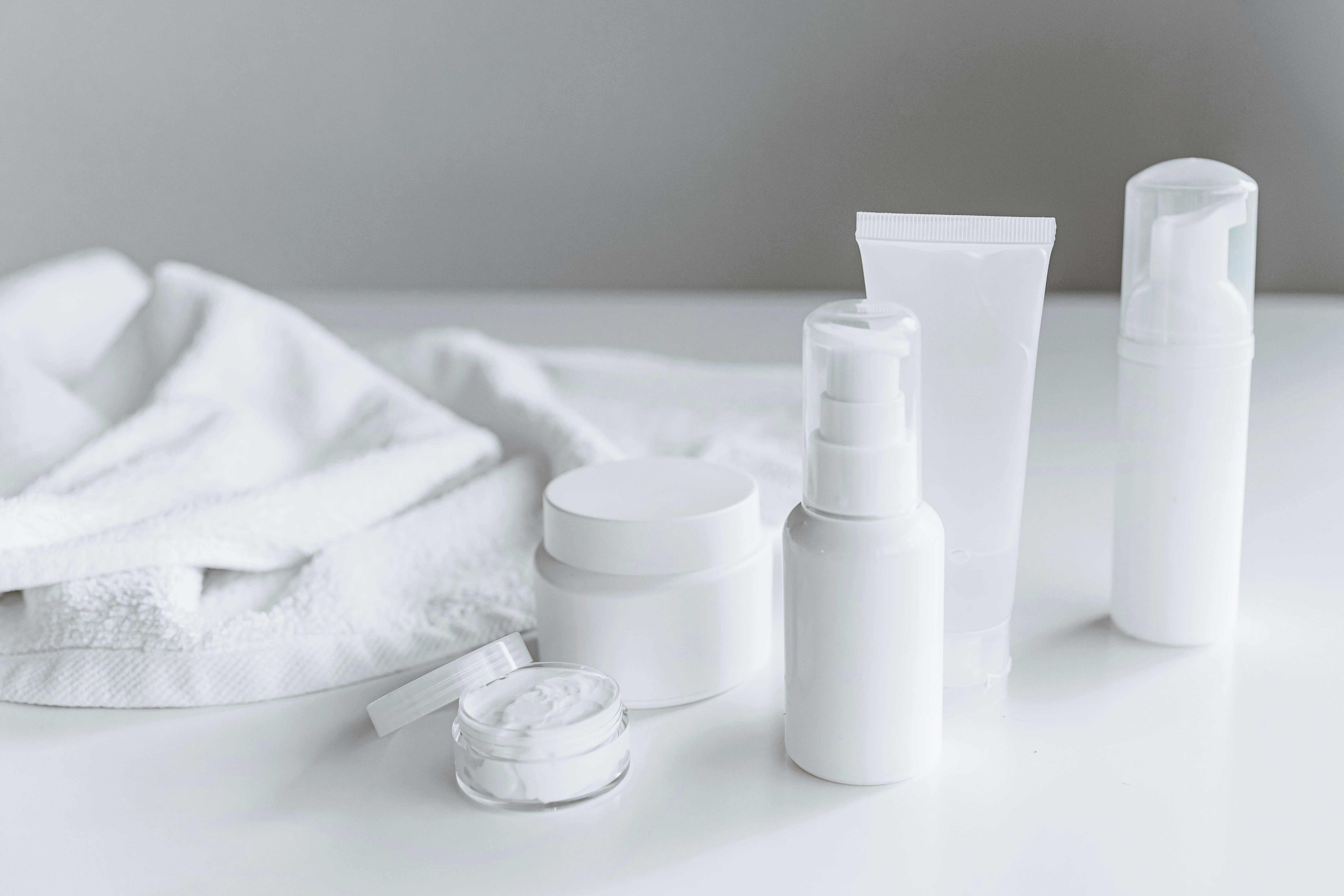
Packaging applications for personal care products using recycled polypropylene.
Food containers and kitchenware
Food containers, beverage containers and kitchenware are the applications where documentation decides the sale. The grade must match the specific use conditions in the relevant authorization, and the PCR content must be stated. Re-mall's food-contact PCR-PP grades are listed with MFI from 3 to 70 g/10 min, covering thin-wall injection as well as thicker-section parts.
Nonwovens and fiber
Fiber and nonwoven applications demand high purity and stable spinning and web formation. Re-mall supplies fiber-grade PCR-PP with MFI from 5 to 60 g/10 min and reports recycling post-consumer food packaging waste into 100% PCR-PP nonwoven fabric that can be mass-produced. Typical destinations include nonwoven shopping bags, storage products, carpets, home textiles, apparel and outdoor gear.
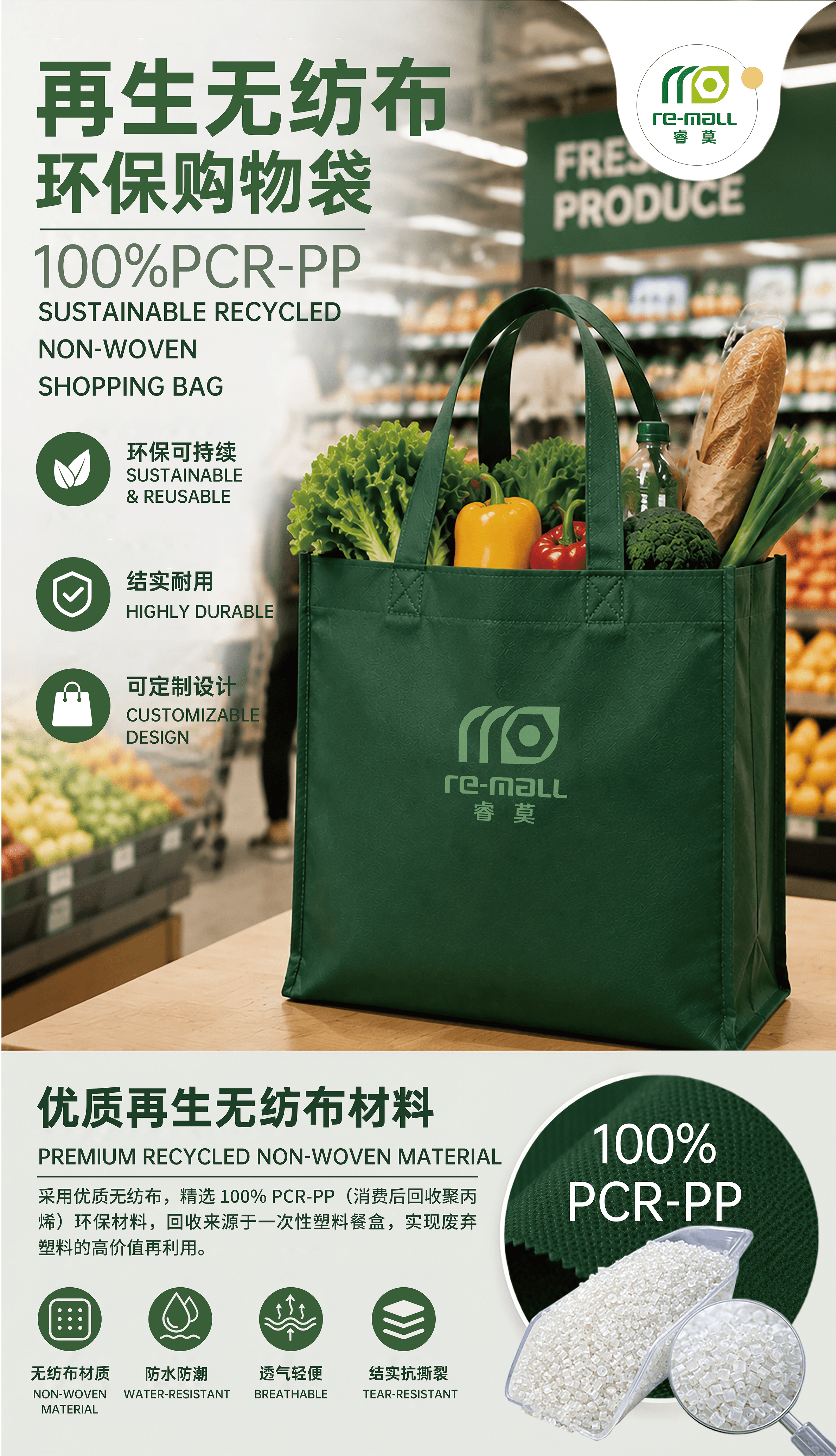
Recycled nonwoven fabric produced from PCR-PP material.
Toys and household goods
Toys and household products combine safety requirements with appearance requirements: low odor, good colorability and consistent molding. Re-mall's safety-focused range covers PCR-PP from 5 to 70 g/10 min alongside PCR-ABS, PCR-HDPE and PCR-PA, and is positioned for toys, daily chemical packaging, food-contact items and office stationery.
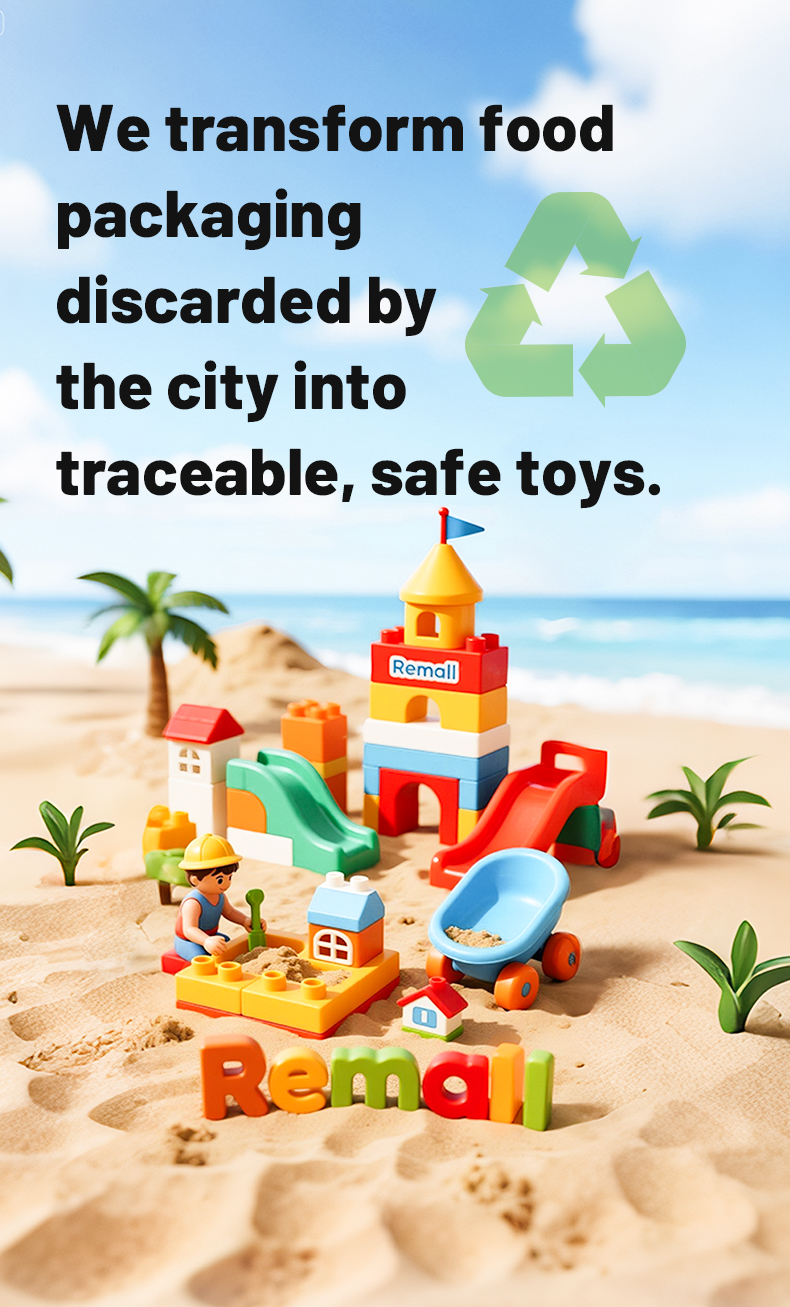
Toy applications using recycled polypropylene compounds.
Office stationery and general injection molding
General-purpose and appearance-driven parts are usually cost-sensitive. Re-mall's general-purpose range covers PCR-PP from 1 to 40 g/10 min for daily necessities, appliances and general injection- or blow-molded parts, while the appearance-focused range targets daily chemical packaging, homeware, storage and decor where color and surface finish carry the brand.
Comparison Table: PCR PP, rPP and Virgin PP
The table below is a terminology and decision reference, not a performance ranking. Specific values must always come from the grade data sheet.
| Attribute | Virgin PP | PCR PP | rPP (general term) |
|---|---|---|---|
| Definition | Newly polymerized polypropylene | Recycled PP from post-consumer waste | Any recycled PP, including post-industrial and post-consumer |
| Feedstock | Fossil-based monomer | End-consumer PP waste such as packaging and cups | Post-industrial scrap, post-consumer waste, or a blend |
| Listed MFI coverage | Broad, set by grade | 1–70 g/10 min across Re-mall's listed PCR-PP families | Depends on feedstock and compounding |
| Recycled content | None | Stated per grade; e.g. 30%–50% on the High Modulus grade | Varies; must be documented per batch |
| Documentation | Standard TDS and SDS | TDS plus GRS, FDA NOL where applicable, product carbon footprint | Depends on supplier; often incomplete |
| Carbon profile | Baseline | Reported approximately 60% lower for mechanically recycled PP | Varies with process and transport |
| Main risk | Price volatility | Batch variation where process control is weak | Ambiguous scope and traceability |
What to Ask Before You Order
- Which exact grade, and what are its MFI, density and PCR content?
- Which certifications apply to that grade, with certificate or submission identifiers?
- What use conditions are permitted under the food-contact authorization, if one exists?
- What feedstock does the grade come from, and how is that feedstock traced?
- Can the supplier run a sample and a pilot batch on your equipment before mass rollout?
- What batch documentation ships with each lot?
FAQ
Is PCR PP approved for food-contact applications?
It can be, but approval is specific to a grade, a recycling process and a set of use conditions rather than to PCR PP as a category. Re-mall holds an FDA No Objection Letter for the physical recycling of PP cups into food-contact articles, covering all food types under Conditions of Use E through G, dated 6 June 2025 under PNC 396. Other entries in the same database carry different limits: a listed PureCycle Technologies submission permits up to 37% recycled content under Conditions of Use A through H, and a listed Kingfa submission is limited to PCR-PP from previously used food-contact articles under Conditions of Use C through G. Buyers should match the exact conditions of use in their own application.
What PCR PP grades and melt flow ranges can Re-mall supply?
The re-mall PCRPP portfolio is organised into five families: multi-purpose grades (PCR-PP310 at 55, PCR-PP392 at 10 and PCR-PP301 at 30 g/10 min), food-contact grades (PCR-PP 3–70 and PCR-HDPE 1–5 g/10 min), safety-focused grades (PCR-PP 5–70, PCR-ABS 18–20, PCR-HDPE 1–2 and PCR-PA 8–20 g/10 min), appearance-focused grades (PCR-PP 5–50, PCR-ABS 18–22 and PCR-PC 10–20 g/10 min) and fiber-grade materials (PCR-PP 5–60 and PCR-HDPE 1–10 g/10 min). Overall coverage across PCR-PP grades is 1 to 70 g/10 min.
Can PCR PP be customized for a specific MFR, color or PCR content?
Yes. Re-mall matches materials against the customer's processing technology, MFI, rigidity, impact performance, color, PCR content and certification requirements, and completes validation through sample testing and pilot production. Color consistency is managed through raw material color sorting, color matching management, homogenization and process control.
How are odor and batch-to-batch variation controlled in PCR PP?
Odor is addressed across multiple stages, covering raw material source control, washing, drying, melt filtration, devolatilization and formula optimization, rather than by end-point deodorization. Batch consistency is controlled through raw material source control, fine sorting, deep washing, high-efficiency filtration, compounding and pelletizing, batch testing and data traceability.
Which companies manufacture PCR PP pellets in China?
China hosts a mix of large polymer groups and specialist recyclers. The FDA recycled plastics database lists submissions from Chinese producers including Kingfa Sci & Tech., and from Re-mall, a Shanghai-based recycler founded in 2015 with 20,000 metric tons of annual output and a CNAS-accredited recycled plastics laboratory operated by its subsidiary Shanghai Re-poly. Because the term covers producers, traders and converters, buyers should confirm legal entity, plant location, capacity, certificate numbers and grade-specific data sheets before shortlisting. A sample request can be started directly with the Re-mall team using the contact details below.
Conclusion
PCR PP has become a specification decision rather than a sustainability gesture. Buyers who get it right treat the material like any other engineering resin: they define processing method and performance targets, request grade-level data and certificate identifiers, confirm which food-contact conditions apply to their product, and validate with a sample and a pilot run before committing volume.
Re-mall's role in that process is as a material partner with in-house recycling, a CNAS-accredited laboratory, food-contact, recycled-content and carbon-footprint certifications, and a PCR-PP range spanning 1 to 70 g/10 min. For buyers at the research stage, the practical next step is a technical conversation about one application and one grade, not a catalogue request.
Request a PCR PP sample or technical data sheet
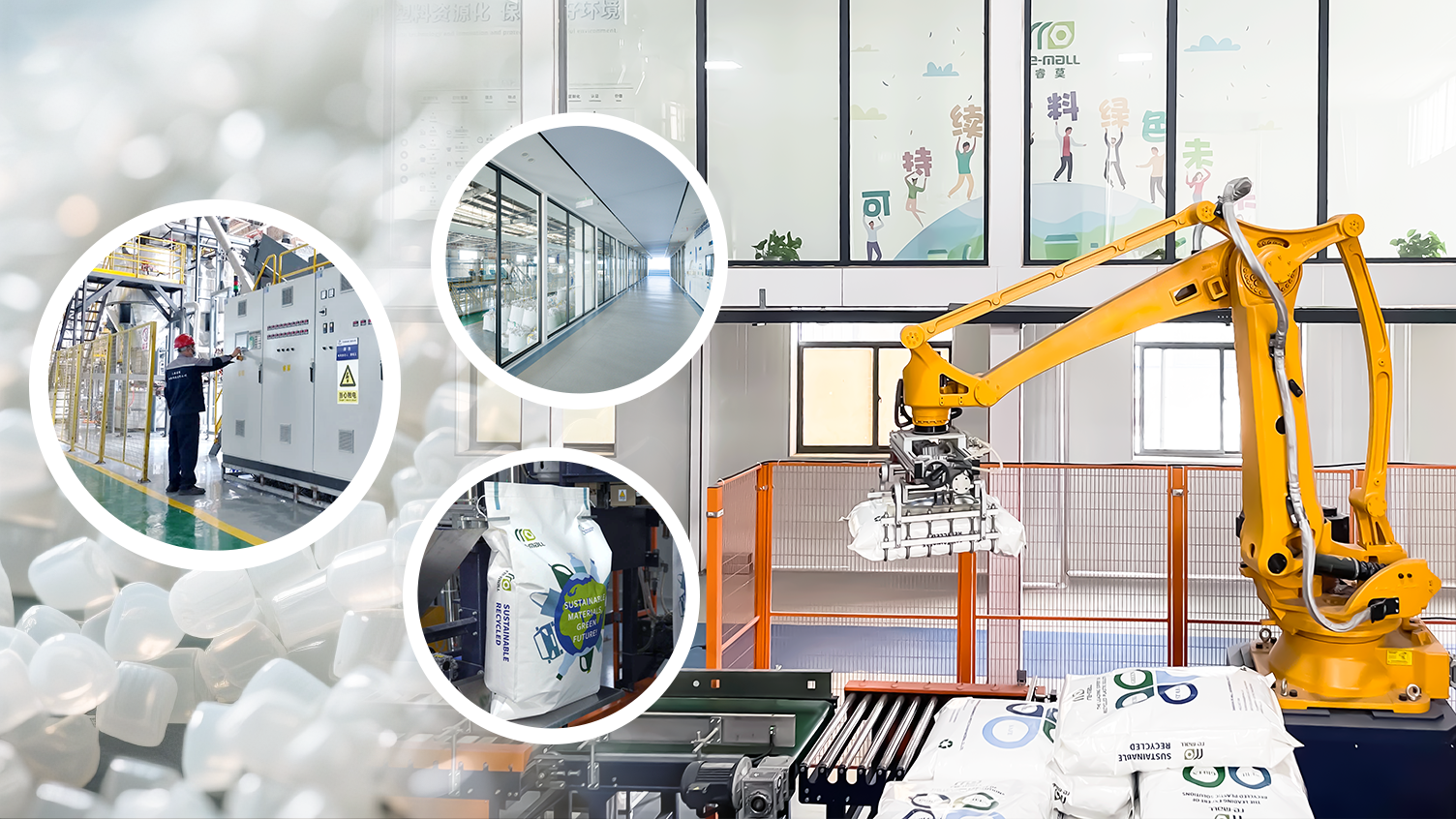
Share your application, processing method, target MFI and PCR content, and the Re-mall team will propose a matching re-mall PCRPP grade for sample testing and pilot validation.
Email: info@re-mall.cn · Tel: +86 400-175-0224 · WhatsApp: +86 152-2184-1874
Website: remall-repoly.com
Address: Room 166, Block A, Building 1, No.2588, Jinhai Road, Pudong New Area, Shanghai, China 201209
Have Questions or Need More Details?
Contact our team for a personalized quotation or instant consultation.
Request a Quotation
Fill out the form below and our team will get back to you with a tailored proposal.
WhatsApp Direct Chat
Prefer to chat in real-time? Message us on WhatsApp for instant assistance & quick answers.
- Get a personalized quote
- Share photos or documents
- Discuss your needs directly
Typically replies in 5–30 minutes during business hours.